What Do Lettuce Seeds Look Like? A Complete Guide with Varieties and Germination Tips
What do lettuce seeds look like? Lettuce seeds are small, flat, and oval-shaped. They usually measure about 1 to 2 millimeters, which is much smaller than tomato seeds.
The shape of lettuce seeds can differ depending on the variety. Iceberg seeds tend to be round, typically 1 to 1.5 millimeters wide. Romaine and butterhead seeds often have a more elongated form.
Healthy seeds feel firm, dry, and plump before planting. Avoid any seeds that look shriveled, cracked, or discolored as they might not sprout well.
Plant lettuce seeds in soil that is cool, ranging from 45 to 65 degrees Fahrenheit. This temperature window supports strong germination and growth for your seedlings.
Key Takeaways
- Lettuce seeds are tiny, measuring 1 to 2 millimeters in size.
- Iceberg lettuce seeds are rounder than romaine or butterhead types.
- Healthy seeds feel firm and look full, not shriveled or spotty.
- Plant lettuce seeds in cool soil temperatures for best germination.
- Spacing lettuce seeds properly prevents overcrowding and poor growth.
- Store seeds dry and cool to keep them viable for 3 to 5 years.
What Do Lettuce Seeds Look Like Up Close?

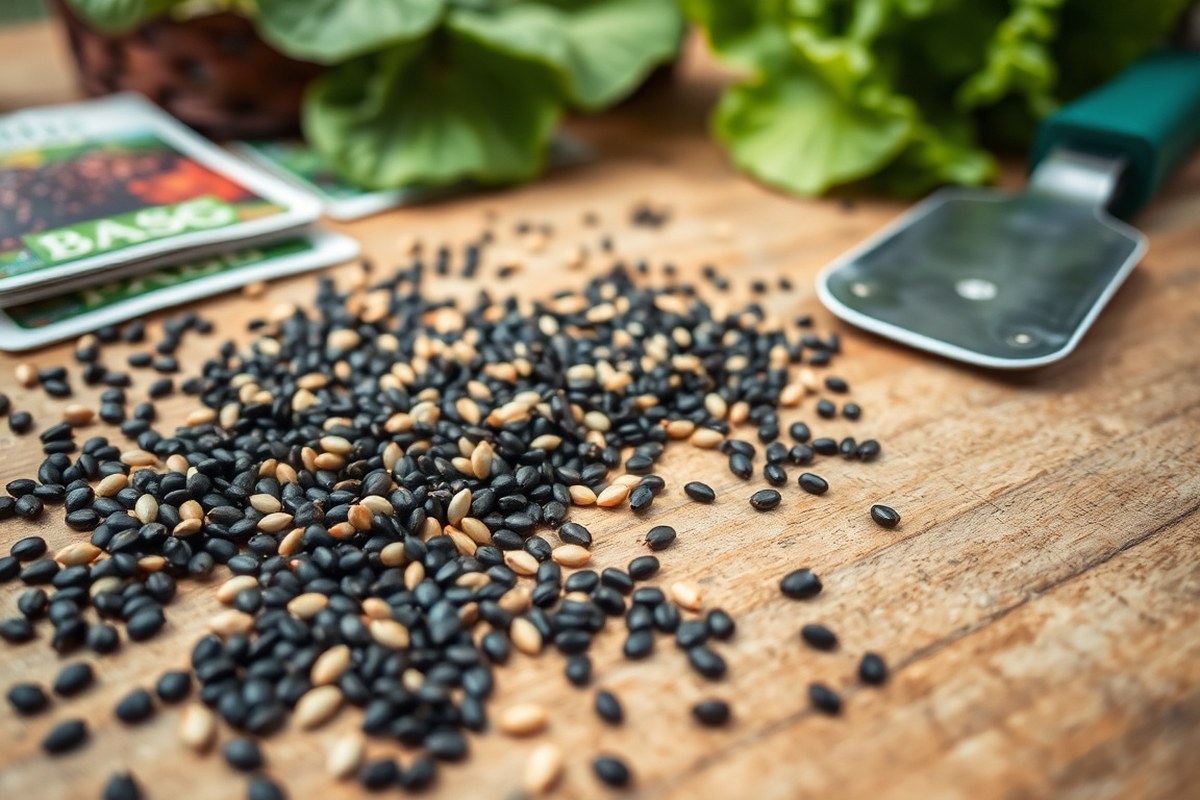
Lettuce seeds are very small, usually about 1 to 2 millimeters long. They have a flat, oval shape, and their size is smaller than many common garden seeds.
For example, they’re much tinier than tomato or cucumber seeds. So you’ll need to handle them gently when sowing.
Their color varies depending on the variety. Common colors include shades of brown, tan, and sometimes black. For instance, romaine seeds tend to be elongated and darker.
Butterhead seeds are more rounded with a lighter tan color. Healthy seeds show consistent color without spots or uneven patches.
The surface texture of lettuce seeds is smooth but not shiny. They have a slightly matte finish and feel dry to the touch.
Avoid seeds that are shriveled, cracked, or sticky, as these may not germinate well. Checking the seed texture helps ensure you pick strong seeds that will sprout.
How Lettuce Seed Varieties Differ in Size and Shape

How Lettuce Seed Varieties Differ in Size and Shape
Lettuce seed varieties show clear visual differences that help you identify types. Iceberg seeds tend to be larger and rounder.
Romaine seeds are elongated and darker. Leaf and butterhead lettuces often have smaller, lighter, or differently colored seeds.
Iceberg Lettuce Seed Features
Iceberg lettuce seeds are generally larger than other types. They measure about 2 millimeters across and have a round shape. Their color is usually light brown or tan, making them easier to spot among debris.
This variety’s seeds are tough with a thin, hard coat that protects them well during storage. Iceberg lettuce takes longer to mature. So its seeds are designed to last until planting the next season.
Romaine Lettuce Seed Characteristics
Romaine seeds are more elongated and darker brown compared to iceberg. They measure about 1.5 millimeters long and tend to be flatter. This color contrast helps you sort them from lighter seed types.
Some romaine varieties have even darker seeds, nearly black. These seeds come from a lettuce type that bolts faster.
They often have high germination rates in cooler soil. This helps you grow lettuce earlier in the season.
Leaf and Butterhead Lettuce Seeds
Leaf lettuce seeds range in color but can be very dark, sometimes nearly black. These seeds are usually smaller than iceberg seeds. They look like romaine seeds, often oval and flat.
You’ll find them easy to handle in your garden. Butterhead seeds are generally round and lighter brown, close in look to iceberg seeds but smaller.
Leaf lettuces sprout quickly, with serrated leaves appearing in the seedling stage. Butterhead seeds need soil like Romaine lettuce does.
They usually mature in 60 days or less. This means you’ll harvest lettuce quicker than with Romaine.
Use this table to compare seed types by size, shape, and color details.
| Variety | Seed Size (mm) | Shape | Color | Notes |
|---|---|---|---|---|
| Iceberg | ~2.0, round | Round, flat | Light brown/tan | Larger seeds, durable coat |
| Romaine | ~1.5, elongated | Oval, flat | Dark brown to black | Longer and darker seeds |
| Leaf | ~1.2-1.6, oval | Oval, flat | Very dark to black | Serrated leaves at sprouting |
| Butterhead | ~1.7, round | Round | Lighter brown | Smaller, round seeds |
Knowing these differences helps you keep seeds true to type. Keep varieties separated in your garden by 10 to 20 feet to prevent cross-pollination.
Separate your lettuce varieties by at least 10 feet to keep seeds true to type.
Identifying Healthy Versus Poor Quality Lettuce Seeds
Lettuce seeds that look healthy usually sprout well and grow strong plants. You can spot poor seeds by their colour, texture, or signs of damage. Storing seeds right helps keep them good for years, even five years if done correctly.
Signs of Viable Lettuce Seeds
Good lettuce seeds are firm and dry with a smooth surface. They typically show a consistent light gray or brown colour, matching their variety. Seeds that feel soft, shriveled, or are excessively dusty often won’t germinate.
Viable seeds generally germinate in about a week when sown in soil at 50°F. Cold soil can slow germination to two or more weeks. Place 10 seeds on a damp paper towel.
Keep it warm and moist. Wait seven days to see which seeds sprout.
Common Seed Quality Problems
Dampness and warmth often lead to seed decay and mold growth. Mold appears as fuzzy white patches.
Dust and discoloration suggest poor handling or old seed. Seeds with dark spots or that are brittle usually don’t grow.
Beginners often mistake lettuce seeds for other small seeds. They also forget to separate seeds from seed heads.
This leads to planting mixed or damaged seeds. Also, sowing too thickly can waste viable seeds and reduce germination success.
- Seeds must be free of mold or powdery dust
- No cracks, shrivelling, or soft spots on seeds
- Seeds should be consistent in colour for their variety
- Store seeds away from humidity and heat
- Avoid planting seeds clumped or too dense
- Perform a germination test before planting
Best Practices for Seed Storage
Store lettuce seeds in a cool, dry, dark place to keep them viable for several years. Ideal storage means no moisture, temperatures below 70°F, and containers that stop air entry. Seeds kept warm or humid lose viability much faster.
Using airtight containers like glass jars with desiccants helps remove moisture. Label each container with the seed type and storage date.
Seeds stored properly can still sprout well after five years. But don’t expect full germination rates after that.
How to Plant Lettuce Seeds for Best Germination
Plant lettuce seeds no deeper than ⅛ inch to help them germinate well. Seeds planted too deep struggle to reach the surface and may never sprout. Shallow planting combined with moist, cool soil helps seedlings push up within 5 to 10 days.
Spacing also plays a key role. Crowded lettuce plants tend to bolt unevenly and produce poor seed heads. Keep seedlings 3 inches apart for early leaf harvest.
Space them 8 to 12 inches apart for mature heads. This works well for types like romaine.
Soil temperature should stay between 60 and 75 degrees Fahrenheit. Lettuce seeds like cool to mild warmth but won’t do well in hot soil. Temperatures above 75 degrees can stop germination or cause the plant to bolt prematurely.
Moist soil that drains well supports steady growth. Avoid waterlogging, as soggy soil can rot seeds or young roots. Keep soil evenly moist but not soaked.
Follow these steps to plant lettuce seeds for best germination:
- Prepare soil by loosening and removing debris for easy seedling growth.
- Measure and mark rows about 12 to 18 inches apart for good air flow.
- Sow seeds no deeper than ⅛ inch by sprinkling or scattering evenly along the rows.
- Cover seeds lightly with fine soil or compost to protect and keep moisture in.
- Water gently to moisten the soil without washing seeds away or creating puddles.
- Keep soil temperature steady between 60 and 75°F using shade or mulch if needed.
- Thin seedlings to 3 inches apart for leaf harvesting or 8-12 inches for full heads.
- Monitor soil moisture daily and water as needed to keep it evenly moist.
What Lettuce Seeds Look Like During Germination Stages
Lettuce seeds begin germinating within five to ten days after planting. During this time, small green shoots appear, followed by tiny oval leaves called cotyledons.
By three weeks after sowing, the plant grows true leaves. These leaves show serrated edges typical of lettuce.
Day 1-5: Root Emergence
Right after planting, lettuce seeds absorb water and swell, triggering germination. A tiny white root, called the radicle, breaks through the seed coat first. This root anchors the seedling into the soil and starts taking up nutrients.
Usually, root emergence happens in about three to four days. During this stage, keep the soil moist but not soaking wet to avoid rotting. Seeds need warmth, ideally around 60 to 70°F, to sprout well.
Day 5-14: Cotyledon Leaf Stage
Between five and ten days, a small green shoot pokes out above ground. It carries two oval cotyledon leaves, which look different from true lettuce leaves. These cotyledons provide energy for the growing seedling.
The seedling stretches to about one to two inches tall during this time. Leaf blade expansion begins, letting the plant catch more sunlight to fuel growth. Proper light and temperatures help healthy cotyledons develop.
- Keep soil evenly moist, not dry or waterlogged
- Provide 10 to 12 hours of bright, indirect sunlight each day
- Maintain temperatures between 60 and 70°F for best growth
- Avoid disturbing young seedlings when thinning
- Use gentle watering to prevent washing away seeds
Overwatering young lettuce seedlings can easily cause them to rot or die.
During this stage, the seedling’s roots also grow longer and finer underground. These roots support more water uptake for the tip growth above. After the cotyledons open fully, the first true leaves emerge.
Day 14-21: True Leaf Development
From two to three weeks after sowing, the first true leaf appears. These leaves have serrated or jagged edges instead of smooth, oval cotyledons. This signals the seedling is maturing and photosynthesizing efficiently.
True leaves help the plant grow faster and taller. It will reach about two to three inches tall. Multiple true leaves start forming.
The plant looks more like lettuce you harvest later. This is a great time to thin seedlings and ensure enough space.
How Lettuce Seeds Develop and Are Harvested from the Plant
Lettuce seeds develop on tall flower stalks that grow after the plant matures. These stalks produce seed heads called achenes. Each achene holds one seed surrounded by white, fuzzy structures called pappus.
As the seed heads ripen, the pappus dries and becomes brittle. You can gently crush the pods to check if they break easily. This brittleness means the seeds are mature and ready to harvest.
Look for seed heads that are completely dry and light-colored. Cutting seed stalks by hand works best because lettuce flowers ripen over several weeks. This helps you harvest only the fully mature seeds and avoid green or immature ones.
Once harvested, seed pods contain loose seeds mixed with dry plant parts and chaff. To clean seeds, gently rub the pods with your hands. You can also use a screen to separate the seeds from debris.
This helps get rid of unwanted parts easily. Drying the seeds completely after harvesting prevents mold during storage.
For best seed development, thin lettuce plants to 12 to 16 inches apart. Rows should be 18 to 30 inches apart. This spacing helps support strong flower stalks and good airflow.
Better airflow lowers the risk of disease. It also helps improve seed quality.
Timing the harvest depends on your climate and lettuce variety. Lettuce grown in cool temperatures around 60 to 70°F produces seeds reliably. Leave the seed heads on the plants until dry.
Drying usually takes several weeks after flowering begins. This lets the seeds mature fully.
Preventing Cross-Pollination and Seed Contamination
Cross-pollination can change your lettuce seed variety, making saved seeds less true to type. Lettuce is mostly self-pollinating but can cross-pollinate through insects or wind. Keeping seed varieties apart stops this and keeps the seeds reliable for next year.
A good isolation distance between different lettuce varieties is about 100 feet or more. Your space is tight. Grow only one variety at a time.
Use tall fences or row covers as barriers. Another idea is to plant so varieties flower at different times. This lowers cross-pollination risk.
Lettuce seedlings need enough space to develop well and avoid disease problems. Space seedlings 6 to 8 inches apart. Rows should be 12 to 18 inches apart.
This gives roots room to grow. It also lets air circulate well. Good air flow slows fungal diseases that harm seeds.
- Keep at least 100 feet between different lettuce varieties for seed saving
- Plant varieties at different times to avoid overlapping flowering
- Use barriers like fine mesh or tall plants to reduce insect cross-pollination
- Space seedlings 6, 8 inches apart, with 12, 18 inches between rows
- Avoid crowded conditions to reduce fungal disease risks during germination
- Use heat-tolerant varieties for warmer months to reduce plant stress
- Grow only open-pollinated (non-hybrid) lettuce if saving seeds is the goal
Problems for lettuce seed germination include poor drainage, high heat, and planting seeds too deep. Plant seeds shallowly, about ¼ inch deep, in well-draining soil to prevent rot.
Lettuce likes cool soil. So sow seeds early in spring or late summer for best results.
Tips for Storing Lettuce Seeds to Maintain Viability
Keep lettuce seeds cool and dry to maintain their ability to sprout. Room temperature and moisture cause seeds to lose viability faster. It’s best to store them at 32 to 41°F in a sealed container.
Seeds absorb moisture from the air, which can lead to mold or early germination. Using airtight glass jars with a silica gel packet helps remove moisture. Avoid plastic bags alone, as they don’t protect well from humidity changes.
- Dry seeds thoroughly before storage to prevent mold
- Use glass jars or heavy-duty plastic containers with airtight lids
- Include silica gel packets or uncooked rice to absorb moisture
- Label containers with seed type and date stored
- Keep stored seeds in the refrigerator drawer, away from fresh produce
- Check seeds every 6 months for signs of damage or mold
Lettuce seeds commonly last about 3 to 5 years when stored properly. You can expect some viability loss after 2 years under less ideal conditions. Darkening or wrinkled seed coats usually signal age or damage caused by moisture or heat.
Seed colors and textures vary by variety and storage. Natural seed coats range from cream to black, depending on breeding. Over time, poor storage causes seeds to look dull or shriveled, which reduces germination success.
Don’t store lettuce seeds near ripe fruit. Ethylene gas speeds aging and kills seed viability.
Step-by-Step Action Plan for Planting and Storing Lettuce Seeds
Follow these steps to plant, care for, and store your lettuce seeds successfully.
- Before planting: Pick healthy seeds that look plump and undamaged. This helps ensure good starts.
- Day 1: Sow seeds about 1/4 inch deep in loose, moist soil. Check the soil stays damp but not soaked.
- Week 1: Keep the container or bed in partial shade if temperatures exceed 75°F. Look for seed sprouting in 7 to 10 days.
- After 2 weeks: Remove extra seedlings so each one is 6 inches apart. Wait until each seedling has two true leaves before thinning. This helps the remaining plants grow strong. This avoids overcrowding.
- Harvest time: Pick mature lettuce leaves before the plant bolts or flowers. Collect seeds after flower heads dry on the plant.
- Seed storage: Store dried seeds sealed tightly in a cool, dark spot. Test a few seeds each year to see if they still grow.
Frequently Asked Questions
What Are Common Colors of Lettuce Seeds?
Lettuce seeds usually range from pale tan to dark brown. Darker seeds can sometimes indicate older or less viable seeds.
How Can You Tell If Lettuce Seeds Are Mature on the Plant?
Mature lettuce seeds turn brown or black and feel hard when ready. Immature seeds are softer and greener, so wait for full color.
Do Lettuce Seeds Have Any Specific Scent or Smell?
Lettuce seeds generally don’t have a strong scent. If they smell moldy or sour, that could signal poor quality or spoilage.
Can Lettuce Seeds Be Confused with Any Common Garden Pests or Debris?
Lettuce seeds are small and oval. So they can look like tiny stones or soil bits. Take a close look before planting to avoid mistakes.
Why Do Some Lettuce Seeds Appear Fuzzy or Hairy?
Lettuce seeds sometimes have tiny hairs to help with seed dispersal. These hairs don’t affect planting or germination.
Is It Normal for Lettuce Seeds to Vary in Size Within One Packet?
Yes, seed size varies slightly due to variety and harvest conditions. This variation rarely affects germination or plant growth.
Wrapping Up
Lettuce seeds are small, light brown, and vary by type. You can grow fresh lettuce by planting them shallowly in moist soil. Try planting your saved seeds soon to see them sprout and grow into tasty leaves.