How Much Water Does a Fern Need: A Complete Guide for Healthy Growth
How much water a fern needs depends on several factors, including its environment and species. Most indoor ferns do well when watered every 3 to 7 days.
Always check the top inch of soil. Water only if it feels dry to the touch.
Ferns dislike sitting in soggy soil, so avoid overwatering to prevent root rot. Let the soil dry out slightly between waterings to keep roots healthy. Fast-drying pots like terracotta need watering more often than plastic ones.
Temperature plays a big role in watering frequency. If your fern’s room stays above 75°F, you should water more often to stop the soil from drying out. Cooler rooms below 60°F mean you can water less because moisture stays longer in the soil.
Humidity also matters. Higher humidity helps reduce how often ferns need water. Using a humidity tray or misting can keep your fern comfortable between waterings.
Key Takeaways
- Check the top inch of soil regularly to guide watering frequency.
- Water indoor ferns every 3 to 7 days, adjusting for pot type.
- Use more frequent watering for terracotta pots than plastic ones.
- Water outdoor ferns in summer every 2 to 3 days during heat.
- Deep-water outdoor ferns so soil stays damp 4 to 6 inches down.
- Boost watering when indoor temps rise above 75°F to keep moisture.
How Much Water Does a Fern Need and When to Water
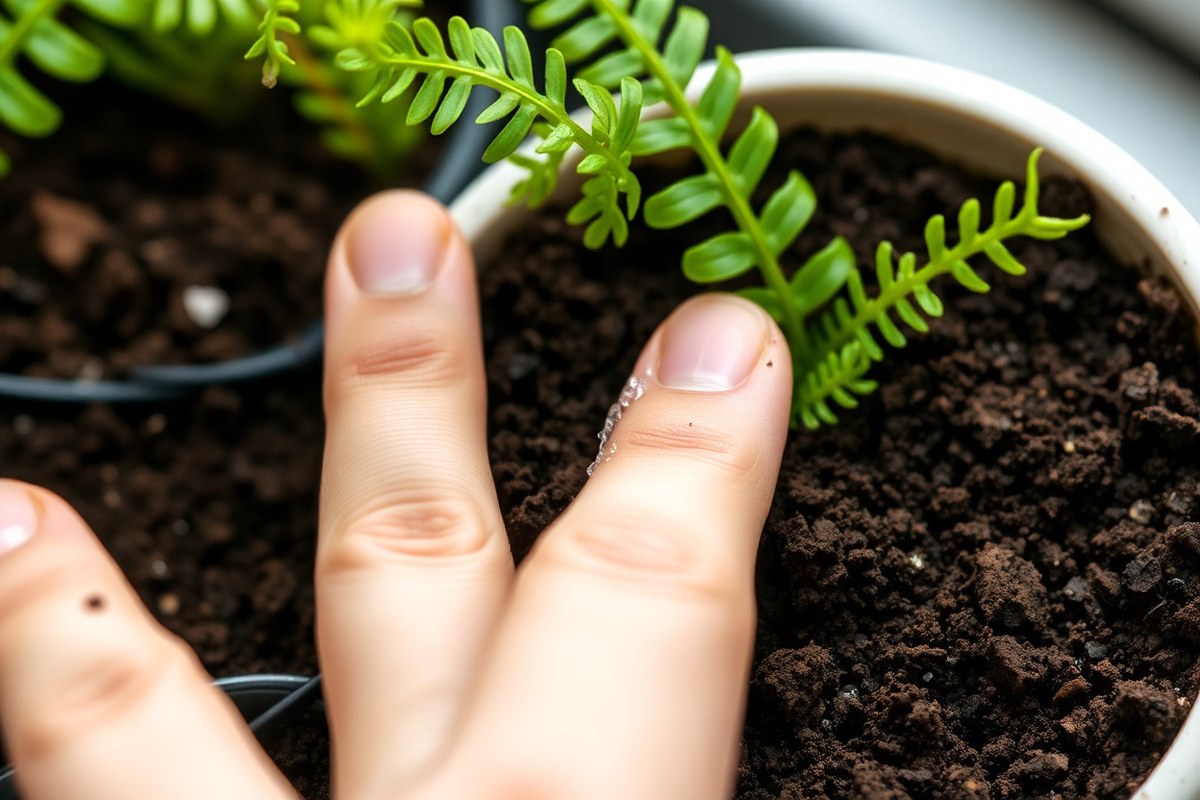
Water indoor ferns every 3 to 5 days during warm months. Check the top inch of soil by poking your finger in. Water thoroughly when this layer feels dry but not soggy.
For outdoor ferns, water more often in summer heat, about every 2 to 3 days. Shaded outdoor ferns or those in humid spots need less frequent watering.
Pull your finger 1 to 2 inches deep. When soil feels dry there, it’s time to water your fern.
An ideal watering session for most potted ferns uses enough water to soak the soil well. Water until you see drainage coming from the pot’s bottom. This helps flush salts out and prevents dry spots at the roots.
Soil type changes how often you water ferns. Sandy soil dries faster, so water outdoor ferns every 2 days in summer heat.
Clay retains water longer, so watering every 4 days is often enough. In loam or amended woodland soils, 3-day intervals work well for most garden ferns.
Indoor ferns in terracotta pots might need watering every 3 days because the pot absorbs moisture. Ferns in plastic pots hold water longer and can go 5 to 6 days between waterings. Adjust your check based on pot material and room temperature.
When the soil is damp but not soaking, wait 1 to 2 days and check again. When soil stays soggy, wait more and improve drainage to stop root rot. Using the finger test regularly helps you catch the right time to water without overdoing it.
How Different Fern Species Affect Water Requirements

Different fern species vary a lot in how much water they need. Some ferns thrive with constant dampness.
Others prefer their soil to dry out a bit between watering. Knowing your fern’s species helps you avoid watering mistakes like overwatering or drought stress.
High-Moisture-Demand Ferns
Ferns like Maidenhair and Boston demand constant moisture to stay healthy. The soil should never dry out completely for these species. They also need higher humidity, usually over 50%, to keep their fronds looking fresh and green.
Maidenhair ferns need the soil’s top surface to start drying. Wait until it’s slightly dry before watering again. This helps prevent overwatering.
Boston ferns prefer watering once the top inch becomes dry. These ferns react quickly to drought by browning or curling leaves. So keeping soil moist is important.
Moderate Water Needs Ferns
Japanese holly ferns require moist soil but tolerate short dry spells. They do well if you water when the top 1 to 2 inches dry out.
Their humidity needs match typical room air. So you won’t have to mist them often.
These ferns handle occasional drying better than high-moisture types. Watering frequency can be adjusted a bit, especially in cooler or less humid rooms. Check soil moisture by poking your finger 2 inches deep.
If it feels dry, it’s time to water. If it feels wet, wait a bit longer.
Low Water Requirement Ferns
Staghorn ferns like their medium or moss slightly dry between watering. They prefer high humidity.
But their roots need good air circulation and can’t sit in soggy soil. Bottom watering works well for them, soaking their moss for 20 to 30 minutes once dry.
Unlike moisture-loving ferns, these can’t handle overwatering. Signs of too much water include yellow leaves and mushy stems. Let the growing medium dry out a bit, then soak thoroughly for best results.
Species-Specific Watering Notes
Water needs vary not just by species but also by climate and potting mix. A peat-based medium holds moisture longer, so these ferns need watering less often. Bark-rich mixes dry out faster and require more frequent watering.
Light and temperature also affect water demand. A fern in bright indirect light needs more water than one in shade. Cooler indoor temperatures below 60°F reduce watering needs since ferns grow slower and lose less moisture.
| Fern Species | Moisture Preference | When to Water | Recommended Humidity |
|---|---|---|---|
| Boston Fern | Evenly moist | When top inch dries | 50%+ |
| Maidenhair Fern | Constantly damp | Top surface just drying | 60%+ |
| Japanese Holly Fern | Moist, tolerates brief dryness | Top 1-2 inches dry | Average room air |
| Staghorn Fern | Dries slightly between drinks | Moss or medium dry to touch | High |
Adjust watering depending on your fern’s species and potting conditions. High-moisture ferns need steady dampness, while drought-tolerant ones let soil dry before watering. Matching water schedules to species helps keep fronds healthy and vibrant.
Use bottom watering for ferns sensitive to wet crowns. Let the soil dry a little between waterings. This method avoids wetting the crown and soil surface.
How Soil Type and Pot Features Influence Fern Watering
Terracotta pots dry out faster than plastic ones because they are porous. Clay lets moisture escape through the pot’s surface, so soil loses water quicker.
A fern in a terracotta pot often needs watering every three days. The same plant in plastic might go five to six days between waterings.
Soil type also influences watering needs. Clay soils hold water longer but may drain poorly, raising overwatering risks. Sandy soils drain fast and dry out quickly.
So ferns in sandy soil need more frequent watering. Loam has sand, silt, and clay mixed together.
It holds moisture but drains water well. This balance works well for ferns.
Drainage is important. Pots must have holes to let excess water escape. A saucer under the pot should not hold standing water for more than an hour.
Poor drainage traps water, making the soil feel dry on top while roots stay soggy. Adding perlite or a gravel layer helps soil drain better.
| Factor | Impact on Moisture | Watering Frequency |
|---|---|---|
| Terracotta pot | Porous; loses water faster | Every 3 days on average |
| Plastic pot | Non-porous; retains moisture longer | About 5, 6 days between watering |
| Clay soil | Holds water longer; slower drainage | Less frequent, watch for sogginess |
| Sandy soil | Drains quickly; dries fast | Water more often |
| Loam soil | Good moisture retention and drainage | Moderate watering needs |
| Small pot | Less soil; dries faster | Check water daily in warm weather |
| Large pot | More soil; holds moisture longer | Water less often; monitor surface dryness |
Look for the top two inches of soil to dry out before watering again. Using a terracotta pot inside a plastic container can balance moisture loss and soil access.
In dry air, ferns lose water faster, especially in clay or sandy soils. Adjust watering every one to two days in warm months for hanging or small-potted ferns.
Poor drainage can cause issues even when soil feels dry on top. Check deeper soil moisture by probing two inches down. When the soil feels dry, water the fern well.
Avoid letting water sit under pots for long to prevent root rot. Add drainage materials to your soil mix.
Use the right pot size too. Both help you water correctly.
Recognizing When a Fern Is Underwatered or Overwatered
Wilting fronds and dry, crispy leaf edges usually mean your fern needs water. Brown tips or brittle fronds are common signs too.
Check moisture by pushing your finger about one inch into the soil. When it feels dry or nearly dry there, water deeply so moisture reaches 4 to 6 inches below the surface.
Soggy or yellowing fronds usually point to overwatering. Pooled water on the soil surface or slow drainage can cause root rot. Check soil moisture by touching one inch below the surface.
When the soil remains wet or very damp five days after watering, skip adding more water. Use pots with drain holes to let excess water escape easily. Standing water after watering or rain means you should move the pot or lift it up for better drainage.
Look at the roots if your fern isn’t improving. Healthy roots are firm and white or light tan. Mushy, black, or smelly roots show overwatering damage.
Shallow, weak roots may indicate too little deep watering. Aim water at the soil above the roots, not just the surface. So roots grow strong and deep.
Fix underwatering by watering thoroughly and consistently when the top inch of soil dries. Avoid quick daily spritzes that don’t soak soil deeply. For overwatering, cut back water and let soil dry between watering sessions.
Remove damaged fronds and repot the fern in fresh soil if roots become rotten. Adjust pot placement if drainage is poor or the area is too shady or too sunny.
Ferns in hanging baskets or packed pots may need extra care. Water may miss the center roots here. Try watering around the edges and directly inside the pot to wet all roots.
Check soil moisture in multiple spots to get a true reading. Shade ferns exposed to strong afternoon sun to reduce water loss and leaf scorch.
Cold water can also stress roots, causing brown leaf patches. So use room temperature water.
How Seasonal Changes Affect Fern Watering Needs
You need to change your fern’s watering based on the season. Hot summer days make ferns dry out faster. Cooler winter temperatures slow down their growth and water use.
During summer, check outdoor and indoor ferns every day or every 1 to 3 days. The heat causes more water loss through evaporation. In winter, water less often, about every 5 to 7 days indoors.
Spring and fall call for moderate watering. Ferns grow more in spring.
So water every 2 to 5 days depending on where they are. Fall watering drops a bit as nights get colder and days shorten.
This table shows typical watering frequencies by location and season to help set a schedule:
| Situation | Spring | Summer | Fall | Winter |
|---|---|---|---|---|
| Indoors | Every 3, 5 days | Every 3, 4 days | Every 5, 6 days | Every 5, 7 days |
| Pots outside | Every 2, 4 days | Every 1, 3 days | Every 4, 6 days | Rarely |
| Hanging baskets | Every 2, 3 days | Every 1, 2 days | Every 3, 5 days | Every 4, 6 days |
| In the ground | Every 4, 7 days | Every 3, 5 days | Only if no rainfall | Only if no rainfall |
Temperature and daylight affect how fast your fern uses water. More warmth and sunlight speed up growth. That means ferns drink more in summer, needing watering every day or two.
In fall and winter, shorter days and cooler air slow fern growth. Watering every 5 to 7 days indoors suits their lower demand. Outdoor plants may need even less if rain falls regularly.
Check your fern’s soil before watering, dry on top but moist below means waiting is best.
Practical Methods to Water Ferns Effectively
You can water ferns from the top or soak their pots, depending on their needs. Top watering is normal for most ferns. Hanging basket ferns need extra care and more frequent watering.
Checking Soil Moisture Before Watering
Feel the top inch of the fern’s soil to check moisture. It should feel just dry before you water again. This helps prevent overwatering and root rot.
Use your finger or a wooden stick to test the soil. Push it down about an inch deep. When the soil feels moist, hold off watering for another day or two.
Top Watering Method
Top watering means pouring water slowly around the fern’s base. You want the water to soak evenly through the soil. This ensures that all roots get moisture.
Stop when water begins to drain slightly from the pot’s drainage holes. Let the extra water drain fully to avoid soggy soil. Use a tray to catch water if indoors.
- Place the fern pot in the sink or over a tray for excess water.
- Pour room temperature water slowly around the base.
- Keep pouring until you see water start draining out below.
- Let soil absorb water for 5 to 10 minutes.
- Drain any excess water from the tray or saucer immediately.
- Return the pot to its usual spot with good drainage.
Soaking Method for Thorough Moisture
The soaking method gives the whole root ball deep hydration. It works well if soil feels dry deep down or for waking up tired plants. Soak for 15 to 30 minutes to let water penetrate fully.
After soaking, drain the pot completely. Top water occasionally to flush out built-up salts. This prevents damage from fertilisers or tap water minerals.
- Fill a container slightly larger than the pot with room temperature water.
- Place the whole fern pot into the water up to its soil line.
- Let the pot sit for 15 to 30 minutes, soaking the soil.
- Remove the pot and let it drain fully for at least 10 minutes.
- Top water lightly every few weeks to flush salts from the soil.
- Return the fern to its growing area with proper drainage.
Special Care for Hanging Ferns
Hanging basket ferns dry out faster and need watering more often. Watering from the top is best, but soaking works well too. You should check soil daily during warm, dry weather.
Let water drain freely to avoid soggy roots and weight damage. Use a bucket or watering can with a long spout for easier reach. Avoid underwatering by keeping the soil evenly moist, not wet.
- Check soil moisture in the hanging basket daily.
- Use a watering can to pour water slowly and evenly on top.
- Water until it drains out the bottom of the basket.
- When the basket is very dry, soak it in water for 15 minutes.
- Let the basket drain completely before rehanging.
- Flush the soil every few weeks with extra water to clear salts.
How Humidity and Environment Influence Fern Water Needs
Low humidity makes ferns lose water faster through their leaves. Most ferns prefer humidity above 50%.
But indoor levels in winter can drop to 5-10%. When humidity is low, you need to water ferns more often to replace lost moisture.
Raising humidity around your fern helps reduce how often you water. Use a spray bottle with room temperature water to mist leaves once or twice daily. Grouping several plants together also traps moisture, creating a mini humid zone.
A humidity tray filled with water goes under the pot. Make sure the pot’s bottom doesn’t sit in the water. Check it often to avoid root rot.
Temperature changes affect how quickly ferns lose moisture. Rooms above 75°F speed water evaporation. So water ferns every 3 days or even more often.
Cooler spots below 60°F slow moisture loss, allowing longer watering gaps, sometimes up to a week. Avoid cold drafts or sudden temperature shifts that stress your fern’s water balance.
Indoor heat from furnaces dries air out, dropping humidity and increasing watering needs. Air conditioning can have a similar drying effect, especially in summer. Place your fern away from vents or heaters.
Consider adding a humidifier in drier seasons. These steps help keep moisture levels steadier. So your fern stays healthier without overwatering risks.
Preparing Ferns for Absences and Watering While Away
Ferns need careful prepping before you leave to stay healthy. Soaking them well helps, plus a clear watering plan for your caretaker avoids stress. After you return, gentle watering resets your fern’s balance.
Pre-Trip Soaking Procedure
Soak your fern thoroughly a day before leaving. This helps the soil hold plenty of moisture for several days. Check that water drains freely to avoid root rot.
Follow these steps to prepare your fern before a short trip:
- Water the soil deeply until water flows out the pot’s bottom.
- Let the fern stand in its watering saucer to absorb excess water for 10 minutes.
- Drain any leftover water to prevent soggy roots.
- Move fern away from direct sunlight to reduce evaporation.
- Spray the fern’s leaves lightly with water to keep humidity high.
Tender ferns lose water fast; soaking before leaving cuts drying risk.
Setting Up a Caretaker Schedule
A good schedule helps your caretaker give the right water at the right time. Ferns indoors usually need water every 2 to 4 days. Outdoors in warmth, that shortens to 1 to 3 days.
Have your caretaker test soil moisture using the finger test every 2 to 3 days. They should water when the top inch of soil feels dry. Overwatering causes root problems just as much as underwatering.
Using Written Instructions Effectively
Write a clear note for your caretaker explaining when and how to water. Use simple language to avoid confusion. Include key tips like checking soil dryness and letting excess water drain.
Here’s a template you can use:
Water when the top 1 inch of soil feels dry. Water enough to moisten the soil, then let it drain. Avoid letting the plant sit in standing water.
Post-Return Watering and Care
After your return, give your fern a gentle watering to help it recover. Use room-temperature water poured slowly at the soil’s base. Avoid drenching the leaves or roots too fast.
Monitor the plant closely for a week. Your fern might need extra misting or less direct sun while it adjusts. Doing this avoids shock and keeps your fern healthy.
Step-by-Step Action Plan for Watering Your Fern
Follow these steps to water your fern correctly. You will see healthier leaves and firmer soil by the end of the month.
- Day 1: Check the soil moisture by sticking your finger about an inch deep. Water only if it feels dry.
- Week 1: Water the fern with a cup of lukewarm water every 3 to 4 days. Look for damp but not soggy soil.
- Week 2: Observe the leaves for dryness or yellowing signs. Adjust watering by adding or holding back 1/4 cup.
- Week 3: Measure humidity around your fern. Use a spray bottle to mist leaves daily if air is dry.
- Week 4: Reduce watering slightly if temperatures or daylight drop. Keep soil moist but less wet.
- Monthly: Repot your fern in fresh soil if roots start showing or water drains too fast.
- Before trips: Water deeply the day before leaving. Set up a drip or self-watering system for longer absences.
Frequently Asked Questions
How Often Should I Check the Soil Moisture of My Fern?
Check your fern’s soil every 3 days and water only if the top inch feels dry. This helps avoid overwatering and keeps your plant healthy.
Can Watering Frequency Change with Different Pot Materials?
Terracotta pots dry out faster. They need water every 3 days.
Plastic pots hold moisture longer. Adjust your watering schedule accordingly to prevent root rot or dryness.
Is It Okay to Use Tap Water for My Fern?
Tap water can work for many ferns. Some, like rabbit’s foot fern, prefer rainwater or distilled water. This avoids salt buildup that can harm the plant.
How Can I Tell If My Fern’s Leaves Are Browning Due to Water Issues?
Leaf browning often means improper watering, either too much or too little. Check soil moisture to adjust watering and save your fern’s leaves.
Does the Size of the Fern Affect How Much Water It Needs?
Larger ferns generally need more water because they have bigger root systems. Watch soil moisture rather than size alone to water correctly.
Should I Water My Fern Differently in Winter Than in Summer?
Yes, ferns need less water in winter since growth slows. Check soil carefully before watering to avoid overwatering in cooler months.
Key Points to Remember
Ferns thrive by keeping soil moist but not soaked. Check soil often and adjust watering with seasons and room conditions. Start by testing soil moisture today to protect your fern’s health.