Why Are My Plants Turning Yellow? Complete Guide with Proven Fixes
Why are my plants turning yellow? Most often, yellow leaves mean a problem with water or nutrients.
Overwatering is the biggest cause, as it drowns roots and stops them from taking up oxygen. Checking the soil before watering can stop yellowing early.
Yellow leaves also happen when plants don’t get enough light or face cold drafts. Many houseplants come from warm places and can quickly yellow below 50°F. Moving your plants away from cold spots and giving them enough light helps them bounce back.
Nutrient issues show in yellow patterns on leaves, usually fixed with the right fertilizer. For example, iron deficiency causes leaves to yellow but the veins stay green. Correcting soil pH or adding a chelated iron supplement can solve this.
Key Takeaways
- Check soil moisture by poking 2 inches deep before watering your plants.
- Move plants away from cold windows or drafts that drop temperatures below 50°F.
- Use full-spectrum LED grow lights 12 to 18 inches above plants in low light areas.
- Watch for yellow leaves with green veins, it often signals iron deficiency.
- Apply a balanced plant food like 10-10-10 to fix general nutrient shortages.
- Let potted soil dry out completely between waterings to avoid root rot.
What Causes Plant Leaves to Turn Yellow?

Leaves turn yellow when plants lose chlorophyll, the green pigment that catches sunlight. Chlorophyll breaks down due to age, stress, or poor growing conditions.
As it fades, yellow pigments under the green show through. This makes the leaf look yellow, not red or brown.
Yellow leaves often mean a problem with the plant’s health, but not always. Sometimes it signals normal leaf aging or natural shedding. Other times, it shows stress from too much or too little water, nutrient gaps, or pests.
Yellowing can start in one part of the leaf. It can also spread across the whole leaf. This helps you find the cause.
When plants lack nitrogen, older leaves turn yellow first. The plant sends nitrogen to new growth instead. Yellowing appears between leaf veins when iron or manganese is missing.
Overwatering can cause the roots to rot, leading to yellow, mushy lower leaves. Poor light causes all leaves to become pale and yellow over time. These different causes show how leaf yellowing reflects specific problems in how plants grow.
Some yellowing happens because the soil can’t supply enough nutrients or holds too much water. Roots need room and air to stay healthy. A plant in a pot too small often shows yellow leaves soon.
Heavy, soggy soil can cause yellow leaves too. Cold drafts and sharp temperature swings confuse plants and interrupt chlorophyll production, turning leaves yellow.
Yellow leaves do not always mean the plant is dying. But they are a sign to check growing conditions right away. Healthy green leaves indicate good chlorophyll, enough nutrients, proper water, and suitable light.
Sudden or fast-spreading yellow leaves mean your plant is stressed. Stress comes from the environment or how you care for it. Watching for these signs helps you catch problems early and keep your plants healthy longer.
How to Diagnose Yellow Leaf Patterns for Accurate Causes
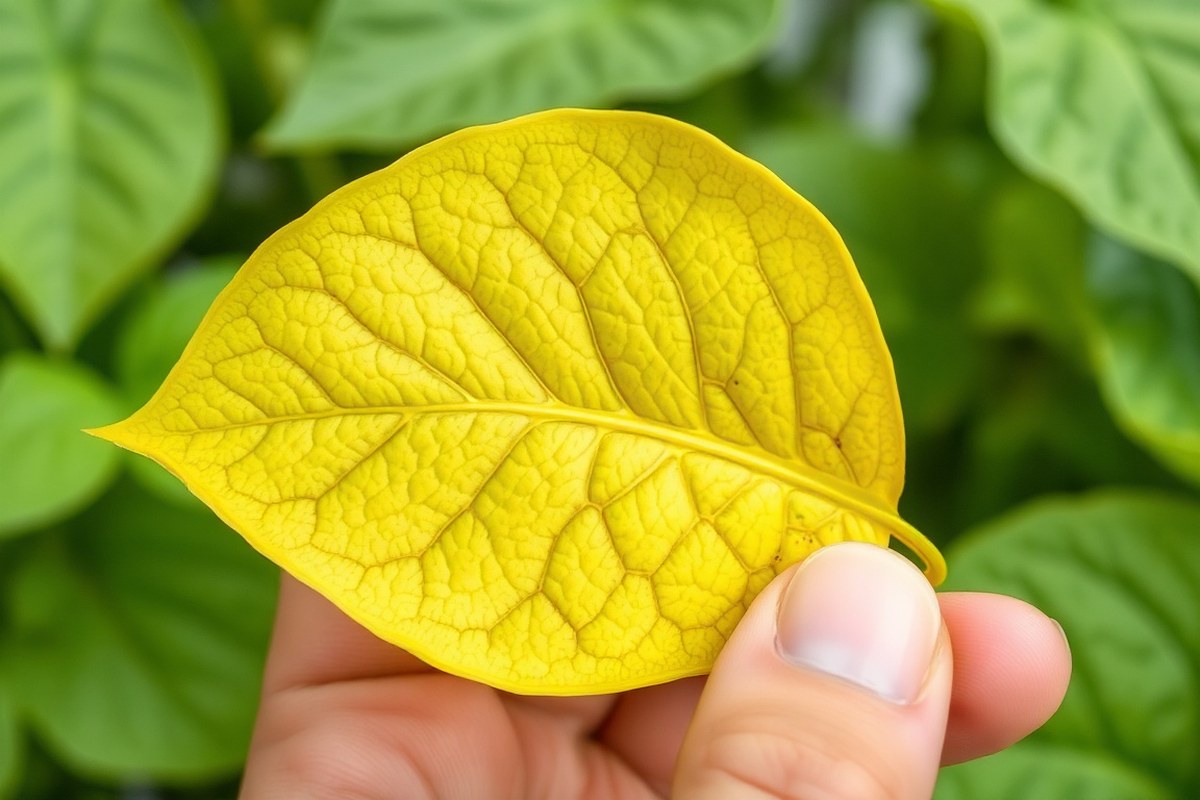
Look closely at which leaves turn yellow first. Older leaves that yellow while new growth stays green often show nitrogen or magnesium deficiency. If new leaves yellow first and older leaves stay green, iron deficiency is more likely.
Check the yellowing pattern on the leaf surface. Uniform yellowing over the whole leaf suggests nitrogen shortage.
Patchy yellowing between the veins points toward magnesium or manganese shortages. Yellow along leaf edges may reflect potassium deficiency or salt build-up from tap water or fertilizer.
- Older leaves yellowing first usually means mobile nutrient shortage (nitrogen, magnesium)
- New leaves yellow first if nutrient cannot be moved (iron deficiency)
- Yellow veins or interveinal yellow patches suggest magnesium or iron problems
- Yellow edges or tips mean salt buildup or potassium deficiency
- Soft or mushy leaves with yellowing usually signal watering issues
- Crispy, dry yellow leaves point to underwatering or heat stress
Touch the soil to check moisture. Wet soil with yellowing leaves hints at overwatering.
Dry soil and crisp yellow leaves lean toward underwatering. Remember, older leaves die off naturally; don’t confuse this with a nutrient problem.
Look for differences in leaf texture, too. Soft yellow leaves with waterlogged soil often mean root problems.
Crispy edges with dry soil indicate lack of water or too much sun. Leaf vein yellowing requires a look at magnesium or iron levels in soil.
Remember, a soil pH test helps confirm nutrient availability before adding fertilizer or changing watering habits.
Overwatering and Underwatering: Signs and Solutions
Yellow leaves often signal watering problems. Overwatering causes soggy soil and mushy leaves.
Underwatering brings dry soil and crisp, yellow leaves. Testing your soil moisture helps you water just right.
Testing Soil Moisture Levels
Check soil moisture before watering your plants. The easiest way is the finger test. Just slide your finger into the soil about 2 inches deep.
Feeling damp means wait before watering. Dry or dusty soil means the plant needs water soon.
For containers, try lifting the pot to feel its weight. A light pot usually means dry soil.
- Clean your hands to avoid soil contamination.
- Insert your index finger 2 inches deep into the soil.
- Feel the soil around your finger to check for moisture.
- When soil feels dry or dusty, you should water the plant.
- When soil feels wet or soggy, wait before watering again.
- Smell the soil; a sour smell can mean overwatering.
- Replace soil or repot if sogginess and bad odor persist.
Symptoms of Overwatering vs. Underwatering
Overwatered plants have yellow leaves that feel soft or mushy. The stems near the soil line may also become mushy. Soil stays wet for over 3 to 4 days, sometimes smelling sour or rotten.
Underwatered plants show dry, crispy yellow leaves. Their soil feels dry even several inches below the surface. Growth can slow, and leaves may drop off quickly.
Fleshy plants like Chinese money plants and cacti suffer most from overwatering. They store water in leaves and stems, so excess water causes yellowing fast. Garden plants can show mixed signs if soil pH or nutrients are off.
Adjusting Your Watering Schedule for Recovery
Water plants only when the top 2 inches of soil feel dry. For most houseplants, that means watering every 4 to 7 days. Succulents and cacti need watering every 2 to 3 weeks, depending on indoor humidity.
To rehydrate dry soil, water slowly and deeply. Pour water until it drains from the pot’s bottom. Avoid frequent shallow watering, which encourages weak roots.
For overwatered plants, hold off watering and improve drainage. Repot if soil stays soggy and roots look rotten. During recovery, reduce watering frequency and keep plants in indirect light to help them heal.
Nutrient Deficiencies That Cause Yellow Leaves and How to Fix Them
Yellow leaves often point to a nutrient shortage. Knowing which nutrient is missing helps you pick the right fertilizer fast. Visual signs usually guide you to the problem.
For example, nitrogen deficiency turns older leaves yellow first, while iron affects new growth. Applying targeted fertilizers corrects these shortages quicker than general feeding.
Here’s a simple comparison of common nutrient deficiencies, their signs, and fertilizing tips to jumpstart recovery:
| Nutrient | Yellowing Pattern | Where on Plant | Fertilization Strategy | Recovery Time |
|---|---|---|---|---|
| Nitrogen (N) | Uniform yellow on older leaves | Lower leaves first | Use balanced fertilizer high in nitrogen; 10-5-5 NPK | 1-2 weeks |
| Iron (Fe) | Yellow between veins causing green veins | Young, new leaves | Apply chelated iron fertilizer; foliar spray or soil drench | 1-2 weeks |
| Magnesium (Mg) | Yellow edges with green veins inside | Older leaves, sometimes center | Use Epsom salt (magnesium sulfate) as foliar spray or soil soak | 1 week |
| Potassium (K) | Yellowing or browning leaf edges | Older leaves first | Feed with potassium-rich fertilizer; e.g., 5-5-10 NPK | 2-3 weeks |
| Calcium (Ca) | Yellowing with leaf tips curling or distorted | New growth and leaf edges | Apply calcium nitrate or gypsum; frequent watering helps | 2 weeks or more |
Picking the right fertilizer means matching your feeding to the plant’s deficiency. Acidic soil can block nutrients, so check pH before applying. Nutrient uptake improves when the soil is moist but not soggy.
Avoid overfeeding since excess fertilizer can burn roots or cause leaf spots. Follow package instructions carefully.
After feeding, yellow leaves often start to green up within a week or two. New leaves usually appear healthy in a few weeks. Old yellow leaves usually don’t turn green again.
Don’t cut them off too fast. They help the plant get better.
Symptoms lasting more than three weeks need a fresh check. Look at watering, pH, or pests again.
Light and Temperature Stress Affecting Leaf Color
Plants need the right light to make chlorophyll and stay green. Leaves turn pale and yellow, especially on lower branches, with low light. Too much direct sun stresses plants.
This causes yellow leaves. Leaves may get scorched or edges turn crispy.
Tropical plants hate cold drafts and hot spikes, which trigger yellow leaves as a stress response. Most tropical species prefer temperatures between 65°F and 80°F. Plants start yellowing and dropping leaves when air stays below 60°F or above 85°F too long. Sudden cold near single-pane windows or direct air from vents often causes this problem indoors.
To fix low light, move your plant closer to a bright window that gets indirect sun. LED grow lights give good help when natural light is low. Place the light 12 to 18 inches above the plant tops.
Run the light 10 to 12 hours daily, matching natural daylight hours. Use full-spectrum LED bulbs designed for plants, which cost between $30 and $60 typically. These provide the needed light wavelengths for photosynthesis and can reverse yellowing caused by shade.
Keep grow lights too close and your plant may get leaf burn. Too far and light won’t help. Check leaves weekly for improvement or new yellowing.
Pests and Diseases That Lead to Yellowing Leaves
Yellow leaves can point to pests like aphids, spider mites, and whiteflies. These insects suck sap, leaving leaves yellow, spotted, or deformed. You might see tiny bugs clustered on stems or the leaf underside.
Look for sticky residue or webbing as signs of infestation. Other pests, such as scale or mealybugs, also cause yellow patches by feeding on plant fluids.
Diseases contribute to yellowing, often showing visible spots or molds. Fungal infections like cercospora leaf spot create yellow patches with dark edges. Early downy mildew also causes yellow blotches that look like pest damage.
Tomatoes and potatoes often suffer from blight, which starts as yellowing before black lesions appear. Bacterial or viral infections may cause irregular yellow areas, sometimes with leaf deformities.
To control pests safely, start by wiping leaves with soapy water. This removes many insects without chemicals. Use insecticidal soap or neem oil for persistent bugs.
Spray in the morning or evening to avoid burning leaves. Repeat treatments every 5 to 7 days for two weeks. Always test sprays on a small leaf area first.
Follow the label instructions closely. This helps prevent any harm to your plants.
Fungal diseases need prompt attention to stop spread. Copper fungicides work well against leaf spots and downy mildew. Apply these outdoors or in well-ventilated spaces, aiming for all leaf surfaces.
Remove and destroy affected leaves to reduce spores. Avoid overhead watering to keep leaves dry. Treat at first signs; waiting lets the disease infect more plants.
- Aphids: clustered on leaf undersides, sticky honeydew
- Spider mites: tiny dots, fine webbing on leaves
- Whiteflies: white flying insects around the plant
- Cercospora leaf spot: yellow patches with dark edges
- Downy mildew: yellow blotches, fluffy white mold below
- Blight on tomatoes/potatoes: yellow leaves followed by black spots
- Scale insects: hard or waxy bumps, yellow splotches
Check your plants often to catch problems early. Cleaning tools after use reduces disease risk. Healthy soil and proper watering also help plants resist pests.
Yellow leaves from pests or disease improve in days with correct care. When the problem spreads, isolate affected plants. This keeps the rest safe from infection.
Soil pH and Root Health’s Impact on Leaf Yellowing
Yellow leaves often mean your plant’s soil pH is off or its roots are unhealthy. Soil pH affects how well your plant absorbs nutrients. Problems like root rot or compacted roots block nutrients and water, causing yellowing.
Testing Soil pH Accurately
Testing soil pH helps you know if nutrients are available for your plant. Most houseplants need slightly acidic soil, around pH 6.0 to 7.0. You can test pH cheaply at home or with lab kits from garden stores.
Follow these steps to test soil pH:
- Collect a soil sample from 2 to 4 inches deep near the plant’s roots.
- Place soil in a clean container and add equal parts distilled water.
- Mix the soil and water to create a muddy solution.
- Dip a pH test strip or meter into the solution and wait for the result.
- Compare the color change on test strips to the chart that comes with them.
- Record the pH level so you can adjust soil if needed.
Soil amendments depend on pH level. For acidic soil under pH 6, add lime to raise it. For alkaline soil above pH 7.5, add sulfur or peat moss to lower it.
Signs of Root Rot and Root-Bound Plants
Look for yellow, drought-stressed leaves that wilt easily. Stems near the soil that are soft and dark mean root rot. Soil that smells musty or sour also signals rotting roots.
Root-bound plants have many tangled roots circling the pot’s edge. These plants struggle to get nutrients and water, causing yellow leaves. You may also see less growth or smaller new leaves.
Correcting Soil and Root Problems
You can improve root health by checking and fixing soil and pots. Start by gently removing the plant from its pot to inspect roots. Healthy roots look firm and white, while rotten ones are brown and mushy.
Fix compacted soil by loosening it before repotting your plant. Choose a pot with drainage holes to prevent water buildup. When root rot is there, cut off bad roots with clean scissors first.
Here’s how to fix soil and root issues step by step:
- Water the plant lightly to avoid overwatering.
- Remove the plant from its pot and shake off excess soil.
- Check roots for softness, darkness, or bad smells.
- Trim any rotten roots back to healthy tissue.
- Loosen or replace compacted soil with fresh, well-draining mix.
- Repot the plant in a slightly larger pot with drainage holes.
- Adjust soil pH by adding lime or sulfur based on your test results.
- Water the plant after repotting and place it in indirect light for recovery.
How to Revive Your Yellowing Plants: Practical Care Tips
Start by fixing watering, light, and feeding issues. These are the most common causes of yellow leaves. Then prune only fully yellow leaves to help the plant focus on healthy growth.
Adjusting Watering and Light Conditions
Check if your plant gets the right water amount and light. Overwatering or underwatering often causes uniform yellowing on all leaves. Make sure the plant sits in an area with suitable light for its species.
Adjust watering by letting the top inch of soil dry before watering again. Move the plant to brighter or shadier spots if leaves pale or yellow tips appear. Watch new leaves for color improvement within two weeks, signaling a positive change.
Feeding and Soil Amendment Practices
Feed your plant with balanced fertilizer every four to six weeks during growing seasons. Use fertilizer with nitrogen, phosphorus, and potassium to support leaf health. Pay close attention if your plant loves acid.
Rhododendrons need slightly acidic soil. The pH should stay around 6.0.
Soil that is too alkaline causes iron deficiency. This leads to yellowing between leaf veins.
Add soil acidifiers or specialized fertilizers to adjust pH slowly. Compost and organic matter improve soil health and keep nutrients steady for long-term care.
Pruning Yellow Leaves and Monitoring Recovery
Only prune yellow leaves that are completely yellow or brown. Leaving partly yellow leaves lets them recover and keeps energy for new growth. Use clean, sharp scissors or pruners to cut near the stem base.
Track your plant’s recovery for three to four weeks after care changes. New green leaves show progress, while persistent yellowing might need further diagnosis. Remove fallen yellow leaves from soil to prevent pest and disease buildup.
- Check soil moisture and water only when the top inch is dry.
- Adjust light exposure based on plant type, more for sun lovers, less for shade plants.
- Apply balanced fertilizer every four to six weeks while the plant grows.
- Test and adjust soil pH if you grow acid-loving plants prone to yellow leaves.
- Add organic matter like compost for steady nutrient supply.
- Remove fully yellow or brown leaves with clean tools to avoid stress.
- Watch new leaf growth for up to a month to see if the plant improves.
Give your plant time to adjust after changes; yellow leaves don’t improve overnight.
Step-by-Step Action Plan to Fix Yellowing Leaves
Follow these steps carefully to bring your yellowing plants back to life. Watch for signs of improvement after each phase.
- Day 1: Check soil moisture by sticking your finger an inch deep. Water only if dry. Healthy plants won’t droop or stay soggy.
- Day 2: Inspect all leaves for pests like spider mites or aphids. Wipe leaves and treat with insecticidal soap if needed. No more bugs mean greener leaves soon.
- Week 1: Measure light exposure. Move your plant to brighter or shadier spots based on its species. Leaves should stop yellowing and grow stronger.
- Week 2: Test soil pH with a kit. Adjust acidity using lime or sulfur if necessary. Watch new leaves for healthy green colour.
- Week 3: Apply a balanced liquid fertilizer following label instructions. Avoid overfeeding to prevent new stress. Leaf colour should improve within two weeks.
- Week 4: Inspect roots by gently removing soil near the base. Trim any brown or mushy areas with clean scissors. Repot if roots look crowded or rotten.
- After 1 Month: Continue consistent watering, feeding, and pest checks. Keep records of changes for adjustments. Your plant should regain its natural leaf colour.
Frequently Asked Questions
Why Do My Older Plant Leaves Turn Yellow Before Dropping Off?
Older leaves yellow and drop naturally as plants focus energy on new growth. This helps plants stay healthy by shedding less useful leaves. Check if new leaves look healthy to confirm normal aging.
Can Yellow Leaves on Indoor Plants Mean Too Much Fertilizer?
Yes, too much fertilizer can burn roots, causing yellow leaves. Flush the soil with water to remove excess salts. Cut back on feeding and follow package instructions carefully.
Why Are Only the Lower Leaves on My Plant Turning Yellow?
Lower leaf yellowing usually signals nutrient or water issues affecting older parts. Roots may struggle to feed all leaves equally. Adjust watering habits and consider balanced feeding.
Can Sudden Yellowing of Plant Leaves Be Caused by Temperature Changes?
Rapid temperature drops or drafts can shock plants and yellow leaves. Keep plants in steady temperatures between 60°F and 75°F. Avoid placing them near heating or cooling vents.
Is Yellow Leafing Related to Pot Size or Root Crowding?
Yes, roots cramped in small pots can stress plants and yellow leaves. Repotting into a larger container with fresh soil often helps. Check root health when you see yellow leaves.
Why Do New Leaves Turn Yellow but Their Veins Stay Green?
This pattern may indicate iron deficiency, limiting chlorophyll in leaves. Iron helps leaves keep their green color around veins. Using iron-rich fertilizer can fix this fast.
Final Thoughts
Yellow leaves usually signal specific plant stress you can fix. Start with the simplest change, like watering properly. That small step often makes a big difference fast.