How Can I Grow Lavender? A Complete Guide for Thriving, Blooming Plants
Plant lavender in a location where it receives at least 8 to 10 hours of full sun daily. Choose sandy soil that drains well and avoids retaining water. Ensure the spot stays dry to prevent root problems.
Give each lavender plant 12 to 18 inches space. This helps roots grow well. It also allows good air flow between plants.
It prefers a soil pH between 6.7 and 7.3, which helps it absorb nutrients well. Water only when the top 2 inches of soil feel dry, since lavender hates wet feet.
Pick a container that’s at least 18 inches wide if you’re growing lavender in pots. This gives roots plenty of space to spread comfortably.
Lavender prefers temperatures between 65° and 85°F. It grows best with low humidity. These conditions are like the Mediterranean climate.
Key Takeaways
- Plant lavender in full sun with 8-10 hours of direct sunlight each day.
- Choose well-drained, sandy soil with a pH close to neutral (6.7 to 7.3).
- Space lavender plants 12 to 18 inches apart to avoid crowding and disease.
- Water only when the soil’s top 2 inches are dry to prevent root rot.
- Use containers at least 18 inches wide for growing lavender in pots.
- Lavender prefers warm temperatures between 65° and 85°F with low humidity.
What Conditions Does Lavender Need to Grow Well?
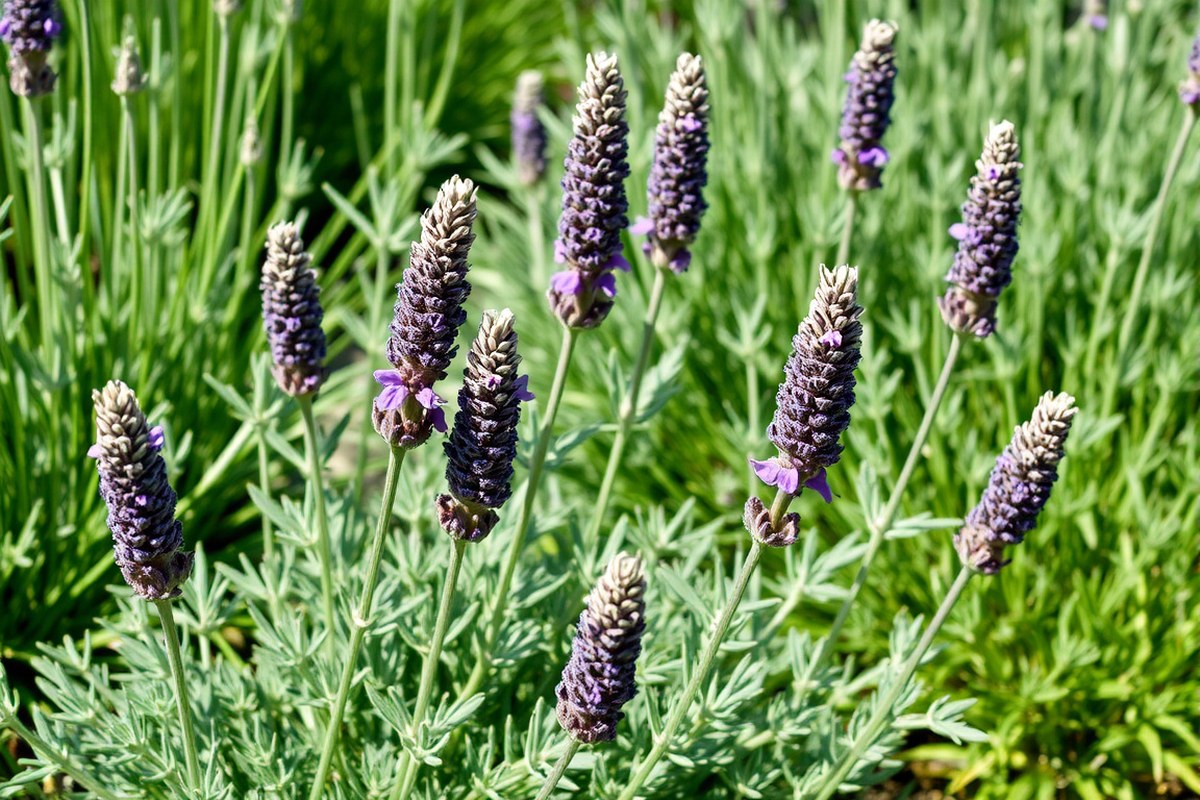
Lavender grows best with full sun exposure. Try to give your plant 8 to 10 hours of direct sunlight daily. Bright light encourages blooming and supports overall plant health.
Choose soil that drains well and is slightly alkaline. A pH between 6.7 and 7.3 suits lavender best. Sandy soil works well because it doesn’t hold water long, which prevents root rot.
Space plants 12 to 18 inches apart. This distance lets air move freely between them, lowering disease risk. Larger lavender types may need up to 24 inches for proper growth.
Water lavender only when the top 2 inches of soil feel dry. Established plants tolerate drought and dislike soggy soil. Overwatering can cause root problems and yellowing leaves.
In cooler climates, plant lavender after the last frost date. Lavender prefers warm temperatures but can handle some heat. Cold and wet conditions may stress the plant and slow growth.
Plant in pots with a soil mix that includes builder’s sand to improve drainage. Pick containers at least 18 inches wide to give roots room to grow. Keep pots in a sunny spot and avoid overwatering.
Which Lavender Varieties Should I Choose for My Climate?

You’ll find four main lavender types useful to compare: English, French, Spanish, and Lavandin. English lavender (Lavandula angustifolia) suits cold climates, hardy down to USDA Zone 5. It grows 2 to 3 feet tall.
It blooms in mid to late summer. The flowers have a strong fragrance and work well in cooking. French lavender (Lavandula dentata) prefers warmer climates, Zones 7 to 10.
It blooms longer but has a weaker scent. This makes it less ideal for cooking.
Spanish lavender (Lavandula stoechas) fits mild winters only and also likes Zones 7 to 10. It blooms earlier and lasts longer than English lavender. But it’s tender with unique topped flowers.
Lavandin (Lavandula x intermedia) hybrids are bred for more heat and cold tolerance. They grow about 3 feet tall and bloom in mid-summer. Their scent is strong but less sweet than English lavender.
For containers, English lavender works best because of its manageable size and growth rate. It forms neat mounds and grows well in pots, making it suitable for patios or balconies. Lavandin grows large, up to 4 feet wide.
It suits hedges or borders well. It spreads to create thick rows. Spanish lavender also fits warmer outdoor spots but rarely works in pots because it’s more delicate.
English lavender’s double bloom and rich scent make it top for culinary and dried flower uses. French lavender isn’t quite as fragrant or flavorful but adds ornamental variety with its fern-like leaves. Lavandin is used in soaps and perfumes for its strong, camphor-like smell.
It’s rarely used fresh in cooking. Spanish lavender’s flowers attract pollinators and add charm, but their scent is mild.
Choose based on your USDA zone and garden goals. You should pick English lavender ‘Munstead’ or ‘Hidcote’ if you live in Zones 5 to 7. They survive cold winters best.
In warmer Zones 8-10, French or Spanish lavender will thrive with proper sun and well-drained soil. Lavandin bridges climates but takes more space. Grow English lavender in pots for patios or lavandin for hedges in larger yards.
Plant lavender in fall in most zones. In very cold areas, spring planting is safer. This helps roots settle before summer heat.
When and How Should I Plant Lavender Outdoors or in Containers?
Plant lavender outside in spring, after the frost ends and soil warms. Use soil that drains well and leans slightly alkaline, with a pH near 6.7 to 7.3. Pick pots that are 12 to 16 inches wide, have holes for drainage, and fill with fast-draining soil mix.
Preparing the Planting Site
Loosen the soil 6 to 12 inches beyond where you plan to plant. This wide area helps roots spread deep and firm. Add lime if your soil is acidic to raise its pH to 6.7 to 7.3, the best range for lavender.
Choose a site with full sun and well-draining soil. Avoid places where water pools after rain. Both garden beds and containers need drainage to prevent root rot.
Planting Steps for Garden and Containers
Plant lavender about 12 to 18 inches apart in garden beds. This spacing lets air move freely and stops fungal problems. In containers, choose pots at least 12 inches in diameter to give roots room.
Use this step-by-step to plant lavender in your garden bed or container:
- Make a hole twice the width of the lavender’s root ball and about the same depth.
- Fill the hole with loose, slightly alkaline soil mixed with some sand for drainage.
- Place the lavender plant so its roots sit just below the soil surface.
- Backfill carefully, pressing soil around the roots to remove air pockets.
- Water gently but thoroughly to settle the soil around the plant.
- Mulch lightly with gravel or small stones to keep soil dry and stable.
Hardening Off Seedlings Before Transplant
Hardening off means slowly getting seedlings used to outdoor conditions. Start this two weeks before planting outside. It helps avoid shock from sun, wind, or temperature changes.
Take these steps to acclimate your lavender seedlings:
- Put seedlings outdoors in indirect sunlight for 1 to 2 hours the first day.
- Increase outdoor time by 1 to 2 hours daily, adding direct sun gradually.
- Bring seedlings inside if temperatures drop below 50°F at night.
- Keep evening temperatures moderate, avoiding harsh wind or frost.
- After about 10 to 14 days, plant seedlings in the garden or containers.
How Do I Propagate Lavender from Seeds, Cuttings, or Layering?
Lavender can be grown from seeds, cuttings, or layering. Seeds take longer and need extra care, while cuttings root faster. Layering works too but takes more space and time.
Starting Lavender Seeds Indoors
Lavender seeds need cold stratification to germinate well. That means chilling the seeds for 3 to 4 weeks before planting. After this, they sprout slowly, usually within 14 to 21 days at about 65° F.
Start by lightly covering seeds with sterile seed-starting mix. Keep the soil moist but not soggy during germination. Patience is key since seeds can be slow and uneven.
- Place seeds in a sealed bag with moist paper towel.
- Refrigerate the bag for 3 to 4 weeks (cold stratification).
- Fill seed trays with sterile seed-starting mix.
- Sow seeds on the surface, lightly cover with a thin soil layer.
- Keep the soil moist, avoiding overwatering.
- Maintain a temperature near 65° F.
- Wait 14 to 21 days for germination.
- Transplant seedlings when they develop 2-3 true leaves.
Taking and Rooting Stem Cuttings
Stem cuttings are the most common propagation method. Softwood cuttings taken in spring root faster but have lower success rates. Hardwood cuttings taken in spring or fall last longer but root more slowly.
Choose a healthy branch about 6 inches long. Remove the leaves on the lower half and dip the cut end into rooting hormone powder. Plant the cutting into moist potting soil or sand for best growth.
- Select a healthy 6-inch-long stem from lavender.
- Trim off leaves on the bottom half of the cutting.
- Dip the cut end in rooting hormone powder.
- Fill a pot with moist potting soil or clean sand.
- Insert the cutting about 2 inches deep.
- Keep soil moist and place in bright, indirect light.
- Wait 3 to 6 weeks for roots to develop.
- Transplant rooted cuttings into larger pots or outdoors.
Using Layering for Propagation
Layering works by bending a low branch to the ground. You scar the branch where it touches soil, encouraging roots to form. This method takes months but yields established plants.
Bend an 8-inch healthy branch in spring. Remove leaves where it contacts soil, then lightly scratch that area with a knife. Secure the branch with a pin or small rock and water regularly.
- Locate a low, healthy branch around 8 inches long.
- Bend it gently to touch the soil surface.
- Strip leaves off the section touching the soil.
- Lightly scratch the branch’s underside with a knife.
- Pin or weigh down the branch to keep soil contact.
- Water the area frequently, keeping soil moist.
- Wait up to 3 months for roots to form.
- Cut and transplant the rooted branch.
What Are the Best Practices for Watering, Feeding, and Pruning?
Newly planted lavender needs about 1 gallon of water once a week. This helps roots grow strong before the plant settles in.
Once established, water less often, about every two to three weeks during dry periods. Lavender hates wet feet, so always check soil moisture before watering again.
Feed lavender lightly with a balanced fertilizer like Miracle-Gro® Performance Organics® Blooms. Do this in early spring and mid-summer when plants bloom most.
Avoid heavy feeding, which can cause lush leaves but fewer flowers. A little goes a long way for healthy, fragrant blooms.
Prune lavender in early spring before new shoots appear. Cut back about one-third of the plant to keep a neat mound shape.
Stay clear of old, woody stems since pruning there can harm the plant. Use clean, sharp pruners to make smooth cuts that help healing.
Deadhead spent flowers regularly through summer. Snip right above the first set of leaves under the faded bloom. This encourages more flowers without stressing the plant.
Avoid pruning too late in fall. It can reduce winter hardiness and flower next season.
Overwatering can lead to root rot, while poor pruning causes leggy growth. Skip cutting into old wood to prevent damage. If your lavender gets woody, gently prune it over two or three seasons to revive it safely.
Use hand pruners with sharp blades to avoid crushing fresh lavender stems during cuts.
How Do I Harvest and Store Lavender Flowers for Best Use?
The best time to cut lavender flowers is early in bloom. Cut when just two or three flowers open on each stem. This gives the best flower quality and scent.
This timing helps keep the lavender’s scent and colour strong. It works if you want fresh or dried flowers. Picking too late weakens the scent and colour.
Cut lavender early morning after dew dries but before heat. This keeps the blooms crisp and gives the best fragrance. Avoid cutting when plants are hot.
Cut stems about 1/8 to 1/4 inch above new green growth to avoid damaging woody parts. Avoid cutting too low on older wood, since lavender does not regrow well from that. Use sharp pruning shears or a knife for cutting lavender stems.
Sharp tools make a clean cut that doesn’t crush the stem. Avoid dull tools to protect the plant.
To dry lavender, tie bunches of 10 to 15 stems with string. This keeps them together as they dry evenly and nicely. Don’t dry too many stems in one bunch.
Hang lavender bunches upside-down in a dark, well-ventilated place. Dark spots keep the colour; good airflow stops mould from forming. Avoid humid places that cause dampness when drying.
Drying takes about two to four weeks depending on humidity. Once dry, flowers still hold scent for up to a year if stored right.
Store dried blooms in airtight containers away from sunlight. Use glass jars or sealed plastic bags in a cool, dry cupboard.
Fresh or dried lavender flowers both add great flavour to baked goods, syrups, and teas. Culinary lavender varieties like English lavender tend to taste best.
- Check stems and pick those with 2 or 3 flowers open.
- Use sharp scissors or a harvesting knife to cut just above new green shoots.
- Gather 10 to 15 stems and tie loosely with natural string.
- Hang bunches upside-down in a dark, ventilated spot to dry.
- Wait 2 to 4 weeks until stems snap easily and flowers feel dry.
- Strip dried blooms off stems or leave bunches whole for decoration.
- Store dried lavender in airtight containers away from light and moisture.
- Use fresh or dried flowers in desserts, drinks, potpourri, or crafts.
What Common Pests and Diseases Affect Lavender and How to Manage Them?
Lavender faces few pests. But some insects like aphids, whiteflies, and spittlebugs may bother it. These pests usually cause only minor leaf damage, not serious harm.
You usually don’t need to treat them unless problems appear. Signs include sticky residue or growth that looks stunted. Treat only when these signs are clear and frequent.
Fungal diseases such as powdery mildew and root rot can cause bigger problems. Overwatering is the main cause of root rot and crown rot in lavender. The soil must drain well and never stay soggy to avoid these issues.
Look for signs of root rot by gently checking roots. They will be brown and mushy in bad cases.
Powdery mildew shows as white powdery patches on the leaves. Leaf spots may look like small brown dots, often on lower leaves.
Water lavender at the base only. Use drip irrigation or a watering can. This keeps leaves dry and helps prevent fungal infections.
Space plants well to boost air circulation. Avoid watering late in the day so the soil dries overnight.
Choose well-drained, sandy soil and plant lavender in full sun. This setup helps the foliage dry quickly after rain, which reduces disease risk. Mulching with small gravel or sand can reflect sunlight and reduce weeds near your plants.
For organic treatment, neem oil or insecticidal soap work well against aphids and whiteflies. Spray early in the morning once a week until the pests clear. For fungal problems, copper-based fungicides or homemade milk sprays can help control powdery mildew.
Remove affected leaves and prune overcrowded branches to improve airflow before spraying fungicides. Always test sprays on one plant first to check for damage. Dispose of fallen leaves away from your garden to avoid disease spread.
Contact a garden professional when plants keep wilting or dying. Home treatments may not fix serious problems. Get expert advice for stubborn issues.
Persistent root rot or infections like Xylella bacteria need special care and testing. A pro can diagnose accurately and suggest fungicides or other controls.
How Can I Protect Lavender During Winter or Harsh Conditions?
Protecting lavender in winter depends on your climate and planting method. Hardy types survive outdoors with mulch, while tender ones need indoor care. Containers require moving indoors or insulating to avoid root freeze.
Winter Protection for Garden-Bed Lavender
Mulch around lavender beds with 2 to 3 inches of straw or dry leaves. This keeps the shallow roots from freezing and damp soil from rotting the plant. Avoid wet mulch like fresh grass clippings since moisture can kill roots in cold weather.
Prune your lavender lightly by early fall to remove dead growth. Cut just above woody stems, not deeply, to avoid winter damage. Pruning too hard late can cause frost damage to the plant.
This injury reduces growth in spring. Avoid heavy pruning near the cold season.
In USDA zones 5 and 6, raised beds help prevent root rot. Use well-drained soil for your lavender here.
Wet winters increase rot risk without good drainage. For colder zones, choose hardier varieties or consider growing as annuals where winter kill is likely.
Overwintering Potted Lavender Indoors
Move lavender pots indoors before the first frost if you live in zones colder than 7. Put lavender where it gets lots of light from the sun. A south-facing window is a good choice.
Keep the room temperature around 50 to 60°F for best growth. Avoid warm rooms that encourage growth and stress the plant.
Water potted lavender only when the soil is dry to about one inch. Keep the soil slightly dry during winter months. This prevents too much moisture and root rot.
Overwatering causes root rot since the plant grows slowly in colder months. A cold garage or unheated basement can work if light is available.
To protect lavender roots outside in zones 5 to 6, wrap pots with bubble wrap. You can also put pots inside a box for extra warmth.
This insulation helps prevent frost damage. Bringing pots indoors eliminates the need for insulation but watch for dry air and pests inside.
Choosing Cold-Hardy Varieties for Your Zone
English lavender is the best choice for zones down to 5, tolerating -10 to -20°F cold. It grows well outside with proper care and mulch. Avoid Spanish or French lavender in these zones since they can freeze below 30°F.
Spanish and French lavender suit zones 8 to 9 with mild winters. These types have tender roots prone to frost damage and often need winter protection even outdoors. Container growing allows bringing these kinds inside for cold months.
Compact lavender varieties fit container growing and indoor moves well. They survive winters only if you provide shelter and avoid dampness. Know your zone to pick lavender that needs little fuss during cold weather.
Don’t let lavender sit in wet soil over winter. Dryness protects roots better than warmth.
Step-by-Step Action Plan to Grow Lavender
Follow these steps to plant and care for lavender successfully. You’ll know it’s working when your plants stay healthy and bloom well.
- Before planting: Choose lavender varieties suited for your climate. Check your USDA zone or local conditions to pick right.
- Day 1: Plant lavender in well-draining soil with full sun. Planting too deep or in shade slows growth.
- Week 1: Water newly planted lavender lightly but regularly. Soil should stay moist, not soggy.
- Month 1: Feed plants with a low-nitrogen fertilizer once. Too much nitrogen makes plants leggy.
- After 6 weeks: Prune lavender right after the first blooms fade. This helps keep the shape tidy and encourages new growth.
- During growing season: Watch for pests like aphids. Treat infestations early with soapy water sprays.
- Fall: Prepare for winter by adding mulch around roots if you live in cold areas. Avoid covering main stems.
- Year-round: Harvest flowers when buds open but before full bloom. Dry in a dark, airy spot for best scent.
Frequently Asked Questions
How Large Should My Container Be for Growing Lavender?
Use a container at least 18 inches wide to allow room for roots. Lavender plants grow about 18 inches wide.
They need space to grow well. This space helps keep them healthy.
How Much Space Does a Mature Lavender Plant Need?
Lavender grows in a circular shape roughly 1 to 3 feet wide. Giving your plant enough room helps good air circulation and stops overcrowding, reducing disease risk.
Can Lavender Survive in Humid Climates?
Lavender prefers dry air and minor humidity for best growth. High humidity and heavy rain cause root rot.
Choose varieties that suit your local climate. This reduces plant disease risks.
What’s a Good Temperature Range for Lavender to Grow?
Lavender grows best between 65 and 85 degrees Fahrenheit. This warm, Mediterranean-style climate helps plants thrive without excess moisture or cold damage.
How Long Does It Take for Lavender from Seed to Mature?
Lavender seed takes about 90 to 200 days to mature fully. Growing from seedlings is usually faster and easier for most gardeners because seeds germinate slowly.
How Big Do Lavender Bushes Typically Get?
Lavender bushes often grow up to 3 feet tall and wide. Knowing this lets you plan your garden space properly so plants don’t crowd each other.
Before You Go
Growing lavender well depends on proper planting, watering, and care. Start by picking the right variety for your area. Then plant and tend it following a simple plan to get strong, flowering plants.