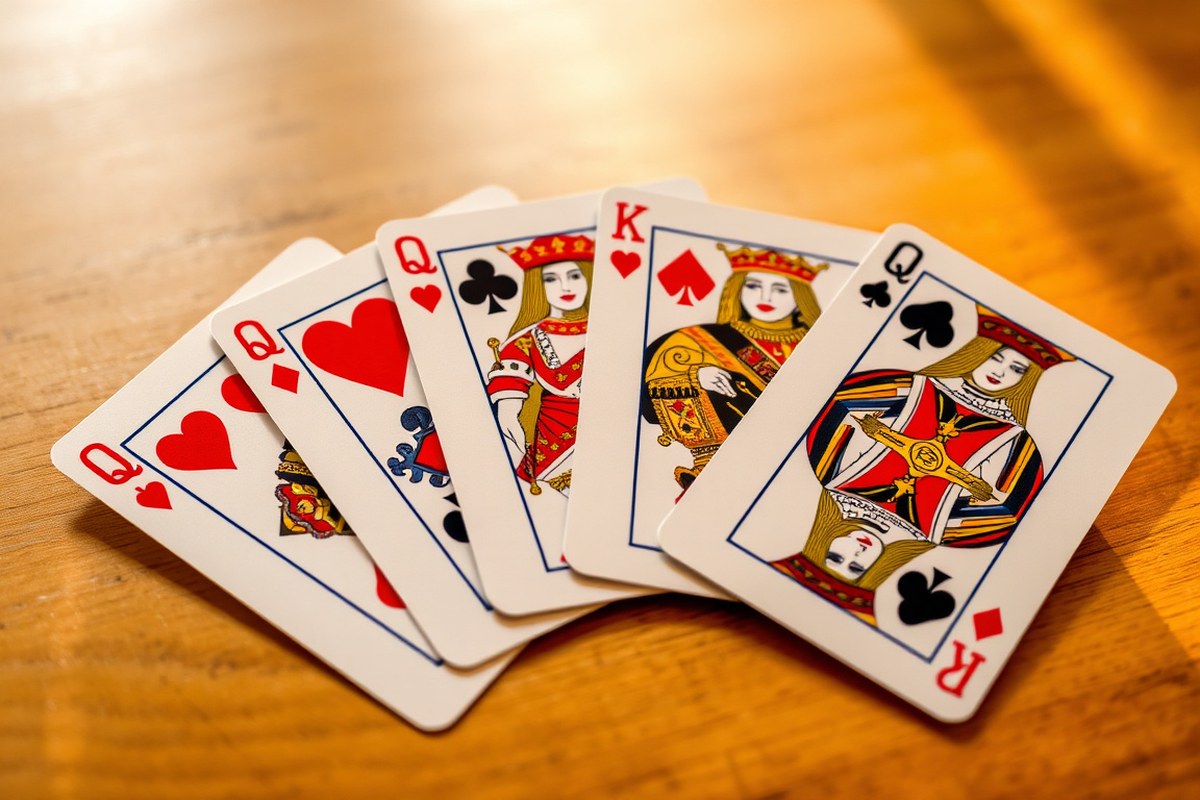
How Many Queens in a Deck – a Complete Guide with Key Facts and Tips
How many queens in a deck is a common question. A standard deck has exactly four queens. Each queen represents one of the four suits in the deck.
You get two red queens and two black queens in a full deck. Checking your deck for all queens first is helpful before playing card games. Missing cards, especially queens, can affect game fairness and scoring.
Knowing how many queens are in the deck helps you track face cards. You also need to know their suits. This makes it easier to find or count those cards.
Usually, you can spot queens easily by their unique pictures in the deck. This saves time and prevents game disputes over missing cards.
Key Takeaways
- A standard deck contains four queens, one in each suit.
- The two red queens belong to hearts and diamonds.
- The black queens belong to clubs and spades suits.
- Each suit has exactly 13 cards, including one queen.
- Besides queens, the deck has four jacks and four kings.
- Check your deck for all four queens before starting games.
How Many Queens Are in a Standard Deck of Cards?
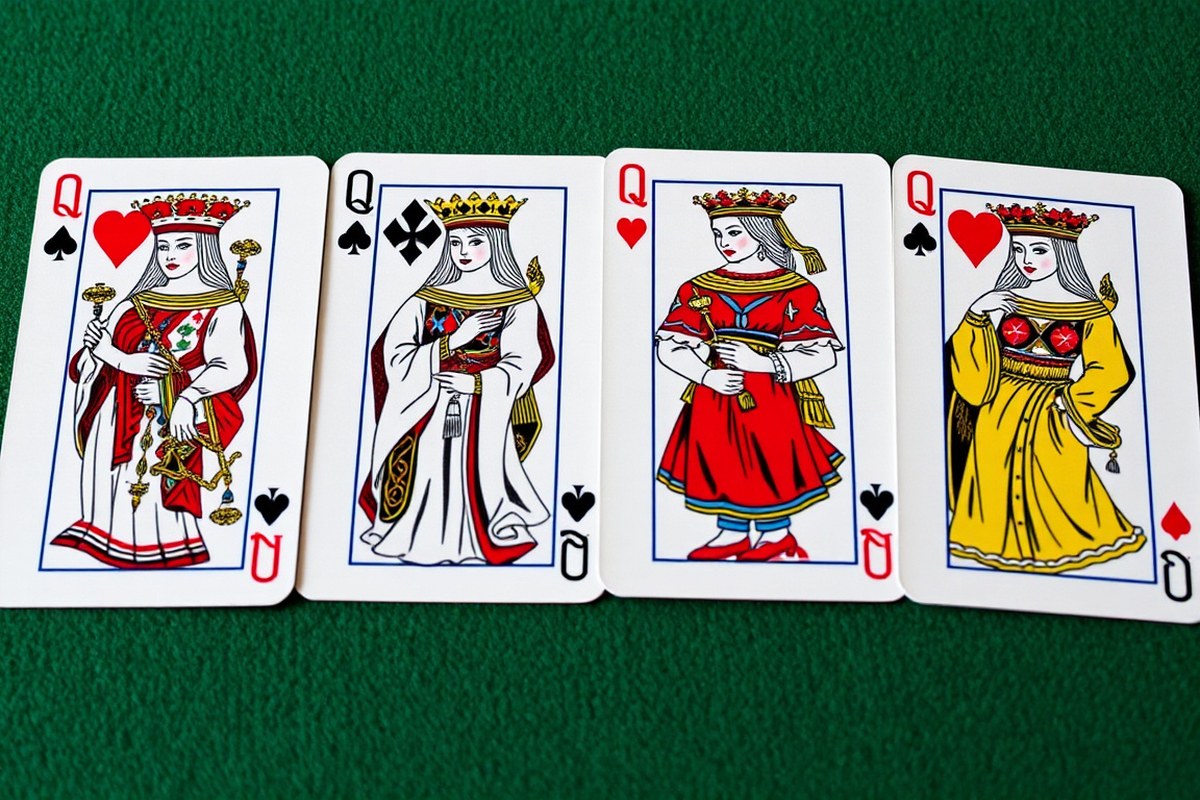
A standard deck of playing cards contains four queens. Each queen belongs to one of the four suits: hearts, diamonds, clubs, and spades. This means you have one queen from each suit in every full 52-card deck.
The four queens are equally represented. Each suit includes exactly one queen card, making no suit more common than the others. The deck splits into four suits.
Each suit has 13 cards. These cards run from Ace to King, including face cards like queens.
| Queen Card | Count in Deck |
|---|---|
| Queen of Hearts | 1 |
| Queen of Diamonds | 1 |
| Queen of Clubs | 1 |
| Queen of Spades | 1 |
Since the deck has 52 cards split into four suits, you get four queens total. Having one queen in each suit helps keep the game balanced.
Count or check your deck. You should only see four queens among face cards.
What Suits and Colors Do Queen Cards Have?
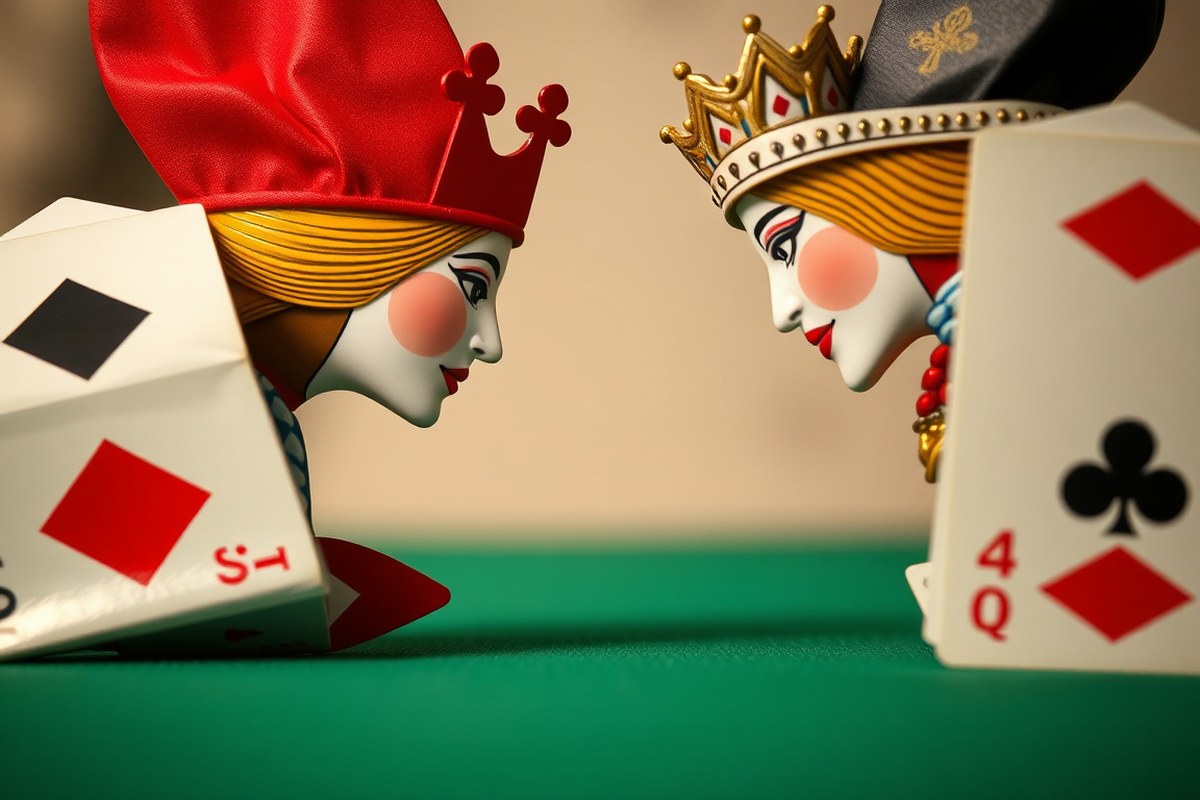
Each queen in a deck belongs to one of four suits: hearts, diamonds, spades, and clubs. The suits divide the deck evenly into red and black color groups. Hearts and diamonds are red, while spades and clubs are black.
Knowing the queen’s suit helps you quickly spot its color. This is useful in many card games where suit and color affect strategy.
The queen of hearts always goes with red cards. The queen of spades fits black cards.
| Queen Card | Suit | Color | Symbol |
|---|---|---|---|
| Queen of Hearts | Hearts | Red | ♥ |
| Queen of Diamonds | Diamonds | Red | ♦ |
| Queen of Spades | Spades | Black | ♠ |
| Queen of Clubs | Clubs | Black | ♣ |
The two red queens, hearts and diamonds, combine with 26 other red cards. They form half the deck’s cards by color. The two black queens join 26 black cards made up of spades and clubs.
Red queens are easy to spot among red cards during play. Black queens among black cards.
This split makes it simple to check the deck for missing cards by color and suit. It also helps when sorting or dealing cards.
Check your deck’s suits and colors often. Missing or damaged suits can ruin gameplay or cause confusion.
How Many Face Cards Are in a Deck Besides Queens?
Every suit in a deck has three face cards: a jack, a queen, and a king. You have four suits, hearts, diamonds, clubs, and spades.
So there are 12 face cards total. That breaks down to four jacks, four queens, and four kings.
The term “face cards” comes from the fact these cards carry human pictures. That is why they’re also called “court cards” or “picture cards.You’ll see the jack, queen, and king have detailed art.
They show people unlike the number cards. The number cards go from 2 to 10 and are called spot cards.
Spot cards are easy to spot because they only show the card’s number and suit symbol. Court cards often have intricate designs and sometimes mirrored designs on the top and bottom. These cards make up 12 of the 52 cards in the deck.
That’s about one in every four cards. You have a good chance to draw one.
Knowing how many face cards you have helps when you play games. Some games only count face cards for special moves or scoring. If you take the jacks, queens, and kings from a full deck, you get 12 cards.
These cards are face cards. They count as three ranks each with four cards.
“Court cards” is the more formal name, often used in printing and card design circles. The face cards come with fancy details and even historical or royal themes. Those details make face cards different from number cards.
Number cards are plain and show spots or pips. That’s why they are sometimes called “spot cards.”
Why Does Each Suit Have 13 Cards Including One Queen?
Each suit has 13 cards because the standard deck divides 52 cards into four equal groups. The queen is one of the three face cards in each suit, right before the king. This system is the same across all suits, keeping the deck balanced and easy to follow.
Historical Background of 13-card Suits
The 13-card suit traces back to early European decks, which were modeled after tarot cards. Decks split 52 cards into four suits based on the calendar year’s roughly 13 lunar cycles. This count made it handy for games and divination, keeping a consistent structure.
Over time, the 13 cards per suit became a standard in both playing and gambling cards. Players grew used to this uniform system.
It applied to both numbered and face cards. This setup also aligned with various cultural and practical uses around the world.
Ranking Order in Each Suit
Each suit orders its cards from Ace through 10, then the face cards: Jack, Queen, King. The queen stands as the second-highest face card, placed between the jack and king. This ranking is uniform across all suits, which ensures the same hierarchy everywhere.
The queen’s position corresponds to a middling royal rank, not the lowest or highest. Players often value the queen slightly more than the jack but less than the king. This setup simplifies comparisons and plays several roles in card games.
Symbolism Behind the Queen Position
The queen card usually represents a powerful female figure, fitting with traditional royal hierarchy. In many games, queens carry special significance or power, reflecting their improve rank. Their consistent placement in the 13-card suit helps players recognize their importance fast.
This symbolism connects with how face cards evolved over centuries. Artists and card makers cemented the queen’s identity to stand out visually and logically. The queen’s role also supports various strategies and magic tricks relying on face card recognition.
How to Verify Your Deck Has All Four Queens
To check for all four queens, take the queens out first. Look at those cards separately from the rest of the deck.
Count and identify each queen by their suit. This helps to spot any duplicates or missing cards quickly.
Step 1: Separate Queens from the Deck
Take your whole deck and spread the cards face up on a clean surface. Look for the queen cards, which show a woman’s portrait and a “Q” in the corner.
Collect these queen cards and place them in a separate pile. This makes it easy to count and check them.
Step 2: Identify Queens by Suit and Number
The deck’s four queens come from each suit: hearts, diamonds, clubs, and spades. Make sure you have one queen from each suit.
Count each queen one by one carefully. Name them in your head or on paper.
List queen of hearts, diamonds, clubs, and spades. There should be exactly 4.
Step 3: Confirm No Duplicates or Missing Queens
After you count the queens, compare them to your checklist of four suits. Look closely to make sure none look like fakes or different cards.
Finding fewer than four queens means your deck is missing cards. Missing one suit’s queen also shows the deck is incomplete. Duplicate queens can confuse gameplay, so spotting those is just as important.
- Shuffle the cards thoroughly to randomize their order.
- Lay the cards face up on a table for clear visibility.
- Scan the deck to find all cards marked with “Q.”
- Set aside the queens as you spot them.
- List the suits you have: hearts, diamonds, clubs, spades.
- Check that each suit has exactly one queen card.
- Look closely for counterfeit marks or unusual wear.
- Return the queens to the deck once verified, or replace missing cards if needed.
Keep your deck in a clean, dry place to avoid warping or fading. Worn cards can make it hard to spot missing queens accurately.
What Is the Probability of Drawing a Queen from a Full Deck?
The chance of drawing any queen from a full 52-card deck is 4 out of 52. Since there are four queens in the deck, you simplify 4/52 to 1/13. This means you have a roughly 7.7% chance of drawing a queen with every random card draw.
For example, say you shuffle the deck well and pick one card. The probability it is a queen is 1 divided by 13.
So across 13 draws, you’d expect about one queen to appear on average. This works because every card has an equal chance of being picked.
When the deck is incomplete, your odds change depending on how many cards remain. For instance, if 12 cards are missing but all four queens remain, your chances go up. You have four queens out of 40 cards.
That’s 4/40, which equals 1/10. So, you have a 10% chance.
Some queens may be taken out. Adjust your count for this. Suppose two queens are missing from a 52-card deck.
Your chance drops to 2 queens out of 52 cards, or 2/52. This simplifies to 1/26, about a 3.9% chance.
Drawing a red queen means selecting either the queen of hearts or the queen of diamonds. There are two red queens in the deck.
That gives you 2 out of 52 chances, simplifying to 1/26. The same works for black queens, clubs and spades, two black queens with a 1/26 chance.
Factors like incomplete decks or removed cards affect these odds directly. The fewer cards you have, the larger the fraction becomes if all queens remain. Some queens might be missing.
That lowers your chance. Always count the queens and total cards before calculating probability.
To estimate your chance, use this formula. Divide queens in the deck by cards left. For example, if three queens remain in a 50-card deck, your chance is 3/50.
This formula shows if you can expect queens or not. It depends on the deck’s current state.
How Do Queens Function in Popular Card Games?
Queens hold important roles in many popular card games. They often rank high and can influence strategy significantly. Knowing how queens work helps you play smarter and make better choices.
Queens in Poker and Blackjack
In poker, queens are high-ranking face cards, just below kings and aces. Holding a queen can help form strong hands like pairs, two pairs, or a full house.
A queen adds value to straights and flushes. It is a key card to watch for.
Blackjack treats queens as cards worth 10 points each, just like kings and jacks. This makes queens valuable when trying to reach a total of 21 without going bust.
Use queens to build a strong hand quickly. Stand if your total nears 21.
Queens in Bridge and Rummy
Bridge ranks queens as important middle cards that help build winning tricks. They count for points and can win a trick when higher cards have already been played. It helps to keep track of which queens have appeared to better predict others’ cards.
In rummy, queens are part of building sets or runs. They can complete a sequence of queens or be grouped with other face cards.
Queens help you form stronger melds fast. This lets you score points sooner.
Special Roles in Themed or Trick-Taking Games
Some games give queens special powers or values beyond their rank. In Hearts, the queen of spades carries a heavy penalty.
Holding it changes the game. Playing that queen at the right time is key to avoiding extra points you don’t want.
Queens can work as unique markers. They also act as wild cards in some decks.
They might be used to trigger special actions or break ties. Understanding if queens have extra roles can shape your overall game plan and strategies.
Variations of Queen Cards in Non-Standard Decks
Decks with jokers usually still have the same number of queens as standard decks. Jokers add variety but don’t include extra queens. Some specialty decks combine more than one standard deck.
This means queens add up with each deck included. You get more queens total the more decks used.
In games like Pinochle and Euchre, the deck size and queen cards change. Pinochle decks have two copies of each card from 9 to Ace. So there are eight queens total.
Euchre uses a reduced deck with only 24 cards, including just four queens. These changes affect how many queens you’ll see during play.
| Deck Type | Total Cards | Number of Queens |
|---|---|---|
| Standard 52-card deck | 52 | 4 |
| Standard + 2 Jokers | 54 | 4 |
| Pinochle deck | 48 | 8 (two sets) |
| Euchre deck | 24 | 4 |
| Double standard deck | 104 | 8 |
Specialty decks often change queen designs or add new queen cards. Collectible decks might feature artwork variations on the queens, changing faces or costumes. Some themed decks add “queen” cards representing characters beyond traditional suits.
To find queens in specialty decks, look for cards with a “Q” or the word “Queen.” Some decks use numbers or symbols instead, which makes spotting queens harder. Checking the deck’s guide or box helps identify any added or changed queen cards.
Keep track of how many queens you expect before playing. Specialty decks can surprise you with extra or altered queens.
Step-by-Step Action Plan for Improving Your Card Game Knowledge About Queens
Use this plan to get familiar with queen cards in any deck today. Follow these clear steps to build your confidence quickly.
- Before you start: Grab a standard deck of playing cards. Check that it has four queens to begin.
- Day 1: Sort the queens by their suits, hearts, diamonds, clubs, and spades. Notice the colors and designs on each.
- Day 2: Identify all face cards in the deck. Count the jacks, kings, and queens in the deck. See how many face cards you find. Knowing this helps you understand the deck better.
- Day 3: Play Go Fish. Notice how queens change your chance to win. Queens can affect the game a lot.
- After one week: Check if the deck is complete. Look for queens and other cards. This builds your skill with decks. Learn to spot missing cards quickly.
- After two weeks: Play Hearts or a game with queen rules. See how queens change the game flow. Watch carefully how the game feels.
- After one month: Experiment with decks that have extra or different queen cards. Notice how game rules might change.
Frequently Asked Questions
How Many Queens Are in a Deck of Cards?
A regular 52-card deck includes four queens, each in a different suit: hearts, diamonds, clubs, and spades.
Can Queens in a Deck of Cards Have Different Designs?
Yes, designs vary by deck brand and theme. Some decks feature artistic or themed queens.
Are Queens Ranked Higher Than Other Face Cards in Card Games?
It depends on the game rules. In some games, queens rank below kings but above jacks.
Do Jokers Ever Replace Queens in Card Games?
Jokers usually act as wild cards, not as queen replacements. They have special roles depending on the game.
How Many Queens Are in Two Standard Decks Combined?
Two decks combined have eight queens total, four in each deck. This is useful when playing multi-deck games.
Can a Deck Have Fewer Than Four Queens?
Yes, incomplete or altered decks might miss queens. Always check to avoid missing cards before playing.
Final Thoughts
There are always four queens in a standard deck, one for each suit. Knowing this helps you play smart and spot missing cards fast. Try handling the queens yourself in a game today to see how they matter.