How Tall Will Sweet Peas Grow? A Complete Guide to Their Heights and Growth
How tall will sweet peas grow depends mainly on their variety. Most sweet peas reach between 3 and 6 feet tall.
But some types can grow even taller. For instance, Grandiflora and Spencer varieties often climb up to 6 feet or more.
Smaller, compact sweet peas only get about 1 to 3 feet tall. Choosing the right variety is your first step to getting the height you want. Watching their growing conditions also matters because soil and sunlight affect their growth.
Planting sweet peas in rich soil and full sun helps them reach their full height. Providing supports like trellises encourages tall varieties to climb well. Start by picking the right spot and variety based on your height goals.
Key Takeaways
- Grandiflora sweet peas can grow up to 6 feet tall or higher.
- Dwarf varieties usually reach only 1 to 3 feet tall.
- Most heirloom and Spencer types grow between 6 and 8 feet tall.
- Full sun and fertile soil help maximize your sweet peas’ height.
- Provide trellises or supports for climbing sweet pea varieties.
- Choosing your variety first sets your height expectations correctly.
Typical Height Ranges of Sweet Peas by Variety
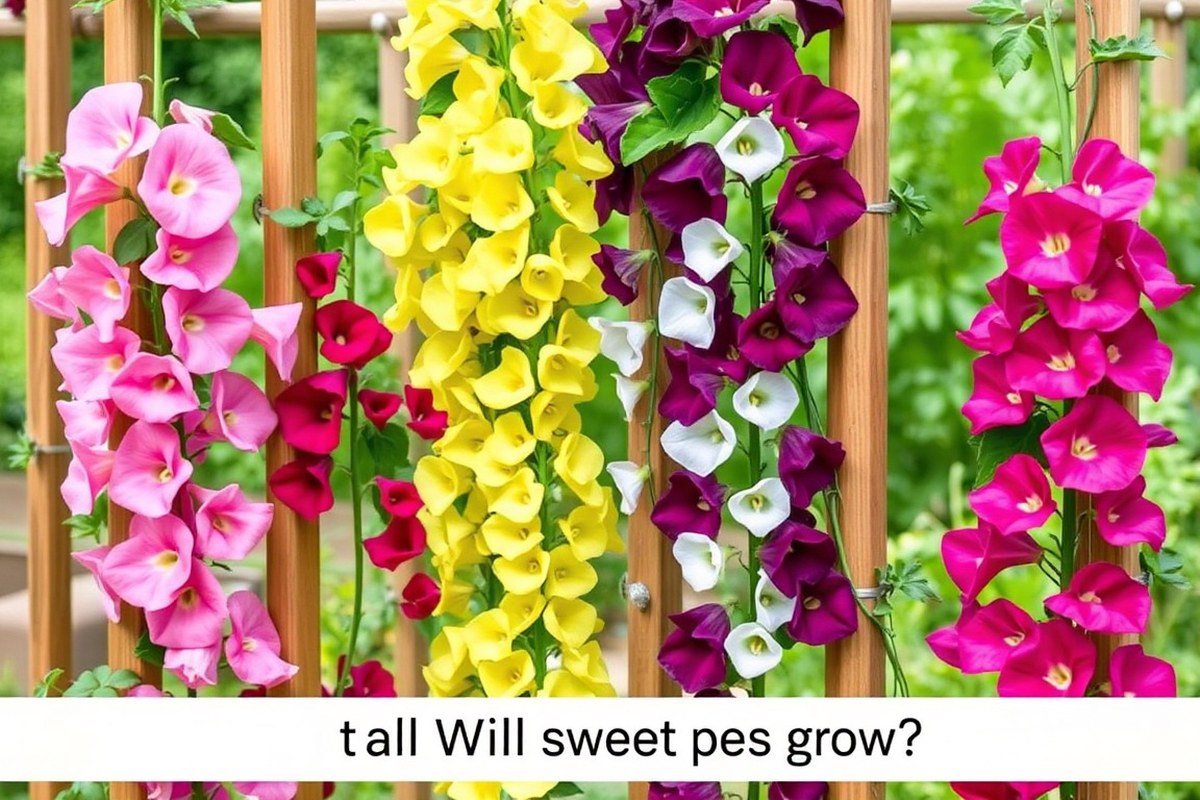
Sweet peas grow in a wide range of heights depending on the type. Dwarf varieties stay small, perfect for pots and small gardens. Climbing types usually reach several feet tall and need support to thrive.
Most sweet peas grow between 3 and 6 feet tall with a trellis or fence. Some vigorous climbing cultivars can reach 8 feet or more. The tallest types sometimes grow close to 10 feet if conditions are ideal.
| Variety | Typical Height | Description |
|---|---|---|
| Dwarf | 1-2 feet (0.3-0.6 meters) | Compact and bushy; good for containers and small spaces. |
| Floribunda | 3-4 feet (0.9-1.2 meters) | Clustering smaller blooms, suitable for garden beds and cutting. |
| Grandiflora | Up to 6 feet (1.8 meters) | Largest, most fragrant flowers; needs trellis or tall support. |
| Spencer | 5-6 feet (1.5-1.8 meters) | Large, fragrant blooms; often considered premium sweet peas. |
The tallest sweet peas, like many Spencer types, can grow 8 feet or more. You’ll want a strong trellis or structure for these vigorous climbers. Dwarf types won’t climb, so they don’t need supports.
Choose your sweet pea variety based on the space you have. Tall varieties create dramatic displays on fences or arbors. Shorter plants fit well in containers or tight garden spots without sprawling.
How Soil, Light, and Climate Affect Sweet Pea Height

Sweet peas need rich, well-draining soil to reach their full height. A soil rich in organic matter supplies nutrients. Compost or well-rotted manure works well.
This type of soil helps these plants grow strong. Heavy clay soil holds too much water. Sandy soil drains too fast.
Both stunt plant growth. You can improve poor soil by mixing in 2 to 4 inches of compost before planting. Well-prepared soil encourages strong root systems, which support taller, healthier vines.
These flowers need full sun to grow well. Give them six to eight hours of sun. They thrive with direct sunlight daily.
Without enough light, sweet peas grow weak and stay shorter, often under three feet. Morning sun and some afternoon shade helps in hot spots. This setup keeps flowers from overheating.
It works well in hot climates. Thin, spindly stems mean they need more sun. More sun helps them grow to 6 to 8 feet tall.
Consistent watering makes a big difference in sweet pea growth. They like moist but not soggy soil. Water deeply once or twice a week.
The weather decides how often you water. During hot, dry spells, more frequent watering is necessary to avoid stress and stunted growth.
Temperature affects their height too. Sweet peas prefer cool weather between 55°F and 70°F. Too hot, above 80°F regularly, slows growth and may shorten the plant.
Keep soil evenly moist but never waterlogged to prevent root rot and poor height growth.
Choosing and Preparing the Best Sweet Pea Varieties for Height
Choosing and Preparing the Best Sweet Pea Varieties for Height
Select sweet pea varieties that naturally reach the height you want. Tall varieties will grow 5 to 8 feet. Dwarf types usually stay under 2 feet.
Preparing your seeds well helps them sprout faster and stronger. Soaking seeds for a day softens their tough coating for quicker germination.
How to Identify Tall Sweet Pea Varieties
Tall sweet peas often belong to climbing types, not the dwarf or bush varieties. They usually need support like trellises or fence wires to reach full height.
Look for varieties described as “tall,” “climbing,” or “vining” on seed packets or plant tags. Examples include ‘Old Spice,’ ‘Royal Wedding,’ and ‘Matucana.’
Dwarf varieties like ‘Little Sweetheart’ won’t grow tall no matter how much care you give. Their growth stays compact to fit small spaces or containers.
Seed Soaking and Pre-Sowing Preparation
Soaking seeds before planting encourages quicker sprouting, especially for tall types that take longer to grow. It’s an easy step that improves your chances. Here’s a simple soaking method to try before planting your sweet peas:
- Place seeds in a bowl or container.
- Cover them with lukewarm water, about room temperature.
- Let seeds soak for 12 to 24 hours but no longer.
- Drain the water and gently pat seeds dry with a paper towel.
- Sow the seeds promptly in well-draining soil or seed trays.
This method costs nothing and only takes a day. Seeds often sprout faster and with fewer failures.
Variety Selection for Different Garden Spaces
Tall sweet peas need more room for roots and vertical support. Space plants 6 to 8 inches apart and use tall trellises or nets.
Dwarf varieties suit small yards, balconies, or containers. They do well with 3 to 4 inches between plants and no extra support.
If you want taller growth from dwarfs, it won’t happen. Their genetics limit height. Focus instead on healthy soil and watering for best blooms.
When and How to Sow Sweet Peas for Optimal Height
Sow sweet peas about 4 to 6 weeks before your last spring frost. Plant seeds 1 inch deep and 4 to 6 inches apart for strong, tall plants. You can start them indoors or sow directly outdoors depending on your climate.
Timing Sweet Pea Sowing by Climate Zone
In most regions, sow sweet peas in late winter to early spring. This means about 4 to 6 weeks before your last expected frost date. Starting this early helps the plants develop strong roots before the warm weather arrives.
Colder climates should start seeds indoors earlier, sometimes as early as November to January. You want the plants ready to transplant outdoors by early spring. Warmer regions can sow seeds directly outdoors in autumn or early spring.
Seed Depth and Spacing Recommendations
Plant sweet pea seeds around 1 inch (2.5 cm) deep to protect them from drying out. Space each seed about 4 to 6 inches (10 to 15 cm) apart to avoid crowding. Crowding forces the plants to stretch for light, making them weak and spindly.
Leaving enough space also lets vines grow wide and tall naturally. A thick layer of mulch helps soil stay moist and warm. Use about 6 to 9 inches of straw for best results.
This keeps the soil comfortable after sowing. Moist soil supports faster and taller growth.
Indoor Starting vs. Direct Sowing Effects
Starting seeds indoors lets you control temperature and moisture early on. This often leads to stronger plants that grow taller after transplanting. Start seeds indoors 4 to 6 weeks before your last frost.
Then move seedlings outside in early spring. This gives plants a strong start.
Direct sowing outdoors works well in mild climates. Water seeds deeply after planting and cover with straw mulch.
This protects seeds from cold and keeps moisture in. Direct sowing plants usually catch up quickly if conditions stay favorable.
Follow these steps to sow sweet peas for tall, healthy growth:
- Check your local last frost date to time sowing properly.
- Soak seeds overnight to speed up germination, if desired.
- Prepare soil by loosening it and adding compost for nutrients.
- Plant seeds 1 inch deep and 4 to 6 inches apart.
- Water seeds thoroughly after planting to settle the soil.
- Cover outdoor seeds with 6 to 9 inches of straw mulch.
- Start indoors using small pots for easy handling. Keep seedlings between 55 and 65°F to grow well. This helps young plants stay healthy before transplanting.
- Harden off indoor seedlings for 1 week before transplanting outdoors.
Supporting and Training Sweet Peas to Maximize Height
Sweet peas grow tall only if they have strong support to climb. Trellises or stakes let the vines stretch upward and avoid sprawling. Tying vines gently to these supports helps them grow tall without breaking.
Best Trellis Types for Climbing Sweet Peas
Wooden lattices, wire trellises, and bamboo canes all work well for sweet peas. Choose a trellis at least 6 to 8 feet tall. This size suits taller varieties like Spencer sweet peas.
It helps them climb well. The support should be sturdy enough to hold heavy vines during wind or rain.
Material matters because rough surfaces give tendrils something to grip. Smooth plastic or metal might let vines slip.
Trellises that allow airflow reduce mold risk and keep plants healthy. You can also use tomato cages or garden netting if fixed tightly in the soil.
Training Sweet Pea Vines Step-by-Step
Start training vines when they are about 6 inches tall. Gently guide each stem to the support. Tie each loosely with soft garden twine or old cloth strips.
This keeps them secure but not tight. Avoid tight ties that cut into the stem and slow growth.
Check vines weekly and adjust ties as plants grow longer. Use your fingers to wrap tendrils around twine or support bars. Do this when needed.
It helps the vines climb naturally. Remove any broken or weak stems to keep energy focused on strong growth.
Spacing and Tie Materials for Healthy Growth
Space sweet pea plants 6 inches apart. This gives each vine room to climb. It also prevents crowding.
Supports should be anchored firmly and set 12 to 18 inches apart to hold vines evenly. This spacing helps air circulate and prevents fungal problems.
Good tie materials are soft and flexible, like garden twine, cotton strips, or old pantyhose. Avoid wire, string, or anything rough that can cut the stems. Replace ties regularly to prevent damage and check that plants aren’t too tightly bound.
- Use 6, 8 foot tall trellises for tall varieties
- Choose rough surfaces for better vine grip
- Tie vines loosely with soft twine or cloth strips
- Space plants 6 inches apart and supports 12, 18 inches apart
- Guide tendrils weekly to prevent sprawling
- Adjust ties to avoid stem damage
- Remove weak stems to focus on strong growth
Loosely tied vines grow taller and avoid stem breakage better than tightly bound ones.
Pruning, Pinching, and Deadheading Effects on Plant Height
Pruning sweet peas can help control their height while boosting flower production. Pinch tips when plants grow 6 to 8 inches tall. This stops them from becoming too tall.
It also makes the plants bushier. Deadheading spent flowers redirects the plant’s energy toward making more blooms instead of seed pods.
By cutting back select stems, you prevent overcrowding and improve airflow. This helps plants grow taller and healthier without wasting energy on too many unnecessary shoots.
But pruning too much or cutting too low can stress the plants and reduce blooms. So it’s best to prune gently and carefully.
Follow these steps to prune, pinch, and deadhead your sweet peas:
- Check your plants when they reach 6 to 8 inches tall.
- Pinch off the top 1 inch of each central stem with your fingers.
- Trim away any weak, yellowing, or overcrowded side shoots.
- Remove spent flowers as soon as they fade, cutting just above a leaf joint.
- Repeat pinching every 2 to 3 weeks to keep plants bushy but not too tall.
- Watch for over-pruning signs like slowed growth or fewer flowers.
- Adjust pruning frequency depending on how fast your plants grow.
Pinching makes the plant send energy to side shoots, creating more flower stems. Deadheading keeps the sweet peas focused on blooming, not seed production.
Regular trimming controls height without harming the plant. But overdoing it causes fewer flowers and weaker stems.
Growing Sweet Peas in Containers and Controlling Height
Yes, you can grow sweet peas successfully in containers. The container size changes how tall the plants will grow. Larger pots give roots more room, letting plants reach 6 to 8 feet in height.
Use a pot that’s 12 inches wide. It should be 12 inches deep too. This size fits one or two plants well.
Make sure it has drainage holes to avoid waterlogging. Smaller containers tend to limit root space. So sweet peas stay shorter, around 3 to 4 feet tall.
Keep the soil moist but not soggy. Hot, dry conditions in containers can stress plants, causing shorter growth. Refresh the soil with balanced fertilizer every 3 to 4 weeks to support tall, strong stems.
You also need good supports because sweet peas climb vigorously. A sturdy trellis or cane support that stands 6 to 8 feet tall works best. Put the support firmly into the pot.
Make sure it won’t tip over. The plant will get heavier as it grows.
For extra security, tie stems gently to the support with soft garden ties or string. This helps the plant climb straight and avoid tangling or breaking. Choose a short trellis if your container is small.
A wigwam-style support about 3 feet tall works well. Match it to your plant’s size.
Make sure the container sits somewhere with full sun, at least 6 hours daily. Sweet peas need this light for the energy to reach taller heights. In hotter zones, some afternoon shade helps reduce plant stress and keeps stems from becoming brittle.
Regular watering is critical. Pots dry out faster than garden beds, which can stunt growth and reduce height. Check soil moisture often, especially during warm spells, and water deeply when the top feels dry.
With these steps, you can control how tall sweet peas grow in containers. Use bigger pots and stable supports.
Add rich soil and water steadily. This helps you grow tall sweet peas on your patio.
Common Growth Problems That Limit Sweet Pea Height
Sweet peas often stop growing tall because of poor soil or watering problems. They need rich soil full of organic matter and good drainage. Otherwise, roots might rot or plants get weak, which stunts growth.
Too much water or heavy clay soil can keep roots wet and cause root rot. On the other hand, dry soil stops plants from growing higher.
Water sweet peas deeply once or twice a week, letting the soil dry lightly between. Use compost or manure to make soil loose and healthy.
Pests like aphids, slugs, and snails also slow growth by eating leaves or sucking sap. Aphids cluster on stems and leaves, making plants weak. Slugs and snails leave shiny trails and chewed edges on leaves.
Diseases like powdery mildew look like white powder spots on leaves. They hurt the plant’s ability to grow well.
- Check soil moisture regularly, avoid soggy or dry soil
- Look for aphids on new shoots and treat early
- Handpick slugs and snails or use safe baits
- Use fungicides or remove mildew-infected leaves
- Improve soil with compost every season
- Provide support to let stems grow straight up
- Remove crowded plants to improve air circulation
Keep soil moist but never waterlogged to prevent root rot and weak growth.
Good soil and steady watering help sweet peas reach 3 to 7 feet tall. Watch for pests and diseases that reduce vigor. Early control keeps your plants strong and growing tall.
Step-by-Step Action Plan to Grow Tall Sweet Peas
Follow these steps to grow sweet peas that reach their full height potential. Each step includes a simple check to see if it worked.
- Before Planting: Choose tall sweet pea varieties like ‘King Edward’ or ‘Painted Lady.’ You’ll see variety labels indicating expected height.
- Day 1: Soak seeds overnight to improve germination. Seeds will swell and feel softer when ready to plant.
- Week 1: Sow seeds 1 inch deep in fertile, well-drained soil with full sun exposure. Check soil moisture stays even but not soggy.
- After 2 Weeks: Install sturdy supports like trellises or pea sticks to encourage upward growth. Plants will begin climbing supports by this time.
- Week 3: Pinch off the top shoot when plants reach 6 inches. This helps side shoots grow. You will get more flowers without making plants shorter.
- Week 5: Start deadheading faded blooms regularly to redirect energy to growth. Notice new buds forming and stronger stems.
- Throughout Growing Season: Keep the soil moist all the time. Feed plants with balanced fertilizer every 4 weeks. This helps steady growth.
- Late Season: Protect plants from extreme heat or pests to avoid stunted height. Plants should still look healthy and growing tall.
Frequently Asked Questions
How Tall Can Grandiflora Sweet Peas Grow?
Grandiflora sweet peas can reach up to 6 feet tall. They work well on trellises or garden structures for support.
What Height Do Dwarf Sweet Pea Varieties Typically Reach?
Dwarf sweet peas usually grow between 1 and 3 feet tall. They are perfect for small spaces and container gardening.
Can Sweet Peas Grow Taller Than 6 Feet?
Yes, some vigorous sweet pea varieties can grow over 8 feet with proper care. They usually need very sturdy support to hold this height.
Do Spencer Sweet Peas Require Special Support to Grow Tall?
Spencer sweet peas grow around 5 to 6 feet tall and need trellises or stakes. Adding strong support helps keep plants upright and healthy.
Why Do Sweet Peas Sometimes Only Reach About 3 Feet?
Sweet peas often remain shorter if they get less sunlight or poor soil. Full sun and good soil are key for taller growth.
Can Pruning Sweet Peas Increase Their Height?
Pruning encourages bushier plants and more flowers, but it doesn’t make plants taller. It helps sweet peas grow fuller instead of taller.
Before You Go
Sweet peas can grow over 6 feet tall with the right care and variety. Start by picking tall types and giving them good soil and supports. Watch them climb and bloom through the season.