Does Lavender Grow in Pots? Expert Tips and Proven Care Guide
Yes, lavender grows well in pots if you get the basics right. It needs plenty of sunlight and good drainage to prevent root rot.
Choose a spot with at least six hours of direct sun. Sunlight keeps lavender strong and healthy.
Using the right soil mix makes a big difference. Lavender prefers soil half organic matter and half gritty materials like perlite or clay. This helps water drain well.
Select a pot 12 to 16 inches wide with drainage holes. Terracotta or clay pots are best for breathability.
With proper soil and pot size, lavender’s roots have room to spread. Keep the plant in full sun.
Water just enough to keep soil barely moist, not soggy. This setup helps lavender thrive in containers, indoors or outdoors.
Key Takeaways
- Choose pots that are 12 to 16 inches wide with drainage holes for lavender roots.
- Use a soil mix of 50% compost and 50% perlite or calcined clay for drainage.
- Set your lavender pot in a location where it receives plenty of sunlight. It needs six hours or more of direct sun every day. This helps it thrive.
- Unglazed terracotta pots help by allowing soil to dry evenly and let roots breathe.
- Water just enough to keep soil slightly moist but never soggy to prevent rot.
- Space pots 18 inches apart to allow airflow and reduce fungal problems.
Can Lavender Thrive in Pots and Containers?

Lavender grows well in pots when you meet its simple needs. Containers let you control soil quality, drainage, and sunlight better than planting in the ground. This control helps especially if your garden soil is poor or lacks sun.
Lavender in pots requires at least six hours of direct sunlight daily. Good drainage is important.
So pick a pot with drainage holes and use a well-draining soil mix. Clay or terracotta pots are excellent choices since they breathe and help prevent soggy roots.
Unlike ground planting, potted lavender needs more careful watering. Overwatering can cause root rot because water drains slower in pots.
Water deeply but infrequently, allowing soil to dry out between waterings. In the ground, lavender benefits from deeper roots and natural rain cycles.
Temperature swings affect potted lavender more than those in the ground. Pots heat up and cool down faster, which stresses the plant if exposed to freezing weather. Protect potted lavender during cold months with insulation or by moving it indoors in colder climates.
Pots need to be at least 12 inches wide for lavender. Use good soil with proper drainage to avoid soggy roots. Give your plant enough sunlight and water it regularly for success.
You also need to prune regularly to keep the plant compact. Small, dwarf, or compact lavender varieties tend to do best in containers.
Growing lavender in pots costs little beyond the pot and quality potting soil. It takes around 15 minutes weekly to check water and remove dead flowers.
Good results show lush, fragrant blooms and healthy, gray-green leaves. Yellowing leaves or mildew mean too much moisture or poor air circulation.
Choosing the Best Lavender Varieties for Pots
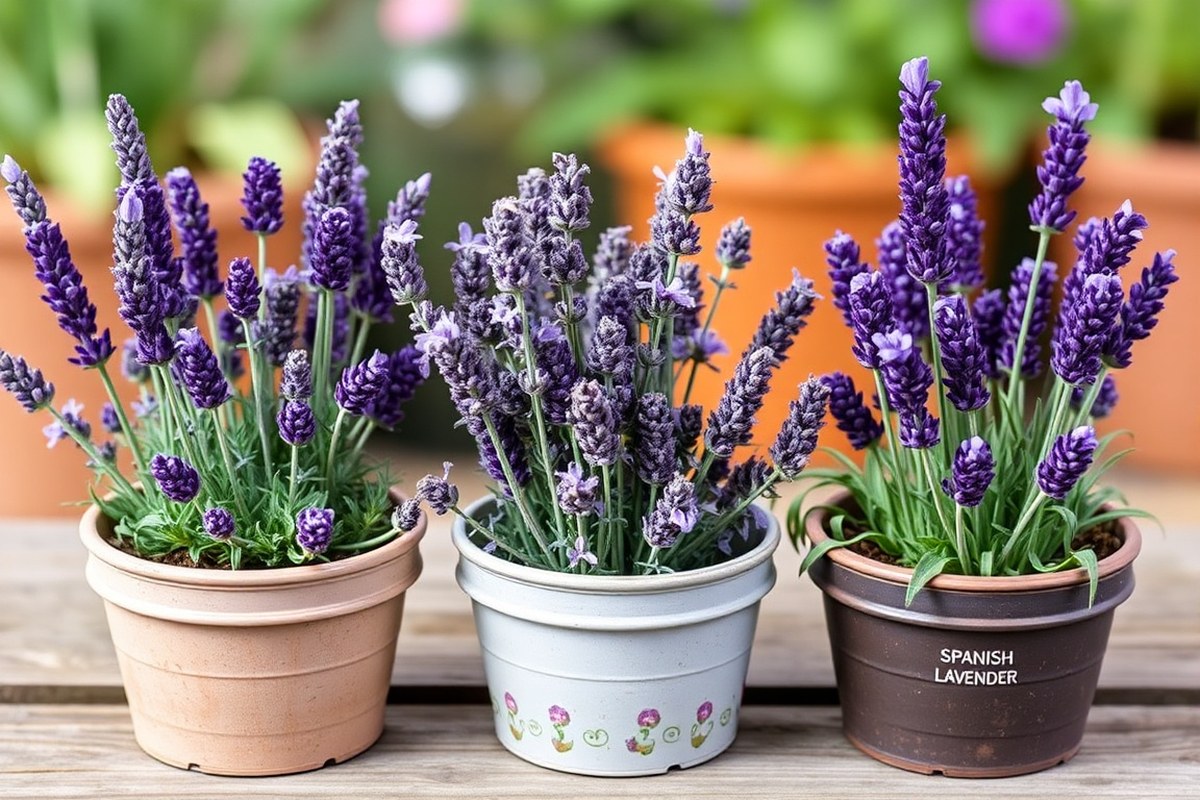
Choosing the right lavender variety helps your pot plants thrive. Compact and dwarf types fit well in containers. They don’t outgrow the pot quickly.
These types work best for container growing. Spanish lavender stays under 9 inches tall, making it perfect for small pots or indoor spots.
English lavender has dwarf cultivars like Munstead and Hidcote that suit container growing. These varieties keep a bushy shape and deliver strong fragrance. They handle pot boundaries well.
They offer good oils for cooking or crafts. Lavender is great for these uses.
French lavender also has compact varieties great for pots, especially in colder zones. They handle mild winters well when planted in containers that get some protection. Choosing lavender based on your USDA zone and pot size ensures the best growth and health.
| Lavender Variety | Size at Maturity | Hardiness (USDA Zones) | Lifespan in Pots | Best Pot Size (Inches) |
|---|---|---|---|---|
| Spanish Lavender | Up to 9 inches | 8-11 | 3-5 years | 6-10 |
| English Lavender – Munstead | 12-18 inches | 5-8 | 5-7 years | 12-16 |
| English Lavender – Hidcote | 12-18 inches | 5-8 | 5-7 years | 12-16 |
| French Lavender (Compact) | 12-24 inches | 7-10 | 4-6 years | 12-18 |
Compact varieties also need frequent watering at first. Smaller pots dry out faster. Overcrowding in pots is useful since lavender prefers group settings.
Use large pots, 12 to 16 inches wide, to avoid root crowding.
Cold-hardier English lavender and lavandin hybrids can survive winter outside. This works in zones 5 and up. These types do well in pots through winter.
Protect their pots from extreme cold by placing them near walls or in sheltered spots. They last several years if well cared for indoors or outdoors.
Selecting the Right Pot Size and Type for Lavender
Choose a pot slightly larger than the lavender’s root ball to avoid soggy soil. Pick pots with good drainage, like unglazed terracotta, to keep roots healthy. Size, material, and drainage all affect your lavender’s growth and wellbeing.
Recommended Pot Sizes by Lavender Type
Small lavender plants do well in 12-inch pots holding about 5 gallons of soil. Larger lavender plants need pots 14 to 16 inches wide. Those pots hold about 7 to 10 gallons.
This space gives the roots enough room to grow. Avoid pots that are too big, which can trap moisture and cause root rot.
Choose a pot size matched to your lavender like this:
- 12-inch pot (5 gallons) for dwarf or smaller lavender varieties
- 14-inch pot (7 gallons) for medium-sized lavender types
- 16-inch pot (10 gallons) for larger lavender plants
Each size leaves room for roots to spread, promoting a strong plant.
Advantages of Unglazed Terracotta for Drainage
Unglazed terracotta pots are porous and breathe naturally, allowing excess moisture to escape. This reduces the risk of overwatering, which suits lavender’s preference for dry soil. Terracotta also helps keep roots cool on hot days.
This pot material usually costs between $15 and $30. You can find it online or at garden stores.
It is an affordable option for many gardeners. Other materials like ceramic or resin may trap moisture, raising root disease risks.
How to Modify Pots for Improved Drainage
Ensure your pot has multiple drainage holes in the bottom before planting. Check if the drainage holes are big enough for water. You can add more holes with a drill.
Use a drill bit made for pottery or ceramics. Adding a layer of gravel or broken pottery shards at the bottom can speed up drainage.
Here’s a quick checklist to boost drainage:
- Verify at least two drainage holes, each about ⅓ inch wide
- Add a 1, 2 inch layer of gravel or clay shards at the bottom
- Use a well-draining potting mix with sand or perlite
- Place the pot on feet or pot risers to keep holes clear
- Water lavender only when soil feels dry to the touch
When setting the pot outside, choose a sunny spot with good airflow. This helps soil dry more quickly between waterings and keeps lavender healthy.
Creating the Best Soil Mix for Potted Lavender
Lavender needs potting soil that drains fast and stays a bit alkaline. Mix 3 parts soil-based potting mix with 1 part coarse sand. Add 1 part compost and 1 part perlite for balanced moisture and nutrients.
Lavender prefers soil with a pH between 6.5 and 7.5. So test your mix using a simple pH meter or test strip. This range avoids acidity that can stunt lavender growth while supporting nutrient availability.
Add garden lime to raise the pH if your soil is too acidic. Use just a small amount to avoid changing the soil too much. Check pH again after a few weeks to see the effect.
Using about 25% coarse sand or perlite improves drainage, which is important for preventing root rot. Compost gives nutrients to your lavender’s soil. Keep compost to less than 30% of the mix.
Too much compost can cause nutrient overload and hurt growth. Well-balanced soil drains water fast but stays a little moist for days.
You should see water soak quickly without the soil drying out fast. This means roots get air and moisture well.
Heavy or dense soil causes trouble by holding too much water, which makes lavender roots rot. Your soil needs more grit like perlite or sand if it feels packed after watering. Adding grit improves drainage and loosens the mix.
It lets air reach the plant’s roots better. More grit keeps soil light and airy like lavender’s dry home in the Mediterranean.
This helps roots breathe and prevents soggy soil problems. It supports healthy container-grown lavender.
When you fill the pot, avoid tamping the soil down hard. Lightly pressing it preserves air pockets and improves drainage.
Also, check for enough drainage holes in your pot to let excess water escape quickly. Sitting in water invites disease and ruins your lavender’s chances of thriving.
How Much Water and Sunlight Does Potted Lavender Need?
Lavender grown in pots needs at least 6 to 8 hours of sun daily. Place outdoor pots where they get full sunlight all day long. Indoors, set pots near a south-facing window or use grow lights to make up for low light.
Water only when the soil feels dry about an inch below the surface. Summer watering usually means every two to three days. Containers dry out faster than garden soil.
Check soil moisture to decide watering time. During cooler months or indoors, water once a week or less.
The dryness of the air affects how often you need to water. Keep soil slightly moist but not wet.
- Use well-draining pots to prevent standing water.
- Avoid leaving water in the saucer to stop root rot.
- Water deeply but infrequently to encourage strong roots.
- Check soil moisture before watering to avoid overwatering.
- In low light indoors, supplement with 12-14 hours of full-spectrum grow lights.
- Rotate the pot weekly for even sunlight exposure.
Keep the pot soil slightly dry between waterings, not soggy or bone dry. Lavender loves sun and hates wet feet. So both water and light routines need to work together.
Indoors without strong sunlight, use plant-specific LED grow lights. These LEDs give lavender the right light for growth and flowers. Avoid regular bulbs that don’t emit enough light.
Never let water sit in the pot’s saucer longer than 10 minutes to avoid crown rot.
Step-by-Step Guide to Plant Lavender in a Pot
Planting lavender in a pot starts with good drainage and well-prepared soil. You place the plant at the correct depth, then water it carefully. Early care helps the plant settle and avoid overwatering stress.
Preparing Drainage and Soil Mix
Good drainage is key for lavender because it hates wet feet. Use a pot with drainage holes to prevent water buildup. Fresh soil should drain fast and avoid compaction that can suffocate roots.
Fill the pot halfway with a mix of potting soil and horticultural sand. This mix allows water to drain quickly and prevents root rot. Avoid garden dirt alone; it compacts too much in containers.
Planting Lavender Seedlings or Cuttings
Set the lavender plant at the same soil level it grew in before. This helps avoid shock and protects the stem from rot. Center the plant in the pot to allow room for root spread.
Follow these steps to plant your lavender properly:
- Choose a pot about 2 sizes bigger than the plant’s current container.
- Fill the pot halfway with your prepared soil mix.
- Gently remove the lavender from its old container.
- Place the plant in the center, keeping the original soil level.
- Fill around the roots with more soil mix, firm gently but avoid compacting.
- Water lightly to settle the soil without overwatering.
- Place the pot in a sunny spot with 6 to 8 hours of sun daily.
First 2 Weeks of Lavender Pot Care
Newly potted lavender needs careful watering to avoid root rot. Water only when the top inch of soil feels dry. Too much water can kill it fast.
Keep the pot in bright sunlight but avoid intense afternoon heat at first. This helps your lavender adjust and grow roots. Watch for signs of stress such as drooping or yellow leaves.
Common Problems with Potted Lavender and How to Fix Them
One common problem with potted lavender is overwatering, which often leads to root rot. Root rot happens when water stays in the soil too long and damages the roots. To avoid this, use a pot with several drainage holes and a well-draining soil mix.
Water your lavender only when the top inch of soil feels dry. Overwatering costs time and can kill your plant within weeks.
Lavender needs at least 6 to 8 hours of sunlight daily. Your plant leans or stretches toward the window. It’s chasing light because it lacks enough sunlight.
Move your lavender to a sunnier spot. You can also use grow lights.
These help keep it strong and upright. Not enough light can cause weak stems and fewer flowers over time.
Fungal and bacterial diseases show up when conditions get too damp and air circulation is poor. Signs include yellowing leaves, soft spots, or mold on the plant.
Fix these by removing affected leaves, improving airflow around the pot, and cutting back watering. Avoid heavy soils that hold moisture, and don’t crowd your plants.
Some pests like aphids and spider mites can attack lavender in pots. You might notice sticky residue, yellow spots, or tiny webs on leaves.
Spray the plant gently with insecticidal soap or rinse it with water to remove pests. Repeat treatments every few days until the problem clears up to stop damage quickly.
Gently lift your plant out of its pot. Check if the roots are crowded or rotting. Rootbound lavender can stop growing and dry out faster.
Repot into a slightly larger container or trim back root balls if needed. Choose smaller or intermediate lavender varieties to avoid issues with large root systems splitting pots.
Maintaining and Overwintering Lavender Grown in Pots
To care for lavender in pots, prune it every year. Repot the plant every two years. Fertilize lightly and keep it safe from freezing cold.
These steps help keep your lavender healthy and thriving in containers. Winter care is especially important in colder regions to prevent damage.
Pruning Techniques for Container Lavender
Prune lavender after it blooms, usually late summer or early fall. Cut back about one-third of the plant’s height, focusing on removing spent flowers and woody stems. This encourages bushy growth and prevents your lavender from becoming leggy or sparse.
Avoid cutting into old, woody parts without green growth. Use sharp, clean scissors or garden shears to make precise cuts just above a leaf node. Pruning maintains the plant’s shape and improves airflow, reducing disease risk.
Timing and Method for Repotting
Repot lavender every two to three years in early spring before new growth begins. Choose a pot one size larger if roots are crowded, ensuring good drainage holes. Refresh the soil with a well-draining mix of sandy and loamy soil to avoid root rot.
Gently loosen the roots when repotting, trimming any that look dead or cramped. Water the plant lightly after repotting, then let it dry out before watering again. Avoid repotting in winter to reduce stress during cold periods.
Winter Protection and Indoor Moving Tips
Lavender in pots can survive winter outdoors down to USDA hardiness zone 5. But it needs protection from freezing soil.
Move pots to a sheltered spot near a south-facing wall. Bring pots indoors if it gets colder than 20°F. Avoid placing them in low-light rooms to prevent weak growth.
Adding a layer of mulch or straw around pots outside helps insulate roots from cold. For colder zones, wrapping pots with bubble wrap or burlap protects roots better. French and Spanish lavenders are less cold-tolerant and benefit from indoor overwintering.
Never let potted lavender sit in soggy soil during winter. Good drainage saves the plant.
Step-by-Step Action Plan for Growing Lavender in Pots
Follow these steps to get your potted lavender off to a strong start. Each step shows you what to do and how to tell it’s working.
- Before you start: Choose a large pot with good drainage holes. This helps prevent root rot.
- Day 1: Fill the pot with a sandy, well-draining soil mix. The soil should feel loose and dry to the touch.
- Day 1: Plant a healthy lavender seedling about 1 inch below the soil surface. It should stand firmly without wobbling.
- Week 1: Water lightly right after you plant. Water again only when the soil is dry about 1 inch deep. Check the soil moisture before watering. Check soil moisture by touch to avoid overwatering.
- Week 2 to 4: Put the pot in a sunny spot. It needs at least 6 hours of sunshine each day. This helps the lavender grow well. Look for new leaf growth as a sign of success.
- After 1 month: Prune dead or leggy stems to encourage bushier growth. Your plant should start looking fuller and healthier.
- Ongoing: Feed with a balanced, low-nitrogen fertilizer once a month during growing season. Watch for vibrant green leaves and no signs of stress.
- Before winter: Bring the pot indoors or under shelter. Do this if you live where it gets cold. Protecting the lavender keeps it alive through winter. Your lavender should remain healthy with no frost damage.
Frequently Asked Questions
Does Lavender Grow Well Indoors in Pots?
Yes, lavender can grow indoors in pots with enough sunlight. Place it near a sunny window for at least 6 hours daily.
Use grow lights if natural sunlight isn’t enough. This keeps the plant healthy and fragrant.
Can Lavender Plants Survive Winter in Containers?
Lavender can survive winter in pots if protected from frost. Move pots to a sheltered spot during freezing weather.
Bring them indoors to protect from frost. This helps the plants survive until spring.
What Type of Fertilizer Should I Use for Potted Lavender?
Use a balanced, low-nitrogen fertilizer for potted lavender. Apply it once a month during the growing season.
This supports healthy blooms without too much leafy growth. Avoid over-fertilizing to keep balance.
How Often Should I Repot Lavender Plants?
Repot lavender every 2 to 3 years to refresh soil and avoid root crowding. Choose a slightly larger pot with good drainage when moving the plant.
Can Pruning Help Lavender Grow Better in Pots?
Yes, pruning keeps lavender bushy and prevents it from becoming woody. Trim back the plant after flowering to promote new growth and maintain shape.
Is Tap Water Okay for Watering Lavender in Pots?
Tap water is usually fine unless it’s very hard or heavily chlorinated. Let the water sit for a day before use if chlorine taste or smell is strong.
Before You Go
Lavender can grow well in pots when you pick the right soil, pot, and care routine. Start by planting in a sunny place and watering carefully. Keep an eye on your plant’s growth and move it indoors if cold weather is coming.