What Is Good Mulch for a Vegetable Garden? 8 Expert Tips That Boost Growth
What is good mulch for a vegetable garden? The best mulch is 100% organic and keeps soil moist while blocking weeds.
Straw is a top choice because it lasts and doesn’t wash away easily. It also breaks down slowly, adding nutrients back into the ground.
Applying mulch at the right time makes a big difference. Wait until the soil is above 60°F to avoid cooling your plants too much.
Aim for a 2 to 4 inch layer. This thickness holds moisture well and stops weeds from sprouting.
Mulch not only keeps soil damp but can reduce how much you water your garden. It slows evaporation, meaning plants stay hydrated longer. Using woodchips or bark around perennial veggies can last years and protect roots better.
Key Takeaways
- Choose natural mulches like straw or woodchips for long-lasting soil benefits.
- Apply mulch when soil temperature consistently exceeds 60°F to protect plants.
- Maintain mulch thickness at 2 to 4 inches to preserve moisture effectively.
- Avoid mulches treated with synthetic chemicals to keep your garden safe.
- Wood-based mulches can last 4 to 6 years without needing replacement.
- Mulch reduces watering needs by slowing soil evaporation.
1. What Is the Best Mulch for a Vegetable Garden?
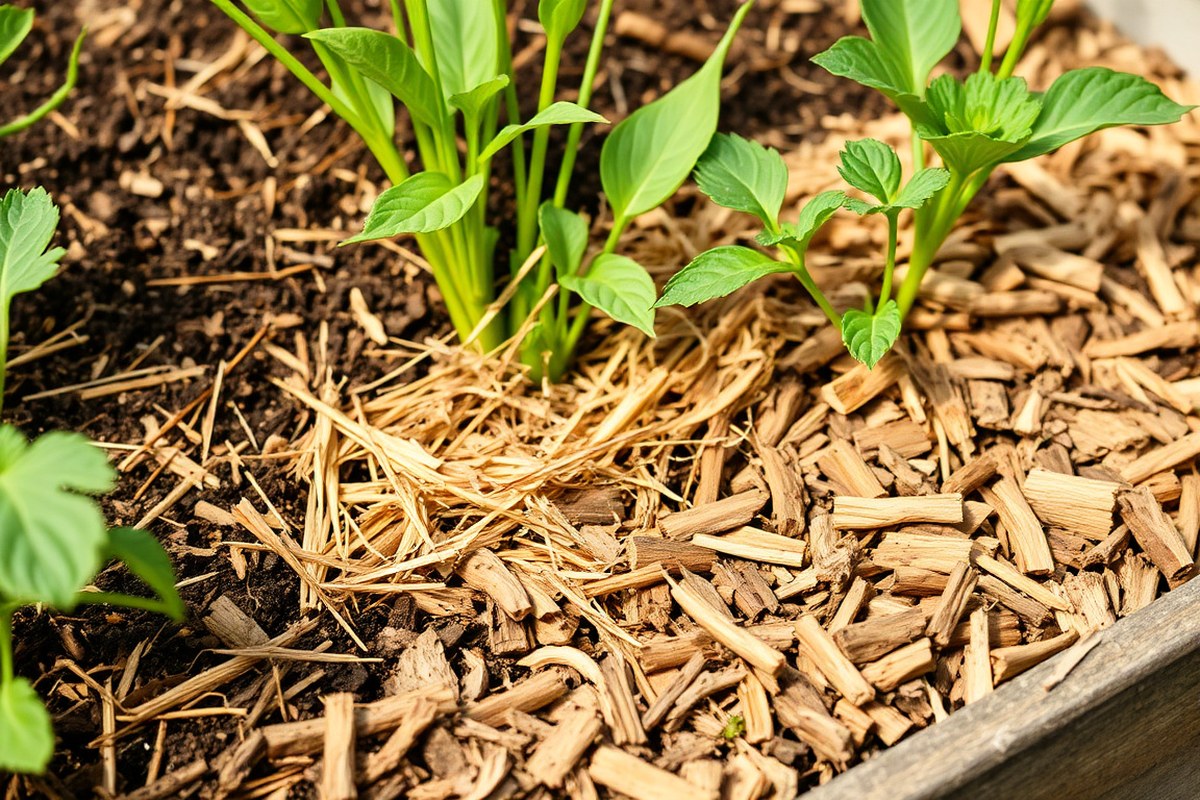
Organic mulches work best for vegetable gardens because they improve soil and help plants thrive. These include compost, woodchips, coconut coir, pine straw, and cardboard. They break down over time, adding nutrients to the soil and keeping moisture in longer.
Inorganic mulches like plastic or stones won’t add nutrients and can cause drainage issues. They do stop weeds well but can overheat roots in hot weather. Many growers prefer organic options for their soil benefits and safer environment for plants.
Compost is the top choice for vegetable gardens. It’s nutrient-rich and helps retain moisture. Coconut coir holds water well.
It has a neutral pH. This makes it safe for all veggies. Pine straw keeps moisture steady and stops weeds.
It is light. This means it may blow away without thick layering.
| Mulch Type | Moisture Retention | Nutrient Value | Weed Prevention | Ease of Application | Cost Range |
|---|---|---|---|---|---|
| Compost | High | High | Moderate | Easy | Low to Medium |
| Coconut Coir | High | Low to Moderate | Good | Easy | Medium |
| Woodchips | Moderate | Low | Good | Medium | Low |
| Pine Straw | Moderate | Low | Good | Easy | Low |
| Cardboard with Straw | High | Moderate | Excellent | Medium | Very Low |
| Plastic Mulch (Inorganic) | Varies | None | Excellent | Medium | Medium |
Use cardboard covered by straw to block weeds well, especially early in the growing season. Compost benefits veggie growth but needs to be replenished yearly. Coconut coir bricks expand with water, so soak them before spreading.
Choose woodchips if you want a mulch that lasts longer without decomposing fast. Pine straw works nicely in cooler climates where it won’t blow away easily. Avoid plastic mulch in hot climates because it can make soil too warm and stress plants.
2. How Mulching Benefits Vegetable Garden Soil and Plants

Mulch keeps soil moist by cutting evaporation. A 2 to 4-inch layer slows water loss, so you water less often. This moisture lasts through dry spells.
It protects plants well. Young or shallow-rooted vegetables dry out quickly without it.
It also helps with soil temperature. Mulch acts like a blanket for soil. It keeps soil cooler in summer.
In spring and fall, it keeps soil warmer. Using organic mulch in late fall shields roots from freezing. In colder areas, this can save tender plants.
Mulch stops weeds from stealing resources by blocking light seed need to sprout. Fewer weeds mean less competition for water, nutrients, and sunlight, helping your vegetables grow better. Plus, reduced weed growth cuts down on the work of pulling them out.
It lowers disease risks by stopping water from splashing soil onto leaves. Wet leaves can cause fungal diseases, so mulch’s barrier keeps leaves dry. Less disease means healthier plants and bigger harvests.
As organic mulches break down, they add nutrients back to the soil. Compost or shredded leaves feed soil microbes and improve soil structure. This feeds your plants naturally and improves soil health over time.
Keep mulch a few inches from vegetable stems. This prevents stem rot. It also stops pests from hiding there.
Mulching your vegetable garden starts by spreading a clean, weed-free layer around plants after transplanting. Apply mulch 2 to 4 inches thick. Adjust if you use mineral or plastic mulches.
These types don’t add nutrients to soil. Organic mulches work best for soil health and nutrient cycling.
In hot climates, mulch keeps the soil cool during peak summer. In cooler regions, black plastic mulch can warm soil for heat-loving crops like squash. Choose your mulch based on your local weather and garden needs for the best results.
3. Choosing Mulch Based on Climate and Soil Conditions
Choosing the right mulch depends on your climate and soil. Hot, dry areas need mulches that keep moisture in and cool the soil.
Cooler or wet regions benefit from mulches that moderate temperature without holding excess water. Matching mulch to your soil’s pH and texture also helps your vegetables thrive.
Mulching Strategies for Hot and Dry Climates
In hot, dry climates, use mulches that retain moisture well. Straw is a great choice because it insulates the soil and slows evaporation.
Pine needles work well too. They cover the ground lightly and help keep soil cooler under the sun.
Apply mulch 2 to 3 inches deep to protect roots during dry spells. Organic mulches like straw and pine needles break down slowly, adding nutrients. Avoid heavy mulches that can trap too much heat or prevent rain from reaching the soil.
Options for Cooler or Wet Climates
In cooler, wetter climates, mulches should help warm the soil and prevent waterlogging. Wood chips help keep soil temperature steady. They let extra water drain well.
This makes them a good mulching choice. Avoid thick layers that stay too wet and cause root rot.
Wait until the soil is consistently above 60°F before applying mulch in early seasons. This prevents the soil from staying cold too long. Thin layers speed drying and reduce fungal problems common in wet climates.
Adjusting Mulch Choice to Soil pH and Texture
Soil pH affects which mulch is best. Acidic mulches like pine needles lower soil pH, which suits plants that prefer acidic soil. Avoid acidic mulches on vegetables needing neutral or alkaline soil.
Soil texture also matters. Sandy soils dry out quickly. So use mulches that hold moisture longer, like compost-based ones.
Clay soils hold water. So choose mulches that improve drainage, such as coarse wood chips. Keep mulch layers thinner on heavy soils to avoid sogginess.
4. How and When to Apply Mulch for Vegetable Gardens
Apply mulch after preparing your vegetable bed but before planting seedlings. The ideal timing helps keep soil moist and controls weeds. Apply a 2 to 4 inch thick layer, leaving space near plant stems to prevent disease.
Timing Mulch Application for Seasonal Success
Mulch right after soil warms in spring but before transplanting seedlings. This timing helps reduce weeds and retain moisture effectively.
Avoid mulching too early when soil is still cold and wet. It might slow plant growth.
Apply mulch again in late fall to protect soil and roots during winter. A fresh layer helps moderate soil temperature and prevents erosion. Plant mulch after each transplant when adding multiple crops to keep benefits.
Proper Mulch Layer Thickness and Coverage
Use a 2 to 4 inch thick layer of mulch for vegetable beds. Thin layers let weeds grow through, while too thick layers prevent water reaching roots. For pine straw, shredded leaves, or straw, 3 inches is a good middle ground.
Avoid dense wood mulch in vegetable beds since it breaks down slowly. Instead, reserve wood chips for pathways or perennial plants. Use thin layers of grass clippings up to 1/4 inch and let dry in between.
Safe Mulch Placement Around Plant Bases
Keep mulch at least 1 inch away from the base of vegetable stems to prevent rot. For good air circulation, clear mulch within a 2 inch radius of stems and roots. Mulch touching stems creates dampness, encouraging fungus and disease.
Apply mulch around established seedlings, not over seeds or very young plants. This practice avoids suffocating seeds or causing uneven germination. Mulching near mature plants supports moisture retention without risking stem health.
Follow these steps to apply mulch correctly in your vegetable garden:
- Clear the garden bed of weeds and debris before adding mulch.
- Water the soil thoroughly to provide moisture before mulching.
- Spread mulch evenly in a 2 to 4 inch layer over planting areas.
- Keep mulch about 1 to 2 inches away from plant stems to reduce rot risk.
- Water the mulch lightly to help it settle and start protecting soil.
- Monitor mulch throughout the season and add more if it breaks down or thins.
- Remove or thin mulch if it becomes moldy or overly wet near plants.
5. Top Organic Mulches: Types, Pros, and Cons
Compost is a top choice for vegetable garden mulch. It’s dark, crumbly, and rich in nutrients.
Spread 1 to 1.Use a 5-inch thick layer to avoid compaction. It helps feed your soil as it breaks down slowly.
Straw mulch is lightweight and great for moisture retention in raised beds. It keeps the soil cool and reduces weeds.
Straw can blow away unless you hold it down. It may have weed seeds if not from a clean source.
Wood chips last longer than straw but decompose slowly. These mulches work well around fruit trees and shrubs.
They can tie up nitrogen in vegetable beds as they decompose. Use wood chips with a layer of compost underneath to counteract this effect.
| Mulch Type | Pros | Cons | Best Uses |
|---|---|---|---|
| Compost | Improves soil, nutrient-rich, dark and crumbly | Can compact if too thick | Vegetable beds, soil amendment |
| Straw | Good moisture retention, lightweight, suppresses weeds | May blow away, could contain weed seeds | Raised beds, moisture retention areas |
| Wood chips | Long-lasting, good for moisture retention | Slow decomposition, can use nitrogen | Fruit trees, shrubs, under compost layer |
| Grass clippings | High nitrogen, breaks down fast | Can compact and mold if thick | Vegetable beds, thin layers |
| Leaf mold | Rich in organic matter, retains moisture | Slow to build up supply | Vegetable beds, soil amendment |
Fresh grass clippings work well in vegetable beds if you dry them first. Use just about 1 inch to avoid smothering plants and mold. Too thick a layer might turn slimy and block air.
Leaf mold acts like a mulch and a fertilizer at once. It holds moisture well and adds nitrogen as it breaks down. It takes time to collect but is worth it for soil health.
Keep mulch layers thin, about 1 to 1.5 inches, to avoid compaction and mold problems.
6. Safe Use of Colored, Plastic, and Inorganic Mulches
Colored, plastic, and inorganic mulches each have safety and effectiveness issues for vegetable gardens. Some colored mulches contain harmful dyes that can contaminate soil and veggies.
Plastic mulches can boost yields but need careful handling. Some inorganic mulches might damage plants or reduce soil health.
Benefits and Risks of Plastic Mulch
Plastic mulch, like black poly or landscape fabric, can warm soil and stop weeds. It keeps moisture in but doesn’t let water pass easily. So you must water under or around it.
Plastic mulch can boost your vegetable yields by up to 20 percent. Red reflective plastic types work especially well. This makes a big difference in your harvest.
Keep plastic mulch clean and remove it after the season to avoid landfill waste. It works best in raised beds or row covers, where you can control moisture and heat.
Watch for overheating on hot days. Plastic can make soil too warm and dry roots out.
Using Dyed and Colored Mulches Safely
Colored mulches often have dyes or chemicals that might pass into your soil and vegetables. Avoid mulches with strong artificial coloring or unknown chemical treatments. Some red or natural wood mulches can be safe if untreated.
These mulches must be aged before use. Use them on garden borders or paths only.
Buy from sources that sell mulches labeled safe for vegetable gardens, or test small amounts first. Don’t use dyed mulches directly on vegetable rows unless you’re sure they’re free from harmful chemicals. Wood chips like cedar mulch are safer if aged for months.
Fresh wood chips can harm your garden. Let them sit for a while before using.
Avoiding Harmful Inorganic Mulches
Not all inorganic mulches suit vegetable gardens. Colored rubber mulch and dyed landscaping chips often have harmful toxins. Treated bark can also carry chemicals.
These materials might hurt your plants. Hay carries many weed seeds, so it’s not a good choice for vegetables either.
Stick to natural mulches or safe plastic films for vegetables. Use wood chips only on paths or around raised beds. Avoid inorganic mulches that don’t break down over time.
They can trap too much heat around roots. These mulches also block water from reaching plants. Choosing well-tested mulches keeps your soil and vegetables safe and healthy.
7. Common Mulching Mistakes and How to Fix Them
Applying mulch too thick can harm your vegetable garden. When mulch piles higher than 3 inches, water and air struggle to reach the soil beneath. This stops roots from getting enough oxygen.
It also limits moisture. This can slow growth and cause root rot.
Piling mulch against plant stems or tree trunks is another common problem. This keeps the area too wet and invites pests and diseases. Mulch touching stems can cause rot, leading to weak or dying plants in your garden.
Using contaminated mulch can spread weeds, pests, or plant diseases. Mulch made from untreated yard waste may carry fungus or insect eggs. This impacts your vegetables by stressing or infecting them early in the growing season.
- Keep mulch layers no thicker than 2 to 3 inches.
- Leave a 1 to 2-inch gap around seeds and stems.
- Use only clean, disease-free mulch materials.
- Mix in nitrogen-rich compost if using high-carbon mulches.
- Replenish mulch yearly to maintain its benefits.
Thick mulch can tie up nitrogen as microbes break it down, causing deficiency in plants. Add a thin layer of compost or organic fertilizer before mulching to avoid this. This feeds your vegetables while mulch improves soil moisture.
To prevent mulch-related diseases, keep mulch away from stems. Remove any mulch that becomes soggy or breaks down too quickly. Also, turn the mulch periodically to reduce mold buildup and maintain healthy airflow.
8. How to Maintain and Refresh Mulch for Continuous Garden Health
Mulch needs refreshment once it starts to break down or wears thin. Check your vegetable beds every 6 to 8 weeks during the growing season. Soil should be covered about 2 to 3 inches thick.
This helps keep moisture in. It also helps stop weeds from growing.
Old mulch can usually be reused after some care. Break clumps apart and mix in fresh material to restore its look and function. At year’s end, put leftover grass clippings in the soil.
Add other organic bits too. This feeds the soil for next season.
Preparing mulch for next year means cleaning, checking for pests, and making storage easy. Keep it dry and covered if you store it. In fall, compost unfinished mulch around garden plants.
This boosts nutrients in the soil. UGA Extension recommends this practice.
- Inspect the mulch layer every 6 to 8 weeks for thinning or decay.
- Remove any weeds growing through the mulch to avoid competition.
- Fluff existing mulch with a rake to keep it loose and airy.
- Add a fresh 1 to 2 inch layer to restore 2 to 3 inches total depth.
- Dig leftover grass clippings or organic mulch bits into soil at fall’s end.
- Store unused mulch in a dry place, covered to avoid moisture issues.
- Apply unfinished compost as mulch around plants during fall to improve soil.
Don’t pile mulch up against plant stems or trunks. It can cause rot and pests.
Step-by-Step Action Plan for Mulching Your Vegetable Garden
Follow this plan to pick, apply, and keep the best mulch for your garden. It helps your plants grow strong and stops common problems.
- Before planting: Clear the garden bed and test your soil. Healthy soil holds mulch better and feeds your plants well.
- Day 1: Choose organic mulch like straw or shredded leaves. It breaks down and adds nutrients to your soil over time.
- Day 2: Spread mulch 2 to 3 inches deep around plants. Avoid piling mulch against stems to prevent rot.
- Week 2: Water the mulch lightly to help it settle and start conserving moisture.
- Monthly: Check mulch thickness. Add more if it looks thin or weeds start popping up.
- After harvest: Remove old mulch if it’s moldy or too compacted. Compost it if possible.
- Fall season: Add a fresh 2-inch layer to protect soil through winter freezes.
- Spring startup: Refresh mulch before planting new crops to keep moisture and warmth steady.
Frequently Asked Questions
What Homemade Materials Work Well as Mulch in a Vegetable Garden?
Grass clippings, cardboard, and compost from your compost pile work well. They recycle yard waste and improve soil health when used properly.
Are Ground Corncobs Good Mulch for Vegetable Gardens?
Yes, ground corncobs are excellent mulch according to the University of Georgia Extension. They retain moisture and slowly break down to enrich the soil.
Is Undyed Woodchips Mulch a Good Store-Bought Option?
Yes, undyed woodchips mulch is the best bagged mulch for vegetable gardens. It is safe, lasts long, and adds organic matter as it decomposes.
Can Pine Straw Be Used as Mulch for Vegetables?
Pine straw works well as it allows water to pass through and holds soil moisture. It also helps stop weeds and doesn’t wash away easily.
Is Compost the Best Mulch to Improve Vegetable Garden Soil?
Compost is the top choice because it adds nutrients and improves soil texture. It’s easy to apply and supports healthy plant growth.
Are Grass Clippings Safe to Use as Mulch Around Edible Plants?
Yes, grass clippings are safe when dry and applied in thin layers. They provide nitrogen and help suppress weeds effectively.
Before You Go
Good mulch boosts growth and keeps your vegetable garden healthy. Start with organic mulch and maintain it regularly. Your next step is to pick the right mulch and lay it down this week.