What Do Weeds Look Like: Complete Visual Guide to Identify Common Weeds
Wondering what do weeds look like in your garden? Most weeds share common traits like broad or grassy leaves and fast growth.
Recognizing these traits early helps prevent them from taking over your lawn or plants. Start by looking closely at leaf shapes and colors for quick clues.
Weeds can appear at different growth stages, from tiny seedlings to tall plants with flowers. Their stems and how they grow also help tell them apart from your good plants. Pay attention to height and leaf arrangement, since many garden plants don’t match typical weed patterns.
Keep an eye out for seasonal changes in weeds too. Some weeds change color or flower depending on the time of year. Watching these changes makes it easier to spot problem weeds before they spread.
Key Takeaways
- Check leaf shape and color first to spot common weeds quickly.
- Note how leaves grow on the stem, opposite or alternate, for ID clues.
- Observe stem texture and growth habits to distinguish weeds from desired plants.
- Look at weed height changes seasonally to catch them early.
- Identify flowers by their color and bloom time for precise weed recognition.
- Use seasonal soil temperature to time pre-emergent weed treatments effectively.
How to Recognize Weeds at Different Growth Stages

Weed seedlings look quite different from mature plants. Early on, the leaves are simple and soft, with pairs growing opposite each other. These first leaves are called cotyledons.
They often don’t look like true leaves. True leaves come after cotyledons and look different.
True leaves start appearing after the cotyledons. They usually have more detailed shapes and patterns. Weeds usually start with leaves in opposite pairs.
Then, their leaves change to zig-zag along the stem. This is called alternate leaf arrangement. This change helps tell a young weed from a mature one.
Weeds develop distinctive features quickly, often within two to three weeks. Seedlings have delicate stems and very plain leaves. When plants reach the mature vegetative stage, you see specific leaf shapes.
You also notice textures and sometimes hair or waxy coatings. These help in identifying them precisely.
- Weed seedlings show opposite pairs of simple leaves (cotyledons)
- True leaves emerge later, more complex in shape and size
- Mature plants have alternate leaves that zig-zag up the stem
- Distinct features like leaf hairs or wax develop after 2-3 weeks
- Growth rate varies by weed type and environmental conditions
Cotyledons tend to be smooth and round or spoon-shaped, like in broadleaf plantain. True leaves develop veins and lobes that the seed leaves lack. Many grassy weeds start with a blunt-tipped sheath that splits quickly into a longer leaf.
Watching how weeds change from seedling to mature plant helps you catch them early. Once they mature, their roots and stems become tougher and harder to control. Spotting true leaves early gives you better chances for removal before they spread widely.
Key Differences Between Grassy, Broadleaf, and Sedge Weeds

The three main categories of garden weeds are grassy weeds, broadleaf weeds, and sedges. Each type has unique leaf shapes, stem features, and growth habits. Knowing these helps you spot and manage the right weed kind effectively.
Characteristics of Grassy Weeds
Grassy weeds have long, narrow leaves that resemble lawn grass blades. Their leaves often feel rough or hairy and grow from the base in tufts. These weeds usually grow fast and can spread quickly.
Most grassy weeds have hollow, round stems, which differ from broadleaf stems. These weeds often grow taller than many broadleaf weeds do. They stand out in lawns or garden beds because of height.
Control for grassy weeds often requires specific herbicides because broadleaf killers won’t work on them. Identifying their leaf texture and growth speed helps pick the right approach.
Features of Broadleaf Weeds
Broadleaf weeds have wider leaves with various shapes like serrated, spiky, or arrow-shaped. Their leaves are usually smooth and a solid green color. These weeds often have visible veins and can look quite different than turf grass.
Broadleaf weed stems are solid, not hollow like grassy ones. This makes them stronger and sturdier than grassy weeds.
Their growth is often slower than grassy weeds. But some like thistle develop tall, prickly forms.
Broadleaf weeds vary a lot, so look closely at leaves. Check their shapes and textures to identify them well. Herbicides made for broadleaf weeds target these features specifically.
Identifying Sedges Accurately
Sedges look like grass but are part of a different family called Cyperaceae. Their leaves are usually triangular in cross-section and feel smooth, not hairy. The stem is solid and has three distinct edges.
Sedges feel firm and have a triangular stem shape. You can feel this by rolling the stem between your fingers. Their growth pattern is clump-forming but often denser and tougher than grassy or broadleaf weeds.
Many garden sedges grow slower but stick around longer, making early identification important. You’ll want to treat sedges differently from grassy or broadleaf weeds for best control.
| Weed Type | Leaf Shape | Color | Texture |
|---|---|---|---|
| Dandelion | Deeply serrated | Green | Smooth |
| Crabgrass | Wide, flat | Green to brown | Hairy |
| Bindweed | Arrow-shaped | Medium Green | Smooth |
| Thistle | Serrated, spiky | Dark Green | Very prickly |
| Foxtail | Narrow | Bright Green | Rough |
Comparing leaf shape, color, and texture reveals clear differences between weed types. This helps you recognize if a weed is grassy, broadleaf, or sedge quickly. Knowing these details also guides you to the right herbicide choices and control methods.
Remember that using the wrong herbicide for a weed type wastes time and chemicals. Always match your treatment to the weed’s category for best results.
Common Leaf Shapes and Colors That Reveal Weed Identity
Recognizing common weeds often comes down to looking closely at leaf shapes, colors, and veins. These features help you tell one weed from another and also spot trouble in your garden. Look closely at leaf texture and veins.
They hint at nutrient problems or plant type. These details give you clues about your plant’s health.
Serrated and Lobed Leaf Examples
Many garden weeds show serrated or lobed leaves with jagged edges. Dandelions, a classic weed, have deeply lobed leaves that look like fingers pointing outward. Thorn apple and some clover types also display serrated edges but with varying depths and shapes.
Serrated leaves can catch your eye because they differ from smooth garden plants. Lobed leaves give clues to the species and how the weed spreads. These rough edges might help weeds ward off pests or survive mowing better than smooth-leafed plants.
Narrow and Flat Leaf Shapes
Narrow, flat leaves often belong to grassy weeds like crabgrass or quackgrass. They are usually long and linear, sometimes curling slightly but remaining thin. These leaves mimic desirable turfgrass, making the weed harder to spot at first glance.
Hold a narrow leaf up against the light. You’ll see a single central vein running down it. This vein is easy to spot on thin leaves.
Smaller veins branch from this main vein, creating a parallel pattern typical of grasses. This vein pattern helps you sort grassy weeds from broadleaf ones quickly.
Color and Vein Pattern Variations
Weed leaf colors change from bright green to dull. Sometimes, yellow or reddish edges appear. These color changes help you identify the weed.
Interveinal chlorosis means the veins stay green. The rest of the leaf turns yellow.
This usually shows nutrient problems like iron deficiency. It’s a “cry for help” from the plant, not just a weed trait.
Vein patterns tell you about the weed’s family group. Monocots have parallel veins like grasses. Dicots have broad leaves with net-like veins.
Texture can vary too, with some broadleaf weeds having rough or hairy leaves. Grassy weeds tend to feel smooth. These visual clues speed up weed ID during garden checks.
Identifying Weed Flowers: Color, Shape, and Bloom Time
Most broadleaf weeds show small, simple flowers in white or yellow shades. These colors help you spot and identify common weeds quickly. Flower shape and blooming time add clues that make identification easier.
Yellow and White Flowering Weeds
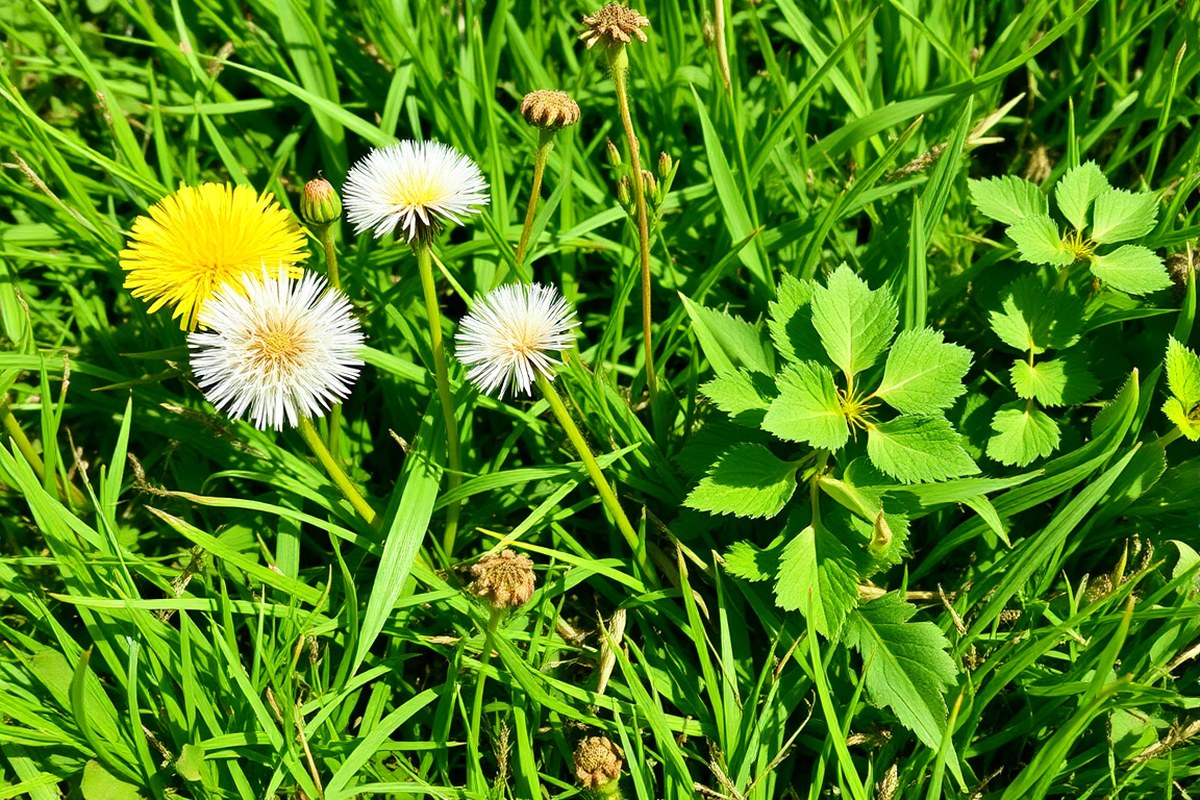
Many garden weeds have yellow or white flowers, which stand out against green leaves. Dandelions are a prime example, showing bright yellow flowers in early spring. Their flowers later turn into fluffy seed heads, which spread easily by wind.
Small white flowers also appear on weeds like chickweed and white clover. These tiny blooms often look delicate but are key to spotting weeds early. Their flowers usually grow in clusters, which helps distinguish them from garden plants.
Flower Shape Variations
Flower shapes differ widely between weed species, helping you tell them apart. Some have simple petals arranged in a single layer.
Others cluster tiny flowers into a ball or spike. Noticing petal number and arrangement helps identify the weed.
For example, dandelion flowers have many narrow petals packed closely. Clover flowers form tight, round clusters with many small, tubular petals. These unique shapes act like natural ID markers.
Seasonal Bloom Patterns
Most weeds bloom early in the growing season, often in spring or early summer. This is when they focus on reproduction and spread. Identifying weeds while they bloom helps control them before seed formation.
Here’s a simple timeline to watch for weed flowers:
- Early spring: Dandelions bloom bright yellow flowers
- Mid-spring: Chickweed and clover produce small white flowers
- Late spring to early summer: Various broadleaf weeds bloom, often in clusters
- After flowering: Many weeds form seeds, which spread to new areas
Spotting flowering weeds during this timeline helps you act before they bond into seeds. This timing saves effort and protects nearby plants from competition.
Growth Habits and Stem Features That Distinguish Weeds
Stem shape helps a lot in spotting certain weeds. Sedges, for example, have triangular stems that feel sharp on the edges.
You can feel this by rolling the stem between your fingers to check for the shape. This differs from grasses, which usually have round, hollow stems.
Leaf arrangement can also signal which weed you’re dealing with. Some weeds, like dandelions, have leaves that grow only at the base.
Others, such as lambsquarters, arrange their leaves alternately along the stem. Knowing these patterns lets you narrow down the type quickly during weeding.
The texture of the stems matters too. Hairy stems often point to weeds like chickweed or velvetleaf. These hairs create a rough feeling if you run your hand up the stem.
Smooth stems are common in weeds such as plantain. Sometimes, tiny hairs help the plant hold onto moisture or avoid getting eaten.
Touch the plant stem carefully, triangular stems mean sedges. But round stems usually mean grasses.
Height is an easy clue to watch for. Many weeds start low-growing and then shoot up fast.
You want to catch these when they are short, often under 6 to 8 inches tall. Waiting lets them produce seeds that spread quickly through your garden.
Here’s a checklist for each weed you find. First, roll the stem. Check its shape with your fingers.
Then notice how leaves are arranged, are they opposite, alternate, or all at the base? Finally, feel the stem to see if it’s smooth or has hairs. Take note of the plant’s height and growth speed too.
This takes just a few minutes per plant but helps you pick the right control method. Missing these details might confuse your identification and slow down your weed control. Watch these features over time.
Focus especially when the weed is young. This helps you manage them better.
How to Tell Weeds from Similar-Looking Garden and Native Plants
Many native or beneficial plants share traits with common weeds, causing mix-ups. Dandelions and some clovers often get mistaken for weeds, but they support pollinators. Milkweed looks weedy yet attracts monarch butterflies, making it valuable.
Subtle differences help separate weeds from look-alikes. Check leaf texture and arrangement carefully.
Weeds often have rough or hairy leaves, while natives feel softer. Also, notice stem thickness and branching; weeds tend to spread quickly with thinner stems.
- Look for leaf edges: smooth or serrated edges can help identify the plant.
- Check root type: weeds often have shallow, spreading roots, natives deeper roots.
- Observe flower shape and color, as native plants may bloom in distinctive patterns.
- Note growth pattern: weeds grow fast and invade many spots, natives stay more contained.
- Feel leaf texture: soft for natives, sometimes rough or sticky for weeds.
- Inspect stem thickness and hairiness; weeds often have thinner, hairy stems.
- Use local plant guides or apps to confirm native versus weed species.
To avoid harming native plants mistaken for weeds, approach garden clearing carefully. Pull only plants you’re sure about, using the checklist. If you doubt, snap a picture and compare it to local plant profiles or ask a garden center expert.
Native plants play key roles in ecosystems and garden health. Killing them can reduce pollination and food sources for bugs and birds. Taking extra time to identify plants prevents these losses and helps your garden thrive naturally.
Seasonal Changes and Environmental Effects on Weed Appearance
Weeds often change color and texture with the seasons. In spring and early summer, many weeds appear bright green and tender. As heat builds, some turn duller, tougher, or even yellowish.
For example, crabgrass grows fast and green in spring but browns in late summer heat. Paying attention to these changes helps you spot weeds at their easiest stage.
Weather impacts weed growth rates a lot. Warm, moist soil speeds up growth. Weeds can grow several inches in just a week under ideal spring conditions.
Cold or dry soil slows them down, sometimes stopping growth for weeks. Checking soil temperature with a probe helps you guess when weeds will start shooting up. Soil over 55°F often signals active growth for many common weeds.
Soil conditions affect how weeds look too. Compact or poorly drained soil can stunt weeds, making them smaller or lighter-colored. You might see more yellowing or spotted leaves in these areas.
Nutrient-poor spots often show thinner, weaker weed growth. Watching how weeds respond tells you facts about your soil, like drainage and fertility issues.
You want to identify weeds visually right after they sprout. Early growth stages have clear leaf shapes and bright colors that later fade. Check your garden every week from early spring through summer.
This habit catches weeds when they are young and easier to pull or treat. Regular observation also helps notice less common weeds before they spread.
In shady or dry spots, weeds grow slower and less dense. In sun and moist soil, expect faster, bushier weed growth.
This difference changes their size, color, and how quickly they fill your garden. For example, bindweed might stay small in shade but quickly spread in sun and moisture.
Timing works with weather and soil. A cold spring delays weed growth, moving their active phase later. Hot, dry spells sometimes pause growth, then weeds bounce back with rain.
Tracking your local weather helps you find the best weeks for weed control. Checking soil temperature is also important.
Both guide when to spot and handle weeds. This strategy saves time and reduces chemical use.
Top Identification Tools and Apps for Spotting Garden Weeds
Smartphone apps can speed up identifying garden weeds. Apps like PlantSnap, iNaturalist, and PictureThis help you identify plants. Just take a photo, and the app shows your plant’s name quickly.
This way, you get instant ID results on your phone. They use large plant databases and can spot common weeds fast, often within seconds.
Digital photo guides help too. A good guide shows clear pictures of leaves, stems, and flowers. It organizes images by season and how the plant grows.
This helps you compare plants at every growth stage. You can compare your weed side-by-side to the pictures. Making a checklist of leaf shape, flower color, and stem type sharpens your identification skills.
For tougher cases, a handheld magnifier or a simple microscope helps you see tiny features better. Look for tiny hairs, leaf veins, or seed head details you might miss. This close look helps tell weeds apart from similar-looking garden plants.
- Use apps to snap and compare plant photos quickly.
- Print or download photo guides focusing on local weeds.
- Create a checklist: leaf shape, flower color, stem type.
- Carry a magnifier with 10x to 20x zoom for close looks.
- Test several app results to confirm ID before removing.
- Update your guides seasonally to catch changes in appearance.
- Keep a notebook to jot down unusual weed traits.
Photo guides and checklists lower mistakes by helping you focus on traits that matter. Spotting broadleaf versus grassy weeds gets easier with practice.
Magnifiers that cost $10 to $30 are affordable, and many clip onto phones. They reveal details like leaf hairs or tiny flowers not visible to the naked eye.
Always double-check apps with a physical guide or expert advice before using herbicides.
Step-by-Step Action Plan for Identifying Weeds in Your Garden
You can start spotting weeds today by following these simple steps. Each step gives you a clear task and a way to check your progress.
- Day 1: Take a close look at your garden and lawn. Note any plants with unusual leaf shapes or colors compared to your desired plants.
- Week 1: Use a plant identification app or a weed guidebook. Match your notes with possible weeds and mark the spots where they grow.
- Weeks 2-3: Watch how those plants grow over time. See if their flowers or seed heads match common weed descriptions.
- Week 4: Compare grassy, broadleaf, and sedge weeds in your garden. Look for stem and growth habit differences to confirm your IDs.
- After 1 Month: Remove the clear weeds carefully by hand or with tools. Check if your garden plants stay unharmed, proving you targeted weeds correctly.
- After 6 Weeks: Monitor your garden for new weed sprouts. Repeat the identification and removal steps before they spread widely.
- Seasonally: Adjust your weed checks with the seasons. Note how weed appearances change to catch them at new growth stages.
- Ongoing: Keep learning about local weeds and updates to ID tools. This will keep your weed spotting sharp and up to date.
Frequently Asked Questions
What Do Young Weeds Typically Look Like?
Young weeds have small, tender leaves and thin stems. They may resemble seedlings of many plants.
Can Weeds Look Like Vegetable Plants?
Yes, some weeds mimic vegetable leaves and growth habits. Identify by their root system and growth speed.
Do Weeds Always Have Flowers?
No, not all weeds flower, especially in early growth. Leaves and stems help spot them first.
Are Weed Leaves Always Green?
Most weed leaves are green, but some have purple or reddish shades. Leaf color varies by species and environment.
Can Weed Roots Help Identification?
Yes, root type and depth differ among weeds and help in ID. Pulling weeds shows key root traits.
How Do Weed Leaves Differ in Texture?
Weed leaves can be smooth, hairy, or rough. Touching leaves helps tell weeds from garden plants.
Before You Go
Knowing what weeds look like helps you protect your garden better. Start by observing your plants closely today. Take action on the easiest weeds first to see quick results.