
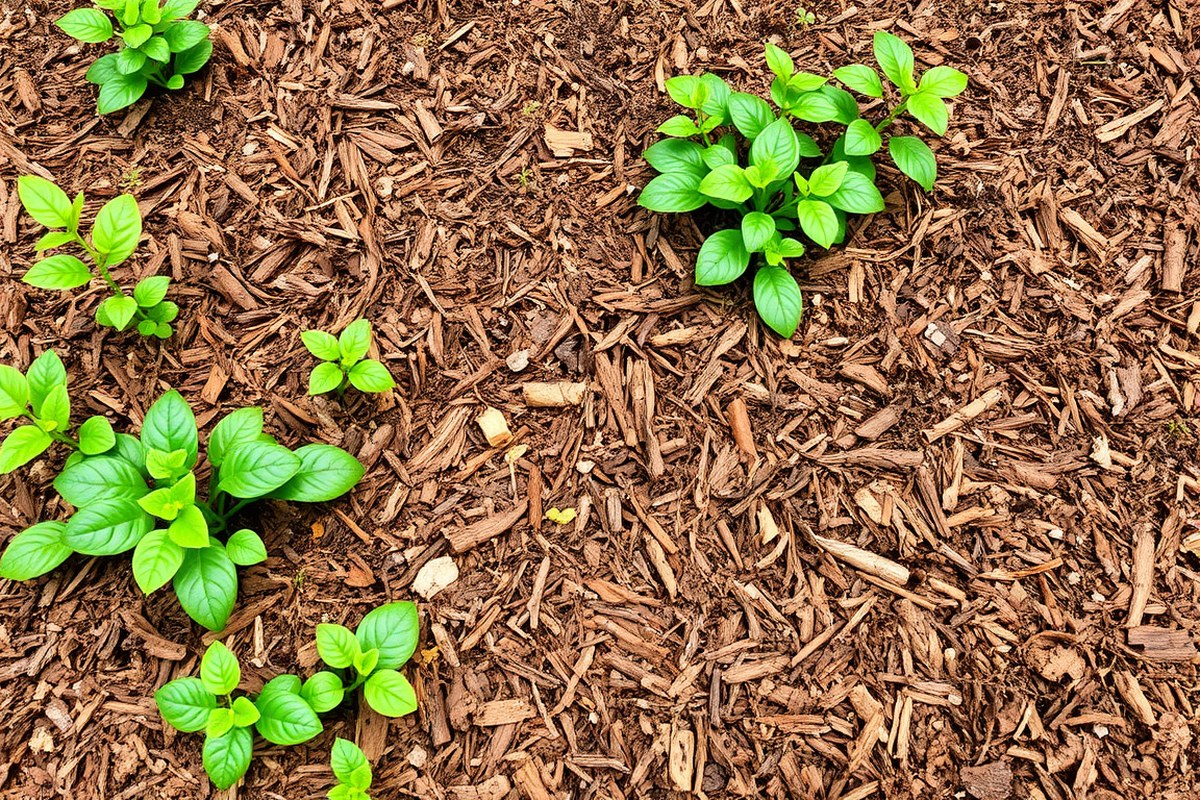
How Thick Should Mulch Be to Prevent Weeds: A Complete Guide That Works
Wondering how thick should mulch be to prevent weeds? The best thickness is between 2 to 4 inches of organic mulch. This range blocks sunlight well enough to stop weeds from growing and also keeps soil moist.
For new garden beds, applying 4 to 5 inches works better because it smothers existing weeds. Don’t pile mulch too close to tree trunks or shrubs. Thick mulch against stems can cause rot.
Keep mulch a few inches away from stems. Keep about 6 inches clear near trunks to avoid problems.
Start by spreading a uniform layer over your soil. Thinner layers of around 2 inches work best for vegetable gardens to avoid waterlogging. Thicker layers suit flower beds and shrub borders where weed control and moisture retention matter most.
Key Takeaways
- Use 3 to 4 inches of organic mulch for strong weed suppression in landscape beds.
- Apply 4 to 5 inches of mulch on new garden beds to control existing weeds.
- Keep mulch at least 6 inches away from tree and shrub trunks to prevent rot.
- Use 1 to 2 inches of mulch in vegetable gardens to allow good water flow.
- Spread mulch evenly to maintain a consistent thickness for effective weed control.
- Avoid mulch thicker than 6 inches as it can suffocate plants and delay soil warming.
Optimal Mulch Thickness to Prevent Weeds Effectively

Apply mulch 3 inches or more thick to stop most weeds from growing. About 3 to 4 inches of organic mulch suits typical garden beds well. Thicker mulch forms a strong layer that blocks weed seeds from sprouting.
You might think piling mulch higher means fewer weeds. But that is not always true. Going beyond 4 inches can suffocate plants and cause moisture problems.
For new beds or heavy weed areas, 4 to 5 inches might be needed. But above that, risks increase.
Less than 2 inches won’t stop weeds well. A thin layer lets seeds get sunlight or grow through.
Staying between 2 and 4 inches balances weed control with plant health and moisture retention. Adjust the depth based on your garden’s weed pressure and plant types.
Recommended Mulch Depths for Different Garden Areas

Mulch thickness varies by garden area to balance weed control and plant health. Flower beds need about 3 inches. Trees and shrubs benefit from 3 to 4 inches.
Vegetable gardens usually need 2 to 3 inches of mulch. New beds should get a lighter layer of about 2 inches. This helps young plants grow better.
Mulch Thickness for Flower Beds
Flower beds generally do best with a 3-inch layer of mulch. This depth blocks sunlight well, which reduces weed growth and keeps the soil cool. Spread mulch evenly across your garden area.
Leave a few inches space from flower stems. This prevents rot around the base.
Thinner layers let sunlight reach weed seeds, reducing effectiveness. Mulch that’s too thick can hold too much moisture. This can harm the plant roots beneath.
Avoid piling it on too high. A 3-inch depth strikes a useful balance.
Mulching Trees and Shrubs Correctly
Trees and shrubs usually do well with 3 to 4 inches of mulch around their bases. This thickness helps suppress weeds and insulates roots during hot and cold weather. Pull mulch back several inches from tree trunks.
This stops moisture buildup around the bark. It also protects the bark from damage.
Avoid piling mulch directly against the trunk; this can cause pests and disease. A donut shape with a clear soil ring lets air circulate. Using bark mulch here is common because it breaks down slowly and also looks neat.
Vegetable Garden Mulching Guidelines
Vegetable gardens often use 2 to 3 inches of mulch for the best effect. Thinner mulch near plant stems allows water and air to reach roots easily. Thicker mulch can go between rows to keep weeds down and soil moist.
Organic materials like straw or shredded leaves work well. They break down over time and add nutrients.
This benefits vegetable beds. Make sure the mulch doesn’t touch vegetable stems or crowns to prevent rot or pest issues.
Adjusting Thickness for New vs Established Beds
New garden beds should get about 2 inches of mulch. This thin layer lets water and air flow to seedlings. It helps them grow.
This lighter cover helps young roots develop well. Established beds can handle thicker mulch, around 3 to 4 inches for perennials and shrubs.
Applying mulch too thick on new plants may suffocate them or trap moisture. You can increase thickness gradually over time as plants grow.
For heavy weed issues, some gardeners go up to 5 or 6 inches. But it’s best only where absolutely needed.
Keep mulch a few inches away from stems or trunk bases. This prevents moisture buildup and pest problems. It helps keep plants healthy.
How Mulch Type Influences Thickness for Weed Suppression
Different mulch materials require varying thicknesses to control weeds well. Fine-textured mulches work at thinner depths, while coarse mulches need to be thicker. Inorganic mulches often demand even greater thickness, especially without a fabric barrier.
Fine-Textured Mulches and Their Thickness Needs
Fine mulches like shredded leaves work best at 1 to 2 inches thick. Ground bark is another good choice at this thickness. These materials pack down quickly and can smother beneficial soil organisms if layered too deep.
Applying them thinner helps keep air and moisture flowing well. They still block sunlight to prevent weed growth.
Because they compact easily, spreading these mulches evenly avoids bare spots that allow weeds to sprout. Apply a fresh layer annually to maintain that thin, effective cover. Avoid piling thick mulches around plant stems to reduce disease risk.
Coarse Organic Mulches: How Thick to Apply
Coarser mulches such as bark chips need to be 3 to 4 inches deep. Use wood nuggets at this depth too. Their chunky texture lets light through gaps if too thin.
So thicker layers stop weeds better. This depth also holds moisture longer, especially in sandy soils prone to drying.
These mulches break down slower and feed the soil while maintaining weed control. Use a rake or pitchfork to spread them evenly and avoid “mulch volcanoes” near plants. Replace or refresh every year or two when the layer thins.
Inorganic Mulches and Weed Control Depth
Inorganic mulches like gravel often need 4 to 6 inches depth to block weeds. Stones also work well at this thickness. Unlike organic mulches, they don’t decompose or add nutrients.
These mulches let more light reach soil if no fabric barrier is under them. Adding a weed barrier fabric helps keep weeds out.
Without a barrier, inorganic mulch layers must be thicker to avoid weeds pushing through gaps. These mulches last longer but don’t improve soil health. Regular inspection is key, as weeds can still grow around edges or under thin spots.
Soil and Environmental Factors Affecting Mulch Thickness
Soil type affects how thick your mulch should be to prevent weeds. Sandy soils dry out faster. So they need 3 to 4 inches of mulch to hold in moisture well.
Clay or loamy soils retain water longer. So a 2 to 3-inch layer usually works without causing soggy conditions that harm plant roots.
Climate also changes the mulch depth you need. Hot, dry places need thicker mulch layers of 3 to 4 inches. This helps stop evaporation.
It also keeps the soil cooler. Wet climates or rainy seasons require thinner mulch layers.
About 2 inches works best. This prevents moisture buildup that can cause problems.
Sunlight exposure impacts how you apply mulch too. Areas with full sun need thicker mulch layers. Thick mulch blocks weed seeds from light.
It also keeps soil from drying out. Shady spots should have about 2 inches of mulch.
Less sun means less evaporation. Weed growth slows naturally in shade.
Watching your plants helps you adjust mulch thickness precisely. Yellowing leaves can mean mulch is too thick and suffocating roots. Try thinning to 2 to 4 inches.
Pull mulch back if water pools or stems look mushy. Rake the mulch to prevent matting. This stops excess moisture around plants.
Applying mulch at the right thickness depends on your soil, climate, and sunlight combined. Start with 2 inches in loam and non-extreme climates. Add up to 4 inches for sandy soils or hot, sunny spots.
Watch soil moisture and plant health closely. Adjust mulch depth with the seasons for better weed control. This helps plants grow well.
Proper Mulch Application Techniques for Uniform Thickness
Spread mulch evenly at about 2 to 3 inches thick to stop weeds well. Use a ruler or stick to check the thickness during application. Keep mulch layers consistent for better weed control and plant health.
Preparing the Bed Before Mulching
Start by removing all weeds from your garden bed. Pull them by hand or use herbicide if needed, but avoid harming nearby plants. Clearing the area reduces weed seeds and roots that might grow through mulch.
Lay down a weed barrier, such as newspaper or fabric, if extra protection is necessary. This layer helps block sunlight to weed seeds below. Avoid piling heavy mulch on top until the barrier is set and smooth.
Tools for Accurate Mulch Spreading
Use a garden rake to spread mulch and level the surface for uniform thickness. Rakes with wide heads work best for spreading without disturbing soil or plants. A measuring stick or ruler lets you verify mulch depth as you go.
Consider an edger tool to keep mulch neatly inside bed borders. Wheelbarrows or buckets help haul mulch in smaller amounts for control. Work slowly and check depth regularly, adjusting with your rake as needed.
Setting and Maintaining Correct Depth
Follow these steps to spread mulch evenly. Keep mulch a uniform thickness around plants and beds. This helps your garden look neat and healthy.
- Clear the bed of debris and weeds completely.
- Lay down any weed barrier fabric or newspaper if using.
- Drop mulch in small piles evenly spaced across the bed.
- Use a rake to spread the piles to about 2 to 3 inches deep.
- Measure thickness with a ruler in several spots to check uniformity.
- Add or remove mulch in spots that are too thin or thick.
- Around plant stems, keep mulch at least 2 inches away to avoid moisture issues.
- Water the mulch lightly to help it settle in place.
Keep mulch away from plant bases to prevent rot and pests. Check thickness often, since mulch compresses over time.
Risks and Problems from Applying Mulch Too Thick or Too Thin
Applying mulch too thick can harm plants by suffocating their roots. Thick layers block air and water from reaching the soil. More than 4 inches of mulch can lead to root rot.
It also causes poor drainage. These problems stress plants and slow their growth.
You should always keep mulch at least 6 inches away from tree trunks. Mulch piled against trunks traps moisture and invites pests and diseases. Keep mulch at least 18 inches away from your house.
This helps lower fire risks. It also reduces chances of pests around your home.
Conversely, mulch that is too thin won’t stop weeds well. Layers less than 2 inches let sunlight reach weed seeds, allowing them to sprout. Maintaining at least 2 to 3 inches helps block light and smother emerging weeds.
Very thick mulch layers can also create a fire hazard. Applying over 6 inches makes mulch dry and prone to catching fire fast. Never toss cigarettes or ashes into mulch beds, especially when mulch depth is high.
Here’s a quick checklist to avoid common mulch problems: – Keep mulch 6 inches away from tree trunks to prevent rot and pests.
– Don’t pile mulch thicker than 4 inches to avoid root suffocation and poor drainage.
– Apply at least 2 inches for effective weed control.
– Keep mulch 18 inches away from buildings to lower fire risk.
– Avoid throwing cigarette butts or ashes on mulch beds.
– Spread mulch evenly to prevent water pooling or dry spots. Following these simple steps will help mulch do its job without causing damage. Proper thickness keeps plants healthy, soil breathing, and weeds under control.
When and How Often to Refresh Mulch for Maximum Weed Control
Mulch naturally breaks down as time passes, so it loses thickness and weed-blocking power. Organic mulch, like wood chips or bark, decomposes the fastest. Expect mulch to thin noticeably within six to twelve months after spreading.
To keep weeds at bay, add more mulch every year. Lay about one inch of fresh mulch over existing layers.
This thickness refreshes the barrier without smothering plants underneath. Use a rake to fluff up compacted mulch before adding new material.
Look for signs you need to refresh mulch. When the mulch layer is below one inch or weeds grow, top it up. Also, if mulch looks matted or turns to soil, it’s breaking down and losing effectiveness.
The mulch type affects how often you replenish. Grass clippings and leaves break down fast.
You might need to add mulch twice a year. Slower-decomposing mulch like hardwood chips can last longer, closer to a full year before thinning out.
In vegetable gardens, use 1 to 2 inches of mulch. It helps control weeds. It also keeps soil moist.
Check mulch thickness each season, especially in spring and fall. Those are good times to rake lightly and add fresh mulch where needed.
Adding fresh mulch is simple and cost-effective. You can buy bulk mulch or bags from a garden center.
Spreading a one-inch mulch layer often takes under an hour for small gardens. Refreshed mulch helps keep weeds down and soil healthy.
Calculating Mulch Volume Needed Based on Desired Thickness
To know how much mulch to buy, first measure the garden area you want to cover. Then use the recommended mulch depth to figure out the volume needed. This keeps the mulch thick enough to block weeds without wasting money or smothering plants.
The volume formula uses your garden’s length and width in feet. It includes mulch depth in inches and divides the total by 12. This gives the cubic feet of mulch you need.
This converts depth from inches into feet, which matches the length and width units. For example, a 10 ft by 5 ft bed has 3 inches of mulch.
Multiply 10 × 5 × 3, then divide by 12. You get 12 cubic feet of mulch needed.5 cubic feet of mulch.
Ordering mulch by cubic feet or cubic yards is common. One cubic yard equals 27 cubic feet.
So, multiply your volume by 1/27 to get cubic yards. For the example, 12.5 ÷ 27 equals about 0.46 cubic yards.
Buy a little more mulch than the formula says you need. This covers mulch settling and uneven spreading in the bed. It helps avoid running out too soon.
It’s easier to store extra than to run out mid-application. Keep measuring the depth as you spread mulch, topping up spots that look thin.
- Measure the length and width of the garden area in feet.
- Decide on the recommended mulch depth in inches (usually 2 to 4 inches).
- Multiply the length by width, then multiply by depth.
- Divide the total by 12 to convert the depth from inches to feet.
- Get the volume in cubic feet (length × width × depth ÷ 12).
- Divide the cubic feet by 27 to convert to cubic yards.
- Buy about 10 to 15% more mulch than calculated for settling and coverage.
- Check mulch depth as you spread and add more if needed.
Don’t guess mulch amounts; overbuying wastes money, underbuying leads to thin spots.
Step-by-Step Action Plan for Mulch Thickness to Stop Weeds
Follow these clear steps to lay down mulch at the right thickness. You’ll see fewer weeds and healthier plants.
- Before you start: Clear the garden area of all weeds and debris. Check that soil is moist but not soggy.
- Day 1: Spread mulch 2 to 3 inches thick for flower beds or vegetable gardens. Test thickness by pressing your finger, it should meet resistance without compacting.
- Week 2: Inspect the mulch for thin spots or soil showing through. Add more mulch in these areas to maintain uniform coverage.
- Month 1: Look for signs of new weeds breaking through the mulch. Spot-treat weeds gently or add ½ inch of mulch to smother them.
- Every 3 to 6 months: Check mulch depth again. When mulch shrinks below 2 inches, add more to control weeds.
- Season change: Before winter, refresh mulch layers to protect soil and maintain weed control. Avoid piling mulch against plant stems.
- Ongoing: Pick mulch types that fit your garden’s needs. Use bark for trees and straw for annual plants. Adjust thickness a bit based on how dense the mulch is.
Frequently Asked Questions
What Happens If Mulch Is Thinner Than 2 Inches?
Mulch thinner than 2 inches lets light reach soil, allowing weeds to sprout. Thinner layers also don’t retain moisture well, reducing mulch benefits.
Can Mulch Thickness Affect Soil Temperature?
Yes, thicker mulch layers keep soil cooler in summer and warmer in winter. This helps plant roots stay comfortable and reduces stress from temperature swings.
Does Mulch Thickness Impact Water Drainage?
Thick mulch slows water evaporation, but too thick layers can cause water to pool. Proper thickness lets water soak through while keeping soil moist.
Can Mulch Thickness Harm Tree Trunks or Roots?
Mulch piled over 4 inches near trunk can cause rot and pests. Keep mulch 3 inches or less and clear from trunk base to protect trees.
Is Mulch Thickness the Same for Vegetable and Flower Gardens?
No, vegetable gardens usually need thinner mulch layers, about 1 to 2 inches. Flower beds benefit from thicker layers around 3 to 4 inches to block weeds better.
Can Organic Mulch Thickness Improve Soil Quality over Time?
Yes, thicker layers of organic mulch break down slowly, enriching soil. You get better soil health while controlling weeds and conserving moisture.
Before You Go
Use 2 to 3 inches of mulch most places to stop weeds well without harming plants. Keep layers even and check them regularly. Start adding or refreshing mulch today to give your garden the best defense against unwanted growth.


