How Often Should You Water Potatoes: A Complete Guide for Healthy Crops
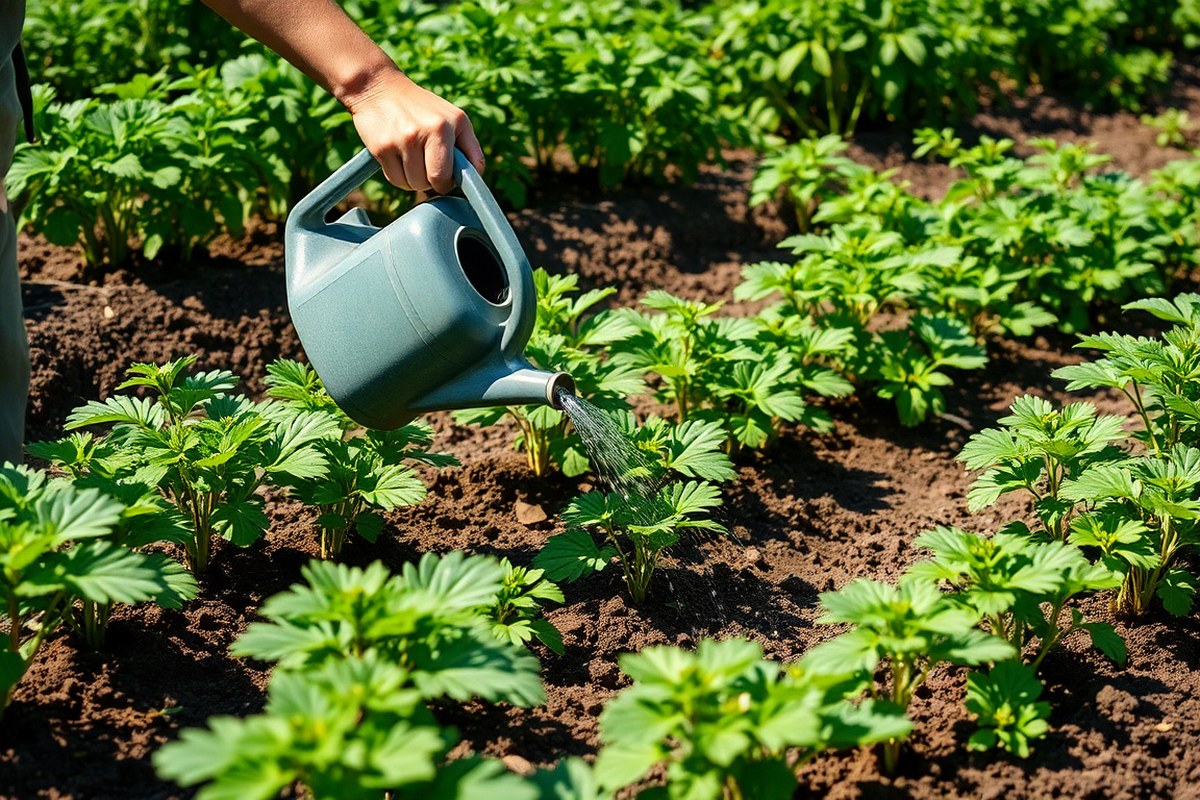
How often should you water potatoes depends mostly on weather and soil. Aim to water your potatoes once or twice a week. Give about 1 to 2 inches of water each time.
Check soil to see if watering fits your local weather. This keeps the soil moist without drowning the roots.
Check your soil’s moisture by feeling it a few inches down. Check the top 6 inches of soil for dryness.
It’s time to water when this layer feels dry. Potatoes have most roots about 6 inches deep, so water needs to reach there.
Adjust watering on hot days, especially near 75, 80°F, where potatoes may need more water. Avoid watering too often, or the soil may stay soggy, which can cause rot. Water deeply but not daily.
Key Takeaways
- Water potatoes once or twice weekly with 1 to 2 inches of water.
- Ensure water soaks around 6 inches deep to reach potato roots.
- Feel soil moisture regularly to decide when watering is needed.
- Increase watering during warm weather near 75 to 80°F.
- Avoid daily watering to prevent soggy soil and root rot.
- Use mulch to keep soil moist longer and reduce watering needs.
How Often Should You Water Potatoes During Growth

Right after planting seed potatoes, give a light soak. Then wait until the top 2 to 3 inches of soil feel dry before watering again.
This phase lasts about 2 to 3 weeks. Overwatering now can cause seed rot.
Once shoots appear, water every 4 to 5 days. Use about 1 inch of water each week. Keep soil moist but not soaked.
Keep the soil moist but not soggy. During this vegetative growth, proper moisture helps strong leaf and root development.
When plants flower and tubers form (weeks 6 to 8), water more. Give 1 to 2 inches of water weekly. This helps tubers grow well.
Water every 3 to 5 days and keep soil evenly moist. Consistent moisture prevents misshapen tubers and skin problems like common scab.
When tubers start bulking between weeks 8 and 14, potatoes need the most water. Aim for about 2 inches weekly, watering every 3 to 4 days to prevent dry soil. Dry spells followed by heavy watering can cause cracked or hollow tubers.
After tuber bulking, reduce watering gradually as plants prepare for harvest so tubers firm up. Near harvest, keep the soil slightly drier with watering every 7 to 10 days. This reduces problems with storage and disease.
Adjust watering based on weather and soil type. Hot, dry weather needs more frequent watering, while sandy soils dry faster than clay. Use a finger test to check soil moisture before watering to avoid over or underwatering.
How Much Water Do Potato Plants Need Each Week

Potato plants usually need about 1 to 2 inches of water each week. This water should soak deep enough to reach roughly 6 inches below the soil surface. You can mix rainwater with extra watering to meet this weekly amount.
Weekly Water Amounts by Growth Stage
Early in growth, potatoes need less water, about 1 inch weekly. As their leaves grow, increase water up to 2 inches per week. More water helps plants bulk up tubers and keep leaves healthy.
Watering once or twice a week is typical. But more might be needed in hot, dry weather. Always adjust depending on soil and rainfall to avoid overwatering or dryness.
| Growth Stage | Weekly Water Amount | Watering Frequency |
|---|---|---|
| Early Growth | 1 inch | Once or twice a week |
| Peak Foliage Growth | Up to 2 inches | Several times per week |
| Pre-Harvest | Reduce watering | Stop watering |
Providing even moisture during the peak growth helps prevent cracking and misshapen tubers. Decreasing watering before harvest lets plants cure properly.
Soil Moisture Depth Targets for Potatoes
Water should reach about 6 inches deep where roots take up moisture. Shallow watering can cause weak growth by drying out roots. Deep soaking encourages roots to grow strong and healthy.
Push your finger about 2 inches into the soil to test moisture. Add water when the soil feels dry at that depth. Continue watering until water flows out from the bottom of the container or bed.
Don’t guess if the soil is dry; check with your finger for moisture.
Balancing Rain and Irrigation
Track local rainfall to adjust how much you water your potatoes. Subtract rain from the 1-2 inch weekly water target to avoid overwatering. Use a rain gauge or weather reports to stay informed.
When rainfall is under 1 inch weekly, use irrigation to meet plant needs. Keep soil evenly moist; avoid soggy spots which cause root problems. Consistent monitoring can prevent both underwatering and root rot.
The Best Time of Day to Water Potato Plants
Water potato plants early in the morning to keep soil moist and foliage dry. Morning watering helps reduce evaporation and lowers disease risks. Avoid watering at night, especially in cooler climates, to prevent damage to the plants.
Advantages of Morning Watering
Watering potatoes early gives plants time to absorb moisture before the sun rises high. This helps the soil stay moist longer, which potatoes need throughout the day.
The cooler morning air means less water evaporates. So your plants get more of what you give them.
Morning watering also leaves the leaves dry during daylight, which reduces fungal disease risks. Potatoes thrive when their foliage dries quickly. Wet leaves overnight create ideal conditions for diseases like blight and mildew.
Risks of Evening and Night Watering
Watering potatoes in the evening or at night keeps leaves wet longer, increasing disease chances. Damp conditions overnight can cause fungi or bacteria to attack. This may lead to wilted leaves or spots on foliage.
Another risk is waterlogging the soil if watering is heavy and slow to dry. Too much water around the roots, especially late in the day, can cause rot.
Avoid watering after sunset unless soil moisture is critically low. Choose early morning instead.
Adjusting Watering Time in Hot Climates
In hot, dry areas, you may need to water potatoes daily, preferably early mornings. Morning watering still reduces evaporation but the time between watering sessions is shorter. Mulching helps keep soil moist longer and cuts down on how often you water.
Water in the late afternoon only if morning watering missed a day, and soil is dry. Late afternoon watering in extreme heat can cool roots but won’t allow leaves to dry fully. Watch your soil closely and adjust for sandy or fast-draining types that dry quickly.
- Water potato plants just after sunrise for best results
- Use a gentle hand watering method to save water and avoid puddles
- Mulch around plants to improve moisture retention
- Check soil moisture daily in hot weather, especially sandy soils
- Never water right before dark to prevent fungal diseases
- Reduce watering frequency if soil feels cool and moist in the morning
- Adjust watering time for containers as they dry faster than garden beds
How to Tell If You’re Watering Potatoes Correctly
Potato plants show clear signals when you’re watering them right. Their leaves look healthy and green, not wilting or yellowing. The soil should feel moist six to eight inches down.
Use your hand to dig and check. Avoid soggy or completely dry soil.
Overwatering makes soil soggy for days. When you squeeze a handful of soil, water might drip out. Potato leaves can turn yellow and feel soft.
Roots may rot, reducing tuber size and causing disease. Underwatering dries the soil, stunts plant growth, and leads to small or cracked potatoes.
Use this checklist to check soil and plant health:
- Soil feels slightly damp 6-8 inches deep, not wet or dry
- Potato leaves are firm, green, and upright
- No yellowing or wilting leaves
- Soil ball doesn’t drip water when squeezed
- Potatoes develop evenly without cracks or shriveling
To test soil moisture, dig into the soil near plants with your fingers. The soil feels crumbly and dry deeper down. You need to water.
You can also use a moisture meter if you want precise readings. This tool shows soil moisture percentage helping you decide when to water. Avoid watering if the soil is still moist below the surface.
Watch the potato plants every few days, especially after watering. Learning these signs helps you avoid common mistakes.
For example, watering every 4-5 days usually keeps young potatoes moist but not soaked. As weather changes, adjust watering to prevent root rot or dry tubers.
Adjusting Watering for Soil Types and Container Growth
Soil type affects how often and how much you water potatoes. Sandy soil drains water quickly and dries out fast. So water more often, about every 3 to 4 days or daily in hot weather.
Clay soil holds moisture longer but can stay soggy. So water less often and watch for standing water.
Loamy soil balances moisture and drainage well. So stick to watering regularly to keep the root zone moist without overdoing it.
Potatoes grown in containers need more frequent watering than those in garden beds. Containers dry out faster since they hold less soil. For starting potatoes in containers, water about every 3 days.
After tubers sprout, water once every 2 days. Aim for at least 1 inch of water weekly.
Increase watering carefully to avoid overwatering. This keeps soil moist without letting roots sit in water.
| Soil Type | Moisture Retention | Recommended Watering Frequency |
|---|---|---|
| Sandy Soil | Poor; dries out quickly | Every 3-4 days or daily in heat |
| Clay Soil | High; can become waterlogged | Less often; ensure good drainage |
| Loamy Soil | Balanced moisture retention and drainage | Regular watering to keep soil moist |
| Containers (all soils) | Varies but drains quickly | Every 2-3 days, 1 inch water per week |
Drainage controls how often you water, especially for clay soils. Poor drainage traps water and limits oxygen to roots. Check soil moisture 6 to 10 inches down before watering.
Water deeply to encourage roots to grow deeper, improving drought resistance. Adjust watering based on rainfall and heat swings to keep moisture steady.
In raised beds or grow bags, treat potatoes like garden potatoes except for watering frequency. Containers and grow bags need watering more often because soil volume is lower. Sandy garden beds also dry faster, so monitor them closely.
Even in clay soil, never let water pool for long. Good drainage means healthier roots and better yield.
Watch container soil moisture closely; it can dry out much faster than garden soil.
Common Watering Mistakes and How to Fix Them
Many gardeners overwater potatoes, leading to yellow leaves and root rot. Potatoes need moist, not soggy, soil to thrive. Overwatering is common in heavy clay soils or after rain, where water lingers and suffocates roots.
Not watering enough makes potatoes smaller and fewer. Test the soil by pushing your finger about one inch down.
If that soil feels dry, give your potatoes water soon. Keeping a steady watering schedule helps potatoes grow, especially when it’s warm near 75 to 80°F (24 to 27°C).
Watering at the wrong time, like late evening, keeps leaves wet overnight. This raises the risk of potato blight, a serious leaf disease.
Water early in the day so plants dry faster. Avoid watering every day to stop soggy soil that kills potatoes.
- Check soil moisture regularly with your finger or a moisture meter.
- Water only when the top inch of soil is dry to avoid overwatering.
- Water early in the morning to prevent wet foliage disease.
- Adjust watering based on weather and soil type; clay soils need less frequent watering.
- Reduce watering in winter to prevent root rot from cold, wet soil.
- Apply water evenly, avoiding puddles that cause soggy spots.
- Use containers with drainage holes to stop water buildup at roots.
To fix poor watering habits, start by watching soil moisture closely. Use drip irrigation or soaker hoses for steady watering without wetting leaves. Cut back watering if you notice yellow leaves or wilting.
When growing potatoes in containers, water until water drains from the bottom. Then let the soil dry out a little before watering again. This keeps the roots healthy and prevents overwatering.
Fixing inconsistent watering means setting a routine that matches your soil and climate. Avoid guessing when to water.
Over time, consistent care helps your potatoes develop smooth tubers without cracks or hollow spots. These simple steps protect against diseases and boost the size and number of your potatoes.
Watering Strategies for Peak Potato Growth and Bulking
Potatoes need their most water during peak vegetative growth and tuber bulking. Watering should increase gradually to keep soil moist but never soggy. Using hilling helps hold soil moisture near the tubers for better development.
Identifying Peak Growth Phase
The peak growth phase starts around 4 to 6 weeks after planting. This is when the plants begin to develop tubers below the soil. Watch for fast green growth and leaf size increasing quickly.
During this time, the roots expand but still remain shallow. So soil moisture is critical. You want the soil moist down at least 6 to 8 inches.
This depth supplies water to the growing tubers. Keep your soil evenly damp but not soaked.
Step-by-Step Watering Increase
Gradually increase watering volume and frequency when you hit the peak phase. This supports the tuber bulking stage without drowning the roots. Follow these steps for controlled watering:
- Check soil moisture by sticking a finger 6 inches deep into the soil.
- Water only when the soil feels dry or just moist at this depth.
- Increase water by about 25% compared to early growth watering.
- Use a slow, steady watering method to allow deep penetration.
- Aim to deliver 1.5 to 2 inches of water per week total.
- Split watering into two or three sessions per week to avoid saturation.
- Watch the plant leaves; drooping may mean underwatering or overwatering.
Slow watering encourages roots to reach deeper layers and prevents runoff. Water pooling on the surface means you should reduce the amount. Or try changing how you water your potatoes.
Hilling to Support Soil Moisture
Hilling covers the lower stems and tubers with soil, locking in moisture. This layer protects tubers from sunlight and reduces evaporation from the soil.
Do hilling when plants are 6 to 8 inches tall for best moisture retention. Use loose soil and avoid compacting it too hard around the stems.
Adding mulch over hills further keeps soil moist and cool. Check soil moisture regularly below the hill by probing 6 inches deep. Adjust watering if hills feel dry to the touch.
When and How to Reduce or Stop Watering Before Harvest
Stop watering potatoes about one to two weeks before harvest. This timing allows the tuber skins to dry and toughen. Skin setting helps potatoes store longer without rotting.
Watch for yellowing and dying back of the vines. This natural sign shows your potatoes are maturing. When leaves turn yellow and start to flop, slow down watering gradually.
Reduce watering frequency first, then stop completely if the soil stays moist enough. Dry out the soil but avoid letting it become bone dry during this stage. Dry conditions help the tubers cure but harsh dryness can harm the potatoes.
Check the soil moisture by digging a little around your plants. Wait to water when the soil is still damp to touch.
Water only if the soil is dry. Give just enough to stop cracking or wilting.
This tapering off usually happens after 90 to 120 days of growth. It depends on your potato variety. Local climate also affects timing.
Warmer areas may need earlier adjustments, cooler regions can wait a bit longer. Timing may shift if rain fills in for watering.
Before you dig up your potatoes, stop irrigating to avoid soggy soils. Wet soil can cause tuber rot and slow skin hardening, which shrinks storage time. After stop watering, wait 7 to 14 days before harvest for the best results.
Once dug, let potatoes dry in the sun for 2 to 3 days before storing. This extra drying removes soil residue and finishes skin curing. Store potatoes in a cool, dark, and dry place for longer shelf life.
Reduce watering as soon as you see yellowing vines, never wait for a fixed calendar date.
Step-by-Step Action Plan to Water Your Potatoes Right
Follow these steps to give your potato plants the water they need. Check each step to see if your plants look healthy and the soil feels right.
- Planting Day: Water the soil deeply after planting seed potatoes. The soil should feel moist 2 inches below the surface.
- Week 1 to 2: Water your plants 1 to 2 times each week. Give about 1 inch of water each time. This keeps soil moist but not soaked. The soil must stay damp but not soggy.
- Weeks 3 to 6 (Hilling stage): Increase watering to 2 inches per week. Watch for dry soil on top, that means water more.
- Weeks 7 to 10 (Tuber bulking): Keep watering steady with 1.5 to 2 inches weekly. Check leaves; they should be bright green and firm.
- Late Growth (2 weeks before harvest): Cut back on watering gradually. Soil should feel drier but not cracked or dusty.
- Harvest time: Stop watering a few days before digging potatoes. This helps the skins toughen for storage.
- Adjust as needed: If using containers, water more often but with smaller amounts. Clay soil needs less water than sandy soil.
Frequently Asked Questions
How Often Should You Water Potatoes in Extremely Hot Weather?
Water potatoes daily in hot weather to prevent drying out. Heat speeds water loss, so frequent watering keeps tubers healthy.
Can Overwatering Potatoes Cause Disease Problems?
Yes, overwatering can lead to rot and fungal diseases. Drainage matters to keep roots from sitting in water.
Should You Water Potatoes Differently in Clay Soil Versus Sandy Soil?
Clay soil holds more water, so water less frequently there. Sandy soil drains quickly and needs more frequent watering.
Is It Okay to Water Potato Leaves or Only the Soil?
It’s best to water the soil, not the leaves. Wet leaves can promote fungal diseases on potatoes.
Can Watering Potatoes Too Late in the Day Cause Issues?
Watering late can leave plants damp overnight, causing diseases. Morning watering lets plants dry during the day.
Do Potatoes Need More Water When Flowering?
Yes, increase watering as potatoes flower to support tuber growth. This stage needs moisture for good yield.
Wrapping Up
Potatoes need careful watering to grow well and avoid problems. Check soil moisture and plant condition often. Start adjusting your watering schedule now to see better yield when harvest comes.