How Do You Stake a Tomato Plant: 8 Proven Ways to Support Healthy Growth
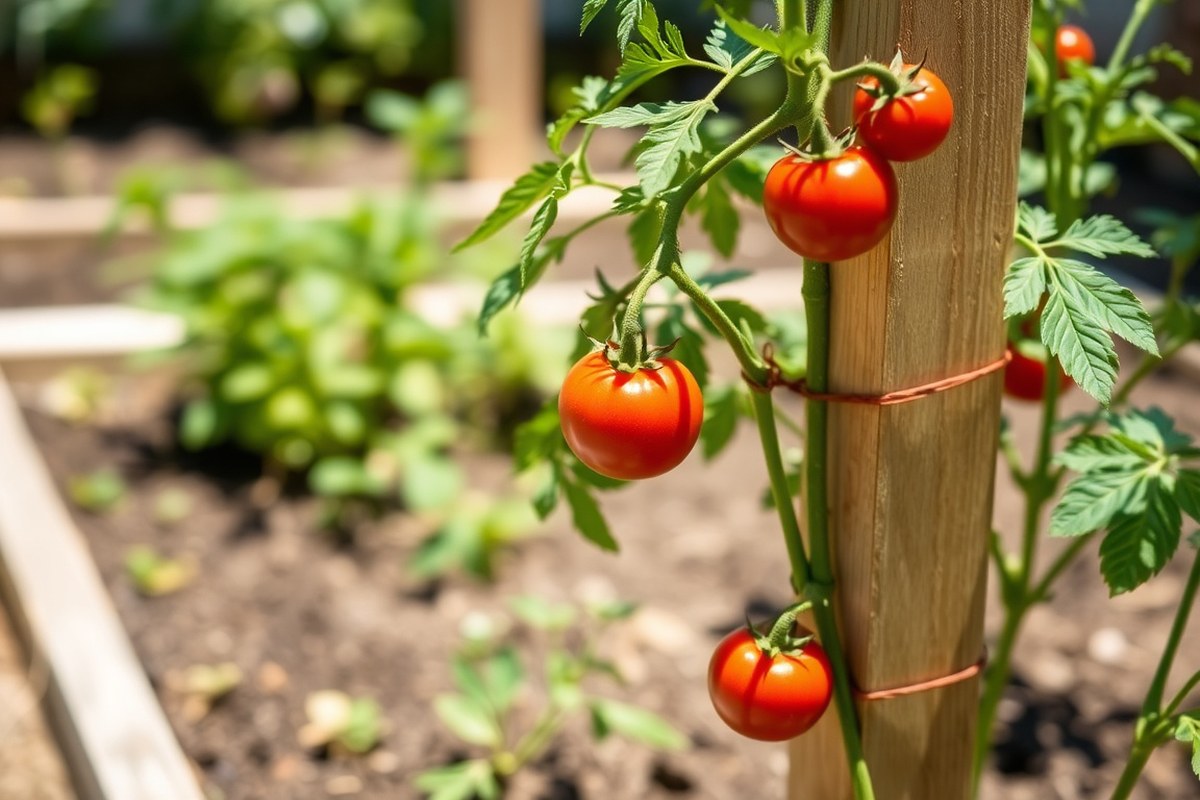
Push a strong wooden or metal stake into the soil near the plant. Insert the stake about 12 inches deep and keep it 4 to 6 inches from the base. This helps avoid hurting the roots.
Attach the main tomato stem to the stake every 8 to 10 inches. Use gentle materials like soft ties or tomato clips for support. This method prevents the plant from falling and stops fruits from touching the soil and rotting.
Make sure the ties are snug but not too tight. The plant can lean up to a 45° angle toward the stake. This support helps it grow healthy without bending or breaking.
Key Takeaways
- Drive a stake 12 inches into the soil, 4, 6 inches from the tomato base.
- Tie the tomato stem every 8, 10 inches as the plant grows taller.
- Use soft ties or clips to avoid cutting into the stem.
- Keep the first tie when the plant reaches about 12 inches tall.
- Allow the plant to lean slightly toward the stake up to 45°.
- Select stakes tall enough for your tomato variety’s mature height.
1. How to Stake a Tomato Plant Step-by-Step

Place stakes right when you transplant tomato seedlings. Drive stakes 1 to 2 feet into the soil next to each plant.
This gives the main stem support as it grows tall and heavy with fruit. Stakes should be sturdy wood or metal to last the whole season.
Use soft ties like cloth strips or commercial tomato ties. Attach them gently to the stem and stake without squeezing. This holds the tomato plant safely in place.
Tie every 8 to 10 inches as the plant grows taller. The ties prevent damage by letting the stem lean gently, up to about 45 degrees.
Tie your plant with a figure-eight knot. Wrap the tie around the stake first, then around the stem, and back around the stake.
This stops the stem from being pinched or rubbed too tightly. Check ties often to loosen or add more tie points during the growing season.
- Drive a stake into the ground 1 to 2 feet deep next to your tomato plant.
- Place the stake just 2 to 3 inches from the main stem without crowding the plant.
- Secure the stem to the stake using a soft tie, tying a figure-eight knot around both.
- Tie the first support about 8 to 10 inches above the soil. Place it near the base of the stem for best support.
- Add a new tie every 8 to 10 inches as the plant grows. Check tie tension and adjust if the plant feels tight.
- Check your ties weekly, loosening or adding ties to avoid stem damage and keep support.
- Remove old ties that restrict growth or start to wear, replacing them with fresh strips.
2. Choosing the Right Stakes for Tomato Varieties

Choosing the right stake depends on the tomato variety and its growth habit. Indeterminate tomatoes need taller and stronger stakes compared to determinate types. You also want to pick materials that suit your budget and weather conditions.
Common Materials Used for Stakes
Wooden stakes like hardwood (oak, poplar, bamboo) are popular because they are sturdy and natural-looking. Bamboo stakes are common in garden centers and usually affordable. Metal stakes or T-posts offer long-term durability but can be more expensive.
Fiberglass stakes are strong and lightweight but cost more upfront and are less common locally. Choose a stake about 1 to 1.5 inches wide to hold a growing tomato plant well. The material you pick should balance strength, price, and convenience.
Recommended Stake Heights by Tomato Type
Determinate tomato plants grow to about 3 to 4 feet tall. So use stakes at least 5 feet long. This gives enough height for tying without waste.
Indeterminate tomatoes can reach 6 to 10 feet tall. You need stakes about 6 to 8 feet long or taller. These tall stakes help support their growth properly.
Push the stake 1 to 2 feet deep into the soil. This keeps the stake stable in the ground. Then, you get about 5 to 6 feet of support above soil.
You can use heavy-duty cages for indeterminate plants. But tall stakes often provide better vertical support.
Durability and Cost Considerations
Wooden stakes cost about $1 to $3 each on average. They can last many seasons when stored dry between uses. Keeping them dry helps prevent rotting or damage.
Metal stakes last much longer, sometimes 10 years or more. But cost $5 or more per stake. Fiberglass is durable but pricey and less widely available.
For long-term gardens, metal or hardwood stakes are best. Bamboo works if you replace stakes yearly. Think about shipping or buying locally since heavy stakes can be costly to transport.
| Stake Type | Best Use | Typical Height | Main Advantage | Main Drawback |
|---|---|---|---|---|
| Hardwood (oak, poplar) | Indeterminate and determinate tomatoes | 6 to 8 feet | Strong, natural, affordable | May rot if left in soil all year |
| Bamboo | Any tomato, mostly determinate | 4 to 6 feet | Cheap, lightweight, easy to find | Less durable, breaks sooner |
| Metal (T-post) | Long-term indeterminate support | 5 to 8 feet | Very durable, stable | More expensive, harder to handle |
| Fiberglass | Indeterminate tomatoes needing strong support | 6 to 8 feet | Strong, lightweight | High cost, less common |
| Wire Cage (Rebar or concrete wire) | Indeterminate and determinate tomatoes | 4 to 5 feet tall, 18 inches wide | Supports whole plant, ready-made | Plants can outgrow cages |
Select a stake material and height that match the tomato’s growth and your garden setup. Strong stakes help avoid plant damage and fruit loss. Avoid stakes too short or flimsy for the tomato’s mature size.
Place the stake at least 6 inches away from the plant. This space prevents injury to the tomato roots. Avoid pushing stakes too close to stems.
3. Best Methods to Tie Tomato Plants to Stakes
Tie tomato stems gently to stakes using loose figure-eight knots. These knots cushion the plant while holding it upright. Add ties every 8 to 12 inches as the tomato grows taller to avoid damage.
Types of Ties Suitable for Tomatoes
Pick soft, flexible materials that won’t cut into tomato stems. Good options include garden twine, strips of soft fabric, hemp string, and raffia. Avoid wire or anything stiff that can harm the plant.
Plastic clips made for plants also work well. They snap onto stakes without squeezing the stem. These clips save time and protect the tomato better than ties.
Tying a Figure-Eight Knot Correctly
The figure-eight knot loops around both the stake and the stem. It cushions the tomato stem and keeps it from rubbing hard against the stake. The twist acts like a buffer to prevent damage.
Make sure to tie the knot loosely enough to allow room for stem growth. Tight ties can dig into the stem, causing wounds or stress. A loose figure-eight tie holds the plant straight but gently.
- Hold the stake about 6 inches from the tomato stem to avoid root damage.
- Wrap the tie material once around the stake and once around the tomato stem.
- Cross the tie material in an eight shape between stake and stem carefully.
- Loop the tie ends and pull them to form a loose figure-eight knot.
- Adjust the knot so it holds the stem steady but does not squeeze tightly.
- Trim any extra tie material to keep the area neat and safe.
How Often and Where to Tie on the Stem
Tie your tomato plant once it grows to about 12 inches tall. This first tie helps keep the plant stable in its early stage. Add another tie every 8 to 12 inches as the tomato plant grows taller.
Ties should be spaced evenly along the main stem to prevent it from leaning or breaking. Check the ties regularly and adjust looseness as the tomato stem thickens. Proper spacing keeps the plant secure and healthy.
4. How Tomato Varieties Affect Staking Needs
Determinate tomato plants, often called bush tomatoes, usually don’t need tall stakes. These plants grow to about 3 or 4 feet tall and stop growing once fruit sets. A sturdy tomato cage works well for them.
Use a stake about 3 to 4 feet tall. This gives enough support without extra height.
Indeterminate tomatoes act differently. These vine tomatoes grow all season long. They often reach 7 or 8 feet or more.
You’ll need stakes at least 7 feet tall. They hold the weight and support long vines.
Strong stakes like concrete reinforcement wire are helpful. These plants need regular tying as they grow.
Semi-determinate tomatoes fall in between these two types. They grow taller than determinate but don’t get as long as indeterminate vines. Stakes or cages around 4 to 5 feet high usually do the job.
Keep an eye on them. Tie the branches as needed to avoid damage from wind or heavy fruit.
Place the stake 4 to 6 inches from the plant’s base. Push it about 1 foot deep into the soil. This keeps the stake steady and prevents damage to the roots.
For indeterminate types, check the ties every week or two. These plants grow fast and need constant support.
5. Common Tomato Staking Methods and Their Uses
Choosing the best staking method lets you keep tomato plants tidy and healthy. Each method offers different support for your tomato plants. They fit various garden sizes.
Each one also changes how you care for your tomatoes. Here’s a clear look at popular choices like single stakes, Florida weave, cages, and trellises.
Single Stake Method
The single stake method uses one stake per tomato plant. Stakes usually run 3 to 4 feet tall. You tie the main stem loosely to the stake as the plant grows.
This works well for isolated plants or small gardens. Since you place stakes where plants stand, this method doesn’t need plants arranged in rows.
It keeps plants upright and easy to pick tomatoes from. Stakes can be bamboo, wood, metal, or plastic with little difference to the plant.
One downside is more materials and effort since every plant needs its stake. Also, stronger winds or heavy fruit may bend or break stakes unless tied carefully.
Florida Weave Method
Florida weave is a staking technique that uses fewer stakes than one-per-plant setups. You put a sturdy stake every two plants along a row. Twine wraps back and forth between stakes, holding plants upright.
This method fits best in straight rows, saving money and effort on stakes and ties. Twine is added regularly as plants grow, forming a basket-like support. It helps prevent sprawling and keeps plants neat.
Florida weave is cheaper but requires more twine and some know-how to tighten twine properly. It’s better for rows than scattered plants, so planning your garden layout matters.
Wire Cage and Trellis Options
Wire cages surround each tomato plant with circular rings and legs, keeping branches supported while growing. Most are 4 feet tall and can easily fit around plants spaced 2 feet apart. They hold fruit-heavy branches up and reduce tying time.
Trellises use a frame, often wooden or metal, sunk 3 to 5 inches deep near plants. You grow tomatoes beside the trellis and tie vines as they climb the structure. This is great for indeterminate varieties with long vines and for rows.
Cages reduce the need for constant tying but may need extra support for heavy plants. Trellises save space and suit plants growing in rows.
They need you to tie vines regularly. This keeps plants supported and growing well.
Other Space-Saving Methods
Besides standard cages and stakes, some gardeners try alternative supports in tight spaces. Fence panels set near tomatoes offer a vertical frame for tying. DIY cages can be made from chicken wire or old metal materials.
Short stakes or smaller cages work well with cherry or dwarf tomato varieties. They keep your garden compact and manageable without losing plant support.
Adding extra ties to branches is wise even with cages or trellises. Heavy fruit or wind can cause branches to break if not secured well.
| Method | Plant Arrangement | Materials Needed | Support Strength | Cost and Effort | Best Use |
|---|---|---|---|---|---|
| Single Stake | Any layout | One stake per plant + ties | Moderate | Higher cost and effort | Small gardens, scattered plants |
| Florida Weave | Row planting | Stakes every 2 plants + twine | Strong if twine is tight | Lower cost, moderate effort | Long rows, economical |
| Wire Cage | Plants spaced ~2 feet | Wire cage per plant | Good branch and fruit support | Moderate cost, less tying | Small to medium gardens |
| Trellis | Row planting | Frame + ties | Very strong vertical support | Higher upfront cost, regular tying | Indeterminate vines, space-saving |
Use this comparison to choose the best method for your garden. Think about how much space you have. Also, consider how much time you want to spend tying plants.
Rows and bigger gardens do well with Florida weave or trellises. Small rows or individual spots suit single stakes or cages.
Check stakes or cages weekly and tighten ties to avoid damage from heavy fruit or wind.
6. How to Stake Tomato Plants Already Growing
Staking tomato plants after they’ve grown tall is possible, but it takes care. Without staking early, you risk damaging roots when pushing stakes in later.
Roots spread 12 to 18 inches from the stem. So place stakes carefully to avoid cutting them.
To stake safely, keep stakes about 5 to 6 inches away from the plant base. Use tall stakes at least 6 feet long to support the full plant height.
Hammer stakes 8 to 12 inches deep for a strong hold. This works even if the plant already fell over.
Follow these steps to secure a toppled or tall tomato plant gently and safely:
- Locate the root area and gently clear soil around the plant base.
- Drive a sturdy 6-foot stake about 6 inches from the main stem.
- Hammer the stake 10 to 12 inches into the ground for stability.
- Tie soft twine or plant ties loosely at 8 to 10 inches above ground.
- Gradually tie more loops higher on the stake as the plant grows.
- Gently lift the main stem upright before tying the plant.
- Check ties regularly; loosen or adjust to avoid pinching stems as they expand.
This slow tie approach prevents breaking the stem or uprooting the plant. Avoid tight knots, which can strangle stems or cause wounds.
Most gardeners spend 5 to 10 minutes staking each plant carefully. Stakes typically cost about $3 to $7 each.
Plants that were staked after growing will recover better when cared for slowly. Watch for drooping or broken branches and support them as needed.
Drive stakes at an angle if possible. Tomato vines twist naturally around angled support better than straight ones.
7. How to Support Tomato Plants in Containers
Tomato plants grown in containers need sturdy stakes to support their weight. Choose stakes about 6 feet long to allow extra length for anchoring. Sink the stake into the soil mix near the plant base.
Push it at least 12 inches deep. This gives the plant strong support as it grows.
Cages can hold container tomatoes well. They take up more space though. These cages are hard to fit in small patios.
Stakes provide better control and save room when you tie the plant properly. Use soft garden ties or strips of cloth to avoid damaging stems.
Watch your plant’s growth carefully. Tie the branches loosely every 6 to 8 inches. This keeps the branches well supported.
Adjust ties regularly to prevent cutting into stems as they thicken. Secure the main stem first, then loosely tie heavier side branches to the stake.
- Use a 6-foot stake made from wood or metal
- Insert stake 12 inches deep near the main stem
- Tie plant loosely every 6 to 8 inches with soft ties
- Check ties weekly and adjust for growth
- Choose determinate tomato varieties for smaller containers
- Use a deep container, at least 12 inches, for better root space
- Avoid tight ties to prevent stem damage
Container soil must stay moist but not soggy to keep stakes firm. Lightweight containers may tip over if stakes aren’t anchored deeply. For added stability, place the container on a flat surface and use wider, heavier pots.
Good staking keeps branches upright and fruit clean. Watch for signs of stress like drooping or branches bending away from ties. Adjust the ties often to avoid damaging the plant.
Change the stake depth if needed. This helps improve tomato size and quality.
8. Common Staking Mistakes and How to Fix Them
One common mistake is tying tomato plants too tightly to the stake. Tight ties can cut into the stem, causing damage or restricting growth. Use soft ties for your tomato plants.
Leave about a half-inch space between tie and stem. This helps avoid injury to the stem.
Incorrect stake placement often leads to poor support. Place stakes about 12 inches deep in the soil. Position them near the main stem carefully.
Avoid hitting roots when staking. Stakes placed too far can cause plants to lean or fall.
Keep stakes closer to the main stem. This keeps plants upright.
Using stakes that are too short for your tomato variety is another frequent problem. Indeterminate tomatoes can grow up to 8 feet tall. Choose stakes that are 6 to 8 feet long to keep plants upright through the season.
- Tie stems loosely with soft garden tape or cloth strips.
- Place stakes 12 inches into the soil near the plant base.
- Use stakes tall enough for the mature tomato variety.
- Check ties monthly and adjust as the plant grows.
- Remove damaged or rotted stakes and replace them promptly.
- For leaning stakes, push or hammer them straight again.
- Support heavy branches separately to avoid stress on the main stake.
Check stakes if your plant starts leaning or falls. See if the stake is loose or the ties are too tight. Fix these issues promptly for support.
Straighten the stake carefully, and loosen ties before retightening them. This prevents stem damage and keeps the plant stable.
Watch the ties often as your plant grows. Adjust ties to prevent damage to the stem. This also helps keep the plant upright.
Maintaining your stakes is part of good tomato care. Stakes that stay in the ground too long can rot. They may also get loose over time.
Loose stakes risk letting plants topple in wind or heavy fruit. Regularly inspecting and fixing stakes costs little but saves you from losing your crop.
Step-by-Step Action Plan for Staking Tomato Plants Today
Follow these easy steps to stake your tomato plants correctly and support their growth. Check each step’s success as you go to avoid common problems.
- Before planting: Choose sturdy stakes based on your tomato variety. Stakes should be 6 to 8 feet tall and set at least 6 inches deep.
- Day 1: Place the stake next to each tomato seedling without damaging roots. The plant should have room to grow freely around it.
- Week 2: Tie your tomato loosely with soft garden twine. Use strips of cloth around the main stem. Make sure it is not too tight. Make a figure-eight loop to avoid stem damage.
- Week 4: Check the ties once a week. Adjust them as the plant grows. Avoid squeezing or breaking the stems. Add more ties as branches spread.
- After 6 weeks: Cut off side shoots on indeterminate tomato plants. This helps the main stem grow stronger. It also improves airflow.
- Mid-season: Watch the plant height closely. Use more twine or stakes for heavy branches. Give extra support as needed.
- At harvest: Remove stakes and twine carefully to avoid harming roots or plants before harvest ends.
- After season: Clean and store stakes and ties to reuse next year and prevent disease.
Frequently Asked Questions
Can I Use Bamboo Stakes for Tomato Plants?
Yes, bamboo stakes work well for tomatoes. They are strong, natural, and usually affordable, providing good support if inserted deeply.
When Should I Remove Tomato Plant Stakes?
Remove stakes after harvesting when the plant dies. This avoids damage during winter and keeps your garden tidy for the next planting.
How Do I Prevent Tomato Plants from Twisting Around Stakes?
Use soft ties and secure the plant loosely to allow some movement. This prevents damage and helps the plant grow straight without twisting.
Are There Alternatives to Staking Tomatoes to Save Space?
Yes, you can train tomatoes to grow vertically using trellises or cages. These options save space and can make harvesting easier in small gardens.
Can I Reuse Tomato Stakes from Last Year?
You can reuse stakes if they are still sturdy and clean. Inspect for cracks or rot before reuse to ensure good support for your plants.
What Type of Knot Is Best for Tying Tomato Plants?
The figure-eight knot is best because it holds securely without crushing the stem. It’s gentle and easy to adjust as the plant grows.
Wrapping Up
Staking tomato plants right keeps them healthy and boosts your harvest. Start with strong stakes and check ties often as plants grow. Now grab your stakes and tie those tomatoes up for a better yield.