When to Plant Marigold Seeds: A Complete Guide for Best Growth and Blooms
Knowing when to plant marigold seeds is key to bright, healthy blooms. The best time is about 4 to 6 weeks before your last expected frost. This way, you can start seeds indoors and get a jump on the season.
Plant outdoors only once the soil hits 60°F and frost ends. Direct sowing works well when the ground is ready because marigolds germinate best in warm soil. Starting indoors offers earlier blooms, while outdoor sowing saves effort.
Check your local frost dates first and plan around those. Pick whether you want earlier flowers or a simpler process based on your schedule. Timing your planting with frost dates greatly improves success.
Soil temperature matters a lot since marigold seeds need warmth to sprout. Both frost dates and soil temperatures together give the best results for planting. Avoid planting outdoors too early to prevent frost damage.
Key Takeaways
- Start marigold seeds indoors 4 to 6 weeks before your last frost date.
- Wait for soil to reach 60°F before direct sowing marigold seeds outdoors.
- Use seed trays or small pots with drainage holes for indoor starting.
- Marigold seeds germinate best between 70 and 85 °F (21, 29 °C).
- Harden off seedlings outdoors for 7 to 10 days before transplanting.
- Thin seedlings to keep the strongest plant once they reach 2 inches tall.
When Is the Best Time to Plant Marigold Seeds?

Start marigold seeds indoors about 6 to 8 weeks before the frost ends. This helps seedlings grow strong before moving them outside. For example, plant indoors from late February to early March if the last frost is April 15.
Outdoor planting is safest after the last frost passes and the soil is warm. Soil temperature should reach at least 60°F for marigold seeds to germinate well.
Your last frost date might be April 15. Wait until late April or early May to sow marigold seeds outdoors.
This decision rule combines frost date and soil warmth: first, check your local last frost date. Then confirm soil temperature is 60°F or higher. In colder zones 3 and 4, soil might warm enough only by early June.
So indoor starting in late April helps. Warmer zones like 8 or 9 allow direct sowing right after frost, sometimes even in March.
Soil temperature influences seed sprouting because marigold seeds need warmth to break dormancy. Cold soil keeps seeds from germinating, causing delays or poor growth. Using a soil thermometer helps here.
Check soil temperature before planting outside. Plant seeds an inch deep in your garden bed. Make sure the soil has reached 60°F or higher.
Starting indoors means using seed trays with a light, well-draining mix. Keep them in a warm spot around 70°F to 75°F, which encourages even germination.
This step requires patience and a bit of space for seedlings. But it gets flowers blooming earlier than direct sowing.
In USDA zones 9 and warmer, marigolds grow well outside after frost risk ends. You can plant outdoors anytime after frost is gone. The soil should be warm enough for seed growth.
These zones often have frost-free winters, so soil stays warm year-round, supporting continuous sowing. In cooler zones, wait to plant outdoors until the soil heats up.
Cold soil can cause seed rot or poor germination. Give the soil enough time to warm before sowing.
How to Choose Between Starting Indoors or Direct Sowing Outdoors
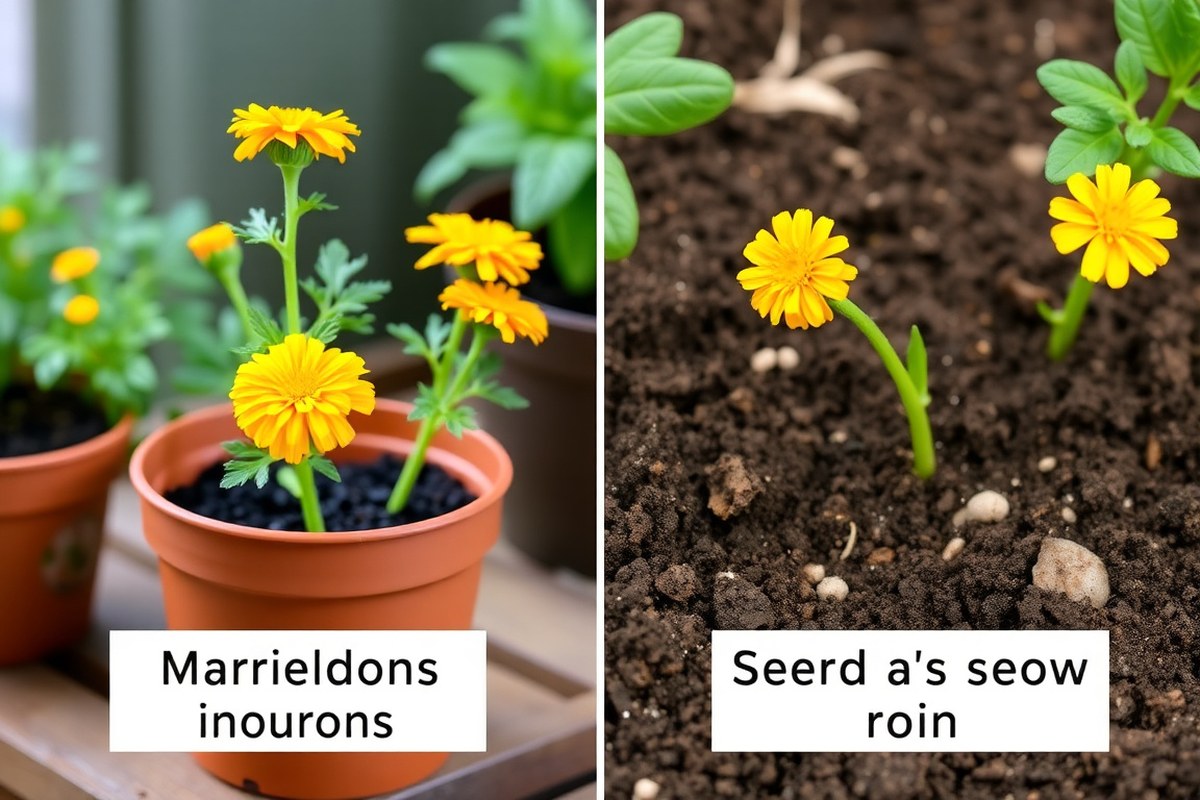
You can start marigold seeds indoors or sow them directly outdoors. But each way has perks and limits.
Indoor starts give you strong, early plants and help you see blooms weeks sooner. This method needs seed trays, light, and a warm spot around 70°F. You’ll transplant seedlings outdoors after 7 to 10 days of hardening off.
Direct sowing outdoors is simpler and needs less gear. Just firm the soil and press the seeds in, covering them lightly.
This works best when soil is steady above 60°F and all frost risks have passed. Outdoor sowing suits gardeners who want to skip transplant worries and save space indoors.
Different types of marigolds also suit these methods differently. African marigolds can grow 3 to 4 feet tall. They do well indoors at first.
This is because they take longer to mature. French and Signet types can handle outdoor direct sowing well, as they sprout and grow faster. Choosing the right starting method depends on your space, time, and the marigold variety.
| Marigold Type | Preferred Starting Method | Reason |
|---|---|---|
| African | Indoors | Requires a longer growing season for big plants |
| French | Direct sow outdoors or indoors | Faster to mature, tolerates outdoor conditions well |
| Signet | Direct sow outdoors | Smaller plants suitable for quick outdoor growth |
The indoor approach costs more since you need trays, seed starting mix, and possibly grow lights. It also takes 6 to 8 weeks before transplanting. Direct sowing needs fewer supplies and less time.
You plant seeds straight in the garden beds. Do this once the frost danger has passed.
Start seeds indoors if you want blooms early. This is also good for unpredictable springs. You’ll get a head start on flowering.
Choose direct sowing for easy plants without much fuss. It’s best when temperatures stay warm.
This method suits simple gardening needs. This way, your marigolds stand a good chance of growing healthy and strong.
Begin indoor seeds about six to eight weeks before frost. This helps you safely jumpstart growth. Time it based on your last frost date.
Understanding Marigold Types and Their Different Planting Timelines
Marigold varieties differ in growth speed, seed size, and planting needs. French and signet marigolds start faster and bloom sooner. Tall African marigolds need earlier indoor sowing and take longer to bloom.
French Marigolds: Timing and Traits
French marigolds, or Tagetes patula, grow quickly and bloom in about two months. You can start seeds indoors four to six weeks before your last frost date. These marigolds handle outdoor sowing well once the soil warms up.
The seeds are small compared to African types, making them easier to plant closely. French marigolds also tend to be less picky about growing conditions. Their fast growth suits gardeners who want blooms early in the season without much fuss.
African Marigolds: Growth and Planting Tips
African marigolds, Tagetes erecta, grow taller and take longer to flower than the others. Start your seeds indoors six to eight weeks before the last frost. This helps prevent seedlings from becoming leggy.
Early starting gives them a strong head start. These marigolds have larger seeds and need more space to grow.
Tall marigold types, like Coco Gold, grow 30 to 40 inches tall. They work well as cut flowers. You can use them for fresh indoor bouquets.
They don’t handle outdoor direct sowing well in cooler soils. Waiting until after the frost and when the soil warms is important for good germination.
Signet Marigolds: Best Practices
Signet marigolds, or Tagetes tenuifolia, grow steadily and have fine foliage with small flowers. Like French marigolds, start seeds indoors six to eight weeks before the last frost date. They also manage outdoor sowing better once the soil temperature rises.
Signet varieties bring a different texture to your garden with their delicate leaves. They mature moderately fast, falling between French and African types in growth timing. These marigolds are less common but add nice variety and can handle varied planting methods.
Soil Temperature and Frost Dates: Two important Rules for Timing
The soil temperature affects marigold seed germination more than calendar days. You want soil at least 60°F before planting. Seeds that go into colder soil take longer to sprout or may not sprout at all.
Knowing your last frost date helps you avoid planting when frost can kill young plants. You can usually find this date through local weather services or gardening websites. Marigold seeds planted outdoors should go in about one to two weeks after this frost date.
Estimating soil temperature without a thermometer can save money and still guide your planting time. Feel the soil at the depth you plant seeds, around 1 inch deep. Soil that feels warm like bathwater is usually above 60°F. Cooler soil feels cold or damp, not pleasant to your fingers.
Decide when to plant marigold seeds by checking soil warmth. Check your area’s frost dates too. Use both to find the best planting time.
- Check your local last frost date using a gardening app or website.
- Wait one to two weeks after this frost date to protect seedlings from late freezes.
- Feel the soil about 1 inch deep in the morning. It should feel warm, not chilly.
- Test soil temperature by feeling it against your wrist. Warm soil feels similar to the inside of your wrist. Warm means about 60°F or higher.
- Avoid planting if the soil feels cold or soggy to the touch.
- Cold soil should be covered with clear plastic to heat up. Wait 3 to 5 days before checking it again.
- Plant seeds spaced well in soil or seed compost once the soil stays warm.
Soil warmth ensures fast, even sprouting in about 4 to 7 days. Planting too early risks slow sprouting and weak seedlings that likely won’t thrive.
Wait for soil to warm and frost danger to pass before planting. This helps marigold seeds grow strong and healthy.
Preparing to Plant: Equipment, Soil, and Seed Starting Mix
Marigold seeds grow best in a light, well-draining seed starting mix. Regular garden soil is too heavy and may hold too much water. Choose a sterile, soilless mix with peat moss, vermiculite, or perlite.
This helps seeds sprout healthy. It also prevents disease from soil.
For indoor planting, use trays or small pots with drainage holes. Seed trays are budget-friendly and hold many seeds at once.
Small peat pots or plug trays work well too and are easy to move or transplant. Make sure containers clean and free of old soil to avoid fungus.
- Seed starting mix that’s light and drains well
- Seed trays, peat pots, or small containers with drainage holes
- A spray bottle or gentle watering can for moistening soil
- Labels or markers to track seed varieties and planting dates
- A heat mat or warm spot to maintain soil around 70°F for germination
- A clear cover or plastic wrap to keep humidity high during sprouting
Marigold seeds don’t usually need soaking or scarifying before planting. Directly sow or press seeds lightly into the prepared mix. Cover them with about a quarter-inch of soil for enough light blocking without smothering.
Water the soil gently using a spray bottle or a watering can with a fine rose. Keep the soil moist but not soggy until seeds sprout. Germination usually takes 5 to 7 days.
Check soil daily to keep it right. After sprouting, remove any plastic covers and give the seedlings plenty of light to avoid legginess.
Don’t let the seed mix dry out completely. Avoid letting it get soaking wet, too. Both can kill young seeds before they grow.
Step-by-Step Indoor Planting Timeline for Marigolds
Start marigold seeds indoors about 6 to 8 weeks before your area’s last frost date. Plant the seeds shallowly, no deeper than ¼ inch, to help them sprout. Space two seeds in each cell for enough room to grow.
Place seeds 1 inch apart when using larger trays to grow. This prevents overcrowding and helps seedlings develop better.
Sowing Seeds Indoors: Timing and Depth
Sow marigold seeds indoors 6 to 8 weeks before the last frost. This timing gives seedlings a strong start before outdoor transplanting.
The last frost date varies by location. So check local gardening resources for exact timing.
Place seeds about ¼ inch deep in seed trays or pots filled with moist seed-starting mix. Plant two seeds per cell to improve germination chances. Space them about 1 inch apart in larger trays instead of cells.
Watering and Light Requirements
Keep the growing medium evenly moist but not soaking wet. Use a spray bottle or light watering to avoid washing out seeds. Water the soil before sowing to settle it and boost germination.
Provide bright, indirect light for 12 to 16 hours daily. A sunny windowsill or a grow light works well. Avoid placing seedlings in deep shade or harsh direct sun that could dry them out quickly.
Thinning Seedlings and Preventing Legginess
Once seedlings reach about 2 inches tall, thin them by trimming weaker plants. Keep only the strongest seedling per cell or thinning area. This helps the remaining plants grow sturdy and avoid overcrowding.
Prevent legginess by providing enough light and avoiding overheating. Maintain temperatures around 65, 70°F for strong, compact seedlings. Rotate trays daily if using natural light to promote even growth.
Follow these steps for growing marigolds indoors from seed:
- Moisten seed-starting mix in trays before sowing seeds.
- Plant seeds ¼ inch deep, two seeds per cell or 1 inch apart.
- Place trays in a warm area with bright, indirect light.
- Keep soil moist using a mist or gentle watering technique.
- Watch for seedlings emerging within 5 to 7 days.
- Provide 12 to 16 hours of light daily to prevent legginess.
- When seedlings are 2 inches tall, thin to one strong plant per cell.
- Prepare for transplanting outdoors after frost danger passes.
When and How to Transplant Marigold Seedlings Outdoors
Transplant marigold seedlings outdoors when they have 3 or more true leaves. Roots should fill the cell tray. Then move them carefully outside.
Harden seedlings off over 7 to 10 days by gradually exposing them outside in mild conditions. Transplant on a calm day, ideally morning or late afternoon, to reduce shock and help survival.
Recognizing Transplant-Ready Seedlings
Seedlings are ready when they have 3 or more sets of true leaves. Not just the first seed leaves. Check leaves before transplanting.
The roots should have filled the cell tray or container, anchoring the plant well. Avoid transplanting if seedlings are still small or weak, as they may struggle outdoors.
Make sure all frost danger is past; marigolds dislike cold. You can check local last frost dates online or through your extension service. Waiting helps prevent setback and protects young plants from cold damage.
Simple Hardening-Off Plan
Hardening off helps seedlings adjust to outdoor light, wind, and temperature. Without this step, seedlings often wilt or die from shock. Start about a week before transplanting and increase outdoor time slowly.
Follow this 7 to 10 day schedule to harden off marigold seedlings:
- On day 1, put seedlings outdoors in shade for 2 to 3 hours. Make sure they stay protected from wind. Then bring them back inside.
- Increase outdoor time by 1 to 2 hours each following day, gradually adding morning sun exposure.
- Keep nights indoors at normal room temperature to prevent cold stress.
- Use a cold frame or light cloth to protect seedlings if temps go below 50 °F. This keeps them safe from cold damage. Cover them at night or on chilly days.
- By day 7 to 10, leave seedlings outside most of the day. Bring them in only if it is very cold or wet. This helps them adjust gradually.
- Watch for signs of stress like wilting or leaf burn and adjust exposure accordingly.
Best Practices for Transplanting Outdoors
Choose a calm, overcast morning or late afternoon to transplant. This timing prevents too much sun or heat stress. Avoid transplanting during windy or very hot conditions to protect tender plants.
Water seedlings well indoors before moving them. Moist soil helps roots settle and reduces transplant shock. After planting, water again gently but thoroughly, avoiding puddles.
Handle seedlings by their leaves, not stems, to prevent damage. Plant at the same soil depth they grew in their container. Mulch around plants to retain moisture and keep soil temperature steady.
Direct Sowing Marigold Seeds Outdoors: Timing and Planting Tips
Plant marigold seeds outdoors after the last frost date when soil reaches 70°F. Cold soil stops seeds from sprouting. Soggy spots invite rot. Choose a sunny area with well-drained, fertile soil to help young plants thrive.
Before sowing, loosen the soil well with a garden fork or tiller. Remove stones, weeds, and debris to create a clean, healthy surface. Mix in compost or aged manure to boost nutrients and improve moisture retention without waterlogging.
Space the seeds about 8 to 12 inches apart to prevent overcrowding. Plant each seed ¼ inch deep, which is roughly six times the seed’s size. Cover lightly with soil then water gently to keep the soil moist but not wet.
- Keep soil evenly moist during germination for 5 to 7 days
- Provide good air circulation to reduce mold risk
- Protect sprouts from cold drafts and heavy winds
- Use row covers or cloches if late cold snaps occur
- Thin seedlings after they develop true leaves to 8, 12 inches
Cold snaps harm fragile sprouts by stunting growth or killing them. Use lightweight row covers or an upside-down bucket to shield them overnight. Remove covers during the day to avoid overheating and help plants toughen up gradually.
Don’t bury marigold seeds deeper than ¼ inch; deep planting delays or prevents sprouting.
Planting seeds in soil that drains well reduces soggy conditions that cause root diseases. Space also helps sunlight and air reach each plant, strengthening their stems. Keeping seedlings safe from wind and cold builds stronger marigolds that bloom on time.
Common Mistakes with Marigold Seed Timing and How to Fix Them
Starting marigold seeds too early indoors often leads to weak, leggy seedlings. These seedlings stretch toward windows for light, growing tall and thin instead of sturdy. To avoid this, give your seedlings lots of bright, direct light.
Use fluorescent or LED grow lights. Keep them on for 12 to 16 hours every day.
Another mistake is planting seeds outdoors too early. Don’t plant before the last frost. Also, avoid planting when soil feels cold.
Marigolds need soil temperatures above 60°F to germinate well. Planting too soon risks frost damage, which can kill young plants or stunt their growth.
Cover seedlings with a cloth if frost comes after planting. You can also move pots indoors for a while.
Here are common timing errors and how to fix them:
- Start seeds more than 8 weeks before the last frost. Use a timer to control the light and heat. This helps maintain steady growing conditions.
- Indoor seedlings grow leggy, set up a grow light just a few inches above plants.
- Direct sowing in cold soil, test soil temperature with a thermometer before planting.
- Frost-damaged seedlings, cover plants or transplant indoors until danger passes.
- Seeds fail to germinate, check seed age and proper soil moisture.
Prevent leggy seedlings by using a seed-starting mix and avoid overwatering. Thin seedlings early so they don’t crowd each other.
For outdoor planting, check your local frost dates and soil warmth. Waiting until the soil feels warm enough helps seeds sprout quickly and grow strong.
To shield seedlings from frost, drape them with garden fabric overnight. This method works well when seedlings are started too soon outside. Alternatively, keep pots indoors under grow lights until the frost danger ends.
Starting seeds indoors 6 to 8 weeks before the last frost offers the best growth chance. This schedule avoids cold harm while promoting strong seedlings.
How to Stagger Marigold Sowing for Continuous Blooms
Planting marigold seeds every two to three weeks helps you enjoy flowers over a longer period. This works especially well for varieties that bloom quickly, like French marigolds. Taller or slower-blooming types, such as African marigolds, might need a longer gap between sowings.
Staggered sowing means you start a new batch of seeds before the previous batch finishes blooming. This keeps fresh flowers coming in your garden or pots. It also gives plants time to rest and prevents all flowers from fading at once.
Follow these easy steps to stagger your marigold sowing and keep your garden lively:
- Check your climate and last frost date. Plant seeds indoors or outdoors once soil hits 70 °F to 85 °F.
- Choose marigold type and know its bloom period. French marigolds bloom in about 60 days. African types may take 90 to 100 days.
- Sow your first batch of seeds. This starts the blooming cycle for your earliest flowers.
- Set calendar reminders. Plant new seeds every two weeks for French marigolds, every three for African varieties.
- Keep soil moist and warm. Use seed starting mix indoors or well-drained garden soil outdoors.
- Thin seedlings carefully. Remove weaker plants early to give strong ones room to grow.
- Watch for blooms. Flowering starts 60 to 100 days after sowing depending on type.
- Repeat sowing until about 60 days before your first expected fall frost. This avoids cold damage and extends your flowering season.
For example, plant French marigold seeds on May 1. Then sow more on May 15 and May 29. This spreads out the blooming period well.
You’ll have fresh blooms from early summer to fall. African marigolds need more spacing between plantings.
Plant seeds on May 1, then again on May 22. Finally, sow more on June 12.
Keep in mind, marigolds prefer warmer soil temperatures for germination. Staggered sowing means keeping track of your planting dates and watering needs. It costs little besides some seed trays and good soil.
This method keeps your garden beds full of color. You won’t get just one short bloom time. It gives flowers over a longer period.
Adjusting Planting Time for Different Climates and Growing Seasons
Gardens in short growing seasons need earlier starts for marigold seeds. For example, if your season lasts 8 weeks, pick seeds maturing fast. Choose varieties that mature in 6 to 8 weeks.
That fits short seasons well. Starting seeds indoors 4 to 6 weeks before the last frost helps. It gives seedlings time to grow before outdoor planting.
In very warm climates, like southern states, sow seeds later in spring or even early summer. Marigolds thrive in warmth but extreme heat can stress young plants.
Aim to plant after soil reaches 60°F (16°C). Shade containers during mid-day heat to prevent wilting.
Cool, mountainous areas need extra care. Marigolds prefer frost-free soil near 70°F (21°C). For alpine gardeners, start indoors 6 weeks before last frost.
Move seedlings outside only when nights stay above 50°F (10°C). Planting later risks frost damage and slow growth.
Container marigolds give more flexibility with timing and climate. You can move pots to warmer spots or indoors at cold nights.
Containers dry out quicker, so water more often. Use well-draining soil and keep seeds in a sunny window if starting indoors.
Here’s a tip for sowing after the last frost outdoors. In cool temperate zones, start seeds from late April to May. This timing helps plants grow well outdoors.
Short summers need fast-growing types planted by mid-May. Warm temperate zones can sow in March or April. But delay if spring is still cold.
Hot climates get the best starts between March and June, avoiding peak heat. Alpine areas start inside mid-March and transplant in June.
Avoid planting marigold seeds too early in cool regions; frost kills seedlings quickly.
Step-by-Step Action Plan for Planting Marigold Seeds
Follow this plan to plant marigold seeds and get blooming plants on time. Check each step to make sure your seeds are growing well.
- 2 to 4 weeks before last frost: Start marigold seeds indoors in seed-starting mix. Look for healthy white roots and green leaves before transplanting.
- 1 week before last frost: Move seedlings outdoors a few hours each day. This helps harden them off gradually. It gets them ready for the garden. Seedlings should remain sturdy and green.
- After last frost date: Transplant seedlings outdoors into well-drained soil. Check that plants adjust and show new growth.
- Alternatively, after soil warms to 60°F: Direct sow marigold seeds in garden beds. Seedlings should sprout within 5 to 10 days.
- Every 2 to 3 weeks: Sow a small batch of seeds to stagger blooming. Check that new seedlings appear regularly for a steady flower supply.
- During growing season: Water plants moderately and add fertilizer every few weeks. Watch for strong growth and bright flower buds.
- Late season: Remove faded blooms to encourage new flowers. Ensure plants stay vibrant until first frost.
Frequently Asked Questions
When Is the Best Month to Plant Marigold Seeds Indoors?
Start marigold seeds indoors about 4 to 6 weeks before your last frost date. That usually falls in late winter or early spring depending on your location.
How Long After Planting Marigold Seeds Will They Sprout?
Marigold seeds typically germinate within 5 to 7 days under warm conditions. Keep the soil moist and between 70, 85°F for best results.
Can I Plant Marigold Seeds Outdoors Right After the Last Frost?
You should wait 1 to 2 weeks after the last frost to sow seeds outdoors. The soil also needs to be warm, at least 60°F, before planting.
What Soil Temperature Is Best for Marigold Seed Germination?
Marigold seeds germinate best between 70 and 85 degrees Fahrenheit. Cooler soil can delay or prevent sprouting, so testing soil temp helps.
Should I Start Marigold Seeds Indoors or Sow Directly Outside?
Start seeds indoors if your frost date is late or unpredictable. Direct sow if you have a warm, frost-free spring and soil temperature above 60°F.
How Can I Stagger Marigold Seed Planting for Longer Blooms?
Plant seeds every 2 to 3 weeks starting indoors or outdoors once conditions are right. This keeps new flowers coming through the growing season.
Before You Go
Plant your marigold seeds when the soil and weather conditions match what marigolds need. Watching your seedlings carefully helps catch any issues early on. Start with just one batch this spring to learn and gain confidence growing marigolds from seed.