How Long Does a Pomegranate Tree Take to Grow? A Complete Guide with Timelines and Tips
How long does a pomegranate tree take to grow? It usually takes 3 to 4 years for a pomegranate tree to fruit. This happens after you plant it.
Starting from cuttings can give you fruit in about 2 years. But seed-grown trees take longer, often up to 7 years before fruiting.
Pomegranates grow best in hot, dry climates where temperatures stay between 75°F and 95°F. Use well-draining soil when planting your tree. Expect about 2 feet of growth per year after it gets established. Keep a close eye on watering and pruning early to encourage steady growth.
Start pruning your pomegranate tree in the second year to develop a strong base. Pruning helps the tree grow faster and makes fruiting more reliable. Watching your tree’s growth stages will help you know when fruit might start to appear.
Key Takeaways
- Expect 3 to 4 years for fruit from transplanted pomegranate trees.
- Cuttings fruit faster, often within 2 years, unlike seed-grown trees.
- Plant in hot, dry climates with temperatures between 75°F and 95°F.
- Use well-draining soil to keep roots healthy and avoid rot.
- Start pruning in year two to encourage strong growth and fruiting.
- Pomegranate trees grow about 2 feet annually once established.
How Long Does a Pomegranate Tree Take to Bear Fruit?
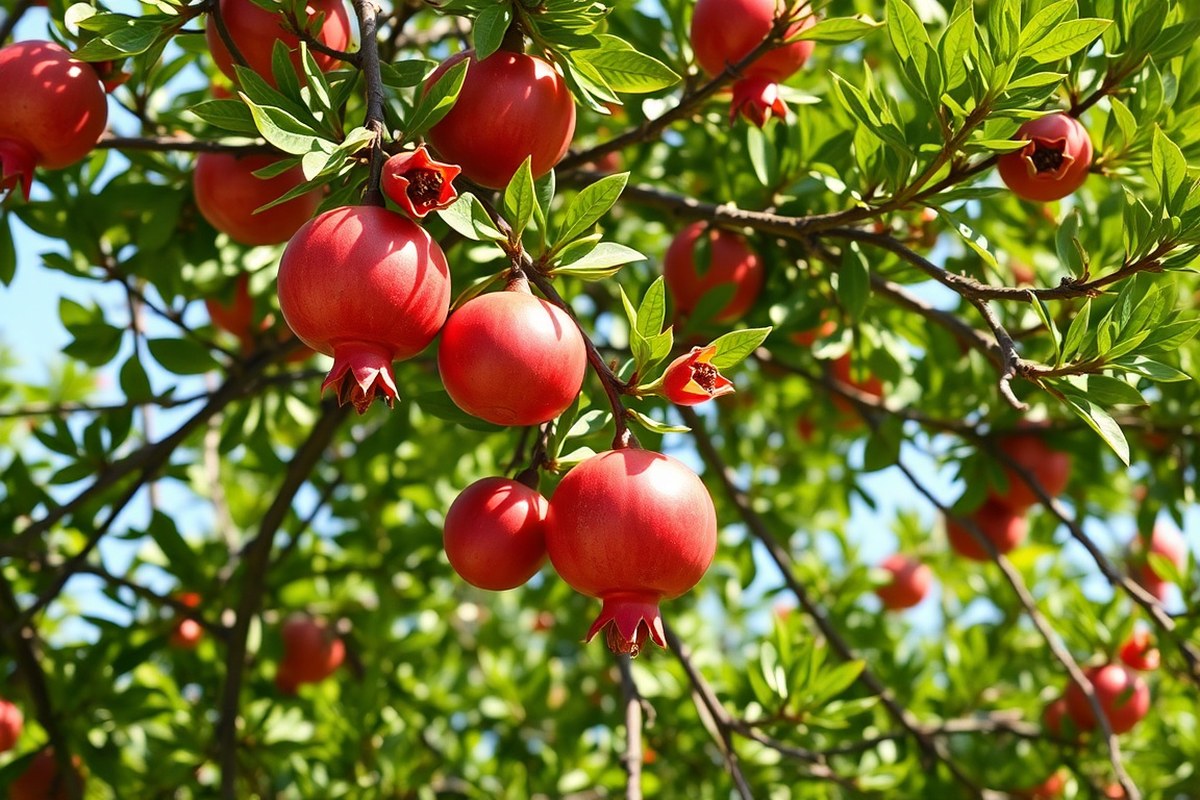
Pomegranate trees usually start producing fruit within two to three years after planting. Using cuttings or grafted trees gets fruit faster, often by year two. Seed-grown trees take longer, typically around five to six years before they bear fruit.
Year by year, the tree focuses on root development first. In the first two years, you’ll see slow vertical growth but strong roots forming below ground.
By years three to five, branches and leaves grow quickly. Tiny flowers start appearing on healthy trees near year three.
You can expect your first small harvest at about year five. Most trees reach 12 to 15 feet in height. They then produce a moderate amount of fruit.
Full production with bigger fruit crops usually takes seven years or more. This depends on care and variety.
Variety plays a role in fruiting time. But the tree’s age, climate, and care matter more. Some cultivars may produce fruit slightly sooner or later.
Warm climates with plenty of sun and well-drained soil speed the process. Cooler or poor soils delay fruiting.
Starting from cuttings helps you skip the slow seedling stage. Cuttings are clones of mature trees, so they “know” to start fruiting sooner.
Seeds need time to grow the entire tree structure. This causes a longer wait before fruit shows up.
Key Growth Stages of Pomegranate Trees Explained
Key Growth Stages of Pomegranate Trees Explained
Growing a pomegranate tree involves clear stages from seed to fruiting. Each phase has key signs, like root growth, leaf development, branch formation, and flowering. Knowing these stages helps you care for your tree the right way as it grows.
Germination and Early Seedling Growth
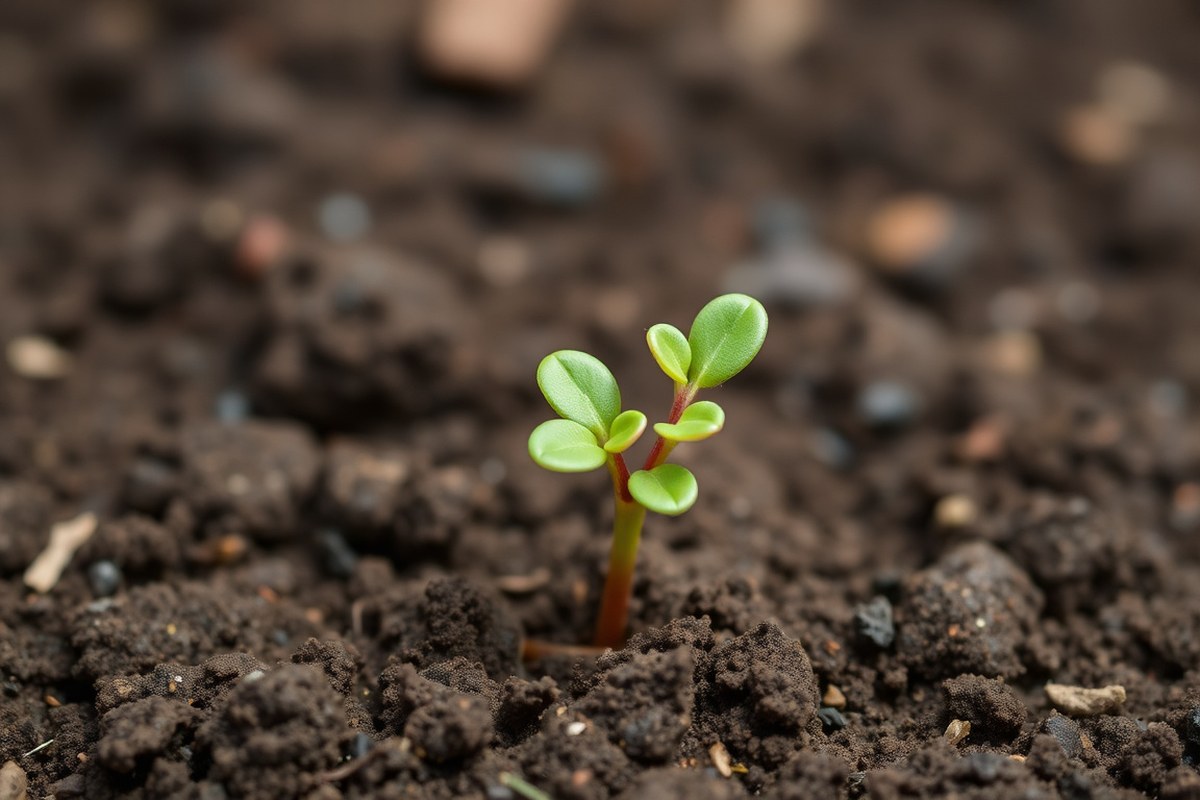
The first stage starts when the seed germinates. Roots push into the soil while tiny shoots break the surface. This phase takes about two to four weeks with proper warmth and moisture.
During early seedling growth, the focus is on root and leaf development. A few true leaves appear after the initial seed leaves. Water your tree about two to three times a week now.
This helps the roots get a good start. Consistency is key to strong root growth.
- Plant seeds in well-draining soil at 1/2 inch depth.
- Keep soil consistently moist but not soggy.
- Provide warmth of 70°F to 85°F to speed germination.
- Thin seedlings to one per pot for healthy growth.
- Wait 4 to 6 weeks for strong root and leaf growth.
Too much water at this stage can drown roots and kill seedlings.
Sapling to Juvenile Transition
After the seedling looks strong, it enters the sapling stage, usually from year 1 to 2. Your tree can grow up to 2 feet a year. It starts to form thicker, stronger branches.
This is when the tree looks more mature. Frequent watering (2-3 times a week) supports this fast growth.
During juvenile growth, pruning is key. Start pruning in the second year.
Remove weak suckers and leave only the strongest shoots to shape a firm main frame. Root systems continue to expand under the ground during this time.
- Water saplings frequently to build roots and leaves.
- Begin selective pruning to focus strength on main branches.
- Check for pests and diseases regularly at this stage.
- Fertilize lightly with balanced nitrogen to boost growth.
- Watch for 2 to 3 feet of height and thicker trunk.
Pruning too much early on can stunt growth and delay fruiting.
Maturity and Flowering Onset
Your tree reaches maturity around years 3 to 4. This stage marks the onset of flowering, with bright orange-red blooms appearing on woody branches. Flowering signals your tree is preparing to produce fruit.
Flowering depends on environmental factors like temperature and moisture. Consistent watering during bloom reduces flower drop and improves fruit set. At this stage, reduce watering frequency to once per week to avoid stress.
- Confirm tree height is about 6 to 10 feet and branching is solid.
- Maintain moderate watering to encourage blooms.
- Apply phosphorus-rich fertilizer just before flowering starts.
- Watch flowers develop and prune only dead or weak branches.
- Protect blossoms from frost and extreme heat.
Late frosts can kill flowers, leading to fewer fruits on your tree.
Establishing Fruit Production
Once flowering happens, expect your tree to start fruiting around years 3 to 5. The fruits take 8 to 12 months to fully ripen after blossoms appear. You’ll notice the tree’s growth slows as it focuses energy on fruit development.
Fruit starts to grow well when the tree is settled. This usually happens after 5 to 7 years. Both roots and branches need time to grow fully.
Water your tree every one to two weeks evenly. Do light pruning to keep it healthy. These steps help you get a better harvest.
- Monitor small fruit growth and adjust watering to avoid drop.
- Thin fruits if they seem crowded to improve size and taste.
- Continue pruning weak shoots after harvest to maintain shape.
- Feed with potassium-rich fertilizer during fruit development.
- Harvest fruits when they are fully colored and slightly soft.
Young trees may produce smaller fruit but building strength helps future crops.
How Starting Method Affects Growth and Fruiting Time
Pomegranate trees grown from seeds take the longest to produce fruit. It usually takes about 3 to 7 years before they start bearing. Seed-grown trees have strong taproots but show variable fruit quality and slower early growth.
Cuttings root within 2 to 3 months if kept moist in the right soil. Trees grown from cuttings mature faster, often fruiting in 2 to 3 years. Their fruit quality is more consistent since the cutting is genetically identical to the parent tree.
Grafted trees produce fruit in 2 to 3 years. They also offer very predictable fruit quality. This makes growth results more reliable for you.
This method joins a chosen variety to a rootstock. It helps the tree grow fast. The growth depends on the rootstock’s health.
| Feature | Seed-Grown | Cuttings / Grafted |
|---|---|---|
| Initial Growth Speed | Slow & Steady | Rapid |
| Genetic Consistency | Variable (Unique) | Identical to Parent |
| Time to Maturity | 3 – 7 Years | 2 – 3 Years |
| Root Structure | Strong Taproot | Fibrous / Rootstock Dependent |
| Predictability | Low | High |
| Predictability of Fruit Quality | Variable | High to Very High |
Starting with seeds is cheaper but takes longer before you see fruit. Cuttings and grafted trees cost more upfront but save years and give reliable fruit quality. Choose grafted trees if you want your first fruit fast and with predictable taste.
Care also matters. Trees still need regular watering and fertilizing to grow strong after planting. Trees grown from cuttings or grafts fruit faster near a south-facing wall.
They thrive best in warm zones. This helps speed fruit production.
Climate, Soil, and Environmental Factors Influencing Growth Speed
Pomegranates grow best in warm, dry climates with temperatures between 75°F and 95°F. Plants in USDA zones 9 and 10 usually bear fruit after about two years. Cooler zones like 6 to 8 can delay fruiting until the third year. You can expect even later fruiting or poor growth if your zone is below 4.
Soil matters a lot for growth speed. Well-draining loam or sandy soil with a pH near 6.0 to 7.0 suits pomegranates best. Avoid heavy clay because it holds water and can drown roots.
Your soil might be heavy. Add sand or organic matter to drain better. Do this before planting your tree.
Sunlight is important. Pomegranate trees need at least six hours of direct sun daily. More sun usually means faster growth and better fruit quality.
Trees in shady spots will grow slower and produce smaller, fewer fruits. Pick a planting spot that stays bright and open all day.
Drought can slow growth but won’t kill established trees because pomegranates resist dry conditions well. Still, steady watering helps speed fruit development, especially in the first two years. Keep the soil moist but not soggy during this time.
Frost can harm young trees quickly. Freezing below 28°F causes damage. It may also delay fruit for a year.
For colder zones, plant by walls. Use frost cloths to protect trees in winter.
Test your soil to know its type. Check your USDA zone too. This info helps you adjust your care.
Add organic matter to sandy or heavy soils. Water young trees weekly in dry spells. But reduce watering if it’s rainy or humid.
Choose a sunny site away from shaded areas. Protect from frost by covering trees or selecting microclimates near buildings.
Effective Pruning and Watering Practices to Speed Growth
Pruning and watering pomegranate trees carefully helps them grow faster and produce better fruit. Prune at the right times using proper cuts to shape the tree. Water amounts should change as the tree grows, especially during flowering.
Pruning Timing and Methods
Start pruning when trees are young, usually in late winter. This helps form a strong structure and removes weak branches. Avoid heavy pruning during blooming or fruit-forming seasons because it can reduce yield.
Use thinning cuts to open the canopy. Remove inward-growing or crossing branches. Cut back any suckers growing from the base to keep energy focused on main branches.
- Prune annually in late winter or early spring before new growth starts
- Remove dead, damaged, or weak branches first
- Thin crowded shoots to improve air and light flow
- Cut suckers growing from tree base regularly
- Make clean cuts close to the branch collar without tearing bark
- Use sharp pruning shears to avoid damaging branches
Improper pruning can delay fruiting by reducing the tree’s energy. Too much pruning weakens the tree and lowers flower production. Keep cuts moderate and focused on improving branch shape.
Watering Frequency by Growth Stage
Saplings need gentle, regular watering to build roots but not drown them. Water young trees once or twice a week depending on weather. They require about 1 to 2 gallons per session.
During vigorous growth after the sapling stage, increase watering frequency. Water mature trees deeply but less often to encourage strong roots. Around 10 gallons weekly is typical for a mature tree.
Flowering and fruit development need steady moisture but no oversaturation. Water 1 to 2 times per week, providing about 10 gallons each session. This supports fruit size and quality.
Avoiding Overwatering or Underwatering
Pomegranates tolerate drought but avoid letting soil get bone dry. Deep watering once a week protects roots and reduces stress. Overwatering leads to root rot and weak growth.
Check soil moisture by feeling 3 to 4 inches below surface. If dry, it’s time to water. Avoid watering if the soil feels wet, especially during cool weather.
Watch for yellowing leaves or wilting; they often signal poor watering habits.
Too little water causes small fruit and delays growth. Too much water reduces oxygen to roots and invites disease. Balance is key.
Encouraging Branching for Fruit
Prune to encourage multiple fruiting branches instead of long straight shoots. Cut selective tips to trigger side shoots. This spreads energy to more buds, improving fruit numbers.
Removing old wood after 3 to 4 years clears space for new branches. Keep the vase-shaped form open in the center for sunlight. This exposure helps flowers develop evenly.
Light pruning on young shoots after flowering can promote new growth but avoid heavy cuts. Limiting crowding reduces pests and disease, which slows growth and fruiting.
Variety Differences and Their Impact on Growth Rate
Pomegranate varieties differ in growth speed, height, and fruiting time. Some produce fruit as early as the second season, especially dwarf types. Others, particularly late-maturing cultivars, take longer to start fruiting and grow taller.
Dwarf varieties usually stay under 6 feet tall. They work well in containers or small garden spaces. Standard pomegranate trees often reach 12 to 20 feet tall with regular care and pruning.
Cold-hardier cultivars suit cooler climates, extending the growing region of pomegranates. Choosing the right variety for your zone affects the success and timing of your harvest. Here’s a quick comparison showing key differences in popular types.
| Variety | Height (ft) | Time to First Fruit | Fruit Ripening Time | Climate Adaptation |
|---|---|---|---|---|
| Wonderful | 12-20 | 2 years | Late (Oct-Nov) | Warm, mild winters |
| Nana (Dwarf) | 3-6 | 2 years | Early (Aug) | Suitable for pots, varied climates |
| Early Spanish | 10-15 | 3 years | Early (Aug-Sept) | Warmer climates |
| Angel Red | 12-20 | 2-3 years | Mid (Sept-Oct) | Cold-hardy, good for cooler zones |
| Salavatski | 10-15 | 3 years | Late (Oct-Nov) | Cold-hardy, thrives in cold areas |
Picking a variety that matches your climate helps avoid delays in fruiting. Late-fruiting types extend your harvest but take longer to appear. Dwarf varieties let you grow pomegranates in tight spots with earlier yields.
Common Mistakes That Delay Fruiting and How to Fix Them
Overwatering young pomegranate trees can slow root growth and cause fruit to drop. Saplings need watering two to three times per week until established. For mature trees, water deeply every one to two weeks.
This helps roots grow deeper. It also supports fruit production.
Pruning mistakes also delay fruit. Cutting too much after flowers appear removes fruiting wood and stops fruit from developing this year.
Instead, prune to shape the tree in late winter or early spring before buds swell. Don’t overfeed either; excess nitrogen leads to leafy growth but fewer fruits.
Fruit drop during flowering often signals stress or pest issues. Watch for pests like aphids and scales, which suck sap and weaken the tree.
Treat infestations early with insecticidal soap or neem oil to keep growth on track. Also, avoid heavy watering or drought during bloom to reduce stress.
Replant or improve soil if your pomegranate roots struggle in poorly drained areas. Raised beds or added organic matter encourage healthier roots. Nitrogen-fixing plants near the tree can improve soil naturally without harming fruit production.
- Water saplings frequently, then switch to deep, less frequent watering
- Prune in late winter, avoid heavy pruning after flowering
- Use balanced fertilizer, not too much nitrogen
- Treat pests quickly to reduce stress
- Plant in well-drained soil or add organic matter
- Watch water levels closely during blooming
Keeping these steps in mind helps your pomegranate tree grow strong and bear fruit sooner. Healthy roots, careful pruning, and pest control matter a lot. They improve how fast the tree produces fruit.
Taking care reduces stress on the tree. Adjust care with the tree’s age and conditions to avoid common delays in fruiting.
When and How to Harvest Your First Pomegranate Fruit
Harvest your first pomegranate fruit about five to seven months after flowering. The fruit is ready when it looks fully colored and feels heavy for its size. Picking carefully helps avoid damage and supports healthy future crops.
Recognizing Mature Fruit Color and Size
Mature pomegranates turn a vibrant red or deep pink, depending on the variety. The skin becomes firm but slightly glossy, signaling ripeness. Smaller fruits or dull skin usually mean they need more time on the tree.
Feel the fruit’s weight before picking. A ripe pomegranate feels heavy because of its juicy seeds inside. A lighter fruit might be dry or underripe, which tastes sour and less juicy.
Timing the Harvest for Best Flavor
Count about five to seven months from the flower bloom to harvest-time. Bloom time varies from April through June, so late blooms often won’t fully ripen. Most pomegranates mature in fall or early winter, just before cold weather.
Wait for your fruit’s skin to crack slightly or show a dull, matte finish. These signs mean the seeds inside are sweet and juicy. You can taste a small piece to check if the flavor matches your preference.
Safe Picking Techniques
Pick pomegranates carefully by hand to avoid hurting the tree or fruit. Use sharp scissors or pruning shears to cut the stem near the fruit top. Avoid pulling or twisting the fruit off to protect branches and future blossoms.
Don’t harvest all fruit at once if some are underripe. Leave unripe fruit on the tree for a few more weeks. The fruit can still ripen during this time.
Avoid picking too early to get best flavor. Harvest ripe fruit in the morning when it is cool and dry for better quality.
- Check the fruit color and firmness carefully before picking.
- Use clean scissors to cut the stem close to the fruit.
- Hold the fruit gently to avoid dropping or bruising it.
- Place harvested fruit in a padded basket or container.
- Leave underripe fruit on the tree for up to a few weeks more.
- Harvest during dry weather to prevent moisture damage.
- Handle fruit carefully to keep the skin unbroken and seeds inside healthy.
Harvest during dry weather to reduce mold and spoilage risk.
Post-Harvest Storage Tips
Store pomegranates in a cool, dry spot or in the refrigerator for up to two months. Keep them away from direct sunlight and high humidity to prevent spoilage. Room temperature storage is fine for just a few days.
For longer storage, place fruit in perforated plastic bags in the fridge’s crisper drawer. Check every few days and remove any soft or damaged fruits promptly. This helps keep the rest fresh and tasty.
Step-by-Step Action Plan to Grow and Harvest Your Pomegranate Tree
Follow these clear steps to grow your pomegranate tree and enjoy its fruit faster. Each step tells you what to do and how to check success.
- Before Planting: Choose a sunny spot with well-draining soil. Test the soil’s drainage by digging and filling a hole with water. It should drain within a few hours.
- Week 1: Plant your tree in spring after the last frost. Water it deeply to settle the roots, checking soil moisture stays damp but not wet.
- Month 1: Mulch around the base to keep moisture and reduce weeds. Check mulch weekly and add more if it’s thinning out.
- Month 3: Begin light pruning of crowded branches. Watch for good air flow and no broken or dead limbs.
- Months 4-6: Water regularly during dry spells, about 1 inch per week. Use a rain gauge or cup to measure rainfall and irrigation.
- Year 1 Fall: Apply a balanced fertilizer once. Look for new growth following feeding as a success sign.
- Year 2 Spring: Your tree may start to show flowers. This happens if it was grafted or planted from mature cuttings. No flowers yet? Keep up care and pruning.
- Year 3-4: Harvest fruits when they turn a deep red color and sound metallic when tapped. Pick one and taste it for sweetness and ripeness.
Frequently Asked Questions
How Long Does It Take for a Pomegranate Tree to Start Flowering?
Most pomegranate trees start flowering within 2 to 3 years after planting. Flowering shows your pomegranate tree is about to make fruit.
Look for blooms in early spring. Use this time to plan your care.
Can Pomegranate Trees Grow in Pots, and Does That Affect Growth Time?
Yes, pomegranate trees can grow in pots, but growth may slow down slightly. Container-grown trees need careful watering and feeding to boost fruiting.
How Tall Does a Pomegranate Tree Typically Grow Before It Fruits?
Pomegranate trees usually reach 6 to 10 feet before fruiting. The tree’s size depends on pruning and the variety you planted.
Does Fertilizing Affect How Quickly a Pomegranate Tree Grows and Fruits?
Fertilizing helps healthy growth and earlier fruiting when done right. Use a balanced fertilizer in spring to support new shoots and blooms.
How Does Root Development Impact the Growth Speed of Pomegranate Trees?
Strong roots speed growth and fruiting by absorbing water and nutrients well. Give young trees deep, regular water to build good roots early on.
Can Cold Temperatures Delay Pomegranate Tree Growth and Fruiting?
Cold snaps can stunt growth and delay fruiting by stressing the tree. Protect young trees with frost cloths during freezing weather to avoid damage.
The Bottom Line
Your pomegranate tree will usually start fruiting between two and four years. Keep learning about your tree’s needs as it grows. Start with good soil and care today to see fruit sooner.