How Does an Earthworm Reproduce? A Complete Guide with Timelines and Facts
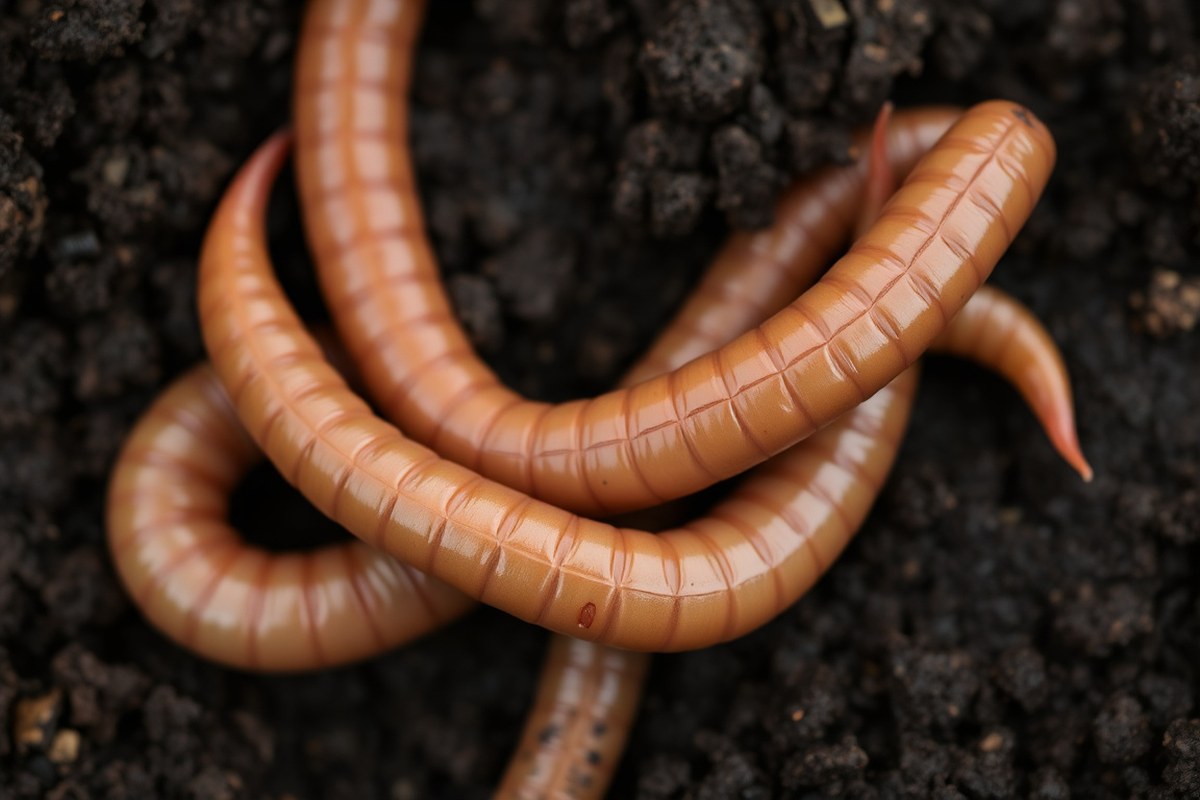
Earthworms are hermaphrodites, with both male and female reproductive organs. They line up head-to-tail and exchange sperm during mating. This sperm exchange is essential to produce fertile cocoons.
After mating, worms create small, lemon-shaped cocoons in the clitellum area. Each cocoon holds several eggs that develop inside. These cocoons get buried in soil or compost for protection.
Eggs take about one month to hatch inside the cocoons. Young worms stay within the cocoon for two to three weeks before emerging. It takes roughly one more month for them to reach full maturity.
Temperature plays a big role in earthworm reproduction. Ideal soil or compost temperature is 59°F to 77°F (15°C to 25°C). Maintaining this range boosts worm health and speeds reproduction.
Key Takeaways
- Earthworms have both male and female reproductive organs.
- They exchange sperm with another worm before producing egg cocoons.
- Cocoons hatch in about 30 days, releasing young worms.
- Young worms mature in roughly one month to start reproducing.
- Ideal reproduction temperature is from 59°F to 77°F (15°C to 25°C).
- Mature worms can produce up to 80 cocoons per year.
How Do Earthworms Reproduce? The Basic Process Explained
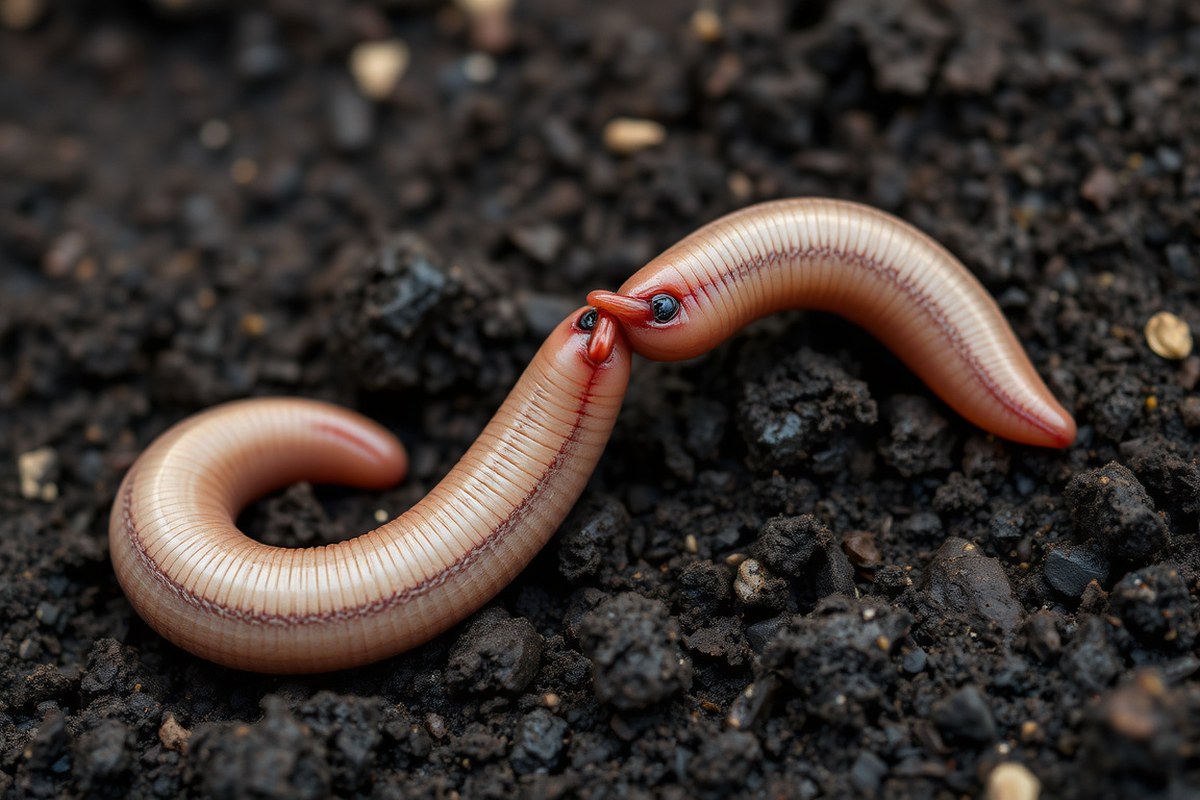
- Find a mate and line up ventrally, belly to belly.
- Secrete mucus to form a slime tube that holds both worms.
- Exchange sperm through pores called spermathecal pores.
- Store your partner’s sperm in special sacs inside your body.
- Separate after sperm exchange, which can take about an hour.
- Produce eggs in your ovaries while keeping stored sperm ready.
- Slide your body through the mucus tube to fertilize the eggs externally.
- Seal fertilized eggs in a protective cocoon where they develop.
Earthworms are simultaneous hermaphrodites, so each individual holds both male and female organs. However, they cannot fertilize their own eggs. They must mate with another worm to swap sperm.
During mating, two worms line up belly to belly. They produce a mucus slime tube to stay connected.
This tube keeps them together and helps exchange sperm through special pores. Each worm stores the other’s sperm for later.
After they separate, they fertilize their own eggs. They do this outside the body by sliding through the slime tube.
The fertilized eggs go inside a protective cocoon that the worm forms. This cocoon is where eggs mature safely.
Usually, earthworms need about 12 months to grow before they can mate. Mature worms can lay up to 80 cocoons a year. This method ensures genetic diversity because two worms contribute genetic material for each cocoon.
Earthworm Reproductive Anatomy: Male and Female Organs
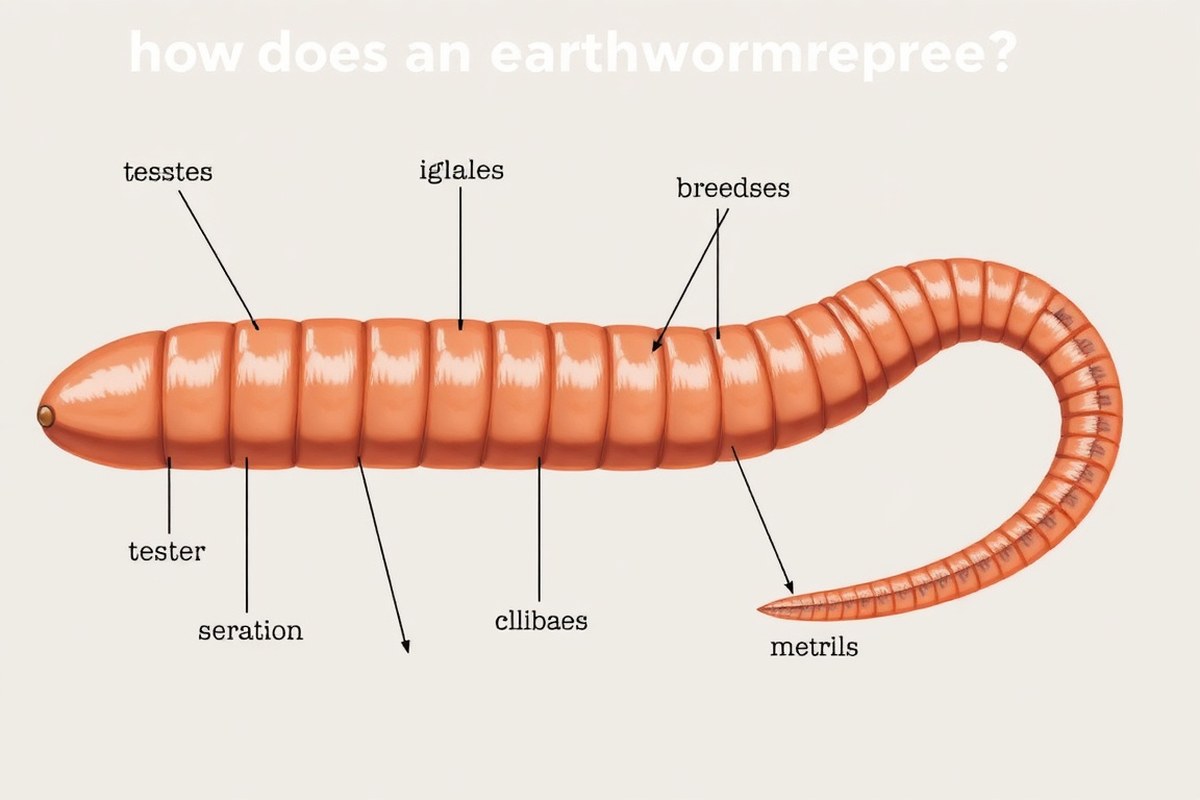
Earthworms have both male and female reproductive organs within their bodies. These organs allow them to act as both sexes during reproduction. Key organs include testes, seminal vesicles, ovaries, and the clitellum, each performing a specific role.
Male Reproductive Organs and Function
The male organs include testes and seminal vesicles. Testes produce sperm, usually located near segments 9 to 15. Seminal vesicles store and expel sperm through male pores found on segment 15.
Seminal vesicles help move sperm outside the body when mating. The sperm travels through sperm ducts connected to the male pores. This setup makes sure sperm can be exchanged efficiently during copulation.
Female Reproductive Structures Explained
The primary female organs are the ovaries and seminal receptacles. Ovaries produce eggs and lie near the 13th segment. Seminal receptacles receive and store sperm from a partner.
These organs allow earthworms to store sperm long enough for fertilization. Fertilization happens later, inside the cocoon formed by the clitellum. The ovaries produce eggs slowly, so female organs mature after the male ones.
Clitellum: The Key Reproductive Band
The clitellum is a thickened, saddle-shaped band found near the head, around segments 32 to 37. It secretes mucus to hold two worms together during mating. After sperm exchange, it also produces a cocoon to protect and develop eggs.
This organ is a visible sign of a mature worm ready to reproduce. Its mucus helps the worms stay aligned during sperm transfer, which lasts hours. Later, the clitellum forms a sticky ring that slides off, carrying fertilized eggs outside the worm.
How Organs Work Together During Mating
During mating, two earthworms line up opposite each other ventrally. The clitellum and mucus keep them attached tightly. Sperm from each worm’s seminal vesicles travel to the partner’s seminal receptacles.
- Testes produce sperm early to ensure readiness.
- Seminal vesicles store sperm before mating.
- Ovaries produce eggs at a slower rate.
- Seminal receptacles store incoming sperm after mating.
- The clitellum releases a mucus cocoon for eggs.
- Fertilization occurs inside the cocoon after it slides off.
This cooperation means both worms act as male and female at once. Such coordination prevents self-fertilization since female organs mature later. Instead, they exchange sperm and fertilize eggs externally inside the cocoon.
Handle earthworms gently to avoid damaging the clitellum, which impairs reproduction.
Mating Behavior and Sperm Exchange in Earthworms
Earthworms find mates by releasing and detecting pheromones in their environment. They come together, align their bodies, and exchange sperm during a process called copulation. After mating, they store sperm in special sacs that later fertilize their eggs inside a cocoon.
Locating a Mate Using Pheromones
Earthworms release pheromones to broadcast their presence to others nearby. These chemical signals help them locate partners even in dark soil environments. Both earthworms detect these pheromones similarly to how they sense food sources like microorganisms.
Once they sense these signals, earthworms move toward one another in moist soil. Finding a mate this way increases the chances of genetic diversity. This system works well since earthworms live underground where visibility is limited.
Positioning and Copulation Process
During mating, two earthworms line up on their bellies with opposite heads. They have a thick band called the clitellum. This band makes mucus.
The mucus forms a slimy tube to keep them stuck together. This tube stabilizes their bodies so they can exchange sperm safely.
Copulation involves each worm passing sperm to the other through their male genital pores. This exchange is reciprocal, meaning both worms fertilize each other’s eggs later. They remain connected for about one to two hours before separating.
Sperm Storage Structures
After mating, earthworms store the received sperm inside internal sacs called spermathecae. These sacs hold the sperm safely until fertilization occurs. The storage allows the worm to wait for ideal conditions before using the sperm.
The spermathecae’s role helps protect sperm from drying out or damage underground. Storing sperm from a partner improve genetic mixing in their offspring. The sperm can stay viable for several days until ready to fertilize the eggs.
Fertilization Timing and Method
Fertilization happens days after copulation when the worm produces a cocoon around its clitellum. The worm slides forward, passing the cocoon over the spermathecae sacs where sperm are stored. The eggs are released into the cocoon, and sperm fertilize them inside.
The fertilized cocoon is then deposited in the soil where embryos develop over a few weeks. Fertilization outside the worm’s body inside the cocoon protects the eggs from drying out. This method also supports successful hatching when environmental conditions improve.
- Detect pheromones released by potential mates in the soil.
- Move toward the source and align ventrally with the other worm in opposite directions.
- The worms produce mucus from the clitellum. This mucus makes a sticky tube that joins the two worms securely.
- Exchange sperm through the male genital pores during reciprocal copulation.
- Separate after sperm transfer, each storing received sperm in spermathecae sacs.
- Produce a mucous cocoon around the clitellum after some time.
- Slide the cocoon forward over the spermathecae, depositing eggs and fertilizing them.
- Deposit the fertilized cocoon in the soil for embryo development.
Cocoon Formation and Egg Development Timeline
Earthworms form cocoons by secreting mucus that hardens into a protective casing. Females deposit fertilized eggs inside these cocoons, which then develop into baby worms. Depending on conditions, eggs take from three weeks up to five months to hatch.
Step 1: Mucus Ring Formation
The clitellum produces a mucous ring around the earthworm’s body after mating. This sticky ring collects eggs and sperm deposited earlier during their sperm exchange. The mucus hardens into a cocoon, which acts as a protective chamber for the developing embryos.
Before the mucous ring forms, the clitellum secretes mucus to create a slime tube during mating. This tube helps exchange sperm between the two worms. Following separation, the mucous ring forms higher on the body, enclosing the reproductive cells.
Step 2: Egg Deposition in Cocoon
After slipping the ring off its body, the earthworm lays eggs inside a mucous cocoon. The eggs develop safely in the cocoon until ready to hatch. This cocoon protects the eggs through early growth stages.
Fertilization occurs as the sperm meet the eggs within the cocoon’s protective environment. Typically, each cocoon contains 4 to 6 eggs but sometimes more.
Although multiple eggs can be inside one cocoon, usually only a few develop fully and hatch. The cocoon shields the eggs from harsh external conditions like dryness. Inside, embryos can develop safely until they become young worms.
Step 3: Cocoon Sealing and Burial
Once the eggs are inside, the cocoon seals tightly to protect the developing embryos. Earthworms then bury these cocoons in moist soil or compost to maintain humidity. High moisture and moderate temperatures support embryo growth inside the cocoon.
Compost worms tend to produce smaller cocoons than soil earthworms, but these hatch faster. This happens because compost heaps offer warmer, damper environments, speeding up development. Moist soil environments during rainy seasons also favor cocoon survival.
Step 4: Hatching Duration
Under ideal conditions, cocoons hatch within 21 to 28 days. If the environment is cooler or drier, hatching may take up to five months. The optimal temperature range for hatching is between 15°C and 25°C (59°F to 77°F).
Each cocoon typically hatches two to six baby worms. Sometimes, one cocoon can produce up to twenty worms. The number varies depending on several factors like worm species.
Some species adapt to wait out unfavorable times by delaying hatching until conditions improve. After hatching, juvenile worms leave the cocoon to begin their soil life.
From Hatchling to Maturity: Earthworm Growth Stages
Earthworms begin life inside cocoons as tiny versions of adults. They are about 2 to 2.4 mm long and 1.5 to 2 mm wide at this point. Young worms lack a clitellum, the mature saddle-like band on their bodies.
Young worms hatch and begin a growth phase lasting 60 to 90 days. This happens when conditions are just right. During this time, they grow steadily.
They need moist soil to survive since their small size makes them vulnerable to drying out. During this time, juveniles grow steadily, looking just like adults except for the missing clitellum.
Once earthworms reach the reproductive phase, they develop the clitellum. This thickened band means they are sexually mature and ready to reproduce. Worms usually become adults when they reach about one-third to half their max length.
This growth takes around two to three months. Once there, they mature fully.
Temperature and moisture greatly affect how fast earthworms grow. They thrive when temperatures are between 15°C and 25°C (59°F to 77°F). Worms become inactive if soil warms above 30°C or reaches freezing.
Adult earthworms can live from one to five years, depending on species and environment. Worms live longest with steady moisture and moderate temperatures in their soil or bin. Good care makes sure they grow well and live fully.
Too much heat or dry soil shortens their life. Older worms contribute more cocoons, giving your garden a steady supply of new worms.
Keep soil moist but not waterlogged; dryness can kill juvenile worms quickly.
Environmental Factors Impacting Earthworm Reproduction
Earthworms reproduce best when the soil temperature stays between 50°F and 77°F. Temperatures below 40°F or above 86°F usually slow or stop reproduction. During winter, cold slows their breeding, and some earthworms become inactive until it warms up again.
Moisture is critical for egg laying and hatching. The soil needs to be damp but not waterlogged. Too little moisture dries out cocoons, killing eggs before they hatch.
Too much water can flood cocoons, also harming them. Balanced moisture helps young worms emerge safely and grow quickly.
Food availability affects reproduction strongly. When worms find lots of organic material, they grow better. Decomposed leaves or kitchen scraps help them thrive.
This makes them produce more cocoons. Poor soil quality or lack of food leads to slower development and fewer eggs. Good soil lets worms and their cocoons survive threats from predators and changes.
| Factor | Ideal Range | Effect on Reproduction |
|---|---|---|
| Temperature | 50-77°F (10-25°C) | Supports active mating, cocoon development, and hatching |
| Soil Moisture | Damp, not waterlogged | Ensures cocoon survival and egg hatching |
| Food Availability | High organic content | Increases cocoon production and hatchling survival |
| Seasons | Spring to early fall | Peak reproduction period; slows or stops in winter |
During extreme heat or drought, earthworms burrow deeper or become inactive. This reduces cocoon laying and egg survival. Wet seasons bring good moisture and moderate temperatures.
These conditions speed up egg development. Eggs hatch in about 50 to 75 days. These conditions help worms hatch fast and grow into adults quicker.
Soil quality matters, too. Healthy soil with plenty of nutrients and no pollutants supports better worm reproduction.
Adding compost and organic matter can improve soil health and help your worm population thrive. Avoid letting the soil dry out or flood as that harms cocoons and baby worms.
Parthenogenesis and Reproduction Without a Partner
Some earthworm species can reproduce without a mate through parthenogenesis. This means an egg develops into a new worm without sperm fertilizing it. This method is rare among earthworms.
You mostly see it in some nematodes. These groups are related to worms.
Normal earthworm reproduction requires two worms exchanging sperm during mating. They cannot fertilize their own eggs alone. Parthenogenesis skips fertilization.
It makes offspring from unfertilized eggs. This is less common in earthworms but happens more in related species.
Offspring from parthenogenesis are usually viable. But they often come from specific species adapted to this method.
This type of reproduction helps quickly increase worm populations in stable environments. For example, some nematodes reproduce this way, allowing rapid growth without finding mates.
In contrast, earthworms like the common Lumbricus terrestris need a partner to reproduce. They mate by exchanging sperm and then produce cocoons containing fertilized eggs. Parthenogenesis lacks this mating behavior and sperm exchange, making it very different from typical earthworm reproduction.
Asexual reproduction like parthenogenesis can be useful in composting systems where mates are scarce. It speeds population growth since worms don’t need to find partners. But in most vermiculture setups, mates are usually present to ensure sexual reproduction happens normally.
The cost of parthenogenesis lies in limited genetic diversity since offspring are clones. This can make populations more vulnerable to disease or environmental changes. Sexual reproduction mixes genes, creating stronger, more adaptable worm communities.
Common Myths About Earthworm Reproduction Debunked
Cutting an earthworm does not create two new worms. Many people think worms survive if their tail gets cut off. This idea comes from worms living after losing tail ends.
But their survival depends on many factors, not just that. But the head part that controls important functions is the only half that can live. The other half usually dies, so you don’t get two worms from one.
This might seem cruel. But even severed worms can wiggle for hours or days, leading to confusion.
Earthworms have both male and female parts inside their bodies. They must swap sperm with another worm to fertilize eggs. Alone, they can’t reproduce normally, which keeps their genes varied.
Earthworms do not lay eggs above ground. Instead, they produce small, yellowish cocoons underground or in moist places like compost heaps.
These cocoons protect the eggs as they develop. The soil or compost keeps the eggs moist and safe from predators.
Despite frequent reproduction, earthworms don’t overpopulate because many factors keep their numbers in check. Predators like birds and moles eat them, plus limited food and space slow their population growth. Also, environmental conditions like temperature and moisture affect how many young survive.
- Cutting a worm usually only leaves one living head end
- Earthworms have both sets of reproductive organs in one body
- They mate by exchanging sperm, not by self-fertilizing
- Cocoons with eggs stay underground or in damp areas
- Predators and environment keep worm populations balanced
Handling worms carefully can protect their delicate bodies and improve breeding success.
Many believe cutting worms creates new worms, but that’s false. Each worm has both reproductive parts and needs a mate for sperm exchange.
Worm eggs hatch from cocoons underground, not above soil. Natural controls keep worm numbers steady despite their regular reproduction efforts.
Step-by-Step Action Plan to Observe Earthworm Reproduction
Follow these steps to see how earthworms reproduce and develop in your garden or compost bin.
- Before you start: Prepare a moist soil or compost spot to encourage earthworm activity. Check that the soil stays damp but not waterlogged.
- Day 1: Get at least two mature earthworms. Put them close in your prepared area. Watch for them to come into contact and line up for mating.
- Day 2 to 3: Let the worms mate for 12 to 24 hours. They exchange sperm during this time. Look for the worms sticking together tail-to-tail.
- Day 4 to 6: Look for a thick band near the worm’s front. This swollen clitellum shows readiness. This shows egg cocoon formation is starting.
- Week 2: Collect any small, lemon-shaped cocoons you find. Place them in a separate moist container to track hatching time.
- Week 3 to 4: Watch the cocoons daily for tiny hatchlings. Keep soil moist to support their growth to maturity.
- After 4 weeks: Observe young earthworms growing and developing clitella. This shows they are nearing reproductive age.
Frequently Asked Questions
How Often Can a Mature Earthworm Reproduce in a Year?
Mature earthworms can reproduce up to 80 times annually. This high rate boosts worm populations quickly in compost beds.
Can Earthworms Regenerate After Being Cut in Half?
Most earthworms cannot regenerate into two worms if cut in half. Only the head end can sometimes survive and heal, depending on the cut location.
Do Earthworms Use Both Male and Female Organs in Reproduction?
Yes, earthworms are hermaphrodites, using male and female organs together. They usually need a mate to exchange sperm for reproduction.
What Is the Role of the Clitellum in Earthworm Reproduction?
The clitellum forms a cocoon for eggs after mating. It secretes mucus to help eggs develop and protect them.
How Long Does It Take for Earthworm Eggs to Hatch?
Earthworm eggs hatch between 30 and 50 days typically. Warm, moist soil speeds up this process.
Can Earthworms Reproduce Without Mating Partners?
Some earthworm species reproduce through parthenogenesis without partners. However, most species reproduce sexually with a mate.
The Bottom Line
Earthworm reproduction is a clear process involving mating, cocoon creation, and growth. Watching this cycle helps you understand their role in soil health. Try setting up your own observation spot to see these steps firsthand.