How Long Does Plants Take to Grow? A Complete Guide to Growth Times and Speed Tips
How long plants take to grow mostly depends on the plant type. Annuals usually take 50 to 95 days from seed to bloom.
Perennials can take up to two years to reach maturity. Some plants, like herbs, often grow quickly, while flowering shrubs need more time.
Fast growers like radishes can be ready in just 3 to 4 weeks. Slow growers, such as asparagus, might need several years. Fruit trees generally take 3 to 7 years before producing harvestable fruit.
Giant trees like sequoias take even longer, sometimes decades. Their slow growth fits their large size and long lifespan. Gardeners plant these trees for future shade rather than quick results.
Growth speed also changes with conditions. Indoor plants with the right light and temperature grow 20 to 50% faster. Proper watering and nutrients also help plants stay on schedule.
Key Takeaways
- Radishes can be harvested just 3 to 4 weeks after planting.
- Annual plants mature in about 50 to 95 days on average.
- Perennials often need up to two years or more to mature.
- Plants grow roughly 0.8 to 1 inch per week on average.
- Indoors, full-spectrum LED lights help plants grow 30, 50% faster.
- Outdoor growth speed depends heavily on climate and daylight hours.
How Long Does It Take for Plants to Grow from Seed to Harvest?
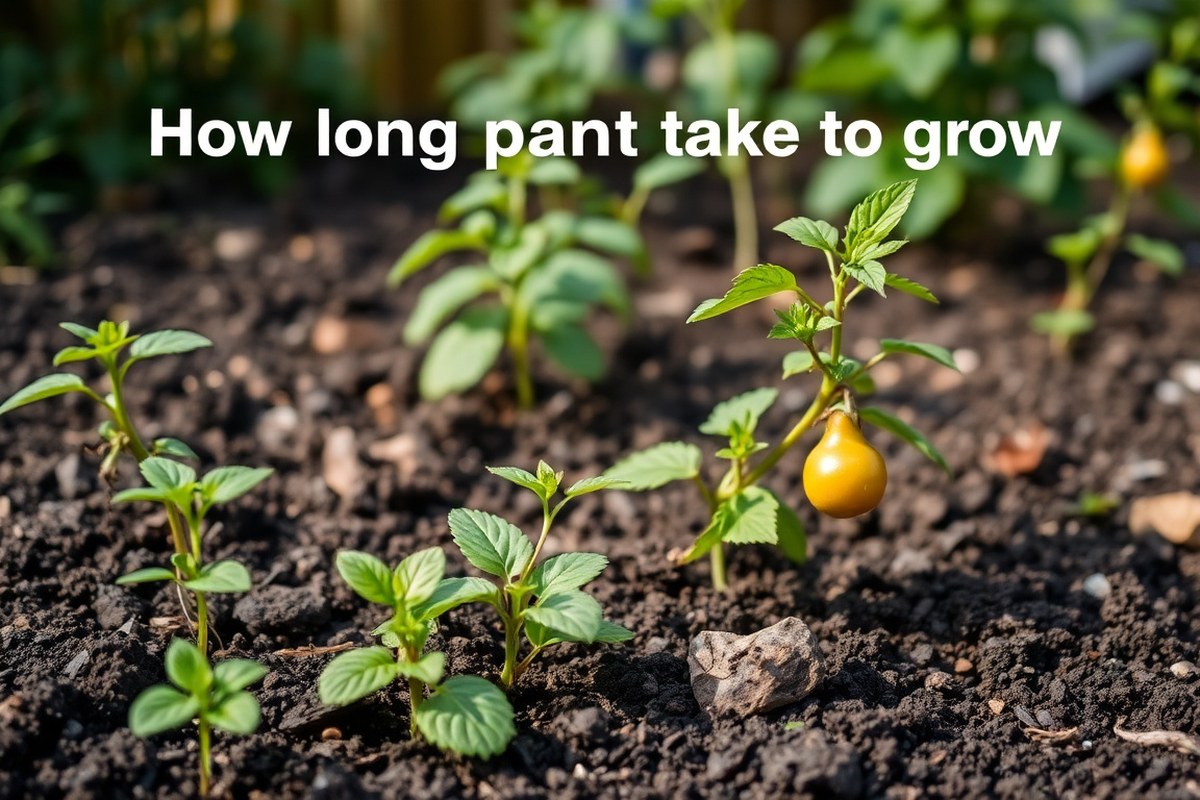
Plants take different amounts of time to grow from seed to harvest depending on their type. Annual plants usually mature within one growing season.
Perennials may take a few years. For most home gardeners, understanding these timelines helps set realistic expectations for their garden.
Annuals are flowers or veggies that live one season only. They finish their life cycle in 50 to 95 days. You plant them, they grow, bloom, then die in one year.
Perennials, like fruit trees or orchids, take much longer. A fruit tree can take two to five years to bear fruit.
This time starts after planting or grafting the tree. It depends on tree type and conditions.
| Plant Type | Example | Time to Grow from Seed to Harvest or Maturity |
|---|---|---|
| Annual | Fast-growing flowers | About 50 days |
| Annual | Regular flowers | About 95 days |
| Perennial (fruit plants) | Fruit trees (apple, cherry) | 2 to 5 years (bearing fruit) |
| Perennial (root vegetables) | Carrot, beet | Several months (germination & harvest) |
| Perennial (houseplants) | Monstera | Indefinite growth; 1 to 2 feet per year |
| Fast vegetable | Radish | 3 to 4 weeks |
| Cannabis (indoor/outdoor) | Flowering plant | 4 to 8 months |
The table shows big differences in growth timelines. Radishes can be harvested in less than a month.
Most fruit trees need years before you get fruit. Annual flowers and vegetables usually take 2 to 3 months or less to mature and harvest.
Some perennials like orchids may take up to two years just to germinate. Houseplants, such as monsteras, grow continuously and don’t have a clear harvest time. Knowing these timelines helps you plan your garden space, pot size, and patience level.
What Are the Main Growth Stages and Their Typical Duration?

The growth of plants involves several key stages, each with a typical timeframe. Seeds usually germinate in about 4 to 10 days. Seedlings then grow for weeks before entering the vegetative stage, which lasts several weeks.
Flowering or fruiting usually takes 4 to 8 weeks or more. It depends on the type of plant you have. Expect some plants to take longer than others.
Seed Germination Time and Conditions
Seeds generally start to germinate within 4 to 7 days under good conditions. Some flower seeds sprout within this short period, making them quick growers.
Fresh seeds tend to germinate faster, taking 2 to 5 days. Older seeds can take up to 10 to 14 days.
Temperature and moisture play a major role in germination. Most seeds prefer soil temperatures between 65°F and 75°F. Keeping the soil damp but not soaked speeds up sprouting without causing rot.
Make sure to plant seeds in fresh, well-drained soil for the best germination rates.
Duration and Care in the Seedling Stage
The seedling stage begins once the seedling breaks through the soil. This phase usually lasts about 2 to 3 weeks. During this time, the plant develops its first true leaves and starts building roots.
Seedlings need moderate light and steady moisture but can dry out quickly. Too much water or poor light slows growth or causes weak, leggy seedlings. Maintaining temperature around 65°F to 75°F helps them grow strong.
Once seedlings have several sets of leaves, they are ready to move into vegetative growth. This happens when the plant looks strong enough to grow more.
It can then put energy into bigger leaves and stems. Growth shifts to support larger plant parts.
Vegetative Growth Length and Characteristics
Vegetative growth can last anywhere from 3 to 16 weeks. Indoors, you control the length with light and pruning. Outdoors, the season and natural light cycles set its length.
In this stage, plants grow fast and produce most of their leaves and stems. For tomatoes and peppers, vegetative growth often lasts about 4 to 8 weeks before flowering begins. Healthy growth needs consistent watering and fertilizing.
Stems thicken and plants stretch taller, supporting future flowers or fruit. You may see rapid leaf growth and new shoots appearing each week.
Flowering and Fruiting Periods
The flowering or fruiting stage follows vegetative growth and usually takes 4 to 8 weeks. Some plants, like indicas, flower faster in about 6 to 9 weeks.
Others take more time. Fruit develops during this phase based on the species.
Flowering needs good care with nutrients high in phosphorus and potassium. Indoor growers often add fertilizer and improve root aeration at this point to speed flowering. Outdoors, flowers appear as days get shorter or when the plant reaches maturity.
This stage demands steady watering. Too little moisture or too much can stop flowers or fruit from developing fully. Watch the plants closely for signs of stress to avoid delays.
Which Plants Grow Fastest and Which Take the Longest?
Fast-growing plants like radishes and lettuce can be ready to harvest within a month. Slow growers, such as trees and many perennials, take years to mature fully.
Annuals complete their life cycle in one season. Perennials and trees grow over several years.
Fast-Growing Vegetables and Herbs
Vegetables like radishes, lettuce, and spinach mature quickly, usually within 20 to 45 days from planting. Herbs like basil need about 6 to 8 weeks to be ready.
They are quick to grow compared to many other plants. These plants are ideal if you want quick results or have limited space.
Microgreens are the fastest, taking only 7 to 14 days. They require very little soil and can grow on a windowsill. This fast growth lets you enjoy fresh greens almost immediately.
Medium-Speed Crops and Flowers
Common vegetables such as tomatoes and peppers take 2 to 6 months. That is the typical time from seed to harvest.
Root vegetables like carrots typically take 70 to 80 days. Medium-speed flowers like zinnias bloom within about 60 days, offering quick color in the garden.
These crops need a bit more patience but will reward you with bigger yields and flowers. For green thumbs planning a garden cycle, these fit well between fast harvests and slow establishes.
Slow-Growing Perennials and Trees
Peonies take 2 to 3 years before they fully bloom and grow. Citrus trees often need 2 to 5 years to produce fruit. These plants last many seasons and need ongoing care and patience.
Perennials develop stronger root systems and larger structures over time. Trees grow wood and roots slowly, so harvesting takes longer. This slow growth offers long-term advantages for your garden.
Here is a table showing plants ranked by growth speed. It lists how long they typically take to bloom or be harvested.
| Plant | Days to Harvest/Bloom |
|---|---|
| Microgreens | 7, 14 |
| Radishes | 30 |
| Lettuce | 30, 45 |
| Spinach | 30, 45 |
| Basil | 42, 56 |
| Tomatoes | 90, 150 |
| Carrots | 70, 80 |
| Zinnias | ~60 |
| Peonies (perennials) | 2, 3 years |
| Citrus Trees | 2, 5 years |
This table helps you plan what to plant based on how soon you want results. Fast growers boost your spirits with quick harvests. Slow growers require patience but add beauty and longevity to your garden.
How Do Indoor and Outdoor Conditions Affect Growth Speed?
Plants grown indoors under full-spectrum LED lights often grow 20, 50% faster than outside. This boost happens because you control every part of their environment. Light stays steady all day.
Temperature stays in the perfect range. Humidity and airflow are also steady.
Outdoors, growth depends on the natural cycle of sunlight and changing weather. Sunlight is good but varies by season and weather, which can slow growth. Temperature swings stress plants.
Humidity changes do too. These slow plant growth compared to indoor spots.
Indoor temperatures between 65 and 75°F usually work best. Humidity should stay between 40% and 60% to avoid dryness or mold.
This range helps plants absorb water and nutrients well, boosting growth speed. You can use a humidifier or dehumidifier and a thermostat to keep these steady.
Natural sunlight provides a broad light spectrum but varies daily. Artificial grow lights supply consistent light intensity for 12 to 16 hours daily. This steady exposure helps plants photosynthesize more often, speeding growth.
Tomatoes indoors with grow lights mature 20 to 30% faster. This speed is higher than outside in temperate zones.
Indoors with grow lights, plants grow 30 to 50% faster than on a sunny windowsill. They also grow 20 to 30% faster than outside.
Outdoors, growth depends on location, season, and weather unpredictability. Indoors, you set all those factors, leading to faster, predictable results.
To optimize outdoor growth, plant when temperatures are steady near 70°F. Water regularly and choose sunny spots with at least 6 hours of direct sunlight daily. Protect outdoor plants when temperature drops below 55°F at night. Cover them or bring potted plants indoors.
Use full-spectrum LEDs inside. Get 40 to 60 watts per square foot. Place lights 12 to 18 inches above plants.
This setup mimics natural sunlight well and keeps growth consistent. Avoid weak side lighting.
Leggy plants result if lights are too far or uneven. Keep lights close and even.
What Environmental and Care Factors Influence Plant Growth Rate?
Plants need the right environment to grow at a good pace. Light, temperature, water, soil quality, and nutrients are the main factors controlling growth speed. Each plant type has its ideal range for these factors.
Light intensity and duration affect photosynthesis, which fuels growth. Provide 14 to 18 hours of light daily, aiming for stage-appropriate light intensity measured in PPFD.
Too little light or a wrong day length slows growth or causes legginess. LED lights must not be too close, or they can burn leaves.
Temperature affects many plant processes. Most plants grow best between 60°F and 85°F. Keep temperatures stable and avoid cold drafts or heat above 90°F to prevent stress. Humidity and vapor pressure deficit (VPD) matter too.
A VPD of 0.8 to 1.2 kPa during the vegetative stage is ideal for most plants. Dry winter air with 20% to 30% humidity can harm growth.
You need to manage it carefully. Otherwise, plants may grow slower or get damaged.
Watering frequency affects root health and nutrient uptake. Check soil moisture often and water when the top 1 inch feels dry. Overwatering leads to poor oxygen in the soil and root rot.
Underwatering slows growth by causing drought stress. Nutrients also play a key role. Feed plants with nutrients balanced for their growth stage, including nitrogen, phosphorus, potassium, and micronutrients.
Soil pH affects nutrient availability. Keep it near neutral unless your plants need specific conditions.
- Use well-drained, fertile soil or appropriate soilless media
- Maintain stable temperature between 60°F and 85°F
- Supply 14, 18 hours of quality light daily, avoid low-light windowsills
- Keep humidity near 50% to 70% or monitor VPD around 0.8, 1.2 kPa
- Water when the top inch of soil feels dry, avoid overwatering
- Feed plants with stage-appropriate balanced nutrients, watch for pH issues
- Increase airflow to reduce stagnant humidity and prevent disease
Soil quality and oxygen availability to roots affect nutrient uptake directly. Hydroponic systems such as deep water culture grow leafy greens faster. They can boost growth by 30% to 50% over soil.
This method speeds up leaf production significantly. Grouping plants with similar care needs makes it simpler to hit ideal conditions consistently.
Don’t ignore airflow; poor circulation increases disease risks and slows growth.
How to Speed Up Plant Growth Indoors: Practical Tips and Techniques
Using grow lights, hydroponics, and the right indoor setup can speed up plant growth noticeably. These methods give your plants steady light, nutrients, and ideal conditions. Follow clear steps to set up your grow tent.
Then pick the right lights. Try hydroponics for faster plant growth.
Choosing the Right Grow Lights
LED grow lights with full-spectrum output work well for all growth phases. They use less energy and produce less heat than other types. Aim for lights providing 30 to 50 watts per square foot for young plants.
Place the lights 12 to 18 inches above seedlings to avoid burning leaves. Adjust height upward as plants grow to keep light intensity balanced. Set timers for 14 to 18 hours of daily light, depending on the plant type.
Before buying, check light coverage for your tent size. A 4×4 foot tent usually needs 3 to 5 LED panels costing $100 to $300 each. Quality LEDs come with dimmable or adjustable spectrum features to tailor light.
Using Hydroponics for Faster Growth
Hydroponics grows plants in nutrient-rich water without soil. Plants access nutrients directly, so roots grow quicker. This method cuts growth times by up to 30 percent compared to soil.
Start with a simple system like Deep Water Culture (DWC). Or use the nutrient film technique (NFT).
Use containers or trays with net pots to hold plants. A water pump and air stone help deliver oxygen to roots.
Water temperature should stay between 65 and 75°F for best nutrient uptake. Replace or top up nutrient solution every 1 to 2 weeks to avoid buildup. Nutrient mixes can cost $20 to $50 for a month’s supply depending on brand.
Optimizing Temperature and Humidity Indoors
Most vegetables and flowers grow best between 65 and 75°F. Keep temperatures stable day and night to avoid stress. Use a heater or fan inside a grow tent to control climate precisely.
Humidity levels should be around 50 to 70 percent during early growth stages. Lower humidity to 40 to 50 percent once flowering starts to prevent mold. A hygrometer keeps track of these levels easily.
Ventilate your indoor space regularly to keep air fresh and prevent heat buildup. Exhaust fans help remove hot air and bring in fresh air from outside. Good airflow is as important as watering and lighting.
Nutrient Management and Supplements
Plants need nitrogen, phosphorus, and potassium throughout growth for fast development. Use a complete fertilizer designed for your plant type. Change formulas between seedling, vegetative, and flowering phases.
Supplements like calcium, magnesium, and trace minerals support strong cell walls and growth. Add organic compost or worm castings to soil setups for better texture and nutrients. Hydroponic growers rely on liquid fertilizers tailored for water systems.
Feed young plants lightly every 1 to 2 weeks, increasing amounts as they grow. Overfeeding can burn roots or stunt growth. Follow label instructions and monitor plants for signs of deficiencies or toxicity.
- Choose a grow tent size matching your available space and plant quantity.
- Install full-spectrum LED grow lights about 12 inches above young plants.
- Set a timer for 14-18 hours of light to mimic natural daylight cycles.
- Select a simple hydroponic system like DWC or NFT for your setup.
- Fill reservoir with nutrient solution and maintain water temperature around 70°F.
- Place seedlings in net pots and suspend roots in nutrient water.
- Use a heater, fan, and hygrometer to keep temperature and humidity steady.
- Feed plants appropriate fertilizer and supplements every 1 to 2 weeks.
Common Mistakes That Slow Plant Growth and How to Fix Them
Slow plant growth often comes from overwatering or underwatering. Too much water fills the soil, keeping roots from getting air. This suffocates roots and slows growth.
Let the top inch of soil dry before watering again. Use pots with drainage holes to avoid soggy soil.
Poor light also makes plants stretch or stay small. Your plant leans toward a window or has thin, weak stems. It needs more light.
Move your plant to a sunnier place. Use a grow light too.
Keep light on for 12 to 16 hours daily. Different plants need different light levels, so check care tags or reliable online sources.
Uneven or slow growth can mean your plants aren’t getting the right nutrients. Look for yellowing leaves, tiny leaves, or spotted leaves, they can signal problems. Adjust fertilizer based on the plant type.
Tomatoes and peppers like extra potassium and phosphorus to fruit well. Avoid overfeeding nitrogen; it promotes leaves but delays fruit and flower development.
- Water only when the top inch of soil is dry
- Use pots with drainage holes to stop waterlogging
- Shift plants closer to a sunny window or add a grow light
- Match fertilizer type and amount to the plant species
- Check for leaf color changes to spot nutrient problems
- Keep indoor temperatures between 65°F and 80°F for steady growth
- Watch for frost or heat stress that can halt growth
You can fix nutrient imbalances by testing soil or using balanced fertilizers from garden centers. Follow label directions on quantities, too much fertilizer can burn roots or slow blooming. Yellow leaves can mean your plant lacks iron.
Use chelated iron sprays to fix it. For potassium or phosphorus deficiencies, switch to bloom-boosting fertilizers specially made for flowering plants.
Light adjustments depend on the plant’s needs. Leafy greens grow well in moderate indoor light. But fruiting plants require bright direct sunlight or strong grow lights.
Slow growth might mean your plant needs more light or fresh air. Move it outside on warm days or increase the artificial light.
Watch your plants every week to catch early signs and fix problems fast. This keeps growth steady and on track.
Realistic Timelines for Harvesting Popular Vegetables, Fruits, and Flowers
Harvest timelines vary a lot depending on the plant type. Fast vegetables like radishes grow in about 30 days. So you can expect a quick harvest in your garden.
Larger fruiting trees like citrus take years to start producing. Usually, they begin between 2 to 5 years.
Flowering plants also differ in their timelines. Fast flowers can bloom in as little as 50 days.
Some flower gardens need up to 90 days to show full blooms. Tracking progress is easier when you note the average days listed on seed packets.
| Plant Type | Days from Seed to Harvest |
|---|---|
| Radishes | 30 |
| Lettuce | 40 |
| Tomatoes | 60, 90 |
| Peppers (hot & sweet) | 70, 85 after transplant |
| Beans | 60, 90 |
| Fast flowers | 50 |
| Citrus trees | 2, 5 years |
Keeping a garden journal can help you track how many days each plant takes. Write down the planting date, germination, and harvest times to spot patterns. This makes it easy to adjust your planting schedule every season.
Continued harvesting can encourage some plants to produce more, especially peppers. For peppers, picking mature green fruits often supports later crops before the season ends. This trick is useful when you want to extend your harvest window.
Note that starting peppers from seed indoors adds about eight weeks before transplanting outdoors.
Step-by-Step Action Plan to Grow Healthy Plants Quickly
Follow these simple steps to speed up your plant growth and get a good harvest. Each step helps you check if your plants are on track.
- Before you start: Choose seeds known for fast growth, like radishes or lettuce. Faster sprouts mean your setup works.
- Day 1: Plant seeds in nutrient-rich, well-drained soil. Seeds should look healthy and start swelling in a few days.
- Week 1: Provide consistent moisture without overwatering. Check soil stays damp and young seedlings emerge.
- Week 2-3: Put plants by a south-facing window. Use grow lights 12 to 16 hours a day. Leaves should turn green and firm.
- After 3 weeks: Thin seedlings if crowded. Plants grow better when spaced properly.
- Week 4: Add a balanced liquid fertilizer every 1, 2 weeks. You’ll see stronger stems and more leaves.
- Week 5 and on: Keep monitoring temperature, light, and water. Adjust if growth slows or leaves yellow.
- Harvest time: Check your plant type’s typical harvest period. Harvest when produce looks full size and firm.
Frequently Asked Questions
How Long Does It Take for a Seedling to Start Growing After Planting?
Seedlings usually begin to sprout within 7 to 14 days after planting. This depends on seed type and soil warmth.
Can Plant Growth Speed Vary by the Season in Outdoor Gardens?
Yes, plant growth is faster in spring and summer due to increased sunlight. Cooler seasons slow down the process.
How Does Soil Type Affect How Quickly Plants Grow?
Plants in rich, well-draining soil grow faster since roots get enough oxygen. Poor soil leads to slower growth.
Do Container Plants Grow Slower Than Those in the Ground?
Generally, container plants grow slower due to limited root space and nutrients. Regular repotting can help.
How Long Does It Take for a Cutting to Root and Grow?
Cuttings typically take 2 to 8 weeks to root, depending on species. Using rooting hormone can speed this up.
Is It Possible for Plants to Grow Too Fast and Weaken?
Yes, overly rapid growth can make plants weak and prone to disease. Balanced nutrients help maintain healthy growth.
Final Thoughts
Most plants take weeks to months depending on their type and care. Good conditions and proper care speed growth. Start by picking the right seeds and keep checking moisture and light levels daily.