What Is a Worms Classification? A Complete Guide to Types and Groups
What is a worms classification? It’s how scientists sort worms into groups based on their traits.
Worm classification helps us understand their biology and how they interact with environments. It also aids in identifying harmful parasitic worms and protecting health.
Worms are grouped by their body shape, size, and life cycle patterns. For example, some worms have segmented bodies while others don’t. Knowing which group a worm belongs to shows how it lives and affects soil or hosts.
Start by looking at key physical features like body segments and symmetry. Then consider if the worm is free-living or parasitic. Paying attention to these details makes worm classification clearer and more useful for studies or management.
Key Takeaways
- Worm classification organizes worms based on physical and life cycle traits.
- Segmented worms belong to different groups than unsegmented ones.
- Parasitic worms are classified partly by their hosts and life stages.
- Earthworms play an important ecological role through soil aeration.
- Size can range from microscopic to over 100 feet in some species.
- Knowing worm groups helps in treating infections and studying ecosystems.
What Is Worm Classification and Why Does It Matter?
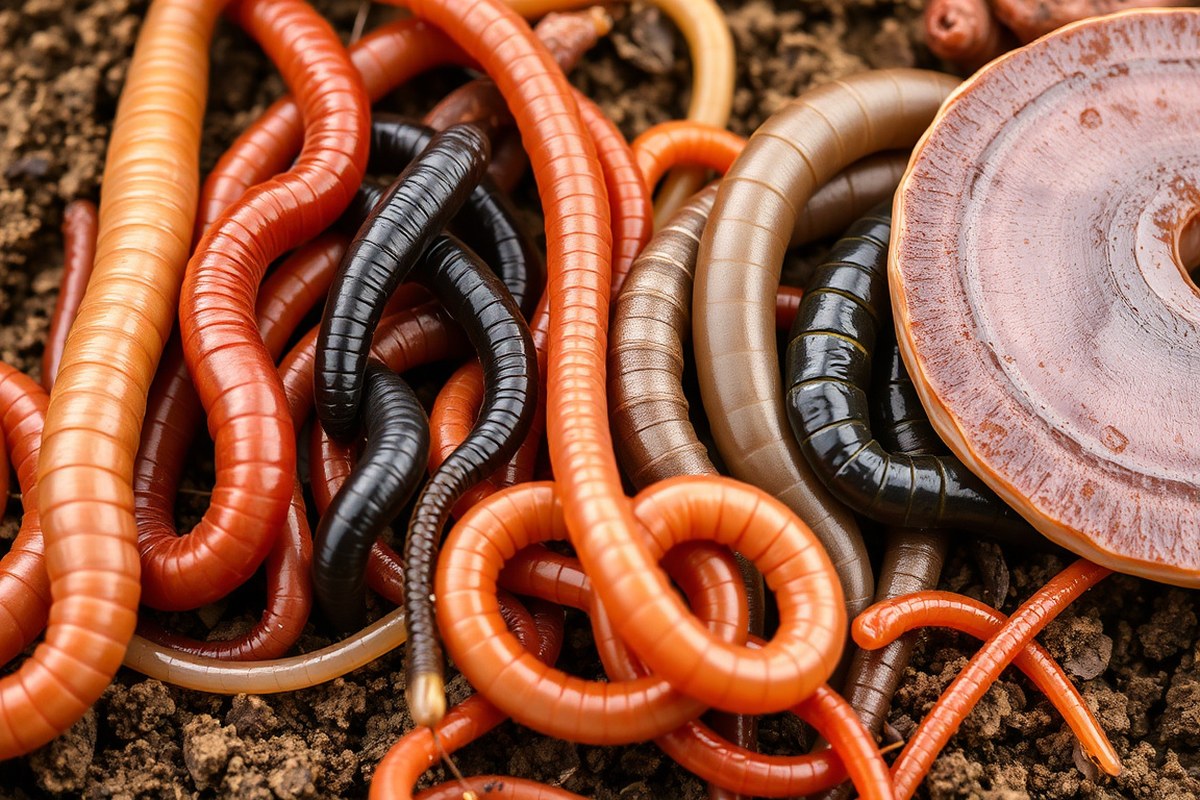
Worm classification means sorting worms into groups based on their biology. Scientists look at features like shape, size, body type, and how they develop. These groups help you understand the vast variety of worms living on Earth.
This sorting shows why worms matter to ecosystems and humans. For example, earthworms improve soil by aerating and breaking down organic matter. Knowing their group shows their role.
Some worms are harmless. Others can cause disease.
Biologists group worms by their body structure and life cycle. Some worms are round, like roundworms, while others are flat or ribbon-shaped. They look at where worms live.
They also study how worms grow. These details help sort worms into phyla and classes.
Classifying worms takes careful study of their physical traits under microscopes and sometimes genetic tests. This process can take days to weeks depending on the worm’s size and complexity. Accurate classification helps scientists track species that spread disease or affect crops.
Wrong grouping can cause confusion about worm behavior or environmental impact. For example, mixing harmless soil worms with parasitic ones can lead to poor pest control decisions. Clear classification offers reliable information for research, farming, and health.
Which Phyla Include Worms and Their Key Features?
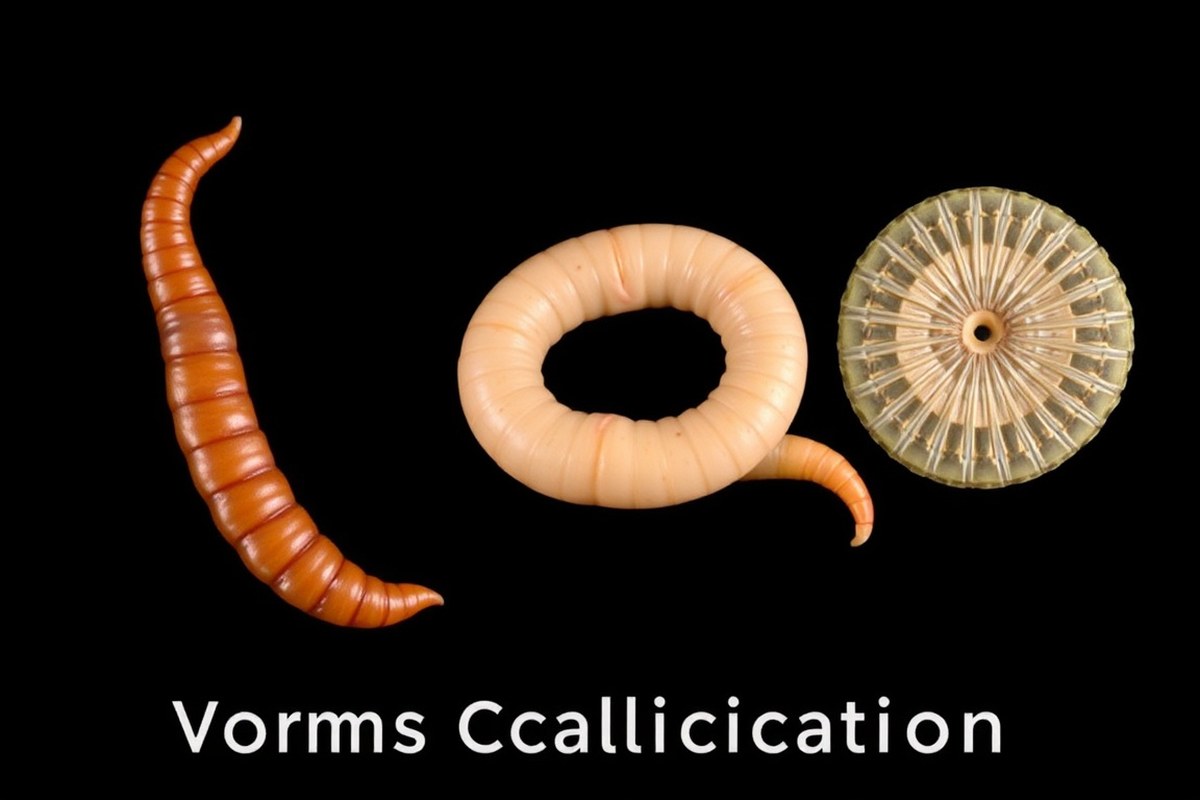
Worms mainly fall into three phyla: Platyhelminthes, Nematoda, and Annelida. Platyhelminthes are flatworms that include flukes and tapeworms. Nematoda covers roundworms found in water, soil, and as parasites.
Annelida contains segmented worms like earthworms and bristle worms. These segmentation rings give them their common name, “ringed worms.” Each phylum differs in body structure and habitat.
| Phylum | Key Features | Examples | Typical Habitat |
|---|---|---|---|
| Platyhelminthes | Flat bodies, no segments, soft-bodied | Flukes (trematodes), tapeworms (cestodes) | Mostly parasitic in animals; some freshwater |
| Nematoda | Round cross-section, unsegmented, tough outer cuticle | Roundworms, hookworms | Soil, freshwater, marine; many parasites |
| Annelida | Bodies segmented into rings, bilateral symmetry | Earthworms, marine bristle worms | Moist soil, marine environments |
Platyhelminthes have thin, leaf-shaped bodies. Flukes range from a few millimeters to 8 centimeters long. Tapeworms attach to intestines and absorb nutrients through their skin.
Nematodes number over 20,000 species. They have simple tube-like bodies with a protective cuticle. Many nematodes live freely in soil or water, but some infect animals and humans.
Annelids have segmented bodies with bristles on each ring. Earthworms help soil by breaking down dead plant matter. Segmentation helps their muscles work efficiently for movement.
Handle soil or water samples cautiously to avoid spreading parasitic worms.
What Are the Major Classes Within Worm Phyla?
Worms belong to different phyla, each with various classes that highlight their key features. These classes group worms by body type, lifestyle, or other traits. Knowing the classes helps you see how worms differ and why each group matters.
Classes of Annelida (Segmented Worms)
Segmented worms belong to the phylum Annelida. They have bodies divided into repeating segments with rings called annuli. This body structure allows flexibility and movement.
The three main classes in Annelida differ by habitat and body features. These classes include:
- Polychaeta: Mostly marine worms with bristle-like structures on each segment.
- Oligochaeta: Includes earthworms and freshwater worms with fewer bristles and simpler heads.
- Hirudinea: Leeches, known for their suction-cup-like mouthparts and parasitic or predatory lifestyle.
Polychaetes often have paddle-like appendages, helping them swim or burrow. Oligochaetes like earthworms improve soil by breaking it up. Leeches are important in medical research and freshwater ecosystems.
Classes of Platyhelminthes (Flatworms)
Flatworms look simple with flat, soft bodies. They belong to the Platyhelminthes phylum. Most are either free-living or parasitic.
Their key classes include:
- Turbellaria: Mostly free-living flatworms, often found in water or moist areas.
- Trematoda: Parasitic flukes with leaf-shaped bodies and complex life cycles.
- Cestoda: Tapeworms, long ribbon-like parasites divided into many segments.
Turbellarians are important in ecosystems as predators or scavengers. Trematodes usually infect vertebrates, including humans, and have complex reproductive systems. Cestodes lack a digestive system and absorb nutrients directly inside hosts.
Classes of Nematoda (Roundworms)
Roundworms in the phylum Nematoda have smooth, tubular, unsegmented bodies. They can live in soil, water, or as parasites. Their cylindrical shape helps them move easily.
This phylum contains many classes, but notable ones include:
- Enoplea: Includes mostly free-living species and some parasites.
- Chromadorea: Contains many of the parasitic roundworms affecting animals and humans.
Nematodes differ by their internal structures, reproductive organs, and habitats. Parasitic Nemotada pose health risks in humans and animals, requiring medical attention. Free-living species help break down organic material in soil.
How Do Morphological Features Define Worm Groups?
Worms are classified by looking closely at their body features. Their long, legless shape is a start. Experts use traits like body segments, shape, and organs to sort worms.
These features help group worms into categories. Scientists look closely at these traits for sorting.
Segmentation is one big clue. Some worms, such as earthworms, have many ringed body segments. Earthworms usually have about 100 to 150 segments.
These segments give their bodies a distinct ringed look. These segments help with movement and show up clearly under a microscope or on fresh samples. Worms without segments, such as roundworms, have a smooth, cylindrical body that narrows at both ends.
Reproductive and digestive organs matter too. Many worms are hermaphrodites, meaning they carry both male and female parts. Identifying how these organs are arranged helps classify worms.
For example, flatworms like trematodes lack a complete digestive tract and absorb nutrients through their skin. That’s different from roundworms, which have a full digestive system from mouth to anus.
- Check if the body has segmented rings or a smooth surface.
- Note the overall body shape: cylindrical, flattened, or unsegmented tube.
- Look for presence or absence of a complete digestive tract.
- Determine if the worm has both male and female reproductive organs.
- Observe the type of reproductive organs visible under a microscope.
- Examine if the worm has specialized structures like hooks or suckers.
Going through this checklist takes access to a microscope and some knowledge of worm anatomy. It usually takes 10 to 20 minutes per specimen in the lab. Accurate results depend on observing fresh or well-preserved samples.
Preserved worms that are damaged or shriveled can hide key features and cause misidentification. When properly done, these morphological checks reveal important differences between groups like annelids, nematodes, and flatworms.
How Are Parasitic Worms Classified and Why Is It Important?
Parasitic worms, also called helminths, fall into three main groups: flukes, tapeworms, and roundworms. Flukes and tapeworms are flatworms, while roundworms are cylindrical. These differences matter.
Body shapes and life cycles affect diagnosis. They also affect how infections get treated.
Trematodes, or flukes, often live in blood or organs. Cestodes, the tapeworms, attach to the intestines with hook-like suckers.
Nematodes, or roundworms, can infect intestines as well as tissues. Classification helps medical professionals target the right treatment since each group responds differently to medications.
For example, roundworms like Ascaris can block intestines, which is dangerous during treatment. Knowing the exact worm type guides doctors in choosing the safest, most effective drugs. The life cycle matters.
Where the worm lives impacts symptoms. It also changes the risk of problems.
| Parasitic Worm | Phylum/Class | Host Location | Common Symptoms |
|---|---|---|---|
| Liver Fluke | Trematode (Flatworm) | Liver, bile ducts | Abdominal pain, jaundice |
| Tapeworm | Cestode (Flatworm) | Small intestine | Weight loss, digestive issues |
| Ascaris | Nematode (Roundworm) | Intestines | Obstruction, abdominal pain |
| Hookworm | Nematode (Roundworm) | Small intestine | Anemia, fatigue |
| Blood Fluke | Trematode (Flatworm) | Blood vessels | Fever, rash, organ damage |
This table compares worm types. It shows their classification and living places. You also see the symptoms they cause.
Flukes often infect organs and blood vessels. Tapeworms stay in the intestines.
Roundworms can live in different body parts. Treatment plans depend heavily on knowing these details.
Caution: Some treatments may cause dangerous blockages if large worms die rapidly in the intestines.
Medical classification groups parasitic worms by shape, life cycle, and host site. Identifying the correct class helps predict symptoms and serious risks. This makes treatment safer and more successful for patients and animals alike.
What Is the Classification of Earthworms and Their Ecological Role?
Earthworms belong to the phylum Annelida and class Clitellata, mainly in the subclass Oligochaeta. They fall into several families with many species adapted to soil environments. These worms help soil by breaking down dead plants.
They also improve aeration, letting air reach roots better. This makes soil healthier and plants grow well.
Family Groups of Earthworms
Most earthworms are classified into a few key families based on anatomical traits and habitat. The Lumbricidae family includes many species common in temperate soils. The Megascolecidae family is mostly tropical, with larger worms that also contribute to soil processes.
Other families include Acanthodrilidae and Glossoscolecidae. Each family represents a group with distinct features like size, reproductive structures, and setae arrangement. This helps scientists classify worms accurately according to their evolutionary history and ecological role.
Common Earthworm Species
Lumbricus terrestris, known as the night crawler, is widespread in Europe and North America. It can travel up to 62 feet in a single night while searching for food. This makes it a significant decomposer and soil aerator.
Other common species belong to the genera Eisenia and Amynthas. Eisenia fetida is widely used in vermicomposting because it processes organic waste efficiently. Amynthas species can be invasive but also significantly affect soil nutrient cycling.
- Lumbricus terrestris (night crawler)
- Eisenia fetida (red wiggler)
- Amynthas spp. (Asian jumping worms)
- Allolobophora chlorotica (green worm)
- Dendrobaena octaedra (octagonal worm)
About 4,400 species of earthworms exist worldwide, showing wide diversity in form and behavior. This range supports soil ecosystems in many environments.
Impact on Soil and Environment
Earthworms improve soil structure by creating tunnels, which boost aeration and water penetration. They also consume dead organic material, turning it into nutrient-rich castings that plants absorb easily. This promotes healthy plant growth and soil fertility.
Their role as decomposers makes them a important link in many ecosystems. They recycle nutrients that would otherwise stay locked in dead matter. This process supports not only crops but also wild plants and microorganisms in the soil.
- Decompose organic matter efficiently
- Improve soil aeration through burrowing
- Increase water infiltration and retention
- Produce nutrient-rich castings
- Support microbial communities
- Serve as a food source for wildlife
Maintaining healthy earthworm populations helps sustain soil quality for agriculture and natural habitats. Dry or polluted soils often have fewer earthworms, which limits these benefits. Moist environments are best for their survival, as they breathe through their skin.
How Do Worms’ Life Cycles Influence Their Classification?
The life cycles of worms shape their classification, especially parasitic ones. Worms keep much of their shape from larva to adult, unlike insects. Taxonomists use details like host shifts and larval forms to tell groups apart.
Lifecycle Stages of Flatworms
Flatworms often have complex life cycles involving more than one host. For example, trematodes need at least two hosts, including a snail as the first. Their larvae go through multiple stages before becoming adults.
Because flatworms spend many stages inside hosts, you usually don’t find them in open environments. The larval stages help identify species and their class when adult forms look alike. Flatworm life cycles typically follow these steps:
- Release eggs into water from adult in the primary host.
- Eggs hatch into free-swimming larvae called miracidia.
- Miracidia infect the first intermediate host, usually a snail.
- Larvae develop into sporocysts inside the snail.
- Sporocysts give rise to rediae or cercariae larval stages.
- Cercariae leave the snail to infect secondary hosts or encyst on plants.
- Cysts on plants or secondary hosts are eaten by the primary host.
- Larvae mature into adults inside the final host’s body.
Lifecycle Stages of Roundworms
Roundworms, or nematodes, have distinct eggs, several larval molts, and adult phases. Many pass eggs through feces into soil or water to continue the cycle. Some species infect through contaminated food or water containing larvae.
The four larval stages in nematodes each involve a molt to shed the cuticle. This sequence changes the worm’s size and form but keeps the basic body shape stable. Many parasitic roundworms follow these life steps:
- Produce eggs inside the host’s intestine or tissue.
- Pass eggs into the environment with host feces.
- Eggs hatch into first-stage larvae in soil or water.
- Larvae molt through second, third, then fourth stages.
- The infective larval stage enters a new host orally or through skin.
- Develop into adult worms inside the host’s organs or intestines.
- Adults produce eggs to continue the cycle.
Lifecycle Stages of Segmented Worms
Segmented worms, like earthworms, have simpler life cycles than parasitic worms. They don’t rely on multiple hosts. Eggs develop inside cocoons deposited in soil, where embryos grow before hatching.
The earthworm’s clitellum secretes mucus to protect eggs during development. Juvenile worms hatch looking like smaller adults, showing no metamorphosis. This simplicity helps group earthworms separately in classification.
Earthworm reproduction steps include:
- Mate and exchange sperm with another worm.
- Clitellum produces a mucus ring around the worm’s body.
- Eggs and sperm are deposited into the mucus ring.
- The mucus ring slips off, forming a cocoon.
- Embryos develop within the cocoon in soil for several weeks.
- Juvenile worms hatch fully formed but smaller.
- Juveniles grow into adults and repeat the cycle.
What Common Myths and Mistakes Occur in Worm Classification?
Ribbon worms are often confused with tapeworms because both look flat and long. Tapeworms have a scolex, a head with hooks or suckers, to attach inside the intestines. Ribbon worms lack a scolex, so their body structure and lifestyle differ strongly.
Identifying worms by shape alone leads to many errors. Worms may look similar but belong to different groups, like annelids or flatworms. Features like body segmentation, reproductive organs, and feeding structures are essential for accurate classification.
Informed classification matters a lot to avoid medical and ecological mistakes. Misidentifying parasitic worms might cause incorrect treatments in humans or animals. It can also affect pest control or ecosystem management when worms are confused with harmless species.
- Myth: All flat, long worms are tapeworms.
Fact: Flat shape alone doesn’t define tapeworms. Check for the scolex. - Myth: Worms with similar shapes share the same phylum.
Fact: Different worm phyla often resemble each other superficially. - Myth: Worms without visible segmentation are always flatworms.
Fact: Some segmented worms have subtle or internal segmentation. - Myth: Larval insects are worms.
Fact: Larval insects belong to insects, not worm groups. - Myth: Worm classification doesn’t affect treatment or ecology.
Fact: Proper ID guides medicine and environmental plans.
Decision rules can help you clear confusion. First, check for body segments to separate annelids from flatworms.
Look for the scolex to confirm a tapeworm. Examine if the worm is free-living or parasitic by observing body openings and movement.
For example, worms born with both sexes can still need hosts to complete life cycles. Knowing this helps avoid mislabeling self-sufficient creatures. You should combine external features with knowledge of life cycles for reliable ID.
Always confirm worm features beyond shape, like reproductive parts or attachment methods, to avoid wrong classification.
Step-by-Step Action Plan to Understand Worm Classification
Use this plan to explore worm classification step-by-step. Each step helps you learn more about their biology and roles.
- Day 1: Review the main worm phyla (Annelida, Platyhelminthes, Nematoda). Spot key differences in body structure.
- Day 3: Focus on major classes within each phylum. Use diagrams to link classes with traits.
- Day 5: Study how worm morphology affects grouping. Look at body symmetry and segmentation.
- Week 2: Explore parasitic worm classification. Understand why knowing their type matters for health.
- Week 3: Dive into earthworm classification and their role in soil ecosystems. Check ecological benefits.
- Week 4: Learn about worm life cycles. Note how development stages influence classification.
- After 5 weeks: Identify common myths in worm classification. Verify facts to avoid confusion.
- Ongoing: Practice by sorting worms in local samples or pictures. Confirm classifications using trusted sources.
Frequently Asked Questions
What Is the Main Difference Between Segmented and Unsegmented Worms?
Segmented worms have body sections called segments. Unsegmented worms lack this division, affecting their movement and structure.
Why Are Some Worms Classified as Parasites While Others Live Freely?
Parasite worms depend on hosts for nutrients. Free-living worms survive on their own in soil or water.
Can Worm Classification Change with New Scientific Discoveries?
Yes, classifications update as scientists learn more about genetics or anatomy. It helps improve our understanding of worm diversity.
Do All Worms Have the Same Type of Digestive System?
No, digestive systems vary; some worms have simple tubes, others more complex organs. This difference helps sort them in taxonomy.
How Do Scientists Classify Worms Without Legs or Bones?
They use body features, such as shape, segments, and internal organs. DNA analysis also aids classification.
Are Worm Classifications the Same Worldwide?
No, classifications can differ slightly by region or scientist opinions. But major worm groups stay consistent globally.
Final Thoughts
Worm classification helps you understand their diversity and importance. Focus on key features and life cycles to identify worm groups accurately. Next, try observing local worms and classify them yourself to deepen your learning.