What Does a Peach Tree Sapling Look Like? A Complete Guide for Beginners
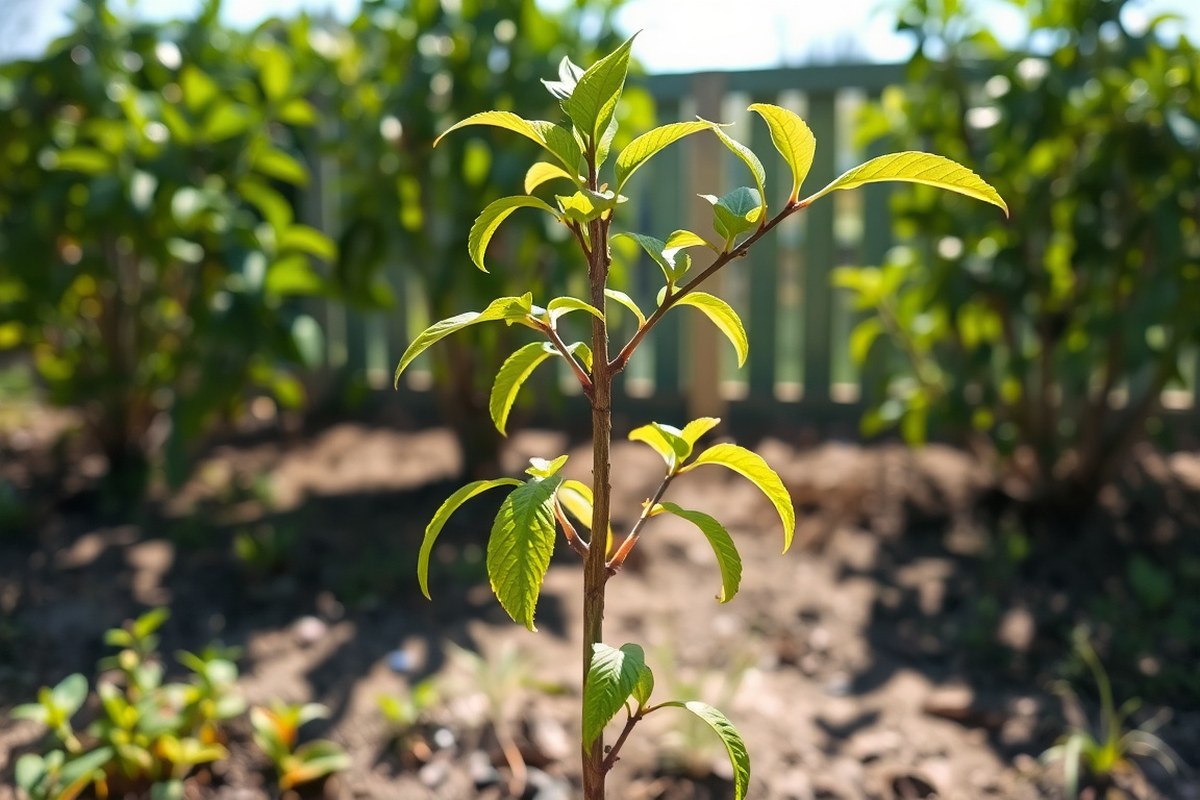
Young peach trees usually grow between 3 and 5 feet tall. Their thin branches have a slight zigzag shape. You can feel the smooth, silvery-gray bark on the branches.
Leaves measure 2 to 4 inches long and taper to a sharp tip. The base of each leaf is rounded, not pointed. Crushing the leaf releases a fresh, mildly sweet smell.
In spring, watch for blossoms that bloom in pink to white. Each flower is about 1 to 2 inches wide. They have five delicate petals around the center.
These flowers attract pollinators, which are key for fruit growth later. Place your sapling where it gets 6 to 8 hours of sunlight.
This exposure gives the tree enough energy to grow well. Sunlight helps the peach tree build strong branches.
Key Takeaways
- Peach saplings are 3, 5 feet tall with smooth, silvery-gray branches.
- Leaves are 2, 4 inches long, pointed, and smell sweet when crushed.
- Spring flowers are pink to white with five petals and showy stamens.
- Sunlight of at least 6, 8 hours daily keeps saplings healthy.
- Look for zigzag branches to help identify young peach trees.
- Choose a spot with good airflow to reduce disease risk.
What Does a Peach Tree Sapling Look Like in Early Growth?

Young peach trees usually stand between 3 and 5 feet tall. Their branches are slender with a slight zigzag bend. These branches feel smooth with a silvery-gray color, adding to their delicate look.
The leaves are narrow and lance-shaped, ranging from 1 to 3 inches long. They have fine, serrated edges that become sharper by late spring.
The leaf color starts light green in early spring. By summer, it grows to a bright green shade.
The bark of a peach sapling is smooth and mostly grayish-brown. You might see a hint of green on newer growth. As the tree grows older, the bark slowly shifts from smooth to lightly furrowed.
Branching starts simple with few main shoots near the trunk. The sapling focuses on building a strong base and root system first. You’ll notice branches spreading evenly to allow good air flow and sunlight.
A good way to check your sapling is to feel the branches. Make sure they have a smooth texture.
Also, look at the leaf shape and serration carefully. Leaves that smell a little sweet when crushed show a healthy peach sapling.
Some young trees grow a little slower, especially in cooler or shadier spots. Those saplings tend to have smaller leaves and less spread in branches. In sunny, warm locations, expect faster growth with larger leaf size and wider branch angles.
The early stage lasts about three years. So don’t worry if your sapling isn’t huge yet.
It spends that time prioritizing roots and structure. Watch for those smooth, flexible branches and lance-shaped leaves as signs your tree is on track.
How to Distinguish Peach Saplings from Similar Trees

You can spot peach saplings by a few simple signs. New leaves often start with a reddish color. As they grow, leaves turn bright green and have a pointed tip.
They measure around 2 to 4 inches long and have rounded bases. Their edges have sharper serrations than plum leaves do.
The bark of young peach trees is smooth and thin. It often peels off in strips, revealing fresh green tissue underneath. This peeling is different from plums, which keep smoother and gray bark longer.
Peach bark also tends to have a light gray or burgundy tint when young. Cherry bark stays more grayish and can get furrowed faster as the tree ages.
Branches on peach saplings often grow at wider angles from the trunk. This spreading pattern helps the tree catch light better.
Cherry and plum saplings usually have more upright, sometimes tighter, branches. Checking branch angles and leaf details together gives a strong clue about the tree’s identity.
| Feature | Peach Sapling | Plum Sapling | Cherry Sapling |
|---|---|---|---|
| Leaf Size & Shape | 2, 4 in, pointed tip, rounded base, broad, serrated edges | Smaller, less serration, narrower, less rounded base | Similar size, less pronounced serrations |
| New Leaf Color | Reddish tint fades to bright green | Mostly green from the start | Greenish, sometimes a subtle red tint |
| Bark Appearance | Thin, peeling strips reveal green underneath; smooth, light gray or burgundy | Smoother, gray, no peeling strips | Grayish, darker, tends to furrow quickly |
| Branch Angle | Wide, spreading angles | Tighter, more upright | More upright |
| Scent and Texture | Leaves may have faint peach scent; soft texture | Less scent; smoother texture | Often mild scent; slightly rough texture |
Look for the peeling bark strips on saplings in early spring. This feature alone goes a long way to spot peach trees.
Leaves with fresh red tint and broad serrations add another check. Branch angles let you back up your guess before the tree gets bigger.
Young plum or cherry saplings look a lot like peach leaves. This similarity can confuse new gardeners easily. Make sure to check carefully before deciding on the tree type.
Typical Growth Timeline and Size Expectations
Peach saplings grow quickly in their first year, reaching about 2 to 4 feet tall. Branches start spreading within this time, forming the tree’s shape. Blossoms show up usually by the second year, with fruit following soon after.
Height and Spread Progression
Expect your peach sapling to grow 2 to 4 feet the first year. This happens if the conditions are good. Growth depends on soil, water, and sun.
Full sun, well-drained soil, and regular watering help reach this growth. After the first year, the tree grows faster, aiming for 15 to 25 feet tall.
Branch spread also starts early as the sapling establishes its shape. Younger trees have more upright branches. This growth pattern sets up a sturdy main framework for later fruit support.
First Branch Development
Branches begin to spread in the sapling’s first year along the main trunk. Scaffold branches take shape between years one and three. These are the main side limbs that carry future fruit.
The typical branch angle helps air and light reach inside. This keeps the tree healthy and encourages strong growth.
- Branches grow out in a spiral pattern around the trunk.
- Scaffold branches develop mainly during years one to three.
- A young sapling often shows mostly upright branch growth at first.
- Proper branch spacing improves airflow and sunlight exposure.
- Pruning can shape the branches and encourage fruiting wood.
By the third year, your tree will have its main branch framework. From there, it focuses more on flowering and fruit development.
Timing of Bloom and Fruit Set
Peach trees usually bloom starting in the second year if healthy. The flowers are pink to white, about 1 to 2 inches across. These blossoms attract bees, which help pollinate the tree.
Fruit set occurs about 1 to 2 weeks after blooms. Small, green fruitlets appear where flowers were. Poor pollination or frost damage can stop fruit from developing well.
- First blooms typically come in the second growing season.
- Flowers are 1 to 2 inches wide with five petals.
- Fruit sets 1 to 2 weeks after flowers drop petals.
- Watch for frost risks during early bloom to protect fruit.
- Fruit size and quality depend on good pollination and care.
Fruit usually appears on your sapling by year three or four. Early fruit may be small, but your tree will grow better harvests later.
Ideal Soil and Environmental Conditions for Young Peach Trees
Soil pH Range for Best Growth
Peach tree saplings need soil with a pH between 6.0 and 7.0. This slight acidity to neutral level helps roots absorb nutrients well. Testing your soil with a kit ensures the pH is just right before planting.
Peach saplings may struggle when the pH is too acidic or alkaline. You can adjust pH by adding lime to raise acidity or sulfur to lower it. Making these changes several months before planting works best.
Sunlight Needs for Strong Saplings
Peach saplings thrive with 6 to 8 hours of direct sunlight daily. Full sun supports healthy leaf and branch growth. Position your sapling where shade from buildings or trees won’t block light.
Lack of sunlight can stunt growth and make the sapling weak. Shady spots hurt peach trees, so trim branches or shift the tree. Sunlight also reduces some pest problems by drying leaves quickly.
Soil Drainage and Root Health
Well-draining soil keeps water from pooling around the roots. Standing water can cause root rot and kill young peach trees.
Soil that feels damp a day after watering is good. Soggy soil is a warning.
To improve drainage, mix organic matter like compost or sand into heavy clay soil. You can also plant on a slight mound or raised bed to help runoff. Avoid low spots that collect rainwater.
Temperature Range to Avoid Stress
Peach saplings grow best in temperatures between 65°F and 85°F. High heat above 90°F can stress them, slowing growth. Frost below 28°F is dangerous and can kill young buds or bark.
In colder areas, protect saplings with frost cloth or mulch around the base. For hot climates, give extra water and shade during mid-day heat. Moving saplings indoors temporarily isn’t practical but helps if frost threatens early growth.
Adjusting Care by Situation
Heavy clay soil needs compost to make it lighter for planting peach trees. Choose a sunny, improve spot to avoid waterlogging. For sandy soil, adding organic matter retains moisture better.
Young peach trees in windy, dry places need extra water and shelter during strong gusts. Use windbreaks like shrubs or fencing to protect saplings. Keep watering consistent during dry spells to prevent wilting.
Recognizing Watering Needs and Avoiding Common Mistakes
Water your peach sapling deeply 1 to 2 times each week. This depends on your soil’s drainage and weather conditions. Check soil moisture 2 inches below the surface before watering again.
Leaves that turn yellow too early or bark that cracks may signal watering problems. Yellow leaves can mean overwatering or underwatering, so feel the soil. If the soil is dry, the sapling needs water; if wet, hold off.
A good watering routine keeps the top 6 inches of soil moist without making it soggy. Avoid frequent shallow watering, which leads to shallow roots and stress. Deep watering encourages strong root growth and healthy saplings.
- Water in the morning or early evening to reduce evaporation.
- Use about 5 gallons of water per session for young saplings.
- Different soil types may need adjusted watering frequencies.
- Mulch around the base to hold moisture and regulate temperature.
- Watch for drooping leaves, signaling dehydration or too much water.
Regular checking of soil moisture helps spot issues before visible damage occurs. Too much water can make roots suffocate and lead to disease. Too little water makes leaves wilt and bark crack from drought stress.
Do not water your young peach tree daily. It can drown roots and reduce growth.
Early Pest and Disease Signs in Peach Saplings
Young peach trees often attract pests like aphids, scale insects, and peach tree borers. These pests feed on sap, weakening the sapling and stunting its growth. Early signs include sticky residue on leaves, yellowing, or small holes on leaves.
Fungal issues like peach leaf curl and brown rot also threaten saplings. Look for leaves that curl, thicken, or show red to purple patches. Brown rot shows as brown spots on young fruit or twigs.
These spots often have a fuzzy gray mold growing on them. It usually affects young parts of the tree.
Check your sapling weekly, especially in spring and early summer. This is when pests and fungi are very active. Keep a close eye on problem spots.
Look under leaves and on branch joints where pests hide. Catching problems early makes treatment easier and cheaper.
Spray neem oil or insecticidal soap to control aphids and scale insects on young saplings. Apply these treatments every 7 to 14 days until pests disappear. Use a fungicide made for peach trees to treat fungi.
Apply it before leaf curl shows, in late winter or early spring. This helps stop the infection early.
Pruning infected leaves and twigs helps prevent fungi from spreading. Dispose of these parts away from your garden to stop reinfection. Keep the area under the tree clean and dry; excess moisture encourages fungal growth.
If pests or fungi get out of control, get help from a pro. Call a licensed arborist or your local extension service. They can offer safe, expert advice.
Professionals can identify pests or diseases you might miss and suggest targeted treatments. Don’t wait until the tree shows serious damage because recovery takes longer.
Pruning Techniques to Shape and Strengthen Young Peach Trees
Pruning young peach trees shapes their growth and boosts fruit production. Cutting at the right spots and times helps build strong branches and healthy saplings. Proper pruning also removes any dead or diseased wood early on.
Best Time to Prune
Do pruning when peach trees are dormant, usually late winter. Avoid cuts during warm spells to reduce disease risk. Dormant pruning helps the tree focus energy on new spring growth.
Prune before buds start swelling to get clean cuts. Waiting until after growth begins can stress the sapling. Fall pruning isn’t ideal because it can stimulate soft new growth that won’t survive winter.
Pruning Cut Types and Placement
Use three main cut types: thinning, heading, and removal. Thinning cuts remove entire branches to open the canopy. Heading cuts shorten branches to encourage side shoots.
Remove any damaged, crossing, or inward-growing branches early. Cuts should be just above a bud facing outward. This guides growth away from the trunk and opens the tree.
Pruning to Encourage Branching
Cut back the main stem to 24-30 inches tall after the sapling reaches about 12-18 inches. This encourages the tree to develop strong scaffold branches. You want 3 to 5 main branches spaced evenly around the tree.
Pinch or cut new shoots when they reach 6-8 inches to promote bushier growth. This helps create a balanced, open structure. Avoid leaving crowded branches that block sunlight and airflow.
Pruning to Promote Flowering and Fruit
Remove about 30-40% of last year’s growth each year after the tree establishes. This keeps the tree’s energy focused on developing fruiting wood. Thin out old, non-productive wood carefully every year.
Shorten some side branches to about 6-8 inches to boost flower bud development. Flower buds form on one-year-old wood, so maintaining young shoots is key. Watch for overcrowded areas that can reduce fruit size and quality.
Follow these steps to prune a young peach tree effectively:
- Choose pruning tools cleaned with rubbing alcohol to avoid infection.
- Start pruning in late winter before buds swell.
- Remove all dead, diseased, or damaged branches first.
- Cut back the main leader to encourage lateral branch growth.
- Thin crowded branches to improve light and air circulation.
- Shorten side shoots to stimulate flowering buds.
- Step back often to check the tree’s shape and balance as you go.
Identifying Grafted vs. Seed-Grown Peach Saplings
You can spot a grafted peach sapling by looking for a visible union. This is where the scion, the top part of the tree, meets the rootstock below. The graft union looks like a small bulge or ring on the stem.
It usually sits 6 to 12 inches above the soil line. You can spot it easily on young peach trees.
Seed-grown peach saplings don’t show this bump. Their trunk is smooth and continuous from roots to branches.
Grafted trees come from two different plants joined together. So the graft union is a clear sign of it.
The rootstock affects the sapling’s growth rate and size. Grafted peach saplings often grow faster and more predictably than seed-grown ones.
The rootstock controls traits like disease resistance and how tall the tree will get. Seedlings can vary widely because their roots and tops are genetically distinct.
Grafted trees also tend to start flowering and bearing fruit earlier, generally within three years. Seed-grown peach trees may take longer, sometimes five years or more. Seedlings grow slower because they lack the grafted variety’s traits.
They don’t have the same strength or precise qualities. That’s why they take longer to develop.
Seed-grown saplings might look less uniform, with more variation in leaf shape or branch structure. Grafted saplings are more consistent in appearance due to the top variety’s traits. The rootstock might change leaf size or color a bit.
It mostly changes growth habits, not the tree’s look. Rootstock influences how your peach tree grows more than how it looks.
Checking your sapling carefully helps you know what you have. Look at the stem near the base for a bulge. Feel for a slight roughness or change in bark texture at the graft union.
The top of the tree is smooth and straight. It matches the peach variety you planted. This section looks typical for the kind of peach you expect.
Handle young grafted saplings gently at the graft union. Damaging it can stunt growth or kill the top part.
Buying grafted saplings often costs more but gives you reliable fruit quality and faster results. Seedlings might be cheaper but come with more uncertainty about fruit taste and tree health. Gardeners wanting specific peach types like Redhaven or Georgia Belle usually prefer grafted trees.
Your choice matters because the grafted rootstock supports the whole tree’s health below ground. It shoulders disease resistance and nutrient uptake, letting the fruiting top thrive. Seed-grown trees lack this advantage, leading to less predictable survival and yield.
Step-by-Step Action Plan for Caring for Your Peach Tree Sapling
Follow these steps to identify and care for your peach tree sapling properly. Each phase helps you check that your tree is growing well.
- Day 1: Inspect the Sapling’s Leaves and Stem. Look for narrow leaves that are reddish-green. Check if the stems are soft and fuzzy. This confirms it is a peach tree, not a similar species.
- Week 1: Prepare the Soil. Ensure the soil is sandy and drains well. Test the pH to be about 6.0 to 7.0. Healthy soil keeps roots strong and sapling stable.
- Week 2: Begin Watering Routine. Water deeply once or twice each week. Stop if soil feels wet for too long. Check soil moisture with your finger to avoid overwatering.
- Month 1: Check for Early Pests and Diseases. Look under the leaves for tiny insects. Watch for spots on leaves. Spot problems early and treat to prevent damage.
- Month 2: Start Light Pruning, Remove weak or crossing branches with clean pruners. This shapes your sapling for stronger growth.
- Month 3: Distinguish Grafted From Seed-Grown. Find any bump or change in the bark near the base. That shows a graft. This indicates a grafted plant, which starts fruiting sooner.
- Month 6: Monitor Growth Size, Your sapling should be 2 to 4 feet tall now. Proper size shows your care is working.
- Month 12: Assess Overall Health and Environment. Make sure the sapling gets 6 hours of sun. Keep the soil well-drained and dry. Healthy conditions encourage strong fruit trees.
Frequently Asked Questions
How Can You Tell a Peach Tree Sapling by Its Branches?
Peach tree saplings have slender branches with a slight zigzag shape. The smooth, silvery-gray bark feels cool to the touch and is distinctive when young. This helps you spot them before leaves even grow.
Do Peach Saplings Always Have Sweet-Smelling Wood?
Yes, crushed sapling branches give off a fresh, lightly sweet scent. It’s a subtle but unique smell that hints at the peach family. This scent fades as the tree ages.
What Leaf Shape Is Typical for Peach Tree Saplings?
Young peach leaves are lance-shaped with finely serrated edges. They appear bright green in summer and turn yellow during fall. This shape helps you identify the sapling from other fruit trees.
Why Might a Peach Sapling Look Different Than Expected?
Genetics and environment affect how your peach starts growing. Poor soil, not enough water, or climate can change its look. Don’t worry if it looks odd at first; care helps it thrive.
What Height Range Do Peach Tree Saplings Usually Reach Initially?
Peach saplings often grow between 3 and 5 feet tall in their early years. They develop quickly with regular watering and sunlight. This height range signals healthy young growth.
Can Seed-Grown and Grafted Peach Saplings Look the Same Early On?
Yes, early saplings from seed or graft often appear similar in shape and size. Differences show later in growth and fruit quality. Knowing the source helps plan future care.
Wrapping Up
Peach tree saplings have distinct leaves, stems, and growth patterns you can recognize. Care like proper watering and pruning boosts their health. Check your sapling today to make sure it grows into a strong tree.