How to Calculate How Much Mulch I Need: Simple Steps for Accurate Results
How to calculate how much mulch I need depends on your garden’s size and mulch depth. Start by measuring your garden bed’s length and width in feet. Multiply these numbers to get square feet, then decide on the mulch depth in inches.
Convert that mulch depth into feet by dividing by 12. Multiply the square footage by that depth in feet to find the volume in cubic feet. To convert cubic feet to cubic yards, divide by 27.
Bulk mulch is usually sold by the cubic yard. Use this math to figure how much you need.
Measure irregular or curved beds by breaking them into smaller, simple shapes like rectangles. Add those areas together to get the total. This method avoids underestimating mulch needs for odd-shaped gardens.
Key Takeaways
- Use 2 to 3 inches of mulch for most garden beds.
- Multiply garden bed length by width to find square feet.
- Convert mulch depth inches to feet by dividing by 12.
- Calculate mulch volume by square feet times mulch depth in feet.
- Convert volume to cubic yards by dividing cubic feet by 27.
- Measure irregular beds by dividing them into basic shapes.
How to Calculate the Amount of Mulch You Need
Calculating the right amount of mulch starts with knowing the exact space you want to cover. You need the area’s square footage and the depth you want for the mulch layer. The depth affects how much mulch will keep your soil moist and weed-free without wasting material.
Depth is usually measured in inches, but the calculation uses feet. So you divide the depth in inches by 12 to convert it. For example, 3 inches becomes 0.25 feet.
This conversion helps get an accurate volume of mulch. You measure in cubic feet or cubic yards. Those measures matter for your project.
- Measure the area. Find the length and width of the garden bed in feet. Multiply them to get square feet.
- Decide the mulch depth. Choose how thick the mulch layer should be in inches, typically between 2 and 4 inches.
- Convert depth to feet. Divide your mulch depth by 12. For a 3-inch layer, 3 ÷ 12 = 0.25 feet.
- Calculate volume in cubic feet. Multiply the area by the depth in feet. For example, 600 square feet × 0.25 feet = 150 cubic feet.
- Convert volume to cubic yards. Divide the cubic feet by 27, since 1 cubic yard equals 27 cubic feet. So, 150 ÷ 27 = 5.56 cubic yards.
- Check your units for buying mulch. Use cubic yards for bulk and cubic feet for bagged mulch. Most bags hold 2 cubic feet.
For example, a 600 ft² bed needs three inches of mulch. Multiply 600 by 3 and then divide by 324. The result is 5 cubic yards of mulch.56 cubic yards needed.
Use this formula to get cubic yards directly. Multiply square footage by depth in inches. Then divide by 324 for the volume.
Choosing the right depth matters. Too little mulch won’t protect soil or stop weeds well. Too much can suffocate plants or waste material.
Three inches is often best for wood chips. Chunkier mulch might need up to 6 inches. Keep your layers consistent to avoid gaps or overly thick spots.
Measuring Garden Beds: Shapes and Irregular Areas

Measuring your garden beds accurately helps you buy the right amount of mulch. Use simple steps to find the area for rectangles, circles, and irregular shapes. This part shows how to measure each shape and combine them if needed.
Measuring Rectangle and Square Beds
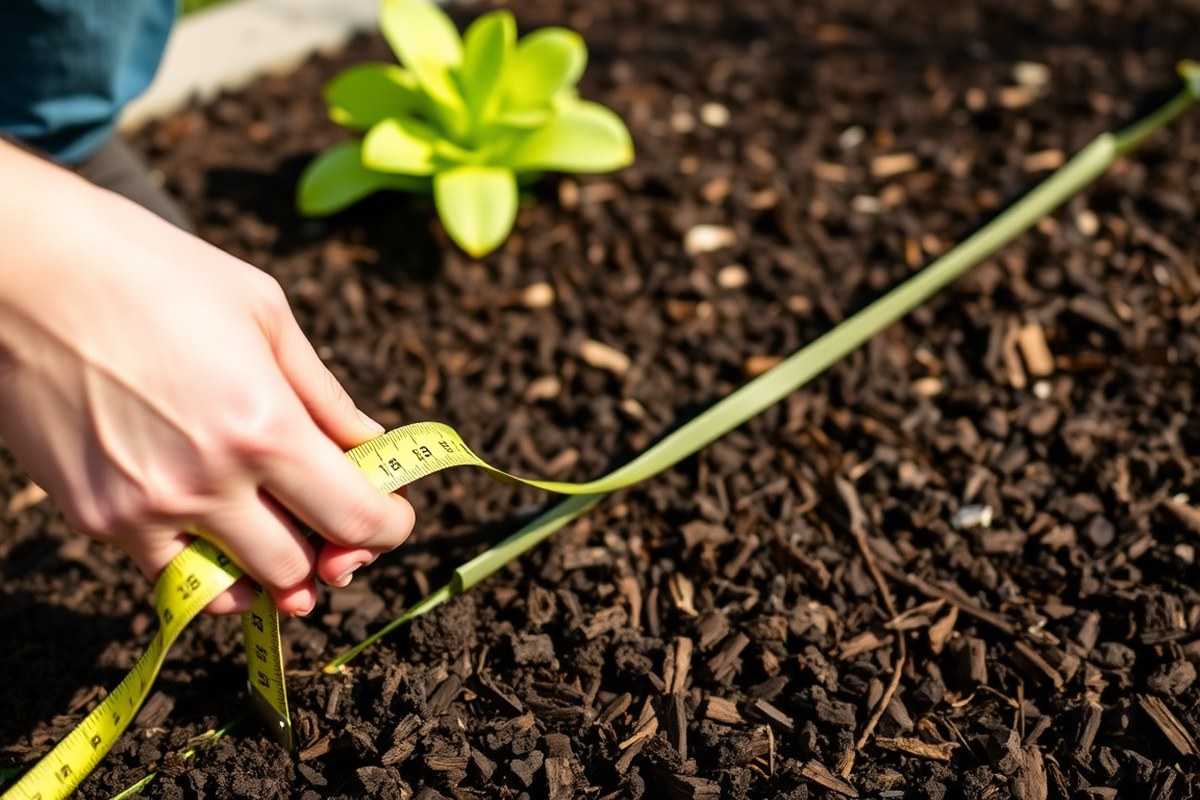
Start by measuring the length and width of your rectangular or square beds. Multiply these two numbers to get the area in square feet. For example, a bed that’s 12 feet long and 5 feet wide.
It measures 60 square feet. You get this by multiplying 12 × 5 = 60.
Use a tape measure or yardstick for this step. Make sure to measure from the outer edges where the mulch will go. This method works well for most flower beds and vegetable gardens.
Calculating Circular and Ring-Shaped Beds
Measure the radius of circular beds from the center point to the edge. Then, use the formula area = π × radius² to find the area. For instance, a 6-foot radius bed covers about 113 square feet (3.14 × 6²).
For ring-shaped beds, measure the radius of both the outer and inner circles. Subtract the inner circle’s area from the outer circle’s to get the ring’s total area. This works well around tree bases or curved beds.
Tips for Irregular and Composite Shapes
Break irregular beds into smaller rectangles, squares, or circles. Measure each separately and then add their areas together. This approach makes complex shapes easier to handle without special tools.
Use these tools to measure irregular areas:
- Long tape measure or yardstick
- String or garden hose for tracing curves
- Marking spray or string stakes to outline shapes
- Graph paper or smartphone apps to sketch and measure
- Calculator handy for adding areas and using formulas
When beds overlap or have multiple shapes, measure each section accurately then sum the results. Don’t estimate too much; even small errors add up when buying mulch. It’s better to buy a little more mulch than too little.
Measure carefully and double-check your numbers to avoid buying too little mulch.
Selecting the Right Mulch Depth for Your Project
Choose mulch depth based on mulch type, plant needs, and garden spot. Most mulches work well at 2 to 3 inches deep. This depth keeps soil moist, controls weeds, and avoids problems like rot or pests.
Standard Depths for Organic Mulches
Organic mulches like bark and shredded leaves need a 2 to 3 inch layer. Pine needles are another common type of organic mulch. Applying this thickness helps keep plants healthy.
This range feeds the soil slowly as the mulch breaks down. It also insulates roots from temperature swings and conserves moisture.
Some organic mulches, like shredded hardwood bark, last longer and stay put around beds and paths. Apply 2 to 3 inches for best results. Light mulches like pine straw or leaves should be about 2 to 3 inches thick.
This depth stops them from matting down too much. Good airflow keeps plants healthy under mulch.
| Mulch Type | Best Use | Typical Depth | Lasts | Pros | Considerations |
|---|---|---|---|---|---|
| Shredded hardwood | Beds, trees, paths | 2, 3 in | Medium | Looks neat, stays put | Can tie up nitrogen if mixed into soil |
| Bark nuggets | Decorative beds | 2, 3 in | Long | Slow to break down | Can float on slopes/heavy rain |
| Shredded leaves/leaf mold | Vegetable and flower beds | 2, 3 in | Short-Medium | Feeds soil, free or cheap | Apply thin layers to avoid matting |
| Straw or pine needles | Vegetable beds, berries | 2, 3 in | Short | Lightweight, easy to spread | Needs clean, weed-free source |
Stay on the typical depth to avoid smothering plants or creating too dense a layer. Thin layers dry out fast, reducing protection and weed control.
Depth Guidelines for Inorganic Mulches
Inorganic mulches like rubber, gravel, or stone need different depths. They usually work best at 1 to 2 inches deep. This layer controls weeds without blocking air or water from reaching roots.
Chunky mulches like stone on paths or slopes can be thicker. Aim for about 3 to 4 inches. This thickness helps prevent soil erosion on slopes.
This helps keep the mulch from washing away in heavy rain or foot traffic. Avoid putting inorganic mulch too close to plant stems or trunks.
Preventing Over-Mulching and Mulch-Related Risks
Applying mulch deeper than 4 inches invites problems. Over-mulching can block water and oxygen from reaching roots. It may also lead to root rot or attract pests like slugs.
Avoid mulch buildup against tree trunks and plant stems. Keep the mulch 3 to 6 inches away from these. This prevents “mulch volcanoes” that trap moisture and damage bark.
Adjust mulch depth by season. In winter, thicker mulch layers of 3 to 4 inches protect roots from freezing. In hot summer, 2 to 3 inches is enough to retain moisture without overheating the soil.
Converting Mulch Volume into Bags or Bulk Purchase
To convert your mulch volume into bags, start by knowing the total cubic feet needed. Divide that number by the size of the bag in cubic feet. For example, you need 27 cubic feet of mulch.
The bags hold 2 cubic feet each. Divide 27 by 2 to get 13 bags.5 bags.
Bag sizes typically range from 0.8 to 2.0 cubic feet, with 1.5 and 2.0 cubic feet being common. You can also convert cubic feet to cubic yards. Divide the cubic feet by 27.
One cubic yard equals 27 cubic feet. This helps if you want to buy bulk mulch.
Bulk mulch is generally cheaper per cubic foot than bagged mulch. Bulk mulch costs about $1.85 per cubic foot.
Bagged mulch can cost around $4 per cubic foot. However, bulk delivery often comes in cubic yards and requires space for a large pile.
| Bag Size (cu ft) | Covers @ 2″ Depth (sq ft) | Covers @ 3″ Depth (sq ft) | Bags per Cubic Yard |
|---|---|---|---|
| 1.5 | 9 | 6 | 18 |
| 2.0 | 12 | 8 | 14 |
| 3.0 | 18 | 12 | 9 |
Multiply the number of bags by their cubic feet. Use this if the calculator counts bags as 1 cubic foot. This gives you the total cubic feet.
For instance, the calculator reads 9 bags at 1 cubic foot each. Your bags hold 3 cubic feet.
Multiply 9 by 3 to get 27 bags. Buying bulk mulch suits bigger projects better.
Some suppliers let you bring your own containers to shovel mulch. This helps if you don’t have a truck.
They will charge the bulk price by eyeballing the amount you take. Choose bagged mulch for smaller jobs or if you prefer easier handling and less mess.
Adjusting Mulch Calculations for Tree Rings and Tree Bases
Mulching around tree bases needs care to protect the trunk and roots. You should not pile mulch right against the trunk. It traps moisture.
This can cause rot or disease. Creating a doughnut-shaped mulch ring keeps the soil healthy and the trunk dry.
Measure the mulch starting 6 inches away from the trunk. Extend outward. Cover the root zone with mulch.
Mulch near trees should be thinner than in garden beds. Keep it about 2 to 4 inches thick. This prevents root suffocation and retains moisture.
- Clear a circle of grass and weeds around the tree from at least 3 feet out.
- Mark the inner edge of the mulch ring at least 6 inches from the trunk.
- Determine the outer radius of your mulch ring based on root spread (3 feet or more).
- Measure the inner radius (6 inches minimum) and outer radius from the trunk.
- Use this formula for mulch volume: π × (outer radius² − inner radius²) × depth. Calculate the area of the ring first. Then multiply by the depth you want.
- Adjust depth to 2, 4 inches near the trunk to avoid excess moisture buildup.
- Multiply volume by mulch density or bag coverage to find the total mulch amount to buy.
Using the annulus formula lets you estimate mulch volume accurately without overpiling close to the trunk. Spacing mulch 6 inches away helps keep bark dry and prevents disease while still protecting roots. Applying mulch after the first hard freeze helps retain soil warmth and moisture.
Keep mulch 6 inches away from tree trunks to stop moisture buildup and decay.
Common Mulch Calculation Mistakes and How to Fix Them
One common mistake is confusing inches and feet when setting mulch depth. For example, you might plan for 3 inches deep but calculate using 3 feet instead. That changes the volume by a lot, leading to too much mulch ordered.
Another error is measuring garden beds incorrectly. People often measure only the length and forget width or use rough estimates. This causes you to buy too little or too much mulch for your space.
To avoid these problems, double-check you convert all measurements to the same units before calculating volume. Convert 3 inches to 0.25 feet to keep calculations consistent.
Use a tape measure for accurate length and width. Don’t round numbers early in your math.
- Mix up inches and feet in depth conversions
- Measure only one dimension of beds, not length and width
- Rounding numbers before final calculation
- Not accounting for irregular bed shapes
- Forget to subtract tree trunks or plants when measuring
- Ignoring existing mulch already in place
- Buying mulch by weight without checking volume
To fix over- or underestimations, reassess your original measurements. Say your bed is 30 feet long and 6 feet wide.
You want a 3-inch thick layer of mulch there.25 feet) depth, multiply 30 × 6 × 0.25 to get 45 cubic feet. To convert cubic feet to cubic yards, divide by 27, which equals 1.67 cubic yards.
Compare your result to how much mulch you ordered. You have more or less mulch than needed. Adjust your order or spread it thinner or thicker as needed.
Check with local mulch suppliers about bag volume to buy the right amount. This process ensures you get enough mulch without waste.
Tips for Refreshing and Maintaining Mulch Layers over Time
You should top up mulch every year or when it looks thin. Calculate the amount by measuring the area and applying a 1- to 2-inch new layer. Timing is best in spring or fall for easy gardening maintenance.
When and How Much to Top Up Mulch
Mulch thins over time due to weather, decomposition, and wind. Adding 1 to 2 inches keeps the layer effective for weed control and moisture retention. Calculate mulch needed by multiplying the area by the new depth.
Break down your garden into simple shapes like rectangles or circles. Measure each area’s square footage, then add them together for total coverage. Use the formula below to find how much mulch to add.
- Measure the length and width of each garden section.
- Calculate the square footage for each shape (length x width for rectangles, πr² for circles).
- Add together all section areas to get total square footage.
- Decide on mulch depth to add (usually 1 to 2 inches).
- Convert depth to feet (1 inch = 0.083 feet, 2 inches = 0.167 feet).
- Multiply total square footage by depth in feet for cubic feet.
- Convert cubic feet to cubic yards if buying in bulk (divide by 27).
- Buy extra bags or bulk mulch based on calculated volume.
Seasonal Mulching Tips
Spring and fall are best for adding mulch. Spring refresh helps moisture retention as temperatures rise. Fall mulch protects roots from winter freezes and prepares soil for spring.
Avoid mulching during hot summer months to prevent overheating roots. Also, wait until soil has warmed in spring before piling new mulch. Lightly water mulch after spreading to settle it.
Signs You Need to Refresh Your Mulch
Mulch looks thin or bald spots appear in garden beds. You may see soil exposed or mulch reduced to less than 1 inch deep. These signs show it’s time to top up for protection and appearance.
Mulch also breaks down into soil, losing its barrier effect over time. Watch for color fading or signs of weeds growing through. Refreshing mulch lets it keep working well and makes your garden look neat.
How Mulch Type Affects Quantity and Application
Different mulch types need varying depths and amounts for best results. Wood chips, shredded bark, and rubber mulch all cover soil differently. These differences impact how much mulch you should buy and apply.
Organic mulches like bark and wood chips break down over time and feed your soil. Because they decompose, you’ll need to add more mulch every year or two. Rubber mulch does not decompose, so it lasts longer but won’t improve soil health.
| Mulch Type | Recommended Depth (inches) | Quantity Adjustment Tips | Soil Impact |
|---|---|---|---|
| Bark Chips (hardwood or pine) | 2 to 3 inches | Buy 10% extra if spreading on uneven ground | Breaks down slowly, adds organic matter |
| Shredded Bark | 3 inches | Buy up to 15% more for wind-prone areas | Decomposes faster, enriches soil faster |
| Wood Chips | 3 to 4 inches | Adjust quantity for settling after rain | Neutral to slightly acidic, feeds soil |
| Wood Shavings | 2 to 3 inches | Use less because they compact | Breaks down quickly, adds nutrients |
| Rubber Mulch | 2 to 3 inches | Quantity stays the same longer, no decomposition | No soil benefit, stays intact for years |
Choose a mulch depth that suits the type you want to use. Wood chips need a bit more depth to stop weeds and hold moisture well.
Thin layers may let light through, allowing weed seeds to sprout. Thicker layers slow water and air movement, which can harm roots.
The decomposition rate influences how often you replace mulch. Pine bark and shredded bark decompose faster, meaning yearly topping up helps keep soil healthy.
Hardwood chips last longer, so you might refresh them every 2 to 3 years. Rubber mulch keeps its volume but won’t feed your soil or improve texture.
Don’t pile mulch against plant stems. Keep it away from tree trunks. This prevents rot and pests.
Calculate mulch needs by depth first. Multiply that by your garden bed area. This gives the total mulch amount.
Adjust for terrain or wind exposure. Soils under mulch stay cooler and more moist, improving plant health. Over time, organic mulches also build up soil nutrients and structure.
Step-by-Step Action Plan for Mulch Calculation and Application
Get the right amount of mulch before starting your garden work. Apply the mulch correctly to protect your plants and soil. Follow these simple steps for best results.
- Before you start: Measure all garden bed areas and irregular shapes carefully. Use a tape to get length and width or a string for curved edges. Write down each measurement.
- Day 1: Decide your mulch depth based on plant types and soil needs. Usually, 2 to 4 inches works well to protect soil and retain moisture without suffocating plants.
- Day 2: Calculate total mulch volume by multiplying area by depth, converting to cubic feet. This lets you know exactly how much mulch you need to buy.
- Day 3: Convert the volume to bags or bulk mulch amounts. Check bag size on the packaging and pick the right number to avoid shortages or waste.
- Day 4: Adjust calculations around trees and bases by measuring rings and excluding tree trunks. This helps keep mulch clear of the trunk to prevent rot.
- Day 5: Buy your mulch early and bring it to your garden site. This prevents any delays in your mulching schedule. Fresh mulch locks in nutrients better and looks nice immediately after spreading.
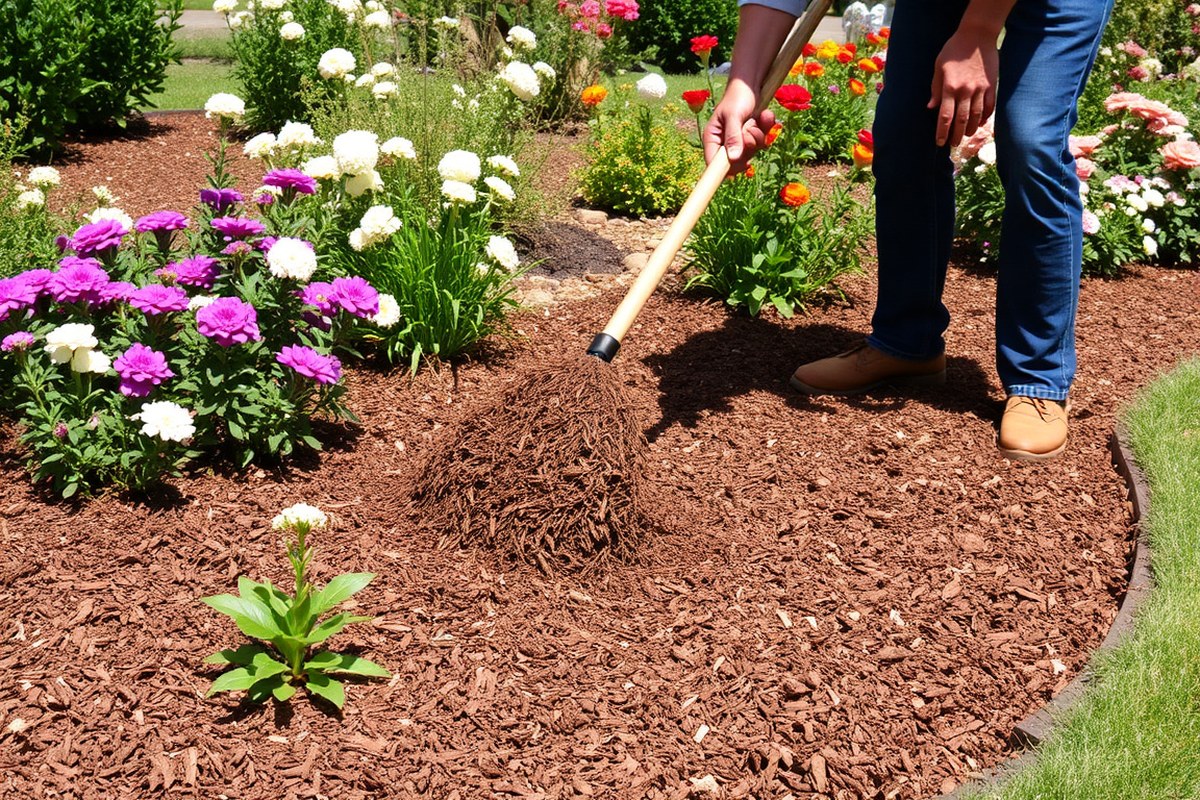
- Day 6: Use a rake or your hands to spread mulch evenly. Keep the layer 2 to 4 inches thick. Avoid piling mulch against plant stems. Even layers prevent mold and pests.
- After 6 weeks: Check mulch condition for compaction or thinning. Add more mulch if needed to maintain the chosen depth and keep your garden healthy.
Frequently Asked Questions
How Much Will 2 Cubic Feet of Mulch Cover?
Two cubic feet of mulch covers about 12 to 24 square feet at 3 inches deep. How thick you spread mulch changes how much ground it covers.
Spread it thicker for less coverage, thinner for more. Adjust depth to get what you want.
What Is the 3-3-3 Rule for Mulch?
The 3-3-3 rule means mulch 3 inches deep. Spread it 3 feet wide around trees. Keep mulch 3 feet away from the trunk.
This keeps roots moist without suffocating the tree base. Follow it carefully to protect your trees from damage.
Is It Cheaper to Buy Mulch by the Yard or by the Bag?
Buying mulch by the yard usually costs less per cubic foot than bags. Bags are easier for small jobs but can add up in price. Bulk mulch needs space to dump but saves money overall.
How Much Do 10 Bags of Mulch Cover?
Ten bags of mulch, each holding 2 cubic feet, covers about 120 to 240 square feet. The coverage depends on how thick you lay it, generally at 3 inches deep.
This assumes you spread the mulch evenly. Adjust for thicker or thinner layers depending on plants’ needs.
How Many Yards of Mulch Do You Need for a 500 Square-Foot Garden at 2 Inches Deep?
For 500 square feet with 2-inch mulch, you need around 0.93 cubic yards. Use this to calculate: square feet times inches deep, divided by 324. Add a little extra to be safe.
What Common Mistake Do People Make When Calculating Mulch and How to Avoid It?
Many forget to convert depth from inches to feet before calculating volume. Always divide depth in inches by 12 to fix this. It ensures you don’t buy too little or too much mulch for your space.
Before You Go
Calculating your mulch needs starts with good measurements and matching depth to your plants. Buy the right amount in bags or bulk to avoid waste. Begin measuring your garden beds today and plan your purchase confidently.