Can Peppers and Tomatoes Be Planted Together? A Complete Gardening Guide
Can peppers and tomatoes be planted together without causing trouble? Yes, you can grow peppers and tomatoes side by side successfully. They share similar sunlight, soil, and watering needs, which makes growing them close pretty easy.
Give each plant room to stretch out by spacing tomatoes 24 to 36 inches apart. Keep peppers a bit closer, about 18 inches apart. This spacing helps prevent crowding and allows air to flow, reducing disease risks.
Start by planting after the last frost date when temperatures stay above 50°F. Watch out for competition from big tomato vines that can shade smaller pepper plants. Choosing bushy or determinate tomatoes keeps your garden balanced and thriving.
Both plants like well-drained soil rich in organic matter and consistent moisture. Mulching helps keep the soil moist and controls weeds around your peppers and tomatoes. Avoid overhead watering to reduce leaf diseases that affect both crops.
Key Takeaways
- Plant tomatoes 24 to 36 inches apart for healthy growth and air circulation.
- Space peppers about 18 inches apart to give each plant enough room.
- Keep at least 24 inches between tomato and pepper plants to reduce crowding.
- Plant after the last frost when nighttime temperatures stay above 50°F.
- Choose determinate tomatoes to avoid overshadowing smaller pepper plants.
- Ensure both get at least 6 hours of direct sunlight daily for best results.
Can Peppers and Tomatoes Be Planted Together Successfully?
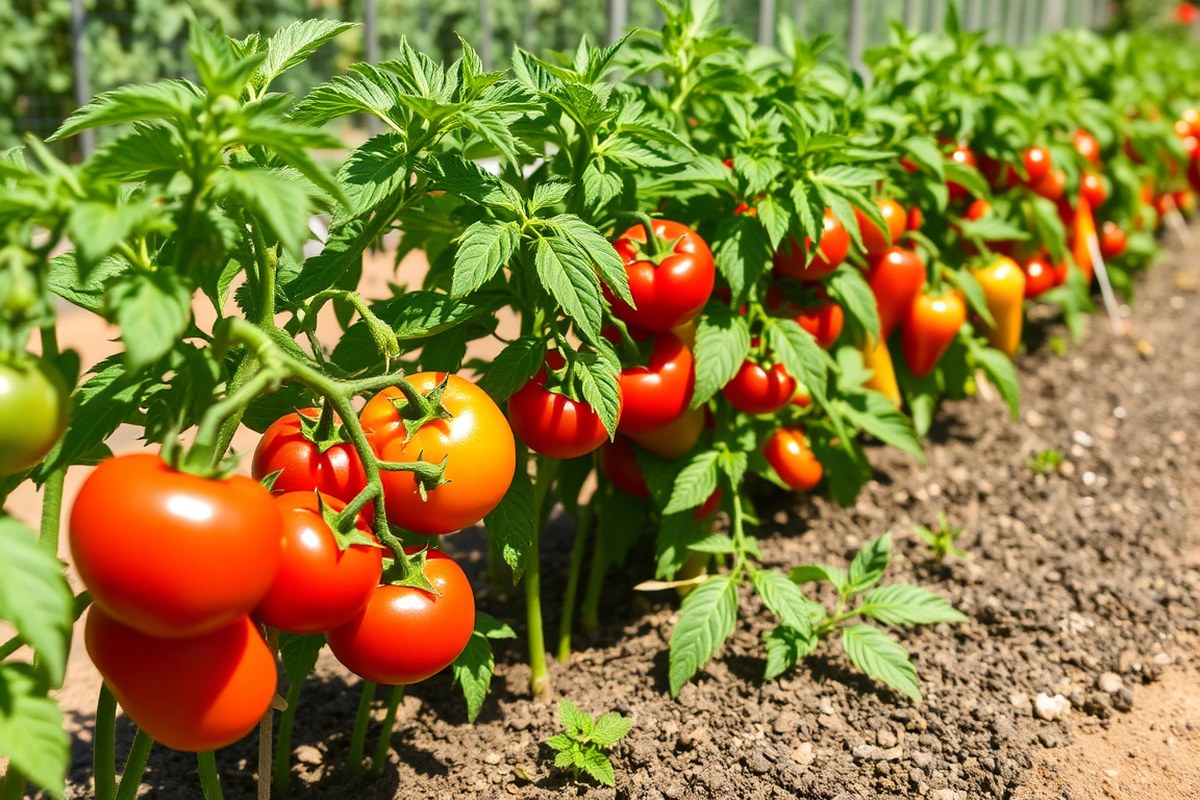
Yes, you can plant peppers and tomatoes together in the same garden bed. Both plants need full sun, similar soil, and warm conditions.
So they share many growth requirements. However, they need enough space to avoid competing for water and nutrients.
Keep at least 24 inches between tomato plants and about 18 inches between pepper plants. Also, leave a 24-inch gap between the tomatoes and peppers. This spacing helps each plant grow well without crowding or cutting off airflow.
Planting peppers and tomatoes too close can reduce fruit yield. Crowded plants fight for the same nutrients and water, slowing their growth. With proper spacing, you avoid this competition and support better fruit quality and size.
Both peppers and tomatoes can get the same diseases, like verticillium and fusarium wilt. This shared risk means you should watch your garden closely for signs of disease. Good airflow and clean gardening tools reduce the chance of spread.
Space and disease risk are the main factors when deciding to grow these plants together. If you have limited space, planting them in the same bed is fine with correct spacing. When you grow them apart, you lower disease risk a bit but need more garden room.
Think about your climate and garden size before planting peppers and tomatoes together. In warm, sunny spots with well-drained soil, they usually grow well side by side. Watch your plants, water regularly, and keep soil fertility balanced to get the best harvest.
Optimal Spacing and Layout for Peppers and Tomatoes

Keeping enough distance between pepper and tomato plants stops overcrowding and helps both thrive. Tomato plants often grow tall and sprawling. So placing them north in a bed prevents shading the shorter peppers.
Bell peppers get large and can shade tomatoes. So give them extra space or plant sweeter varieties with similar size habits.
Tomatoes and peppers grow well together if spaced carefully. You can plant them in the same raised bed or container. Just give them enough room to avoid crowding.
Plant indeterminate or determinate tomatoes with hot or bell peppers. Keep about 24 inches between each tomato and pepper plant. This spacing helps both plants thrive side by side.
Rows should be 36 to 48 inches apart, allowing airflow and sunlight. You can plant tomato and pepper plants a little closer together.
This works well when growing determinate tomatoes or small pepper varieties. Just watch for enough air and light.
| Crop | Plant Spacing (inches) | Row Spacing (inches) |
|---|---|---|
| Tomato (indeterminate) | 24, 36 | 36, 48 |
| Tomato (determinate) | 24, 36 | 36, 48 |
| Bell pepper | 18, 24 | 24, 36 |
| Hot pepper | 18, 24 | 24, 36 |
| Mixed bed (both) | 24, 36 between all plants | 36, 48 between rows |
Taller tomato varieties do better planted on the north edge of your bed. They won’t shade the shorter pepper plants on the south side. For containers, choose compact or determinate tomato and smaller pepper varieties.
Leave at least a foot between plants in containers to avoid root crowding. Raised beds need the same spacing as ground plantings to avoid disease risks.
Tip: Don’t plant peppers and tomatoes in the same spot every year. This prevents soilborne diseases from building up. It also helps keep your plants’ disease resistance strong.
Soil, Sunlight, and Fertilizer Needs Shared by Peppers and Tomatoes
Tomatoes and peppers both thrive in soil with a pH between 6.0 and 7.0. They prefer loamy soil that drains well but holds moisture evenly.
Mix 3 to 4 inches of compost into the top 8 to 10 inches of soil. This adds the right rich texture for planting.
Both plants need full sun, about 6 to 8 hours daily, which boosts fruit development. Too much shade makes them leggy and weak.
Put them where they get morning sun and afternoon shade. This helps on very hot summer days.
Fertility and moisture are critical for peppers and tomatoes. Use a balanced fertilizer, such as a 10-10-10 NPK, when planting.
Then switch to a tomato- or pepper-specific formula higher in potassium and phosphorus during fruiting. Mulch helps keep soil moist and cool, reducing stress on the plants.
- Mix 3-4 inches of compost into the soil before planting
- Choose a sunny spot with 6-8 hours of direct sunlight
- Use balanced fertilizer at planting, then high potassium feed as fruits form
- Apply mulch to hold moisture and moderate soil temperature
- Consider shading peppers on the hottest summer afternoons
- Avoid waterlogging by ensuring good drainage
Red plastic mulch can be especially good for peppers, reflecting light that helps growth. Both peppers and tomatoes hate frost.
So wait until all danger of cold is gone before planting. Keep soil evenly moist but not soggy, watering at the base to avoid leaf diseases.
Shading slows bolting and reduces heat stress, especially for peppers in midsummer. A living mulch early in the season can hold soil moisture and keep roots cooler. These shared needs make growing peppers and tomatoes together easier and more productive when managed properly.
Managing Pests and Diseases When Growing Peppers and Tomatoes Together
Tomatoes and peppers share several pests and diseases since they belong to the same plant family. This means you need to watch both carefully to catch problems early. Using smart, organic methods can help protect both kinds of plants in your garden.
Common Shared Pests and Their Identification
Both tomatoes and peppers attract aphids, spider mites, and occasionally hornworms. Aphids cluster on young shoots and leaf undersides. You’ll see tiny green or black bugs sucking plant juices and causing curled leaves.
Spider mites thrive in hot, dry conditions and leave fine webbing on the leaves. Hornworms mainly eat tomato leaves but might nibble on peppers. They are large, green caterpillars that are easiest to spot at dawn or dusk.
Disease Prevention and Airflow Management
Pepper and tomato plants can catch the same diseases, such as early blight and bacterial spot. These diseases spread more easily if plants are crowded or damp. Leaving at least 24 inches between plants improves airflow and helps dry leaves quickly.
Crop rotation is key. Move peppers and tomatoes to different garden spots each year.
This stops disease buildup in the soil, which can harm both crops. Also, avoid overhead watering to keep leaves dry and cut disease chances.
Organic Pest Control Strategies
Handling pests early reduces damage and keeps plants healthy. You can use a strong water spray to wash aphids off leaves. Lady beetles eat aphids and can help control them naturally.
Neem oil works well for several pests and is safe for organic gardens. Apply it at dusk to avoid harming pollinators. Hand-picking hornworms early in the morning or at night can stop serious leaf damage.
Use these steps to monitor and manage pests organically:
- Inspect leaves daily, especially undersides and new shoots, for bugs or damage.
- Spray plants with a jet of water to remove small pests like aphids.
- Introduce beneficial insects like lady beetles and predatory mites near plants.
- Apply neem oil spray at dusk if infestations grow beyond control.
- Pick off hornworms by hand early in the day or at twilight.
- Keep garden beds rotated and spaced for good airflow and less disease risk.
- Water plants at their base, avoiding wetting the leaves to lower fungal diseases.
Timing Your Planting and Harvest for Peppers and Tomatoes
Plant peppers and tomatoes together after the last frost date. Start tomatoes first, then peppers a week or two later. Both crops ripen around 70 to 85 days after transplanting, allowing for a shared harvest window.
Starting Seeds Indoors and Hardening Off
Start tomato seeds indoors about 6 to 8 weeks before the last frost. Pepper seeds take longer, so start them 8 to 10 weeks before transplanting. Use a seed tray with good drainage and keep the soil moist but not soggy.
Before moving plants outside, harden them off to avoid shock. Set seedlings outside for a few hours daily, increasing the time over a week. This helps plants adjust to sunlight, wind, and outdoor temperatures.
Ideal Transplant Dates Based on Soil Temperature
Plant tomatoes outside once soil reaches 60°F, usually after the last frost. Wait another one or two weeks before planting peppers. This timing suits their slightly warmer soil preference while syncing their growth.
Both crops thrive between 65°F and 85°F. Avoid planting too early since cold soil slows growth and increases disease risk. Warm soil ensures faster establishment and a fuller harvest.
Wait for soil to reach at least 60°F before transplanting for best results.
Harvest Timing and Yield Overlap
Expect harvest to begin about 70 to 85 days after transplanting both tomatoes and peppers. They usually produce ripe fruit in overlapping waves every 5 to 7 days. This lets you enjoy fresh produce for several weeks.
Choosing varieties that mature around the same time helps keep the harvest period in sync. Tomatoes often finish earlier in the season, so plant a second pepper crop afterward. Then, you can follow that with late-season tomatoes for extended productivity.
- Calculate your last frost date using local climate records.
- Start tomato seeds indoors 6 to 8 weeks before that date.
- Start pepper seeds indoors 8 to 10 weeks before transplanting time.
- Harden off seedlings outdoors for 7 to 10 days before planting.
- Transplant tomatoes once soil hits 60°F, just after frost risk ends.
- Transplant peppers 1 to 2 weeks after tomatoes to match growth timing.
- Harvest fruits starting about 70 days after transplanting for both crops.
- Plan for staggered second crops to extend the growing season.
Supporting Pepper and Tomato Plants Effectively
You need strong supports to keep tomato and pepper plants upright and healthy. They should get enough light without shading each other. Also, keep good airflow to cut down disease risks like powdery mildew and leaf spot.
Selecting Appropriate Cages and Stakes
Tomatoes grow taller and heavier than peppers, so use sturdy cages or stakes. Choose tomato cages at least 4 feet tall to support the growing vines. Peppers stay smaller, so short stakes or small cages work well.
These plants can get heavy when full of fruit. Use supports that fit their size and weight.
Start supporting both plants early, before they grow too large and flop over. Using plastic or metal stakes with ties prevents damage to stems. Place supports right after planting to avoid root disturbance later.
Proper Pruning for Airflow and Light
Remove the lower leaves of both tomatoes and peppers, especially those touching the soil. This step helps improve airflow around the plants and reduces fungal disease chances. Also, trim some of the dense tomato leaves to let sunlight reach pepper plants below.
Prune tomato suckers along the main stem or branches to prevent overcrowding. Cut only off young shoots between branches and the main stem where growth is weak. Keep peppers pruned lightly to avoid shading each other or tomatoes.
- Remove leaves in the lower 6 inches to prevent soil contact
- Cut out tomato suckers regularly from late spring through summer
- Trim dense shade-producing foliage to give peppers more sun
- Use clean, sharp pruning tools to avoid spreading diseases
- Prune on dry days to lower infection risk
Pruning takes 10 to 15 minutes weekly during the growing season. Overdoing it can stress plants and slow fruit growth, so prune moderately.
Positioning Peppers Relative to Tomato Supports
Space pepper plants about 18 inches northeast of tomato cages to prevent shading. This zigzag setup increases sunlight and airflow between plants. It also helps you access each plant easily for watering and harvesting.
Tomato foliage grows taller and wider. So place peppers where they get morning sun but avoid hot midday shade.
Pepper plants prefer some light shade on hot afternoons to prevent sunscald. Keep a 2-foot gap between tomato and pepper supports for airflow.
Supporting peppers individually lets you adjust their position slightly without disturbing tomatoes. Use flexible ties or soft cloth strips to avoid stem damage when tying plants to stakes.
Companion Plants That improve Peppers and Tomatoes Together
Planting certain companions near peppers and tomatoes can lower pest problems and boost growth. Some herbs and flowers attract helpful insects. These insects eat pests that harm plants.
Others repel bugs that damage your garden. This mix helps create a more balanced garden where pests have less chance to settle.
Good companion plants mask the smell of peppers and tomatoes, confusing adult insects. This reduces attacks like pepper maggot flies. Flowers like French marigolds attract beneficial insects.
Herbs with umbrella-shaped blooms do, too. Dill, parsley, and fennel all draw wasps and ladybugs. These predators help keep pest larvae under control naturally.
- Basil: repels aphids and improves tomato and pepper flavor.
- Marigolds: deter nematodes that attack roots of both plants.
- Dill: attracts predatory insects that eat caterpillars and aphids.
- Parsley: lures beneficial insects like hoverflies that feed on pests.
- Fennel: brings in parasitic wasps which reduce pest populations.
- Chives: help repel aphids and improve soil health.
Keep some space between your peppers and tomatoes to avoid root competition. You can plant these companions among your vegetables. Try tucking them within your garden space.
Use them along bed edges to protect your plants. Use physical barriers if pests get too persistent despite companion planting efforts.
Avoid planting nightshade family members near peppers or tomatoes. This includes potatoes and eggplants. Keep them separated for healthier growth.
These crops share pests and diseases, which can increase risks. Companion planting helps cut pest threats but does not replace good garden hygiene and monitoring. Check plants regularly to spot pest and disease signs early.
Crop Rotation and Seed Saving When Growing Peppers and Tomatoes
Rotate crops by not planting nightshade plants in the same spot yearly. Repeat only once every 2 to 3 years. This helps keep your garden healthy.
This prevents soil diseases and pests from building up. Diseases target tomato and pepper roots. Pests attack their leaves and stems.
After growing peppers or tomatoes, plant beans or peas next. Leafy greens also work well in that space. This refreshes the soil for future crops.
Crop rotation helps reduce infections like blight and soil-borne diseases common in nightshade plants. Both peppers and tomatoes thrive in soil with a pH near 6 to 7. Maintaining this range with crop rotation keeps nutrients balanced and plants healthy.
Saving seeds from peppers and tomatoes grown together requires care. Since both are nightshades, cross-pollination between pepper varieties can occur, affecting seed purity.
Tomatoes usually self-pollinate, so seed saving is simpler. Keep at least 20 feet between different pepper varieties to reduce cross-breeding risks.
Wait until peppers and tomatoes fully ripen before harvesting seeds. Doing this ensures strong seeds for next season. Clean and dry seeds on paper towels to prevent mold.
Store seeds in labeled, airtight containers away from heat and light. Decide which pepper varieties to isolate in future years to keep seed lines true.
Rotate crops every 2 to 3 years for best results. Keep different pepper types at least 20 feet apart. This helps with seed saving and disease control.
Step-by-Step Action Plan for Planting Peppers and Tomatoes Together
Follow these clear steps to grow peppers and tomatoes side by side successfully.
- Before planting: Prepare soil with compost and choose a sunny spot. Healthy soil and sun make plants strong.
- Planting day: Space pepper plants 18 inches apart and tomato plants 24 inches apart. This space helps air flow and stops disease.
- Week 1: Water gently but well right after planting. Soil should be moist, not soaking wet.
- Week 3: Add a balanced fertilizer once plants have grown a bit. Look for green, healthy leaves to know it worked.
- Week 4: Install stakes or cages for tomatoes and small stakes for peppers. Support stops bending and breakage.
- Ongoing: Check plants every week for pests like aphids or signs of disease. Remove bugs and affected leaves quickly.
- Mid-season: Thin out crowded growth if leaves touch each other often. More airflow lowers disease risk.
- Harvest time: Pick ripe peppers and tomatoes regularly. This keeps plants productive and healthy.
Frequently Asked Questions
Do Peppers Stunt Tomato Growth If Planted Too Close?
Yes, planting peppers too close can limit tomato growth. Tomatoes grow fast and big, so they might crowd peppers if space is tight.
Can Planting Peppers Near Tomatoes Increase Pest Problems?
Peppers and tomatoes share pests, but planting them together doesn’t increase problems. Proper spacing and care keep pests manageable. Good air circulation helps prevent disease spread.
Are Peppers and Tomatoes Root Competitors When Planted Together?
Yes, their roots compete for nutrients and water if too close. Keeping adequate distance lets both plants access enough resources to thrive.
Do Peppers Need More Water Than Tomatoes When Planted Together?
Peppers usually need slightly less water than tomatoes. Water both moderately, avoiding soggy soil for peppers. Check soil moisture often to adjust watering.
Can Peppers Grow Taller Than Tomato Plants in Shared Beds?
Peppers generally stay shorter than tomatoes. Tomatoes can reach 3 to 6 feet. Most peppers grow 1 to 3 feet tall.
Is There a Benefit to Harvesting Peppers and Tomatoes Together?
Yes, harvesting both together saves time and effort. They ripen at similar times, making garden care more efficient.
Final Thoughts
You can grow peppers and tomatoes together without trouble by giving them space and care. The key is steady watering, support, and pest checks. Start by prepping your soil this weekend to get your garden going.