How to Plant Lavender in a Container: Simple Steps for Healthy, Long-Lasting Growth
Plant lavender in a container by choosing a pot at least 12 inches deep. This size ensures good drainage and room for roots to grow. Use soil made of 60% potting mix, 30% compost, and 10% perlite to keep roots healthy and moisture controlled.
Pick English lavender for containers because it stays compact and tidy. It grows 25 to 35 inches tall and wide, fitting well in 16 to 20-inch wide pots. Position the container where it gets 6 to 8 hours of direct sunlight daily for the best results.
Water lavender when the top inch of soil feels dry, about every 1 to 2 weeks. Water young plants 1 to 3 days before planting to help reduce stress. Avoid small pots since tight roots limit growth and shorten the plant’s life.
Key Takeaways
- Choose a container at least 12 inches deep for proper root space and drainage.
- Use a soil mix of 60% potting soil, 30% compost, 10% perlite for best results.
- Select English lavender for container growing due to its compact size and longevity.
- Place the pot where lavender receives 6 to 8 hours of direct sunlight daily.
- Check the soil top inch before watering lavender. Usually, it needs water every 1 to 2 weeks.
- Water young plants 1 to 3 days before planting to reduce transplant shock.
Step-By-Step Guide to Planting Lavender in Containers
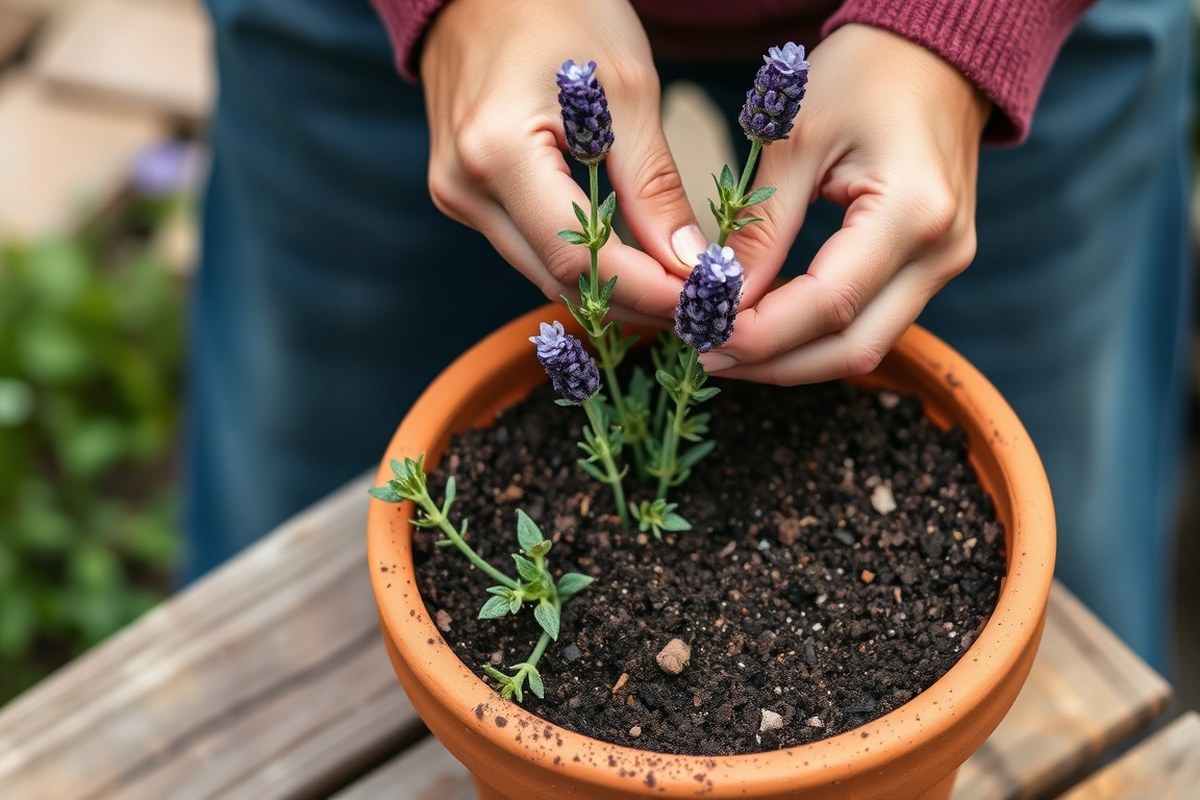
Planting lavender in a container calls for careful preparation to help the roots grow healthy. Choose a pot at least 12 inches deep for your lavender. This helps roots spread out well.
It also lets water drain properly. Make your own soil mix with potting soil, sand, compost, and perlite.
Lavender needs loose soil that drains well. This mix gives it the best start.
Pick a pot that’s a few sizes larger than the nursery one. This gives plants room to grow. It keeps the roots from getting cramped.
That helps the roots grow without getting crowded. Remove old soil gently from the root ball before planting. Doing this lets roots grow into fresh soil.
It helps the lavender settle in quickly. Aim to plant the lavender at the same depth it grew in its original container.
Fill the pot halfway with your soil mix first. Place the lavender plant in the pot’s center. Then fill the rest with soil around it.
The plant needs about 10 to 14 inches of space across the pot to grow well. After planting, water it lightly. Then set the container in a spot with at least 6 hours of sun.
- Prepare your tools: Gather a pot, your soil mix, a trowel, and water.
- Begin by filling your container halfway with a soil mixture. Use 3 parts potting soil, 1 part coarse sand, 1 part compost, and 1 part perlite. This combination ensures proper drainage and provides nutrients for lavender.
- Remove the lavender gently from its nursery pot, loosening soil around the roots without damaging them.
- Dig a hole in the center of the container soil large enough for the root ball.
- Place the plant in the hole, matching the soil line to the original root level.
- Fill around the plant with soil mix, gently firming it but not packing tight.
- Water the lavender lightly to settle the soil around the roots.
- Place the pot where it receives full sun for at least six hours daily.
Choosing the Best Lavender Varieties for Container Growing

Lavender varieties that stay compact and bloom well in pots suit container growing best. English lavender and some compact French types have manageable sizes and sweet scents for pots. Dwarf cultivars also work great for small containers and indoor spaces.
English Lavender – Best for Compact, Long-Lasting Pots
English lavender (Lavandula angustifolia) is a top choice for containers. It grows 25 to 35 inches tall and wide, fitting well in 16- to 24-inch pots. Its sweet scent makes it a gardener favorite.
Large purple flowers add style and charm. Many people grow it for fragrance.
This type lasts several years in one pot when you pick the right size container. English lavender prefers full sun and needs good drainage to avoid root problems. Its evergreen leaves brighten any patio or balcony year-round.
Spanish and French Lavenders – Larger but Aromatic Options
Spanish and French lavenders are usually bigger plants. They often bloom bright purple spikes. Sometimes they produce white or pink flowers.
Their size can exceed that of English lavender. So you may need bigger pots or more frequent repotting to keep them healthy.
There are compact French lavender types for pots. They do well in cooler areas. These types aren’t always hardy in gardens.
Spanish lavender has a strong, fresh scent. This plant can grow into a small shrub.
It needs space to spread out. It’s ideal if you have space for a larger container.
Dwarf and Specialty Lavenders for Small Containers
Dwarf lavender types are bred specifically for small space growing. They stay well under 18 inches tall and bloom abundantly. These plants suit tiny balconies or indoor pots.
They fit where space and light are limited. Small size keeps them manageable indoors.
Choosing dwarf varieties means you can enjoy fragrant lavender indoors or in tiny outdoor pots. These plants are low maintenance and still attract pollinators, just like their larger relatives. They offer variety without crowding.
Here’s a comparison of top lavender varieties suited for container planting:
| Variety | Approximate Size (Height & Width) | Growth Habit | Fragrance | Lifespan in Container |
|---|---|---|---|---|
| English Lavender | 25-35 inches | Compact, bushy | Sweet, classic | Several years in large pots |
| Compact French Lavender | Up to 36 inches | Small shrub | Strong, aromatic | 2 to 3 years, may need repotting |
| Spanish Lavender | 36+ inches | Upright small shrub | Fresh, strong | Depends on container size and care |
| Dwarf Lavender Varieties | Under 18 inches | Compact, low bush | Varies by cultivar | Several years in small pots |
Match your lavender choice to the container size this way. Choosing too small a pot stops growth and lowers flower yield.
Bigger plants need bigger containers to stay healthy and fragrant. Compact varieties save you this worry.
Picking a pot at least 16 inches wide helps avoid root crowding and boosts lavender blooms.
Selecting and Preparing the Perfect Container for Lavender
Pick a pot that matches your lavender’s size and needs. Choose materials that let soil dry quickly. Make sure the container has drainage holes to stop water from collecting at the bottom.
Recommended Pot Sizes for Different Lavender Stages
Young lavender plants do well in a 12-inch pot holding about 5 gallons of soil. This size fits small varieties like Hidcote or Munstead. It gives the roots room to develop without drowning in too much soil.
Mature lavender that can grow up to 3 feet wide needs a bigger pot. Aim for one at least 14 to 16 inches wide for full-grown plants.
This space helps roots spread and supports better blooms over several years. For one-gallon plants, choose a pot about 10 to 14 inches wide.
Pros and Cons of Terracotta, Plastic, and Ceramic Pots
Terracotta pots are popular because they dry fast and allow air to reach the roots. They help prevent soggy soil, which lavender hates. But terracotta breaks more easily and can dry out soil too quickly in hot weather.
Plastic pots hold moisture longer and weigh less. They are less likely to crack outside. However, they can hold too much water.
This raises root rot risks. Make sure drainage holes are there.
Ceramic pots can be glazed or unglazed. Unglazed ceramics act like terracotta, promoting airflow and drainage.
Glazed ones hold moisture more, similar to plastic. Ceramic pots tend to be expensive and heavier than the other choices.
Ensuring Proper Drainage and Avoiding Waterlogging
Drainage holes are important because lavender roots don’t tolerate sitting in water. Check that the pot has several holes at the bottom to let excess water escape. A single small hole isn’t enough for healthy drainage.
Test drainage by filling the pot with soil and watering it. Watch if water pours quickly out the holes or pools inside. Add more holes or use a pot with better drainage if water stays trapped.
- Always select a pot with multiple drainage holes
- Use a layer of gravel or broken pottery shards at the bottom
- Fill with a well-draining soil mix designed for lavender
- Check soil moisture daily by pressing two inches down
- Use saucers to catch excess water but empty them regularly
- Avoid letting the pot sit in standing water or on a flat surface without airflow
Saucers catch runoff but can cause waterlogging if left full. Empty them often to keep roots dry. Improve pots slightly to improve air circulation beneath and prevent soggy conditions.
Optimal Soil Mix and Amendments for Container Lavender
Lavender needs soil that drains very well to avoid root rot. A good mix uses 60% potting soil, 30% compost, and 10% perlite. Potting soil gives nutrients to the plant.
Compost adds organic matter. Perlite helps keep the soil light and drains water well.
You don’t have to start your soil mix from scratch. You can amend store-bought potting soil by stirring in compost and perlite or coarse sand. This change stops water from sitting too long.
Lavender especially dislikes wet soil indoors during winter. It helps keep roots healthy.
Adding compost gives nutrients and supports healthy growth. But avoid using soil mixes high in nitrogen since lavender prefers leaner soil. Over-fertilizing with nitrogen can make the plant weak and leggy instead of bushy and fragrant.
A simple DIY recipe is mixing 3 parts quality potting soil, 1.5 parts compost, and 0.5 part perlite. For a 5-gallon pot, use about 6 quarts of potting soil. Add 3 quarts of compost.
Mix in 1 quart of perlite too. Mix well before filling your container.
Add one tablespoon of garden lime to each pot. This raises soil pH closer to neutral, which lavender likes. Avoid using heavy clay or only garden soil because they trap too much water and drain slowly.
When reusing old soil, take out leftover roots first. Add fresh compost and perlite to improve nutrients and drainage. This refreshes the soil for your lavender.
Over time, soil breaks down and compacts. So amending it keeps your lavender happy and healthy.
Sunlight, Placement, and Temperature Needs for Potted Lavender
Potted lavender requires a minimum of 6 to 8 hours of sunlight daily. Choose a sunny spot on your patio or balcony with 8 to 10 hours outdoors. Place the pot by a south-facing window inside to get plenty of light.
Lavender does not thrive in shade or low light. Grow lights help if your indoor sunlight is too weak. Use them to reach those 6 to 8 hours of bright light needed.
These lights make sure your lavender gets enough energy to grow. Turn the pot regularly so all sides get equal light and the plant grows evenly.
Ideal temperatures during the day range between 60 and 70 degrees Fahrenheit inside your home. Outdoors, lavender prefers warmth and struggles if temperatures drop below 40°F. Protect your plant from drafts near windows or doors, as cold, humid air can harm it.
- Place containers where they get 6, 8 hours of full sun daily
- Use a south-facing window for indoor plants or supplement with grow lights
- Turn the pot regularly for even growth
- Keep indoor temps between 60°F and 70°F
- Bring pots indoors before nighttime temps drop below 40°F
- Use light-colored containers outdoors to avoid overheating the roots
- Move containers during extreme weather to avoid frost or sun scorch
Dark pots left in direct afternoon sun can heat soil by 10 to 15 degrees Fahrenheit. This might dry out roots faster and stress your lavender. Light-colored containers reduce this risk and help maintain stable soil temperatures.
Moving lavender indoors in cold winters keeps it safe from frost. This protects the plant from freezing damage during harsh weather. Keep it near a sunny window inside to mimic outdoor light.
Watch temperature changes closely around your lavender pot. Quickly move your plant to avoid frost or heat stress. Act fast to keep your lavender healthy in shifting weather.
Watering and Feeding Schedule to Keep Container Lavender Thriving
Water your container lavender deeply but only when the top 2 inches of soil feel dry. To check this, stick your finger into the soil near the plant’s base. Wait a few days before testing again when soil feels moist.
Always water at the base of the plant. Avoid getting the leaves wet because standing moisture on foliage increases fungal risks like root rot. Use a watering can with a long spout to reach the soil without splashing the leaves.
Watering frequency depends on pot size, soil, and the season. Smaller pots dry out quicker. So you might water 2 to 3 times a week during hot summer months.
Larger pots retain moisture longer, needing watering about once a week. In cooler seasons, cut back to every 10 to 14 days to prevent soggy soil.
Fertilize container lavender lightly but regularly for healthy growth. Use a balanced, slow-release fertilizer labeled for herbs or flowering plants. Apply fertilizer once a month during the active growing season, usually spring through early fall.
Too much fertilizer can cause leggy growth and lower floral quality. Follow package directions for small containers, often about half the recommended amount for garden beds. Organic options like diluted fish emulsion work well and feed your lavender gently.
Make a simple weekly plan. Check soil moisture every 3 to 4 days. Water only if the soil feels dry.
Feed your lavender once a month with a light dose of fertilizer. Skip feeding in winter when growth slows down. Write reminders on your calendar to keep track during busy weeks.
Water less when lavender is in a decorative pot without drainage holes. Check the drainage often to avoid root waterlogging.
Use a smaller pot with holes inside the decorative container. Remove extra water from the outer pot regularly to keep roots healthy.
Pruning, Repotting, and Winter Care for Container Lavender
Keep your container lavender compact by pruning right after it blooms. Repot every 2 to 3 years to maintain root health without shocking the plant. Protect outdoor pots in winter by moving them indoors or shielding them from freezing temperatures.
Pruning Techniques for Healthy Growth and Flowering
Prune your lavender soon after its flowers fade to keep it bushy and tidy. Avoid cutting into old, woody stems as they won’t regrow leaves. Always leave some green growth on the plant to prevent bare patches.
Regular light pruning helps the plant focus energy on new shoots and flowers. This practice prevents the plant from becoming leggy or sparse in the pot. Aim to trim about one-third of the fresh growth for the best shape.
Safe Repotting Process for Container Plants
Repot lavender every 2 to 3 years or when roots tightly fill the pot. Gently loosen roots and refresh the soil to give your plant space to grow. Use a well-draining sandy mix to avoid waterlogging and root rot during repotting.
Follow these steps to repot safely and reduce stress on your plant:
- Choose a container slightly larger, about 1, 2 inches wider than the current one.
- Prepare fresh soil that drains well, preferably with sand or small gravel mixed in.
- Water the lavender thoroughly a day before repotting to ease root removal.
- Carefully remove the lavender from its current pot without damaging roots.
- Gently tease apart the outer roots if they are circling tightly.
- Place the plant in the new pot at the same soil depth it was before.
- Fill the pot with fresh soil and press lightly to eliminate air pockets.
- Water lightly and place the pot in bright, indirect light for recovery.
Strategies to Protect Lavender from Winter Cold
Outdoor potted lavender needs winter shelter when temperatures drop below 20°F (-6°C). Move pots to a garage, basement, or a spot that stays cool but frost-free. Wrap pots with bubble wrap to insulate them.
Put these pots inside bigger containers. Fill the space with straw for extra protection.
Bring lavender indoors and place it by a sunny window. Make sure the window gives six or more hours of light daily.
Avoid overwatering in winter, letting soil dry slightly between waterings. Keep the air dry and avoid keeping it near heating vents to prevent fungal problems.
Troubleshooting Common Problems with Container Lavender
Wilting or yellow leaves often mean you’re watering too much or too little. Overwatered lavender looks soggy at the base with soft or black stems from root rot. Underwatered plants have dry, brittle leaves and drooping stems.
Check the soil by sticking your finger 1 inch deep. Wait to water when the soil feels wet to the touch. Add water gradually when dry until the soil is moist, not soaked.
Look closely for pests like aphids or mealybugs, which cause distorted or sticky leaves. These bugs hide under leaves or around stem joints. Fungal diseases show as dusty white or grey spots on leaves and stems.
Remove affected parts with clean scissors. Wash your hands to stop spreading the fungus.
Spray neem oil or insecticidal soap once a week if pests persist. Always follow product instructions and avoid overuse.
Leggy, stretched growth happens without enough sun or after overwatering. Lavender needs at least 6, 8 hours of direct sun to bloom fully. Sparse blooms also occur if the plant lacks pruning or gets too much nitrogen fertilizer.
Cut back about 1/3 of each stem using hand pruners. This shapes your lavender and encourages fuller growth. Avoid cutting into old wood, which may prevent new growth.
To save struggling lavender, start by adjusting water and light conditions. Move your pot to a sunnier spot if it’s in shade. Check drainage holes to avoid water pooling.
Repotting into fresh, well-draining soil helps if root rot is suspected. Use terracotta containers to improve airflow.
Remove dead or sick branches and cut back leggy stems. Feed with balanced, low-nitrogen fertilizer sparingly during growing season.
Always ensure your lavender pot has drainage holes to prevent standing water and root rot.
Step-by-Step Action Plan for Growing Lavender in Containers
Follow these steps to get your lavender thriving in containers. Each step shows what to do and how to check it’s working.
- Before planting: Choose a container with drainage holes and fill it with well-draining soil. It should feel loose and dry to the touch, not soggy.
- Day 1: Plant your lavender in the soil. Keep the roots covered. Don’t bury them too deep. The plant should sit firmly without wobbling.
- Week 1: Place the pot where it gets 6 to 8 hours of sun daily. Look for healthy, upright leaves as a sign it’s happy with light.
- Week 2: Water the lavender moderately when the top inch of soil feels dry. Avoid water pooling; the soil should soak up moisture quickly.
- Month 1: Feed the plant once with a balanced, diluted fertilizer. New growth indicates the lavender is getting nutrients.
- Every 6 weeks: Check soil drainage and prune dead stems to keep the plant vigorous. Greens should stay bright and firm.
- Fall: Move the lavender indoors or find a safe spot. Do this if the temperature falls below 40°F. The leaves should stay green and not wilt.
Frequently Asked Questions
Does Lavender Do Well Planted in Pots?
Yes, lavender grows well in pots because it is drought-tolerant. This makes it a low-maintenance choice for container gardening on patios or balconies. You can also enjoy freshly harvested blooms easily from your container.
What Is the 8 8 8 Rule for Lavender?
The 8 8 8 rule means using fertilizer with equal parts nitrogen, phosphorus, and potassium. Applying it once or twice a year helps lavender grow strong without too much nitrogen. Too much nitrogen can reduce flower production.
What Are the Most Common Mistakes When Growing Lavender?
Common mistakes include overwatering and poor drainage in the container. Lavender needs dry conditions, so pots must have drainage holes. Another big mistake is planting lavender in low light or overly rich soil.
Does Lavender Come Back Every Year in Pots?
Lavender is a perennial and can come back each year in pots if cared for right. It needs proper pruning and protection from harsh winter freezes when outdoors. Indoors, consistent light can help it survive year to year.
Can I Grow Lavender Indoors Year-Round?
Yes, you can grow lavender indoors if it gets enough sunlight. Place it near a south-facing window for at least six hours of light daily. Keep the soil slightly dry to avoid root rot.
How Often Should I Repot Container Lavender?
Repot your lavender every 2 to 3 years or when it outgrows its pot. Doing this refreshes the soil and gives roots more space to grow. Avoid disturbing the roots too much during repotting.
Before You Go
Lavender can thrive in containers if you plant it right and care for it regularly. Start with a sunny spot and well-draining soil. Keep checking your plant’s health and enjoy its lovely scent and blooms.