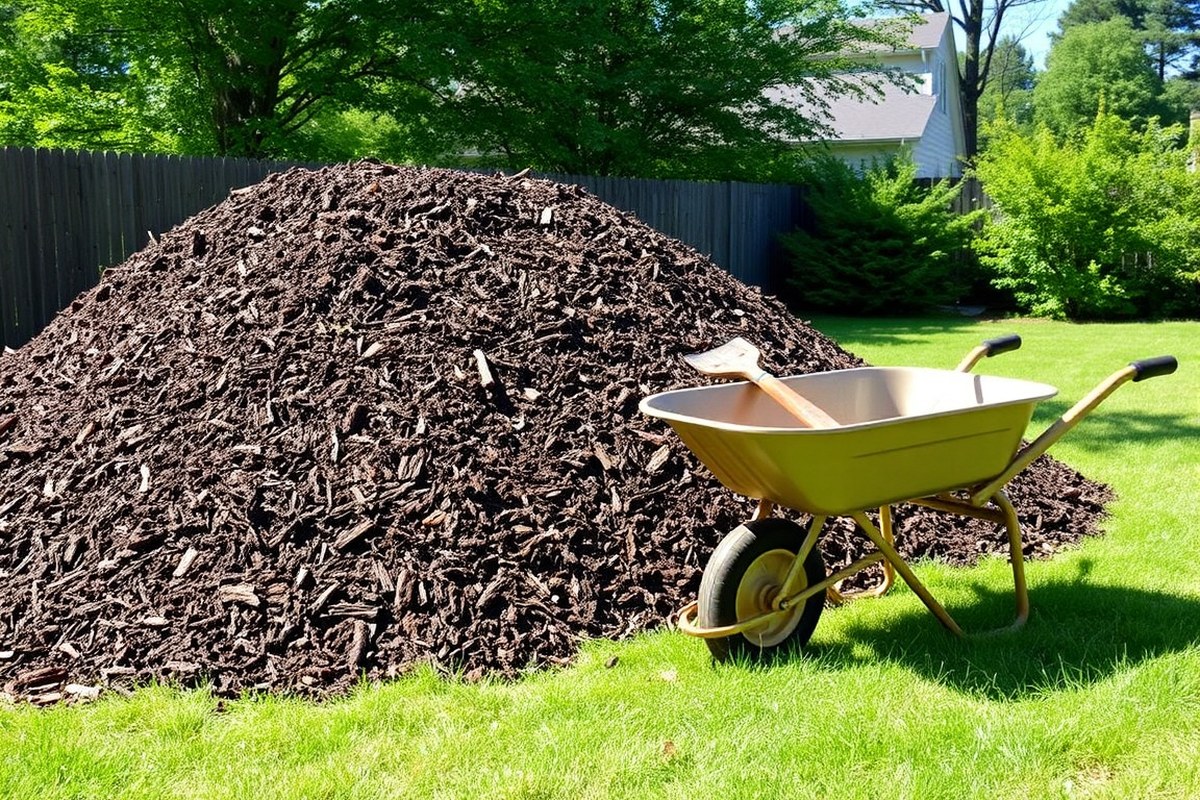
How Much Is 4 Yards of Mulch? Clear Costs, Coverage & Best Buys
Wondering how much is 4 yards of mulch? It typically costs between $80 and $300 depending on the type and source you pick. Buying bulk is your best bet for savings, especially if you don’t need fancy materials.
The price depends on mulch type, quality, and delivery fees. You can expect cheaper options like pine mulch around $30 per yard.
Cedar or colored mulch can run $60 to $100 per yard. Delivery usually adds another $40 to $100, so factor that in before you order.
Start by measuring your project area. Then think about mulch types and prices. Choose what fits your budget and garden needs.
Watch out for those “free delivery” offers since they might raise the price per yard. Getting a clear quote upfront saves surprises later.
Key Takeaways
- Four yards of mulch covers about 480 square feet at 3 inches deep.
- Expect to pay around $30 to $100 per cubic yard depending on mulch type.
- Bulk mulch usually costs less per yard than bagged mulch for 4 yards.
- Delivery fees often add $40 to $100, so get a detailed cost estimate.
- Pine mulch is the most affordable, while cedar mulch costs more but lasts longer.
- Measure your space accurately before ordering mulch to avoid overbuying.
How Much Does 4 Yards of Mulch Typically Cost?

Four yards of mulch usually costs between $120 and $220 for just the material. Prices vary by mulch type: wood mulch typically runs $20 to $45 per cubic yard. Dyed mulches cost around $35 to $55 per yard.
Rubber mulch costs more, usually $130 to $210 per yard. It weighs more and needs more work to make. These factors raise the price.
Delivery fees can add between $40 and $150 depending on your location and supplier. Some companies charge a flat rate per truckload, which can be about $160 on average. Delivery might be free if you buy 10 yards or more.
Sometimes suppliers run special deals that include free delivery. Check for offers before you buy.
Four yards of wood mulch costs about $120 in material. That’s 4 yards times $30 per yard. This simple math helps you budget.
Delivery might add $60, bringing your total to roughly $180. Expect to pay an extra $50 to $100 per yard for installation.
This price covers labor and spreading the mulch. Professionals handle the job for you.
Mulch type changes the material price but barely affects delivery. Heavy mulch, like rubber, can make delivery cost more. Lighter mulches cost less to deliver.
Delivery fees can be waived when ordering bigger loads, typically above 10 cubic yards. So, buying exactly four yards usually means you’ll pay for delivery unless using local pick-up.
Using bulk mulch saves money over bagged options, especially when ordering around four yards. Bagged mulch costs about $3 to $6 per 2 cubic-foot bag. You’ll need around 26 bags to cover four cubic yards.
This helps if you buy small amounts. That totals $78 to $156 before any delivery or hauling charges.
How to Calculate Coverage and Volume for 4 Yards of Mulch

Four cubic yards of mulch covers between 324 and 648 square feet. Coverage depends on how thick you spread it. Thicker layers cover less area.
Choosing your mulch depth wisely helps with moisture retention and weed control while avoiding waste. Measure your bed size in square feet with simple math.
Multiply the size by your mulch depth. This shows how much area 4 cubic yards cover.
Calculating Area of Garden Beds
Measure your garden beds in feet by taking length and width for rectangles. For circular beds, measure the diameter across the widest part. Multiply length by width for rectangles, or use the formula π × radius squared for circles.
Use that square footage as the base number to figure mulch needs. You can add multiple bed areas together if your garden has many parts.
- Use a tape measure to find the length and width of rectangular beds.
- For circular beds, measure the diameter across the center.
- Calculate rectangular areas: multiply length × width to get square feet.
- Calculate circular areas: divide diameter by 2 for radius, then use π × radius².
- Add all garden bed areas if there’s more than one bed.
Converting Depth Inches to Feet for Volume
Depth matters because mulch volume equals area × depth in feet. Convert mulch depth from inches to feet by dividing by 12. For example, 3 inches equals 0.25 feet (3 ÷ 12 = 0.25).
This conversion helps you find total cubic feet, which you then convert to cubic yards. One cubic yard equals 27 cubic feet. So divide total cubic feet by 27 for cubic yards.
Determining Coverable Square Footage from 4 Yards
One cubic yard covers about 162 square feet at a 2-inch depth. Multiply by 4 for 4 yards: 648 square feet at 2 inches. At 3 inches deep, 1 yard covers roughly 108 square feet.
So 4 yards cover 432 square feet. At 4 inches, 1 yard covers 81 square feet. So 4 yards cover 324 square feet.
Here’s a quick reference chart for 4 yards of mulch covering:
| Depth (inches) | Area Covered (sq ft) |
|---|---|
| 2 | 648 |
| 3 | 432 |
| 4 | 324 |
Use this calculation template:
- Measure your bed area in square feet.
- Choose your mulch depth in inches (2, 3, or 4 inches).
- Convert depth inches to feet (divide by 12).
- Calculate cubic feet: multiply area × depth in feet.
- Convert cubic feet to cubic yards (divide by 27).
- Compare with your 4 yards supply to see coverage.
Don’t lay mulch too thick or plants may suffocate; 3 inches is usually enough.
What Types of Mulch Are Available and How They Affect Price
Prices for 4 yards of mulch vary widely based on the type you pick. Organic mulches usually cost less than inorganic ones but need refreshing more often. Your choice depends on your budget, durability needs, and garden style.
Common Organic Mulch Types and Prices
Organic mulches like hardwood chips, pine bark, and straw break down over time. That means you’ll improve your soil but need to add mulch more often. Typical costs range from $30 to $110 per cubic yard depending on material and quality.
Hardwood mulch costs $30 to $50 per yard in bulk. It lasts about 1 to 2 years. This makes it a good value for many gardens.
Pine bark nuggets provide a nicer look at $40 to $60 per yard but are pricier. Straw is usually cheaper but less durable and not ideal for high-traffic garden beds.
Inorganic Mulch Options and Features
Inorganic mulches include rubber, plastic, and decorative stone. They cost more upfront but last longer. These mulches don’t break down like organic types do.
Rubber mulch runs about $80 to $140 per cubic yard and can last many seasons. Plastic mulch costs less but mainly suits vegetable beds.
Crushed seashells and stones create a unique garden look. Prices range from $40 to over $180 per yard. Costs depend on the material and supplier.
Inorganic mulches don’t add nutrients to soil. They do reduce weeds effectively. These materials help prevent erosion in permanent beds.
Premium vs Utility Grade Mulch Costs
Premium mulches like cypress and cedar range from $40 up to $135 per cubic yard. They last longer and have aromatic qualities.
So they fit flower beds and display gardens well. Cypress mulch at $110 per yard often needs no refresh through the growing season.
Basic hardwood and dyed wood mulches cost $25 to $55 per yard. These options are more budget-friendly than some other types. They suit many standard landscape needs.
These mulches cover large areas well but break down faster. You’ll need to add more every year or twice a year. Frequent topping keeps mulch effective and fresh.
The table below compares common mulch types by price, durability, and ideal uses. This can help narrow choices for your 4-yard project:
| Mulch Type | Price Per Cubic Yard (Bulk) | Durability (Years) | Ideal Use |
|---|---|---|---|
| Hardwood (Organic) | $25 – $50 | 1 – 2 | Lawn edges, general beds |
| Pine Bark Nuggets (Organic) | $40 – $60 | 1 – 2 | Flower beds, walkways |
| Cedar (Premium Organic) | $40 – $100 | 2 – 3 | Decorative shrub beds |
| Cypress (Premium Organic) | $45 – $65 | 3+ | Long-lasting beds, landscaping |
| Rubber (Inorganic) | $80 – $140 | 5+ | Playgrounds, paths, flower beds |
| Plastic (Inorganic) | $35 | 1 – 2 | Vegetable gardens, weed control |
Pick organic mulch for affordable soil improvement and softer, natural looks. Choose inorganic mulch if you want long-lasting coverage and minimal yearly maintenance. Think about your garden’s needs and budget before choosing mulch.
Also consider your local growing season length. These factors help you decide how often to refresh mulch.
Bulk Versus Bagged Mulch: Which Is Better for 4 Yards?
Bulk mulch usually costs less than bagged mulch for the same 4-yard amount. Bagged mulch costs about $54 to $95 per cubic yard. The price is based on 2-cubic-foot bags.
Each bag costs $4 to $7. Bulk mulch prices range from $30 to $75 per cubic yard. Delivery fees often add around $50.
You’ll need around 58 bags of 2-cubic-foot mulch to make 4 cubic yards. This number comes from multiplying 14.5 bags per cubic yard by 4 yards. Bulk mulch saves you money and cuts down on the hassle of handling many bags.
Delivery or pickup matters too. Bulk mulch delivery brings 2 to 3 yards at once. The truckload is enough for many projects.
You don’t have a suitable vehicle. Hauling 4 yards yourself means multiple trips. Bagged mulch fits in a car but requires more trips to the store.
| Project Size | Bulk Cost (Material) | With Delivery ($50) | Bags Equivalent @ $4.50 Each | Sq Ft Covered @ 3″ Depth |
|---|---|---|---|---|
| 2 yards | $70 | $120 | $122 (27 bags) | 216 sq ft |
| 3 yards | $105 | $155 | $183 (41 bags) | 324 sq ft |
| 5 yards | $175 | $225 | $304 (68 bags) | 540 sq ft |
To estimate costs for 4 yards, average prices between 3 and 5 yards. Use the chart for reference. Bulk mulch with delivery will likely cost around $190 to $210.
Bagged mulch at $4.50 per bag means roughly $260 for 58 bags. This shows a clear bulk price advantage.
Choosing bulk helps if you want fewer shopping trips and less plastic waste. It suits bigger jobs well but needs a truck or trailer for pickup. Bagged mulch fits small projects or spotty needs but costs more in time and money.
Consider your storage and transport options before buying. Renting a truck makes bulk mulch even cheaper.
It cuts hauling costs down. Store bags properly to avoid moisture, which can increase the final cost due to waste.
Delivery and Installation Costs for 4 Yards of Mulch
Delivery fees for 4 yards of mulch usually run from $40 to $100. This fee often stays flat regardless of how much mulch you order.
Some suppliers waive this for large orders. But 4 yards might be just under that threshold.
Labor costs for spreading mulch professionally add around $20 to $45 per yard. That means you could pay an extra $80 to $180 for spreading 4 yards. Professional spreading saves time and effort, especially if your area is large or uneven.
Total delivery and installation may add $120 to $280 to your cost. This is above just buying the mulch material. You can save $40 to $100 by picking up the mulch yourself.
This helps cut delivery costs. Installing mulch yourself means renting or borrowing tools and spending a few hours outside.
You can ask landscapers if they offer a minimum job charge. Many charge $100 to $200 regardless of how small your order is.
Negotiating delivery or installation fees might be easier if you bundle jobs or pay in cash. Some companies also discount spreading if you buy more than 5 yards.
Consider these points before choosing DIY or pro spreading:
DIY means you handle hauling and spreading. You save labor costs but need a wheelbarrow, rake, and gloves.
It takes about 1 to 2 hours to spread 4 yards of mulch. This depends on your bed’s shape and a 3-inch depth.
Hiring professionals adds cost but they finish faster and clean up. They know proper depth and avoid overpacking mulch. For tricky spots or steep slopes, pros often get better results without back strain.
Picking up mulch yourself saves $50 to $100 on delivery. Plan on needing a big vehicle and lifting heavy loads.
Common Mistakes When Buying and Applying 4 Yards of Mulch
Ordering too much or too little mulch can cause problems. Too little mulch leaves soil exposed and defeats weed control. Too much mulch costs extra and can suffocate roots.
Mulch should be spread 2 to 4 inches thick, depending on plant needs. Use 3 inches for most beds and 2 inches around shallow-rooted plants. Avoid piles deeper than 4 inches to prevent moisture buildup and root rot.
Never mound mulch directly against tree trunks or plant stems. Keeping mulch 3 to 6 inches away avoids trapping moisture that can cause bark rot. This practice also stops pests and fungal diseases that harm your plants.
- Check mulch depth monthly to prevent layering or buildup
- Avoid “volcano mulching” by leaving a mulch-free zone near trunks
- Order 10-15% extra mulch to cover uneven spots and settling
- Spread mulch evenly using a rake without compacting it
- Apply mulch after the first hard freeze or on mild days
- For trees, keep mulch edge 3-6 inches from trunk base
- Don’t dump all mulch in one spot; spread loads evenly
Spreading mulch takes time and effort. For 4 yards, plan about 1.5 to 2 hours if you do it alone. Use a wheelbarrow and rake to move and level mulch smoothly.
Good mulch layers save water and control weeds without hurting plants. Check for damp, smelly spots that signal overwatering or compaction. Fix these by pulling mulch back and letting soil dry before adding more.
Tips to Save Money When Purchasing and Using 4 Yards of Mulch
Buying 4 yards of mulch in bulk usually cuts costs significantly compared to bagged mulch. You can get discounts by asking for lower rates on bulk orders. Buying all 4 yards at once helps you qualify for better prices.
Always ask your supplier about bulk discounts before you buy. Local garden centers and yards often give better prices for advance orders.
Paying with cash can also help you get a discount. Ordering ahead saves you money and secures your mulch supply.
Picking up your mulch can save delivery fees, typically $50 or more per trip. But factor in your vehicle’s capacity. A standard pickup truck bed holds about 2 to 3 cubic yards.
So you might need two trips for 4 yards. Weigh fuel, time, and effort against delivery costs before deciding.
Prices usually drop after peak gardening season ends in late spring. Buying mulch in late fall or winter can save you 10% to 20% off summer prices.
However, cold weather may affect application ease. So store mulch in a dry place until you’re ready to spread it.
- Ask for bulk discounts upfront when ordering 4 yards
- Check if your vehicle can safely haul all mulch in one trip
- Shop local yards or municipal compost sites for better prices
- Buy mulch off-season, like fall, to lower costs by up to 20%
- Weigh cost savings of DIY spreading vs professional labor fees
DIY spreading saves money but takes several hours of physical work for 4 yards. Professionals charge mainly for delivery and labor, not just the mulch. Lacking equipment or time?
Paying for delivery and installation can be worth it. It offers convenience and usually better results for your project.
Choose a plan based on your budget, vehicle, and time. Demand usually peaks in spring.
So ordering mulch early or late in the year reduces expenses. Planning ahead helps you avoid rush fees and out-of-stock problems.
When and How Often to Replace or Refresh Mulch Layers
Four yards of mulch usually lasts 2 to 3 years in garden beds. Add a fresh 1 to 2 inch layer every year. This keeps mulch at the right depth.
Check yearly to see if you need more. The best time to refresh mulch is in spring or fall after soil warms or cools.
Typical Mulch Longevity by Type
Shredded hardwood mulch lasts about 2 to 3 years. Many yards use it for that reason. After that, you need full replacement.
Bark nuggets break down slower and can last longer. Organic mulches like shredded leaves and pine needles have shorter lifespans, often less than two years.
Maintaining a mulch depth of 2 to 3 inches helps it last longer. The harder the wood, the slower it breaks down. Mulch color fades in 1 to 2 seasons.
Black-dyed mulch fades faster. You may need to add color each year.
Recognizing When Mulch Needs Replacement
Mulch looks thin, patchy, or compacted when it needs topping or replacing. Moldy or matted mulch with fungal growth also signals refreshing is due. Mulch that smells sour or pushes up plant roots means it’s time for attention.
Check mulch depth yearly. When mulch drops below 2 inches, add fresh mulch on top. This keeps plants protected and soil healthy.
Check your mulch depth regularly. Complete removal is rarely needed unless mulch smells bad or damages plant roots. Removing old mulch can cost $50 to $100 in disposal fees if done professionally.
Timing and Methods for Refreshing Mulch
Spring and fall are best for adding mulch. Soil temperatures support plant growth in these seasons. Adding mulch before summer heat or winter cold helps retain moisture and protect roots.
Use these steps to refresh mulch properly:
- Rake the existing mulch to break up clumps and fungal mats gently.
- Check the depth of the mulch layer.
- Add a 1 to 2 inch layer of fresh mulch over the old.
- Keep mulch 1 to 2 inches away from tree trunks to prevent rot.
- Water the mulch lightly after application to help it settle.
- Spot replace any areas where mulch is missing or very thin.
Raking old mulch before adding fresh layers prevents fungal mats and promotes healthy soil.
Step-by-Step Action Plan for Buying and Using 4 Yards of Mulch
Follow these steps to plan buying, delivery, and applying 4 yards of mulch efficiently. Each step helps you track progress and avoid common pitfalls.
- Before You Buy: Measure your garden area carefully. Check that 4 yards of mulch will cover your space with a 2-3 inch layer.
- Day 1: Choose the mulch type based on price and appearance. Pick between bulk for savings or bags for convenience.
- Day 2: Arrange delivery if you buy bulk mulch. Confirm the truck can access your yard and that delivery fees won’t surprise you.
- Day 3: Prep garden beds by removing weeds and old mulch. This step ensures the new mulch lays evenly and stays put.
- Day 4: Spread mulch evenly across beds, 2 to 3 inches thick. Check for bare spots or piles that might cause decay.
- Week 4: Inspect mulch after rain or wind. Add or redistribute mulch to keep coverage consistent.
- Every 6 to 12 Months: Plan to refresh mulch layers. Note fading color or thinning depth as signs it’s time.
Frequently Asked Questions
How Much Mulch Covers a 10×10 Foot Garden Bed at 3 Inches Deep?
About 0.93 cubic yards of mulch covers that area at 3 inches depth. It’s enough to spread a thick layer without packing the soil.
Is 4 Yards of Mulch Heavy to Move by Hand?
Yes, 4 yards weigh about 2,000 to 3,000 pounds, too heavy to move easily. Using a wheelbarrow or delivery service saves you many trips and sore muscles.
Can I Store 4 Yards of Mulch Outside Before Using It?
You can store mulch outside if it’s kept dry and covered. Moist mulch can start decomposing or attract pests if left uncovered for weeks.
Does the Color of Mulch Affect the Coverage of 4 Yards?
Color doesn’t change how much area 4 yards cover but can affect cost. Some colored mulches run more expensive due to dyes and added processing.
How Long Does 4 Yards of Mulch Typically Last in a Garden Bed?
Mulch in a garden bed usually lasts about one to two years before needing topping up. Rain, sunlight, and plant growth speed up decomposition.
Is It Better to Buy 4 Yards of Mulch from a Local Supplier or a Big Box Store?
Local suppliers often offer fresher mulch and better bulk deals for 4 yards. Big box stores may charge more per cubic yard and have limited mulch types.
The Bottom Line
Four yards of mulch gives enough coverage for medium garden beds when spread right. Planning your purchase and delivery avoids waste and extra costs. Start by measuring your garden today and checking mulch options nearby.