What to Plant with Coral Bells: 8 Top Companions and Design Tips
Wondering what to plant with coral bells to boost your garden’s appeal? Choose plants that like part shade and gentle sunlight, just like coral bells do. This way, your plants grow well together without fighting for light or space.
Good companions include hostas, ferns, and bleeding hearts. They add height and texture but won’t crowd your coral bells if you give them room. Keep them spaced properly to avoid plants getting crowded as they mature.
Consider adding spring bulbs like daffodils or tulips for seasonal color contrast. These bulbs enjoy similar light and soil conditions, complementing your coral bells’ foliage.
Start by planting coral bells in spots with 4 to 6 hours of morning sun. Avoid harsh afternoon sun that can stress them. This setup helps both coral bells and their companions thrive side by side.
Key Takeaways
- Space coral bells 12 to 18 inches from companion plants to prevent crowding.
- Plant taller companions like hostas behind coral bells for balanced layers.
- Choose companions that enjoy part shade with about 4-6 hours of sun.
- Ferns should be planted 12 to 15 inches away to allow their spread.
- Repeat coral bells every 2, 3 feet to create visual anchor points in beds.
- In warmer zones, plant coral bells in fall after summer heat fades.
Best Plants to Grow with Coral Bells
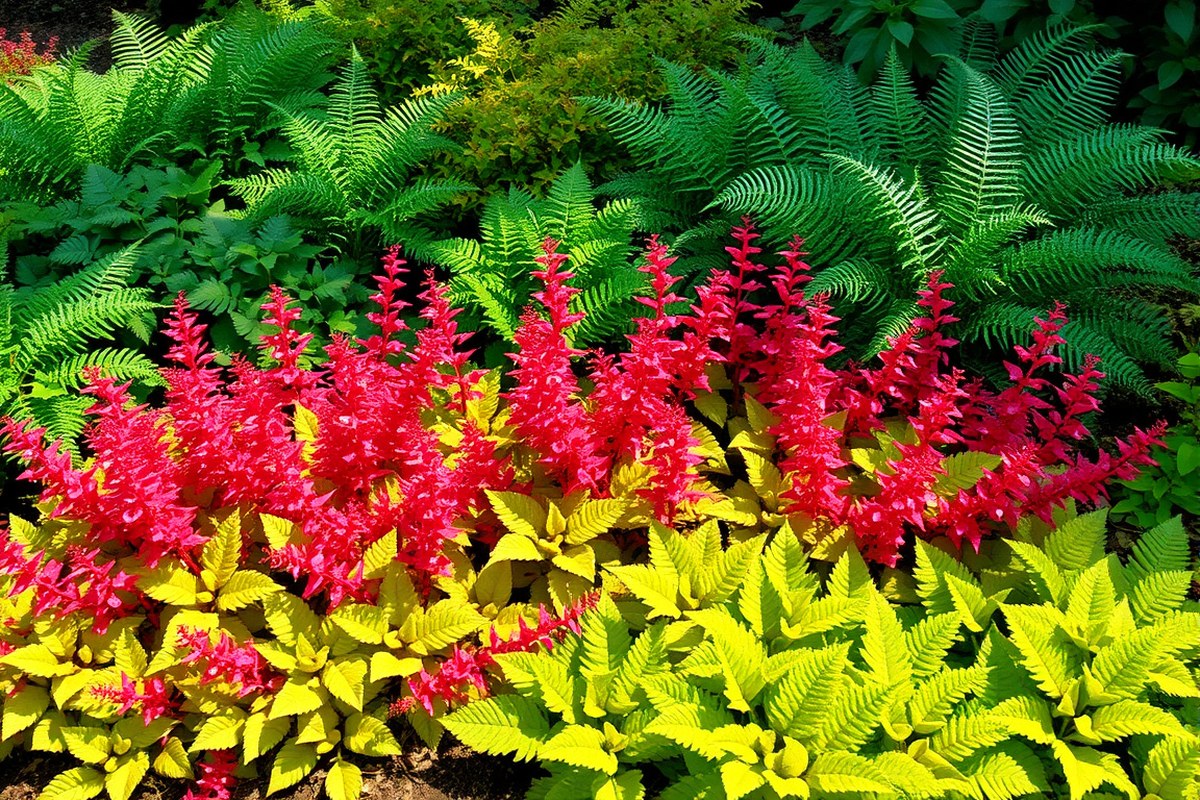
Coral bells grow best with shade-loving companions that match their moisture and soil needs. Hostas, ferns, and astilbe are top choices because they thrive in similar conditions. These plants mix different heights and textures in your garden.
They help your garden look balanced. They also make it look full.
Hostas bring broad, bold leaves that contrast nicely with coral bells’ mound-shaped foliage. Ferns, especially Japanese painted ferns, add fine, feathery texture that softens the garden’s look. Astilbe provides tall, upright flower plumes in early to mid-summer, extending bloom time in your bed.
- Hostas, broad leaves, 24, 36 inches wide, bold backdrop
- Astilbe, upright, feather-like flowers, 12, 24 inches tall
- Ferns, fine, airy fronds, 18, 24 inches tall, soft texture
- Bleeding heart, early spring blooms, grows 1, 3 feet tall
- Japanese forest grass, graceful, cascading leaves, adds movement
- Bugleweed, low ground cover, vibrant color, complements leaves
Put taller plants like astilbe behind coral bells. Bleeding heart also works well in the back. Coral bells grow 6 to 12 inches tall.
This layering shows off the coral bells without hiding them. Early bloomers like bleeding heart fill gaps before coral bells fully leaf out.
Choose companions that share coral bells’ preference for partial to full shade and moist, well-drained soil. Planting after the last frost in spring gives everything time to settle. This arrangement gives your garden varied heights and textures.
It also adds different bloom times. The garden looks natural and healthy this way.
How to Space and Arrange Coral Bells and Companions
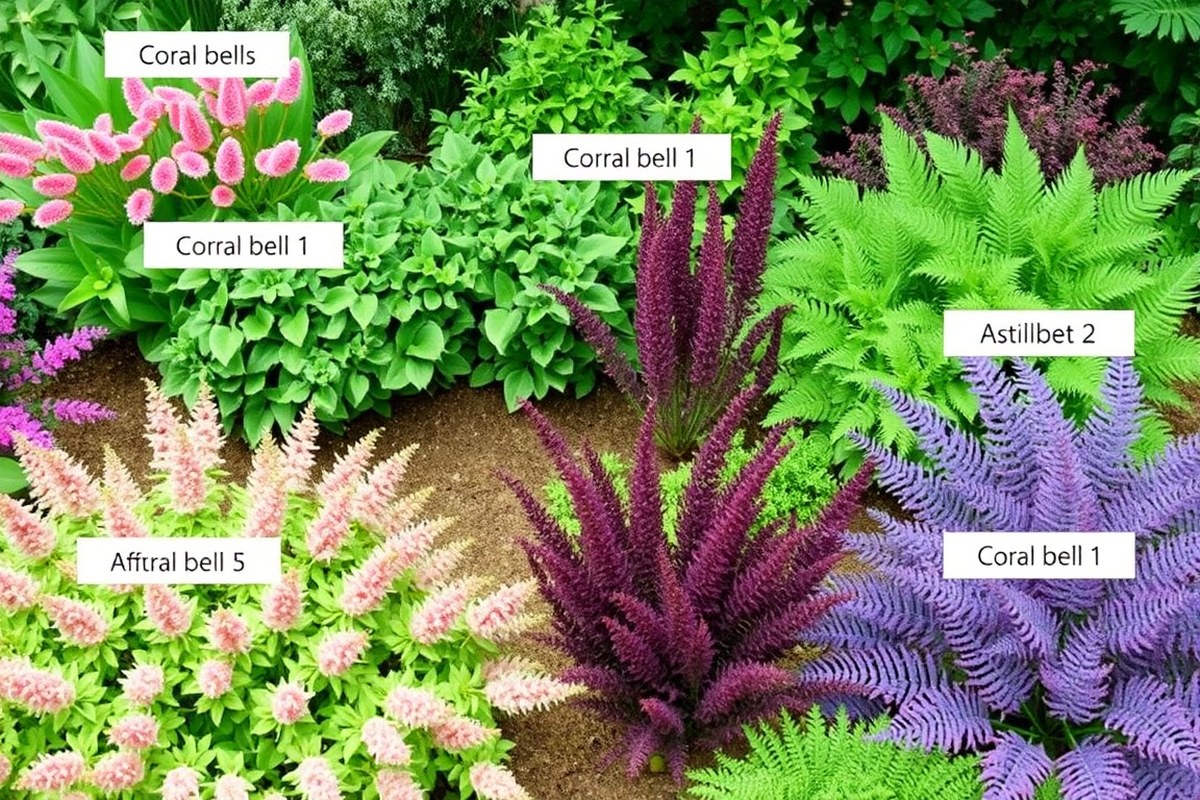
Coral bells and their companion plants need enough space so air moves freely. This spacing stops diseases and gives each plant room to grow happily. You want 12 to 24 inches between coral bells and other plants.
The exact space depends on each plant’s size. Larger plants need more room to spread out.
Arrange taller plants behind coral bells to keep them visible and create a nice tiered look. For instance, hostas can reach 24 inches tall. So place them behind coral bells, which usually grow shorter.
Put shorter plants in front to keep each one visible. This also lets light reach lower leaves easily. It helps all plants look healthy.
The right distance also prevents overcrowding, which can stunt growth and cause problems like root rot. Space coral bells 14 to 18 inches from hostas for a good fit. This lets both fill out nicely without crowding.
They grow well with this spacing. Ferns need about 12 to 15 inches of space to spread.
They grow moderately and won’t take over quickly. This distance lets them stay healthy.
| Companion Plant | Spacing from Coral Bells | Typical Height |
|---|---|---|
| Hostas | 14 to 18 inches | Up to 24 inches |
| Ferns | 12 to 15 inches | 12 to 18 inches |
| Azaleas (coral bells at feet) | 1 to 2 feet | Varies, usually taller |
| Mountain Laurels (understory planting) | 1 to 2 feet | Several feet tall |
| Rhododendrons (understory planting) | 1 to 2 feet | Several feet tall |
Spring or fall are the best times to space and plant your coral bells and companions. Planting in rich, well-draining soil makes roots happy. You need to check space again as plants grow to avoid crowding later.
Give coral bells enough breathing room, crowding causes rot and weaker growth.
Plant taller hostas behind bright coral bells in pots. This setup shows off both plants well. It keeps the display colorful and balanced.
Spacing varies if you plant in warmer zones. But 1 to 2 feet is a good general rule. Keep layering plants by height to balance the shade garden and keep air flowing.
Companion Plants’ Light and Soil Requirements
Matching Light Needs for Coral Bells and Companions
Coral bells do best with 4 to 6 hours of light in the morning. Protect them from strong afternoon sun to prevent leaf damage. Pick plants that thrive in medium to full shade to grow alongside coral bells.
Plants such as ferns, hostas, and astilbes thrive in similar low-light conditions. Avoid pairing coral bells with sun-loving herbs like lavender or rosemary. These need full sun and dry soil, which can stress coral bells.
Soil Moisture and Drainage Compatibility
Coral bells prefer well-drained soil that remains moist but not soggy. Your garden has heavy clay soil? Raise coral bells a bit.
Alternatively, plant them in a raised bed for better drainage. This helps avoid root rot and keeps them healthy.
Select companion plants that need similar moisture levels. For example, moisture-loving ferns do well where soil stays damp longer. Place slightly more drought-tolerant coral bells near runoff spots where soil dries faster.
Balancing Soil pH and Fertility
Coral bells grow best in medium loamy soil with good fertility. Their companions should also prefer fertile, well-drained soil to avoid competition.
Check your soil pH. Coral bells tolerate a wide range but do best near neutral.
Check soil pH for your plants. Add lime to make it more alkaline. Use sulfur to make it more acidic.
Do this based on what your companion plants need. Keeping pH in the ideal range helps nutrients stay available for all plants.
Microclimates Affecting Plant Placement
Microclimates around your garden can cause moisture and light differences. Plant coral bells under tree drip lines where soil dries faster. Put moisture-loving plants like ferns in shadier, damper spots.
This arrangement reduces stress and competition for water. You’ll see healthier growth when each plant sits in a spot that matches its needs.
Decision Rule for Choosing Companions
Pick plants with light and moisture needs that overlap with coral bells. Start by listing the light hours and soil moisture each could handle. Match companions that thrive in partial shade and moist, well-drained soil.
Test your companion plants’ needs first. If a plant likes full sun and dry soil, it won’t suit coral bells.
Choose companions with similar shade and moisture needs instead. Choose plants like compact impatiens or hostas for reliable success where moisture and light are compatible.
Using Color and Texture to improve Coral Bells
Combining coral bells with plants featuring different leaf colors and textures creates eye-catching garden spots. Sharp contrasts highlight coral bells’ unique foliage while softer textures build harmony. Repeating key plants ties the whole look together for a smooth flow.
Choosing Complementary Leaf Colors
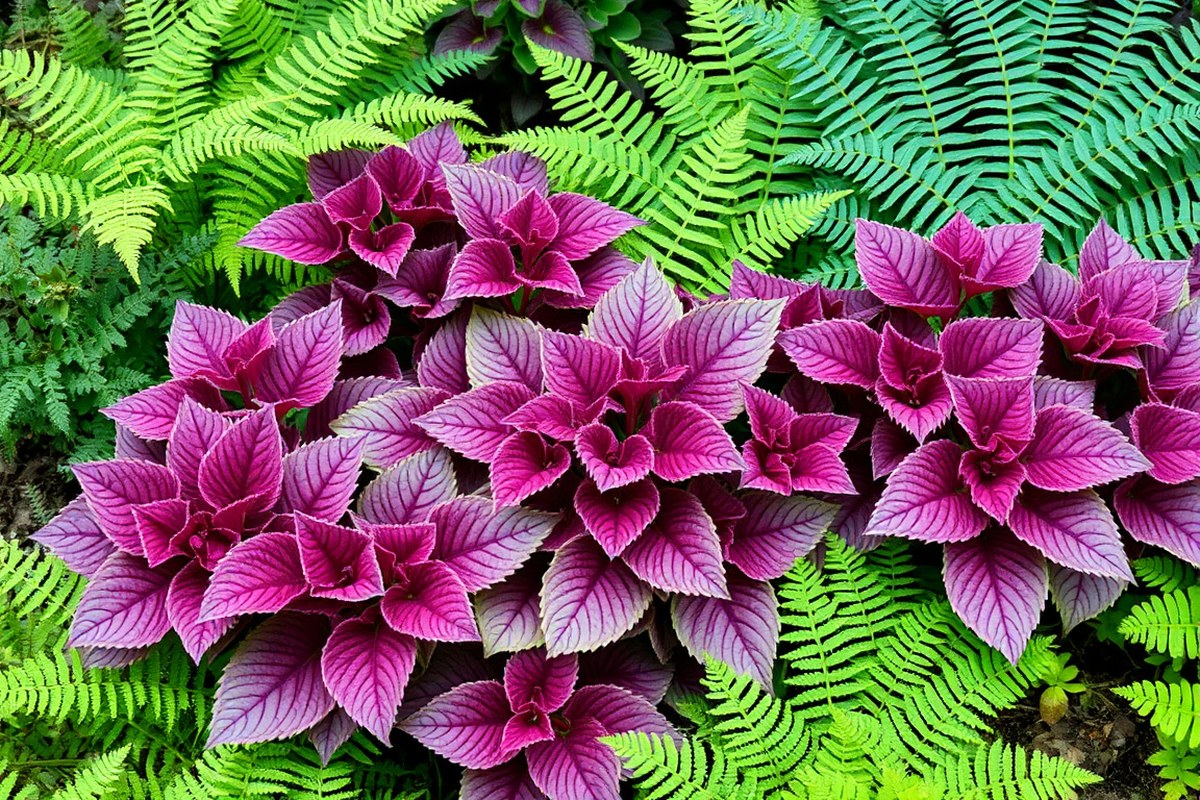
Coral bells come in shades from deep purple to bright lime green. Pair darker leaves with lighter or silver-toned companions to make coral bells pop. For example, white or gray dusty miller leaves highlight coral bells’ rich colors well.
Use leaf color pairs that contrast without clashing. Blue-green hostas, with their cool tones, balance red or bronze coral bells nicely. This difference draws attention to both plants without overwhelming the eye.
Adding Texture with Ferns and Grasses
Coral bells’ broad, lobed leaves pair nicely with thin, spiky foliage from ferns and ornamental grasses. Their fine textures add lightness beside coral bells’ solid leaf shapes. This variety adds dimension without crowding the garden bed.
Try planting soft ostrich ferns or tidy blue fescue grass with coral bells. Their airy look lets coral bells stay the star. Plus, they often enjoy similar shady spots and soil types.
Repeating Plants for Visual Flow
Repeating your chosen companion plants throughout the garden creates visual unity. It links separate coral bells clusters with steady swatches of matching or contrasting leaves. This stops your design from feeling choppy or random.
Place small groups of the same companion plant at intervals, not just once. This repeat pattern gives the eye places to rest and keeps the garden feeling balanced. Avoid overdoing it to keep things fresh.
Follow these steps to mix colors and textures effectively with coral bells:
- Pick two or three leaf colors that complement but contrast coral bells.
- Choose plants with different leaf shapes and sizes for texture.
- Arrange plants so contrasting textures sit side by side but don’t crowd.
- Space companion plants 12 to 18 inches apart from coral bells to allow growth.
- Plant ferns or grasses near coral bells for their light, airy feel.
- Repeat your chosen companions in several spots across your garden.
- Step back often to check balance and adjust spacing or colors as needed.
Seasonal Interest and Bloom Timing with Companions
You want to plant companions that bloom before or after coral bells for continuous color. Coral bells usually flower late spring to early summer. Choose plants with spring or late summer blooms to fill the gaps.
For example, bulbs like tulips and daffodils bloom in spring before coral bells. Astilbe offers feathery plumes in summer. Ajuga spreads low.
It covers bare spots and blocks weeds. In fall, foliage colors can shine, keeping the garden lively.
| Plant | Bloom Time | Function |
|---|---|---|
| Tulips, Daffodils | Early Spring | Add early color before coral bells bloom |
| Coral Bells (Heuchera) | Late Spring to Early Summer | Colorful foliage with seasonal flowers |
| Astilbe | Summer | Feathery plumes fill summer color gap |
| Ajuga | Spring to Early Summer | Groundcover; fills gaps and suppresses weeds |
| Hellebores | Late Winter to Early Spring | Early blooms in white, pink, purple shades |
This timeline helps you decide which companions create year-round interest. Plant bulbs around coral bells in fall to get early surprise blooms. Adding astilbe ensures color lasts through summer when coral bells fade.
Look at your garden’s light and soil conditions to pick plants that thrive alongside coral bells. Different soil types like clay may need amendment or raised beds. Layering foliage by planting under taller plants like hostas adds texture and color beyond flowers.
Don’t plant all companions at once. Stagger planting times to ensure blooms appear in sequence.
Watch how your garden changes through seasons to adjust plant choices. Using species with contrasting leaf colors beside coral bells boosts visual appeal between flower cycles. Filling empty spots controls weeds and keeps the bed neat.
Care Differences for Coral Bells and Companions
Coral bells prefer regular watering, especially in dry spells. Most companions also need consistent moisture but might differ slightly.
For example, azaleas appreciate evenly moist soil but don’t like waterlogged roots. You should check soil moisture by feeling it about 2 inches deep.
Fertilizing coral bells is low-key. Use a balanced, slow-release fertilizer or a thin compost layer in spring.
Many companions share similar nutrient needs, but heavy feeders will want extra fertilizer. Always watch for yellowing leaves or slow growth as signs of nutrient deficiency.
Pruning coral bells comes after flowering. Cut stems back to about 1 inch above ground.
Companions may need pruning at different times, usually to tidy up or remove dead growth. Keep track of bloom times to avoid cutting off new buds.
- Water mixed beds 1 to 2 times per week, adjusting during heat
- Apply a thin spring layer of compost or slow-release fertilizer
- Check companion plants for specific feeding needs once a month
- Prune coral bells after blooms fade, in late summer or fall
- Trim companion shrubs or perennials according to their bloom cycle
- Divide coral bells and companions every 3 to 4 years to boost health
Water carefully to avoid overwatering. Coral bells dislike soggy soil but need steady moisture.
Mulching helps keep moisture in and cuts down weeds. Good pruning improves air circulation and reduces pest problems for both coral bells and companions.
Planning Planting Timing and Soil Preparation
The best time to plant coral bells with other plants is in early spring or fall. These seasons offer mild temperatures that help roots settle without heat stress. Preparing the soil right helps coral bells grow well.
Check the drainage first. Add amendments if the soil needs improving.
Testing Soil Drainage
Good drainage is essential because coral bells and many companions don’t like standing water. Poor drainage can cause root rot and stunt plant growth. You can check drainage with a simple test in your planting area.
Follow these steps to test soil drainage:
- Dig a hole about 12 inches deep and 12 inches wide where you plan to plant.
- Fill the hole with water and let it drain completely.
- Fill it with water again, then time how long it takes to drain.
- Check if water drains within 1 to 2 hours; this is good drainage.
- Drainage slower than 4 hours means the soil holds too much water.
- Take note of any standing water or soggy texture after 24 hours.
When the soil drains well, plant roots get enough oxygen. Drainage that’s slow can cause problems for coral bells.
They may struggle. Sedum can have trouble too.
Amending Soil for Moisture and pH
Coral bells and their companions prefer rich, loose, well-draining soil. Amend soil to improve drainage and balance moisture for better growth. Adding organic matter like compost helps both hold moisture and drain excess water.
Here’s what to do to improve soil:
- Remove large rocks, roots, and debris from your planting area.
- Mix 2 to 3 inches of compost into the top 6 to 8 inches of soil.
- Add coarse sand or fine grit if your soil is very heavy clay.
- Test soil pH; coral bells grow best at pH 6.0 to 7.0.
- Add lime to raise pH if soil is acidic below 6.0, or sulfur to lower it.
- Work amendments evenly throughout the soil before planting.
Good soil lets water soak through but not stay soggy. A mulch layer also helps keep moisture steady and soil healthy.
Optimal Planting Times by USDA Zone
Coral bells thrive in zones 4 through 9. You can plant them and companions in early spring as soon as the ground is workable. Planting in fall works well in warm areas.
Do it when temperatures drop but before frost. This timing helps the plants establish.
Start planting coral bells companions:
- In zone 4 or 5, plant in mid to late spring after last frost date.
- For zones 6 to 9, early spring or mid-September to early October is best.
- Adjust timing to avoid hottest summer months, which stress young plants.
- Prepare soil in advance by tilling and amending at least a week early.
Planting at the right time helps new plants establish roots and resist pests. It also lets neighboring plants grow in balance, improving shade and moisture conditions.
Common Mistakes When Planting with Coral Bells
Planting companions too close to coral bells causes overcrowding. Coral bells need 8 to 12 inches of space on all sides. This helps them get enough air and light.
Give them room to grow well. Overcrowding makes coral bells weak and invites diseases like powdery mildew or leaf spot.
Some taller or fast-growing plants steal nutrients and water. Plants like aggressive grasses or large coneflowers can overshadow coral bells. Their roots compete underground, leaving coral bells stressed and less colorful.
Watch out for soil and moisture differences too. Coral bells prefer moist, well-drained soil. Pair coral bells with plants that like similar soil moisture.
Dry or very wet soil can cause root rot. Poor growth can happen too.
- Space coral bells 8 to 12 inches apart from companions
- Avoid tall aggressive plants that block sunlight or crowd roots
- Choose companions with similar water and soil needs
- Remove diseased or dead leaves promptly to stop spread
- Use clean tools when pruning to prevent introducing pests
- Leave enough air space to reduce fungal problems
- Check plants regularly for aphids and slugs common on coral bells
Avoid common pests and diseases by spacing plants correctly and cleaning tools. Too much shade from dense neighbors encourages fungal growth. Keep coral bells healthy by clipping old leaves and removing bugs quickly.
The best coral bells gardens balance sunlight, water, and root space. When one plant dominates, coral bells won’t thrive. Yellowing or shriveling leaves mean trouble.
Check for crowding and root competition. These issues hurt coral bells.
Give coral bells enough space and similar companions to avoid diseases and stress.
Step-by-Step Action Plan for Planting Coral Bells with Companions
This plan helps you start planting coral bells alongside suitable companion plants. Follow each step to ensure healthy growth and a beautiful garden design.
- Before planting: Check light and soil needs for coral bells and companions. Choose plants with matching conditions to avoid stress.
- Day 1: Prepare the soil by loosening it and adding organic compost. Soil should drain well but hold moisture.
- Week 1: Space coral bells and companions according to their mature size. This avoids crowding and allows airflow.
- Week 2: Mulch around plants to keep moisture and suppress weeds. Look for 2-3 inches thickness covering.
- Month 1: Water plants regularly, aiming for even soil moisture. Check soil dryness by feeling about 1 inch down.
- Month 2: Watch plant growth for signs of stress or crowding. Thin out companions if needed to improve airflow.
- Ongoing: Deadhead blooms to extend flowering. Prune companions to keep your mix balanced and tidy.
Frequently Asked Questions
Can Coral Bells Thrive with Succulents in the Garden?
Coral bells prefer moist, shady spots, while succulents need sun and dry soil. You might create separate zones to grow both. But they aren’t perfect companions side by side.
How Do Coral Bells Affect Soil Moisture for Nearby Plants?
Coral bells form a dense undergrowth that helps keep soil moist. This can benefit plants needing consistent moisture. But make sure companions tolerate less drying out.
Are Coral Bells Deer-Resistant When Planted with Other Perennials?
Coral bells are somewhat deer-resistant but not totally safe from hungry deer. Planting them beside less tasty perennials might reduce browsing. Yet deer taste varies by area.
Do Coral Bells Attract Pollinators When Paired with Flowering Plants?
Yes, coral bells produce flowers that attract pollinators like bees. Including other nectar-rich plants nearby increases pollinator visits to your garden patch.
Can You Plant Coral Bells with Vegetables in a Kitchen Garden?
It’s possible if you choose shade-tolerant veggies like leafy greens. Coral bells provide shade and help retain moisture for some vegetables.
Should Mulch Be Different When Planting Coral Bells with Hydrangeas?
Use similar organic mulch for both to keep soil moist and cool. Mulching helps coral bells and hydrangeas thrive by stabilizing soil temperatures.
Final Thoughts
Coral bells thrive with companions that share their growing needs. Start by matching light and soil conditions well. Pick one companion today to add texture and color to your coral bells bed.