What Grows Well with Onions: A Complete Guide to Perfect Companions
Wondering what grows well with onions? Onions work well with many vegetables, herbs, and some fruits.
They naturally repel pests that bother carrots, tomatoes, and strawberries. Growing these nearby can reduce bugs and support healthier plants in your garden.
Plant peppers 12 to 18 inches from onions to avoid crowding and allow airflow. Lettuce also does well next to onions and helps keep aphids away. Avoid planting beans and peas near onions because they stunt each other’s growth and reduce yields.
Choose companion plants like marigolds early in the season to boost onion health and deter pests. Space strawberries about a foot from onions to give both enough room to grow. This arrangement helps both crops thrive while managing common garden pests effectively.
Key Takeaways
- Plant carrots near onions to repel damaging carrot flies effectively.
- Keep beans and peas away from onions to avoid growth competition.
- Space peppers 12 to 18 inches from onions for healthy neighbor plants.
- Marigolds should grow two months before onions to boost pest control.
- Plant strawberries about 12 inches from onions to improve pest resistance.
- Avoid sage and fennel near onions since they stunt onion growth.
Top Vegetables That Grow Well with Onions
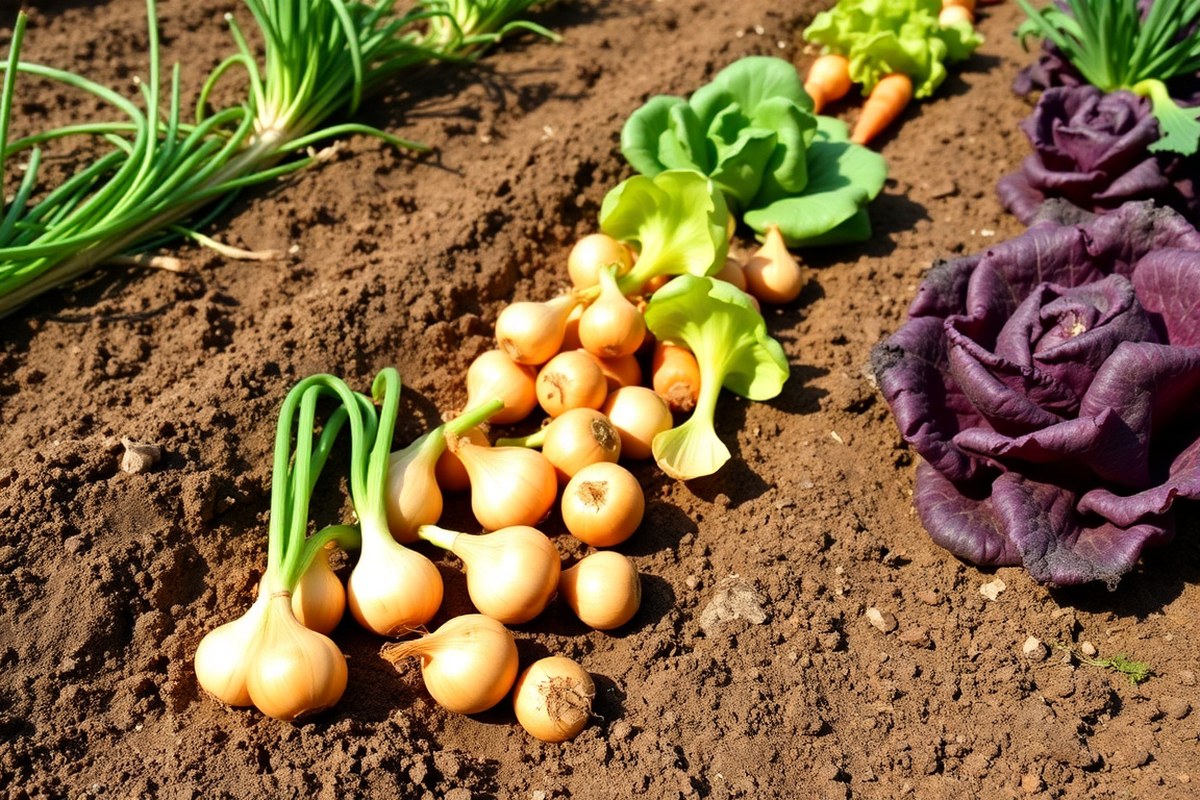
Vegetables that grow well near onions often benefit from the pest-repelling powers onions have. Carrots thrive with onions because onions keep carrot flies away.
Tomatoes also do better since onions repel their pests. These pest-repellent traits help reduce damage and cut down the need for pesticides.
Onions don’t usually change the flavor or growth speed of most companion veggies. But the key is to avoid plants like beans and peas, which can stunt onion growth. You want to plant companions close enough to protect against pests.
Plant them far enough apart so they don’t compete for nutrients. Balance closeness with space for healthy growth.
| Good Companion Plants | Why They Work Well | Plants to Avoid | Reason to Avoid |
|---|---|---|---|
| Carrots | Onions repel carrot flies; improve soil | Beans & Peas | Inhibit each other’s growth |
| Lettuce | Onions deter aphids and other pests | Sage | Stunts onion growth |
| Beets | Different nutrient needs; minimal competition | Asparagus | Allelopathic effects reduce growth |
| Tomatoes | Onions repel tomato pests | Fennel | Strong allelopathic properties |
| Strawberries | Improve pest resistance; no competition |
Spacing depends on the onion variety and companion plant. For most veggies, keep onions 4 to 6 inches apart from the companion.
This allows onion bulbs room to grow without crowding their neighbors. Also, plant in rows to help air circulation and sunlight reach all plants.
Onions can help protect nearby plants from rabbits and deer. Their strong smell often deters these animals from nibbling on neighbors.
For more defense, plant onions in clusters or near garden edges where pests enter. This method costs nothing extra but can save your crops.
In tight spaces like small garden beds, swap companions every season for healthier soil. Rotate crops so onions and their friendly neighbors don’t stay in one spot too long. This keeps pest pressure low and soil nutrients balanced for better harvests.
Herbs That improve Onion Growth and Flavor
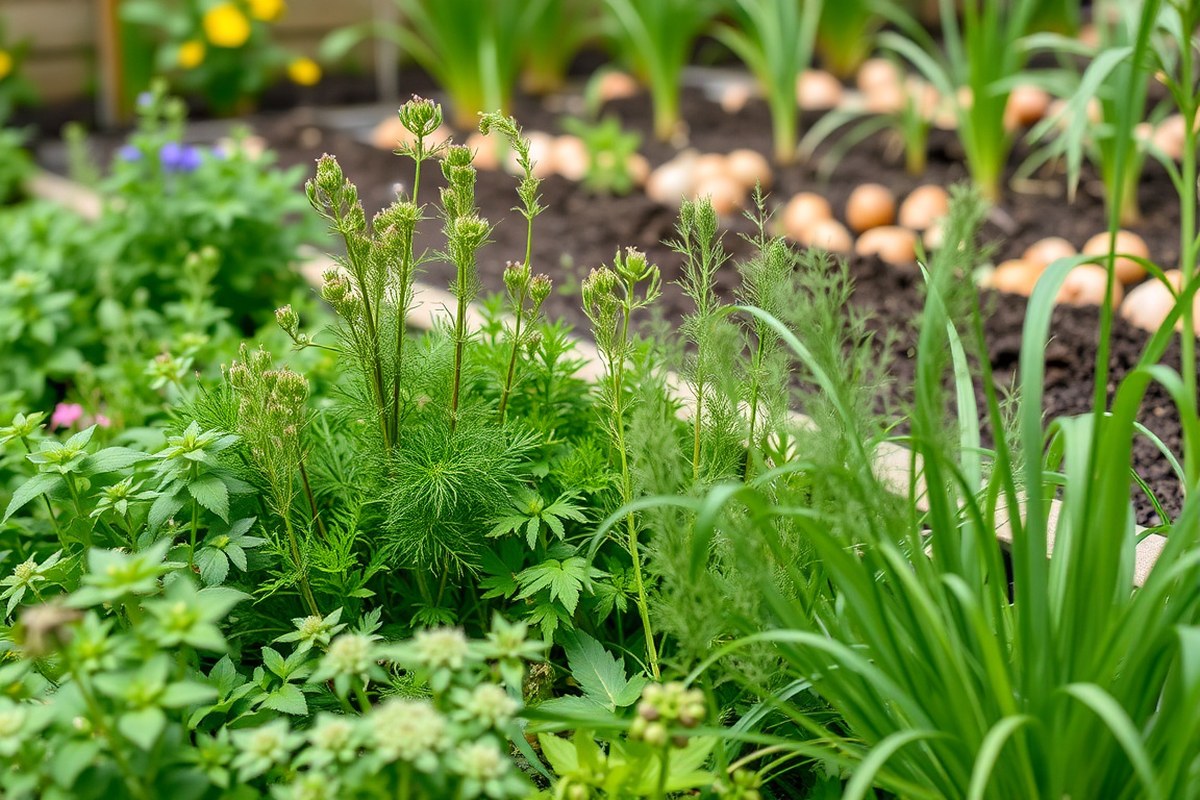
Several herbs work well with onions by boosting their growth and flavor. Dill and chamomile especially improve onion taste and encourage strong growth. These herbs also attract helpful insects that keep pests away from your onion patch.
Mint and summer savory also help control garden bugs near onions. Mint’s strong scent can deter pests that damage onions and nearby plants. However, mint spreads aggressively.
So it’s best to grow it in a separate container. Keep this container close to your onion bed. This avoids crowding and root competition.
| Herb | Key Benefit |
|---|---|
| Chamomile | Boosts onion growth and flavor |
| Dill | Improve onion flavor and attracts beneficial insects |
| Mint | Controls pests but should be grown in a planter |
| Summer Savory | Helps with pest control around onions |
Plant chamomile and dill near onions but leave about 6 to 8 inches between plants. This spacing prevents crowding while allowing herbs to release their scents. Onions stay low, so herbs growing taller won’t compete for sunlight.
Keep mint in a pot to stop it from overtaking your garden. Mint roots spread underground and can choke onion roots if planted directly in the ground. Placing it beside your onions in a container lets you manage its growth without losing control.
Use a container to grow mint near onions. It keeps mint from spreading and competing for resources.
By mixing these herbs with onions, you create a natural pest barrier without chemicals. You also improve onion flavor, which comes through fresh and more intense at harvest. Your garden needs little extra work beyond usual watering.
Trim herbs occasionally to keep them looking tidy. This keeps your plants healthy and neat.
How Fruits Like Strawberries and Melons Fare Next to Onions
Growing Strawberries and Melons Near Onions
Onions grow well beside strawberries and melons because they share similar soil and sunlight needs. Both fruits prefer well-drained soil and full sun, like onions. Placing onions nearby helps mask the fruits’ smell, making it harder for pests to find them.
Strawberries especially benefit from onions since pests that damage berries avoid the onion’s strong scent. Melons get similar protection but need more space because they spread out as they grow. Keep melons about 18 to 24 inches away from onions to avoid crowding.
How Onions Help Control Fruit Pests
Onions repel many pests that usually attack strawberries and melons. Their strong smell confuses insects like aphids and beetles. This reduces damage so you get better fruit yields without extra sprays.
While onions cut down some bugs, they don’t prevent all pest problems. Use onions alongside other pest control like hand-picking or insect netting for best results. Combining onions with pollinator-friendly flowers can also attract helpful insects that eat pests.
Spacing and Planting Tips for Mixed Gardens
Plant onions 4 to 6 inches apart. This gives enough room to grow. It also helps onions release their scent.
Space strawberries 12 to 18 inches apart in rows that are 3 feet wide. Melons need at least 3 feet between plants to spread their vines.
Make sure onions don’t shade the fruits, since they grow lower and won’t block sunlight. Plant onions in between fruit plants or around the edges of strawberry beds. For melons, put onions near the center or end.
This allows for easy access. It also keeps air flowing well.
- Plant onions 4 to 6 inches apart
- Space strawberries 12 to 18 inches apart in rows 3 feet wide
- Keep melons at least 3 feet apart to allow vine spread
- Use onions to border strawberry beds for pest protection
- Place onions near melon vines but not so close they block airflow
- Combine onions with flowers like marigolds to attract pollinators
- Check soil moisture regularly, since onions and fruits like consistent watering
Adjusting for Different Garden Setups
Use containers or raised beds in small gardens. Separate onions, strawberries, and melons by suggested distances.
This helps them grow better. Containers can also reduce disease risks in mixed beds.
For larger gardens, establish onion rows between fruit patches to create wide pest-barrier zones. In cooler areas, start onions indoors first.
Transplant them near fruits when frost risk is gone. This gives onions a good head start.
Flowers for Onion Gardens: Pest Control and Pollinator Attraction
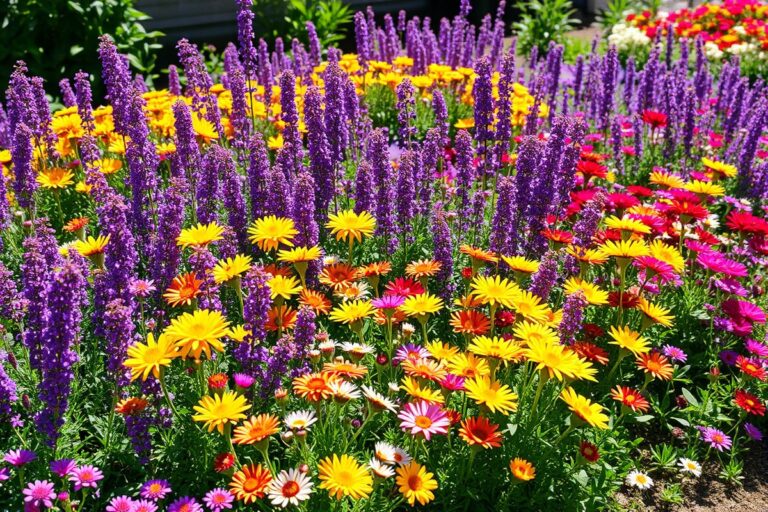
Adding flowers around your onions can help repel pests and attract helpful insects. For example, marigolds keep away nematodes and flies.
Nasturtiums act as trap crops for aphids, drawing them away from onions. Many of these flowers bring color and interest while supporting your garden’s health.
These flowers don’t just look good, they improve your garden’s balance. Chamomile and dill flowers lure beneficial bugs that eat onion pests.
Coneflowers attract predatory wasps that control aphids. Choosing the right flowers means your onions get natural pest control and better growth conditions.
| Flower | Pest Control | Attracts Beneficials | Extra Benefit |
|---|---|---|---|
| Marigolds | Nematodes, flies | Yes | Colorful border |
| Roses | Aphids (with onions) | Not typical | Boosts rose scent |
| Nasturtiums | Aphids (trap crop) | Yes | Edible flowers |
| Calendula | Aphids | Yes | Long blooming |
| Alyssum | Mild | Yes | Weed-suppressor |
Plant these flowers close to onions, leaving at least 6 to 12 inches between them. Marigolds work well as a border around onion beds. Dill or chamomile should be allowed to flower to bring in more beneficial insects.
This also helps create diverse garden habitats. So pests don’t build up on just one plant.
Expect fewer aphids, flies, and nematodes around your onions when these flowers are present. You may notice stronger onion growth and less damage from common pests.
Avoid overcrowding, as too many plants can compete for nutrients. For best results, intersperse flowering plants evenly and maintain good soil moisture.
Plants to Avoid Planting Near Onions and Why
Onions may harm nearby plants by taking their nutrients or releasing chemicals. Beans and peas especially struggle when grown close to onions. Keep onions away from beans, peas, asparagus, sage, and other alliums for better growth and yield.
Legumes: Beans and Peas Don’t Mix with Onions
Beans and peas suffer when planted next to onions. Onions release compounds that can stunt legume growth.
Beans show poor nitrogen-fixing and stunted growth. Peas produce fewer pods and appear weak.
Keep beans and peas at least 2 to 3 feet away from onion beds. This distance helps prevent root zone interference and limits contact with onion-produced compounds. Plant legumes separately to give both crops a better chance.
Other Crops Harmed by Onions
Besides legumes, asparagus and sage don’t fare well near onions. Their growth weakens, partly due to competition for nutrients and possible chemical interference. These plants need space to thrive and shouldn’t share beds with onions.
Also avoid planting multiple allium family members, like garlic, leeks, or shallots, right next to onions. These similar crops often compete intensely for soil nutrients, lowering the harvest.
Common Planting Mistakes with Onions
Many gardeners make the error of crowding onions next to incompatible plants. This often leads to stunted, slow-growing crops. Planting only one type of crop in one area is a common error.
This practice can cause more pests and diseases linked to that plant family. It’s better to mix crops to reduce these risks.
Mixing incompatible neighbors reduces yields and plant health. Always check the companion plant list before planting onions to avoid these problems. Leaving at least 2 feet of separation from beans and peas works well.
What to Avoid Planting Near Onions
Here is a clear list of plants to keep away from your onion patch:
- Bush beans and pole beans
- Snow peas and snap peas
- Asparagus
- Sage
- Garlic, shallots, and leeks
- Other onions or alliums too close together
Planting these too close reduces onion and neighbor growth and harvest. Separate these crops into different beds or rows whenever possible.
How to Decide Where to Plant Onions
Plan your garden layout by keeping incompatible plants at least 2 to 3 feet apart. Use separate beds or alternate rows to reduce root overlap. Onions thrive alongside carrots and beets, but not with legumes.
Before planting, draw a simple map. Mark onion rows and place beans or peas far away.
This step costs only a few extra feet of garden space. But it ensures better yields and healthier plants.
Plant onions away from beans and peas by at least 2 feet to avoid weak plants.
How Onion Allelopathy Affects Neighboring Plants
Onions release chemicals that affect nearby plants and soil microbes. These chemicals, called allelochemicals, can harm beneficial bacteria that legumes need.
Beans and peas rely on these bacteria to fix nitrogen. But onions can reduce this bacteria’s activity, stunting legume growth.
Planting onions near asparagus isn’t a good idea either. Both crops compete for the same nutrients and space. This competition reduces growth in one or both crops.
So, they don’t grow as well together. Their strong flavors and root systems clash underground. So they shouldn’t share a bed or be planted back-to-back.
You can use crop rotation to avoid these problems. After you harvest your legumes, plant onions in that spot to use the boosted nitrogen. Avoid following onions immediately with legumes or asparagus.
Give the soil a rest after harvesting onions. Or plant deep-rooted crops like celery nearby. These crops won’t compete much with onions.
Root crops such as carrots and beets grow well near onions. They need similar soil conditions and avoid allelopathic problems. This makes them good neighbors in the garden.
Onions also repel many pests, protecting these crops. Strong allelopathic effects mean don’t leave onions in the ground too long.
Switch to other crops after a while. This helps keep the soil healthy.
Proper crop rotation usually means changing bed contents each season or two. For example, plant legumes one year, then onions the next.
Follow with a different type like brassicas or celery. This system avoids building up harmful allelochemicals and keeps soil healthy.
When planning beds, watch out for plants that allelopathy severely reduces. Legumes and asparagus are the main ones to avoid near onions.
Each case depends on soil type and moisture, so adjusting timing and spacing helps. Take time to observe how your crops respond after each rotation cycle.
Practical Companion Planting Layouts and Spacing with Onions
Onions do best with careful layout and spacing. Use alternating rows with root veggies and keep herbs near but not crowded. Timing your planting helps maximize pest control and harvest success.
Creating Alternating Rows with Root Vegetables
Planting onions next to root vegetables like carrots helps ward off pests naturally. Their strong scent confuses carrot flies and other bugs. To do this right, alternate rows rather than mixing plants in the same row.
Space onion rows about 12 to 18 inches apart. Plant carrots or parsnips between these onion rows. This pattern improves airflow too, lowering disease risks on both crops.
Proper Spacing for Herbs and Flowers
Herbs grow well with onions when spaced to avoid crowding. Keep herbs like chamomile and parsley at least 8 to 12 inches from onion rows. This spacing lets both plants get enough sunlight and nutrients.
Plant flowers such as marigolds or nasturtiums near onions but maintain 10 to 12 inches gap. These flowers attract beneficial insects without competing for root space. Proper spacing also prevents moisture buildup between plants.
Timing Planting for Pest Control Benefits
Plant onions early in spring or fall to align with pest cycles. Onions grown alongside tomatoes or peppers should be planted as those crops go in. This timing maximizes onion scent benefits against insect pests.
For carrots and lettuce, plant onions a few weeks before or with them. This helps them grow well together. Timing is key for good companion planting.
Early onion planting helps confuse pests before the seeds or seedlings become vulnerable. Avoid late planting when pests are already active.
Adjusting Layouts by Climate Zone
In cooler climates, space onions and companions slightly wider to improve air circulation. Use at least 18 inches between onion rows and neighbors if fungal disease pressure is high. This spacing cuts humidity around the plants.
Hotter zones allow closer planting but monitor soil moisture carefully. Mulch well to keep roots cool and spaced herbs about 10 inches from onions. Adjust rows north-south for more even sunlight exposure in shorter growing seasons.
Follow these steps for planting onions with companions:
- Choose a sunny, well-draining garden spot.
- Mark out onion rows 12 to 18 inches apart.
- Plant onion sets or seeds in rows spaced 4 to 6 inches apart.
- Insert root vegetables like carrots in the spaces between onion rows.
- Place herbs 8 to 12 inches away from onion rows on the side.
- Add flowers around the onion patch, keeping 10 to 12 inches gap.
- Plant onions a few weeks before or at the same time as companion crops.
- Adjust spacing based on your local climate for airflow and moisture control.
Attracting Beneficial Insects with Onion Companion Plants
Planting flowers and herbs near onions helps attract pollinators and insects that eat pests. These beneficial insects improve your garden’s health. They help onions by keeping harmful bugs away and boosting pollination for nearby plants.
Some flowers and herbs invite these helpful insects right into your onion patch. They provide nectar and shelter, which keeps predators like ladybugs and lacewings around. These predators eat pests such as aphids, thrips, and onion maggots that can damage your onions.
- Marigolds attract ladybugs and repel nematodes.
- Chives and thyme bloom with small flowers attracting bees and hoverflies.
- Calendula’s bright petals draw pollinators and predatory wasps.
- Dill and fennel flowers bring in lacewings and parasitic wasps.
- Coriander flowers make an inviting home for hoverflies and parasitic wasps.
- Borage attracts bees and improves pollination nearby.
- Yarrow feeds ladybugs, ladybird beetles, and lacewings.
Mix these companion plants within your onion rows or around them. Plant flowering herbs in sunny spots, where they bloom best, usually mid-spring to early summer.
The flowers last for weeks and encourage steady insect activity. This natural pest control reduces the need for chemicals.
Do not overcrowd onions with tall flowers that shade bulbs. Keep companions low or spaced apart.
You’ll notice fewer insect problems on onions with these companion plants. Healthy onions usually develop larger bulbs because they face less stress from pests.
The presence of pollinators also benefits nearby crops, helping your whole garden thrive. Regularly check companion plants to keep them blooming during onion growing season for consistent insect support.
Step-by-Step Action Plan for Successful Onion Companion Planting
Use this plan to grow onions with good companions and keep pests away naturally.
- Before planting: Choose onion-friendly companions like carrots and lettuces. Check your garden space and avoid plants like beans nearby.
- Planting day: Space onion sets at least 4 inches apart from other plants. This helps reduce competition and keeps growth steady.
- Week 2: Add flowers such as marigolds to attract beneficial insects nearby. Look for fewer aphids or onion maggots around your plants.
- Week 4: Mulch around onions and companions with straw or leaves. This controls weeds and keeps moisture steady.
- Month 2: Check for pest activity weekly, especially on plants that attract beneficial bugs. Add more flowers or herbs if pests grow.
- After harvest: Clear old onion plants and rotate crops the next season to stop allelopathy effects. Note plant health to plan better the following year.
Frequently Asked Questions
Can Onions Grow Well with Tomatoes?
Yes, onions repel common tomato pests. This helps tomatoes stay healthier and reduces the need for pesticides.
Is It Good to Plant Herbs Like Dill Near Onions?
Dill grows very well with onions and has no negative effects. You can plant them close without worrying about growth issues.
Can Lettuce and Onions Be Planted Together?
Yes, lettuce grows faster than onions and they don’t compete for space. This makes them a good pairing in the garden.
How Far Should Swiss Chard Be Planted from Onions?
Plant Swiss chard at least 12 inches from onions. Their different growing habits allow the use of more garden space effectively.
Will Onions Protect Strawberries from Pests?
In warm zones, onions deter aphids and slugs from strawberries. This helps keep strawberry plants healthier without extra chemicals.
Do Onions Keep Deer and Rabbits Away from Certain Plants?
Yes, deer and rabbits avoid onions, offering protection to nearby vegetables. This can reduce damage to crops like beet greens.
The Bottom Line
Onions grow best with certain companions that help them thrive and keep pests away. Plant carrots, herbs, and flowers with onions to boost your garden’s health. Start small this season by adding marigolds or basil next to your onions.