What Grows Well Next to Tomatoes: 8 Best Companion Plants That Boost Growth
What grows well next to tomatoes can make a big difference in your garden. Growing certain plants alongside tomatoes can boost growth and keep pests away. Plant garlic close to tomatoes in fall or spring to deter insects and diseases.
Herbs like basil and celery improve tomato flavor and health when grown nearby. Flowers such as alyssum attract pollinators and help control weeds around the plants. Be sure to space companions 18 to 24 inches apart to avoid nutrient competition.
Some plants don’t mix well with tomatoes. So keep fennel far away, at least three feet or in another bed.
Starting with the right companions creates a healthier, more productive tomato patch. You’ll get better fruit with less fuss when you choose wisely.
Key Takeaways
- Plant garlic 4 to 6 inches from tomato stems in fall or spring.
- Keep fennel at least three feet away from tomato plants.
- Space tomato plants 18 to 24 inches apart for good growth.
- Scatter alyssum seeds between tomato rows to control weeds naturally.
- Start celery indoors, transplant when soil warms to at least 50℉.
- Sow sunflower seeds 1 to 2 feet away after tomatoes finish flowering.
8 Best Companion Plants to Grow Next to Tomatoes
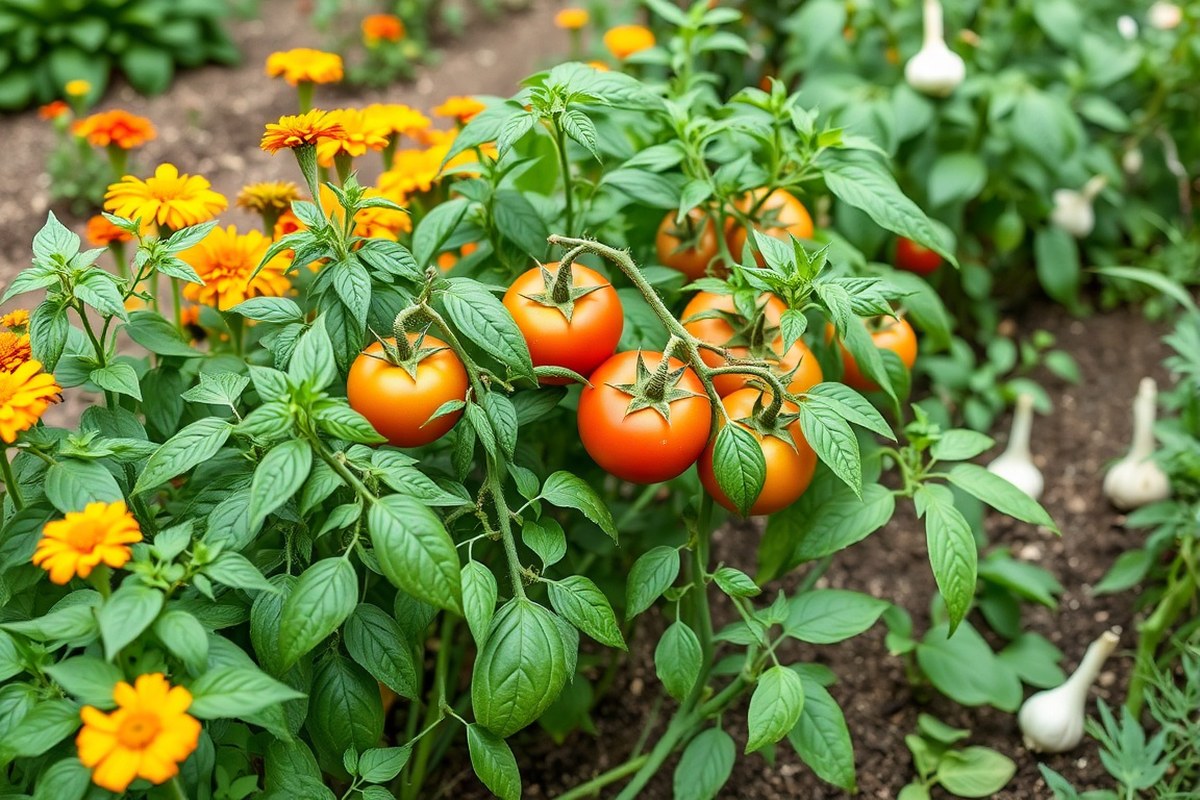
Growing certain plants next to your tomatoes can boost their health and keep pests away. Companion plants affect tomatoes by improving soil nutrients, attracting helpful insects, or repelling bugs. You’ll see better tomato growth and fewer pests when you plant smartly.
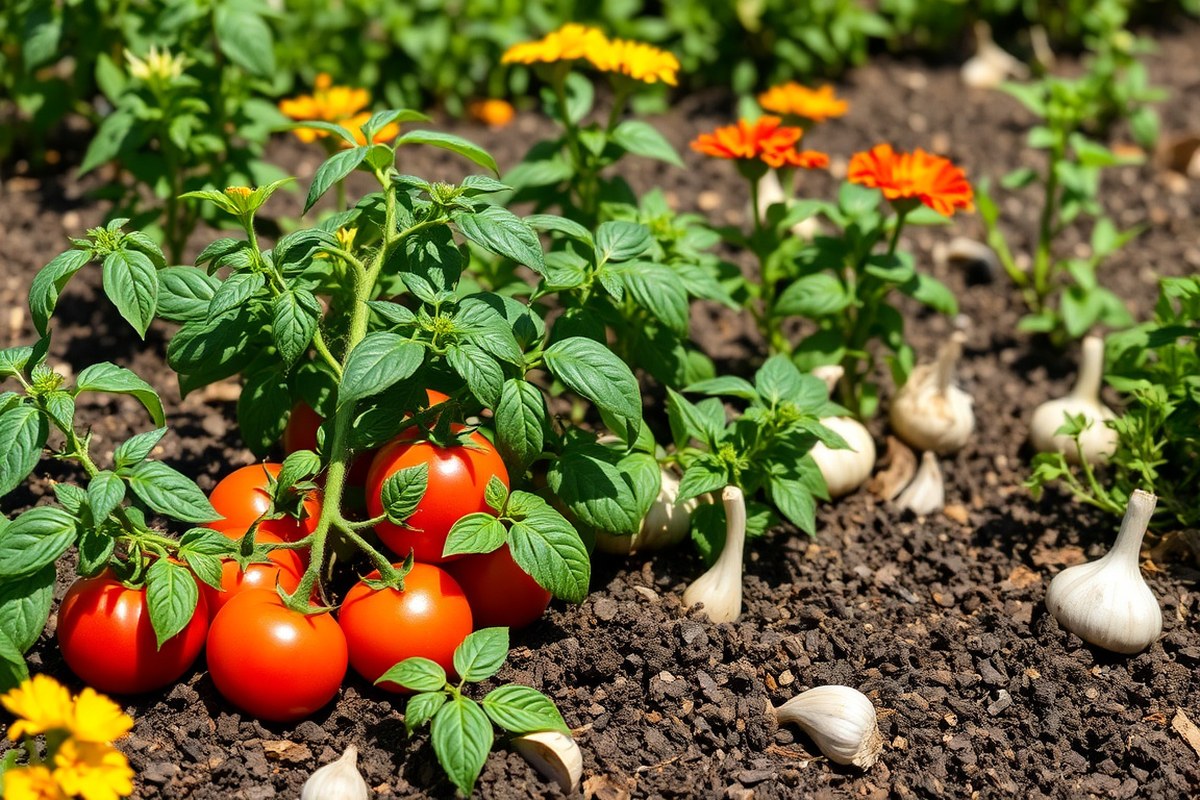
One popular choice is basil. It improve tomato flavor and helps deter pests like aphids and tomato hornworms. Plant basil about 12 inches from your tomato plants to avoid crowding and allow airflow.
Marigolds work well by keeping snails, slugs, and some harmful insects away. They also attract pollinators that improve fruit set. Space marigolds 8 to 12 inches from tomatoes for best coverage.
Garlic is another great companion. Plant cloves 4 to 6 inches away in fall or alongside spring tomatoes. Garlic’s strong smell confuses pests and reduces fungal diseases.
Radishes grow quickly and make good space fillers around tomatoes. They attract flea beetles, which helps draw pests away from your tomato plants. Sow radish seeds between tomato rows with 3 to 4 inches spacing.
Parsley can improve pest control when allowed to flower. Those flowers attract beneficial insects that hunt tomato pests. Plant parsley close enough for shared root space, about 10 to 12 inches apart.
Lettuce works nicely as a low-growing groundcover under tomato plants. It shades soil, reducing weeds and conserving moisture. Plant lettuce seeds or starts 6 to 8 inches from tomato bases.
Chives add pest-repelling benefits too and don’t crowd tomato roots. They work best planted 6 inches away, offering gentle shade and smell that bugs avoid.
- Basil: deters pests, boosts flavor, space 12 inches
- Marigold: keeps slugs away, attracts pollinators, space 8, 12 inches
- Garlic: repels diseases and pests, plant 4, 6 inches from tomatoes
- Radishes: attract flea beetles, fill space, seed 3, 4 inches apart
- Parsley: attracts beneficial insects in bloom, space 10, 12 inches
- Lettuce: shades soil and controls weeds, plant 6, 8 inches from tomatoes
- Chives: repel pests, plant 6 inches away
Spacing matters because crowded plants invite disease and block sunlight. When companions get enough room, each plant thrives without stealing nutrients.
Adjust these distances in small gardens or containers. Smaller spacing works if airflow stays good.
How Companion Plants Protect Tomatoes from Pests and Diseases
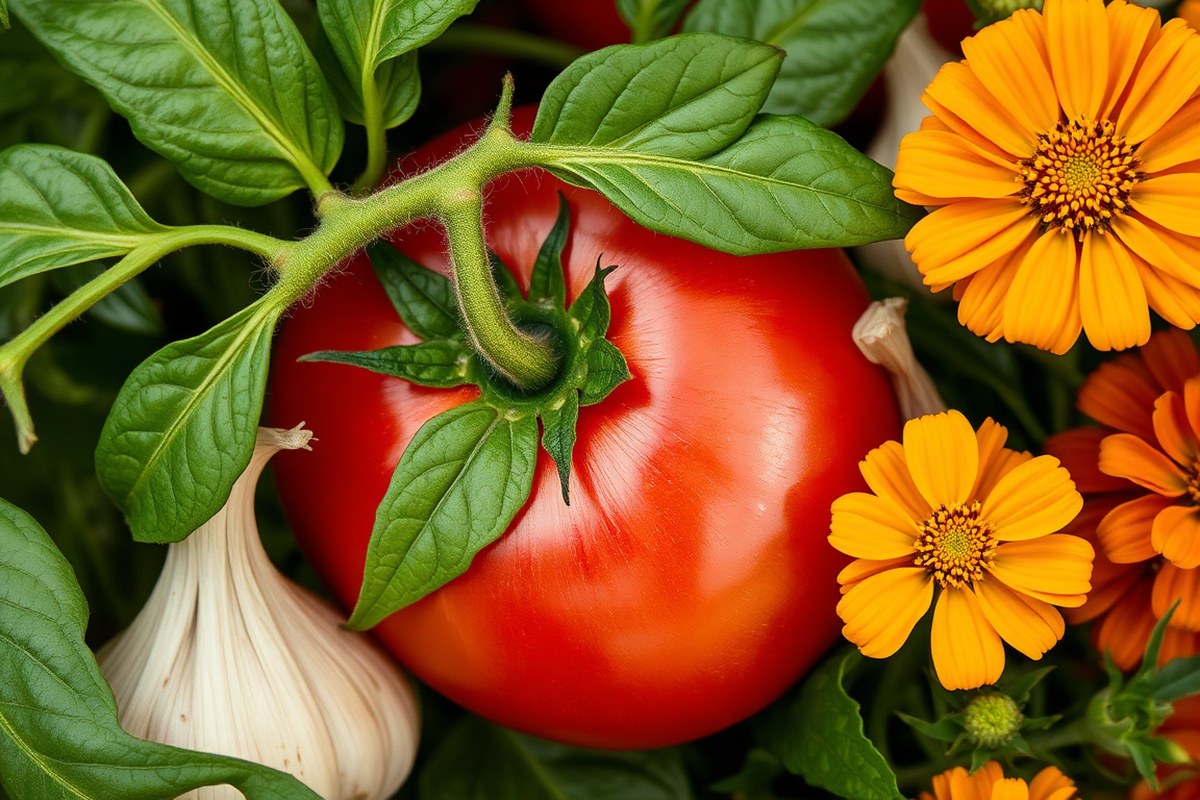
Tomatoes face many pests like thrips, aphids, tomato hornworms, and stink bugs. These pests damage leaves, stems, and fruit, opening the door to diseases. Companion plants help by masking tomato scent and confusing pests that find tomatoes by smell.
Basil is one of the best companions to repel thrips and other pests. Its strong scent hides the tomato smell and discourages insects from settling. Planting basil right next to tomatoes can reduce pest visits and may even improve tomato flavor.
Sunflowers and marigolds attract beneficial insects such as ladybugs and lacewings. These predators eat harmful bugs like aphids and caterpillars. Growing flowers with tomatoes helps keep pests away naturally.
These flowers protect your tomatoes without relying on chemicals. It’s a safe, easy way to guard your plants.
Fungal diseases like blight spread fast when tomato plants are close. Poor airflow between plants makes this worse. This creates a perfect spot for disease to grow.
Adding short companions like bush beans beside tomatoes opens up the space. This helps keep leaves dry, cutting down fungal spores and reducing disease risk.
Aromatic herbs like mint or oregano may confuse pests by masking tomato scents. These plants release smells that pests find unpleasant or distracting. Plant them mixed with tomatoes to create a natural scent barrier and protect your crop.
Some companions even lure pests away from tomatoes. Nasturtiums attract aphids and harlequin bugs, drawing them off your tomato plants. This sacrificial planting lets your tomatoes grow with less pest stress and damage.
Don’t plant potatoes and tomatoes together. They share pests and diseases that can harm both crops.
Herbs That improve Tomato Growth and Flavor
Planting herbs near tomatoes helps control pests and can improve tomato flavor. Herbs like basil, chives, oregano, and thyme attract beneficial insects and repel harmful ones. Plant them within 12 to 24 inches of your tomato plants for the best effect.
Basil: Pest Control and Flavor Booster
Basil is a top herb to grow next to tomatoes. It naturally repels pests like aphids and whiteflies. Many gardeners say basil improves tomato flavor, although this is not scientifically proven.
Plant basil 12 to 18 inches away from tomato stems. This spacing allows airflow and helps both plants get enough light. Basil grows well in garden beds and containers with tomatoes.
- Choose a sunny spot with well-draining soil for basil and tomatoes.
- Space basil plants 12 to 18 inches from tomato plants.
- Water basil regularly but avoid wetting tomato leaves.
- Pinch basil tips to encourage bushy growth and more leaves.
- Harvest basil leaves frequently to keep plants healthy.
Chives and Garlic: Protective Root Vegetables
Chives and garlic repel many tomato pests, including aphids and spider mites. Both have shallow roots that don’t compete much with tomatoes. They also help prevent fungal diseases by releasing protective compounds into the soil.
Plant chives and garlic around the edges of your tomato bed or container. Keep them 18 to 24 inches from tomato stems for best results. These herbs are great additions for container tomato growing because they require little space.
- Prepare loose, fertile soil at the tomato bed edges or container sides.
- Space garlic cloves and chive plants 18 to 24 inches from tomatoes.
- Water moderately to keep soil moist but not soggy.
- Harvest garlic after it flowers, and cut chives regularly to prevent flowering.
- Rotate garlic yearly to avoid disease buildup.
Oregano and Thyme: Beneficial Insect Attractors
Oregano and thyme flowers attract ladybugs, lacewings, and other beneficial insects. These insects eat harmful tomato pests. Thyme also improve tomato color and flavor according to many gardeners.
Plant oregano and thyme as low-growing ground cover within 12 inches of tomato plants. Thyme works well around tomato containers’ edges. Both herbs prefer well-drained soil and full sun for best growth.
- Choose a sunny spot near tomato plants for oregano and thyme.
- Space oregano and thyme 10 to 12 inches from tomato stems.
- Water when the top inch of soil feels dry.
- Trim oregano and thyme regularly to encourage fuller growth.
- Use thyme as a border in containers, and oregano as ground cover.
Parsley and Cilantro: Soil and Pest Helpers
Parsley and cilantro attract beneficial insects that prey on tomato pests. These herbs also add nutrients to the soil when shredded and mulched. You can plant them near tomatoes to help keep pests low.
Plant parsley and cilantro 12 to 18 inches from tomato plants. Both herbs do well in garden beds and larger containers. Cilantro grows and flowers quickly, attracting helpful insects early in the season.
- Select a moist, fertile soil area near tomato plants.
- Space parsley and cilantro 12 to 18 inches from tomato stems.
- Water regularly to keep the soil evenly moist.
- Harvest leaves often to encourage new growth.
- Allow some cilantro flowers to attract beneficial insects during tomato flowering.
Vegetables That Thrive Next to Tomatoes and Complement Their Growth
Several vegetables grow well with tomatoes, improving their growth or sharing space without harm. Knowing which vegetables fix nitrogen, deter pests, or fit well together improves your garden’s yield. Avoid plants that compete for the same nutrients or increase disease risks around tomatoes.
Peppers: Similar Growth Needs and Pest Compatibility
Peppers and tomatoes both belong to the nightshade family. They have alike sunlight, soil, and water needs.
So they thrive together in the same bed. This matching cycle allows you to manage watering and fertilizing easily.
Peppers and tomatoes can get the same pests and diseases. Watch for aphids and blight to protect both plants. Early spotting helps keep them healthy.
Regularly inspect leaves and stems weekly for two minutes per plant to catch pests early. This care prevents damage and keeps plants healthy.
Beans and Peas: Soil Nitrogen Enrichment
Beans and peas fix nitrogen in the soil with help from root microbes. This benefit suits tomatoes best because tomatoes use lots of nitrogen to grow big and healthy. Growing beans near tomatoes naturally replenishes nitrogen, keeping soil nutritious.
Mix tall climbing beans among staked tomatoes to use vertical space well. Plant both at the same time, since they grow and finish together in summer. After harvest, clear the bed for a fall crop rotation to keep soil balanced.
Root Crops: Carrots and Parsnips for Soil Sharing
Carrots and parsnips have deep roots that grab nutrients from lower soil levels. Tomatoes have shallower roots, so they don’t compete directly for nutrients or water. This complementary root system means they can share space without stealing resources.
Plant carrots or parsnips beside tomatoes with about 12 inches between plants. This spacing avoids crowding and gives each plant room for proper growth. These root veggies also help loosen soil, which improves tomato root development.
Plants to Avoid: Potatoes and Fennel
Potatoes and tomatoes both fall victim to similar root diseases like Verticillium wilt and late blight. Planting potatoes too close increases the chance these diseases spread to tomatoes. Keep potatoes away from tomato beds to reduce this risk.
Fennel releases substances from its roots that can stunt tomato growth. Its biochemical secretions make nearby tomatoes weaker and less productive. Plant fennel far from tomatoes or in a separate garden section.
Here’s a quick comparison of vegetable companions for tomatoes and their key benefits or cautions:
| Vegetable | Benefit | Caution |
|---|---|---|
| Peppers | Same soil and sunlight needs; compatible growth timing | Shared pests and diseases; needs monitoring |
| Beans and Peas | Fix nitrogen, enriching soil for heavy feeders like tomatoes | None significant; good companions |
| Carrots and Parsnips | Deep roots, minimal nutrient competition; improve soil structure | Require spacing to avoid crowding |
| Potatoes | None; compete for nutrients, share diseases | Increases risk of root rot and blights in tomatoes |
| Fennel | None | Produces growth-inhibiting root secretions harmful to tomatoes |
Choosing vegetables that complement tomatoes reduces nutrient competition and pest risks. Plant nitrogen fixers like beans to boost soil naturally. Don’t plant tomatoes near close relatives that share diseases.
Some plants stunt tomato growth with their roots. Keep a safe distance to avoid problems.
Flowers That Attract Pollinators and Control Weeds Near Tomatoes
Planting flowers near tomatoes attracts pollinators like bees and butterflies. These insects improve tomato fruit set and boost your harvest with better pollination. Flowers also bring predatory insects that feed on pests harming your tomatoes.
Some flowers help reduce weeds by shading soil and lowering moisture evaporation. Creeping thyme is a good choice for this. It spreads around tomato plants, suppresses weeds, and keeps soil moist longer.
Certain flowers can repel tomato pests or attract predators that control them. Dill and carrot tops attract parasitic wasps and beneficial insects that devour aphids and caterpillars. Crimson clover blooms attract good insects to keep pests in check.
Space flowering companions carefully for the best effect. Plant them in clusters of two to three around each tomato plant. This arrangement draws more pollinators and protective insects than a single flower would.
- Plant bee balm near tomatoes to attract pollinating bees
- Grow borage to boost pollinator visits and tomato fruit set
- Plant crimson clover for beneficial insects that reduce pests
- Sow creeping thyme at tomato bases to suppress weeds and conserve moisture
- Let dill flower to attract predatory insects that protect tomatoes
- Allow carrot tops to bloom as a second-year benefit for pest control
Scatter flower seeds or young plants between tomato plants five to 10 inches apart. This ensures good coverage without crowding. Keep them near bed edges or in hanging baskets close to potted tomatoes for extra benefits.
Space flowering companions evenly and avoid overcrowding to keep airflow good and prevent disease around tomatoes.
How to Plan and Space Companion Planting with Tomatoes for Best Results
Space tomato plants 18, 24 inches apart for determinate types. Indeterminate tomatoes need 24, 36 inches between plants. Plant companions close enough to benefit tomatoes without crowding their roots or leaves.
Spacing Guidelines for Various Companion Plants
Keep garlic cloves 4, 6 inches from tomato stems to prevent competition. Onions need at least 18 inches spacing, especially when sown in spring near tomatoes. Short-lived plants like cilantro can fill space temporarily between tomato plants.
Leafy companions like lettuce should sit 6, 12 inches from tomatoes for good air flow. Herbs or plants that grow low help reduce weed growth without blocking tomato sunlight. Spacing depends on companion size and growth rate to avoid shading smaller plants.
Container and Raised Bed Companion Planting
Companions can share containers if space is planned well. Use containers at least 18 inches wide for tomatoes. Plant small herbs or onions around the container edges.
These companions can help tomatoes grow better. Raised beds should follow similar spacing but allow room for deeper tomato roots.
Companions grown near, but not inside, tomato beds also benefit tomatoes. Placing aromatic herbs in pots near in-ground tomatoes helps deter pests. Make sure each container has enough soil and drainage to reduce competition.
Using Dense Perimeter Planting for Pest Control
Plant a 6, 8 inch wide border of herbs or flowers around tomato beds. This dense edge helps keep pests away while attracting pollinators nearby. Perimeter planting reduces weeds and protects tomatoes without crowding their main root zone.
Use fast-growing, low plants that mature early to clear space for tomatoes. This border can be renewed yearly or seasonally for continuous benefit. Keep perimeter plants trimmed to avoid shading tomato leaves.
Avoiding Competition for Nutrients and Sunlight
Arrange taller companions on the north or shady side of tomatoes to protect sunlight. Avoid planting tomatoes with other heavy feeders or plants like potatoes. Choose companions with different nutrient needs to share soil effectively.
Stagger planting times for short-term companions like cilantro to use space before tomatoes grow large. Avoid crowding roots.
Leave at least 18 inches between tomato roots and large-companion root zones. Healthy spacing promotes better airflow and limits fungal risks.
Here’s a simple checklist for planning your tomato and companion planting layout:
- Measure tomato plant spacing: 18-24 inches for determinate, 24-36 for indeterminate.
- Place garlic cloves 4, 6 inches apart near tomato stems but not touching.
- Space onions at least 18 inches apart and plant in spring near tomatoes.
- Add short-lived companions like cilantro between tomatoes early in the season.
- Use containers at least 18 inches wide to grow tomatoes alongside small herbs.
- Set up a 6, 8 inch wide dense border of herbs or flowers around beds.
- Plant taller companions north of tomatoes to avoid shading fruiting plants.
- Leave room between companion roots and tomato roots to reduce competition.
Long-Term Companion Plants to Improve Soil and Garden Health with Tomatoes
Planting asparagus near tomatoes helps control nematodes that harm tomato roots. Tomatoes also keep asparagus safe by producing solanine, which repels asparagus beetles. It’s best to plant tomatoes next to established asparagus beds instead of starting both at once.
Cover crops like mustard greens improve tomato soil by preventing diseases like verticillium wilt. These crops add nutrients and organic matter, boosting future tomato harvests. You can grow cover crops in off-seasons or between tomato rows to keep soil healthy year-round.
Perennials and cover crops take time to show benefits for tomatoes. Asparagus can take 2 to 3 years to fully establish before you plant tomatoes nearby. Cover crops improve soil quickly, often in one growing season.
Cut and till them back before planting your tomatoes. This helps prepare the soil well for your tomato plants.
Good soil health from long-term companions means better nutrient availability and fewer pests near tomatoes. Avoid planting onions or garlic near tomatoes if you have beans or thrips issues. Following these practices prepares your tomato bed for healthier, larger fruit crops over multiple seasons.
Plants to Avoid Near Tomatoes and Why They Matter
Potatoes and tomatoes should never grow close. Both share risks of blight infections that spread quickly. Planting them apart helps stop disease from ruining the whole crop.
Fennel is another plant to avoid near tomatoes. It releases natural chemicals that can stunt tomato growth. Keep fennel at least 3 feet away from tomato plants.
Better yet, plant fennel in a separate garden bed. This helps avoid problems with tomato growth.
Some other plants can also cause problems for tomatoes. They may bring diseases or pests that harm tomatoes or compete for nutrients. Avoid growing tomatoes near peppers.
They share a common disease called Fusarium wilt. This disease can kill both plants easily.
- Strawberries increase soil fungi that cause tomato root rot.
- Peppers can share Fusarium wilt and other diseases with tomatoes.
- Potatoes increase risks of blight infections for tomatoes.
- Fennel releases chemicals that hinder tomato growth nearby.
- Parsley is better away from tomatoes as it attracts similar pests.
Plant incompatible crops at least 3 feet away or in separate garden sections. Use barriers or containers if space is tight. These steps prevent harmful pests and diseases from spreading.
Keep tomatoes far from potatoes and peppers to avoid shared diseases. A clean break between these crops saves you extra work and crop loss.
Step-by-Step Action Plan for Planting Tomatoes with Companions
Use this plan to plant tomatoes with companion plants and boost growth and health. Follow each step and watch your garden thrive.
- Before planting: Choose companion plants like basil, marigold, and carrots known to help tomatoes. Pick varieties suited to your climate.
- Day 1: Prepare the soil by mixing in compost or well-rotted manure. This improves nutrients and helps both tomatoes and companions grow strong.
- Week 1: Plant tomatoes with companion herbs and flowers spaced 12 to 18 inches apart. Good spacing prevents crowding and disease.
- Week 2: Mulch around your plants with straw or shredded leaves. This helps keep weeds down and holds soil moisture well. Check for pest activity nearby.
- Weeks 3, 6: Watch for early pest signs. Let marigold and nasturtium do their job repelling insects. Add natural insecticidal soap only if pests appear.
- Monthly: Prune tomato plants to improve airflow. Trim companion plants if they start blocking sunlight.
- Mid-season: Plant beans or clover next to your tomatoes. These build soil for the next season.
- After harvest: Remove dead plants from your garden area. Add compost to the soil. Move tomato plants to a different spot next year to avoid pests.
Frequently Asked Questions
Can I Plant Parsnips Next to Tomatoes?
Parsnips grow well near tomatoes due to similar soil needs. They don’t compete much and can share space nicely in your garden.
Does Sweet Corn Help Tomatoes Grow Better?
Sweet corn near tomatoes can reduce the tomato plants’ strong leaf smell. This makes your garden more pleasant and may help with pest control.
Is It Safe to Plant Squash Next to Tomatoes?
Squash isn’t the best companion because it takes up lots of space. It can shade tomatoes and compete for nutrients, affecting their growth.
How Close Should I Plant Garlic to Tomatoes?
Plant garlic cloves 4 to 6 inches from tomato stems for best results. This spacing prevents garlic roots from crowding tomatoes and still offers pest protection.
Can Radishes Protect Tomatoes from Pests?
Yes, radishes attract flea beetles away from tomatoes. Plant radishes nearby to help keep these pests off your tomato plants.
Why Keep Fennel Away from Tomatoes?
Fennel releases chemicals that inhibit tomato growth when planted nearby. Keep fennel at least 3 feet away or in a separate bed for healthy tomatoes.
Final Thoughts
Tomatoes grow best with the right companions to protect and support them. Start by adding a few herbs and flowers next to your tomato plants. See how they improve your crop and enjoy fresher, healthier tomatoes this season.