What Plants Grow Well with Lavender: A Complete Guide with Companion Picks & Tips
Wondering what plants grow well with lavender? The best neighbors share its love for full sun and well-drained soil. Plants like rosemary, thyme, and sage grow well with lavender.
They all need similar sunlight and water. Growing them together keeps their care simple.
Lavender grows best with companions that don’t steal its space or shade it out. Keep 18 to 24 inches between lavender and other shrubs. This space helps prevent crowding.
It lets each plant get enough air and light. Mint spreads quickly. So plant it 12 inches away from lavender to control its growth.
Choosing the right plants helps keep your garden healthy and fragrant. All companion plants need six or more hours of sun. Avoid planting water-loving plants near lavender.
Lavender prefers dry soil and extra water can harm it. This way, your lavender will flourish without competition for resources.
Key Takeaways
- Plant rosemary 2 to 4 feet away from lavender to avoid crowding.
- Space lavender plants about 3 feet apart for good air flow.
- Choose herbs like thyme and sage that prefer similar soil and sun.
- Avoid shade-loving plants near lavender to ensure enough sunlight.
- Keep mint at least 12 inches from other plants to manage spreading.
- Use well-drained soil with a pH of 6.5 to 7.5 for all companions.
Best Plants That Grow Well with Lavender
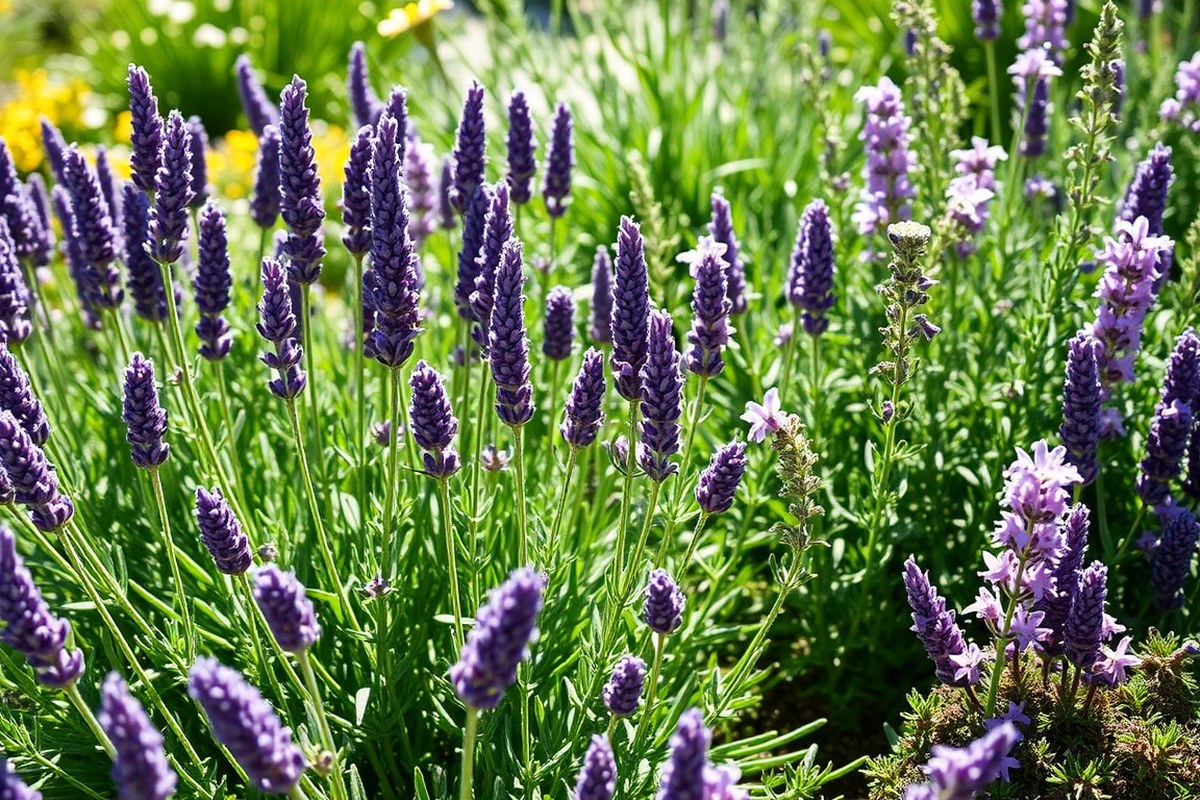
Lavender grows best with plants that like full sun and dry, well-drained soil. These companions share similar needs.
So you don’t have to change your watering or soil for different plants. Also, companion plants can attract pollinators or help keep pests away.
Herbs are great partners for lavender because many of them prefer the same dry, sunny conditions. Some flowering perennials pair well too, adding color and texture without demanding extra moisture.
A few vegetables that tolerate drier soil also fit in nicely. But most veggies need more water than lavender.
- Rosemary, a drought-tolerant herb that loves full sun
- Thyme, stays low and dry, filling spaces nicely
- Sage, thrives in similar well-drained soil
- Alliums, onion-family flowers that repel pests and add height
- Yarrow, a tough perennial that attracts beneficial insects
- Oregano, drought-resistant and useful for cooking
- Carrots, one of the few vegetables that grow well near lavender
Planting these together means you provide consistent care and reduce pest problems naturally. Keep about 3 feet between lavender plants to allow airflow and avoid rot. Mix in lower-growing herbs like thyme to fill gaps and keep weeds down.
Avoid plants that like moist or shady environments near lavender. Mint, ferns, and hydrangeas often need more water than lavender can handle. Choosing companions based on similar water and sun needs ensures a healthy, low-maintenance garden that lasts.
Herbs That Thrive Alongside Lavender
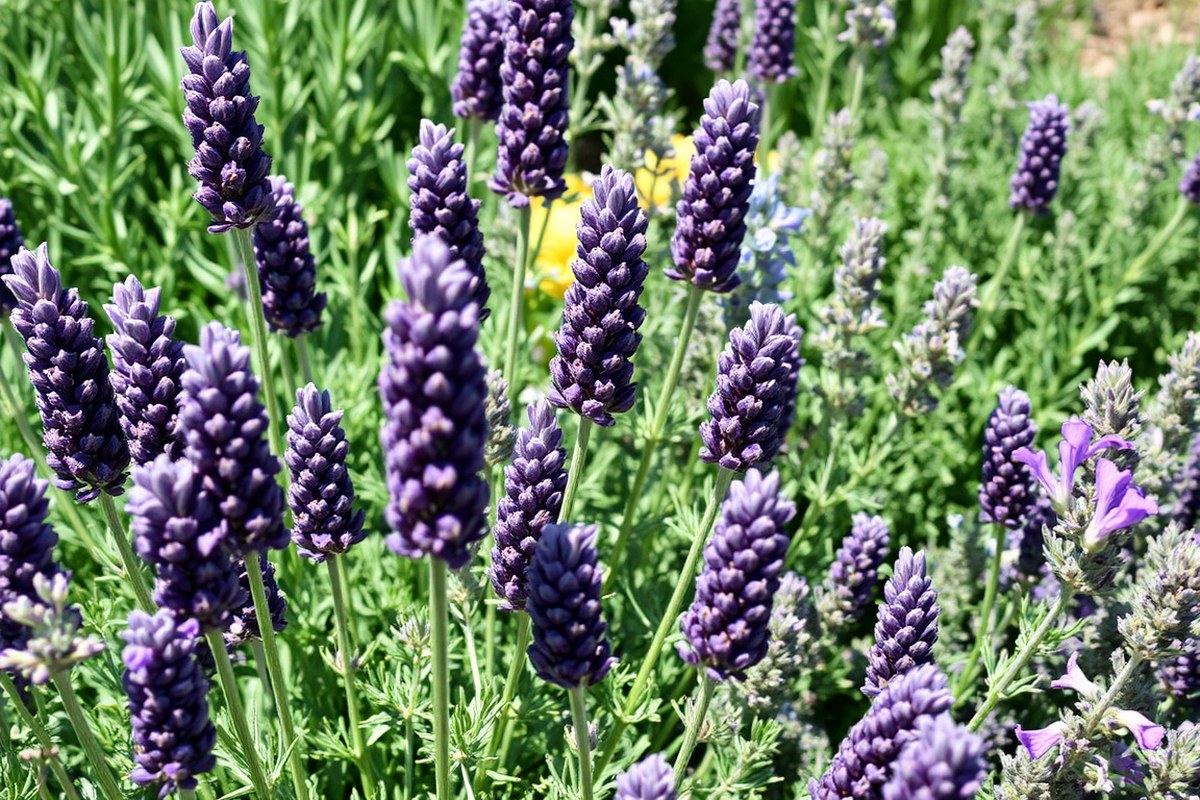
Herbs that grow well with lavender need similar sun, soil, and water. Rosemary, thyme, sage, and oregano are top choices. They all prefer full sun and well-drained soil with minimal watering.
Rosemary’s Growth Habits and Spacing
Rosemary shares lavender’s Mediterranean roots, so it thrives in sunny spots. It grows into a woody shrub that can reach 2 to 3 feet tall.
Plant rosemary 18 to 24 inches from lavender for good air flow. This distance also gives both plants enough room to grow.
Both plants prefer sandy or loamy soil that drains well. Rosemary tolerates dry soil and needs only occasional watering, just like lavender does. This makes watering schedules simple and keeps roots healthy.
Benefits of Thyme with Lavender
Thyme is a low-growing herb that does well in lean, alkaline soil. It also loves full sun and dry conditions like lavender. You can plant thyme closer, about 12 to 18 inches away, since it spreads more horizontally.
Thyme’s compact growth habit helps prevent weeds and cover bare soil. It thrives with the same minimal watering routine as lavender. This peaceful pairing saves you time and water while providing a fragrant garden spot.
Sage and Oregano Pairing Tips
Sage matches lavender perfectly in soil and sunlight needs. It likes sandy, well-drained soil and full sun exposure. Give sage about 18 inches of space from lavender plants to prevent overcrowding.
Oregano also enjoys similar growing conditions and works well beside lavender. It spreads like thyme but can tolerate slightly richer soil.
Keep oregano 12 to 18 inches away from lavender to prevent crowding. This spacing helps keep the air flowing well.
Here’s a table comparing key growing needs of lavender and these herbs for quick reference.
| Herb | Sunlight | Soil Type | Watering | Spacing from Lavender | Mature Size |
|---|---|---|---|---|---|
| Rosemary | Full sun | Sandy or loamy, well-drained | Minimal, dry soil tolerant | 18-24 inches | 2-3 feet tall |
| Thyme | Full sun | Lean, alkaline, well-drained | Minimal, dry soil tolerant | 12-18 inches | Spreads low and wide |
| Sage | Full sun | Sandy, well-drained | Minimal | 18 inches | 2-3 feet tall |
| Oregano | Full sun | Well-drained, slightly richer OK | Minimal | 12-18 inches | Low and spreading |
Planting these herbs with lavender makes watering and sunlight tasks easier. They fit nicely in the same environment without crowding. Each keeps well-drained soil dry and stops water-logging problems.
Don’t plant lavender or these herbs in heavy, wet soil. Root rot can occur fast.
Flowering Plants That Complement Lavender
Flowering perennials and annuals that bloom alongside lavender bring color and attract pollinators. Their varying bloom times extend your garden’s flowering season. Choosing plants with contrasting colors improves the look while supporting bees and butterflies.
Alliums and Marigolds for Pest Control
Alliums, also called ornamental onions, bloom with round purple flowers. These blooms complement lavender’s spikes in shape and color. Alliums thrive in sunny, well-drained spots like lavender, so they share watering needs.
Marigolds add bright orange and yellow to a garden. Their scent repels harmful insects, protecting lavender and nearby plants. Plant marigolds around lavender to reduce pests naturally without chemicals.
- Alliums need full sun and well-drained soil.
- Plant alliums in fall for spring blooms.
- Marigolds are annuals, best started after frost.
- Space marigolds about 8 to 12 inches apart.
- Both plants tolerate drought like lavender.
Both reduce pests naturally while adding color. They also attract pollinators like bees, helping lavender’s blooms set seed.
Coneflowers and Black-Eyed Susans for Color
Coneflowers offer rosy pink petals with tall stems that suit lavender’s height. They bloom from midsummer to early fall, overlapping with lavender’s late blooms. Black-eyed Susans add yellow-orange color and bloom in similar conditions.
These flowers attract butterflies and bees in large numbers. Plant coneflowers and black-eyed Susans near lavender to draw in more pollinators. That helps your garden stay lively and productive.
- Plant coneflower seeds in spring or use nursery starts.
- Black-eyed Susans prefer full sun and moderate watering.
- Both grow well in well-drained soil, like lavender.
- Space plants 12 to 18 inches apart for airflow.
- Deadhead flowers to prolong blooming.
These color contrasts make your garden attractive through summer and fall. Their sturdy stalks blend well with lavender’s soft foliage.
Annuals Like Zinnia and African Daisy
Zinnias and African daisies serve as colorful fillers around lavender plants. They bloom all summer long, starting in late spring. Their bright reds, pinks, yellows, and whites contrast nicely with lavender’s purple spikes.
Both attract bees and butterflies, boosting pollination around lavender and your vegetable garden. Plant these annuals after the last frost date for best bloom times. They can fill spaces and keep the garden colorful year-round.
- Start seeds indoors 4 to 6 weeks before last frost.
- Plant seedlings outside when soil warms above 60°F.
- Zinnia and African daisy need full sun and moderate water.
- Space plants about 6 to 12 inches apart to prevent overcrowding.
- Pinch off dead flowers to encourage more blooms.
Using annuals with lavender creates a cheerful garden with continual color. It helps attract helpful insects and keeps your garden lively all season.
Vegetables That Can Be Companion Plants for Lavender
Vegetables that grow well near lavender share similar sunlight and soil needs. Lavender loves full sun and well-drained, slightly alkaline soil. Vegetables like tomatoes, peppers, and asparagus like full sun.
They also prefer drier soils. These qualities match lavender’s needs well.
It’s smart to keep vegetables that need heavy watering away from lavender. Lavender does not tolerate wet soil. So placing thirsty plants right next to it causes root problems.
Instead, plant vegetables in containers or separate beds close to lavender. So you can manage their soil moisture separately.
Giving your lavender enough space is very important. Lavender can grow up to 20 feet wide. It can also grow tall.
Leave 2 to 3 feet between lavender and your vegetables. This keeps them from shading each other.
It also stops roots from crowding. This spacing helps both plants get enough air, sun, and water without competing.
Pairing lavender with drought-tolerant vegetables reduces watering work and prevents soggy soil. For example, grow eggplants, onions, or kale nearby, but not directly beside lavender bushes. They thrive in similar dry conditions and full sun.
Before planting, improve your soil by adding lime to raise pH if needed. This adjustment suits lavender and many vegetables like cabbage or beans, which prefer slightly alkaline soil. Avoid acidic soils or heavy compost near lavender since it thrives in lean, well-drained grounds.
Watch out for vegetables that need lots of nutrients and water, like lettuce or cucumbers. These can cause a struggle if planted close to lavender. Use separate irrigation schedules and consider pots to keep their watering needs from affecting your lavender.
Essential Growing Conditions Shared by Lavender and Companions
Lavender and its companion plants need full sun, roughly six to eight hours daily. This bright exposure helps them produce strong stems and vibrant flowers.
Potting lavender lets you quickly move it to sunnier spots. This helps the plant grow better in changing conditions.
Their soil should be well-drained to prevent root rot and other moisture problems. Sandy or gravelly soils drain water well. They don’t stay soggy but still feed the plant.
These soils suit lavender best. Heavy clay soils trap moisture and are a poor match for lavender’s needs.
The ideal soil pH for lavender is neutral to slightly alkaline, between 6.7 and 7.3. This range helps lavender absorb nutrients efficiently.
Some companion plants prefer slightly acidic soil. So it’s important to pick those with aligned pH needs to avoid stunted growth.
Both lavender and its best companions like perennial salvia and echinacea are drought-tolerant after establishment. They need only minimal watering once rooted, usually once a week in dry conditions. Overwatering or frequent watering harms lavender and nearby plants with similar needs.
- Choose full sun locations with at least 6 hours of direct light daily.
- Use well-drained, sandy, or gravelly soil to avoid water buildup.
- Check soil pH often to keep it near 6.7 to 7.3. This range helps lavender absorb nutrients well. Testing soil keeps plants healthy.
- Water sparingly once plants are established; avoid soggy soil.
- Avoid companion plants that demand rich soil or lots of water.
- Adjust watering seasonally, less in rainy months and a bit more in dry spells.
Make sure not to overwater, lavender and companions struggle in moist soil.
Routine soil tests help maintain pH in the right range, especially if you add nearby plants. Some companions like geraniums prefer 6.5 pH, slightly acidic.
So watch for any signs of decline. Keeping similar watering and light routines for all nearby plants prevents competition and stress.
Plants to Avoid Planting Next to Lavender
Plants that need more water than lavender are a poor match. Lavender prefers dry soil, so watery neighbors can cause root rot.
Also, shade-loving plants rob lavender of its required sunlight. Lavender needs 6 to 8 hours of direct sun daily to thrive.
Mint is especially bad near lavender because it spreads aggressively. It grows roots underground and crowds out nearby plants.
Mint also likes moist soil, which conflicts with lavender’s dry needs. To stop mint from spreading, plant it 12 inches from lavender.
- Mint, for its aggressive growth and high water need
- Hostas and ferns, which prefer shade and moist soil
- Impatiens and astilbe, shade lovers that reduce light for lavender
- Azaleas and camellias, both needing more water and acidic soil
Plants with a shady growth habit reduce lavender’s sun exposure. Less light weakens lavender and stunts its growth.
Picking neighbors that share lavender’s love for sun and dry soil keeps all plants healthy. Avoid plants demanding frequent irrigation; too much water invites diseases in lavender’s roots.
How Companion Plants Benefit Lavender’s Growth and Health
Companion plants help control pests by keeping harmful bugs away naturally. Thyme has insect-repelling qualities that protect lavender from pests. Marigolds attract ladybugs, which eat pests like aphids and spider mites around lavender.
Plants like zinnias and marigolds attract bees and butterflies. These pollinators help lavender produce more flowers by improving its pollination. Lavender also draws pollinators that boost other nearby plants’ blooms.
Some companion plants improve soil health, which benefits lavender’s growth. Beans add nitrogen to the soil, helping lavender thrive with better nutrients. Healthier soil encourages stronger lavender plants with fuller blooms.
Place companions carefully to avoid crowding. Too many plants close together can trap moisture on lavender’s leaves. This moisture encourages diseases, harming lavender instead of helping it.
In dry climates, companions that repel pests and attract pollinators improve lavender’s chances. Using thyme nearby prevents pest buildup without chemical sprays. Adding marigolds pulls in helpful insects that keep the garden balanced.
In richer soil, including nitrogen-fixing plants like beans supports lavender’s nutrient needs. Plant them with space to grow without shading lavender, ensuring root health. This balance encourages vibrant, healthy lavender plants.
Spacing and Planting Tips for Healthy Lavender Gardens
Keep lavender and its companion plants spaced out so each one gets enough light and air. Pruning regularly helps stop lavender from shading or crowding other plants. Plan your garden to get the most sun and air for plants.
Good airflow and sunlight help all your plants stay healthy. Arrange your plants to avoid overcrowding and blocked light.
Recommended Spacing Guidelines
Give lavender enough room to grow without crowding nearby plants. Give each lavender plant about 12 to 18 inches of space.
This room helps roots grow well and you can water easily. Avoid crowding plants to keep them healthy and strong.
Companion plants should be planted at least 12 inches away from lavender. This prevents them from competing for nutrients and reduces disease risk.
Raised beds and containers work well if space is limited. In these cases, keep plants spaced on the wider side to improve root space and airflow.
Pruning Techniques for Companion Plants
Prune lavender regularly to stop it from becoming too woody and shading smaller neighbors. Trim once or twice each growing season after flowering to encourage fresh growth.
Prune companion plants by removing dead or crowded branches. This keeps them healthy and prevents them from blocking sunlight to lavender.
Keep an eye on plants taller than lavender. Trim them back when they grow too tall.
This keeps your garden height even and balanced. This avoids shading and keeps airflow steady.
Garden Layout for Sun and Airflow
Make sure lavender gets six hours or more of sun daily. Place taller plants on the north or west to avoid shading lavender. Set up your garden so lavender gets plenty of light.
Set plants in rows or clusters with open spaces between. This allows wind to flow through and dries leaves quickly, reducing fungal problems.
Use pathways or gaps between beds to improve air movement. This lowers humidity around plants, which benefits both lavender and its companions.
- Choose your garden site with full sun and good drainage.
- Measure and mark planting spots at least 12 inches apart for companions.
- Plant lavender spaced 12 to 18 inches from each other.
- Place taller companion plants upwind or to the north side.
- Prune lavender after it flowers to keep it from getting woody.
- Trim companion plants monthly to reduce crowding and shade.
- Create walking paths that break up the garden bed for airflow.
- Check regularly for overcrowding or shading and adjust as needed.
Don’t plant lavender too close to aggressive bulbs like daffodils. They can crowd out companions and disrupt your garden’s balance.
Step-by-Step Action Plan for Planting Lavender Companions
Follow this simple plan to grow lavender and its best companions together. You’ll set the right conditions and avoid common mistakes.
- Before planting: Choose companion plants that share lavender’s love for full sun and well-drained soil. Test your soil’s drainage by digging a hole and filling it with water. Good drainage means water drains within an hour.
- Day 1: Mix sand or gravel into your soil. This improves the drainage in your garden bed. Check that pH is around 6.5 to 7.5 for lavender and its companions. Use a simple soil test kit.
- Week 1: Plant lavender and companions like rosemary or thyme. Space them 12 to 18 inches apart to allow airflow. Expect firm soil around roots and steady growth in leaves.
- Week 3: Mulch lightly with gravel or coarse sand, not organic mulch. Look for signs of good drainage by spotting no soggy spots after watering.
- Month 1: Water deeply but only when soil is dry to prevent root rot. Watch for healthy green leaves and no wilting, which means watering is right.
- Month 2: Check for pests like aphids or fungal problems. Companion plants should help repel pests. Seeing fewer bugs means your planting is working well.
- Month 3: Prune lavender lightly after flowering to keep plants bushy and to encourage airflow. Check that new shoots grow strong and upright.
Frequently Asked Questions
What Herbs Grow Best with Lavender in a Garden?
Rosemary, thyme, and sage grow well with lavender. They all prefer sunny spots with well-drained soil, which keeps them healthy together. Planting these herbs near lavender creates a strong, natural scent barrier that can repel pests.
Can Flowering Plants Thrive Alongside Lavender?
Yes, flowers like yarrow and cone flowers do well with lavender. They share similar needs such as full sun and dry soil. These flowers add color and attract pollinators that help lavender bloom better.
Which Vegetables Can You Plant Near Lavender Successfully?
Carrots and cabbage are good vegetable companions for lavender. These veggies enjoy similar growing conditions with plenty of sunlight and well-drained soil. Growing them near lavender can help reduce pests naturally.
How Does Lavender Benefit from Companion Plants?
Companion plants can improve lavender’s health by repelling pests and attracting pollinators. They also help with soil balance and moisture control. Planting companions gives lavender a stronger chance to thrive without harmful chemicals.
What Plants Should Be Avoided Near Lavender?
Avoid planting moisture-loving plants like mint, ferns, and hydrangeas near lavender. These plants need wetter soil conditions, which can harm lavender’s roots. Keeping them apart prevents root rot and stunted growth.
How Far Apart Should You Space Lavender and Companion Plants?
Space lavender about 1 to 3 feet from companions depending on their mature size. Giving plants room helps air circulate and prevents fungal diseases. This distance keeps both plants healthy and growing well.
Wrapping Up
Lavender grows best with partners that share its sun and drainage needs. Pick the right companions and space them well for healthy growth. Start by testing your soil’s drainage and pH today to set yourself up for success.