What Can You Grow with Strawberries: Best Companion Plants and Planting Tips
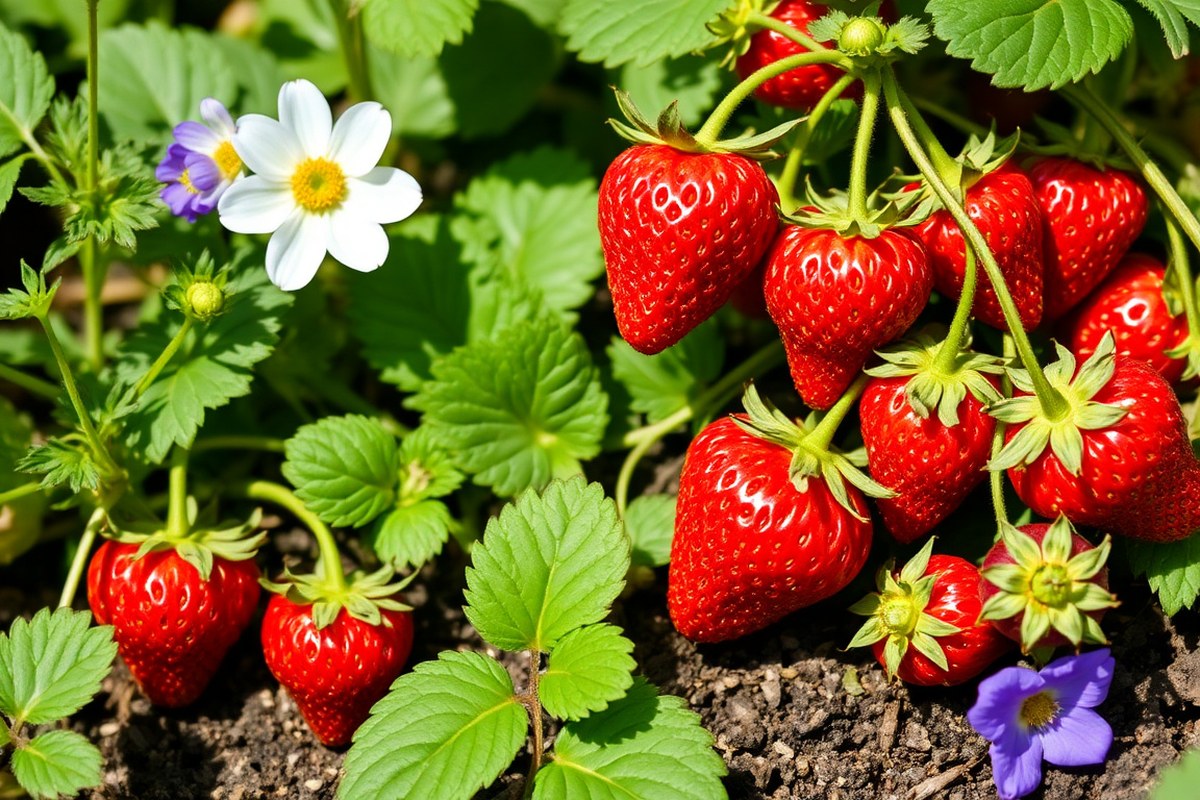
Wondering what can you grow with strawberries to get the best results? The top companions include herbs like sage and tulsi.
Vegetables such as onions and radishes. These plants either help strawberries grow or keep pests away without crowding the space.
Plant sage 2 feet away because it grows large and might shade your berries. Radishes need about 12 inches distance since their leaves get quite big as they mature. Onions and their slender cousins fit nicely between strawberries and take up minimal room.
Spacing plays a key role in success here. Keep strawberries 12 to 18 inches apart. Plant companions 6 to 12 inches away.
This spacing helps each plant grow well. Doing this keeps roots happy and air flowing, cutting down on disease risks.
Key Takeaways
- Grow sage 2 feet from strawberries to avoid shading fruit plants.
- Plant radishes at least 12 inches away due to their large leaves.
- Interplant scallions or green onions among strawberries for space saving.
- Allow 12 to 18 inches between strawberry plants for steady growth.
- Set companion plants 6 to 12 inches away to prevent crowding.
- Use flowering plants like borage and marigolds to improve yields.
Best Vegetables and Herbs to Grow with Strawberries
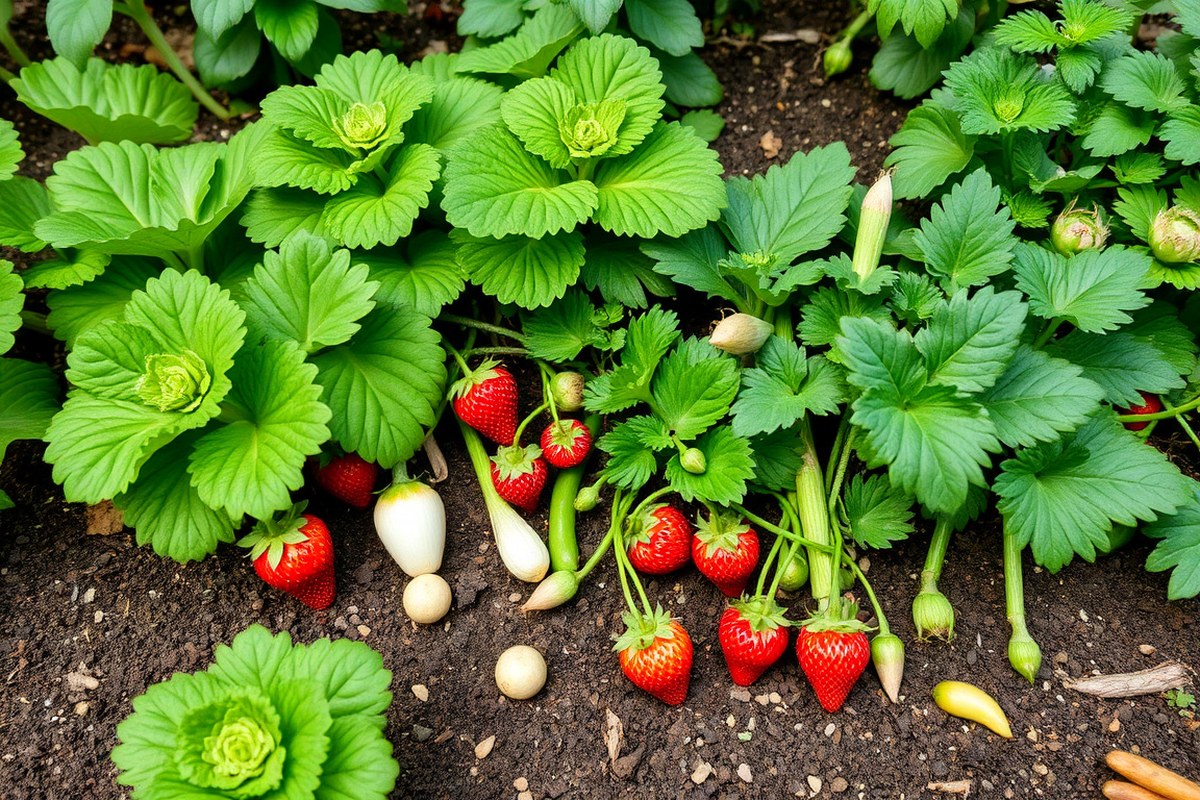
Vegetables like spinach, lettuce, and onions grow well with strawberries. These plants don’t take much space and help keep weeds down around strawberries. Spinach also helps hide your berries from hungry animals like rodents.
Herbs such as sage, thyme, and chives protect strawberry plants by repelling pests. Sage should be planted about 2 feet away because it grows large. Thyme and chives are smaller and fit nicely between strawberry plants without crowding them.
Nitrogen-fixing plants can benefit strawberries by improving soil health. However, avoid large nitrogen fixers like runner beans near strawberries, as they can increase disease risks. Instead, consider smaller legumes if you want to add nitrogen without crowding.
- Spinach: grows quickly, controls weeds, hides fruit from animals
- Lettuce: low-growing, helps cover soil, needs similar moist conditions
- Onions and chives: repel pests with strong smells, small root systems
- Sage: plant 2 feet away, deters bugs, grows tall and woody
- Thyme: ground cover herb, fits between strawberries, pest repellent
- Small legumes: add nitrogen, avoid large varieties to prevent disease
Plant these companions with your strawberries in raised beds, containers, or garden rows. Give taller plants space so they do not block sunlight. Watch for overcrowding, which can reduce airflow and increase plant disease.
Flower Companions That Improve Strawberry Health and Yield
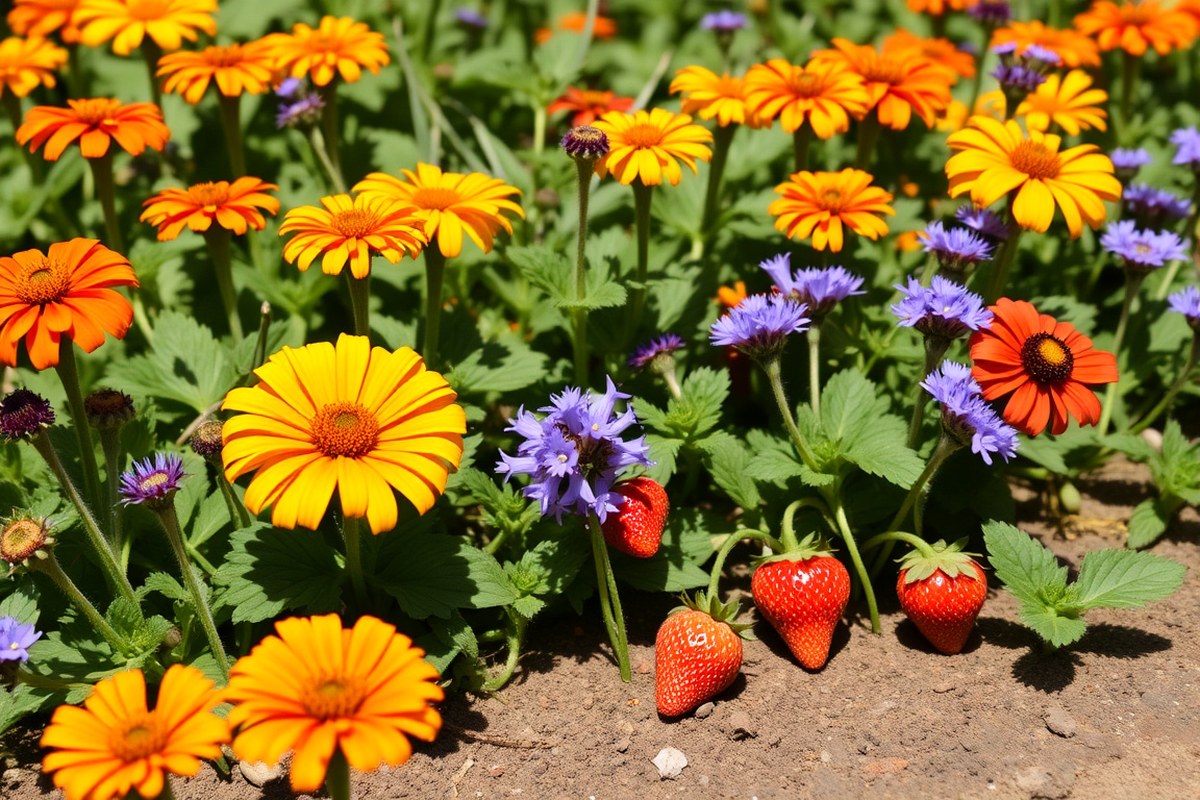
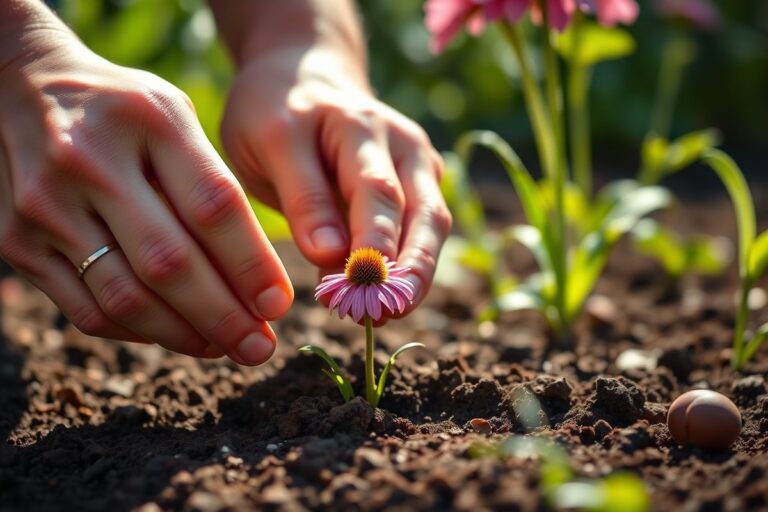
Flowers can boost strawberry health by attracting pollinators and pest predators. Phacelia’s deep blue blooms are great for honey bees and beneficial insects. These pollinators help strawberries produce more and better berries by improving pollination rates.
Some flowers also repel pests that commonly trouble strawberries. Marigolds send off scents that keep insects and rodents at bay.
White clover’s fragrant flowers attract beneficial predatory insects that prey on pests. Planting alliums nearby can deter bugs and rodents as well.
To support strawberry growth, choose flower companions carefully. Here’s a list of effective options:
- Phacelia for attracting pollinators like honey bees and hoverflies
- Marigolds to repel harmful insects and small rodents naturally
- White clover to lure predatory insects and improve soil health
- Borage for attracting parasitic wasps and other pest predators
- Alliums (onions, garlic) to deter a wide range of strawberry pests
Growing these flowers near strawberries can increase yields by improving pollination and reducing disease risk. Watch for overcrowding though, to avoid competition for nutrients and sunlight. Keep flowers at least 12 inches away from the strawberry plants.
Don’t plant flowers that attract pests, like alyssum, too close to strawberries.
Flowering companions also benefit soil health by adding organic matter and encouraging worms. This helps strawberries with their shallow roots by improving soil drainage. Replace or rotate flowers every 1 to 2 seasons.
This keeps soil nutrition balanced. It also helps control pests.
How to Space and Time Planting Companions with Strawberries
Plant strawberries and their companions far enough apart to avoid crowding. Give strawberries about 12 to 18 inches between plants. Space companions 6 to 12 inches from strawberries to prevent root competition and shading.
Recommended Spacing Distances by Plant Type
Most strawberry plants need 12 to 18 inches of space in rows 30 inches apart. Compact companions like bush beans fit well between strawberry plants at 6-inch spacing. Keep taller companions like borage 2 to 3 feet away.
This prevents shading and crowding. It helps strawberries get enough light.
Herbs like thyme, chives, and mint should have dedicated spaces around strawberries. Mint grows aggressively.
So plant it with a root barrier to stop it from overtaking the bed. Garlic and strawberries can be interplanted, but follow the 6- to 12-inch spacing rule.
Timing Companion Planting with Strawberry Seasons
Plant companions after the last frost passes, along with strawberry runners and new transplants. Early-season companions like radishes should go in about 6 inches from strawberry rows after frost. Wait to plant tall companions until strawberries are strong.
This avoids shading young plants. Give strawberries time to establish first.
Removing the first flush of strawberry flowers improves establishment and lets runners root freely. Time companion planting so it doesn’t disturb runner growth or early strawberry blooms. Strawberries need 6 to 10 hours of sun daily.
Plant companions that don’t block their sunlight. Consistent light helps strawberries grow well.
Avoiding Overcrowding and Shading Issues
Prevent overcrowding by spacing plants correctly and selecting companions that stay low and compact. Avoid climbers or tall plants that cast shade on strawberries, as these reduce berry yield. Allow room for strawberry runners to root by keeping soil clear around strawberry plants.
Use a root barrier with mint to stop it from spreading under strawberry plants. Check companion plant height before planting and give tallest plants the bed edges or corners. Remove excess flowers or runners from strawberries to reduce competition for nutrients.
Follow these steps to space and time companions correctly with strawberries:
- Check your garden’s last frost date and soil temperature.
- Space strawberry plants 12 to 18 inches apart in rows 30 inches wide.
- Plant compact companions like bush beans 6 to 12 inches away from strawberries.
- Place tall plants, such as borage, at least 2 feet from strawberries.
- Sow companions after frost when strawberry seedlings and runners are settled.
- Remove first strawberry flowers to help runners establish before companions grow tall.
- Use root barriers for aggressive plants like mint near strawberry beds.
- Monitor shading and adjust companion placement if strawberry plants show stress.
Long-Term Perennials and Their Effect on Strawberries
Growing asparagus and rhubarb with strawberries works well because their roots stay at different depths. Strawberries root only in the top 6 inches of soil. Rhubarb has deep taproots that break up soil below.
This helps strawberries get air and water under their shallow roots. Asparagus’s root system is also much deeper and won’t compete with strawberries.
These perennials improve soil structure and long-term health. For example, rhubarb’s deep roots loosen compacted soil, making it easier for strawberry roots to spread. Asparagus stays planted for 20 to 30 years, so it offers lasting soil benefits.
Plant asparagus a few feet away to avoid crowding strawberry runners. This spacing lets both plants thrive without fighting for nutrients or space.
Planting asparagus and rhubarb near strawberries also means less hassle with weeding and soil care. Because strawberries have dense low leaves, they shade the ground and help keep weeds down. Rhubarb’s big leaves further block sunlight, reducing weeds and protecting the strawberry roots.
Watch out for heavy shade though. Asparagus or rhubarb growing too dense may block sunlight. This reduces strawberry plants’ light and slows fruit production.
For best results, space strawberry plants about 12 to 18 inches apart in rows. Keep asparagus and rhubarb at least 2 to 3 feet away from strawberry rows. This distance prevents root competition but keeps their benefits close.
Both asparagus and rhubarb like rich, well-drained soil, just like strawberries. Water regularly to keep soil moist but not soggy. Raised beds can help with drainage, especially if your soil tends to stay wet.
Adding asparagus or rhubarb takes more effort at first. These perennials need months to establish in your garden. Asparagus needs about 8 to 10 months before it produces usable spears.
Rhubarb grows back strong each spring but takes a couple of years to mature fully. To get faster strawberry harvests, don’t just plant perennials.
Include annuals or quick-growing plants for quicker fruiting. But use them combined with annual herbs and flowers.
Asparagus and rhubarb make good strawberry companions. They help create a garden bed with long-lasting benefits. They improve soil and reduce weeds without competing, supporting your strawberry harvest season after season.
Just watch their growth so they don’t shade strawberries too much. Keep spacing right for healthy roots.
Plants to Avoid Near Strawberries and Why
Some vegetables and herbs can harm strawberry plants if grown too close. Plants like cabbage, kale, and Brussels sprouts compete for nutrients. They can also attract pests that harm strawberries.
These plants may reduce strawberry growth and health. These antagonistic plants stunt strawberry growth and reduce fruit size.
Garlic, leeks, and mint also interfere with strawberries. Mint spreads aggressively and crowds out strawberry roots.
Garlic and leeks can invite diseases or hinder strawberry flowering. Keeping these plants apart reduces stress on strawberries and improves yield.
Use a clear checklist to keep antagonistic plants at bay. Place at least 12 inches between strawberries and any harmful plants.
Bush beans need 4 to 6 inches of distance from strawberries to avoid competition. Avoid planting cabbage family vegetables like cauliflower, kale, and savoy cabbage near your patch.
- Keep leafy brassicas like kale 12 inches away from strawberries
- Do not plant mint or oregano close; they crowd and compete
- Allow 4 to 6 inches space between bush beans and strawberries
- Avoid garlic and leeks near strawberry plants for disease control
- Exclude cabbage, Chinese cabbage, and Brussels sprouts from the same bed
- Plant thyme along the border to deter garden worms
Planning your garden with these rules keeps strawberries healthy and fruitful. Mark the plots before planting and check distances with a ruler or tape measure. Spending extra time now prevents poor harvests later.
Notice stunted or deformed fruits? Check for harmful plants close to strawberries first. They might be the cause of poor fruit.
Keep strawberry crowns dry and avoid wetting fruits to prevent fungal diseases like grey mould.
Separating antagonistic plants also cuts pest risks. For example, Brussels sprouts attract pests that target strawberries.
Keeping strawberries free from aggressive plants means they get enough sunlight, air, and nutrients. This balance helps your berries grow fuller and tastier.
Attracting Beneficial Insects to Your Strawberry Garden
Companion plants that attract pollinators and predatory insects greatly improve strawberry fruit set and health. These beneficial insects help with pollination and reduce pests naturally. You can boost both by adding the right flowers and herbs around your strawberries.
Key Pollinator-Attracting Plants
Strawberries benefit from visits by bees and butterflies, which increase berry size and number. Yarrow, with its daisy-like flowers, is especially good at drawing pollinators. Borage is another helpful plant that attracts bees and also supports strawberry flavor and disease resistance.
Other flowers like lupins can border your strawberry patch. Lupins grow about 3 feet tall and provide color plus insect visits. These companions encourage a steady flow of pollinators during strawberry bloom, boosting yields.
Beneficial Predators for Strawberry Pest Control
Many insects eat strawberry pests before they can cause damage. Ladybugs and hoverflies prey on aphids and other bad bugs. Lacewings also feed on eggs and larvae that harm strawberries.
Planting herbs with strong scents can confuse or repel unwanted pests. Onions are useful because their smell masks strawberry fragrances and deters animals and bugs. Purslane is another choice, improving strawberry quality while tolerating salty soil conditions.
- Yarrow attracts ladybugs, hoverflies, and lacewings.
- Borage invites pollinators and resists disease.
- Lupins work as tall border plants for insect visits.
- Onions mask strawberry scents, repelling pests.
- Purslane tolerates salt and boosts fruit quality.
These plants balance pest control with pollination. They help keep your patch healthy without chemicals.
Planting Strategies to Boost Insect Presence
Place pollinator-attracting flowers in clusters near your strawberry plants. This makes it easier for bees to find and visit multiple flowers. Try planting yarrow or borage in groups of at least 3 to 5 for best effect.
Use a weed-suppressing membrane before planting to reduce competition for insects’ attention. Preventing weeds helps both strawberries and companion plants flourish. Also, stagger planting times so flowers bloom throughout spring and early summer.
Plant lupins about 3 feet from your strawberry patch. They attract helpful insects from your garden. This benefits your strawberries by reducing pests.
Keep soil moist and flowers healthy to maintain steady insect visits. These tactics help your strawberry plants get more pollination and natural pest control.
Adapting Companion Planting for Containers and Raised Beds
Choose companion plants that fit the size of your container or raised bed. Small herbs like thyme or chives work well in pots with strawberries.
Larger vegetables need more space. So plant them in bigger containers or wider raised beds.
Use a high-quality potting mix with good drainage to keep roots healthy. Mix in compost to add nutrients. Avoid heavy garden soil.
Heavy soil holds too much water. Strawberries and their companions like soil that stays moist but not soggy.
Leave 12 inches between strawberry plants. Keep 12 inches between companions like beans. Also space beets at least 12 inches apart.
In containers, space plants far enough to stop their leaves from touching. Crowding can cause poor air flow and promote disease.
Beans fix nitrogen, which helps strawberries grow better. Choose bush varieties that won’t climb or crowd your berries.
Beans can take up some water. So check soil moisture often when growing them with strawberries.
Watering needs change when strawberries grow with other plants. Raised beds drain faster.
So you might water every 2 to 3 days during warm weather. Containers often need watering daily because they dry out quicker.
Use a drip irrigation system or water at the base to avoid wet leaves. Wet leaves can lead to fungal problems in strawberries. Check soil moisture by sticking your finger one inch deep.
Water if the soil feels dry. Check often to avoid drying out.
Plant French marigolds in raised bed corners. You can also place them every 3 to 4 feet. They add pest protection and color.
They help repel pests while adding colour. Interplant them carefully so they don’t crowd your strawberries or block sunlight.
Watch the runners of strawberry plants closely in containers. They often try to spread and can tangle with companion plants. Trim runners if they crowd pots or containers to keep each plant healthy and spaced properly.
Preventing Common Companion Planting Mistakes with Strawberries
Common mistakes with companion planting strawberries include overcrowding plants. Pairing incompatible plants also causes problems. Planting at the wrong times hurts growth.
These errors can stunt growth and reduce your strawberry harvest. Fixing them needs careful planning and proper spacing.
Overcrowding and Root Competition Errors
Strawberries have shallow roots that spread wide. Planting companions too close causes them to compete for water and nutrients. Keep at least 6 inches (15 cm) between each strawberry and companion plant to avoid this.
Overcrowding also reduces air flow, raising disease risks like mold. Thin plants early when they grow too tightly packed. Remove weaker and extra seedlings promptly to help strong plants thrive.
Give strawberries room to breathe; too much crowding leads to mold and weak plants.
Wrong Companion Pairings to Avoid
Some plants make poor neighbors for strawberries. Avoid planting members of the cabbage family nearby, they can attract pests harmful to strawberries. Tomatoes also produce chemicals that stunt strawberry growth.
Here are some common poor pairings to skip:
- Cabbage, kale, broccoli, and cauliflower varieties
- Tomato plants
- Potatoes, which share diseases with strawberries
- Fennel, known to inhibit growth of many plants
- Any plants with deep, aggressive roots crowding strawberries
Instead, choose companions that share the same space without overtaking strawberries.
Correcting Planting Time Mismatches
Planting strawberry companions too early or too late can disrupt their growth cycles. For example, garlic or chives work well planted in early spring. Quick-growing lettuce fits better planted after strawberries start fruiting.
Match planting times to strawberries’ growth phases. Plant companions like French marigolds before strawberries bloom to attract beneficial insects during fruiting. Avoid companions that shade strawberries during flowering or fruit set.
Step-by-Step Action Plan for Growing Strawberries with Companions
Follow these steps to choose, plant, and care for companions with strawberries. Watch for better growth and better yields as you go.
- Before Planting: Choose companion plants like spinach, basil, or marigolds that fit your garden space. Select healthy strawberry plants to get started.
- Planting Time: Space companions at least 8 inches apart from strawberries to avoid crowding. Check the soil drains well to prevent root rot.
- Week 2: Mulch around both strawberries and companions to keep soil moist and stop weeds. Look for moist but not soggy soil.
- Weeks 3 to 4: Water your plants deeply once or twice a week. Adjust this based on how much rain you get. Aim to keep the soil moist but not soggy. Soil should feel damp 2 inches below the surface.
- Week 6: Add a light dose of balanced fertilizer to support growth. Leaves and flowers should look green and healthy.
- Month 2: Watch out for pests like aphids on your plants. Plant flowers such as alyssum nearby to attract helpful insects. These insects can keep the pests under control. Count more pollinators visiting the garden.
- Month 3 and On: Rotate or replace companion plants yearly to keep soil fresh. Watch for stronger strawberry plants with more fruit.
Frequently Asked Questions
Can You Grow Strawberries with Onions?
Yes, strawberries grow well with onions as they don’t compete much. Onions take little space, helping control pests around strawberries.
Is It Okay to Plant Strawberries Near Tomato Plants?
Planting strawberries near tomatoes is not ideal due to shared diseases. Tomatoes can spread wilt and blights harmful to strawberries.
Can Strawberries Share Garden Space with Lettuce?
Strawberries and lettuce grow well together because lettuce’s short roots don’t compete. Lettuce adds ground cover, keeping soil moist for strawberries.
How Far Should Mint Be Planted from Strawberries?
Plant mint about 12 inches from strawberries to avoid overcrowding. Mint spreads quickly, so manage its growth to protect strawberry plants.
Do Strawberries Grow Well with Beans?
Strawberries and beans grow well together since beans fix nitrogen in soil. This added nitrogen benefits strawberries without heavy root competition.
Can You Grow Carrots Near Strawberries?
Yes, carrots grow well with strawberries because they occupy different soil depths. Carrots loosen soil, helping strawberries’ shallow roots get air and water.
Key Points to Remember
Good companion choices make strawberries healthier and more fruitful. Study your space and plant smart companions. Start by picking one or two easy plants to grow with your strawberries now.