What Herbs to Grow Together: Best Companion Pairings and Tips
Growing herbs that like the same conditions helps keep them healthy and productive. Basil, parsley, and chives grow well together because they need similar sunlight and water. Grouping herbs with matching preferences creates a better garden environment.
Warm-weather herbs like basil and sage make good companions, especially in pots. They don’t crowd each other’s roots, which helps both grow well. Avoid planting tall herbs near smaller ones to prevent shading that can stunt growth.
Choose pots that are 10 to 12 inches deep and wide enough for root growth. This space helps keep soil moist and prevents herbs from competing too much. Proper spacing and containers give all your herbs room to thrive.
Key Takeaways
- Group herbs with similar sunlight and water needs to grow together well.
- Plant warm-weather herbs like basil and sage in pots at least 10-12 inches deep.
- Avoid pairing tall herbs, like lovage, with small ones to prevent shading.
- Keep herbs that spread vigorously in separate pots or divided containers.
- Plant basil within 18 inches of tomatoes for better growth.
- Herbs like dill and cilantro take about 50 days to reach harvest-ready leaves.
Which Herbs Grow Well Together and Why
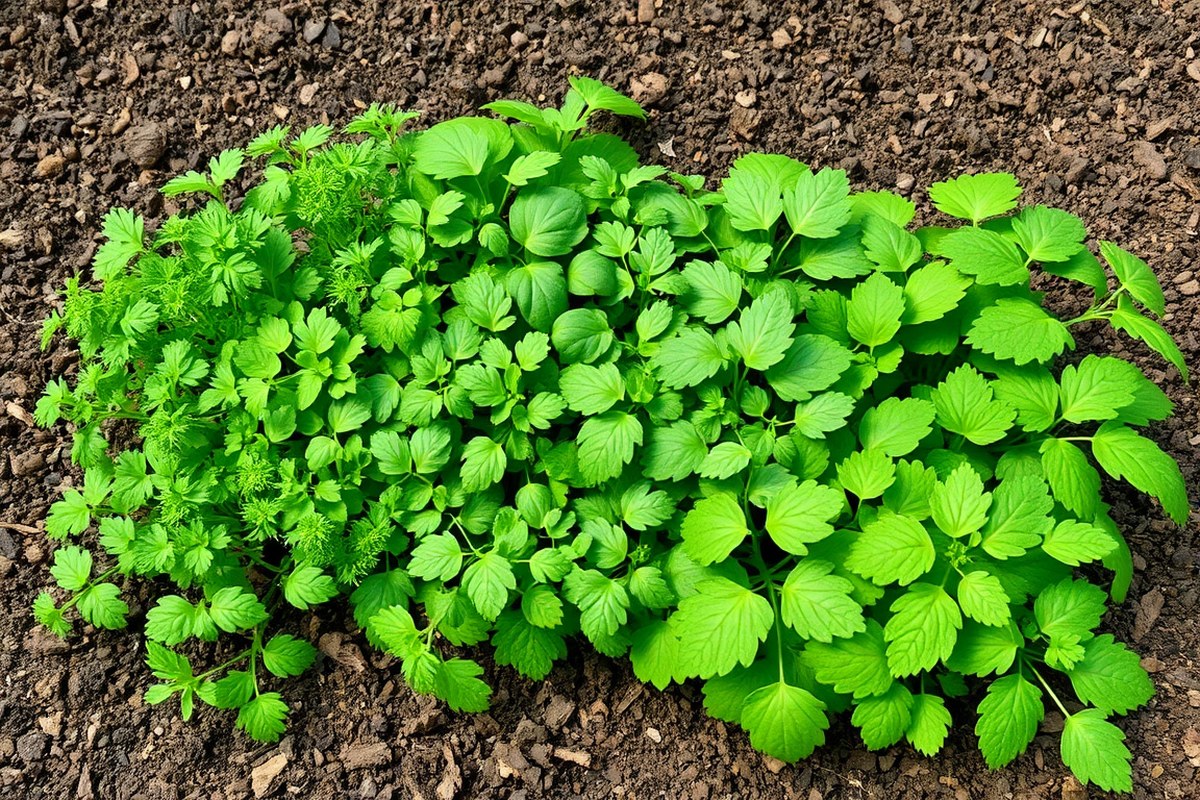
Herbs that thrive together share similar needs for sunlight, soil, and moisture. Mediterranean herbs like rosemary, thyme, sage, oregano, and lavender prefer dry, rocky soil and full sun. Planting these herbs together saves time on watering.
It keeps your herbs healthy. This grouping makes gardening easier for you.
Moisture-loving herbs like basil and parsley need rich soil. They also require damp ground and lots of sunlight. These conditions help them grow well.
Pairing them together ensures they get the same water and light, which helps them grow evenly. These herbs taste great together in many dishes.
Mixing them in the garden and kitchen works well. It gives you fresh flavors and easy cooking.
Lemon thyme, lemon verbena, and lemon basil all like similar sun. They also need about the same water. Planting them together suits their needs well.
Growing them together lets their citrus flavors improve fresh recipes. They often do well in pots, where you can control their warmth and watering easily.
Mint varieties require close planting only with other mints due to their invasive root systems. Planting different herbs near mint often leads to overcrowding and poor growth. Keeping mints contained in their own space avoids this problem and limits cross-pollination.
Herbs with different requirements should be kept apart. For example, rosemary thrives in dry soil, while basil needs consistently moist conditions. Mixing herbs with different water needs causes problems.
Plants might grow poorly or get stressed. Keeping water needs similar avoids this issue.
Choosing herbs with compatible growth habits and root systems helps prevent overcrowding. For instance, sage grows well alongside other dry-soil herbs but not with moisture-loving ones. Knowing how deeply each herb roots will guide your garden layout or container design.
Matching herbs also helps control pests naturally. Certain herbs repel bugs that may harm their neighbors. For example, planting basil near parsley can reduce insect issues, supporting healthier plants without chemicals.
Herbs That Should Never Be Planted Together
Some herbs should never be planted together because they compete for resources or have different needs. This can cause weak growth, poor flavour, or even kill one of the plants. Knowing which herbs to keep apart will save you time, water, and frustration.
Water and Sunlight Needs Clash
Herbs that like dry, sunny spots won’t thrive near those needing more water and shade. For example, rosemary, thyme, and sage prefer dry soil and full sun.
Planting them next to chives, which want moist soil, leads to uneven watering. Either the dry herbs get too wet, or the wet herbs stay too dry.
Separate herbs into groups based on water and sun needs. That helps you water correctly without risking root rot or drought stress. Use containers or separate garden patches for different groups to keep care simple.
Competition Between Herbs
Some herbs compete aggressively for nutrients and space, stunting each other’s growth. Mint is a classic example, it spreads fast and can choke out smaller neighbors. Plant mint in its own container to stop it from overtaking your garden.
Sage and chives shouldn’t share a spot. Sage grows slowly and prefers dry soil.
Chives like moist ground and quicker growth. Planting them together means one will suffer due to limited nutrients or inappropriate moisture.
Allelopathy and Chemical Interference
Certain herbs release chemicals into the soil that inhibit others’ growth. Marigold, though not an herb, is often avoided near some herbs for this reason. Some herbs like tansy are known to harm basil and beans by releasing allelopathic substances.
Avoid pairing herbs that show signs of poor growth or yellowing when planted close. Testing small groups first can save your whole garden. Rotate or move herbs yearly to prevent allelopathic build-up.
Key Herb Pairings to Avoid
Here’s a quick list of herb combinations you should keep separated to avoid problems:
- Chives and rosemary (different water needs)
- Chives and thyme or oregano (prefers drier soil)
- Mint with any slow-growing herb (mint spreads aggressively)
- Sage and chives (conflicting moisture needs and growth rates)
- Basil and tansy (allelopathic effects)
- Fennel and most herbs (fennel can inhibit growth nearby)
- Lavender and sweet basil (lavender needs dry soil, basil likes moist)
Breaking these rules causes some plants to weaken or die, wasting your effort and money. Separate groups physically or by planting time for better growth.
How to Spot and Prevent Bad Interactions
Watch your herbs in the first weeks. If one gets pale, wilts, or grows slowly next to another, they might be incompatible. Yellowing leaves or stunted growth can signal competition or allelopathy.
Prevent problems by grouping herbs with similar needs for water, sunlight, and soil type. Use raised beds, pots, or herb spirals to separate incompatible plants while saving space. Keep a notebook to track what works in your garden.
Always check an herb’s needs before planting it near others, prevention beats replanting.
Grouping Herbs by Growing Conditions and Habits
You can group herbs successfully by matching their sunlight, water, soil, and growth needs. Mediterranean herbs like rosemary and thyme need full sun and dry soil.
Herbs like parsley and chives prefer partial shade and more moisture. Grouping them by these traits helps them all thrive together without extra work.
Herbs Preferring Full Sun
Rosemary, thyme, oregano, and sage love full sun and dry, well-drained soil. These Mediterranean herbs grow well in poor, sandy soils. They like the soil to dry out between waterings.
Water them only when the soil feels dry. Plant them together in a sunny spot to get the best flavor and growth. They keep producing well into fall when grown in full sun.
They don’t need much water, so avoid overwatering. Using sandy soil helps prevent root rot.
Keep pots or garden beds at least 10 to 12 inches deep. So roots have space to grow and soil dries evenly.
Herbs Suitable for Partial Shade
Parsley, cilantro, mint, and chives grow better with partial shade and steady moisture. These herbs tolerate some direct sunlight but prefer less exposure than Mediterranean herbs. They do well in richer, more moist soil and need more frequent watering.
You can place these herbs where they get morning sun but afternoon shade. This protects them from drying out and wilting in hot weather. Grouping these moisture-loving herbs separately helps avoid soggy roots or dehydrated plants.
Growth Habit and Root System Considerations
Herbs with similar root depths and growth rates fit best together. Mediterranean herbs often have woody, deep roots and grow moderately slow. Low-growing herbs like thyme or oregano spread slowly and don’t crowd others quickly.
Fast-growing or invasive herbs like mint have shallow, spreading roots and can overwhelm neighbors. Avoid planting mint with slower or deep-rooted herbs. Instead, contain mint in a 10-12 inch pot or a buried barrier to prevent spreading.
Herbs like parsley and chives have moderate root depth and similar growth speed. So they share space well. Use a wide, deep pot to grow multiple herbs together.
This helps roots spread out without crowding. It also reduces competition for water and nutrients.
Here is a quick reference table to group herbs by their basic needs and habits:
| Herb | Sunlight | Water | Soil Type | Growth Habit |
|---|---|---|---|---|
| Rosemary | Full sun | Low, dry soil | Well-drained, sandy | Woody, deep roots |
| Thyme | Full sun | Low, drought-tolerant | Well-drained, sandy | Low-growing, spreads slowly |
| Oregano | Full sun | Low, dry soil | Well-drained | Medium spread, deep roots |
| Parsley | Partial shade | Moderate, moist soil | Rich, moist | Moderate growth, moderate roots |
| Chives | Partial shade | Moderate, regular watering | Moist, rich | Moderate roots, clumping habit |
| Mint | Partial shade | Moderate to high | Rich, moist soil | Invasive, spreading roots |
Grouping herbs with similar needs reduces stress and cuts down your work. Mediterranean herbs do better when soil dries completely between waterings.
Moisture-loving herbs want richer soil and steady watering without sitting in water. Letting herbs grow at their own pace and root style means stronger plants and better harvests.
Best Herb Companion Pairings for Gardens and Containers
Planting certain herbs together can improve flavor and pest control. Choose combos based on space and growing conditions. Pots and garden beds have different needs you should factor in.
Mediterranean Herb Groupings
Rosemary, thyme, oregano, and sage thrive together outdoors. They all prefer sunny spots and well-drained soil. Grouping these helps repel insects like aphids naturally.
Rosemary adds height and a woody scent that complements thyme’s low growth. Oregano and sage fill middle layers and keep humidity low. This layout supports airflow, reducing fungal risks.
| Herb | Scientific Name | Good Companions | Why They Are Worthy |
|---|---|---|---|
| Basil | Ocimum basilicum | Oregano, Marjoram | Deters aphids and attracts pollinators |
| Chives | Allium schoenoprasum | Tarragon, Oregano, Sage, Thyme | Repels aphids and fungus |
| Bay | Laurus nobilis | Rosemary, Sage, Thyme, Oregano | Adds height and repels insects |
| Thyme | Thymus vulgaris | Rosemary, Sage, Oregano | Improve aroma and pest resistance |
This group suits outdoor beds or large, deep pots of 14-16 inches. Make sure to space rosemary at the back, thyme low in front, and oregano mid-level. Water well but avoid soggy soil.
Herbs Ideal for Container Planting
Basil, parsley, and chives grow well together in large containers. Pots should be at least 14 to 16 inches deep for good root space. Basil goes in the center with parsley and chives on either side.
This setup fits kitchen herb gardeners who want flavors for Italian or Mediterranean dishes. Basil’s pest-repellent properties help protect parsley and chives. Regular watering is key since containers dry out quicker.
Keep an eye on moisture by feeling soil every few days. Use well-draining potting mix and place the container in a sunny spot. This trio produces fresh leaves nearly all season if trimmed often.
Mint and Lemon Balm Groupings
Mint and lemon balm spread aggressively and prefer separate pots. Growing them in containers avoids invasion into other herbs’ root zones. Both like partial sun and moist, well-drained soil.
Plant each in individual pots with at least 8 inches depth. This limits their growth but keeps the leaves lush and flavorful. Water moderately and trim regularly to prevent woody stems.
Mint and lemon balm repel mosquitoes and other pests. They make great companions near outdoor seating or vegetable beds where bugs are a problem. Avoid planting these directly in garden beds with slower herbs.
How to Space and Arrange Herbs for Healthy Growth
Spacing herbs properly helps their roots grow without crowding. Leave 4 to 6 inches between each plant to allow good airflow. Air moving freely lowers the chance of fungal diseases and keeps herbs healthy.
Layout affects how well your herbs get light and space. Taller herbs go in the back or center, with shorter ones around them. This way, all plants get enough sun and room to spread out.
Designing a herb spiral or tiered bed saves space and improves growth differences. The spiral shape uses vertical space, placing sun-loving herbs on top and shade-loving plants below. A tiered bed means steps or levels to organize herbs by height and sunlight needs.
Follow these steps to space and arrange your herbs for better growth:
- Choose a bed or container at least 12 inches wide to fit several herbs.
- Plan your layout with taller herbs like rosemary or basil at the back or center.
- Place shorter herbs such as thyme or chives in front or around the edges.
- Space each herb 4 to 6 inches apart for roots and leaves to grow freely.
- For a herb spiral, build a gentle mound. Stack plants by their light needs on the tiers. This helps plants get the right amount of sun.
- Keep herbs with similar water and sun needs close together to match care routines.
- Check plants regularly and thin crowded spots to improve airflow and sun exposure.
Never plant invasive herbs like mint in mixed beds. It can take over quickly. Mint crowds out other plants around it.
Growing Multiple Herbs Together in One Container
Choosing the right pot size is key when growing multiple herbs in one container. Use at least a 12-inch diameter pot for two or three herbs to avoid crowding. Larger pots around 16 to 18 inches work better for herbs.
They are best if you grow four or more herbs together. Bigger pots give roots enough space to spread out.
Pick herbs that share similar water and light needs. Lavender and sage both like full sun and dry soil. They grow well together because their needs match.
This makes them excellent partners in your garden. Basil and stevia also pair well because they prefer similar moisture and sunlight levels.
Soil mix matters too. Use a well-draining blend with a mix of potting soil, sand, and perlite.
This combo prevents water from pooling around roots, which helps keep moisture consistent but not excessive. Well-draining soil also reduces root rot risk.
- Choose a pot with drainage holes to avoid water buildup.
- Select herbs with roughly the same mature size and moisture needs.
- Mix potting soil, perlite, and sand for good drainage.
- Water deeply but let soil dry slightly between watering sessions.
- For tall herbs like dill, pick a deeper pot and plant near the center.
- Use smaller pots for fewer herbs to keep soil from drying too fast.
Maintaining moisture is about balance. Water your container when the top inch feels dry, usually every 3 to 5 days outdoors.
Smaller pots will dry out faster and need more frequent watering. Mulching the surface with thin bark or straw helps retain moisture.
Root competition happens if herbs get crowded or share limited soil. Give each plant enough space based on its mature size to avoid stress. In smaller containers, focus on slower-growing or smaller plants like chives with rosemary or thyme.
Herb and Vegetable Companion Planting Combinations
Planting herbs near vegetables helps in many ways. Herbs can boost vegetable growth and flavor. They also repel pests without chemicals, keeping your garden healthy.
For example, basil planted near tomatoes deters harmful bugs. Mint by tomatoes reduces pest problems and promotes plant health. Chives help carrots and tomatoes grow better and taste sweeter.
| Vegetable | Best Herb Companion | Benefits |
|---|---|---|
| Tomatoes | Basil | Repels pests; improves growth and flavor |
| Tomatoes | Mint | Reduces pests; promotes overall health |
| Carrots | Chives | Improve flavor and growth |
| Leafy Greens (Cabbage, Kale) | Basil | Protects from pests; boosts growth |
| Beets | Basil | Improves taste and growth |
Not all herbs fit well everywhere though. Avoid dill near peppers, carrots, or mature tomatoes.
Its growth can weaken those vegetables. Be careful to check your herb and veggie pairings before planting.
Plant herbs close to vegetables but give them room to grow. About 6 to 12 inches apart usually works. This spacing lets both plants access enough light, water, and nutrients.
Common Problems When Growing Multiple Herbs Together and Solutions
Herbs growing too close together often compete for sunlight, water, and nutrients. You’ll notice yellowing leaves, wilting, or slower growth when plants fight for space. Crowding also raises moisture levels around leaves, inviting fungal diseases like powdery mildew.
Managing water and sunlight is key to avoiding these problems. Herbs from dry climates prefer less water and well-drained soil to prevent root rot. Give sun-loving herbs six hours of direct sunlight each day.
This helps them grow well. It also lowers the chance of disease.
When herbs outgrow their space, thin or trim crowded plants. This improves air circulation and light exposure. Using a consistent watering schedule helps, water deeply but allow soil to dry between sessions.
- Check soil moisture before watering to avoid overwatering
- Trim taller herbs regularly to prevent shading smaller ones
- Space plants according to mature size, usually 6 to 12 inches apart
- Remove any yellowing or damaged leaves right away
- Use well-drained soil mixes to keep roots healthy
- Rotate herbs in containers to balance sun exposure
- Separate herbs with different watering needs into distinct beds or pots
Herbs with mismatched needs often struggle together. For example, thirsty basil planted next to drought-tolerant rosemary may cause one to suffer.
Group herbs by water and sun needs to keep growth balanced. Adjust your plan if plants show signs like drooping or pale leaves.
Watch for sudden leaf spots or slow growth. These signs show root or fungal problems. Act quickly if you see them.
Spot persistent crowding? Repot herbs or move them to larger pots or beds.
It might cost time but prevents long-term damage. Healthy herbs grow bushier leaves and stronger stems with spaced roots, making your garden more productive.
Step-by-Step Action Plan for Growing Herbs Together
Follow these steps to start growing multiple herbs successfully in your garden or containers.
- Before You Plant: Choose herbs with similar sunlight and water needs. This keeps them healthy and easy to care for.
- Day 1: Prepare your soil or container with well-draining soil. You’ll know it’s ready if water doesn’t pool on top.
- Day 2: Space herbs according to their growth habits, about 6 to 12 inches apart. Proper spacing prevents crowding and disease.
- Week 1: Water your herbs gently but thoroughly each morning. Check that soil stays moist but not soggy.
- Week 2: Watch for signs of pests or disease like yellow leaves or holes. Treat problems early with natural sprays.
- Month 1: Thin out crowded herbs by trimming or transplanting. Plants need air and room to grow well.
- Ongoing: Harvest herbs regularly to encourage fresh growth. Healthy herbs grow fuller and stronger after cutting.
Frequently Asked Questions
What Herbs Can Help Improve Each Other’s Growth When Planted Together?
Basil and tomatoes grow well together because basil repels pests. Dill attracts beneficial insects that help other herbs. Planting these together can reduce pests naturally and boost growth without chemicals.
Can I Grow Herbs with Different Watering Needs in the Same Container?
It’s best not to mix herbs needing dry soil with ones needing moist soil. Group herbs with similar watering needs to avoid root rot and under-watering. For example, rosemary prefers drier soil than mint, so keep them apart.
How Does Sunlight Affect the Success of Planting Herbs Together?
Herbs needing full sun grow best with others that like the same light. Mixing shade-loving herbs with sun lovers can stunt growth or cause stress. Plan your herb bed based on how much sun each herb needs a day.
What Soil Type Is Best When Growing Multiple Herbs Together?
Most herbs prefer well-draining, slightly acidic to neutral soil for good health. Heavy clay or soggy soil can hurt herb roots and invite disease. Adding sand or compost can improve drainage and soil texture for mixed herb beds.
Can I Grow Perennial and Annual Herbs Together in One Garden?
You can grow them together, but remember perennials last years and need space. Annuals die after one season and might need replanting yearly. Plant annuals around perennials to fill gaps and keep your herb garden fresh every year.
How Do I Deal with Invasive Herbs When Growing Many Types in One Spot?
Invasive herbs like mint can take over unless planted in containers or barriers. Use pots or root barriers to control spreading and protect neighbors. Regularly pruning invasive herbs helps keep the garden balanced and prevents crowding.
Key Points to Remember
Growing herbs together works best when you match their needs and give each enough space. Start small with easy plants like basil and parsley to build your confidence. Keep an eye on your herbs and enjoy fresh flavors right from your garden or container.