
How to Cover Plants to Protect from Frost: 8 Practical Methods That Really Work
Knowing how to cover plants to protect from frost can save your garden. The best way is to cover plants with sheets, blankets, or frost cloth on cold nights. This keeps the warmth in and prevents leaf damage from frost.
Start covering your plants when the temperature drops to around 36°F or lower. Choose lightweight materials that let some air and light through but trap heat. Secure covers tightly to stop cold air from sneaking in under them.
Remember, frost forms when temperatures hit 32°F or below, so plan ahead. Covering work best on calm, clear nights since wind and clouds affect frost risk. These simple steps protect tender plants like tomatoes and peppers effectively.
Key Takeaways
- Cover plants whenever overnight temperatures hit 36°F or below.
- Use sheets, blankets, bloom cloth, or burlap for frost protection.
- Secure covers at the base to trap heat and block cold air.
- Start covering frost-sensitive plants early in the season.
- Floating row covers raise air temperature 2, 4°F around plants.
- Remove covers during the day to allow sunlight and air flow.
1. How to Cover Plants for Frost Protection Step-by-Step

- Choose a cover material like a frost cloth, old bedsheet, or burlap. These trap heat without suffocating plants. Avoid plastic as it can freeze and harm foliage.
- Cover plants before sunset when temperatures drop near 36°F. This helps trap warmth radiating from the soil overnight. Remove covers by mid-morning to prevent overheating.
- Drape covers fully over plants down to the ground or pot edges. This keeps cold air away and traps heat around roots and leaves.
- Secure edges with rocks, bricks, or garden staples to stop wind from lifting the cover. Wind can expose plants to cold air and damage covers.
- Provide ventilation for larger or fragile plants by propping covers with stakes or hoops. This prevents crushing branches and lets moist air escape, reducing mold risk.
- Add a 2-inch layer of mulch around plants under the cover. Mulch insulates soil and roots, keeping them warmer through frosty nights.
- For containers, wrap pots with bubble wrap or burlap before covering foliage. Containers lose heat faster, so extra insulation protects root systems well.
Covering plants like this protects them from frost for a while. It works down to about 28°F. The protection lasts a few hours. Covers keep plants warmer by 2 to 4°F, reducing frost damage in early winter.
Keep a close eye on weather forecasts and remove covers once temperatures rise above freezing. Leaving covers on during warm days can cause heat stress and plant damage.
2. Best Materials to Use for Frost Covers: Pros and Cons
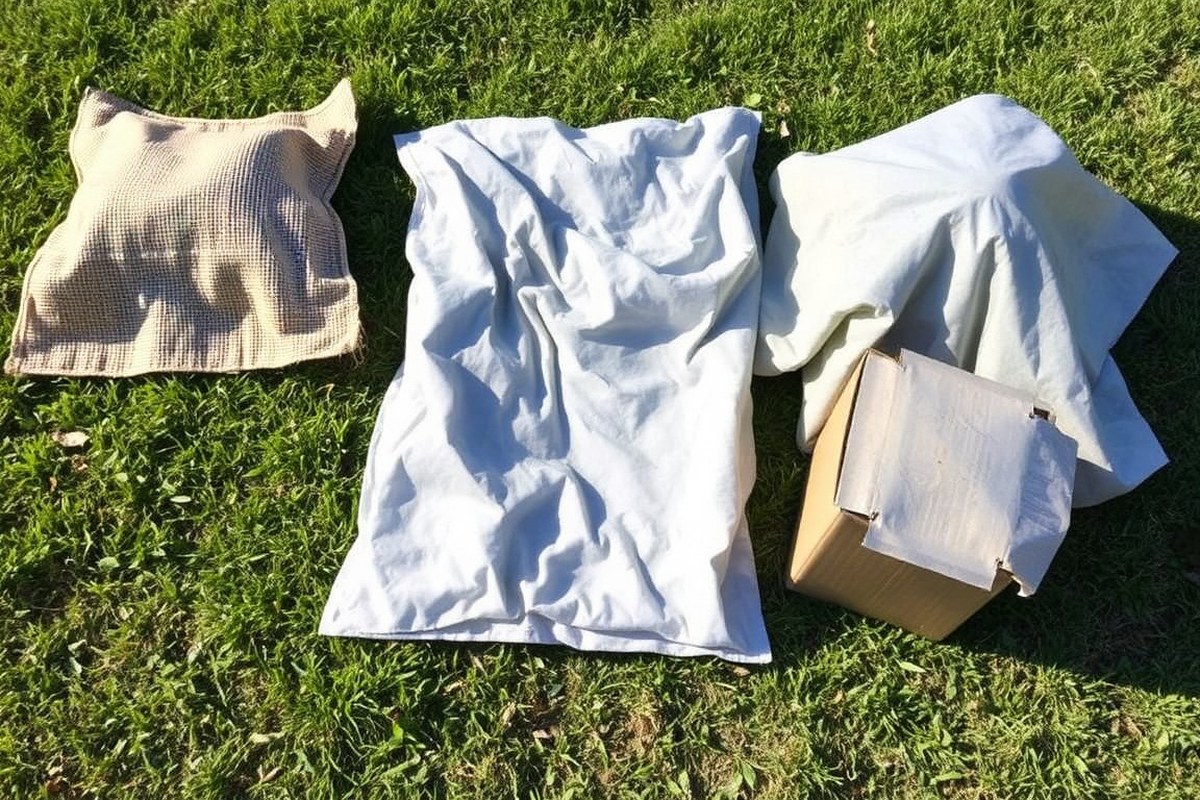
Choosing the right material for frost covers helps keep your plants safe. Materials vary in how much warmth they hold and how easy they are to use. Using the right cover depends on your plant’s size and type.
It helps protect plants better during cold weather. Choosing well makes a big difference in frost damage.
Plastic bags are not recommended. They trap moisture and can freeze, damaging leaves.
Instead, breathable fabrics like frost cloth or even old sheets work better for tender plants. They let some air and light pass through while raising temperatures by several degrees.
| Material | Insulation Value | Cost | Ease of Use | Best For | Notes |
|---|---|---|---|---|---|
| Frost Cloth | Moderates temperature by 4 to 10°F | Moderate ($10-$30 per 5×10 ft) | Easy to drape and anchor | Vegetables, flowers, small shrubs | Allows sunlight and air |
| Old Sheets or Blankets | Moderate insulation | Free or low cost | Easy, but heavy; remove in morning | Tender plants, annuals | Secure edges well to trap warmth |
| Cardboard Boxes | Low to moderate | Free (reused) | Simple for small plants | Seedlings, small pots | Place upside down; remove during the day |
| Bubble Wrap | Moderate insulation | Low to moderate | Wrap containers or pots | Small pots, tender bulbs | Protects from cold air, avoid crushing |
| Plastic Sheeting | Poor for insulation | Low cost | Difficult to secure; traps moisture | Temporary windbreaks, not direct covers | Not good for direct contact with plants |
| Plastic Buckets or Pots | Moderate | Free or low cost | Easy for individual seedlings | Seedlings, single small plants | Make vent holes for air flow |
For small seedlings or pots, place upside-down cardboard boxes or plastic buckets over them. These give decent draft protection and trap some warmth. Just remove covers each morning to prevent overheating or rot.
Breathable options like frost cloth and old sheets give better overall results for larger plants. Drape covers loosely and anchor edges with soil or stones. This traps heat from the ground and blocks frost from touching leaves.
Never use plastic bags directly on plants. They can cause freezing damage and moisture buildup.
3. When and How Long Should You Cover Plants for Frost?
Cover your plants before temperatures hit 32°F or 33°F. This range marks the point when frost can start to damage leaves and stems. Start covering your plants in late afternoon or early evening.
Do this once the forecast shows low temperatures at night. This helps protect your plants from frost damage.
Hardier plants like spinach and kale tolerate frost longer and survive down to 28°F. When temps drop near or below 28°F, cover sensitive plants right away. Use materials like blankets, burlap, or garden fleece securely over the plants to trap heat.
Keep the covers on for as long as the frost risk remains. Frost usually happens overnight and lasts about 6 to 12 hours.
This depends on your weather and where you live. Remove covers after sunrise to avoid overheating and moisture buildup, which can harm your plants.
- Start covering when forecasts predict lows at or below 33°F
- Apply covers 1, 2 hours before temperatures drop below freezing
- Leave covers on through the frost period, usually overnight
- Remove covers once the temperature rises above 35°F in the morning
- Hardier plants tolerate frost down to 28°F without covering
- Use mulch under plants to add extra ground insulation
- Water plants beforehand; moist soil holds heat better
Timing covers correctly helps plants withstand frost without stress. Leaving covers on too long creates humidity that invites disease. Not covering early enough risks damage from sudden frost.
Watch local weather forecasts closely in the fall and spring. You might need to cover plants multiple nights in a row during cold spells. Planning coverage around temperature predictions will protect your garden efficiently and save you effort.
4. How to Protect Different Types of Plants from Frost
Protecting Frost-Tender Vegetables and Annuals
Vegetables like tomatoes, squash, and young brassicas die quickly from frost damage. Cover them right before frost hits with frost cloth or horticultural fleece. Use hoops or stakes to keep fabric off plant leaves.
Letting fabric touch leaves can cause damage in freezing weather. Always secure fabric away from plants for best protection.
Annuals and tropical plants need this same care because they can’t survive freezing temperatures. Remove covers after sunrise once temperatures stay above 40°F to avoid overheating. Cover beds fully, tucking the edges under soil to trap warmth.
Shielding Container and Potted Plants
Many container plants don’t tolerate frost well because pots lose heat fast. Small pots dry out and freeze quicker, so bring frost-sensitive plants indoors. Place them away from drafts and near a window with indirect light.
You can’t bring containers inside? Wrap them with bubble wrap or frost cloth. This helps keep their roots safer from frost damage.
Group pots close together and raise them off cold surfaces to reduce heat loss. Water the soil before frost; moist soil holds heat better and protects roots.
Safeguarding Established Hardy Plants and Shrubs
Established shrubs and hardy perennials often survive mild frost without covering. Still, fragile new growth on shrubs needs frost cloth or fleece when frost threatens. Cover plants loosely to allow airflow but keep cold air out.
For larger shrubs, lay fabric over support hoops or frames to avoid crushing branches. Mulching roots with 3 to 5 inches of organic material adds extra freeze protection. Skip covering if temperatures won’t drop below 25°F; some plants tolerate down to 18-20°F.
5. How Mulch and Watering Help in Frost Protection
Watering plants before frost can help protect them. Moist soil holds heat longer than dry soil.
Water your plants thoroughly in the afternoon, giving about an inch of water to soak deeply. This keeps roots warmer overnight and cuts frost damage risk.
Mulch works by insulating plant roots from freezing temperatures. Use organic materials like straw, wood chips, or shredded leaves. Spread mulch 2 to 4 inches thick around plants.
But keep it 2 to 3 inches away from stems or trunks. This prevents rot and rodent problems near the base.
Potted plants lose heat faster than those in the ground. Mulch doesn’t work as well here. So you might combine it with covers or move pots indoors.
For plants in the garden, replenish mulch after heavy winds or rain. This keeps the layer thick enough to block frost from freezing soil.
Never pile mulch directly against stems; this invites rot and pests that harm plants.
A thick mulch layer traps ground heat overnight. This ground heat reduces frost forming on leaves.
Add mulch before the first hard freeze hits, so the soil stays warm longer. Avoid fresh feeding of plants close to frost dates because new growth is more frost-sensitive.
6. Common Mistakes and How to Avoid Frost Covering Failures
Using plastic as a frost cover can backfire if you don’t handle it right. Plastic traps moisture and does not breathe. This creates damp conditions that can cause plants to rot or get fungal diseases.
Covering plants too tightly is another common error. When covers press against leaves, they can freeze to the plant and cause damage. Tight coverings also prevent air circulation, raising humidity and frost risks.
Forgetting to remove frost covers during the day leads to heat buildup. This can stress plants or even cook them in strong sunlight. Covers should come off as soon as temperatures get above freezing.
- Use breathable frost blankets or row covers, not plastic sheeting.
- Allow several inches of space between the cover and the plant.
- Secure covers with stakes or weights, but don’t clamp tightly to plants.
- Remove covers by mid-morning once frost danger passes.
- Check covers daily for moisture buildup under them.
- Water plants well before frost, but keep covers dry on top.
Frost blankets let air and moisture pass while blocking cold air. These covers cost around $0.10 to $0.50 per square foot and usually last multiple seasons. Use garden staples or bricks to keep covers from blowing off in wind.
If you spot condensation or wet spots under covers, gently lift them to air out plants. Too much moisture invites disease and rot. On windy sites, wrap covers loosely but securely to avoid gaps that let frost in.
Checking the weather forecast helps you know when to put on or take off covers. Cover plants just before a predicted freeze and remove them by late morning when temperatures rise. This timing avoids moisture buildup and heat stress, keeping plants safe from frost damage.
7. How to Use Floating Row Covers and Other Protective Structures
Floating row covers and other protective structures shield plants from frost and cold winds. They trap heat and keep frost off leaves. Each structure suits different garden sizes and frost risks.
Types of Frost Protective Structures
Floating row covers are lightweight fabrics laid directly on plants. They let light, air, and water through but block frost.
Cloches are clear plastic or glass domes placed over individual plants. Cold frames are wooden or plastic boxes with transparent tops that trap warmth.
Hoop tunnels use curved metal or plastic rods covered with plastic or fabric. They cover larger rows and shield plants from frost and wind. Floating row covers work best for small to medium beds.
Cloches and cold frames fit smaller areas. Hoop tunnels help protect bigger gardens or vegetable rows.
Installing Floating Row Covers
Start by laying the fabric gently over plants before frost hits. Make sure the edges extend several inches beyond the plant bed.
Weigh the edges down with soil, bricks, or stakes to keep the cover from blowing away. A loose fit works best so plants don’t get crushed.
Secure covers every evening during frost risk. Remove them during the day when temperatures rise above 40°F to prevent overheating.
Watch for tears or holes and patch them quickly. Be ready to cover plants again if the temperature drops below the mid-30s°F.
When to Use Cold Frames and Hoop Tunnels
Cold frames suit gardeners who want a reusable structure to protect seedlings or tender plants. Place frames south-facing in a sunny spot for maximum heat gain.
Ventilate during warm days to avoid overheating inside the frame. They help extend the growing season into early spring and late fall.
Hoop tunnels are a good choice to protect long rows of vegetables from frost. They can cover several feet of garden space. Building or buying costs between $50 and $150.
The price depends on size and materials. Use plastic for longer frost protection or frost cloth for better breathability during milder freezes.
8. Preparing Plants for Frost: Hardening Off and Heat Sources
You harden plants by exposing them to cooler outdoor conditions gradually over a week or so. Electric lights or heat lamps can protect plants from frost.
But use them carefully to avoid burns or fires. A slow, cautious approach with supplemental heat keeps plants safe and resilient.
Step-by-Step Hardening Off Process
Start hardening plants about 7 to 10 days before the frost. Put them outdoors for a few hours in the daytime, starting with 2 to 3 hours. Let your plants spend 1 to 2 more hours outside each day.
Increase their outdoor time slowly to help them get used to cooler air. Do this bit by bit to avoid shock.
Bring plants inside before nightfall the first few days to avoid cold shocks. By week’s end, leave plants out during both day and night. Make sure the weather is mild enough before doing this.
Let them get used to full-time outdoor conditions gradually. This process helps plants toughen up, so they don’t get damaged when frost arrives.
Using Electric Lights for Frost Protection Safely
Small heat lamps or incandescent bulbs can add warmth during cold nights. Keep the lamp 12 to 24 inches away from leaves and stems to avoid burning them. Use these lights only in combination with frost covers for a safer, warmer environment.
Turn on lights an hour or two before frost arrives. Keep them on until the temperature climbs above freezing. This helps keep plants warm and safe from frost damage.
Don’t leave lights on all night to lower fire danger. Dry leaves and flammable covers can catch fire easily.
Always watch your heat sources near plants. Position lamps where they won’t touch moist soil or create electric hazards.
Other Safe Heat Options and Precautions
A small portable greenhouse or cold frame keeps heat trapped inside. It lets warmth build during the day and slowly releases it at night. Plus, it shields plants from wind and cold air for safer protection.
Using an electric fan at night helps stir the air and reduces frost formation on foliage. Fans don’t warm the plants but stop cold air pockets from settling around them. Always check electrical cords and keep them off the wet ground to prevent shocks.
Never place heat sources directly on or too close to plants. Keep cords dry and monitor electrical equipment regularly.
Step-by-Step Action Plan to Protect Your Plants from Frost
Follow these steps to cover your plants safely and effectively against frost. Each step includes a way to check that it worked.
- Evening before frost: Water your plants thoroughly. Damp soil holds heat and protects roots.
- Nightfall: Cover plants using a breathable cloth or frost cover. Check that the edges reach the ground to trap heat.
- Before sunrise: Secure covers with bricks or stakes. Make sure covers do not touch leaves, or damage might occur.
- During frost hours: Monitor temperatures. Use a thermometer to confirm frost is present and coverings work.
- After the frost ends: Remove covers when temperature rises above 36°F to avoid overheating plants.
- Next morning: Check plants for any frost damage and adjust your method if needed.
Frequently Asked Questions
What Are Some Homemade Frost Covers for Plants?
Homemade frost covers include old bedsheets, towels, blankets, and cardboard. These materials trap heat and protect plants from frost without costing much. Make sure the cover reaches the ground to keep warmth close to the plant.
Do I Need to Cover Plants for One Night Freeze?
Yes, it’s best to cover plants even for a one night freeze. Frost can damage leaves and new growth quickly. Cover sensitive plants once temperatures dip to 36°F or below to prevent freeze harm.
Can I Put Plastic Bags over My Plants to Protect from Frost?
No, it’s not advisable to use plastic bags for frost protection. Plastic traps moisture and can cause freezing damage or mold. Instead, use breathable materials like frost cloth or old sheets.
What Can I Use as a Substitute for Frost Cloth?
You can substitute frost cloth with old bedsheets or burlap. These fabrics let air flow while keeping plants warm enough to avoid frost damage. Avoid heavy blankets that block all air circulation.
How Tight Should Frost Covers Fit Around Plants for Best Protection?
Frost covers should fit loosely to trap warm air around plants. Tight covers can damage leaves and reduce insulation. Leave some slack so the cover doesn’t weigh down on delicate stems.
Can I Leave Frost Covers on Plants During the Day?
Remove frost covers during sunny days to avoid overheating. Plants need sunlight and air circulation to stay healthy. Only cover plants overnight or when frost risk returns.
Final Thoughts
Covering your plants the right way makes a big difference during frosts. Start tonight by watering and setting up covers. This simple step protects your garden through cold snaps.