Do Tomatoes Like Acidic Soil? Complete Guide to Ideal pH and Soil Care
Do tomatoes like acidic soil? The short answer is yes, but with limits.
Tomatoes prefer soil that is slightly acidic, usually around a pH of 6.0 to 6.5. This means the soil should be just a bit sour, not strongly acidic.
Soil in that pH range helps tomato plants absorb nutrients better. Tomatoes have trouble absorbing nutrients and growing in very acidic soil. You can test your soil pH and adjust it if needed to keep your tomatoes happy.
Start by checking your soil’s pH level before planting. Use a simple soil test kit and take samples from about 4 inches deep. This is where tomato roots live and need balanced soil conditions to grow strong.
Key Takeaways
- The ideal soil pH for tomatoes is slightly acidic, between 6.0 and 6.5.
- Soil pH affects nutrient uptake, so keep it balanced for healthy plants.
- Too much acidity can harm tomato growth and reduce fruit yield.
- Test your garden soil pH before planting tomatoes every 1, 2 years.
- Take soil samples from 4 inches below the surface where roots spread.
- Adjust soil pH by adding amendments if your soil is too alkaline.
Do Tomatoes Prefer Acidic or Neutral Soil?
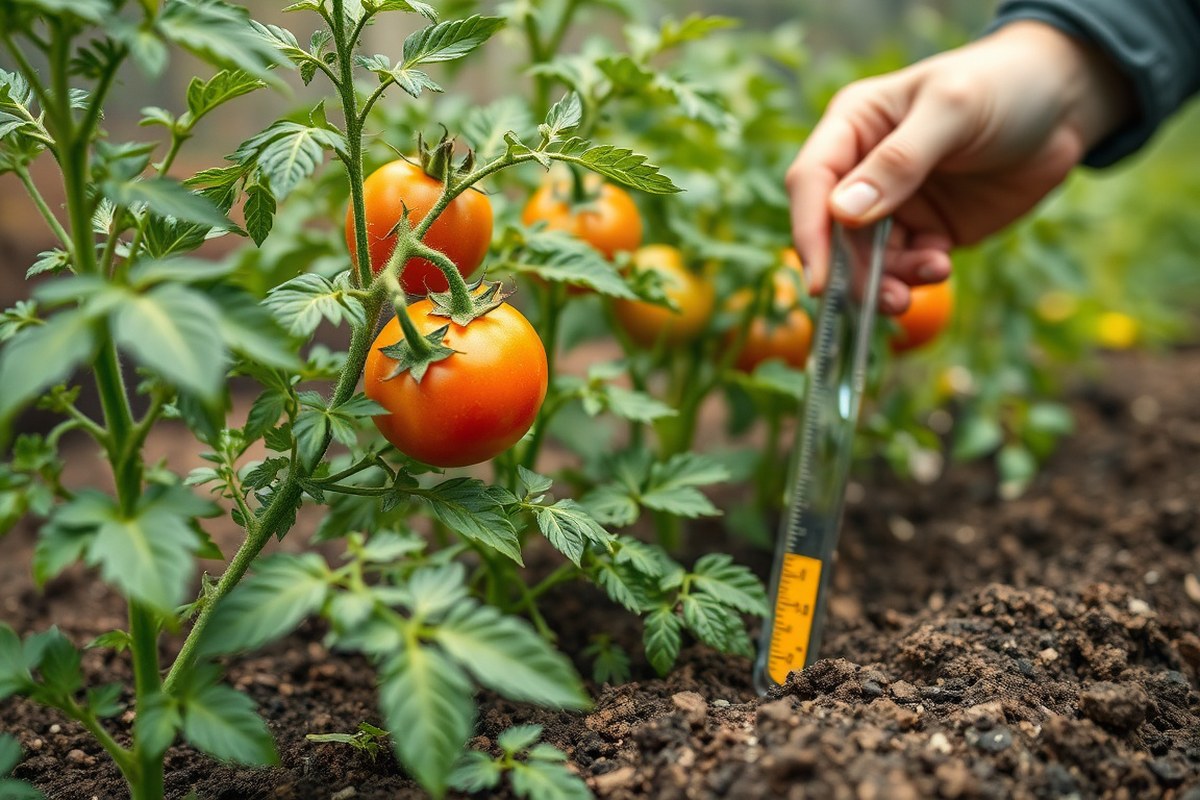
Tomatoes thrive best in soil that is slightly acidic to neutral. Their optimal pH range lies between 6.0 and 7.0, which supports healthy growth and higher fruit yields. Soil in this range allows tomato plants to absorb nutrients efficiently without toxic buildup or deficiencies.
Soil that is too acidic, below about 5.5, will stunt tomato growth and lower yields sharply. At very low pH levels, nutrients become less available and harmful elements can build up. Tomato roots struggle in strongly acidic conditions, which harm beneficial microbes important for plant health.
Keeping your garden soil near pH 6.0 to 6.8 works well for most tomato varieties. If soil tests show it’s outside this range, you can adjust the pH to help your plants thrive. Slightly acidic soil promotes nutrient uptake and supports strong tomato plants with plentiful fruit.
How Soil pH Impacts Tomato Plant Nutrition

Soil pH controls how well tomato plants can absorb essential nutrients. When soil is mildly acidic, between pH 6.0 and 6.8, nutrients like nitrogen, phosphorus, and potassium become more available. These nutrients support leaf growth, flower development, and strong root systems.
Outside this range, especially below pH 5.5, important nutrients like calcium and magnesium become locked up in the soil. That limits what the plant can use and leads to weak fruit and slower growth.
Tomatoes also rely on soil microbes to break down organic matter and release nutrients. These tiny helpers work best in a pH range close to neutral. Soil becomes too acidic, and microbial activity slows down a lot.
That means less nutrient release and poorer soil health. This makes it harder for tomato plants to get enough food.
Even if the soil has nutrients, plants struggle over time. Low microbial activity can also reduce root health, making plants more vulnerable to disease.
Excessive acidity can raise harmful elements such as aluminum and manganese to toxic levels. This toxicity hurts roots and disturbs nutrient uptake. When calcium is missing, tomatoes can get blossom end rot.
It forms black, sunken spots on the fruit. Monitoring soil pH helps prevent these problems. Adding lime is a common way to raise pH slowly and improve nutrient availability.
A 50-pound bag usually costs $10 to $15. It treats around 1,000 square feet of soil. Adjusting pH in stages over weeks ensures you don’t shock plants or soil life.
Always test your soil’s pH before planting tomatoes. Adjusting it after plants grow is tougher and less effective.
Recognizing Signs of Soil That’s Too Acidic for Tomatoes
Tomato plants growing in soil that’s too acidic often show slow growth and weak stems. They might have smaller leaves that yellow quickly. This happens because acidic soil blocks important nutrients, like calcium and magnesium, from reaching the roots.
When soil pH falls below 6.0, tomatoes struggle to absorb nitrogen, phosphorus, and potassium. This nutrient shortage stunts fruit development and lowers yield. Blossom end rot is a dark, sunken spot on tomato bottoms.
It happens when the plant lacks calcium. Acidic soil often causes this problem.
- Slow, stunted plant growth
- Yellowing leaves, especially older ones
- Blossom end rot on fruits
- Leaves curling or showing brown edges
- Poor fruit set or small, misshaped tomatoes
- Thin, weak stems and root damage
Very acidic soil also releases aluminum and other harmful metals into the root zone. These damage tiny roots and make absorption problems worse. Roots struggling in acid soil will look stunted or brown if you dig carefully.
Test soil pH regularly for healthy tomato growth. Strongly acidic soil reduces fruit and plant health. Avoid letting your soil become too acidic.
Getting the pH closer to the sweet spot of 6.0 to 7.0 helps tomatoes grow strong and productive. That sweet spot supports availability of key nutrients and keeps toxic metals locked away.
How to Test Your Garden Soil pH for Tomatoes
Testing your garden soil pH is a straightforward way to check if it’s right for tomatoes. You can use home kits or send samples to labs for precise results. Doing this before planting lets you adjust the soil for better tomato growth.
Collecting a Representative Soil Sample
Get soil samples from several spots where you want to plant tomatoes. This mix gives a clearer picture of your soil’s overall pH. Avoid sampling right after fertilizer or lime application to prevent skewed results.
Samples should come from 4 to 6 inches deep, the root zone tomatoes will use. Gather soil with a clean shovel or trowel. Mix these samples together in a clean bucket for testing.
Using Home pH Test Kits and Meters
A good soil pH test kit costs less than $30 at most garden stores or online. Kits include test strips or probes that react to your soil’s acidity or alkalinity. Follow the instructions carefully to get an accurate reading.
Here’s how to do a simple home test:
- Remove debris and stones from your mixed soil sample.
- Place 1 to 2 teaspoons of soil into a clean container.
- Add distilled water to create a muddy slurry, about twice the soil amount.
- Let the mix settle for a few minutes.
- Dip the test strip or probe into the slurry.
- Wait the recommended time, usually 30 seconds to 2 minutes.
- Compare the strip color to the provided chart or read the digital value.
Interpreting Test Results Accurately
Tomatoes thrive in soil with a pH from 6.0 to 6.8, which is mildly acidic. Soil with a pH lower than 5.5 can harm your plants and reduce nutrient uptake. Use lime or similar products to boost soil pH when tests show it is too low.
Test your soil pH every 2 to 3 years or before each new tomato planting season. Regular checks catch changes and help you adjust naturally over time. After adding amendments, allow 2 to 3 months before testing your soil again to ensure proper adjustment.
Raising Soil pH: Effective Ways to Reduce Acidity for Tomatoes
To raise soil pH for tomatoes, add alkaline materials like agricultural lime. Lime gently neutralizes soil acidity, making it easier for tomatoes to absorb nutrients. Applying lime properly can improve tomato growth within a few weeks.
Using Agricultural Lime and Types Explained
Agricultural lime, also called calcitic lime, raises soil pH by neutralizing acids. Dolomitic lime is a common variant that also adds magnesium, which benefits tomato plants. Add 2 to 5 pounds of lime per 100 square feet.
The amount depends on your soil’s acidity level. Test soil to know the exact amount.
Incorporate lime into the top 6 inches of soil before planting tomatoes for best results. Spread it evenly, then turn the soil to mix thoroughly. Avoid adding lime blindly; test your soil first to know how much is needed.
Organic Options Like Wood Ash and Compost
Wood ash can raise soil pH naturally but use it carefully. Apply about 22 pounds of lime per 1,000 square feet. Do this every few years to avoid making soil too alkaline.
This keeps your soil balanced. Wood ash also supplies potassium and trace minerals, useful for tomato health.
Compost improves soil structure and adds nutrients without sharply changing pH. Adding 2 to 4 inches builds organic matter and can gently buffer acidity. Compost also supports beneficial microbes that help tomatoes thrive.
Timelines and Expected Results for Amendments
Lime takes about 2 to 4 weeks to raise soil pH noticeably. Dolomitic lime works on a similar schedule, with added magnesium effect. Wood ash’s impact varies but generally acts over several weeks, releasing nutrients gradually.
Adding compost gives immediate benefits to soil texture and nutrient supply, though pH changes happen slowly. Expect to see healthier tomato growth once the soil pH reaches 6.0 to 6.8. Regular soil testing helps track progress and avoid overapplication.
| Amendment | Primary Effect | Typical Application Rate | Time to See Change |
|---|---|---|---|
| Agricultural lime | Raises pH | 2, 5 lb per 100 sq ft | 2, 4 weeks |
| Dolomitic lime | Raises pH + adds Mg | 2, 5 lb per 100 sq ft | 2, 4 weeks |
| Wood ash | Raises pH, adds potassium | 22 lb per 1,000 sq ft, every few years | Several weeks |
| Compost | Buffers pH, adds organic matter | 2, 4 inches incorporated | Immediate to weeks |
Test soil before applying lime. Never add too much at once to avoid over-alkalizing.
Choosing Tomato Varieties Based on Soil pH Tolerance
Some tomato varieties handle a wider pH range better than others. Patio and beefsteak tomatoes are known to tolerate slightly acidic to mildly alkaline soils. This helps you pick the best plants if your garden soil isn’t ideal.
Cherry Tomatoes and pH Preferences
Cherry tomatoes usually prefer soil close to neutral or slightly acidic, around pH 6.0 to 6.5. They can tolerate a bit of variation but grow best when soil matches that sweet spot. Your soil pH is above 7, which means it’s alkaline.5 or below 5.5, you may see slower growth or less fruit.
Growing cherry tomatoes in slightly acidic soil works fine. However, if the soil is too acidic, nutrient deficiencies may show up. You can fix this by adding lime or using fertilizers suited for acidic soils.
Patio and Compact Varieties Tolerance
Patio tomatoes stand out because they tolerate higher pH soil. They can grow well in soil up to pH 8.0, which is fairly alkaline. These tomatoes work well for alkaline soil.
They grow fine in your garden. You can also plant them in containers.
Their compact size also fits container growing, where soil pH is easier to manage. Regularly test the potting mix to catch pH shifts before they hurt the plants. Chelated fertilizers help keep iron available in alkaline soils for patio tomatoes.
Indeterminate vs Determinate Tomato pH Needs
Beefsteak tomatoes, usually indeterminate, tolerate a wider pH range (5.5 to 7.5) than some other types. They prefer slightly acidic soil.
But this range means they can still fruit well in less acidic soils. That extra pH flexibility helps if you can’t adjust your garden soil easily.
Determinate tomatoes, including many smaller varieties, tend to prefer soil closer to the optimal 6.0, 6.5 range. They might show reduced yields if the soil is too acidic or alkaline. Adjusting your soil pH or choosing a matching variety boosts your chance for a good harvest.
Here is a quick guide on tomato types. It shows their pH tolerance ranges. Use this to pick tomatoes that grow well in your soil.
| Tomato Variety | Preferred Soil pH Range | Notes |
|---|---|---|
| Patio Tomatoes | 6.0 to 8.0 | Tolerate alkaline soil well, good for containers |
| Beefsteak Tomatoes | 5.5 to 7.5 | Large fruits, wider pH tolerance than others |
| Cherry Tomatoes | 6.0 to 6.5 (ideal) | Prefer slightly acidic, less tolerant of extremes |
Check your soil pH before selecting tomato types. Using varieties that match your soil pH range saves time and improves harvest. Adjust soil pH or use fertilizers to fix minor mismatches.
How Organic Matter and Compost Affect Soil pH for Tomatoes
Adding compost and organic matter helps keep your soil’s pH stable. Compost doesn’t usually change acidity much.
But it buffers the soil, preventing sudden pH shifts. This steady pH helps tomatoes access nutrients better, supporting healthy growth.
Organic matter like peat moss and pine needles can slightly increase soil acidity. Your soil being too alkaline means adding these materials helps. They push pH closer to the ideal 6 for tomatoes.
This adjustment improves nutrient uptake significantly.0 to 6.5 range. Work 2 to 3 inches of compost into the top 6 to 8 inches of soil.
Doing this before planting builds good soil texture. It also raises fertility for better tomato growth.
Spent coffee grounds are nearly neutral in pH but add valuable organic matter and nitrogen. Mix them evenly into your soil instead of dumping in large piles. Too much fresh organic material can cause nitrogen lock temporarily.
This slows tomato plant growth at first. Let soil settle before expecting speedy growth.
Compost also improves your soil’s ability to retain moisture and air, which tomatoes need. Work compost into your soil every year during spring planting to keep soil nutrients balanced. Soil lacking organic matter drains poorly or stays too wet.
This raises chances for root problems and nutrient troubles. Adding organic matter improves drainage and health.
Common Soil pH Mistakes and How to Fix Them
One common mistake is overliming the soil to reduce acidity. Adding too much lime raises pH above 7, causing nutrient lockout.
This leaves tomatoes unable to absorb iron, leading to yellow leaves and poor growth. Apply lime slowly and retest soil after a few weeks before adding more.
Ignoring the timing of soil amendments can also disrupt tomato growth. Lime and sulfur take time to change pH. Lime may need 3 to 6 months to adjust soil pH fully.
So add it in fall or early spring. Sulfur can take about 3 months. Applying them right before planting can stress your tomato plants.
Skipping a proper soil test before adjusting pH risks guesswork and damage. Soil varies greatly even within a small garden.
Collect samples from several spots at 4 inches deep to get an average. This prevents adding unneeded amendments that can harm tomatoes.
- Apply lime no more than 5 pounds per 100 square feet at once
- Wait at least 3 months after liming before planting tomatoes
- Use elemental sulfur sparingly, about 1 to 3 pounds per 100 square feet
- Retest soil pH every 3 months after adjustments to track changes
- Mix amendments well into the top 6 inches of soil before planting
- Avoid acidifying already neutral or alkaline soil
- Water soil after adding amendments to help them activate
Applying soil treatments in the wrong season reduces their effectiveness. Cooler soil slows chemical reactions, so warm soil above 50°F speeds up pH shifts.
Also, don’t apply lime on dry soil; moist soil spreads lime particles better. These simple steps improve pH change without overdoing it.
Overcorrecting soil pH can harm tomatoes as much as wrong pH. Brown, brittle root tips often show acid damage. But excessive lime can lead to calcium buildup and root stress.
Start with small doses and retest often to avoid this. Patience pays off with healthy tomato growth.
Test soil pH every season; don’t add more lime or sulfur without data.
Step-by-Step Action Plan for Adjusting Tomato Soil pH
Follow these steps to test and manage your tomato soil’s pH for healthy plants. Each step shows what to do and how to check if it worked.
- Before planting: Test your soil pH using a kit or lab test. A pH between 6.0 and 6.8 works best for tomatoes.
- Day 1: If your soil is below 6.0, spread lime evenly to raise pH. Check the product label for exact amounts.
- Week 1: Mix lime into the top 6 inches of soil using a garden fork. This helps lime react faster.
- Month 1: Add compost regularly to improve soil nutrients and support pH balance. Dark, crumbly compost works best.
- After 2 months: Retest soil pH before planting tomatoes. Aim for 6.0 to 6.8 again. Adjust lime if needed.
- During the growing season: Watch tomato leaves for yellowing or spotting. These signs can mean pH is off.
- Every year: Add lime or sulfur as needed based on soil tests. Keep soil in the right pH range for best growth.
Frequently Asked Questions
Do Tomatoes Like Acidic Soil?
Tomatoes grow best in soil with a pH between 6.0 and 6.5. This mild acidity helps them take in nutrients effectively and stay healthy.
Can Adjusting Soil pH Improve Tomato Taste?
Yes, soil pH affects nutrient uptake, which influences tomato flavor. Keeping pH slightly acidic helps tomatoes taste sweeter.
Is Acidic Soil Bad for Tomato Roots?
Extremely acidic soil can harm tomato roots by limiting nutrients. Aim for a pH near 6.0 to avoid root problems.
Does Acidic Soil Increase Tomato Disease Risk?
Very acidic soil may weaken tomato plants, raising disease risk. Balanced pH supports healthier, more resistant tomato plants.
Can Rain Make Tomato Soil More Acidic?
Heavy rain can leach nutrients and lower soil pH over time. Monitoring soil pH after rainy periods helps maintain proper acidity.
Are Lime or Sulfur Better to Balance Tomato Soil pH?
Lime raises soil pH to reduce acidity, sulfur lowers it. Choose based on your current soil pH and tomato needs.
The Bottom Line
Tomatoes do best in soil that’s slightly acidic to almost neutral. Testing your soil pH is quick and helps you plant with confidence. Start by testing your garden soil this week to give your tomatoes a healthy boost.