How Much Does a Yard of Mulch Weight? Complete Guide with Tips and Tables
Wondering how much does a yard of mulch weight? The answer depends on the mulch type and moisture content.
Most wood-based mulches weigh between 400 and 800 pounds per cubic yard when dry. For practical planning, assume about 600 pounds per yard of hardwood mulch under normal conditions.
Straw mulch is much lighter, around 350 to 500 pounds dry. But it can more than triple in weight when wet.
Rubber mulch stays steady near 1,150 pounds since it doesn’t absorb water. Knowing these differences helps you choose the right mulch and avoid hauling too heavy loads.
Always check if mulch is dry or wet before delivery to avoid surprises. Start by estimating mulch weight using type and moisture to stay safe during transport. This simple step can save you from vehicle overload and extra trips.
Key Takeaways
- Standard wood mulch weighs about 600 pounds per cubic yard when dry.
- Straw mulch is light dry but triples weight when wet.
- Rubber mulch weight stays constant regardless of moisture.
- Wet mulch can weigh twice as much as dry mulch.
- Check mulch moisture before hauling to avoid overloading.
- Multiply dry weight by two for saturated mulch weight estimates.
How Much Does a Yard of Mulch Weigh in Pounds?
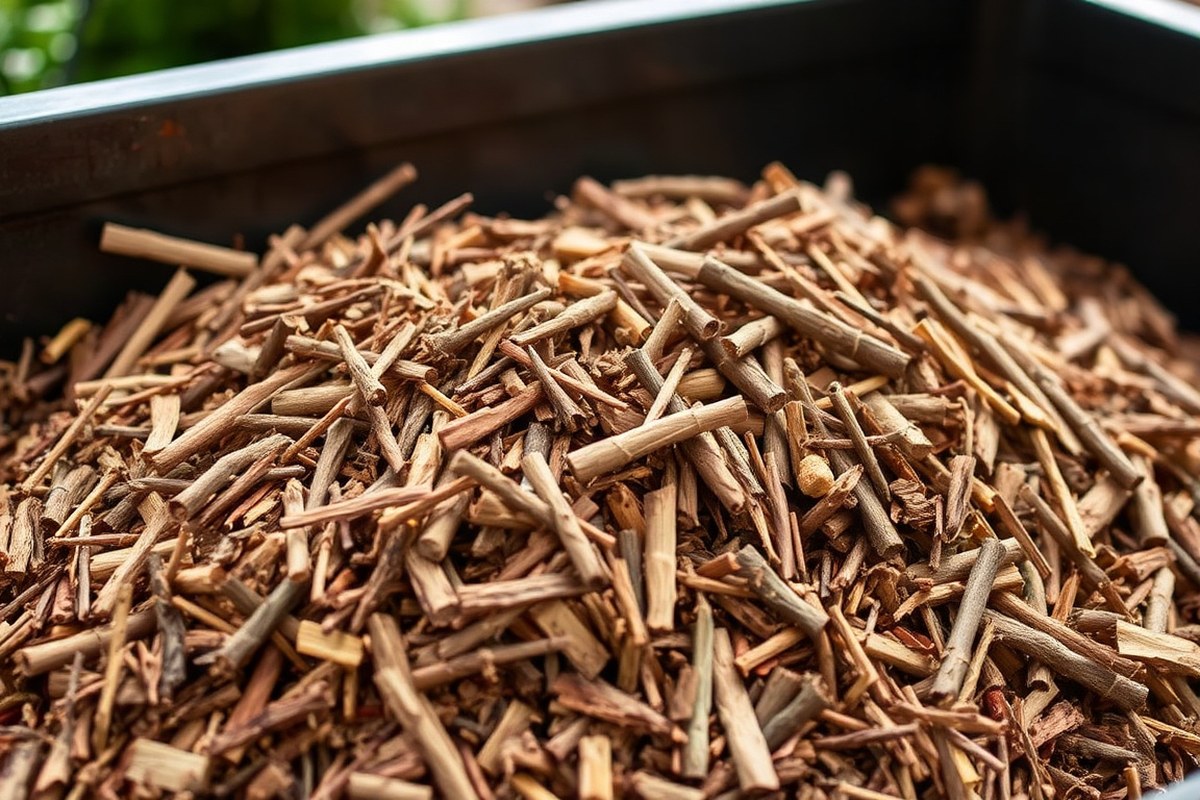
Most wood mulch weighs between 400 and 800 pounds per cubic yard when dry. After rain or saturation, its weight can increase to 800, 1,000+ pounds.
Wet mulch often weighs 50% to 80% more than its dry version. So moisture matters a lot.
Here’s a table with common mulch types. It shows dry and wet weight ranges per cubic yard. Use it to estimate how heavy your bulk mulch might be depending on type and moisture.
| Mulch Type | Dry Weight (lbs/yd³) | Wet Weight (lbs/yd³) | Notes |
|---|---|---|---|
| Shredded Hardwood | 500, 700 | 800, 1,000+ | Common bulk mulch, weight doubles when wet |
| Cedar Mulch | 400, 700 | 700, 900 | Lighter to midweight; wet weight increases moderately |
| Pine Bark Nuggets | 350, 500 | 600, 800 | One of the lighter mulches, less absorption |
| Rubber Mulch | 1,150 | 1,150 | Non-absorbent, weight stays constant wet or dry |
| Dry Cypress Mulch | 350, 550 | N/A | Generally light, wet weight varies by saturation |
| General Wood Mulch | 400, 800 | 800, 1,000+ | Good rough estimate for calculations |
For a quick estimate, expect about 600 pounds per cubic yard for dry hardwood mulch. Wet mulch doubles this, possibly reaching over 1,000 pounds. Rubber mulch is an exception, staying at about 1,150 pounds no matter what.
The wide weight range means you should know the mulch type and moisture before hauling. Wet mulch can easily overload your truck if you assume dry mulch weight. That’s why ordering mulch and planning transport requires these exact weight checks.
What Types of Mulch Affect the Weight Most?

Mulch weight varies a lot depending on the material. Wood-based mulches usually weigh between 250 and 800 pounds per cubic yard.
Rubber mulch is much heavier, often weighing 800 to 1,250 pounds per cubic yard. Straw mulch weighs the least, often just 100 to 200 pounds dry.
Dyed mulches weigh roughly the same as natural hardwood mulch. The dye doesn’t add much weight.
Compost mulch tends to be heavier than wood mulch, ranging from 600 to over 1,000 pounds. The differences matter if you haul mulch yourself.
| Mulch Type | Dry Weight (lbs/cubic yard) | Wet Weight (lbs/cubic yard) |
|---|---|---|
| Shredded Hardwood | 400, 700 | 800, 1,000+ |
| Pine Bark Nuggets | 350, 500 | 600, 800 |
| Rubber Mulch | 800, 1,250 | 800, 1,250 (no change) |
| Straw Mulch | 100, 200 | 900, 1,400+ |
| Compost Mulch | 600, 1,000 | 1,000, 1,600+ |
| Dyed Hardwood Mulch | ~450 | ~700, 900 |
Wood chips weigh less than rubber mulch, roughly half as much dry. Rubber mulch’s weight barely changes with moisture. It is made from recycled tires that don’t soak up water.
Straw mulch is very light dry but absorbs water fast. After rain, a yard of straw can weigh over 1,400 pounds.
Compost mulch is dense and heavier than pure wood products. It often holds moisture, adding significant weight.
Dyed mulches typically match the weight of natural hardwood mulch. So you don’t gain or lose weight by choosing dyed over natural mulch.
Check how wet your mulch might get before hauling. Wet mulch is much heavier and can overload your vehicle.
How Does Moisture Change the Weight of Mulch?
Wet mulch can weigh up to 50 to 60 percent more than dry mulch. Water adds significant weight because it weighs about 1,685 pounds per cubic yard. Rubber mulch barely changes weight since it does not absorb water.
Water Absorption Rates by Mulch Type
Wood-based mulches like shredded hardwood or bark absorb water well. They soak up moisture through their porous surfaces and fibers.
Rubber mulch is made from synthetic materials that repel water. Its weight remains almost the same whether dry or wet.
Some types like pine bark hold less water than hardwood. They still get heavier when wet. Soil and leaf mulch can also add moisture but less predictably.
Weight Increase Percentages After Rain
Shredded hardwood mulch weighing 600 pounds dry can climb to 900 or 1,000 pounds after rain. This represents a 50 to 60 percent increase in weight.
Absorbing just 20 percent water by volume adds over 300 pounds per cubic yard. This weight jump affects hauling capacity and costs.
Rubber mulch weighs about 800 to 1,200 pounds per cubic yard. Moisture doesn’t affect its weight. This steady weight makes transport easier to plan.
Estimating Wet Mulch Weight for Transport
Start by knowing your mulch’s dry weight, then multiply by 1.5 to 1.6 for wet mulch. Dry hardwood mulch weighs about 600 pounds per cubic yard. When wet, it rises to 900 to 960 pounds.
Use your mulch supplier’s information on typical moisture content if available. Assume wood mulches get about 50 percent heavier after rain.
Keep rubber mulch estimates steady regardless of moisture. Wet mulch adds 300 to 400 pounds extra per cubic yard. Your vehicle or trailer must handle this extra load.
How to Convert Bagged Mulch Weights to Cubic Yards?
Thirteen and a half 2-cubic-foot bags add up to one cubic yard of mulch. Each bag weighs between 20 and 40 pounds when dry, depending on mulch type and moisture.
Multiply the number of bags by the average weight per bag. This gives you the total weight in pounds for the yard.
Standard Bag Sizes and Volumes
Mulch bags come in sizes like 1, 1.5, 2, and 3 cubic feet. The common bag size you see in stores is 2 cubic feet. You need 13.5 bags of 2 cubic feet mulch to equal one cubic yard.
Here’s a quick table showing bags per cubic yard for popular sizes:
| Bag Size | Bags per Cubic Yard |
|---|---|
| 1 cu ft | 27 |
| 1.5 cu ft | 18 |
| 2 cu ft | 13.5 |
| 3 cu ft | 9 |
You use these figures to convert bags to cubic yards easily.
Typical Weight per Bag Dry and Wet
Weight varies with bag size and moisture content. A 2 cubic foot bag usually weighs between 20 and 30 pounds dry. Mulch weight can climb to about 40 pounds when damp or wet.
Here’s an overview of weight ranges per bag size, including dry and wet conditions:
| Bag Size | Dry Weight (lb) | Wet Weight (lb) |
|---|---|---|
| 1.5 cu ft | 15, 25 | Up to 35 |
| 2 cu ft | 20, 30 | Up to 40 |
| 3 cu ft | 30, 40 | Up to 55 |
Knowing these numbers helps you estimate weights more precisely for hauling and handling.
Worked Example: Calculating Total Weight
You want to buy mulch in bags for a 1 cubic yard space. You plan to use 2 cubic foot bags that weigh about 25 pounds dry each. Here’s how to estimate the total dry weight.
Follow these steps to get your total mulch weight from bags:
- Determine the volume needed in cubic yards (for example, 1 yard).
- Find the bag size you want to use (here, 2 cubic feet).
- Multiply the cubic yards by the number of bags per yard (13.5 bags).
- Estimate the weight per bag (25 pounds dry average).
- Multiply the number of bags by the weight per bag (13.5 × 25 = 337.5 pounds).
- Consider if mulch is likely to be damp. Add roughly 30% to weight for wet mulch.
- Adjust your totals if you expect wetness, storage time, or mulch type differences.
One cubic yard of dry, bagged mulch weighs between 270 and 400 pounds. This depends on the moisture content in the mulch. Expect mulch weights near or just above 400 pounds when the mulch is damp.
Can Your Vehicle Safely Haul a Yard of Mulch?
Half-ton pickups like the Ford F-150 usually carry between 1,200 and 1,700 pounds safely. You can haul about 1 to 2 cubic yards of dry mulch. This amount does not overload the bed.
It keeps your truck safe and stable. Wet or heavy mulch reduces how much you should load to avoid exceeding the payload limit.
Three-quarter-ton pickups raise the limit to around 2,200 to 3,200 pounds. These trucks can hold roughly 2.5 yards of dry mulch, offering more room for bigger projects. One-ton pickups handle even more, lifting 3,500 to 5,500 pounds safely, meaning 2.5 yards or more depending on mulch type.
Your vehicle’s payload includes passengers and gear, not just the mulch. Overloading risks tire blowouts, brake trouble, and steering loss, so load carefully. Using a trailer with a high weight rating helps a lot.
This is true if you need 5 yards or more. It makes heavy loads easier to handle.
- Check your pickup’s payload rating in the owner’s manual or door sticker.
- Subtract passenger weight and any tools or gear in the bed.
- Estimate mulch weight using about 500, 700 pounds per cubic yard for dry hardwood.
- Cut back volume when mulch is wet, about 25% to 50% heavier.
- Use a tarp or liner in the truck bed to protect paint from staining.
- Secure your load to prevent shifting during transport.
- Drive slower and brake earlier with heavier loads to maintain control.
Never guess your truck’s payload. Know exact limits to avoid damage. Overloading can also cause danger on the road.
For example, 1 yard of dry mulch weighs roughly 700 pounds, fitting well in most half-tons. A 5-yard wet load can weigh around 4,000 pounds. This weight overloads most trucks.
Overloads increase hazards when driving. Match mulch weight to your vehicle’s payload for safe hauling.
It keeps your truck in good shape. This prevents costly breakdowns and accidents.
How to Calculate Mulch Needed and Expected Weight for Your Project
Measure the area of your project first. Then choose how deep the mulch should be. Use these to estimate mulch needed and total weight.
Convert this into cubic yards, then adjust for settling and compaction before estimating the weight. These steps help you order the right amount without surprises during delivery or hauling.
Measuring Area and Desired Depth
Start by measuring the length and width of the area to be mulched. Use feet for these measurements to keep it simple. Pick your mulch depth.
Most use between 2 and 3 inches. This gives good coverage and moisture.
Depth matters because it affects how much mulch fits in the space. A thin layer might not control weeds well.
Too much mulch wastes material and adds unnecessary weight. Stick to recommended depths to get the best results.
Calculating Cubic Yards Required
Convert the area size and depth into a volume number. This shows how many cubic yards you’ll need.
Since one cubic yard equals 27 cubic feet, use that to translate your measurements. Follow these steps to find your mulch volume:
- Multiply the length and width of your area in feet to get square feet.
- Convert the desired mulch depth from inches to feet (divide inches by 12).
- Multiply the square footage by the depth in feet for cubic feet.
- Divide the cubic feet by 27 to get cubic yards needed.
For example, covering 100 square feet with 3 inches of mulch means 100 × 0.25 = 25 cubic feet. Divide 25 by 27 for about 0.93 cubic yards. Round up to 1 cubic yard to avoid shortage.
Adjusting for Mulch Settling and Compaction
Mulch settles over time, so order extra to keep your desired depth. Plan for about 10 to 20 percent more mulch to allow for compaction. Some mulches compact more quickly, especially finer shredded types.
Mulch weight is heavier than dry weight by about 50 percent. Keep this in mind if you haul it yourself.
Moisture in bulk mulch raises weight significantly. Knowing this helps prevent overloading your vehicle or underestimating delivery needs.
Following these steps makes sure you buy enough mulch and manage its weight well. This avoids extra trips, protects your equipment, and saves time on your landscaping project.
What Practical Tips Help Avoid Mulch Hauling Mistakes?
Underestimating mulch weight can cause serious hauling problems. You might overload your vehicle, risking damage or unsafe driving. Expect mulch to weigh more when wet.
Rainfall can triple its weight. This happens especially with types like straw.
To avoid extra trips or unsafe loads, plan hauling based on the heaviest expected mulch weight. It’s best to use the upper end of weight estimates when hauling after wet weather.
For example, dry wood mulch weighs about 600 to 800 pounds per yard. But wet mulch can exceed 1,000 pounds.
Mulch stored outside often absorbs moisture. Before loading, check if mulch feels damp or heavy. Spread wet mulch out to dry.
Or cover it with a tarp. This helps reduce water weight. Carry less at a time if you can’t dry it first to avoid vehicle strain.
- Always ask your supplier if mulch has been recently rained on or stored wet
- Use a scale or weigh your load on a public scale before driving long distances
- Load mulch evenly to avoid axle overload on trucks or trailers
- Cover mulch during transport to prevent extra wetting from rain
- Plan mulch delivery or pickup for dry weather whenever possible
- Calculate mulch volume carefully. One cubic yard can weigh from 600 to over 1,400 pounds
- Request weight estimates specific to your mulch type and local conditions
Talk clearly with your supplier about mulch moisture and weight. This helps you plan vehicle capacity better. Insist on a smaller load if mulch is wet on delivery.
Ask for delivery later when it’s dry. This avoids unsafe, overloaded hauls and saves time and money.
Good mulch storage means keeping it under cover and off the ground. Use pallets or weed barrier underneath to avoid soaking.
Doing so keeps weight closer to dry mulch levels and makes hauling safer and more predictable. Adjust your decisions by season and weather forecasts to prevent surprises at the job site.
What Questions to Ask Your Mulch Supplier About Weight and Delivery
Ask your mulch supplier about the type of mulch they offer and its moisture level. This helps you estimate the weight more accurately.
Hardwood mulch usually weighs around 600 pounds per cubic yard. But wet mulch can weigh much more.
Clarify delivery limits such as maximum load size and extra fees. Delivery trucks and local rules can restrict how much mulch you get at once. Knowing these details avoids surprises and helps you plan transport or storage.
When ordering bagged mulch, confirm the volume and weight per bag. Suppliers often list the weight on the bag.
But double-check to make sure you get the right amount for your project. This also helps compare bulk vs. Bagged options.
- What type of mulch do you sell and is it freshly delivered?
- How moist is the mulch, and can I see or test it before purchase?
- What is the total weight per yard or per bag?
- Do you charge extra for deliveries over a certain weight?
- What vehicle size or weight limits affect delivery?
- Can you mix moisture levels or mulch types for my order?
- What are your policies if the weight or quality differs on delivery?
On delivery day, inspect the mulch for dampness and uniformity. Wet mulch feels heavier and darker.
Use a scale or ask drivers to verify total weight when unloading. This helps avoid overloading your vehicle or paying for more mulch than you need.
Check local weight limits before deciding between bulk or bagged mulch to avoid fines.
Step-by-Step Action Plan for Hauling Mulch Safely
Follow these steps to pick, measure, and haul mulch without surprises. Each step moves you closer to finishing your project right.
You get the right amount and weight of mulch. This helps your garden look its best.
- Before you order: Measure your garden or beds carefully. Know the cubic yards you will need. This keeps your mulch order accurate. Use a tape measure for length and width and estimate depth for the mulch layer.
- After measurements: Check the mulch type and moisture content with your supplier. Ask about average weight per cubic yard to avoid overloads.
- Day of delivery: Weigh a small sample or check supplier’s scale ticket to confirm mulch weight. Adjust your load if mulch feels heavier than expected.
- Before hauling: Confirm your vehicle’s weight capacity in the manual or online. Plan loads smaller than your max to stay safe on the road.
- During loading: Load mulch evenly to keep balance and avoid shifting. Use a tarp to cover the mulch and prevent loss during transport.
- On the road: Drive slowly and watch for changes in vehicle handling. Stop and check the load if the vehicle feels unstable or heavy.
- At delivery: Unload mulch carefully to keep your yard and driveway clean. Use gloves and tools to spread mulch without strain or injury.
- After spreading: Monitor the mulch moisture over time and replenish as needed. Proper moisture helps mulch last longer and stay lighter to handle.
Frequently Asked Questions
How Do Different Mulch Textures Impact Hauling Safety?
Coarser mulches like wood chips spread weight unevenly, risking load shifts. Fine mulches pack tighter, distributing weight more evenly. Knowing texture helps you load mulch safer.
Is Mulch Weight a Factor in Application Tools Choice?
Yes, heavier mulch limits your use of manual tools for large jobs. Lighter mulches are easier to spread by hand or shovel. Pick tools that suit mulch weight to avoid strain.
Does Mulch Compaction Change the Volume When Delivered?
Mulch can settle or compact after delivery, cutting volume up to 10%. This means you may need to order extra to cover your area. Know this to avoid a shortfall in your project.
Can Mulch Weight Influence Soil Erosion Control Effectiveness?
Heavier mulch stays put better in windy or rainy conditions, reducing erosion. Lighter mulch may blow or wash away quicker. Select mulch weight based on erosion needs.
Does Mulch Weight Affect How Quickly It Breaks Down?
Generally, lighter mulches like straw decompose faster than dense wood mulches. Weight hints at density and material type, which affect breakdown speed. Choose mulch weight for your gardening goals.
How Does Mulch Weight Play into Landscaping Cost Estimations?
Knowing mulch weight helps estimate transport and handling costs correctly. Denser mulch might cost more to ship even if volume is the same. Think about weight to avoid budget surprises.
Key Points to Remember
A yard of mulch weighs differently by type and moisture. So always confirm before hauling.
Start by measuring your space and getting weight info from your supplier. That way, you’ll haul safely and get your landscaping done right.