How Often Should You Water Tomatoes Plants: A Complete Guide for Best Growth
Wondering how often you should water tomato plants? For most gardeners, watering every 2 to 3 days works well.
This schedule helps keep soil moist without overwatering, which can harm the roots. Overwatering can cause issues like root rot or fungal diseases.
Tomatoes need about 1.5 to 2 inches of water each week, including rainfall. The best approach is deep watering sessions instead of light daily watering. This encourages roots to grow deeper and makes plants more drought-resistant.
Start by checking the soil with your finger about 1 to 2 inches deep. Only water again when that soil layer feels dry to avoid soggy soil and plant stress. Mulching can also help retain moisture and reduce how often you need to water.
Key Takeaways
- Water tomato plants every 2 to 3 days as a general rule.
- Provide 1.5 to 2 inches of water weekly for tomatoes in the ground.
- Use deep watering sessions instead of daily shallow watering.
- Check soil moisture 1 to 2 inches deep before watering again.
- Adjust watering frequency during heatwaves or very dry spells.
- Mulch around plants to reduce evaporation and save water.
How Often Should You Water Tomato Plants for Optimal Growth?
Water tomato plants every 2 to 3 days to keep them healthy. This schedule fits most typical garden conditions, especially in the UK.
Check the soil before watering by sticking your finger about an inch deep. When the soil feels dry, you should water your tomatoes.
Tomatoes need consistent moisture to avoid problems like blossom end rot or split fruit. When soil dries too much, the plants stress and make smaller yields. Water your tomatoes 2 or 3 times a week.
This helps roots grow deep. Deep roots make plants stronger in hot weather.
Adjust frequency based on weather and soil type. On hot, dry days, your plants might need water every other day.
Clay soils hold moisture longer, so watering every 3 days may work. Sandy soils drain quickly, so check soil and water more often if dry.
Using a slow hose nozzle or watering wand helps you add water gently. Water the base close to the plant to reduce leaf diseases and water waste. Mulch around plants to hold moisture and lower how often you must water.
Remember that overwatering can be as harmful as underwatering. Wet soil for too long can rot roots and wilt plants. Check soil dryness often.
Water enough to keep soil moist, not soaked. This helps tomato plants grow well.
How Much Water Do Tomato Plants Need Each Week?

Tomato plants usually need about 1 to 1½ inches of water each week. This equals about 20 to 30 liters of water per square meter.
That means roughly 2 to 3 liters per plant spaced normally. The exact amount depends on the plant’s size, soil type, and weather conditions.
Smaller or younger tomato plants may need less water, closer to 1 inch per week. Mature plants and those entering fruiting stages often benefit from 1.5 inches to stay healthy. Watering should soak deeply into the soil.
It needs to reach the roots. Surface wetting is not enough.
You can use a rain gauge or simple container. They help measure how much water your tomatoes get.
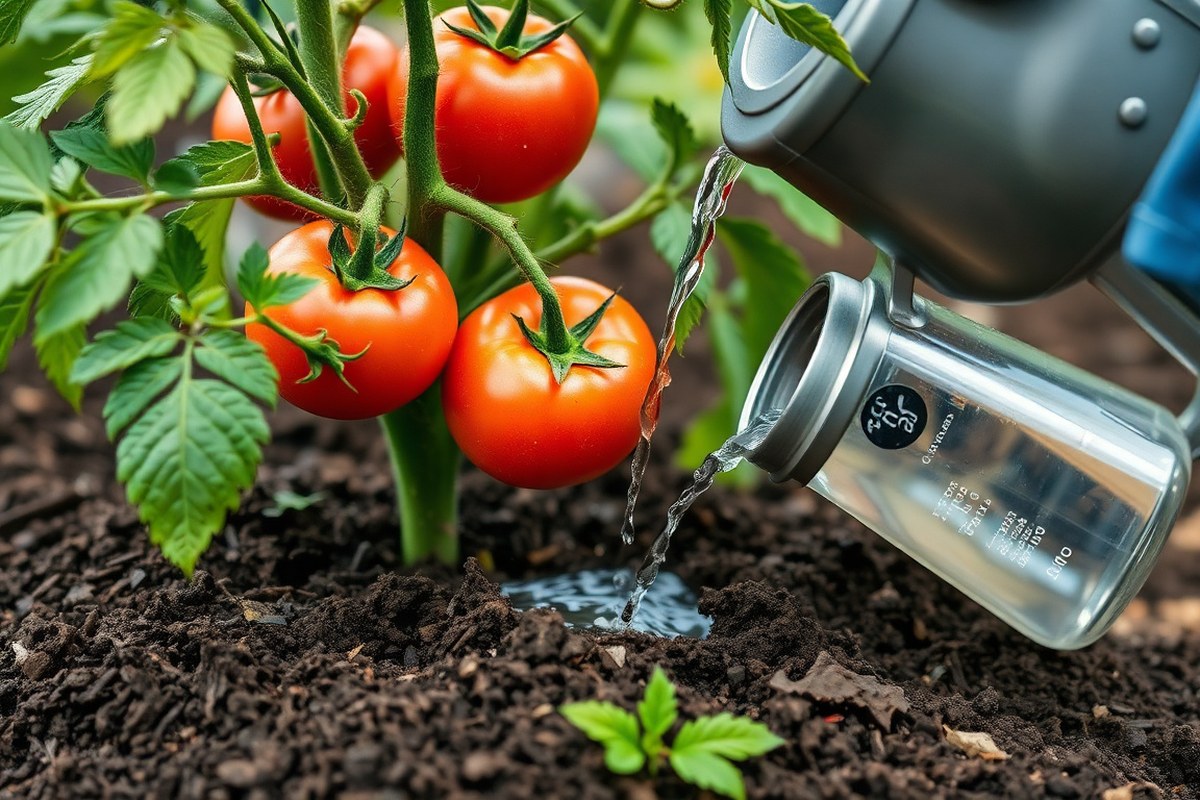
For example, if your tomatoes need 1.5 inches per week, aim to deliver that over 2 or 3 watering sessions. Use a container marked in liters to pour water around each plant evenly.
Imagine a tomato bed with four plants spaced evenly. The plants fill one square meter. The weekly need is 25 liters per square meter.
Divide that amount by four plants. Each plant needs roughly 6.25 liters weekly. Split that into two waterings, so each session delivers about 3.1 liters per plant.
Water slowly and deeply for best results. This usually takes 20 to 30 minutes depending on how you water. Use a drip irrigation system or soaker hose.
Place it around the plant bases for steady moisture. Avoid frequent shallow waterings to prevent weak roots.
Check soil moisture by feeling 1 to 2 inches below the surface before watering again. Moist soil means hold off watering.
How to Adjust Watering Based on Tomato Growth Stages
Your tomato plants need different amounts of water as they grow. Seedlings require more frequent but light watering.
Mature plants need deeper watering two to three times weekly. Before harvest, watering should decrease slightly to improve fruit flavor and prevent splitting.
Watering Tomato Seedlings and Transplants
Young seedlings need moist soil to develop roots but can’t handle heavy watering. Frequent, light watering keeps their roots damp without drowning them. Overwatering can cause seedling diseases or root rot.
Water seedlings once a day if soil feels dry on the surface. Avoid soaking; aim to keep soil evenly moist, not soggy.
Watering Developing Vegetative Plants
As your tomato plants grow taller and develop leaves, their roots reach deeper. Watering frequency can drop to every other day, but increase the amount per watering. This encourages roots to grow downward.
Plants in warmer temperatures or sandy soil may need watering more often. Use mulch to retain moisture and reduce evaporation.
Watering Fruiting and Mature Plants
Mature tomato plants need about 1 to 2 gallons per deep watering session. Water these plants thoroughly two to three times each week. This helps the roots grow deeply and supports fruit development.
Deep watering prevents stress and uneven fruit ripening. Water in the morning to reduce disease risk and water loss.
Reducing Water Before Harvest
Cut down watering a week before picking tomatoes. Less water helps improve fruit flavor and reduces cracking. Keep soil moist but avoid heavy watering near harvest.
Watch for wilting in hot weather. Plants may need some water.
Even small amounts help prevent stress. Adjust carefully based on weather and soil.
Follow this timeline for watering your tomato plants:
- Check seedling soil daily and water lightly when the top feels dry.
- Water young plants every 1 to 2 days with a little more water than seedlings.
- Apply mulch around plants after the first few weeks to hold moisture.
- Water mature plants deeply twice a week with about 1 gallon per plant.
- Increase to three times per week during hot, dry spells.
- Reduce watering one week before harvest to improve fruit texture and taste.
- Keep monitoring soil moisture and plant health, adjusting as needed.
How Climate and Soil Type Affect Tomato Watering Frequency
Soil type and climate strongly affect how often you water tomato plants. Sandy soils drain fast and need more frequent watering. Clay soils hold moisture longer and require watering less often, even during hot periods.
Watering Needs in Sandy Soils
Sandy soil drains quickly, drying out in just a few hours after watering. This means tomato roots can’t stay moist for long without new water. Plan to water sandy soil every 2 to 3 days, especially if there’s little rain.
Check the soil’s top 2 to 3 inches to see if it’s dry. When the soil surface feels dry, it’s time to water again. Sandy soil needs more frequent watering but avoid overwatering to prevent nutrients from washing away.
Watering Needs in Clay or Loamy Soils
Clay soil drains slowly. It holds moisture for 5 to 7 days. This soil stays wet longer than other types.
You usually only need to water clay soils deeply about once a week. Check if the top 3 inches are dry before watering to avoid soggy soil.
Loam soil holds moisture for 2 to 4 days and drains better than clay. Water loamy soil about twice a week. Check the top few inches first.
Only water if the soil feels dry there. Raised beds with amended soil drain moderately fast and need watering 2 to 3 times weekly.
Adjusting for Hot and Dry Weather
Hot, dry weather dries soil quickly and increases tomato water use through their leaves. Water more often during heatwaves, around every 2 to 3 days, to keep soil moist. Mulch around plants to help soil hold moisture longer and reduce watering needs.
Young tomato plants need frequent watering to build strong roots in hot weather. Keep the soil evenly moist rather than soggy.
Too-frequent watering on heavy clay during heat risks root rot. So watch soil moisture closely.
Adjusting for Rainfall or Humid Conditions
After heavy rain, pause watering to avoid overwatering and root rot. Check if sandy or loamy soil is dry 2 to 3 inches down. Only water when dry at this depth.
This helps avoid overwatering. Clay soils can stay wet longer so wait until the top 3 inches dry out.
Humid air and rain mean plants lose less water, cutting your watering frequency. Extended wet periods stress tomatoes less if soil drains well. Avoid watering during or right after rainfall to prevent soggy roots.
This simple table shows your watering schedule. It uses soil type and climate. The table helps you decide how often to water.
| Soil Type | How It Behaves | Frequency Adjustment | How to Check Readiness |
|---|---|---|---|
| Sandy soil | Drains within hours, dries fast | Water 3 times per week | Top 2, 3 inches dry = water |
| Loam soil | Holds moisture 2, 4 days | Water 2 times per week | Top 2, 3 inches dry = water |
| Clay soil | Holds moisture 5, 7 days | Water once per week deeply | Top 3 inches dry = water |
| Raised bed (amended) | Drains moderately fast | Water 2, 3 times per week | Top 2 inches dry = water |
| Mulched in-ground | Retains moisture 2, 3 days | Water every 2, 3 days | Top 2 inches dry = water |
This table shows how soil type and moisture retention decide watering schedules. Adjust the frequency based on weather changes. Test soil dryness by feeling the top inches before watering.
Best Time of Day and Methods to Water Tomato Plants
Water tomato plants early in the morning around the base only. This timing helps the soil absorb water well and keeps leaves dry. Use slow watering methods like drip irrigation, soaker hoses, or careful hand watering for best results.
Why Morning Watering Works Best
Watering tomatoes in the morning gives plants time to soak up moisture before the heat arrives. It allows wet soil and any damp leaves to dry out during the day. Dry leaves reduce the chance of fungal diseases common in tomato plants.
Morning watering also reduces evaporation loss, so more water reaches the roots. Applying water when the sun is low wastes less water than afternoon watering. This helps you water efficiently and maintain healthier plants.
Avoiding Leaf Wetness to Prevent Disease
Tomato leaves stay safest when kept dry during watering. Wet leaves create humid conditions that encourage fungal spores. Over time, this can cause leaf spots or blight, which damage your tomatoes.
Focus on watering the soil at the plant base instead of spraying leaves. Watering leaves can also wash away protective leaf hairs and increase sunburn risk. Use a watering can, hose wand, drip line, or soaker hose.
Aim the water at the base of the plant. This targets roots without wetting leaves.
Wet leaves increase fungal disease risk, so always water at the soil level.
Benefits of Drip Irrigation and Soaker Hoses
Drip irrigation and soaker hoses deliver water slowly and directly to the root zones. This method prevents runoff and ponding, which reduces disease and wasted water. Both systems are easy to set up to cover whole tomato rows efficiently.
Soaker hoses cost less and take about 30 minutes to install. Drip irrigation requires 1 to 2 hours to set up but can include timers. These timers let you water early in the morning automatically.
- Soaker hose: best for raised beds and garden rows
- Drip irrigation: great for large gardens and busy schedules
- Hand watering: good for 1 to 6 plants, low cost
- Automatic timers save time and ensure morning watering
- Both methods reduce leaf wetness and support deep watering
How to Water Deeply at the Base
Apply water slowly and steadily at the soil level near tomato stems. This encourages roots to grow deeper, which supports strong plants. Use a hose with a wand attachment or a watering can.
Place drip emitters near the plant bases for best results. This reduces water waste.
Watering too fast causes runoff and poor soil absorption. Aim for a steady soak over 10 to 20 minutes. Adding a mulch layer around the plant base helps keep soil moist and reduces evaporation.
How to Know If Your Tomato Plants Need Water Now
Stick your finger about 2 inches into the soil near your tomato plants. When the soil is dry at that depth, water your tomato plants. Wet soil at this level means your tomatoes still have enough moisture.
Look at the tomato leaves for clues. Wilting leaves usually mean the plant is thirsty.
Yellow leaves can mean either overwatering or underwatering. So check the soil before adding water.
After a rain, wait and test the soil before watering again. Check the top 2 inches of soil.
Skip watering if still moist. This helps prevent soggy soil.
- Check soil moisture daily during hot weather over 95°F (35°C).
- Feel soil 2 inches deep near the plant base.
- Observe leaves: droopy means thirsty, yellow could be too wet or dry.
- Skip watering if recent rain moistens the soil well.
- Water only if soil feels dry to the touch at root level.
- Remember greenhouse plants may need daily checks and watering.
Tomato plants have trouble absorbing nutrients from dry soil. This happens even if nutrients are there. Keeping soil moist helps plants take in nutrients better.
Feeling the soil saves you from watering too little or too much. Checking daily is practical in hot weather or when tomatoes grow fast. This simple routine helps keep your plants steady and productive.
Common Watering Mistakes and How to Avoid Them
Watering tomato plants too little slows their growth and weakens fruit development. Too much water causes root rot and fungal diseases that kill the plant. Avoid shallow daily watering because it only wets the topsoil where roots barely reach.
The soil’s top layer dries quickly, making you water often but shallowly. This leads to weak roots near the surface.
Instead, aim for deep watering that soaks 6 to 8 inches down. It encourages roots to grow deeper, helping the plant survive dry spells.
Uneven watering causes problems like blossom end rot, showing as black patches on tomato bottoms. This happens because calcium can’t get to the fruit without consistent moisture. Overwatering can split fruits and invite mold due to waterlogged soil.
- Water deeply once or twice a week instead of daily shallow sprinkles
- Check soil moisture with your finger, 2 inches below the surface
- Use slow drip irrigation or watering cans near the plant base
- Adjust watering during hot, dry weather by increasing amounts
- Avoid watering leaves to prevent fungal infections
- Less water is needed if you grow tomatoes in pots with shallow roots
Place a finger in the soil before watering to feel if it’s dry below the surface. Use slow watering methods that soak the root zone instead of hosing fast over the top. In hot weather, your tomatoes may want more water as fruit grows.
Watching your plants closely helps you avoid both underwatering and overwatering. This helps keep roots healthy and fruits strong.
It lowers risks for mold, split fruit, or stunted growth. Proper watering is one of the easiest ways to improve your harvest.
Watering Tomatoes in Containers, Raised Beds, and Different Settings
Tomato plants in containers dry out faster than those in garden soil. Containers usually need watering once or twice daily, especially in warm weather. Raised beds fall between containers and garden soil for watering.
Their soil drains well but holds less moisture than ground soil. This means they need watering more often but less than containers.
Watering frequency and volume depend on where your tomato plant grows. Soil type matters too: sandy soil dries faster, while clay soil holds moisture longer. Raised beds and containers warm up faster, which also affects how quickly plants use water.
| Growing Environment | Watering Frequency | Water Amount per Session |
|---|---|---|
| Container Plants | Once or twice a day | Water until soil is moist 6, 8 inches deep |
| Raised Beds | Every 1-2 days | Enough to keep soil moist but not soggy |
| Garden Soil | Every 2-3 days | About 5 cm (2 inches) per week total |
Containers need frequent checks for dryness because of limited soil volume. Use a finger or moisture meter to check 2, 3 inches down.
Raised beds sometimes dry unevenly. So water deeply at the roots along the entire plant row.
Efficient watering can save time and reduce water waste. Drip irrigation or soaker hoses work well for all settings. They deliver water slowly to roots, preventing runoff and keeping leaves dry to reduce disease risk.
Don’t let container soil dry out completely, it stresses tomatoes and harms fruit development.
Step-by-Step Action Plan for Watering Tomato Plants
Follow these simple steps to water your tomato plants well and keep them healthy.
- Before planting: Prepare your soil to retain moisture by mixing in compost. Check soil feels crumbly but holds some water.
- Week 1 after planting: Water daily with about 0.5 inches of water. Soil should feel moist but not soggy.
- Weeks 2-4: Water every 2-3 days with 1 inch of water each time. Look for deep, green leaves and no wilting signs.
- Flowering stage: Water every 2 days. Make sure soil stays evenly moist but not soaked.
- Fruit development: Water every 2-3 days with a steady soak to avoid cracked fruit. Check soil 2 inches down feels moist.
- Hot, dry days: Increase watering to daily in containers or raised beds. Watch leaves for signs of stress.
- Cool or rainy days: Hold off on watering to avoid waterlogging. Test soil moisture before adding water.
- Ongoing: Use morning watering to reduce disease risks. Adjust frequency based on weather and plant signals.
Frequently Asked Questions
How Often Should You Water Tomato Plants in Very Hot Weather?
In very hot weather, check daily for moisture and water if dry. Heat over 95°F stresses tomatoes, so more frequent watering helps keep them healthy.
Can You Water Tomato Plants with Just Rainwater Alone?
Yes, rainwater can work well for tomatoes and is free of chemicals. However, you might need extra watering during dry spells when rain is insufficient.
Does Watering Tomato Leaves Instead of Soil Cause Problems?
Watering leaves often promotes fungal diseases and should be avoided. Always aim water at the soil around the base for best results.
What Effect Does Mulching Have on Tomato Watering Needs?
Mulching reduces soil evaporation by 30-50%, so you water less often. A layer of straw or wood chips also keeps roots cooler and healthier.
Are Tomatoes Equally Sensitive to Overwatering and Underwatering?
Tomatoes dislike both extremes but are most harmed by overwatering causing rot. Ensuring soil drains well can prevent waterlogging and keep roots safe.
How Deep Should Watering Soak the Soil for Tomatoes?
Water deeply to soak the top 6-8 inches of soil each time. This encourages strong roots and reduces how often you need to water.
Final Thoughts
Water tomato plants regularly and watch for changes in their growth. Adjust watering based on weather and soil moisture. Start by checking soil moisture next time you tend your plants.