How Much Is a Truckload of Topsoil? A Complete Cost and Buying Guide
How much is a truckload of topsoil? Expect to pay between $200 and $600 for a typical 10- to 12-cubic-yard load. The price depends on topsoil quality, location, and delivery distance.
Topsoil prices range from $10 to $50 per cubic yard. Bulk loads cost less and are cheaper overall.
You save more buying in larger amounts. Higher quality soil with compost or screened loam can push the price over $40 per yard.
Measure the length and width of your project area first. Decide how deep the soil layer should be next.
Then calculate total cubic yards needed. Next, check if delivery fees are included, as small orders often pay more per yard.
Buying a full truckload usually saves money but prepare your site before delivery. You’ll avoid extra costs for spreading or labor if you plan ahead well.
Key Takeaways
- Expect to pay $200-600 for a 10-12 yard truckload of topsoil.
- Bulk topsoil costs $10-50 per cubic yard, varying with quality.
- Good drainage topsoil suitable for trees costs $25-42 per yard.
- Larger orders lower per-yard cost compared to small deliveries.
- Screened or compost-enriched soil costs more but benefits plants.
- Calculate yardage by measuring your project’s dimensions in feet.
How Much Does a Truckload of Topsoil Cost?
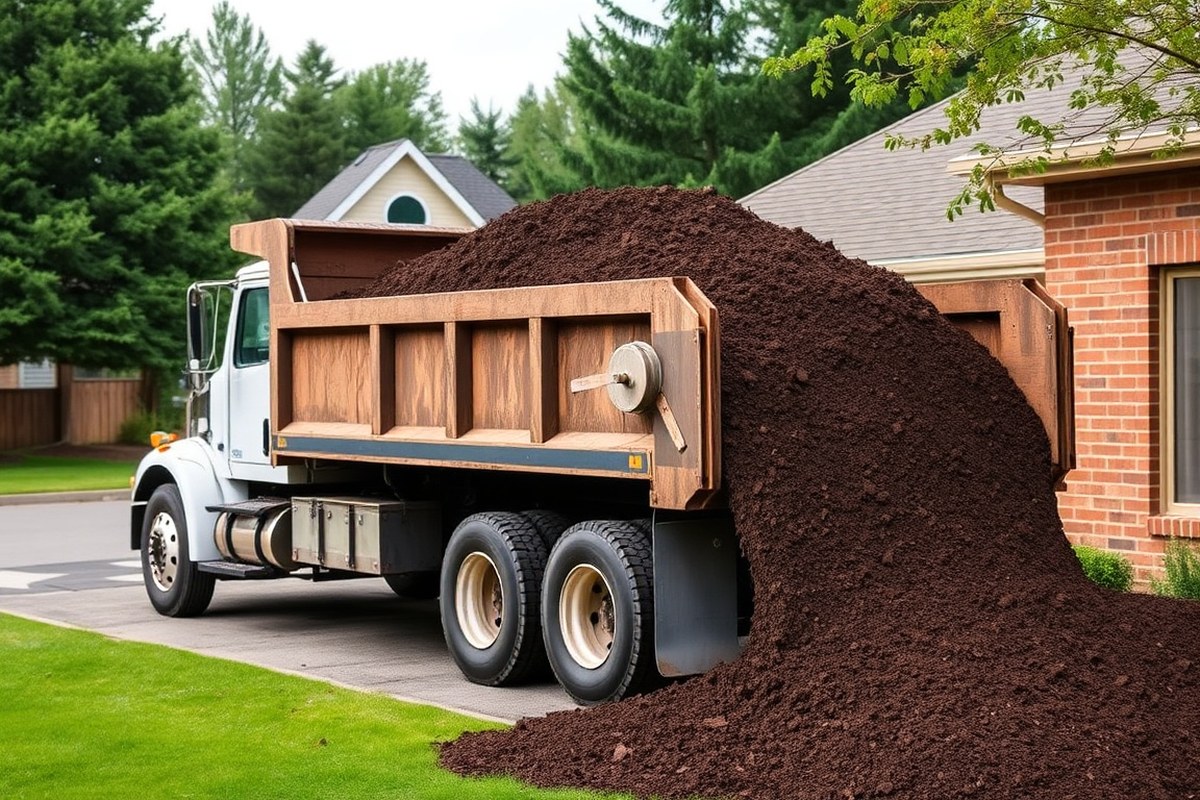
The average cost of a truckload of topsoil typically falls around $618. This price covers both the material and the delivery fees for a standard-sized garden bed quantity. Most projects range between $262 and $1,015, depending on soil quality and volume.
Topsoil pricing mainly varies by quality and how much you order. Basic, unscreened topsoil costs around $20 to $30 per cubic yard. Screened topsoil usually ranges from $30 to $50 per cubic yard.
Premium blends with added compost cost $50 to $90 per cubic yard. These mixes have organic material included. They often cost more than basic topsoil blends.
You pay by the cubic yard. Delivery often has minimum amounts, usually 3 yards or more.
Delivery fees commonly add $50 to $150 to the total, depending on distance and load size. Some suppliers include delivery in the price if you order enough volume.
The cost you see mostly covers the topsoil material and delivery. Any spreading, grading, or old soil removal tends to add separate charges beyond your truckload cost.
How to Calculate the Amount of Topsoil You Need
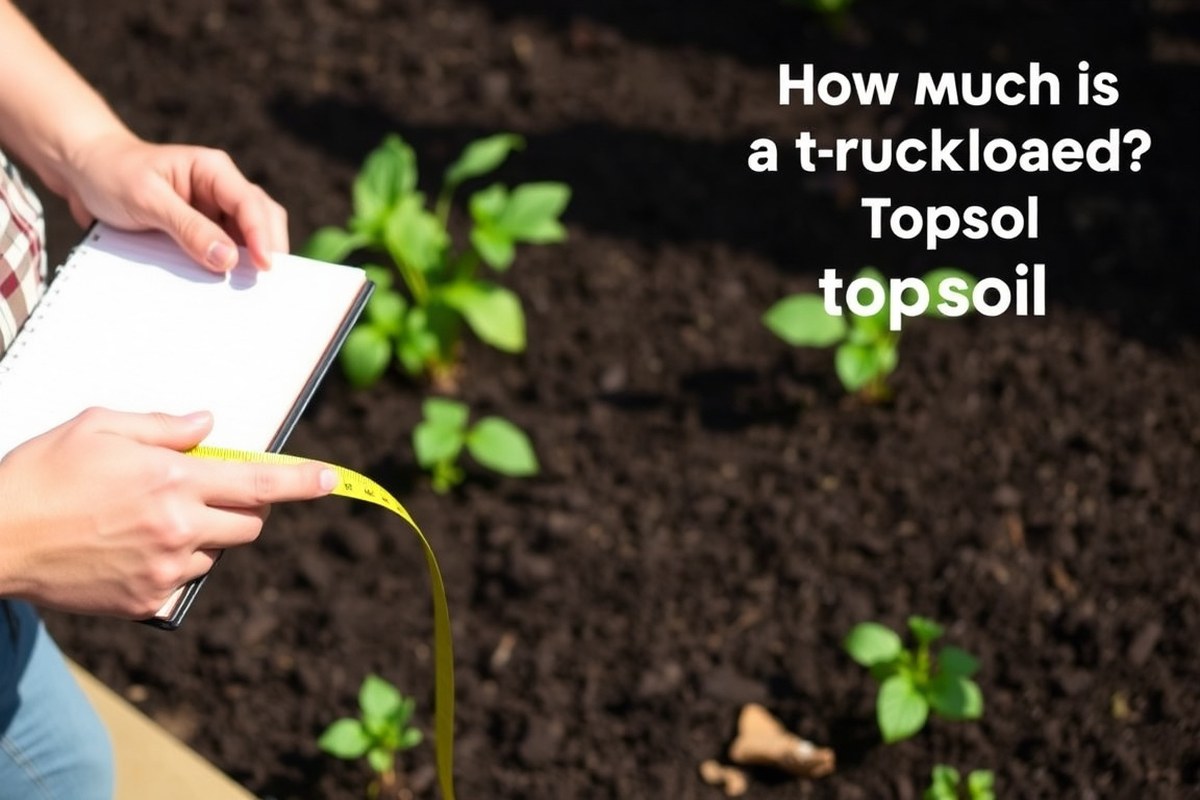
Measure the Surface Area
Measure the length and width of the area where you want topsoil. Use feet for both measurements because the calculation uses square feet. Multiply length by width to get the surface area in square feet.
If your space is irregular, break it into rectangles and add each area. This gives a better estimate than guessing. Accuracy here helps you buy the right amount of topsoil.
- Use a tape measure to find the length in feet.
- Measure the width in feet across the widest point.
- Multiply length by width to get square footage.
- For odd shapes, divide the area into rectangles, measure each, and add.
- Write down the total square feet for the next steps.
Double-check your measurements. Small errors can mean ordering too much or too little soil.
Calculate Depth in Feet
Topsoil depth is usually given in inches, but calculations need feet. Divide the depth in inches by 12 to convert it to feet. For example, 4 inches becomes 0.33 feet.
Choose your depth based on what you want to grow or improve. Lawns usually need 4 inches, while garden beds might need 6 to 12 inches. Accurate depth means healthier plants and less wasted soil.
Convert Cubic Feet to Cubic Yards
Multiply the surface area in square feet by the depth in feet to find cubic feet. Then divide that number by 27 to convert cubic feet into cubic yards. This matches delivery truck measures.
For example, a 1,000-square-foot lawn with 4-inch depth is about 333 cubic feet. Dividing by 27 gives about 12.3 cubic yards. Always round up to prevent shortages when buying.
Add 10, 15% Waste Factor
Add a waste factor to cover compaction and uneven spreading. Adding about 10 to 15% extra topsoil protects against settling and minor mistakes. This helps avoid needing second deliveries.
Multiply your cubic yard total by 1.1 or 1.15. For example, 12.3 cubic yards becomes about 13.5 to 14.1 cubic yards after adding 10 to 15%. This ensures you get enough soil for the project.
Topsoil Types and Quality That Affect Price
You’ll find different types of topsoil that affect price and use. Screened topsoil is clean and good for lawns, gardens, and flower beds. It removes rocks and clumps, creating a smooth surface that helps plants grow well.
Fill dirt or unscreened topsoil is much cheaper. It’s mostly used for grading, filling holes, or raising levels where you don’t plan to plant. It may contain stones, debris, or clay and isn’t suitable for visible planting areas.
Premium or compost-enriched topsoil costs more but feeds plants better. It’s mixed with organic matter like manure or compost, perfect for raised beds or vegetable gardens. This type gives nutrients and improves soil structure for healthy root growth.
| Topsoil Type | Common Uses | Traits |
|---|---|---|
| Screened Topsoil | Lawns, gardens, flower beds, landscaping | Clean, smooth, versatile; best for visible areas |
| Compost/Garden Mix | Vegetable gardens, raised beds, soil amendment | Nutrient-rich; supports growth of food and flowers |
| Unscreened Topsoil/Fill Dirt | Grading, filling holes, foundation backfill | Contains debris; used under hardscapes; affordable |
Balancing quality and cost means matching soil type to your project. For big grade changes, start with fill dirt for bulk. Then add 4 to 6 inches of screened topsoil on top.
This creates a good base and nutrition layer. Only pay extra for soil plants will use.
Prices range widely: fill dirt runs from $10 to $20 per cubic yard. Screened topsoil costs $25 to $45.
Premium blends with compost can reach $35 to $65. Check which type fits your budget and project goals before ordering.
Understanding Delivery Fees and Logistics
Delivery fees usually run between $80 and $150 for truckloads from 1 to 15 cubic yards. The cost depends on your distance and the truck size. Smaller loads usually face minimum delivery charges, which may make buying in bulk more cost-effective.
Trucks delivering topsoil come in several sizes. A small dump truck carries 6 to 8 cubic yards and costs around $50 to deliver.
Standard flatbed trucks hold 8 to 12 cubic yards, with delivery around $75. Large dump trucks carry 12 to 15 cubic yards at about $150 delivery fee.
Think about your driveway or drop-off area before ordering topsoil. Delivery trucks need about 10 feet of width and at least 15 feet of overhead clearance. This space avoids damage to power lines, tree branches, or your property.
- Small dump trucks: carry 5-7 cubic yards, deliver for $50
- Standard dump trucks: carry 10-12 cubic yards, deliver for $75
- Tri-axle trucks: carry 15-18 cubic yards, deliver for $150
- Minimum orders may apply for small bulk deliveries
- Check driveway width and overhead clearance before scheduling
- Plan delivery time and location with your supplier
Delivery minimums mean small jobs might cost more per yard. For tiny landscaping projects, bagged topsoil can be cheaper and easier. Bulk delivery suits larger projects because of lower per-yard cost but requires planning for truck access.
Order your topsoil ahead and confirm details with the supplier. Tell them the exact address and your preferred delivery time. This planning helps avoid delays and extra fees during drop-off.
Suppliers can recommend the best truck size for your order. They base their advice on how much soil you need. They also consider your site’s conditions.
How Heavy Is a Truckload of Topsoil and Why It Matters
One cubic yard of topsoil weighs between 1,600 and 2,600 pounds. Its weight depends on moisture and organic content, which vary by supplier and weather. A typical truckload carries around 10 to 15 cubic yards.
Expect it to weigh roughly 8 to 15 tons. The weight depends on how wet the soil is. Wet soil weighs more than dry soil.
Moisture plays a big role in topsoil weight. Dry topsoil can weigh about 1,600 pounds per cubic yard. Wet soil may weigh up to 2,600 pounds.
This difference happens because water adds extra weight without adding volume. After heavy rain, topsoil gets heavier.
It can weigh up to 50% more than dry soil. This adds extra weight to the truckload.
The soil’s weight affects both delivery and spreading. Heavier loads cost more to haul since trucks may have weight limits or gasoline use increases. You could pay extra delivery fees if your truck is close to its limit.
Plus, spreading very heavy, wet topsoil takes more time and effort. It can compact your soil and make work harder. So let wet soil dry before spreading if possible.
Knowing soil weight helps when you compare prices quoted per ton or per yard. A quote of $20 per ton nearly equals $20 to $24 per cubic yard. This applies to damp topsoil.
Prices vary with moisture content. Ask your supplier about moisture levels to avoid surprises.
Suppliers often quote by the cubic yard. But checking weight helps you understand what you’re really paying for.
Avoid overloading trucks with very wet topsoil. It raises delivery charges. This also risks fines on the road.
Preparing Your Site and Scheduling Delivery
Preparing your yard before topsoil delivery saves time and cuts extra costs. Clear the area for delivery trucks to get close. Make sure trucks can park nearby.
Plan storage if you won’t spread soil right away. These steps help avoid delivery problems and protect your property.
Clear and Level the Area
Remove rocks, sticks, and old mulch from the soil where the new topsoil will go. Level the ground to keep the topsoil from washing away or settling unevenly. This also makes spreading easier and creates a clean base for planting.
Mark the spot for dumping and keep it at least 12 feet by 12 feet. That space lets the truck safely unload without blocking walkways or damaging plants. Clear all debris or garden equipment from this area.
Ensure Truck Access and Turning Space
Dump trucks need a driveway or path at least 10 feet wide to enter. Make sure overhead wires and tree branches are at least 14 feet high to avoid damage. Firm, flat ground is important to prevent trucks from getting stuck in mud or soft soil.
Turnaround space is also a must. Trucks need room to back up and exit safely without multiple attempts. Measure if the driveway can handle large vehicles and clear any obstacles blocking access.
Plan for Delivery Timing
Schedule delivery on a dry day with firm ground. Wet ground can cause trucks to sink in mud. Soil also gets muddy and harder to work with.
Morning deliveries give you daylight to check the soil and unload properly. Also, avoid weekends if local traffic rules restrict heavy trucks.
Confirm the delivery window with your supplier. Trucks often come within a few hours but can be delayed. Stay flexible and have someone ready to guide the driver to your designated dump spot.
Best Practices for Temporary Storage
You can store topsoil in piles for a short time before spreading. Keep piles away from buildings and sidewalks to avoid dirt tracking and damage. Cover the soil pile with a tarp if rain comes.
This helps stop soil loss and nutrient washout. Keep your soil ready for use after rain.
Don’t pile topsoil higher than 3 feet to avoid compacting the bottom layers. Plan to spread soil within a week because older piles can dry out or grow weeds. Moving wet soil can cause clumps that are hard to break up.
- Clear plants and debris from drop spot
- Check driveway is at least 10 feet wide and 14 feet high
- Confirm turnaround space for dump truck
- Choose a dry, firm delivery day
- Cover stored soil piles if rain is forecasted
- Limit pile height to 3 feet maximum
- Spread soil within one week of delivery
Additional Costs: Labor, Spreading, and Site Preparation
Professional spreading of topsoil usually costs between $60 and $125 per hour. Contractors charge this rate for leveling soil or removing existing dirt. The exact price depends on the area’s size and the job’s difficulty.
Grading services are often an extra charge beyond topsoil delivery and spreading. This can also cost $60 to $125 per hour, depending on needed detail.
Soil testing is less common but may be required for certain garden types or regulations. Expect testing to add $15 to $50, depending on the lab and test type.
After spreading topsoil, you should budget for seeding or planting. Grass seed costs about $0.10 to $0.25 per square foot.
Adding planting labor could raise costs by $40 to $100 per hour. Small projects tend to cost less, but big yards can get pricey fast.
To save money, spread topsoil yourself with rakes and shovels. This takes more time but cuts labor fees. Renting a wheelbarrow might speed up moving soil on larger projects, usually costing $20-$50 per day.
Soil settles over time. So ordering about 10% more topsoil than calculated helps avoid a costly extra delivery.
Spreading the soil evenly lays a good base for planting. Uneven soil layers can cause water pooling and poor plant growth.
Good results mean a level surface that drains well and supports plants. Dense, compacted soil leads to poor root development and water issues. Some projects need premium blended topsoil.
It costs more but lasts longer. This topsoil supports plant growth better.
Tips to Get the Best Price and Avoid Common Mistakes
Getting the best deal on a truckload of topsoil means comparing prices and understanding fees. Start by calling several local suppliers to spot price differences. Always check delivery terms and ask if they offer discounts for bigger orders.
Call Multiple Local Suppliers
Most suppliers vary in price and service. So calling at least three local yards helps.
Ask about the cost per cubic yard for the type of soil you want. This step lets you see if small suppliers offer better deals than big ones.
Have your project details ready. Give them your delivery address and the exact amount you need. This way, they can give a more accurate quote, avoiding surprises later.
Confirm Delivery Fees and Minimums Upfront
Delivery fees can add $40 to $80 or more to your cost. This is common if you live outside the local delivery area. Make sure to ask about delivery fees before ordering.
Ask suppliers if delivery is included in their price. Half loads sometimes cost more per yard of soil.
The delivery fee spreads over less soil, raising the price. Check with your supplier for exact half-load costs.
Suppliers often require minimum orders for delivery, usually 10 to 15 cubic yards. Always check minimum order amounts before placing your order.
This helps avoid extra fees or needing unwanted extra soil. Ask about minimums when you call the supplier.
Order Slightly More Than Calculated
Ordering 5 to 10 percent more than your exact measurement helps cover soil settling and spreading. For example, if you need 15 cubic yards, order about 16 to 17 yards. This avoids ordering again, saving delivery costs and delays.
Keep in mind that over-ordering too much raises expenses unnecessarily. Only add extra soil if your yard is uneven or sandy.
Extra fill helps level the area correctly and supports plant growth. Don’t add extra soil unless it’s necessary.
Choose Standard Topsoil over Premium If Possible
Standard screened topsoil usually costs $20 to $30 per cubic yard. It works well for most landscaping and lawn projects. Organic or premium mixes cost $30 to $50 or more.
Premium soils work best for planting beds or special gardens. These soils improve plant health by offering better quality and nutrients. Use premium soil when quality matters most.
Using screened topsoil can save you money on larger projects. It has fewer rocks and less debris than raw fill dirt. This makes it easier to work with and healthier for plants.
Check Supplier Reviews and References
Trustworthy suppliers have stable reputations with positive feedback from landscapers and homeowners. Look online for reviews or ask neighbors about their experiences. Good suppliers deliver soil on time and match the soil quality promised.
Asking for references can also reveal if a company charges extra fees or has delivery problems. This step prevents surprises and helps you pick a reliable supplier for your project.
- Call at least three local suppliers for price comparisons.
- Ask clearly if delivery is included or extra.
- Order at least 10 to 15 cubic yards to reduce per-yard cost.
- Order 5-10% more soil than calculated to cover settling.
- Pick standard topsoil for common landscaping needs.
- Check online reviews and ask for references before choosing.
- Negotiate volume discounts, usually 10% to 20% off for large orders.
Don’t agree to a price without confirming delivery and minimum order rules first.
Step-by-Step Action Plan for Ordering Topsoil
Follow this plan to get the right amount of topsoil delivered on time. It helps avoid delays and extra costs.
- Before You Order: Measure your project area carefully. Confirm the square footage and depth you need. This ensures you buy the right volume of topsoil.
- Day 1: Contact at least three suppliers for price quotes and delivery options. Compare their topsoil quality and fees. Choose the best value, not just the lowest price.
- Week 1: Prepare your site by clearing debris and leveling the ground. Check that trucks can access the delivery spot. Proper prep prevents delivery problems and extra labor costs.
- Day Before Delivery: Confirm your order and delivery time with the supplier. Double-check the delivery location and any special instructions. This reduces confusion on delivery day.
- Delivery Day: Meet the driver to verify the load size and drop location. Inspect the topsoil quality briefly to catch any issues early.
- After Delivery: Spread the topsoil evenly as soon as possible. Avoid letting it sit in one spot for days to prevent compaction and weeds.
- One Week Later: Check for settling or uneven spots. Add more topsoil as needed before planting to ensure an even base.
Frequently Asked Questions
How Much Soil Does a Typical Truckload Hold?
A typical truckload holds 10 to 12 cubic yards of topsoil. This amount fits most landscaping projects needing fill or garden beds.
What Factors Make Topsoil Prices Vary so Much?
Price depends on soil quality, type, location, and delivery distance. Higher quality soil with compost costs more than basic fill soil.
Can I Get a Partial Truckload of Topsoil Delivered?
Yes, some suppliers offer smaller loads but at higher per-yard prices. Delivery minimums may cause higher costs for less than a full load.
How Long Does Delivery of a Truckload of Topsoil Usually Take?
Delivery time varies but often takes one to three days after ordering. Scheduling early helps avoid delays during busy landscaping seasons.
Is It Cheaper to Buy Topsoil in Bags or by the Truckload?
Buying by truckload is cheaper per cubic yard than bags. Bags cost about $35 to $120 per cubic yard, much higher than bulk delivery.
Why Do Delivery Fees Sometimes Cost More Than the Soil?
Delivery fees depend on distance and truck size. Remote locations or small orders often cause delivery to cost more than the topsoil itself.
Key Points to Remember
A truckload of topsoil varies in cost depending on quality, quantity, and delivery. Measure your project and plan ahead to avoid surprises. Reach out to local suppliers today to get specific quotes and move your project forward.