How to Fertilize Citrus Trees: 8 Complete Steps for Healthy Growth and High Fruit Yield
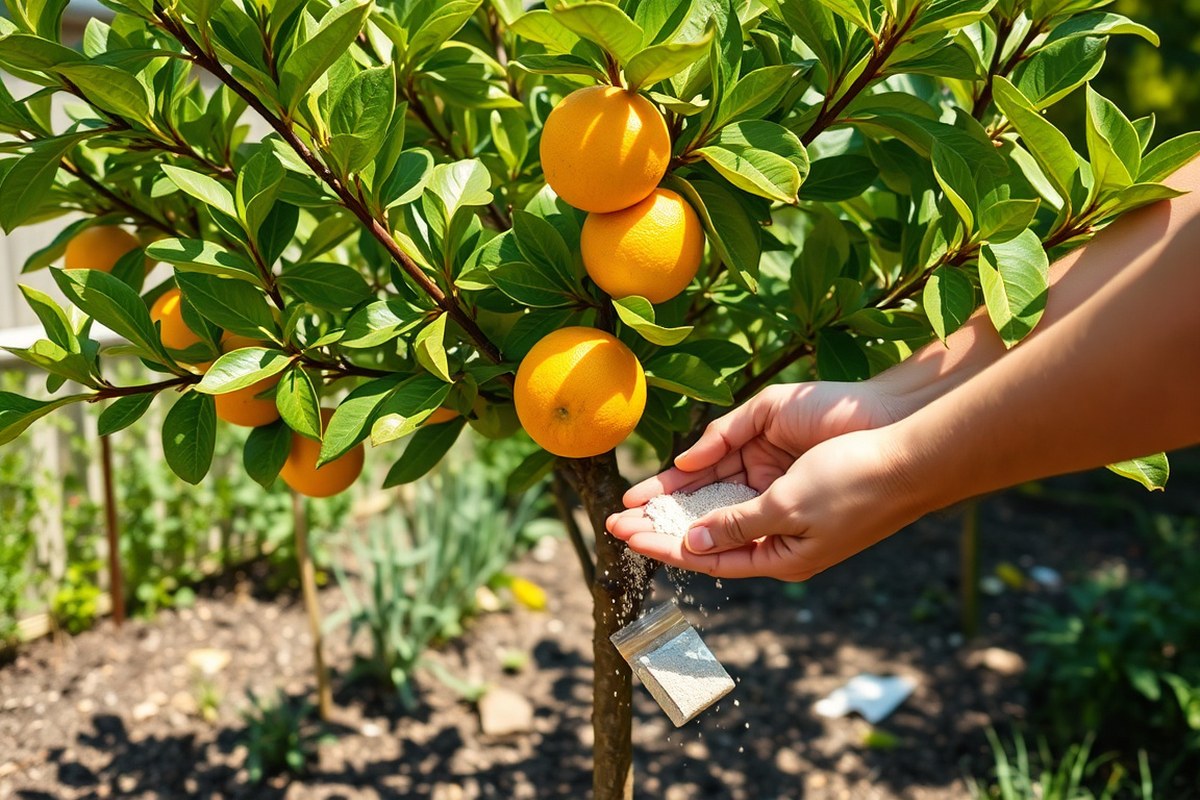
Knowing how to fertilize citrus trees is key for strong growth and fruit. You need regular feedings that match your tree’s size and season. Follow a simple schedule that fits your climate and tree type.
This helps keep nutrients balanced. It also stops you from overfeeding your citrus tree.
Start fertilizing in late winter or early spring when new growth appears. Use fertilizer formulas with balanced nitrogen, phosphorus, and potassium like 6-6-6 or 10-10-10. Water well after applying fertilizer so nutrients reach the roots efficiently.
Adjust your fertilizer amount by your tree’s age and height. Young trees use less, about 1-2 pounds of 12-4-4 mix per feeding. Older, larger trees need more to support heavy fruit production and leaf growth.
Key Takeaways
- Fertilize citrus trees regularly during the growing season for best results.
- Use balanced fertilizer formulas suited to your tree’s age and size.
- Start feeding in late winter or early spring when growth begins.
- Water trees deeply after fertilizing to help nutrient absorption.
- Apply 1-2 pounds of fertilizer for young trees per feeding.
- Increase doses as trees grow larger and start producing more fruit.
1. When and How Often to Fertilize Citrus Trees

Begin fertilizing citrus trees right when new growth appears in early spring. For Zone 9 areas like parts of Texas and the Southwest, start feeding in March. Keep feeding until late summer.
Stop fertilizing by the first frost date. This prevents growth that cold can damage.
In warmer regions like Zone 10, fertilize earlier. Start feeding around January or February.
Feed your trees regularly through summer since the growing season is longer. Feeding three times per year, spaced evenly, works well for most mature trees here.
Young citrus trees need more frequent, lighter feedings than mature ones. Feed them every 6 to 8 weeks throughout the growing season. This helps support steady growth without overwhelming the roots.
Mature trees usually need feeding three times a year. Do it in early spring, early summer, and late summer.
Potted citrus require tighter feeding schedules because nutrients wash out faster. Feed your container trees every 4 to 6 weeks during the growing months.
Use diluted fertilizer for potted trees. Pots hold less soil and water than ground trees, so roots can burn easily.
A good rule is to give 1 pound of fertilizer per year of tree age. Do this up to 12 years.
Divide that total into three feedings if you fertilize three times each season. For example, a 5-year-old tree would get 5 pounds total yearly, divided into 1.7 pounds per feeding.
Don’t increase fertilizer amounts after the tree reaches 12 years old. Keep feeding consistent to avoid stressing older trees.
Always water deeply after fertilizing. This helps nutrients reach roots and stops salt buildup.
2. How to Calculate the Right Amount of Fertilizer
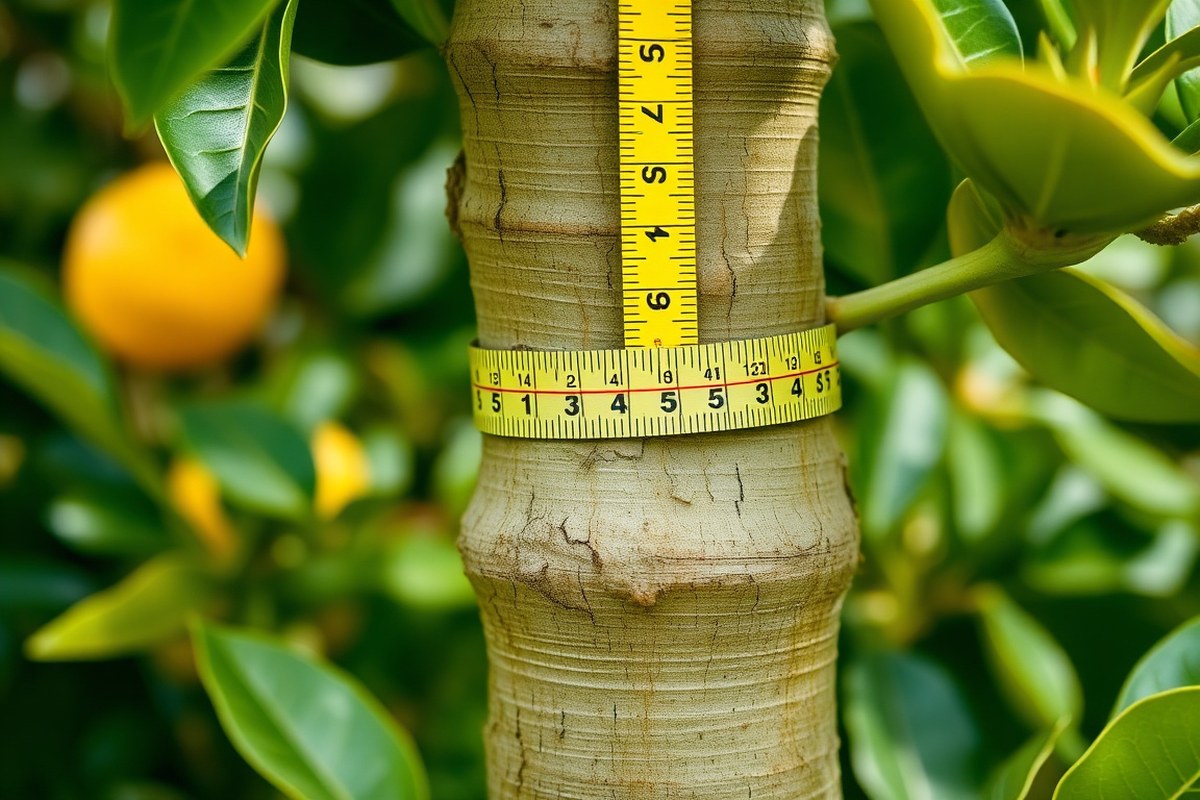
Use the trunk diameter to calculate how much fertilizer your citrus tree needs. Measure the trunk 12 inches above the soil.
Use one pound of fertilizer per inch of diameter. Adjust amounts if the tree is young or a specific variety requires it.
Measuring Trunk Diameter Accurately
Measure the tree trunk at about one foot above the ground. This spot usually avoids soil swelling or root flare that can distort size.
Use a tape measure or string to wrap around the trunk. Do this exactly at 12 inches from soil.
Mark the circumference, then measure the string with a ruler. Divide the circumference by 3.14 to find the diameter. This step gives a clear diameter you can use for fertilizer calculation.
- Use a flexible tape measure or string to wrap around the trunk 12 inches above soil.
- Mark where the tape or string meets to get the circumference.
- Measure the length of the marked string in inches.
- Divide that number by 3.14 to get the trunk diameter in inches.
- Note the diameter for your fertilizer calculation.
Always measure the trunk on the north side if possible to avoid sun damage swelling.
Applying the ‘Pound per Inch’ Rule
Apply one pound of fertilizer for each inch of trunk diameter measured. For instance, a tree with a 4-inch diameter needs about 4 pounds of fertilizer. This rule helps avoid over or underfeeding.
Spread fertilizer evenly under the tree’s canopy, about 30 inches from the trunk. Doing this allows roots to absorb nutrients better and reduces fertilizer waste. Repeat this feeding once every few months during growing seasons.
Adjusting Quantities for Tree Age and Variety
Young citrus trees 1 to 3 years old need less fertilizer. Apply about 1 to 2 pounds per feeding. Mature trees older than 5 years usually need more fertilizer.
Use 3 to 5 pounds, more for bigger trunks. Use more fertilizer cautiously to avoid root burn or unintended growth problems.
Meyer lemons and other dwarf varieties in pots need smaller doses than big orange trees. Potted citrus trees usually require fertilizer divided into smaller, spread-out applications during their growing season.
You can use citrus-specific blends. But most types accept similar fertilizer amounts if adjusted by size and age.
Never give mature tree fertilizer amounts intended for young trees. Excessive feeding will harm them.
3. Understanding Essential Nutrients for Citrus Trees
Citrus trees need three key nutrients: nitrogen, phosphorus, and potassium. Nitrogen helps leaves and shoots grow green and healthy.
Phosphorus is important for new roots and blossom development. Potassium supports fruit growth and overall fruit health.
Citrus trees require small amounts of nutrients like sulfur, iron, boron, magnesium, manganese, and copper. These micronutrients improve how the tree absorbs main nutrients.
Iron stops leaves from turning yellow, and magnesium aids in photosynthesis. Missing micronutrients limits the tree’s growth and lowers fruit quality.
| Stage | Primary Nutrient | Purpose |
|---|---|---|
| Dormancy | None | Avoid fertilizing during this rest period |
| Bud Break | Nitrogen | Promotes leaf and shoot growth |
| Fruit Set | Phosphorus, Potassium | Supports fruit development and blossom |
| Maturation | Balanced NPK | Improves root health and fruit quality |
Leaves can show problems if nutrients are missing. Yellow leaves often indicate nitrogen or iron deficiency. Small fruit or poor blossom might mean phosphorus is low.
Brown leaf edges can signal potassium deficiency. Checking these signs helps you adjust feeding before damage spreads.
Young trees need phosphorus to build a strong root system early on. Mature trees use nitrogen most during growing seasons. Fruit growing phases need more potassium for size and sweetness.
Container trees require more frequent feeding since watering washes nutrients out. Adjust the specific fertilizer blend to match these changes in demand for best results.
4. Best Fertilizer Types and Formulations for Citrus Trees
Organic fertilizers come from natural materials like compost or bone meal. They release nutrients slowly and improve soil health over time. Synthetic fertilizers have man-made chemicals for fast nutrient delivery.
They can wash away quickly or harm helpful soil life. Use them carefully to avoid damage to your garden.
Slow-release fertilizers work well with citrus because they discharge nutrients gradually. This means you fertilize less often, which saves time and reduces the risk of overfeeding. Fertilizer spikes and liquid sprays give quick nutrient boosts.
They’re useful for reviving droopy trees or container citrus. These options help when trees need fast feeding.
| Product | Type | NPK | Best For |
|---|---|---|---|
| Dr. Earth Citrus | Organic | 5-2-2 | Eco-friendly gardens |
| Miracle-Gro Citrus | Synthetic | 8-2-4 | Fast results |
| Jobe’s Citrus Spikes | Slow-Release | 9-12-12 | Low maintenance |
For young citrus trees, look for an NPK ratio around 3-1-1, like 12-4-4. It supports healthy branch and root growth early on. Mature citrus trees like fertilizer ratios near 3-1-2, such as 15-5-10.
This balance helps with fruit growth and tree health. Use these ratios to support strong trees.
Cost varies, with organic fertilizers often priced higher but gentler on the environment. Synthetic options usually cost less and work faster but need careful timing to avoid nutrient loss. Slow-release spikes might seem pricey but reduce how often you must fertilize.
Sprays deliver nutrients fast but need more frequent use than others. They work best on trees showing signs of nutrient stress. Use sprays carefully and regularly for best results.
5. Safe and Effective Citrus Fertilizer Application Methods
Spread fertilizer evenly around the citrus tree’s drip line to protect roots and improve nutrient uptake. Water properly before and after applying fertilizer to reduce the risk of leaf burn. For better efficiency, try fertigation, which delivers fertilizer through irrigation.
Applying Fertilizer at the Drip Line
The drip line is the edge of the tree’s canopy, where most feeder roots gather nutrients. Avoid placing fertilizer near the trunk to prevent root damage. Organic fertilizer should cover a circle about 3 feet wide around this line for best results.
Follow these steps to apply fertilizer safely and effectively:
- Measure 3 feet from the trunk to mark the drip line boundary.
- Clear away any mulch or debris in that area.
- Evenly sprinkle the recommended amount of fertilizer along the entire drip line.
- Do not pile fertilizer in clumps; spread it out thinly.
- Lightly rake the fertilizer into the soil surface without disturbing roots.
- Replace any mulch over the fertilized area to conserve moisture.
Avoid putting fertilizer too close to the trunk. It can injure roots and cause leaf burn.
Proper Watering Before and After Feeding
Watering before fertilizing moistens the soil to reduce fertilizer burn risk. After applying fertilizer, water deeply to help nutrients seep into the root zone. Moist soil also helps roots absorb nutrients efficiently.
For trees in containers, extra watering is necessary since pots dry out faster. Keep the soil consistently moist but not soggy. Too little water can cause nutrients to build up and burn roots.
Using Fertigation Systems for Fertilizer
Fertigation applies fertilizer through your irrigation system, mixing it into the water. This method saves water by up to 50% and improves nutrient uptake by about 30%. It spreads nutrients evenly, reducing the chance of hot spots or root damage.
To use fertigation correctly, check your irrigation system’s compatibility with fertilizer solutions. Use a fertilizer designed for fertigation and calibrate the system to deliver the right dose. Regularly flush the lines to prevent clogging.
Avoiding Over-Fertilization and Burn
Over-fertilizing can burn roots or leaves and stress the tree. Follow your fertilizer label closely for the right amount and timing. Skipping the hottest months of June and July can prevent fertilizer damage caused by heat stress.
Use slow-release fertilizers or organic options to reduce burn risks. Thin, even applications lower the chance of salt buildup. Watch for yellowing or scorched leaves as signs of overfeeding and adjust accordingly.
6. Adjusting Fertilization for Containers and New Citrus Trees
Container-grown citrus trees need more frequent but lighter feedings than those in the ground. Pots hold less soil and nutrients wash away quicker when you water.
You should fertilize potted citrus every 4 to 6 weeks. This usually happens during active growth from spring through early fall.
Use a balanced fertilizer for citrus or fruit trees. Make sure nutrients absorb quickly into the plant. Liquid or water-soluble fertilizers work well because they apply evenly and reduce buildup risk.
For each feeding, apply about half the usual amount. Use less than you would for a similarly sized tree in the ground.
Newly planted citrus trees in the landscape need no fertilizer the first year. They lean on established roots and soil nutrients as they settle in. Adding fertilizer too early can stress young roots and cause salt damage.
Begin feeding gently in the second year. Use about half the recommended amount every 6 to 8 weeks.
- Fertilize potted citrus every 4 to 6 weeks with half-strength fertilizer
- Use water-soluble fertilizer designed for citrus or fruit trees
- Do not fertilize newly planted trees the first year
- Begin light feeding in the second year after planting
- Switch to full fertilizer amounts in the third year
- Feed outdoor trees in early spring to early fall in warm climates
- Reduce fertilizer frequency after the tree is three years old
By year three, your tree can handle the full feeding schedule recommended for mature citrus. At that point, cut back to about three fertilizer applications annually for established trees.
Monitor leaf health and growth speed to adjust feeding if needed. Overfeeding young or potted trees can cause leaf burn or nutrient imbalances that slow growth.
Look for steady new growth and dark-green leaves as signs of good fertilization. Cut back on feeding if leaves yellow or edges turn brown.
Reduce how often or how much you feed the tree. Proper care in these early stages sets your tree up for years of productive fruit.
7. Common Citrus Fertilizing Mistakes and How to Avoid Them
Over-fertilizing citrus trees can burn roots and cause yellowing leaves. Too much fertilizer also slows fruit growth and invites pests. Keep to the recommended amounts and timing to avoid these issues.
Using fertilizer at the wrong time can hurt your tree’s health. Feeding during a heat wave or late in the season risks freeze damage or nutrient leaching. For example, avoid fertilizing in South Texas after late spring to prevent freeze risks.
Underfeeding or uneven feeding leads to weak growth and poor fruit size. If your tree looks droopy, has pale or dropping leaves, check for nutrient imbalances before adding more fertilizer. A soil test can guide precise feeding.
- Apply fertilizer in early spring through late spring in warm climates.
- Space fertilizer evenly around the root zone, about 6 to 12 inches from the trunk.
- Use a balanced fertilizer formulated for citrus with nitrogen, phosphorus, and potassium.
- Do not fertilize during heat waves or late seasons to reduce stress.
- Watch for symptoms: burnt leaf edges mean too much fertilizer is given.
- Add slow-release fertilizers for steady feeding and less risk of overdoing it.
- Conduct soil tests every 2 to 3 years to adjust fertilizer types and rates.
Signs of nutrient poisoning include leaf spots, curled leaves, or sudden yellowing. These can show up weeks after overfeeding. Stop fertilizing if you see these signs and flush the soil with water.
Fix underfeeding by applying fertilizer in smaller, consistent doses rather than heavy, rare feedings. This helps roots absorb nutrients better and prevents waste. Regular checks on tree health allow tweaks to your feeding schedule.
8. Soil pH, Water Quality, and Environmental Safety Tips
Soil pH and water quality strongly affect how citrus trees take up nutrients. They shape the tree’s health and fruit quality. Environmental safety matters when you fertilize to avoid pollution and waste.
Ideal Soil pH for Citrus Trees
Citrus trees like soil pH between 6.0 and 7.0, which is slightly acidic to neutral. This pH range helps roots absorb nutrients like nitrogen, phosphorus, and potassium better. Soils that are too alkaline or too acidic block nutrient uptake and stunt growth.
You can change soil pH by adding sulfur or lime. Sulfur lowers the pH. Lime raises it.
Pick the one you need based on test results. Make changes slowly and retest after a month or two. Overcorrecting pH can harm beneficial microbes and tree health.
Water Quality Effects on Fertilization
Water pH also influences fertilization because it affects nutrient solubility. Water with a pH above 7.5 can cause some nutrients to become less available to roots. Acidic water below pH 6.0 may increase toxic metals and damage roots.
Hard water with high calcium or magnesium can interfere with fertilizer absorption. Use filtered or rainwater if you notice poor growth and suspect hard water. Adjust irrigation timing and amount to avoid nutrient runoff.
Minimizing Environmental Impact
Excess fertilizer can leach into groundwater or runoff into streams, causing pollution. Avoid over-fertilizing by following recommended rates based on soil tests. Use slow-release or organic fertilizers to reduce leaching risks.
Mulching with organic materials like comfrey leaves helps retain moisture and reduce fertilizer runoff. Water deeply but less frequently to encourage strong roots and less waste. Clean up any spilled fertilizer promptly to protect pets and wildlife.
Only apply fertilizer when soil is moist to prevent burning roots and runoff risk.
Conducting Soil and Water Tests
You can buy soil and water test kits at garden centers. You can also send samples to local extension labs. They provide detailed analysis.
Collect soil samples from around the tree’s drip line about 6 to 8 inches deep. Test before each main fertilizing season.
For water, test pH and hardness at least once a year. Keep records of test results to track changes over time. Adjust your fertilizer type and schedule based on test feedback for best nutrient balance.
Step-by-Step Action Plan for Fertilizing Your Citrus Trees
Follow these steps to keep your citrus trees healthy and fruitful throughout the year.
- Early Spring: Apply a balanced fertilizer with nitrogen, phosphorus, and potassium. Watch for fresh green leaves as a sign of success.
- Late Spring: Fertilize again using a formula with micronutrients like magnesium and iron. Healthy, dark green foliage shows the tree is responding well.
- Mid-Summer: Use a lighter dose of fertilizer to avoid stressing the tree in hot weather. Check fruit size and firmness for good growth.
- Late Summer to Early Fall: Reduce or pause fertilizing to let the tree prepare for dormancy. Leaves should stay vibrant without excessive growth.
- Before Winter: Test soil pH to ensure it stays near 6.0, 7.0, and adjust if needed. Good pH keeps nutrients available and avoids tree stress.
- New Trees (First Year): Feed them monthly with a gentle, dilute fertilizer. Look for steady leaf growth without yellow edges.
- Container Citrus: Fertilize every 4, 6 weeks because nutrients wash out faster. Watch for healthy root growth and juicy fruit.
Frequently Asked Questions
How Often Should I Fertilize Citrus Trees in Pots During the Growing Season?
Fertilize potted citrus trees every 4 to 6 weeks during growing. Using light amounts helps steady growth and avoids root stress. It also reduces chances of overfeeding your tree.
Can I Use Organic Fertilizer for My Citrus Trees?
Organic fertilizers work well for citrus trees, providing steady nutrient release. Organic fertilizers help soil stay healthy.
Nutrient levels change more than in synthetic types. Watch your tree and change feeding if needed.
Do I Need to Fertilize Citrus Trees in the Fall Season?
It’s better not to fertilize citrus trees in the fall to avoid new growth. New growth could be damaged by cold weather. Focus on fertilizing only during active growing months.
How Does Water Quality Affect Citrus Tree Fertilization?
Poor water quality can limit nutrient uptake, even with proper fertilization. Testing water reveals problems like high salt levels.
These issues can harm trees. They also make fertilizer work less well.
Should I Fertilize My Citrus Trees Before Planting Them?
Fertilize after planting, not before, to encourage root establishment first. Too much fertilizer at planting can burn young roots. Wait until you see new growth to start feeding.
Can I Use Lawn Fertilizer on My Citrus Trees?
Lawn fertilizers are not recommended due to different nutrient needs. Citrus trees need more nitrogen, phosphorus, and potassium ratios tailored to fruiting, unlike typical lawn formulas.
Final Thoughts
Fertilizing your citrus trees right helps them grow strong and produce great fruit. Start by checking your soil and picking the right fertilizer. Take small steps every season to keep your trees happy and healthy.