How to Propagate Peach Trees: A Complete Guide with Proven Methods
How to propagate peach trees depends on whether you use seeds or cuttings. Both methods work well. But cuttings tend to give faster results and keep the parent tree’s traits.
Starting peach trees from seed takes more time than cuttings. The new tree might not grow fruit that tastes the same. You could end up with different fruit quality than expected.
For cuttings, pick a straight, 4- to 6-inch stem with healthy leaf nodes. Dip hardwood cuttings briefly in rooting hormone to improve success. Soak peach seeds in water for 24 hours first.
Then plant them about 3 inches deep in pots. Use well-draining potting mix to help seeds grow.
Keep cuttings and seeds in warm spots with 10 hours of light daily. Watch for roots or new leaves to know they’ve taken. Transplant seedlings outdoors once they reach 6 to 12 inches tall and the weather warms.
Key Takeaways
- Use 4- to 6-inch hardwood cuttings with several leaf nodes for best rooting.
- Dip hardwood cuttings in 0.4% rooting hormone liquid for five seconds.
- Soak peach seeds in water 24 hours before planting 3 inches deep in pots.
- Keep cuttings and seeds in 70-80°F with at least 10 hours of daily light.
- Transplant seedlings outside once they reach 6 to 12 inches tall in warm weather.
- Space mature peach trees 15 to 20 feet apart to allow room for growth.
Best Methods to Propagate Peach Trees Compared
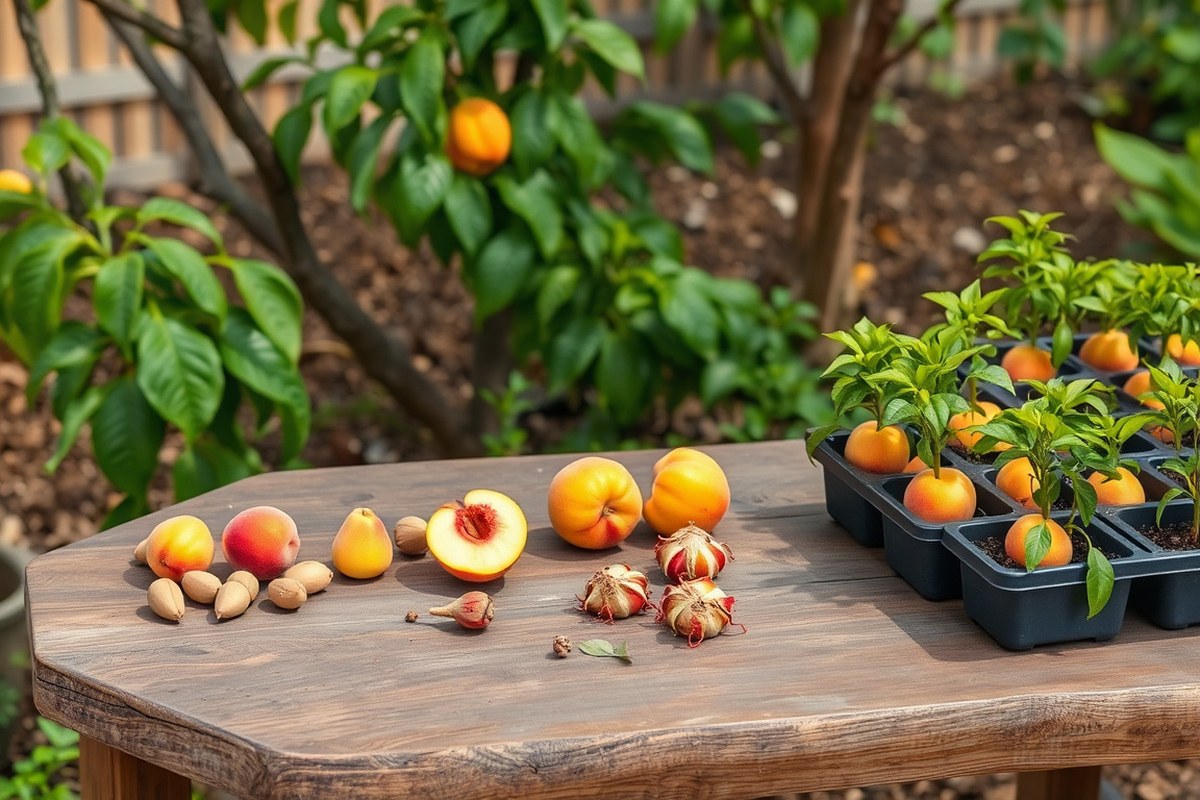
Peach trees can be propagated mainly by seeds or softwood cuttings. Seeds are the easier option for beginners but take longer to bear fruit. Cuttings require some skill but grow trees with traits identical to the parent.
Growing peach trees from seed starts with fresh pits. These pits need cold treatment first. The cold helps them germinate properly.
After planting, these seedlings can take 3 to 5 years to produce fruit. This method requires less initial care but more patience.
Cuttings come from new growth, about 4 to 6 inches long. You root them in moist soil, often indoors or in a greenhouse. Cuttings take longer to root than seeds do.
But these trees fruit faster than seed-grown ones. They also copy the parent tree’s traits.
| Propagation Method | Time to Fruit | Care Needs | Success Rate | Advantages | Disadvantages |
|---|---|---|---|---|---|
| Seed | 3 to 5 years | Low after germination; needs cold chill hours | High but variable quality | Easy; cheap; vigorous trees | Genetic variation; longer wait for fruit |
| Softwood Cutting | 2 to 4 years | Moderate; requires humidity and warm temps to root | Moderate; several attempts may be needed | Clones parent; faster fruiting | More skill; less common; lower resilience than grafted trees |
Choosing seed propagation suits those who want an easy start and don’t mind waiting. Cuttings work best for gardeners wanting sooner fruit and exact parent traits.
However, cuttings may fail without proper conditions. So be ready to try more than once.
Peach trees require 800 chill hours below 45°F while dormant. This cold helps them bloom and grow fruit. Without enough chill hours, no fruit will form.
This cold requirement matters whether you start from seed or cuttings. Trees must have enough space to grow well.
Standard peach trees should be 15 to 20 feet apart. This room lets the trees spread out properly.
How to Grow Peach Trees from Seed Step by Step
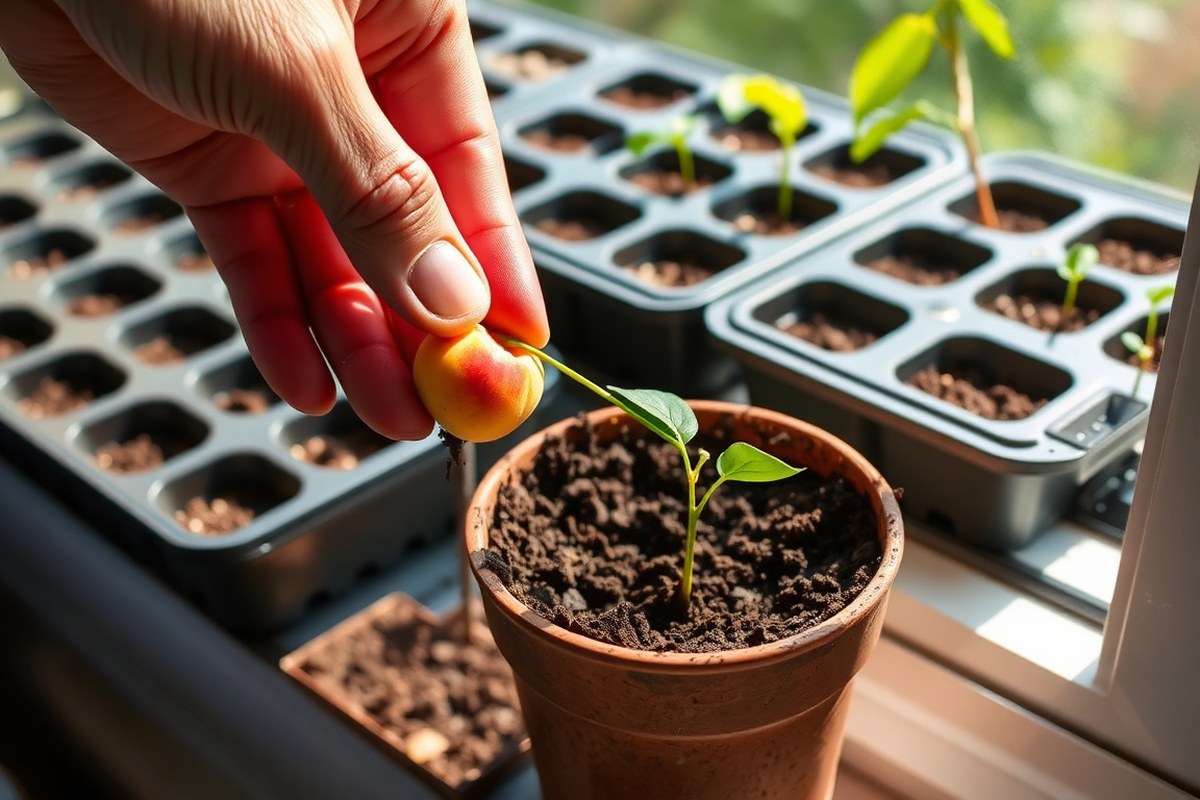
Growing a peach tree from seed starts by preparing the seed well. You need to chill the seed using cold stratification. This step is important for it to sprout.
Plant the seed in the right soil at an appropriate depth. After the seed sprouts, keep the seedling indoors.
Nurture it until it grows strong. Then it will be ready to go outside.
Extracting and Preparing Peach Seeds
Choose a ripe peach to remove the seed. Wash off all fruit flesh completely to prevent mold. Soak the clean seed in water for 24 hours to soften the hard shell.
Use containers about 10 to 12 inches wide filled with nutrient-rich potting soil. Plant the peach seed about 3 inches deep to give the young root space to grow. Cover loosely with soil and gently water.
- Select a ripe peach and remove its pit carefully.
- Clean the pit of all fruit flesh under running water.
- Let the seed soak in a bowl of water for 24 hours.
- Fill a container with potting mix and moisten it slightly.
- Plant the seed 3 inches deep in the soil.
- Cover the container with plastic wrap to hold humidity.
- Keep the container in a warm, shaded spot until stratification starts.
Never plant seeds with any fruit flesh left. It causes rot and kills the seed.
Cold Stratification Process for Germination
Cold stratification mimics winter by chilling the seed, triggering germination. Wrap the moist seed in wet paper towels or peat moss. Put the wrapped seed inside a plastic bag.
This keeps the seed damp for stratification. Store the bag in the refrigerator at 34 to 40°F for 6 to 8 weeks.
Check the seed moisture weekly, keeping it damp but not soggy. After this cold period, the seed’s coat softens, increasing the chances of sprouting when planted. Remove the seed from the fridge once this period ends.
Caring for Seedlings Before Transplanting
Place the seed tray or container near a sunny window or under grow lights. Provide at least 10 hours of light daily to support strong growth. Keep the soil evenly moist but avoid overwatering, which causes root rot.
When the seedling breaks the soil and grows leaves, watch closely. If many sprouts appear, thin them out. Keep only the strongest seedling.
Avoid drafts and sudden temperature changes inside your home. Move seedlings outdoors after the frost danger is gone.
Make sure the plant is about 6 inches tall. This gives it a better chance of survival.
Taking and Rooting Peach Tree Cuttings Successfully
Peach trees root best from hardwood cuttings taken in winter or softwood cuttings harvested in spring. Using the right rooting hormone and planting the cuttings in well-draining soil helps roots form faster. Keep cuttings in warm, humid conditions to improve your chances of success.
Choosing Softwood, Semi-Hardwood, or Hardwood Cuttings
Hardwood cuttings produce roots more reliably, but they take longer to establish. These are dormant branches cut during winter when the tree has lost its leaves. Softwood and semi-hardwood cuttings come from new growth in spring or early summer.
They root faster. But they may not work well for some peach cultivars.
Pick branches that look healthy and have no signs of disease. Use branches from trees growing well in your area.
Softwood cuttings should be taken in April when the new shoots are plump but still flexible. Hardwood cuttings are best taken between late fall and early winter.
Preparing and Treating Cuttings with Rooting Hormone
Trim cuttings to 6 to 8 inches long, cutting just below a leaf node. Remove leaves from the lower half to prevent rot and focus energy on root growth.
For hardwood cuttings, dip the base in 0.4 percent rooting hormone liquid for five seconds or dust with 0.8 percent powder. Softwood cuttings work well with a 0.25 percent rooting hormone powder dusting.
Rooting hormone strength matters because it helps stimulate root cells. Using too strong or too weak hormone can hurt rooting results. Make sure your tools and containers are clean to avoid infections, which stunt root development.
Before planting, gently tap off excess powder or liquid to avoid burning the cutting. Let cuttings dry briefly in the shade, about 15 minutes, for better hormone absorption.
Setting Up the Rooting Environment
Use a soil mix that drains well but keeps some moisture. Try a mix of peat moss and perlite in equal parts.
Fill pots or trays with this mix and water just before planting. Insert cuttings deep enough to hold them upright but not so deep they can rot.
Maintain humidity by covering cuttings with a plastic dome or bag, leaving some air holes open. Keep the rooting area warm, between 70 and 75°F, and out of direct sunlight. Mist cuttings lightly every few days to maintain moisture without making the soil soggy.
Follow these steps to root peach cuttings successfully:
- Select healthy softwood or hardwood branches from a well-performing peach tree.
- Cut 6 to 8 inches sections, trimming just below a leaf node.
- Remove lower leaves and dip the cut base in the appropriate rooting hormone.
- Allow cuttings to air dry for 15 minutes in the shade after hormone treatment.
- Prepare a moist, well-draining soil mix of peat moss and perlite.
- Plant cuttings upright, burying the base 2 to 3 inches deep.
- Cover the cuttings with a plastic dome or bag to keep humidity high. Put them in a shaded spot with temperatures around 70 to 75°F.
- Check moisture regularly; mist every few days and avoid overwatering.
Identifying When Peach Cuttings or Seeds Are Rooted
You can tell a peach cutting has rooted when it shows new leaf growth. This usually happens two to three months after you take the cutting. The cutting needs roots to draw water and nutrients, which support new shoots and leaves.
Look carefully at the base of the cutting for soft, white root tips. Gently tug the cutting after about eight weeks.
Roots have likely formed if you feel resistance against the soil. Avoid pulling too hard to prevent damage.
Seedlings are ready for transplant when they grow between 3 and 4 inches tall. This size shows they have developed a strong enough root system. At this point, the seedlings can handle being moved to larger pots or the garden.
After transplant, keep the peach seedlings well-watered but not soaked. Water helps stressed roots get established in their new spot.
Give them a few days to harden off. Slowly expose them to outdoor conditions if started indoors.
Rooting time varies with temperature and care. At ideal temperatures near 70°F, rooting takes two to three months.
Cooler or inconsistent temperatures can slow growth. Keep your cuttings in a warm, humid place without direct harsh sun.
Signs that rooting failed include no new leaf growth or leaves turning brown and falling off. Cuttings that stay limp or brittle usually lack roots. It’s better to start fresh cuttings than wait too long on failed ones.
Properly rooted cuttings can go into individual pots before outdoor planting. Transplanting into the garden in the fall with plenty of water sets them up for success. This stage moves the plant from a delicate starter to a strong young tree.
Aftercare and Transplanting for Peach Tree Seedlings and Cuttings
After you see roots on your peach seedlings or cuttings, take care when moving them outside. Gradually exposing plants to outdoor conditions helps them adjust and stay healthy. Transplant them to a spot with good soil.
Make sure to space them properly. Water well and prune early to help growth.
Hardening Off Seedlings and Cuttings
Seedlings and cuttings need time outdoors before planting in the ground. Bring them outside for a few hours daily, starting in a shady spot. Add more sun and time outside over 7 to 10 days so they adapt without stress.
Bring plants indoors overnight until they toughen up. Watch for leaf droop or discoloration; that means too much sun or wind. Keep soil moist to avoid drying out.
Here’s how to harden them off:
- Place plants outside in partial shade for 2 hours first day.
- Increase outdoor time by 1 to 2 hours each day.
- Move plants to a sunnier area gradually but avoid strong afternoon sun at first.
- Keep soil damp but not soaked to prevent root shock.
- Bring plants indoors overnight during cool or rainy nights.
- Check leaves daily for signs of stress, reducing sunlight if needed.
- Continue for 7 to 10 days until fully adjusted for full sun.
Don’t skip hardening off; sudden exposure can kill young peach plants.
Preparing the Planting Site and Soil
Choose a site with full sun (at least 6 hours daily) and good air circulation. Dig soil deeply to loosen it up and remove rocks or roots. Peach trees need well-drained, slightly acidic to neutral soil, pH 6.0 to 7.0.
Before planting, mix compost or aged manure into soil to add nutrients. Space seedlings or cuttings about 12 to 15 feet apart to allow proper growth and airflow. Planting too close causes disease and poor fruit development.
Follow these steps to prepare your planting area:
- Select a sunny location sheltered from strong winds.
- Clear the ground of weeds and debris before soil work.
- Dig a hole about twice as wide and deep as the root ball.
- Amend soil with 2 to 3 inches of compost mixed into the hole.
- Ensure soil drains quickly; avoid places where water pools.
- Mark spots at least 12 feet apart for each new tree.
Plant peach trees in spring or early fall for best root growth.
Watering, Fertilizing, and Early Pruning
Right after transplanting, soak the soil well around the roots to settle soil. Keep watering every 2 to 3 days for the first two weeks. Then water deeper once a week during dry spells to encourage strong roots.
Feed young peach trees with a balanced fertilizer, like 10-10-10 NPK, in early spring. Use about 1/2 pound of fertilizer per tree. Spread it evenly around the base.
Keep it away from the trunk. Avoid over-fertilizing, which can burn roots.
Prune only damaged or crossing branches during the first year. This keeps the young tree healthy and shapes it properly. Remove any suckers growing from the base to focus energy on main branches.
Follow these aftercare steps:
- Water deeply right after transplanting to avoid air pockets.
- Keep soil moist by watering every 2 to 3 days initially.
- Shift to weekly watering once established, more in hot weather.
- Apply balanced fertilizer in early spring following product guidelines.
- Check for weak or damaged branches and prune during dormancy.
- Remove base suckers to prevent wasted growth energy.
Too much water causes root rot; too little causes stress and slow growth.
Choosing Peach Tree Varieties Suitable for Propagation
Peach kinds that root well from cuttings grow better from seed. They give you a better chance of success. Choose these for easy propagation.
Some varieties suit cooler climates with more chill hours. Others thrive where winters are mild. Picking a variety with good disease resistance helps prevent problems as the tree grows.
The number of chill hours needed matters because peach trees need winter cold to set fruit. Your area might lack enough chill hours for your peach variety. This can stop proper blooming.
It also hurts fruit production. For example, varieties like Elberta require 800 to 1,000 chill hours.
So they suit colder zones better. Contender needs fewer chill hours and fits milder climates.
| Variety Name | Chilling Hours | Disease Resistance | Harvest Time |
|---|---|---|---|
| Elberta | 800-1,000 | Moderate | Late July |
| Redhaven | 600-800 | High | Early August |
| Georgia Belle | 700-900 | Low | Late August |
| Contender | 500-700 | High | Early September |
Redhaven and Contender are popular for their strong disease resistance and fewer chill hours needed. These features make cuttings and seeds easier to grow. This helps if your area has common peach diseases.
You get a stronger tree. Georgia Belle fights disease less well.
You will have to check for pests often. Watch for fungal issues too.
Consider your local climate first. Choose Contender or Redhaven if your winters have less than 600 chill hours. These varieties do better in mild winters.
They bloom and fruit well. For colder zones where chill hours exceed 800, Elberta will do fine.
Always prefer varieties with high disease resistance to save time and money on pest control. Cuttings of Redhaven root well, so it’s a good all-around choice for beginners.
Common Problems and Mistakes When Propagating Peach Trees
Cuttings often fail to root because they don’t get enough moisture or warmth. Keep cuttings in a humid, warm spot around 70 to 75 degrees Fahrenheit. Use rooting hormone to increase success, and avoid overwatering, which causes rot.
Seeds may not germinate if they stay too dry or too cold. Before planting, soak seeds in water for 24 hours.
Then, plant them in well-draining soil kept moist. Keep the soil temperature between 65 and 75 degrees Fahrenheit to help sprouting.
Mold and rot happen when there’s poor air circulation or excess moisture. Use clean pots and fresh soil to reduce mold risk.
Water only when the soil feels dry on top. Placing a small fan nearby helps air flow and keeps mold away.
Pests like aphids or scale insects can weaken young plants fast. Inspect your cuttings and seedlings regularly.
Remove pests by hand or use an insecticidal soap safe for fruit trees. Acting early keeps pests from spreading and damaging growth.
Trees grown from seed or cuttings can take several years to fruit, sometimes up to four. Lack of fruit often comes from poor pollination or immature trees.
Plant multiple peach trees for better pollination. Also, check that your tree gets at least six hours of sun daily.
Propagation sometimes fails when trees lack grafting. Grafting keeps desirable fruit traits and strong root systems.
Without it, young trees may grow well but produce less tasty fruit. Grafting takes practice, but trained local nurseries can help you get started.
Regularly check your peach trees for enough sunlight, water, and nutrient-rich soil. Balanced fertilizing supports healthy growth and fruit production. Avoid over-fertilizing, which causes lots of leaves but few fruits.
Remember, patience is key with peach propagation. Take your time to adjust conditions based on how your plants respond. Small changes in watering, light, and temperature often solve most problems.
Environmental Conditions for Optimal Peach Tree Propagation
Peach tree propagation happens best when temperatures stay between 70°F and 85°F. This range encourages root growth and seed germination without stressing the plants. Avoid cold drafts or heat above 90°F, which can slow or stop development.
Light matters a lot. Peach seedlings and cuttings need about 12 to 14 hours of bright, indirect sunlight daily.
Use a grow light 6 to 12 inches above plants for indoor sun. Direct midday sun can scorch young leaves, so filtered light often works better.
Humidity should be kept moderate, around 50 to 70 percent. Too dry air causes cuttings to lose moisture quickly. Too much humidity can promote mold.
Use a humidity dome or spray water occasionally to keep the air moist. Good air circulation helps prevent fungal problems.
Soil for propagation needs excellent drainage. A mix of equal parts potting soil, sand, and perlite works well. This mix prevents waterlogging, which kills roots.
Check the soil pH with a testing kit and aim for a range between 6.0 and 6.8. This slightly acidic level helps peaches absorb nutrients efficiently.
Indoor setups require a stable temperature and humidity control. Put seedlings by a south-facing window with filtered light. Use a small humidifier or spray to keep moisture up.
Outdoors, pick a sheltered spot protected from wind and sudden weather changes. Using pots lets you move plants if conditions get too harsh.
Always test your soil’s drainage before planting; slow drainage means risk of root rot.
Step-by-Step Action Plan for Propagating Peach Trees
Follow this plan to start growing your peach trees from seeds or cuttings. Watch for signs that show your efforts are working.
- Before you start: Choose healthy seeds or cuttings from your preferred peach variety. Make sure they look fresh and undamaged.
- Day 1: Prepare seeds by soaking them in water for 24 hours to soften the shell. Seed swelling shows it’s ready to plant.
- Week 1: Plant seeds 2 inches deep in soil that drains well. Insert cuttings into moist rooting medium. Roots starting to form means success.
- Weeks 2 to 4: Keep the soil or medium moist but not soggy. A small sprout or new leaves will show the plant is growing.
- Weeks 4 to 6: Move your seedlings or rooted cuttings to brighter light gradually. Healthy leaves and stronger stems show good progress.
- After 2 months: Transplant young peach trees into larger pots or outdoor site. New root growth and firm stability mean they’re ready.
- Ongoing: Watch for pests, diseases, or wilting. Early intervention keeps your trees healthy and growing well.
Frequently Asked Questions
Can You Propagate Peach Trees by Grafting?
Yes, grafting is common for peach trees to improve disease resistance. It helps combine strong root systems with desirable fruit traits for better growth and yield.
How Long Does It Take for Peach Tree Cuttings to Root?
Peach tree cuttings usually take 4 to 6 weeks to root. Keep them moist and in warm, indirect sunlight to improve success.
What Soil Conditions Are Best for Planting Peach Trees?
Well-drained, loamy soil with a pH of 6.0 to 7.0 suits peach trees best. Avoid heavy clay or waterlogged soil to prevent root problems.
Do Peach Trees Need Pruning After Propagating from Seeds?
Yes, pruning helps shape young peach trees and promotes healthy growth. Remove weak or crowded branches to increase sunlight and air circulation.
How Often Should Peach Tree Seedlings Be Watered?
Seedlings need consistent moisture but not soggy soil. Water when the top inch of soil feels dry to support steady root growth.
Can Dwarf Peach Trees Be Propagated Differently?
No, dwarf peach trees can be propagated from seeds or cuttings like standard types. Their smaller size mainly affects spacing and care needs.
Key Points to Remember
Growing peach trees from seeds or cuttings takes patience, but it’s rewarding. Start by selecting healthy material and following a steady care routine. Take the first step today by soaking seeds or preparing your cuttings for planting.