How to Plant Tomatoes Indoors: A Complete Guide with Proven Steps
Learning how to plant tomatoes indoors lets you enjoy fresh produce year-round. You just need good light, the right containers, and careful watering.
Starting seeds indoors gives you a head start before transplanting. It also helps keep your indoor garden growing during winter.
Choose compact tomato varieties designed for pots to save space and avoid sprawling vines. Use containers that hold at least 5 gallons of soil. Place a full-spectrum LED grow light 6 to 12 inches above plants.
Keep indoor temperatures between 60 and 85 degrees Fahrenheit. Maintain humidity around 40 to 60 percent for healthy tomatoes.
Start your seeds about 6 to 8 weeks before you want fruit. Keep your soil moist but not soggy.
Avoid cold drafts and do not refrigerate unripe tomatoes, they lose flavor if too cold. Rotating seedlings every few weeks ensures a steady tomato supply inside your home.
Key Takeaways
- Pick tomato varieties labeled for container or patio growing indoors.
- Use at least 5 gallons of nutrient-rich organic soil per plant.
- Provide 8 to 10 hours of full-spectrum LED light daily for best growth.
- Keep indoor temperatures between 60°F and 85°F to suit tomato needs.
- Maintain humidity levels between 40% and 60% to avoid fungal problems.
- Water consistently but avoid soggy soil to prevent root issues.
Can You Successfully Grow Tomatoes Indoors?
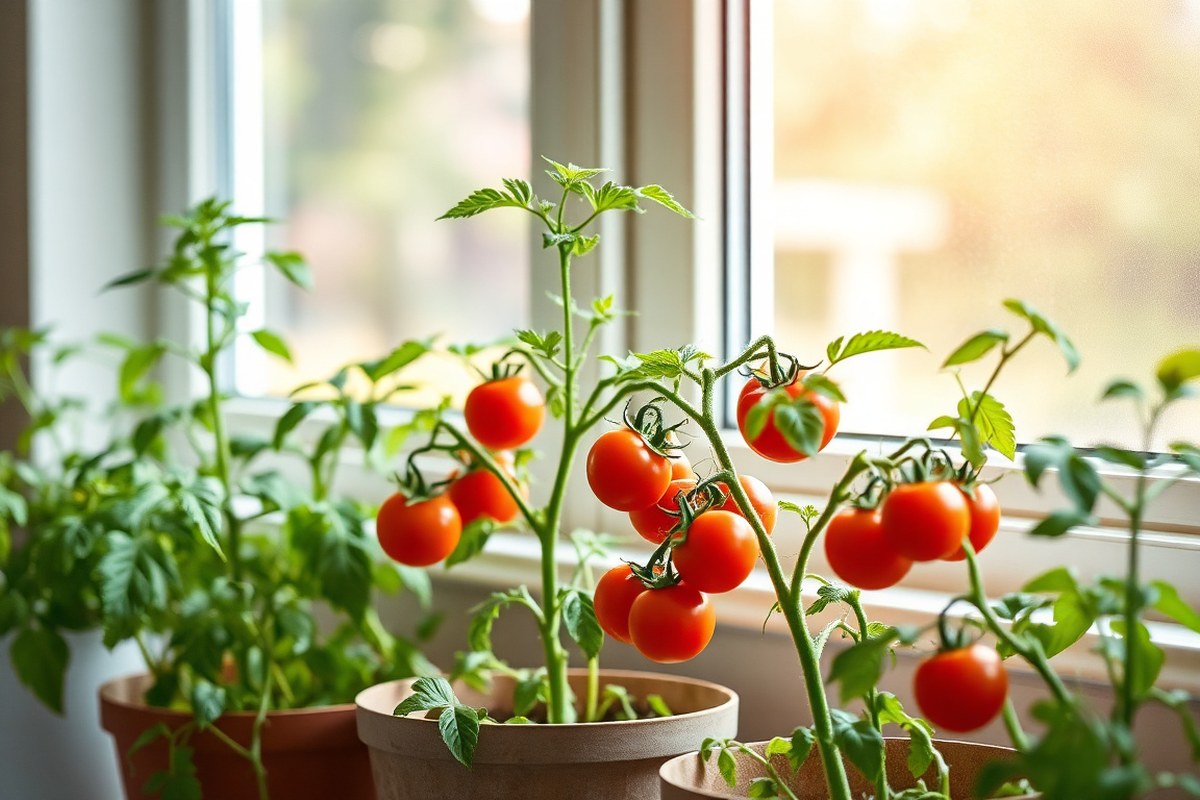
Growing tomatoes indoors is definitely practical with the right setup. You can have fresh tomatoes all year by controlling light, temperature, and humidity inside your home.
Keep indoor tomatoes around 70°F to 75°F during the day. At night, don’t let temperatures drop below 60°F. Consistent conditions help mimic outdoor summer days.
One big benefit is space flexibility. You don’t need a yard or patio to grow tomatoes. This also lets you avoid pests and harsh weather that can harm outdoor plants.
Indoor tomatoes often taste fresher because you pick them when ripe. You don’t wait for store shelves. This freshness improves their flavor.
Expect fewer tomatoes indoors because plants have less space and light. Pots limit root growth and light intensity affects size. Overall yields are smaller than outdoor gardens.
Challenges include keeping enough light on your plants. Most homes don’t get enough natural sun. So you’ll likely need grow lights for 12 to 16 hours daily.
A sunny south-facing window alone usually isn’t enough, especially in winter. You need to control humidity and air flow indoors.
This stops mold and spider mites from growing. Good circulation keeps plants healthy.
Tomato plants indoors need a good pot and plenty of light. Without these, they become spindly and yield less fruit. Proper setup is key for healthy growth.
Pruning helps keep plants healthy by improving airflow and focusing energy on fruiting branches. You might spend more time feeding and watering since soil nutrients wash out faster in pots.
Year-round tomato growing is easier if you stagger seed starting every six to eight weeks. This keeps fresh tomatoes coming without a long wait. Indoor tomatoes may produce less fruit than outdoor ones.
But with the right care, they can be just as sweet. Ideal conditions make a big difference.
Which Tomato Varieties Are Best for Indoor Growing?
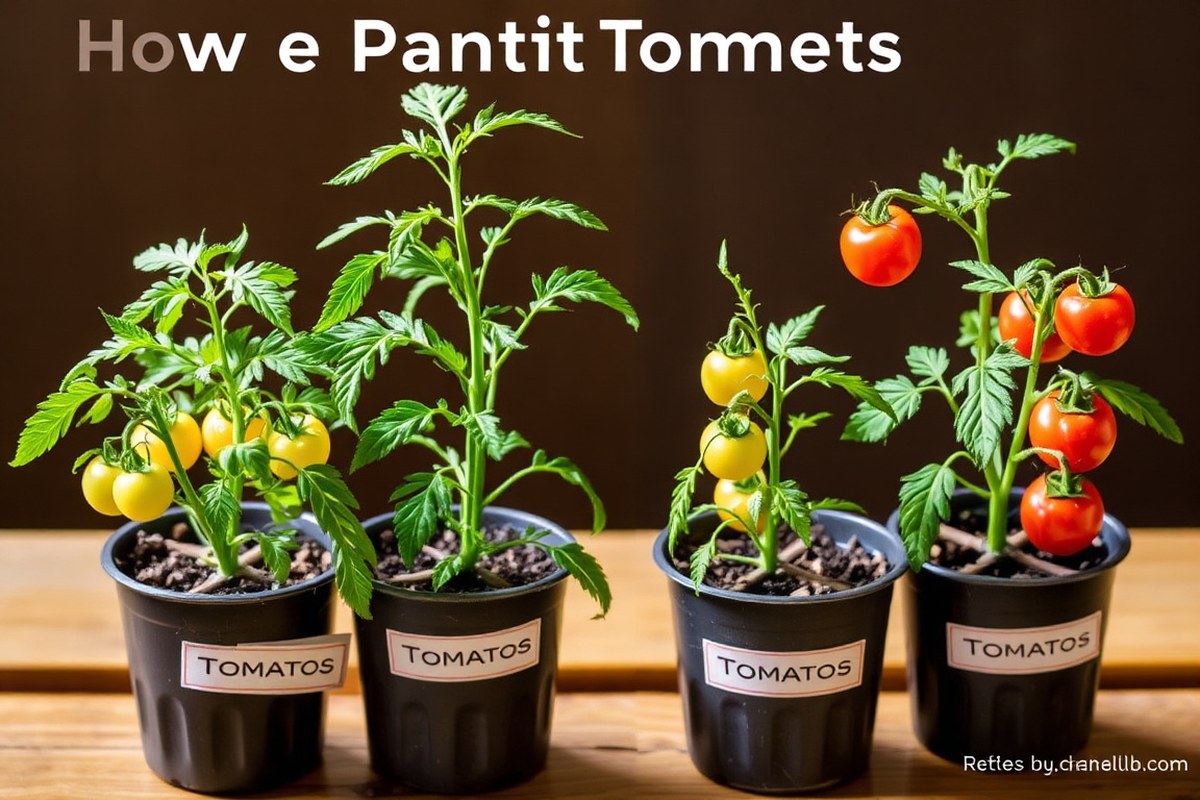
Tomatoes that grow best indoors tend to be determinate, also called bush varieties. These stop growing once they reach about 2 to 3 feet tall. Indeterminate tomatoes grow very tall and vine a lot.
They need strong stakes or trellises. Managing them indoors can be tricky.
Choosing smaller tomato types helps keep plants smaller and easier to care for. Compact determinate varieties work well in containers under grow lights. They produce fruit all at once over a few weeks, which fits indoor schedules.
| Variety | Growth Habit | Approx. Height | Best For | Notes |
|---|---|---|---|---|
| Tiny Temptations | Determinate, compact | 6, 12 in | Very small spaces | Compact plant suited to containers |
| Tumbling Tom | Trailing | Variable | Hanging baskets | Plants that trail are great for small areas. They don’t take up much floor space. This lets you fit more plants inside. |
| Red Alert | Determinate, bush | 12, 18 in | Easy container growing | Early fruiting and little support needed |
| Gardener’s Delight | Indeterminate, vining | 6, 8 ft | Cherry tomatoes | Sweet fruit and a prolific crop |
Dwarf indeterminate types also exist for indoor growing. They need more pruning and staking. Cherry tomatoes usually yield better indoors because they produce many small fruits.
Plant size controls container size and care demands. A 3-gallon pot suits most compact determinate plants. Bigger pots help larger or indeterminate tomatoes but take more space and soil.
Look for disease resistance in indoor varieties, especially to common tomato diseases. This reduces problems in close quarters where infections spread faster. Check seed catalogs or labels for resistant cultivars.
Choose compact determinate tomatoes for smaller spaces. But prune and support bigger types carefully to avoid top-heavy plants tipping over.
How to Start Tomato Seeds Indoors for Best Growth
Preparing Seed Trays and Soil Mix
Start tomato seeds in small trays or pots holding seed starting mix. Use a sterilized mix made of coco coir, perlite, and vermiculite. Garden soil and fertilizer can harm weak seedlings at this stage.
Choose containers with drainage holes to avoid waterlogging. Seed trays or small plastic pots 2 to 3 inches wide work well. Use fresh seed starting mix to ensure good air and water flow.
Maintaining Temperature and Humidity
Keep the soil warm between 68°F and 77°F to help seeds sprout. Use a heat mat for consistent warmth if your room feels cooler. Maintaining moderate humidity by covering trays with plastic clear domes encourages reliable germination.
Remove the cover once seedlings emerge to reduce the risk of mold. Good airflow prevents damping off disease. A small fan nearby can boost air movement if indoor air is still.
Lighting and Air Circulation for Seedlings
Set grow lights 2 to 3 inches above seedlings to avoid tall, weak plants. Operate the lights 12 to 14 hours daily for healthy growth. Natural light alone is usually not enough until seedlings develop true leaves.
Avoid soggy soil by watering when the top inch feels dry. Use a spray bottle or bottom watering to keep moisture even without soaking. Keeping stems sturdy requires gentle air circulation around seedlings.
Timing for Germination and First Leaf Stage
Tomato seeds usually sprout in 5 to 10 days under good conditions. Keep soil moist but not wet during this early stage to avoid seed rot. Seedlings show true leaves 1 to 3 weeks after sprouting, signaling readiness for more light.
Don’t add fertilizer until seedlings have two to three sets of true leaves. Use a diluted balanced fertilizer for the first feeding. Transplant seedlings to bigger pots once roots fill the small containers.
Follow these steps to start your tomato seeds indoors for best growth:
- Fill seed trays or small pots with seed starting mix, moisten it slightly.
- Plant each seed about ¼ inch deep, cover gently with mix.
- Place trays in a warm spot or on a heat mat set to 68°F, 77°F.
- Cover trays with a plastic dome to keep humidity high until seeds sprout.
- Once seedlings appear, remove the cover and move lights 2 to 3 inches above.
- Run grow lights 12 to 14 hours daily, keeping soil just moist.
- Provide gentle airflow with a fan to strengthen stems and reduce disease.
- Once seedlings have 2 to 3 true leaves, begin light feeding and pot up.
Choosing Containers and Soil for Indoor Tomato Plants
Tomato plants need the right container size to grow healthy roots indoors. Small tomato varieties need pots of at least 5 gallons.
Larger varieties require 10 gallons or more. Using a container too small can stunt growth and reduce fruit production.
Containers should have drainage holes to prevent water from pooling at the bottom. Good drainage lowers the risk of root rot, a common problem with indoor tomatoes.
Terracotta pots drain well but dry out faster. Plastic pots retain moisture longer and cost less.
Choose a high-quality potting mix designed for vegetables, not garden soil. Potting mixes drain well and hold nutrients.
Avoid heavy garden soil or compost, which can compact and suffocate roots indoors. Soilless mixes made from peat moss or coconut coir reduce disease risks and improve aeration.
- Use a 5-gallon pot for cherry or patio tomato varieties
- Use a 10-gallon pot or larger for indeterminate or big tomato plants
- Pick containers with drainage holes, like terracotta or plastic
- Choose well-draining potting mix labeled for vegetables
- Avoid garden soil; it compacts and holds too much moisture
- Add perlite or vermiculite to improve drainage if needed
- Place a saucer under pots to catch draining water indoors
Check container drainage often. Water only when the top inch is dry. Too much water can lead to yellow leaves and root problems.
Rotate pots weekly. This helps roots grow evenly toward the light. Don’t let roots circle inside the pot.
Lighting, Temperature, and Humidity Needs for Indoor Tomatoes
Tomatoes grown indoors need 12 to 16 hours of strong light daily to fruit well. Use full-spectrum LED grow lights 2 to 4 inches above plants. You can also use a sunny, south-facing window.
Add LED lights if the window does not give enough light. Keep indoor temperatures between 60°F and 85°F for good growth. Maintain humidity around 50-70% to help fruit develop.
LED Grow Lights vs. Natural Sunlight
A south-facing window can supply 6 to 8 hours of sunlight daily but often lacks intensity. Use a full-spectrum LED grow light for 8 to 12 hours daily. This helps your plants grow better and produce more fruit.
Place LED lights 2 to 4 inches above your plants. Raise the lights as seedlings grow to prevent burning. Keep lights close enough to avoid tall, weak plants.
Full-spectrum LEDs combine white, red, and blue lights. These mimic natural sunlight and support flowering and fruiting. LEDs use less electricity than fluorescent lights.
They also produce less heat, so they are safe near plants. Rotate your tomato plants often to expose all sides to light. This prevents them from leaning or growing unevenly.
Maintaining Steady Temperatures and Avoiding Drops
Keep day temperatures between 65°F and 80°F. Night temperatures near 60°F for best results. Large temperature swings cause tomatoes to drop flowers and slow growth. Avoid placing plants near drafts, heaters, or air conditioners that cause fluctuations.
Check indoor temps daily using a thermometer and adjust heating or cooling accordingly. Use a seedling heat mat if your home is cool.
Watch it closely to make sure it doesn’t get too hot. Consistent warmth encourages steady fruit development and strong stems.
Humidity Levels and Preventing Fungal Issues
Tomatoes thrive in 50-70% relative humidity indoors. Too high humidity encourages fungal diseases like powdery mildew and blight. Use a small fan to circulate air gently around plants, reducing humidity and discouraging fungal spores.
Lightly mist your plants if humidity is low, especially in winter. You can also use a humidity tray with pebbles and water under pots.
Avoid wetting leaves during watering to prevent fungal problems. Proper ventilation helps keep leaves dry and plants healthy.
Keep grow lights close but watch plants for signs of light burn or stretch.
Watering, Feeding, and Supporting Plant Growth Indoors
Water your indoor tomatoes whenever the top inch of soil feels dry. Feed them every two weeks with a balanced fertilizer.
Prune regularly to shape plants and support fruit growth. Use stakes or cages for support.
Watering Schedule Based on Conditions
Tomatoes need water, but not too much. Wait until the top inch of soil dries before watering again.
This helps avoid root rot. It also prevents your tomato plant’s leaves from drooping.
Containers with more soil hold water longer, so this helps avoid overwatering. Check soil moisture with your finger instead of following a strict calendar.
Fertilizing with Organic and Synthetic Options
Feed tomatoes every two weeks with a balanced, liquid vegetable fertilizer. This encourages flowering and fruit development indoors.
You can choose organic options like fish emulsion or seaweed extract. Synthetic fertilizers often provide nutrients faster but use both as directed on the label.
Pruning and Training Staking Methods
Prune your tomato plants to remove suckers, the small shoots between stem and branches. This helps the plant focus energy on producing fruit.
Use stakes or tomato cages to support plants as they grow. Gently tie main stems with soft twine to prevent damage but keep support firm.
Manual Pollination Techniques
Indoor tomatoes might not get natural pollinators, so help by shaking flowers daily. This moves pollen, allowing fruit to form.
You can also use a small brush or a cotton swab to transfer pollen between flowers. Do this in the morning when flowers are freshest.
- Check soil moisture with your finger about 1 inch deep.
- Water only when top soil feels dry but not bone dry.
- Feed plants with liquid fertilizer every 14 days.
- Remove suckers weekly to direct plant energy to fruit.
- Place stakes or cages near plants early for easier training.
- Tie stems gently with soft twine as plant grows.
- Shake flowers or brush pollen daily during blooming.
Recognizing and Fixing Common Indoor Tomato Problems
Yellow lower leaves usually mean your tomato is either overwatered or hungry. Check the soil first; if it feels soggy, hold off on watering.
When the plant is dry, try feeding it half-strength tomato fertilizer. Watch for leaf color improvement over about a week.
Leggy growth shows up as thin, tall stems that often fall over. This happens when the light is too far away. It also occurs if you remove the humidity dome too soon.
Bring your grow light to about 2 inches above the plant. Use a small fan to boost airflow around it. Also, bury the stem deeper when transplanting to help the plant stand straight.
Tomato flowers dropping before fruit sets is a common frustration. Dry air below 40 percent causes this issue. Temperature swings outside 65-75°F can also trigger it.
Too much nitrogen in the soil adds to the problem. Try gently brushing flowers with a soft toothbrush every day between 10 a.m. And 2 p.m. To encourage pollination. Also, balance your feed to favor potassium over nitrogen to help fruit development.
- Watch for powdery mildew or early blight causing white or brown spots on leaves
- Remove affected leaves promptly and improve air circulation
- Keep indoor humidity between 40 and 60 percent to limit fungal growth
- Check for indoor pests like aphids or whiteflies, visible on the underside of leaves
- Wash pests off with soapy water spray or use insecticidal soap if needed
- Don’t overwater; soil should dry slightly between watering to avoid root rot
- Use a balanced tomato fertilizer weekly during growth and fruiting stages
Less light or poor air movement invites fungal diseases like powdery mildew. Early blight shows brown spots starting near the bottom leaves. Cut off affected leaves quickly to stop spread.
Avoid keeping humidity over 70 percent for too long. Otherwise, fungi will spread faster than you can prune.
Common indoor pests include small aphids and whiteflies, especially on new growth. They’re easier to catch early by looking under leaves.
Spray them off gently with mild soapy water every few days. Persistent pests might need a safe, indoor-approved insecticidal soap.
Harvest Timing and Extending Tomato Production Indoors
Tomatoes indoor ripeness shows in both color and firmness. When fruits turn bright red or their grown variety’s color, check firmness.
Ripe tomatoes feel slightly soft when gently squeezed but not mushy or wrinkled. Harvesting too early means tomatoes need room-temperature ripening away from sunlight for several days.
Picking tomatoes just as they start to change color extends production and prevents plant stress. This means harvesting before full redness, letting tomatoes ripen in a warm spot. Indoor tomatoes take about 10 days to ripen after harvest in winter.
This is slower than the 6 days outside. Winter conditions slow down tomato ripening indoors. Early-maturing types like ‘Early Girl’ produce fruit in under 70 days.
This is helpful if you want a faster harvest. Choose these for quicker results indoors.
Staggered crops mean you start new seeds every few weeks while others fruit. For example, start a batch every three weeks to keep a constant supply.
Remove older plants after harvest to make space for fresh seedlings. This strategy supports year-round growing, as you balance mature plants and seedlings under your grow lights.
Prune older leaves and suckers to extend fruit production. This helps the plant focus on growing fruit. Pruning directs energy to the tomatoes.
Support branches to prevent breakage as tomatoes get heavy. Consistent watering and feeding keep the plants productive longer. Indoor plants may fruit for several months once mature, given proper light and care.
Avoid harvesting tomatoes when cold. Bring them to room temperature first to allow proper ripening.
Storing harvested tomatoes is best short-term at room temperature away from direct sun. Refrigeration can dull flavor and alter texture when tomatoes are not fully ripe. Use fresh tomatoes within a week of harvest or process them soon.
You can make sauces or preserves to save them. This keeps the tomatoes from spoiling. This reduces waste and maximizes flavor from your indoor garden.
Step-by-Step Action Plan
Get started with these clear steps to grow your tomatoes indoors. Follow the timeline to track your progress.
- Before You Start: Choose a compact tomato variety and buy seed-starting mix. Look for plants labeled “dwarf” or “patio” for indoor success.
- Day 1: Plant seeds ¼ inch deep in moistened seed-starting soil. Cover lightly and keep soil warm (70, 75°F) so seeds sprout.
- Week 1: Place seedlings under a grow light or near a south-facing window. Keep lights on at least 14 hours daily to prevent leggy growth.
- Week 3: Thin seedlings by snipping weaker ones at soil line. Use a balanced liquid fertilizer every 10 days to feed young plants.
- Week 5: Transplant seedlings into containers 3 gallons or larger with quality potting soil. Support stems with stakes or cages.
- Week 6 and Onward: Water when the top inch of soil feels dry. Avoid watering too much or the roots may drown. Check soil moisture regularly to keep plants healthy. Keep room temperature 65, 75°F and humidity moderate.
- Week 8 to 10: Look out for flowers forming on your plants. Pinch off some blossoms to help roots grow stronger. Do this if your plants seem weak or thin. Pollinate flowers with a small brush.
- Week 10 and Beyond: Harvest ripe tomatoes as they turn red. Keep feeding weekly to stretch your harvest longer indoors.
Frequently Asked Questions
How Long Does It Take for Indoor Tomato Seeds to Sprout?
Tomato seeds usually sprout within 5 to 10 days indoors. Keep the soil moist and the light source close for best results.
Can I Grow Tomato Plants Indoors Year-Round?
Yes, you can grow tomatoes indoors all year with proper light and care. Provide 8 to 10 hours of quality light daily to support fruit production.
Do Indoor Tomato Plants Need Pruning?
Pruning indoor tomato plants helps improve air circulation and fruit growth. It encourages stronger branches and prevents crowding inside small spaces.
Can I Use Tap Water to Water Indoor Tomatoes?
Tap water is fine if it’s at room temperature and low in chlorine. Let water sit 24 hours before watering to reduce chemicals.
How Often Should I Fertilize Indoor Tomato Plants?
Fertilize every two weeks with a balanced, water-soluble fertilizer during growing season. Avoid overfeeding, which can harm roots and reduce fruit quality.
What’s the Best Way to Support Tomato Plants Indoors?
Use stakes or small cages for support to prevent stems from breaking. Secure plants gently as they grow for best stability inside.
Wrapping Up
You can grow fresh tomatoes indoors with good care and proper timing. Start by picking the right seeds and a warm spot. Check your plants daily to catch problems and enjoy your homegrown tomatoes soon.