What Are Potato Tubers? A Complete Guide to Their Biology and Use
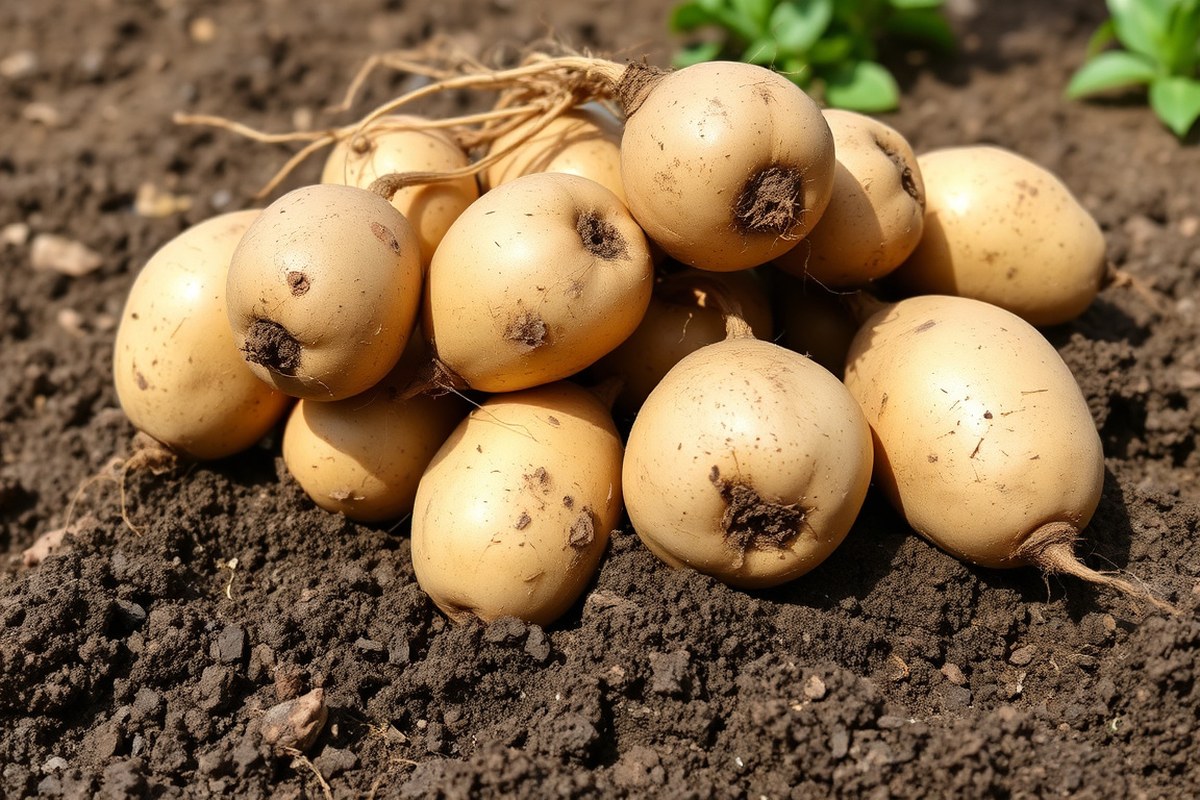
What are potato tubers? They are the thickened underground stems of the potato plant.
These tubers store nutrients to help the plant survive and grow new shoots. They develop below the soil surface and swell as they accumulate starch and water.
Potato tubers grow from buds on the underground stem, often called “eyes.” These eyes are small indentations where new shoots start to emerge. This natural form of plant reproduction makes potatoes easy to grow and multiply, especially for gardeners using seed potatoes.
Understanding potato tubers starts with knowing they act as storage organs. They keep energy in the form of starch and some sugars. This stored energy supports new growth and gives tubers their value as a staple food for humans and animals alike.
Key Takeaways
- Potato tubers develop from underground stems with bud-like eyes.
- They store energy mainly as starch to fuel plant growth.
- Potato eyes allow tubers to sprout new plants naturally.
- Tubers serve as nutrient reserves for the plant’s winter survival.
- They are the edible part of the potato plant, rich in starch.
- The tuber’s thickened stem tissue helps it grow underground safely.
What Exactly Is a Potato Tuber?

A potato tuber is a swollen underground stem used by the plant to store nutrients. Unlike roots, tubers have buds or “eyes” that can sprout into new plants. This ability to grow shoots shows tubers are not roots but specialized stems.
Tubers serve a storage function for energy in the form of starch. The potato is a stem tuber. It grows bigger to store food.
This helps the plant survive and grow. You can spot the difference because tubers have buds, while roots do not.
Many plants produce tubers, which come in different types like stem tubers and root tubers. Potato tubers grow from underground stems called stolons, not from roots. Gardeners plant tuber pieces with eyes.
These grow into new plants. Seeds are not needed.
Understanding the difference matters for growing potatoes. Since tubers have buds, you cut them into pieces with eyes before planting. Each tuber piece can grow a new plant.
This spreads potatoes faster than seeds. It’s more reliable too.
Confusing tubers with roots can lead to poor gardening results. Roots usually absorb water and nutrients, but tubers mainly store energy. This storage helps plants survive winter or drought and regrow when conditions improve.
A potato tuber is an underground stem. It swells to store food. It also helps grow new plants.
It’s different from roots, which lack buds and serve other functions. This biological fact guides how potatoes reproduce and how they should be planted in gardens.
How Potato Tubers Develop: From Plant to Underground Stem
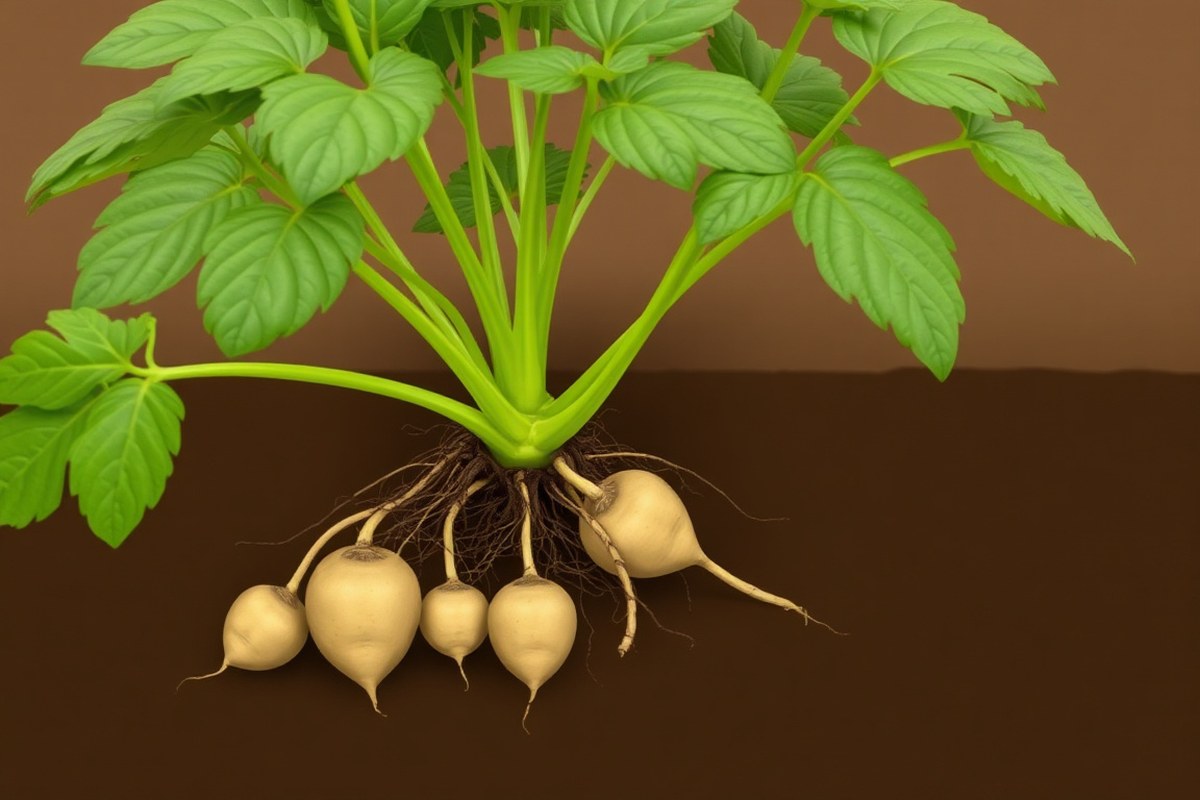
Potato tubers develop from underground stems called stolons. These stolons swell and thicken into tubers, storing energy for the plant. Hormones and environmental factors control when and how tubers form.
Growth Stages of Tuber Formation
The process starts when the sprouted eyes grow above ground into stems and leaves. Underground stolons then grow from these stems and reach into the soil. The tips of stolons swell as cells enlarge and starch accumulates, forming tubers.
The timeline varies by potato variety and conditions like temperature and light. Eventually, tubers grow larger while the plant’s above-ground parts age. Tubers can continue to develop until harvest.
Here is how tuber formation usually unfolds:
- Sprout eyes produce shoots above ground.
- Stems and leaves grow, enabling photosynthesis.
- Underground stolons develop at stem bases.
- Stolon tips start swelling as cells store starch.
- Tubers enlarge, pulling energy from leaves and stems.
- Plant foliage matures and slows growth.
- Tubers reach desired size for harvest.
Key Hormones Involved in Tuberization
Plant hormones trigger and regulate tuber growth. The hormone gibberellin usually promotes stem elongation but inhibits tuber formation. Lower gibberellin levels encourage tuber initiation.
Another hormone, abscisic acid, increases during tuberization, helping promote tuber growth and dormancy. The signal molecule StSP6A is also key, as it tells stolons to start swelling.
Balancing these hormones controls tuber timing. Overproduction of StSP6A can make tubers form earlier, even in long days when they normally wouldn’t.
Environmental Triggers for Tuber Development
Day length and temperature play major roles in tuber formation. Potatoes start to form tubers under short daylight hours. Cooler soil temperatures between 50 and 70°F (10 to 21°C) help this.
These conditions encourage potatoes to grow tubers underground. Long daylight can delay tuber growth.
Soil moisture and nutrient availability also matter. Moderate watering helps tubers swell, but excess moisture risks rot. Fertilizer rich in phosphorus and potassium supports tuber development better than excess nitrogen.
Light intensity influences leaf growth, which in turn feeds the tubers. Too much heat or drought stress can reduce tuber size or number.
Watch soil moisture closely. Too much or too little can stunt tuber growth or cause rotting.
Anatomy and Structure of Potato Tubers
A potato tuber has several parts that store energy. These parts also help the plant grow new shoots. They work together to keep the tuber alive.
The skin forms a protective outer layer that keeps moisture in and harmful microbes out. Just under the skin is the cortex.
It stores starch and nutrients. This helps the tuber survive through cold seasons.
You’ll notice small dimples on the tuber’s surface called eyes. These eyes are actually groups of buds or growth points located near nodes on the tuber. They’re important because each eye can sprout shoots that eventually grow into a new potato plant.
This capacity comes from the tuber’s nature as an underground stem. So it keeps those stem-like growing points.
Inside the tuber, the main storage area holds starch in large amounts. Starch is the tuber’s energy reserve made up of complex carbohydrates. Stored starch feeds the sprouting eyes.
The energy helps shoots break through the skin. Then the shoots can grow above ground.
The skin’s texture changes as the tuber matures, becoming tougher to protect the stored starch. Harvest potatoes after the vines die back. This makes the skin firm.
Firm skin protects tubers during handling and storage. Soft skin can cause early sprouting. Early sprouts waste the tuber’s energy before planting.
Eyes vary in size and number depending on the potato variety, which affects sprouting success. More eyes mean more growth points but also create more places for moisture loss. Keep tubers away from light.
Light makes them turn green from chlorophyll. Green tubers may produce bitter or toxic compounds.
Each tuber part helps store energy and grow new plants. The parts work together for storage and sprouting. The skin protects the tuber from damage.
The cortex and inner parts store energy. The eyes hold buds ready to sprout.
Knowing tuber parts helps you care for them. Proper harvest and storage lead to better sprouting.
How Long Potato Tubers Take to Form and Mature
Potato tubers usually take about 70 to 120 days to form and mature after planting. Early varieties may mature closer to 70 days.
Late-season ones need 100 to 120 days. This timeline depends on the potato type, environmental conditions, and planting methods.
The growth has three main phases. First is sprout emergence, lasting about two to four weeks, when shoots break through the soil. Next is vegetative growth, where stems and leaves develop.
This phase lasts two to three weeks. Tuber initiation and bulking happen underground.
They start about 30 days after planting. This process continues until harvest time.
Tuber initiation marks when underground stems begin swelling to form tubers. This phase is sensitive to soil temperature and moisture. Tubers grow fastest at soil temperatures between 60 and 70 degrees Fahrenheit.
Temperatures above 75 degrees slow tuber development. This causes the harvest to take longer. Proper watering during bulking ensures firm, well-sized potatoes.
After tubers mature, about 10 to 20 days before harvest, the plant tops die back. This signals that tuber growth has stopped and skin starts thickening.
Digging potatoes too early can lead to smaller tubers with thin skins that bruise easily. Leaving tubers in the ground too long increases the risk of sprouting and pest damage.
Weather also affects tuber timing. Cool, wet springs delay sprouting and growth, stretching maturity by weeks. Dry conditions during bulking reduce tuber size and quality.
Consistent moisture and moderate temperatures help tubers develop on schedule. Farmers and gardeners adjust planting dates based on local climate to hit the best harvest window.
Nutritional Value and Uses of Potato Tubers
Potato tubers provide significant nutrition, mainly from starch and key vitamins. They are popular for many cooking methods and also serve industrial and animal feed roles. Cooking changes the tubers’ resistant starch, affecting digestion and uses.
Macronutrients and Micronutrients in Tubers
Potato tubers mainly offer energy through starch, a carbohydrate stored underground. They also contain potassium, vitamin C, and dietary fiber, which support heart health and digestion. Resistant starch in raw potatoes slows digestion but mostly disappears after cooking.
The starch granules in potatoes are larger than in grains like barley or wheat. This means potato starch resists breakdown in animals’ rumens longer than other starches. That property impacts both human digestion and animal feed efficiency.
| Component | Amount (per 100g cooked potato) | Notes |
|---|---|---|
| Starch | 15-20g | Main energy source |
| Potassium | 400 mg | Supports muscles and nerves |
| Vitamin C | 20 mg | Helps immune function |
| Dietary fiber | 2 g | Aids digestion |
| Resistant starch (raw) | Varies, reduced by cooking | Slows digestion, improves gut health |
Potatoes provide more fiber and vitamins than many other starchy foods. Cooking reduces some nutrients like vitamin C but makes starch easier to digest. Resistant starch acts like fiber but breaks down quickly after heat exposure.
Culinary Variations by Tuber Type
Different potato types suit specific dishes. Floury varieties like King Edward are best for baking and mashing. Waxy types like Desiree work well for roasting or salads because they hold shape.
Cooking methods like boiling, roasting, or frying affect texture and nutrient retention. For more resistant starch, let cooked potatoes cool before eating. This changes their starch structure, helping blood sugar control.
Let boiled potatoes cool in the fridge for at least 12 hours to boost resistant starch.
Uncooked potatoes lose most resistant starch when normally cooked but may still offer fiber and vitamins. Some pigmented varieties also add antioxidants, improve by roasting.
Industrial and Animal Feed Uses
Potato tubers are a key starch source in industry, used in paper, textile, and adhesive production. Their starch properties make them valuable for these processes. Potato by-products from food processing feed livestock because of their high energy content.
Animal feed uses rely on slow starch digestion, which potatoes provide better than some grains. Farmers often feed boiled or raw potato peel waste to animals. This encourages efficient energy use without chemicals.
Avoid feeding green or sprouted potatoes to livestock because of natural toxins.
Using potatoes in industry or feed adds value beyond the kitchen. Their starch supports many products, while leftover tubers cut waste and boost farm economics.
Best Conditions for Growing and Storing Potato Tubers
Potato tubers grow best in loose, well-drained soil with a temperature near 60°F to 70°F. This range supports tuber bulking without stressing the plant. The space around tubers underground should be airy to help roots and stolons develop well.
Too high or too low soil temperature affects tuber size and yield. Tubers won’t grow properly if the soil stays too cold or waterlogged.
Mild drought during tuber bulking can lower size. But too much water can cause rot and lower quality.
After harvest, store tubers in a cool, dark place. Keep temperatures between 45°F and 55°F to slow sprouting. Avoid cold spots that can damage the tubers.
Humidity should stay around 85% to keep tubers firm and prevent shriveling. Avoid places with direct sunlight or heat sources, which cause tubers to spoil or sprout prematurely.
- Store potatoes in a ventilated, dark space to avoid sprouting.
- Keep temperature steady at 45°F to 55°F to balance shelf life and quality.
- Maintain 85% humidity to prevent shriveling and drying out.
- Avoid temperatures below 40°F to stop cold-induced sweetening.
- Handle tubers gently to prevent bruises and cuts that invite rot.
- Harvest when vines die back for mature tubers with better storage.
- Separate damaged tubers from healthy ones to stop spread of decay.
Common mistakes include storing tubers too cold or too hot. Too cold storage (below 40°F) causes sugars to build up, changing taste and cooking quality.
Too warm or dry storage makes potatoes sprout fast or shrivel. Bruised or cut tubers spoil faster and reduce overall storage time.
Maintaining the right temperature and humidity takes some effort. This effort improves your crop yield and storage life. The payoff makes the work worth it.
Cooler, stable environments that are not too wet protect tubers from sprouting and decay. Always check stored tubers regularly and remove any soft or sprouting ones early to avoid losses.
How Potato Tubers Sprout and Reproduce Vegetatively
Potato tubers sprout new plants from small buds called “eyes” on their surface. Each eye has a tiny shoot that can grow into a stem and leaves above ground. When you plant a tuber, its eyes break dormancy.
They start to grow roots below. The plant develops from these roots.
Tubers act as asexual reproductive organs, meaning they clone the parent plant without mixing genes. You can cut a tuber into pieces. Each piece must have at least one eye.
Plant the pieces to grow identical plants. This repeated sprouting lets gardeners propagate potatoes reliably without using seeds.
A seed potato is a tuber used for this vegetative propagation. It differs from a true seed, or botanical seed, which grows inside a fruit after flowering.
Potato plants can flower and sometimes produce these true seeds. But they are not common for growing potatoes in a garden.
True seeds come from sexual reproduction, mixing genes and producing genetic variety. Seed potatoes, however, produce new plants identical to the parent, making them easier to manage. Using seed potatoes avoids the challenges of germinating tiny true seeds and speeds up potato production.
Planting seed potatoes requires at least a few eyes on each piece for good sprouting. Cut tubers dry for a day or two to prevent rot before planting. Sprouts show up within 2 to 4 weeks.
Soil temperature affects this time. Ideal soil temperature is 50°F to 70°F.
Tuber Healing, Microbial Life, and Health Implications
Potato tubers heal wounds by forming a protective layer over damaged tissue. Microbes living on and inside tubers include both helpful and harmful types. The green color on potatoes results from sun exposure and can be toxic if eaten.
Healing Mechanisms in Tubers
When a potato tuber gets damaged, it produces a corky layer called suberin over the wound. This layer seals the opening, stopping water loss and blocking microbes from entering. The healing process usually takes a few days, depending on temperature and humidity.
The corky layer prevents dehydration and shields delicate inner tissues. It keeps the tuber healthy while buried underground or during storage. Cold temperatures around 50°F (10°C) slow healing, while warmer conditions speed it up.
Beneficial vs Harmful Microbes
Potato tubers host a mix of microbes, some protecting the tuber against disease. Good microbes form a core microbiome helping keep the plant healthy across different soils and years. They can suppress harmful bacteria and fungi that cause rotting.
Harmful microbes attack damaged tubers, leading to decay and spoilage. Common pathogens include soft rot and late blight fungi. Proper wound healing and cool, dry storage reduce harmful microbe growth.
Causes and Dangers of Green Potatoes
Potatoes turn green when exposed to sunlight or artificial light. Chlorophyll builds up in the skin, making the tuber look green. Along with chlorophyll, a toxic chemical called solanine forms under the skin.
Solanine causes nausea, headaches, and digestive problems if eaten in large amounts. Potatoes with green skin should be avoided or peeled deeply before use. Feeding green potatoes to livestock in large amounts can be harmful, so remove sprouts first.
Store potatoes in a dark, cool place to prevent them from turning green.
Step-by-Step Action Plan for Growing and Storing Healthy Potato Tubers
Follow these steps to grow strong potato tubers this season. Store them so they stay fresh for next season. Make sure they sprout well when you plant again.
- Before planting: Select certified seed potatoes free of disease. This helps prevent infections later.
- Planting day: Plant seed potatoes 4 inches deep in loose, well-draining soil. You’ll see shoots within 2 weeks.
- Week 3 to 4: Hill soil around plants as they grow to protect tubers from sunlight. Tubers form underground here.
- Week 8 to 10: Begin checking tubers by gently digging near the plant. They should feel firm to mature.
- Harvest time: Wait until plants turn yellow then carefully dig tubers. Avoid bruises for longer storage.
- After harvest: Cure potatoes in a cool, dark, and humid place for 1 to 2 weeks. This toughens their skins.
- Storage phase: Store cured tubers at 38 to 40°F in a dark place. Check regularly for sprouts or soft spots.
- Before next planting: Sort out shriveled or rotten tubers. Use healthy sprouts as seed potatoes.
Frequently Asked Questions
What Role Do Potato Tubers Play in Crop Rotation?
Potato tubers help break pest cycles and improve soil health. Rotating with other crops reduces disease buildup and maintains soil nutrients.
Can Potato Tubers Be Used to Feed Livestock Directly?
Yes, potato tubers provide energy and protein for animals like cows and rabbits. They should be fed in moderation due to starch content.
Are Potato Tubers Environmentally Sustainable to Grow?
Potato tubers require moderate water and fertilizer compared to other crops. They grow quickly, making them efficient for land use when managed well.
How Do Potato Tubers Differ from Sweet Potato Tubers?
Potato tubers are stems underground; sweet potatoes are root tubers. This affects their growth and how you plant or propagate them.
Can Potato Tubers Have Natural Pest Resistance?
Some potato varieties develop microbiomes that help resist pests and diseases. Choosing these can reduce pesticide needs.
What Happens If Potato Tubers Sprout Indoors at Room Temperature?
Sprouting uses stored nutrients and weakens the tuber over time. Store them cool and dark to delay sprouting.
Key Points to Remember
Potato tubers grow underground as nutrient-rich storage organs. They need the right soil and care to develop well. Start with good seed potatoes and proper storage to enjoy a healthy crop every year.