When to Fall Fertilize Grass: Best Timing, Fertilizers & Pro Tips
Knowing when to fall fertilize grass makes a big difference in lawn health. The best time is usually late October to early November.
This is about 2 to 3 weeks before the first hard frost. Applying fertilizer then strengthens roots and prepares grass for winter without encouraging vulnerable blade growth.
Watch soil temperatures closely before you fertilize. For cool-season grasses, aim for soil temps between 50 and 65 degrees Fahrenheit. Fertilizing too early is a waste if soil is warmer than 65.
Grass uses nitrogen on new shoots. Frost can damage these shoots.
The weather staying warm past usual times means you should delay feeding. Wait until the soil cools down. Timing your last mow when temperatures are near 60 degrees helps.
This makes the fertilizer work better. This reduces disease risks and helps grass soak up nutrients more efficiently.
Key Takeaways
- Apply fall fertilizer 2 to 3 weeks before the first expected hard frost.
- Check soil temperature, fertilize cool-season grass between 50 and 65°F soil temps.
- Delay fertilizing if soil temperature stays above 65°F to prevent waste.
- Use a winterizer fertilizer high in potassium for late fall applications.
- Time last mowing when daytime temperatures hover near 60°F for nutrient uptake.
- Stop fertilizing once grass growth fully slows or ends with colder temps.
When Is the Best Time to Fertilize Grass in Fall?

The best time to apply fall fertilizer depends on soil temperature and frost timing. Aim to fertilize when soil temperature falls below 65°F but stays above 50°F. This window helps avoid wasting nitrogen on late grass growth, which frost can kill easily.
Start feeding your lawn about 6 to 8 weeks before frost. This timing helps your grass prepare for winter. Check local frost dates to know when to start.
If frost usually comes by November 1, plan fertilizer earlier. Apply fertilizer between mid-September and early October.
This keeps your lawn healthy. This timing lets grass absorb nutrients and store energy to survive winter.
Warm-season grasses need an earlier fall feed, typically finished by mid-September. They stop growing sooner, so extra nitrogen after that risks weak new shoots. Cool-season grasses grow later into fall.
You can fertilize until mid-November if soil is soft enough. Avoid fertilizing once soil freezes.
Late fall fertilizer works as a winterizer. It focuses mostly on potassium. Potassium helps with cold tolerance and disease resistance.
Apply winterizer 2 to 3 weeks before frost or ground freeze. This usually means late October or early November.
Timing matters for best results. Wait until the grass is still green and soil above 50°F to avoid fertilizer loss.
Don’t fertilize after the soil drops below 50°F or grass stops growing. Cold soil reduces fertilizer uptake and wastes your money. Your lawn is dormant when there’s no new growth.
The color changes to dull green or brown. These signs stay consistent during dormancy.
You can check soil temperature with a basic thermometer at 2 to 4 inches deep. Measure in the morning for best accuracy. It’s best to time feeding based on soil conditions.
Don’t just follow calendar dates. This is important in areas with changing fall weather.
How to Adjust Fall Fertilizing for Different Grass Types
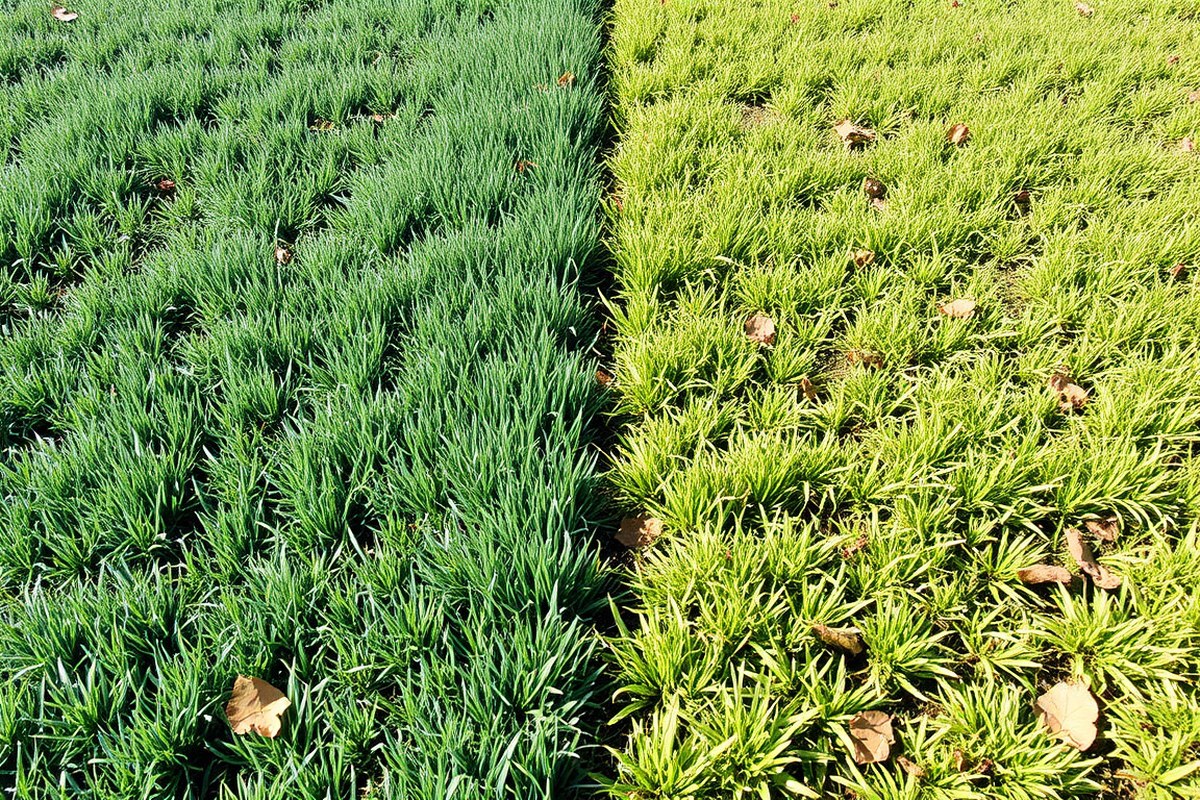
Cool-season and warm-season grasses need different fertilizing schedules and nutrients in fall. Cool-season grasses benefit from stronger nitrogen feedings when soil is between 50 and 65°F. Warm-season grasses need lighter feeding earlier, focusing on potassium, and often stop fertilizing by mid-September.
Cool-Season Grass Fertilizing Timing and Needs
Cool-season grasses like Kentucky bluegrass grow mostly in early fall. They keep growing through late fall. Tall fescue behaves the same way.
These grasses do well with high-nitrogen fertilizer in fall. Apply it in September and early October. Soil temperature should be 55°F or higher.
Give a second feeding in late October or early November. Use more potassium with moderate nitrogen. This helps grasses store energy over winter.
Spread roughly 1 pound of nitrogen per 1,000 square feet during fall. Pick a quick-release nitrogen to boost fast grass development. Avoid delaying fertilizing too long after the growing season ends.
Warm-Season Grass Fertilizing Timing and Needs
Warm-season grasses like Bermuda and Zoysia slow down as soil cools below about 70°F. Fertilize lightly by mid-September, focusing on potassium in early fall. Potassium strengthens roots and helps grass handle stress.
Use less nitrogen at this stage. Stop applying nitrogen fertilizer well before the first frost or by late September in most areas.
St. Augustine and centipede grasses need low nitrogen in early fall. Stop feeding them before winter arrives. This prevents excess growth in cold months.
Excess nitrogen late in the season can harm the grass by encouraging weak growth. Wait to fertilize again until spring green-up.
Regional Climate Considerations
Cold regions require earlier fall fertilizing for cool-season grasses. Start feeding in late August or early September. This fits their growth schedule before freeze.
In mild areas with mixed grasses, timing changes with soil temperature. Apply fertilizer when soil reaches 55 to 60°F. The exact time depends on grass type.
Fertilizing warm-season grasses in the deep south during fall is not advised. These grasses go dormant late. They don’t use nitrogen well in this season.
Instead, focus on soil tests and local extension guidelines. Timing closely follows soil temperature drops that match each grass’s growth cycle.
| Grass Type | Common Grasses | Early Fall | Late Fall | Final Cutoff |
|---|---|---|---|---|
| Cool-season | Kentucky bluegrass, tall fescue, fine fescue, perennial ryegrass | Sept to early Oct: nitrogen-rich feeding | Late Oct to early Nov: most important feeding, high potassium | When growth slows but grass still green |
| Warm-season | Bermuda, zoysia, St. Augustine, centipede | Early fall, after summer heat: light potassium, low nitrogen | Skip | End of Sept, stop nitrogen |
| Regions / Zones | Grass, soil temp | Early Fall Window | Late Fall Window | |
| Upper Midwest / Northeast (Zones 3, 5) | KBG, fine fescue, 55°F dropping | Late Aug, Early Sept | Mid Oct, Early Nov | |
| Transition Zone (Zones 6, 7) | Tall fescue, zoysia, and Bermuda grasses need feeding at different soil temps. Warm-season grasses prefer around 60°F soil warmth. Cool-season types like it near 55°F. | Early Sept, Mid Sept | Late Oct, Mid Nov | |
| Deep South / Gulf (Zones 8, 10) | St. Augustine, centipede, Bermuda; 70°F dropping | Late Sept, Mid Oct | Do not apply nitrogen |
The table shows when and what nutrients your lawn needs. It varies by grass type and where you live. Use it to plan your fertilizing carefully.
You’ll see cool-season grasses need two feedings. Warm-season types mostly need a single early fall treatment.
Don’t exceed recommended nitrogen rates, too much late in the season worsens winter damage risks.
What Types of Fertilizers to Use and When in Fall
Use a balanced fertilizer with higher nitrogen early in fall. Later, switch to a winterizer rich in potassium to boost roots. Slow-release types feed your lawn gradually, while fast-release give quick growth.
Starter Fertilizers for Early Fall
Early fall is best for a balanced fertilizer like 20-5-10. It helps grass recover from summer heat and stress. Apply it from late August to early September, then water it deeply.
This formula supports green-up without pushing weak new blades. Nitrogen in higher amounts fuels leaf growth and color. Phosphorus supports root recovery, and potassium strengthens overall turf health.
Winterizer Fertilizers for Late Fall
Late fall’s winterizer fertilizer usually has a lower nitrogen but higher potassium ratio. This mix builds strong roots and stores carbs for winter. Apply it late October to early November, about 2, 3 weeks before the ground freezes.
Too much nitrogen at this time can cause new shoots that freeze off. Focus on potassium to make roots tough and durable over winter. Slow-release formulas reduce nutrient loss while feeding your grass steadily.
| Timing | NPK Ratio | Purpose | Typical Application Period |
|---|---|---|---|
| Early Fall | 20-5-10 or similar | Supports leaf growth and summer recovery | Late Aug to Early Sept |
| Late Fall (Winterizer) | 12-0-24 or similar | Builds strong roots, stores energy for winter | Late Oct to Early Nov |
This table shows common nutrient mixes for fall fertilizing. Early fall favors nitrogen for quick growth. Late fall cuts nitrogen to prevent weak shoots, boosting potassium instead.
Organic vs Synthetic Options
Organic fertilizers release nutrients slowly and improve soil health. They work well for steady, long-term feeding but cost more and act slower. Synthetic fertilizers give faster visible results and cost less but need careful timing.
Choose organic if you want to build soil health over years. Pick synthetic for quick fixes or seasonal boosts. Either type can be slow-release or fast-release, so check the label before buying.
How Much Fertilizer to Apply for Effective Fall Feeding
Apply 0.75 to 1 pound of nitrogen per 1,000 square feet in fall. This range supports most lawns’ health heading into winter. To figure out the fertilizer needed, know your lawn’s size and the nitrogen percent on the package.
Why Nitrogen Amount Matters in Fall Fertilizing
Nitrogen feeds your grass, helping it build strength before winter. Using too much can burn the grass or waste product.
Applying up to 1 pound per 1,000 square feet works well. The Virginia Cooperative Extension confirms this amount is safe.
Fertilizers vary in nitrogen content. So applying the right amount depends on the bag’s N percentage. This keeps your lawn healthy without overfeeding.
How to Calculate Fertilizer Amount by Lawn Size
Start by measuring your lawn’s square footage. Multiply the lawn’s length by its width or find the size in your deed. Apply 0.75 to 1 pound of nitrogen for every 1,000 square feet.
For example, a 5,000-square-foot lawn needs 5 pounds of nitrogen. That’s 1 pound times 5 (thousand square feet). You then use the fertilizer bag’s N% to find the total product weight needed.
Step-by-Step Calculation Using Fertilizer N Percentage
Follow these steps to calculate how much fertilizer to spread:
- Check the fertilizer bag for the nitrogen percentage (N%).
- Determine the total nitrogen pounds you want per 1,000 square feet (0.75-1.0 lb).
- Multiply the number of 1,000 square-foot units in your lawn by that nitrogen rate.
- Divide the total nitrogen amount by the fertilizer N% (expressed as a decimal).
- The result is the amount of fertilizer (in pounds) to apply.
This method matches fertilizer use precisely to your lawn size and desired nitrogen.
Worked Example for a 4,000 Sq. Ft. Lawn
With a 4,000-square-foot yard, applying 1 pound per 1,000 means 4 pounds total. Multiply 4 by 1 to get the nitrogen amount.
Assume your fertilizer shows 20% nitrogen (N=20). Convert 20% to decimal, 0.20. Divide 4 pounds by 0.20:
| Total Nitrogen (lb) | 4 |
|---|---|
| Nitrogen Fraction (N%) | 0.20 |
| Fertilizer Amount (lb) | 4 ÷ 0.20 = 20 pounds |
To give 4 pounds of nitrogen, spread 20 pounds of fertilizer over 4,000 square feet. This assumes your fertilizer has 20% nitrogen content.
Adjusting Amounts for Multiple Fall Applications
Some split their total fall nitrogen into two trips, 65% first and 35% late fall. For 2 pounds total per 1,000 square feet, apply 1.3 pounds first, then 0.7 pounds later.
This helps nourish the lawn longer and supports late-season growth. Keep each application under 1 pound per 1,000 square feet to avoid overfeeding.
Step-by-Step Guide to Applying Fall Fertilizer Correctly
Applying fall fertilizer the right way helps your lawn absorb nutrients better. Use a spreader to get even coverage and avoid overfeeding any patch. Watering afterward moves fertilizer into the soil, starting nutrient uptake quickly.
Mow your lawn before fertilizing to keep grass blades short and expose the soil slightly. This step lets the fertilizer reach roots more effectively. After spreading fertilizer, wait a few days before mowing again to avoid cutting away fresh nutrients.
Follow these steps to fertilize your lawn properly in fall. The process is straightforward but requires attention to timing and equipment. You can use a broadcast or drop spreader, depending on your lawn size and shape.
- Check soil moisture: Water lightly a day before if the soil is dry. Fertilizer sticks better to moist ground and reduces runoff risk.
- Mow your lawn: Cut grass to about 2 to 3 inches tall. Removing clippings helps spread fertilizer evenly without clumps.
- Calibrate your spreader: Set the spreader to the fertilizer bag’s recommended rate. This avoids applying too much or too little.
- Spread fertilizer: Walk at a steady pace, overlapping slightly on each pass. Use a drop spreader for precision near edges or beds.
- Water the lawn: Apply about 0.5 inch of water soon after spreading. This helps fertilizer soak in and prevents it from washing away.
- Delay mowing: Wait at least 3 to 4 days before mowing again. This prevents fertilizer loss and allows nutrients to settle in the soil.
Don’t spread fertilizer if rain is expected within 24 hours. It can cause runoff and pollution.
Common Mistakes in Fall Fertilizing and How to Avoid Them
Fertilizing too early in fall can harm your grass by encouraging growth right before frost. This stresses the lawn and can cause damage during cold weather. On the other hand, fertilizing too late risks feeding dormant grass, which won’t absorb nutrients effectively.
Applying the wrong fertilizer rates often leads to over-fertilizing. Excess nutrients wash away and pollute nearby water sources. Using too little fertilizer leaves your grass weak and unable to store energy for winter.
Ignoring soil temperature is also a frequent mistake. Organic fertilizers need soil above 50°F for microbes to break them down.
When soil cools, these fertilizers stop working until spring. This wastes your late fall effort.
- Fertilize cool-season grass about 2 to 3 weeks before the first frost.
- Space two fall feedings 4 to 6 weeks apart for best results.
- Check soil temperature before applying organic fertilizers in late fall.
- Avoid fertilizing before heavy rain to prevent nutrient runoff.
- Use soil test results to apply the right nutrient amounts.
- Apply fertilizer only when grass is actively growing, not dormant.
Fix problems from improper fertilizing by adjusting timing and rates next season. You can restore soil health with proper aeration and overseeding if the lawn thins out. Put fertilizer on dry days.
Avoid heavy rain for a few days. This prevents runoff.
Warm-season grasses need fertilizing when soil temps sit between 60 and 85°F. For cool-season lawns, two feedings in early and late fall during active growth keep grass resilient. Watch soil temperature and grass growth.
This helps you avoid problems. It keeps your lawn healthy for winter.
How Fall Fertilizing Supports Weed Control and Lawn Health
Proper fall fertilizing helps reduce weeds by promoting thicker, healthier grass. Dense turf blocks sunlight and space, which keeps weeds from taking hold. Studies show feeding your lawn in fall reduces weeds by up to 50%.
It works by making the grass thicker and healthier. Thicker grass crowds out weeds naturally.
You might wonder if fertilizing is necessary when your lawn looks healthy. Feeding your lawn in fall boosts root growth and nutrient storage. This extra energy helps grass survive the winter and bounce back strong in spring.
Fall fertilizers for cool-season grass use nitrogen that releases slowly over time. This encourages steady root growth and not excessive leaf growth. Purdue recommends about 1.75 pounds of nitrogen per 1,000 square feet, split across two feedings in fall.
A late fall feeding, rich in potassium, supports winter hardiness and disease resistance. Potassium strengthens grass cell walls, helping it resist cold, drought, and fungal diseases. Apply fertilizer before the ground freezes for best results.
Late November works in mild climates. Applying too late can limit its benefits.
Skipping fall fertilization leaves your grass weak and more vulnerable to disease, moss, and winter kill. Healthy roots from fall feeding improve drought resistance and nutrient absorption for winter. Grass without a strong root system struggles the following spring and invites more weeds.
Fertilizing costs are moderate overall. Use a slow-release nitrogen mix first. Later, add fertilizer with potassium for added health.
You’ll need a spreader for even application and to measure coverage by square feet. Overfeeding or late fertilizing past November risks promoting weak top growth that freezes off.
When to Consider Professional Lawn Fertilizing Services
Hiring a pro for fall fertilizing helps if your lawn is large. Complex soil conditions also make hiring worth it.
Experts know how to time applications based on soil temperature, not just air temperature. This helps avoid feeding during warm spells above 80°F that can waste fertilizer or harm grass.
Professionals often test your soil before applying fertilizer, which saves money and improves results. A soil test costs about $20 at your local extension. It shows nutrient needs and pH levels.
This article explains how much nitrogen to use in fall. It also says many lawns don’t need extra phosphorus then.
Choosing the right product is tricky, especially if you prefer organic options. Pros choose the best fertilizer mix like 24-4-12 or organic ones. They might use feather meal in organic blends.
They manage watering to avoid drought or water restrictions. This helps protect your lawn and the environment.
Look for companies with good reviews and clear pricing on fall fertilizing. Ask if they include soil testing and a personalized fertilizer plan. Make sure they know your grass type for proper timing.
Cool-season grass needs two feedings; warm-season one. Reliable services often offer year-round care too, making seasonal upkeep easier.
Prices depend on lawn size and services offered. Fall fertilization alone usually costs $50 to $150. Hire professionals if your schedule is busy or your lawn struggles.
It can save you time and effort. Pros save you time and reduce guesswork, often leading to greener, thicker grass in spring.
Delay fertilizing if soil moisture is low. Water the lawn 1, 2 days before applying fertilizer.
Step-by-Step Action Plan for Fall Fertilizing
Use this plan to feed your lawn at the right time with the right fertilizer. Follow each step and watch your grass get greener and stronger.
- Two weeks before first frost: Check your local frost date online. Plan to fertilize your lawn in this window when grass is still actively growing.
- The day before fertilizing: Mow your lawn to the recommended height for your grass type. This helps fertilizer reach the soil better and encourages root growth.
- On fertilizing day: Spread a slow-release fertilizer evenly over your lawn. Use a spreader for precise coverage and prevent burning the grass.
- Immediately after fertilizing: Water your lawn lightly to help fertilizer soak into the soil. Avoid heavy watering that might wash nutrients away.
- One week later: Inspect your lawn for any brown spots or uneven color. Adjust your fertilizer amount next season if you see patchy growth.
- Four weeks after fertilizing: Apply a pre-emergent weed control if needed. Fertilizing supports weed prevention chemicals to keep your lawn healthy.
- End of fall: Rake leaves and debris regularly. This keeps fertilizer working effectively and prevents lawn diseases over winter.
Frequently Asked Questions
Can I Fertilize My Lawn in Late Fall If the Grass Looks Dormant?
Yes, apply a winterizer fertilizer 2-3 weeks before the first hard frost. This feeds the roots and boosts cold resistance before dormancy.
Is It Better to Fertilize Before or After Overseeding in Fall?
Use starter fertilizer right after overseeding or wait until new grass sprouts. This helps young grass get nutrients for strong growth.
How Does Soil Temperature Affect Fall Fertilizing Timing?
Fertilize when soil temperatures are above 40°F but below 65°F for best nutrient uptake. Grass uses fertilizer efficiently in this range.
Should I Stop Fertilizing Once My Grass Stops Growing in Fall?
Yes, stop once growth halts to avoid wasting fertilizer and prevent disease risks. The grass won’t absorb nutrients during dormancy.
Can Fall Fertilizing Help Reduce Lawn Weeds?
Regular fall feeding thickens grass, which blocks weed growth by up to 50%. Strong lawns outcompete weeds naturally.
What’s the Risk of Applying Nitrogen Fertilizer Too Late in Fall?
Too late, nitrogen fuels weak blade growth that frost damages easily. Use quick-release nitrogen only early in fall for best results.
Before You Go
Fertilizing your lawn in fall helps grass store nutrients for winter and spring growth. Start your fertilizing schedule two weeks before frost for best results. Grab a slow-release fertilizer next time you shop and give your lawn the boost it needs.