How to Figure Mulch Amounts: Complete Steps and Cost Comparison
Start by measuring your garden bed to find its square footage. Choose a mulch depth between 2 and 4 inches. This range provides good coverage and helps hold moisture.
Calculate how much mulch you need using cubic feet. Multiply the area (in square feet) by your chosen depth (in feet), then divide by 27 to convert to cubic yards. This gives you the amount to order.
If your bed isn’t a simple shape, divide it into smaller sections for accurate measurement. Measuring carefully prevents buying too much mulch. Also, consider mulch type, heavier options like bark may cost more to transport.
Key Takeaways
- Measure your garden bed’s length and width in feet for accurate area.
- Use 2 inches depth for decorative mulch, 3-4 inches for weed control.
- Convert mulch volume from cubic feet to cubic yards for ordering bulk.
- Calculate separate areas for oddly shaped beds, then add totals together.
- Choose mulch type knowing bark mulch bags weigh around 20 pounds each.
- For top-ups, buy only 1-1.5 inches depth to save money and effort.
How to Calculate the Amount of Mulch Needed
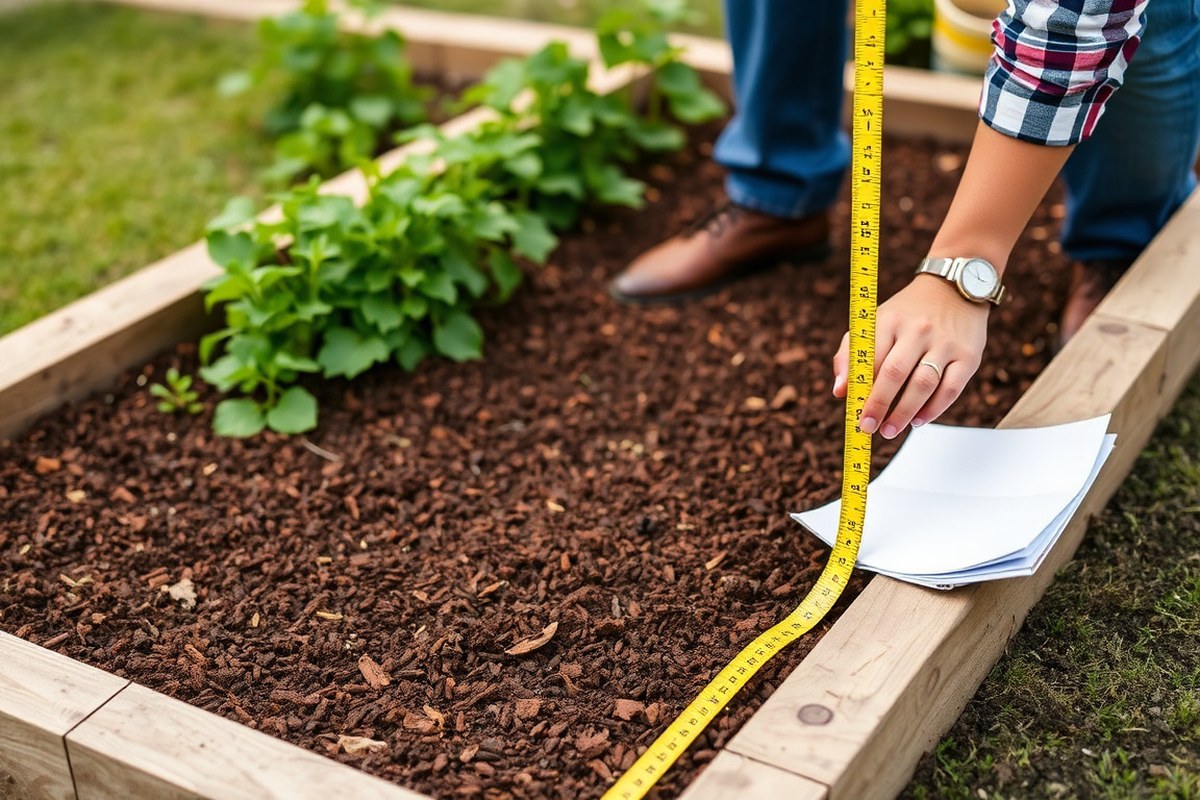
To find how much mulch you need, first measure your bed. Then, decide how deep you want the mulch to be. Multiply the area by the depth to get volume.
Mulch volume is measured in cubic feet or cubic yards. Knowing these numbers helps to buy the right amount without waste or shortage.
Calculate the volume for rectangular or square beds by multiplying length, width, and depth. Depth is key because it shows how thick the mulch layer will be. A common depth is 3 inches, which works well for many plants and weed control.
For circular beds, first find the area using the radius. Multiply that area by your desired mulch depth. This gives you the volume needed.
Mulch is usually sold by the bag. You need to convert your volume into bags.
This way, you know how many bags to buy. Bags usually contain 2 cubic feet of mulch in the US.
Follow these steps to figure out how much mulch to get. Use examples for different bed shapes. Then convert your volume to bags or cubic yards.
- Measure the length and width of your rectangular mulch bed in feet. For example, a bed 10 ft long and 4 ft wide.
- Decide the mulch depth in inches. A standard depth is 3 inches for plant beds.
- Convert the depth to feet by dividing inches by 12. So, 3 inches ÷ 12 = 0.25 feet.
- Calculate volume in cubic feet: length × width × depth (in feet). Example: 10 × 4 × 0.25 = 10 cubic feet.
- Divide the cubic feet by 27 to get cubic yards. One cubic yard equals 27 cubic feet. This helps when you need larger quantities. Example: 10 ÷ 27 ≈ 0.37 cubic yards.
- To find how many bags to buy, divide cubic feet by bag size. Most bags hold about 2 cubic feet of mulch. Example: 10 ÷ 2 = 5 bags.
- For circular beds, find the area with formula π × radius². Then multiply area (square feet) by depth (feet) for volume.
- Use this formula to find cubic yards: length times width times depth (inches), divided by 324. It makes the math quick and easy. For a 10 ft by 4 ft bed at 3 inches deep, do this math. Multiply 10 by 4 by 3, then divide by 324. The result is 0 point something cubic yards.37 cubic yards.
Calculations that ignore depth lead to too little or too much mulch. Depth affects water retention and temperature control. Most bags label volume in cubic feet so converting cubic yards to bags prevents overbuying.
For example, a circular bed 6 ft in diameter needs radius 3 ft. Area = 3.14 × 3² = 28.3 square feet.
Mulch at 3 inches deep equals 28.3 × 0.25 = 7.1 cubic feet. That’s about 4 bags of 2 cubic feet each.
Measuring Different Garden Bed Shapes Accurately

Measure irregular garden beds by breaking them into simple shapes, like circles, triangles, and rectangles. Calculate each shape’s area separately, then add them together for total coverage. Use those areas and your chosen mulch depth to find the volume needed.
Measuring Circular and Curved Beds
For round beds, measure the radius, which is the distance from the center to the edge. Then use the formula: area = π × radius² (π is about 3.14). That gives you the square feet for that circular bed.
For beds with curves but no complete circle, break it into smaller parts or use a bendable tape to measure each segment accurately. Add those segments’ areas after converting each to simple rectangles or circles.
Calculating Triangle and Trapezoid Area
Triangle beds need the base length and the height (the distance from base to opposite corner). Calculate the area with: base × height ÷ 2. For example, a 15-foot base and 10-foot height gives 75 square feet.
Trapezoids have two parallel sides of different lengths and a height. Use (base1 + base2) × height ÷ 2 to find the area. Record each length carefully with a tape measure for the best results.
Estimating Volume for Multiple Beds
Measure each bed separately, break oddly shaped ones into simple shapes, and calculate all areas. Add these areas to get combined area. Multiply by your mulch depth (in feet, converted from inches) to find the total volume.
To buy mulch by the yard, divide your total cubic feet by 27 to get cubic yards. Bagged mulch shows coverage in cubic feet, so use that number for your math.
- Measure length and width or radius of each bed piece.
- Calculate each area using the right formula for the shape.
- Add all areas for total square footage.
- Decide desired mulch depth (convert inches to feet by dividing by 12).
- Multiply total area by mulch depth to get cubic feet.
- Divide cubic feet by 27 for cubic yards, if needed.
- Use numbers on mulch bags or bulk orders to finalize purchase.
Double-check your measurements before ordering mulch to avoid buying too much or too little.
Choosing the Right Mulch Depth for Different Uses
Most mulch types work best at 2 to 3 inches deep. This applies to flower beds and trees. You don’t need to add more than that.
Chunkier mulches like bark or straw need 3 to 4 inches. They work well on paths and slopes.
This thickness keeps them in place better. The right depth stops weeds, holds moisture, and looks good without harming your plants or soil.
Recommended Depths for Common Mulch Types
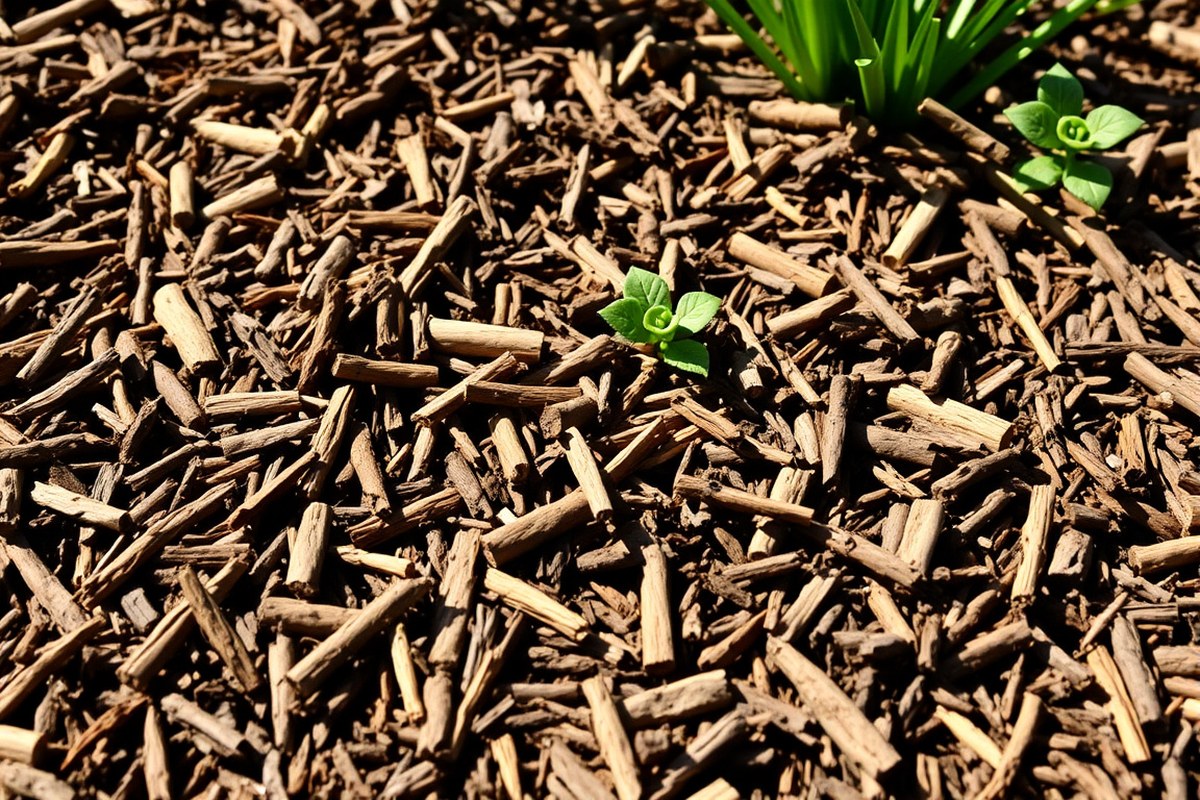
Different mulch materials call for slightly different depths. Shredded hardwood and leaf mold usually stay effective at 2 to 3 inches deep. Bark nuggets and straw pine needles need 3 to 4 inches deep.
This helps stop weeds and keeps mulch from washing away. Thicker layers work best here.
| Mulch Type | Best For | Typical Depth (inches) | Lasts | Notes |
|---|---|---|---|---|
| Shredded hardwood | Beds, trees, paths | 2-3 | Medium | Looks neat, stays put |
| Bark nuggets | Decorative beds | 2-3 | Long | Slow to break down, may float |
| Shredded leaves/leaf mold | Veg and flower beds | 2-3 | Short-Medium | Feeds soil, avoid matting by applying thin layers |
| Straw pine needles | Veg beds, berries | 2-3 | Short | Good for moisture, breaks down quickly |
Following these depths helps mulch do its job without harming your plants. Applying thicker layers of fine mulch can lock up nitrogen and harm your soil
Adjusting Depth by Garden Use
Flower beds and shrubs work well with 2 to 3 inches of mulch. Keep mulch a few inches away from plant stems to prevent rot.
Around trees, spread mulch 2 to 3 inches deep in a wide ring. But keep it 3 to 6 inches from the trunk itself.
Paths and slopes need thicker mulch layers, around 3 to 4 inches. Chunky mulch like bark or straw helps mulch stay put on paths and hills, avoiding wash-offs. Container plants only need a thin mulch layer.
About 1 to 2 inches helps hold moisture. It also stops soil from splashing out.
Avoiding Too Shallow or Too Deep Layers
Applying mulch less than 2 inches won’t block weeds well or keep moisture in. Mulch deeper than 4 inches may suffocate roots or cause mold. Fine-textured mulches, like shredded wood, shouldn’t exceed 3 inches.
Check existing mulch before adding more. For beds mulched last season, adding 1 to 1.5 inches is enough.
Adding too much mulch drives up costs and can harm plants. Keep mulch clear of stems and trunks to avoid rot and pests.
How Mulch Type Affects Quantity and Weight
Different mulch types weigh and feel different. This changes how thick the layer should be. It also affects how much mulch you’ll need.
Organic mulches like wood chips shrink as they dry and settle after spreading. You should plan to add extra to make up for this difference.
Synthetic mulches usually keep their volume better but weigh more. So handling and transportation need more care.
Wood mulch is common but varies in density based on the wood type. For example, softwood chips are lighter than hardwood chips. They also lose volume because they break down faster.
You want to start with a 3-inch thick layer. This helps keep the coverage as the mulch settles.
It prevents bare spots over time. Shredded mulch compresses quicker than larger bark chunks.
| Mulch Type | Volume After Settling | Weight Range (per ft³) | Density Notes |
|---|---|---|---|
| Wood Chips (Softwood) | 75-80% | 8-12 lbs | Lighter, more air space, settles moderately |
| Bark Chips (Hardwood) | 70-75% | 10-14 lbs | Denser, decomposes slower, lasts longer |
| Rubber Mulch | 95-100% | 20-25 lbs | Heavy, does not decompose or settle |
| Dyed Mulch | 75-80% | 9-13 lbs | Similar to wood mulch, color additives may affect |
| Shredded Hardwood | 65-70% | 11-15 lbs | Fine texture; compacts and settles quickly |
Rubber mulch keeps its shape and volume well. So it only needs a 2-inch layer usually. It weighs about twice as much as organic mulch per cubic foot.
Heavy mulch means transport can cost more. It also takes more effort to move it during installation. Keep this in mind when planning your project.
This mulch won’t add nutrients to the soil. But it reduces the need for yearly replenishing.
The moisture content also changes the weight and working time. Wet mulch can weigh 20, 30% more, making bags and bulk loads heavier. You need more effort spreading it evenly when wet.
To plan purchases, multiply the settled volume by about 1.25 for organic mulches to cover loss through settling and compaction. For synthetic mulches, use the volume needed without much increase.
Calculating Cost: Bags Versus Bulk Mulch Purchasing
Bulk mulch tends to cost less per cubic yard than bagged mulch. One cubic yard equals 27 cubic feet.
That matches about 13.5 bags of 2 cubic feet each. Buying bulk saves money on bigger jobs and cuts store trips.
To see how many bags match one cubic yard, use this: Divide 27 by your bag size in cubic feet. This gives you the bags per cubic yard.
For example, if your bags are 3 cubic feet, divide 27 by 3. You get 9 bags to equal one cubic yard.
Considering costs, a 2 cubic-foot bag might cost $8. So, 13.5 bags cost about $108 for one cubic yard. Bulk mulch prices change by location but usually cost less.
Expect to pay about $50 to $70 per cubic yard. Your exact price depends on where you live.
Hidden costs matter too. Bags are heavy to carry and take up car space. You also spend more time unloading and handling them.
Bulk delivery can add delivery fees but saves your time and effort. It’s better for big areas.
- Calculate how many cubic yards you need first
- Use the formula: 27 ÷ bag size (in cubic feet)
- Compare total cost: bags cost more per cubic yard than bulk
- Include delivery fees if buying bulk mulch
- Think about your ability to carry and store many bags
- Choose bags for small, detailed areas or mix with bulk for big jobs
For example, a circular bed 10 feet in diameter at 3 inches depth needs about 0.73 cubic yards. That’s about 10 bags of 2 cubic feet or just under 1 bulk cubic yard. Bags priced at $8 each add up to about $80.
Bulk mulch costs around $60, plus delivery fees. Buying in bulk saves around $20 here.
Buying mulch in bulk saves money for large projects but demands space and organizes delivery.
Choosing bags makes sense for small patches or easy transport needs. Bulk mulch suits bigger spaces and lets you spread mulch faster. Calculate how many bags or cubic yards you need first.
Add all costs, including delivery, to compare prices. This helps you buy the right amount for less.
Best Practices for Applying and Maintaining Mulch
Spread mulch in even layers about 2 to 4 inches deep. Keep mulch away from plant stems. Avoid piling mulch directly on stems.
Refresh or add mulch when the layer shrinks below 2 inches or once a year. Put landscape fabric under mulch to help control weeds.
The fabric does not reduce mulch needed. You still apply the same mulch amount.
Proper Mulch Spreading Techniques
Apply mulch on a mild day after the first hard freeze to protect soil and plants. Keep mulch a few inches away from tree trunks and plant stems to prevent rotting. Use mulch to cover the soil evenly without piling it too thick.
- Clear debris and weeds from the garden bed area.
- Loosen the soil surface with a rake or garden fork.
- Place cardboard or newspaper over bare soil if desired for extra weed control.
- Soak cardboard with water to help it settle and break down.
- Make a 2 to 3 inch mulch layer for new beds. Use 1 to 2 inches for topping up mulch. Spread mulch evenly for best results.
- Keep mulch about 3 to 4 inches away from plant bases and trunks.
- Use a rake to smooth and level the mulch surface.
- Water the mulch layer lightly to help it settle in place.
Seasonal Mulch Maintenance Schedule
Check mulch depth every spring or fall and add more if less than 2 inches thick. Mulch breaks down over time, so topping up yearly keeps soil protected. Don’t add too much mulch at once to prevent problems.
Thick mulch layers block water from reaching roots. They also block air from roots.
Remove any old mulch that is moldy or compacted before adding new layers. Use about 1 to 2 inches when refreshing mulch. So total depth stays near 2 to 4 inches.
Mulch applied too early in spring can smother growth. So wait for after hard frost.
Landscape Fabric and Mulch Volume Considerations
Landscape fabric blocks weeds but water and air still need to pass through. It does not reduce how much mulch you should apply on top. Use three or more inches of mulch over fabric for the best protection and appearance.
Fabric can slow mulch breakdown, so plan on refreshing mulch less often if used. It helps prevent weeds but can trap moisture, which might harm some plants. Always allow space around stems and trunks for airflow, regardless of fabric.
Common Mistakes When Figuring Mulch Amounts and How to Avoid Them
One common mistake is mixing measurement units or using the wrong formula when you figure mulch. For example, mixing feet and inches causes big errors. Calculating area without same units also leads to mistakes.
These errors affect your mulch quantity. This mistake makes you buy too much or too little mulch.
Buying too much wastes money. Buying too little leaves bare spots.
Another problem is ignoring existing mulch. Adding fresh mulch over old mulch affects the thickness. You must adjust your calculation when layering mulch.
Otherwise, the mulch layer gets too thick. Too much mulch stops air and water from reaching plant roots. That can cause root rot or attract pests.
- Measure all sides carefully and convert to feet before calculating area
- Subtract any existing mulch thickness when working out how much new mulch you need
- Leave a 3-inch gap around tree trunks to avoid trapping moisture
- Spread mulch evenly to avoid volcano-shaped piles near plants
- Stick to recommended depths: about 2 inches for decorative beds, 3 inches for weed control
- Check for firm, dry mulch to avoid compacting and mold
- Buy a bit extra mulch to cover settling, usually about 10% more
Leaving mulch piled against tree trunks can kill bark or create mold problems. You should spread it out flat, not mounded high like a volcano.
When you apply mulch too thick, water may run off instead of soaking in. That wastes mulch and keeps soil dry under the pile.
Watch for mulch shifting or thinning out quickly. It might mean your depth is too shallow or wind is blowing it away.
Check mulch a few weeks after spreading to top it off if needed. Too little mulch can leave weeds growing through, which defeats the purpose.
To avoid these problems, take time measuring and measure twice. Calculate the surface area using the correct shape formula, then multiply by your chosen depth. Remember that accurate math saves you a trip to the store and keeps plants healthy.
Adjusting Mulch Calculations for Special Conditions
Mulching around tree trunks needs care to avoid damage. Keep mulch at least 6 inches away from the trunk base. This prevents moisture buildup that can cause bark rot and disease.
Instead of piling mulch against the tree, spread it in a donut shape. Check the mulch thickness and keep it 2 to 4 inches deep.
Avoid making mound shapes called “mulch volcanoes.” Keep the layer even and flat.”
For curved or odd garden bed edges, add extra mulch. Add 5 to 15 percent more than your base amount. This covers tricky spots better.
This extra accounts for odd shapes, uneven spreading, and measurement errors. For example, if you estimate 10 cubic feet for a bed, multiply by 1.10 to 1.15 to cover the odd areas well. Don’t run short on mulch in tricky places like curves.
These spots need a little more to look even and neat. That helps protect plants well.
Expect mulch to settle over time, especially after rain or watering. Adding a 10 percent buffer on top of your calculated amount helps keep coverage steady. If your area needs 20 cubic feet, buy a bit more.
Buy about 22 cubic feet to keep the right depth. Mulch compresses over time, so plan ahead. Plan to check your mulch depth a month after applying and top it off if needed.
Soil type affects how mulch holds moisture and breaks down. Sandy soils drain quickly and may need a thicker mulch layer to keep moisture in.
Clay soils hold moisture longer, so use a thinner layer to avoid waterlogging. Adjust mulch thickness by about half an inch up or down depending on soil drainage.
Seasonal weather also changes how much mulch you’ll need. Apply fresh mulch in mid-to-late spring once soil warms up well. Winter freeze-thaw cycles cause mulch to settle faster.
So expect to add more after winter. In hot, dry summers, mulch can dry out and shrink. So a thicker starting layer helps preserve soil moisture during heat waves.
Mulch never belongs piled against tree trunks. Keep a clear 6-inch mulch-free gap to protect tree health.
Step-by-Step Action Plan for Figuring and Applying Mulch
Follow this easy plan to measure, buy, and lay mulch confidently on your beds. It will help you avoid common mistakes and save money.
- Before You Start: Measure your garden beds’ length, width, and shape. Check your notes to make sure your measurements add up correctly.
- Day 1: Calculate the volume of mulch needed using your measurements and the right depth. Verify with an online calculator or simple formulas.
- Day 2: Pick the mulch type your garden needs. Check how it changes volume and weight. Double-check the mulch coverage on bag labels or bulk estimates.
- Day 3: Compare prices between bags and bulk mulch. Include delivery or pickup costs. Confirm your buying choice saves money and fits your budget.
- Day 4: Purchase the mulch. Ask vendors about the exact volume per bag or bulk yard to prevent surprises. Make sure the amount matches your calculations.
- Day 5: Spread mulch evenly over your garden beds at the correct depth. Use a rake to avoid clumps and bare spots. Check visually to confirm consistent coverage.
- Week 2: Inspect your mulch for settling or thinning. Add more if spots look thin or bare. Keep mulch at recommended depth to protect plants.
- Monthly: Maintain your mulch by loosening packed areas and topping up if needed. This keeps soil moist and beds looking neat.
Frequently Asked Questions
How Do I Estimate Mulch for a Sloped Garden Bed?
Measure the surface area on the slope, not just the base. This gives a more accurate volume needed for coverage.
Can I Mix Different Mulch Types in One Garden Bed?
Yes, but mix similar textures for consistent appearance and drainage. Avoid combining types with very different decay rates.
How Often Should I Refill Mulch in Heavily Shaded Areas?
Mulch in shaded areas decomposes slower than in sun. Check depth yearly and top up when it drops below 2 inches.
What Impact Does Rain Have on How Much Mulch to Buy?
Rain compacts mulch and can wash some away. Add 10-15% more mulch if your area gets heavy rainfall.
Should I Calculate Mulch Volume Using Cubic Feet or Cubic Yards?
Use cubic feet for small projects under 100 square feet, cubic yards for large ones. This helps avoid buying too much or too little.
Can I Use Mulch Under a Lawn Seed or Sod?
Mulch isn’t recommended directly under seed or sod as it blocks sunlight. Use for garden beds instead.
Wrapping Up
Figuring out how much mulch you need is simple with careful measuring and planning. Take the first step by measuring your garden beds today. That will set you up for success in your landscaping project.