When to Plant Seed Potatoes: A Complete Guide for Best Timing and Growth
Figuring out when to plant seed potatoes depends on your local frost dates and soil temperature. The best time is usually about 2 to 4 weeks before your last spring frost. Make sure the soil feels workable and warms to at least 40°F before planting.
In some places, you can plant seed potatoes 4 to 6 weeks before the last frost. Make sure the soil is dry and warm enough first. Store the seed potatoes in a cool, dark spot until planting time.
Avoid putting them in soil that’s too cold or wet. This prevents rot and weak plants.
Spacing and depth matter too. Plant seed potatoes 3 to 4 inches deep. Place the eyes facing upward.
Space each seed potato about 24 inches apart. Well-prepared soil helps potatoes develop strong roots and bigger tubers.
Key Takeaways
- Plant seed potatoes 2 to 4 weeks before the last expected spring frost date.
- Wait until soil temperature reaches at least 40°F before planting.
- Store seed potatoes 5 to 6 weeks before planting, keeping them cool and dark.
- Plant seed potatoes 3 to 4 inches deep with the eyes facing upward.
- Space potatoes about 24 inches apart to give them room to grow.
- Avoid planting in wet, cold soil to reduce rot risk.
When Is the Best Time to Plant Seed Potatoes?

Plant seed potatoes about 2 to 4 weeks before your region’s average last spring frost. This timing helps avoid hard frost damage while giving plants time to grow. You also want the soil temperature to be at least 40°F (4.4°C) to encourage strong sprout growth.
Check local frost dates online or with nearby gardeners to find your average last frost day. For example, your last frost date is April 15. Plant seed potatoes between March 15 and March 29.
Soil temperature matters more than calendar dates. So use a soil thermometer for the best results.
In cooler regions or zones 2 to 8, wait until soil warms. The soil should be at least 40°F before planting. Planting too early in cold, wet soil slows sprouting and may cause rot.
The soil might be dry and workable but still cold. It’s better to wait a bit longer before planting.
For a summer crop, plant seed potatoes 2 to 3 weeks before last frost. Ensure soil temperatures stay under 85°F (29°C).
Hot soils above 85°F can stress the plants and reduce tuber quality. In milder climates, planting closer to 4 weeks before frost works well if soil is ready.
Want early sprouts? Put seed potatoes in a light, warm place. Keep them around 60 to 70°F (15 to 21°C) for 1 to 2 weeks before planting.
This process, called chitting, helps eyes sprout faster but isn’t always necessary. It takes a week or two and costs nothing except space.
Planting too soon or in cold soil can harm growth. It may stunt plants and cause tuber rot.
In those cases, you might see weak sprouts or rotting seed potatoes that never grow well. Better soil and temperature conditions mean faster, stronger plants and a bigger harvest.
How to Prepare Seed Potatoes Before Planting

Preparing seed potatoes properly before planting improves growth and yield. You can cut large seed potatoes or plant small ones whole. Chitting lets sprouts grow early and helps timing.
Cutting Seed Potatoes Correctly
Cutting seed potatoes ensures each piece has eyes to grow from. Use a sharp, clean knife and make pieces about 2 inches square. Each piece should have at least two eyes to produce healthy plants.
Small seed potatoes under two inches across don’t need cutting. You can plant them whole to avoid damaging sprouts or losing moisture. For larger potatoes, cut pieces two days before planting to let them heal.
- Choose firm, healthy potatoes with no decay or green spots.
- Use a sharp knife to slice potatoes into 2-inch squares.
- Make sure each piece has at least two eyes for sprouting.
- Discard any pieces that look soft or damaged.
- Label pieces if different varieties are cut to avoid confusion.
Cut seed potatoes two days before planting. Let cut sides dry to avoid rot.
Chitting for Sprout Development
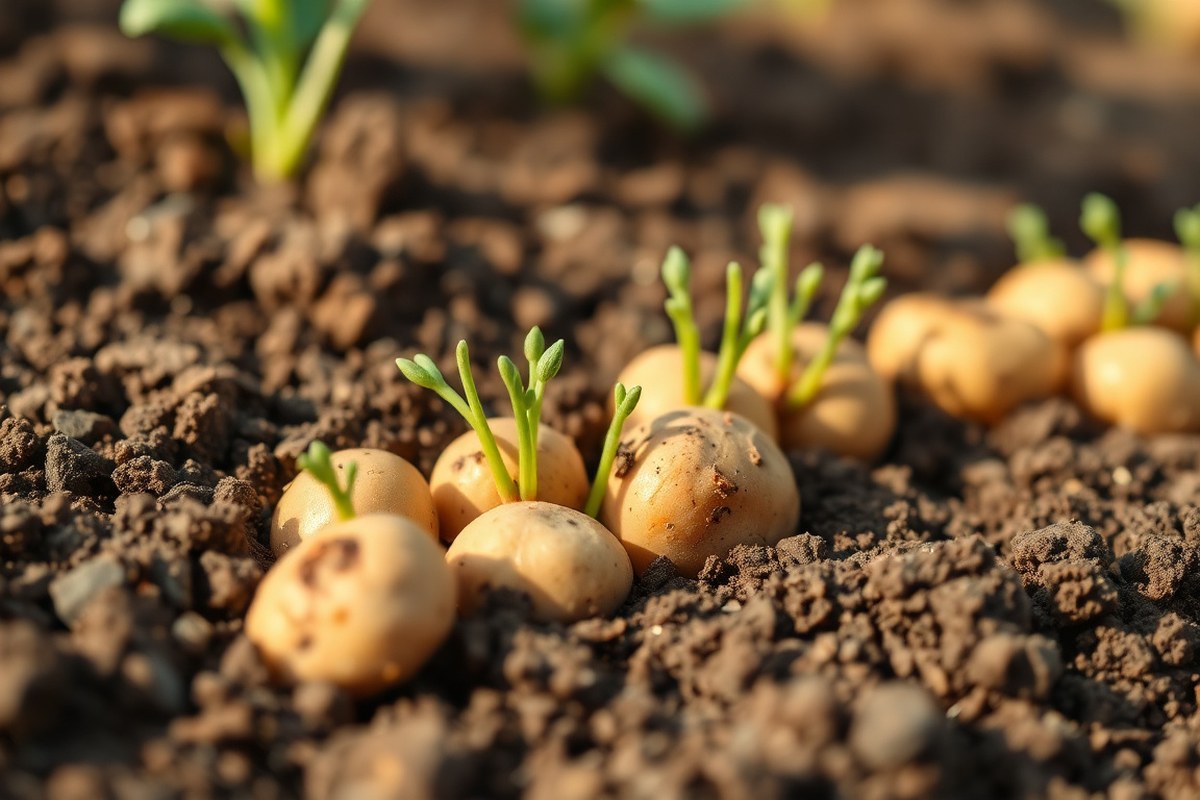
Chitting means letting seed potatoes sprout before planting. Place the tubers in a bright room at 65° to 70°F. This usually starts two to three weeks before planting.
Sprouts should be short and strong, about ½ inch long. Avoid long, weak sprouts, which break easily in the soil. Chitted potatoes often grow faster and produce bigger yields.
- Gather seed potatoes about three weeks before your planned planting date.
- Set them in a shallow box or tray in a bright, cool spot indoors.
- Keep the temperature between 65° and 70°F to encourage sprouting.
- Let the potatoes sprout for two to three weeks before planting.
- Check regularly for strong, stubby sprouts. Remove soft or damaged ones.
Start chitting early but don’t let sprouts get longer than 1 inch.
Curing and Storing Cut Pieces
After cutting, cure seed potato pieces to toughen their skin and reduce rot risk. Leave them in a warm place at about 75°F for one to two days. This drying period helps seal the cuts.
Store cut pieces in a cool, humid place for two to three days. Keep them there if you can’t plant right away. This helps the cuts heal before planting.
This keeps them healthy and ready. Avoid placing them in direct sunlight or very dry spots.
- After cutting, spread pieces out in a single layer in a warm spot.
- Keep the area around 75°F with good air circulation for one to two days.
- Move cured pieces to a cool, humid place to store if planting is delayed.
- Keep humidity moderate to avoid shriveling or mold growth.
Don’t plant freshly cut potatoes immediately. Curing helps prevent disease and rot.
Understanding Frost and Soil Temperature Impacts
Frost can delay planting seed potatoes. They need soil above 45ºF. This temperature helps them start growing well.
Plant seed potatoes 3 to 4 weeks before your last frost. This timing helps catch the right soil temperature. Check your local frost date.
Cover the planted area with frost cloth or straw if frost comes. Green shoots can freeze easily. Protect them to avoid damage.
Potatoes planted underground are safe if frost hits because the soil insulates them. Still, when young plants sprout, a sudden frost can kill them. Wait to plant until soil warms to 45º to 55ºF.
Slow warming soil means late planting. This avoids seed potato damage.
Cold, wet soil can cause seed potatoes to rot. So avoid planting in soggy ground.
Cover seed potatoes with at least two inches of soil if frost is expected. This helps protect them before sprouting. Use frost blankets or garden fabric at night to keep temperature steady.
Check daily weather during early growth. This helps you cover plants quickly when frost threatens. Be ready to protect your potatoes.
Soil moisture also affects planting time. Wet soil warms slower, so choose a sunny, well-drained spot to plant. Plant earlier if soil dries and warms fast.
Faster warming reduces rot risk. Watch the soil to decide when to plant. In mild winter zones, some plant seed potatoes late winter.
They take advantage of warmed soil. This can produce earlier crops.
Plant seed potatoes in loose soil to help warmth reach tubers evenly. Dig trenches 4 to 6 inches deep for planting. Space potatoes about one foot apart.
Cover them with two inches of soil. This depth helps protect tubers from frost and keeps soil moist but not soggy.
Choosing the Right Potato Varieties and Planting Schedules
Potato variety affects when you plant, how long they grow, and how to space them. Early varieties suit cooler soil and come in 70 to 90 days.
Late varieties need warmer soil and grow for 110 days or more. You’ll want to match the variety’s season to your area’s climate.
Spacing depends on variety size and growth habits. Early potatoes should be 8 to 14 inches apart, with rows 12 to 18 inches apart.
This allows enough room for the tubers to develop without crowding. Plant seed potatoes 4 inches deep to protect from frost but keep the soil warm.
| Variety Type | Days to Harvest | Spacing (Between Plants) | Row Spacing | Notes |
|---|---|---|---|---|
| Early | 70, 90 days | 8, 14 inches (20, 35 cm) | 12, 18 inches (30, 45 cm) | Can harvest small “new potatoes” at flowering (6, 8 weeks) |
| Mid-Season | 90, 110 days | 10, 12 inches (25, 30 cm) | 12, 18 inches (30, 45 cm) | Good for multiple crops in zones 6, 8 |
| Late | 110+ days | 12, 15 inches (30, 38 cm) | 14, 18 inches (35, 45 cm) | Best for storage potatoes, plant in early summer for late harvest |
Knowing the days to harvest helps you plan when to plant and expect a yield. Early varieties let you pull small potatoes two weeks after flowering.
You can plant multiple varieties to stretch the harvest season. Late varieties take longer but store better.
Planting depth stays consistent at about 4 inches, but spacing varies with the type. Crowded plants produce smaller potatoes and more disease risk.
Using proper spacing improves airflow and soil warmth. This simple step helps you get 5 to 10 potatoes from each seed potato.
Planting Seed Potatoes in Different Environments
You can plant seed potatoes in gardens and containers. You can sow them in warm or fall settings too. Just adjust how you plant based on conditions.
Timing and setup depend on where you grow them. Different environments need their own care to get potatoes growing well.
Planting in Open Garden Beds
Plant seed potatoes in garden beds after the last frost. Wait until soil reaches about 45°F (7°C). This helps them start growing well.
This timing helps prevent the tubers from rotting and gives plants a healthy start. Metal raised beds warm faster, letting you plant sooner by a couple of weeks.
Space your seed potatoes 10 to 12 inches apart in rows. Cover seed potatoes with 3 to 4 inches of soil first. This layer protects them from freezing and pests.
Keep soil loose and even. You’ll add more soil as plants grow, which supports tuber production.
- Pick a sunny spot with loose, well-draining soil.
- Dig trenches 4 inches deep and set seed potatoes 10 to 12 inches apart.
- Cover with 3 to 4 inches of soil, leaving room for later hilling.
- Water gently to keep soil moist but not soaked.
- When sprouts reach 6 to 8 inches tall, mound soil around stems.
Don’t plant too early in cold soil, it causes rot and stunts growth.
Container Planting Guidelines
Containers need to be at least 2 to 3 feet deep to fit growing potatoes. Use containers with good drainage holes to stop water from pooling. Plant one seed potato at the bottom, spacing multiple potatoes about 10 inches apart.
Fill the container with 4 inches of soil, place seed potatoes, then cover them fully. As plants sprout and grow, add more soil or compost to keep tubers covered. Containers warm quicker, so plants may grow a bit faster than in the ground.
- Select a container 2 to 3 feet deep with drainage holes.
- Add 4 inches of loose, fertile soil to the bottom.
- Place seed potatoes 10 inches apart on the soil layer.
- Cover with soil until fully buried.
- Water to keep soil moist but not soggy.
- Add soil as shoots grow to cover tubers and protect them from light.
Avoid small containers; shallow pots limit tuber growth and reduce yield.
Adjusting for Warm or Fall Planting
In warm climates, plant potatoes in fall or early winter to avoid summer heat. September works well for a fall or winter harvest. Soil temperatures should be around 50°F (10°C) or cooler when planting in these zones.
In areas with hot summers, avoid planting potatoes during the heat. The plants will struggle and produce fewer tubers. Planting in fall gives them cooler growing weather and better moisture balance.
- Time planting for September to early winter in warm regions.
- Check soil temperature; aim for near 50°F (10°C) when planting.
- Prepare soil with organic matter to retain moisture during dry spells.
- Mulch to keep roots cooler and reduce water loss.
- Water regularly, adjusting as fall weather cools.
Planting potatoes during summer heat can cause weak plants and low yields.
Common Timing Mistakes and How to Avoid Them
One common mistake is planting seed potatoes too early in the season. The soil might still be frozen. It can also be too wet.
This can cause rot or poor sprout growth. Wait until the soil is about 45°F (7°C).
Make sure it is dry enough to work. This helps you avoid those problems.
Another frequent error is planting too late, after the soil warms beyond 70°F (21°C). High soil temperatures can stress the potatoes and reduce yields. Planting during the cool but workable soil window supports steady sprout development without overheating the tubers.
Timing mistakes also include ignoring local frost dates. Planting before the last frost risks damaging young shoots. Use your area’s frost schedule to plan a safe planting date, especially in colder climates.
- Check soil temperature with a soil thermometer weekly starting in early spring.
- Plant seed potatoes once the soil stays consistently above 45°F (7°C).
- Aim to plant about 2 weeks before the average last frost date in your area.
- Avoid planting if the soil feels muddy or soggy to prevent rot.
- Plant overwintered crops when soil is cool but not frozen. This prevents premature top growth.
- Order seed potatoes early to allow time for chitting before planting.
Gardeners sometimes skip preparing chitted seed potatoes, which can cause slow growth. Chitting lets the sprouts develop before planting, speeding up the harvest. About 4 to 6 weeks’ chitting under cool, indirect light helps avoid weak or leggy sprouts.
Planting seed potatoes too close together is another timing-related mistake. Crowding leads to competition for nutrients and tuber size reduction. Space plants about 12 inches apart in rows.
Leave rows about 30 inches apart. This keeps plants productive.
By watching soil temperature, frost dates, and seed preparation, you reduce the risks of crop failure. Timing pays off with stronger plants and bigger potato yields. Adjust your planting timetable based on your local climate to get the best results.
Tools and Soil Preparation for Planting Seed Potatoes
Choose a site with loose, well-drained soil for your seed potatoes. Avoid heavy clay or soggy spots to prevent rot. The soil should be rich in compost or well-rotted manure for best growth.
Prepare the ground by loosening it about 8 to 12 inches deep. This lets roots and tubers grow easily. Remove stones and weeds that can block or damage the potatoes.
Using the right tools makes preparation quicker and less tiring. A garden fork or tiller works well to break up the soil and mix in compost. A rake helps level the bed and removes debris.
- Garden fork or tiller to loosen soil
- Rake to level and clear the bed
- Compost or rotted manure to add nutrients
- Measuring stick or ruler to check soil depth
- Gloves to protect your hands
- Watering can or hose for initial watering
- Optional: Soil thermometer to check soil temperature
Before planting, mix in 2 to 4 inches of compost or manure into the loosened soil. This feeds your potatoes and improves soil texture. You can spend around 10 to 30 minutes prepping a small garden bed, depending on size.
Check soil temperature with a thermometer if you want precision. Seed potatoes do best if soil is at least 45°F (7°C) at planting depth. Cooler soil slows sprout growth and can cause rot.
Cover seed potatoes with about 4 inches (10 cm) of soil when planting. As plants grow, mound more soil around their stems. This supports tuber development below and limits sunlight exposure that causes greening.
Step-By-Step Planting Guide for Seed Potatoes
Plant seed potatoes 2 to 4 inches deep and space them 12 to 18 inches apart. Cover them with soil and water the area well after planting. Follow these steps to plant your potatoes properly for best results.
Digging Trenches and Spacing
Loosen the soil a few inches deep where you plan to plant. You can dig shallow trenches to keep seed potatoes in neat rows. Space trenches so each plant will get enough room to grow and spread.
Set trenches about 12 to 18 inches apart to allow plants to grow comfortably. The rows should leave space for easy watering and maintenance. This setup helps potatoes grow big and healthy below ground.
Placing Seed Potatoes
Lay seed potatoes cut side down in the trenches or on loose soil. Keep them about 12 to 18 inches apart in every direction. Planting too close can limit growth and reduce your harvest.
If you prefer, place seed potatoes across the surface, then cover them. This method works when you cover seeds with soil or mulch up to 4 inches deep. It’s easier to manage and slows weed growth around your plants.
Covering and Watering
After placing the seed potatoes, cover them with 2 to 4 inches of soil or mulch. This covers the potatoes while still allowing fresh shoots to reach the sun. Use soil that is loose and well-draining to avoid rotting.
Water the planting area thoroughly after covering the seed potatoes. The soil should be moist but not soggy to encourage sprouting. Keep the soil evenly moist during the growing season to develop healthy tubers.
- Loosen the soil 3 to 4 inches deep where you want to plant.
- Dig trenches or prepare a flat bed about 12 to 18 inches apart.
- Place seed potatoes cut side down in the trenches or on soil.
- Make sure each seed potato is 12 to 18 inches from the next.
- Cover the seed potatoes with 2 to 4 inches of loose soil or mulch.
- Water the area well to settle the soil and start sprouting.
- Keep soil moist but not waterlogged as plants grow.
Plant seed potatoes when soil is dry enough to work to avoid clumping. Wet soil can cause clumps and make planting uneven.
Step-by-Step Action Plan for Planting Seed Potatoes
Follow these steps to plant your seed potatoes at the right time. Doing this helps give you a good harvest. Start by preparing your soil and choosing healthy seed potatoes.
- Two weeks before planting: Chit your seed potatoes by placing them in a bright, cool spot. Look for short, sturdy sprouts about ½ inch long.
- Three days before planting: Check your soil temperature early in the morning. Aim for at least 45°F (7°C) to ensure safe planting conditions.
- One day before planting: Prepare your planting site by loosening soil and mixing in compost. The soil should drain well and feel crumbly.
- Planting day: Cut large seed potatoes into pieces with at least one eye each. Let your seed potatoes dry for one full day to stop rot. Plant them 4 inches deep in the soil. Space each potato about 12 inches apart.
- One week after planting: Water the soil to keep it moist but not soggy. Check that sprouts are emerging above the soil.
- Two to three weeks after planting: Gently pile soil around your potato plants. This forms a mound at the base and protects them. This protects tubers from light and encourages growth.
- During growing season: Keep soil moist and watch for pests. Healthy green leaves mean your timing and care are working.
Frequently Asked Questions
How Deep Should I Plant Seed Potatoes in Containers?
Plant seed potatoes about 3 inches deep at the bottom of your container. This depth helps protect them from drying out and supports good root growth. Add soil over the potatoes to reach about 5-6 inches from the container top.
Can I Plant Seed Potatoes After Light Frost Has Passed?
Yes, you can plant seed potatoes once hard frosts are gone but light frosts still occur. This timing avoids soil that is too cold and reduces frost damage risk. Make sure the soil is workable and not soggy.
Is Spacing Important When Planting Seed Potatoes?
Seed potatoes should be spaced about 24-30 inches apart in rows. This gives the plants enough room to grow tubers and helps air flow around them. Crowded potatoes may produce fewer and smaller tubers.
Should Seed Potatoes Always Be Planted with Eyes Facing Up?
Yes, plant seed potatoes with the eyes facing upward. This orientation lets sprouts grow straight upward and reach sunlight quickly. Laying seed potatoes sideways or face down slows growth and weakens plants.
How Long Before Planting Should I Get Seed Potatoes?
It’s best to have seed potatoes 5 to 6 weeks before planting. This allows them to start sprouting indoors if they are still dormant. Old or unsprouted potatoes may not grow well when planted.
Can I Plant Whole Seed Potatoes or Should I Cut Them?
Plant seed potatoes as whole or sliced pieces having 2 to 3 eyes. Cutting them helps you plant faster and use less seed. But dry the cuts first to avoid rot.
Before You Go
Plant your seed potatoes once soil is warm and frost-free for the best results. Prepare your seed potatoes ahead of time to boost sprouting. Start chitting your potatoes today to be ready for planting when conditions are right.