How Much Are Tomatoes? Current Prices, Varieties & Money-Saving Tips
How much are tomatoes right now? Prices vary by type and source. But most common tomatoes cost between $1 and $4 per pound.
Roma tomatoes usually come cheapest at about $0.97 to $1.49 per pound. Slicing and on-the-vine tomatoes average around $2.49 per pound. Organic and heirloom tomatoes tend to cost more, often around $3.50 to $3.80 per pound.
Tomato prices can jump depending on the season and market conditions. For example, prices have risen by over 20% in the past month in some areas. Knowing when and where to shop helps you avoid paying more than necessary.
Start by checking prices at your local grocery store and farmers markets. Watch for organic versus conventional options and buy in-season to get the best deals.
Key Takeaways
- Roma tomatoes usually cost less than $1.50 per pound, making them budget-friendly.
- Slicing and on-the-vine tomatoes sell for about $2.49 per pound in major stores.
- Organic and heirloom tomatoes often cost between $3.49 and $3.79 per pound.
- Tomato prices can surge 20% or more during certain months or shortages.
- Buying tomatoes in season generally saves you money and improves taste.
- Farmers markets can offer competitive prices compared to retail stores.
Current Average Costs for Common Tomato Varieties
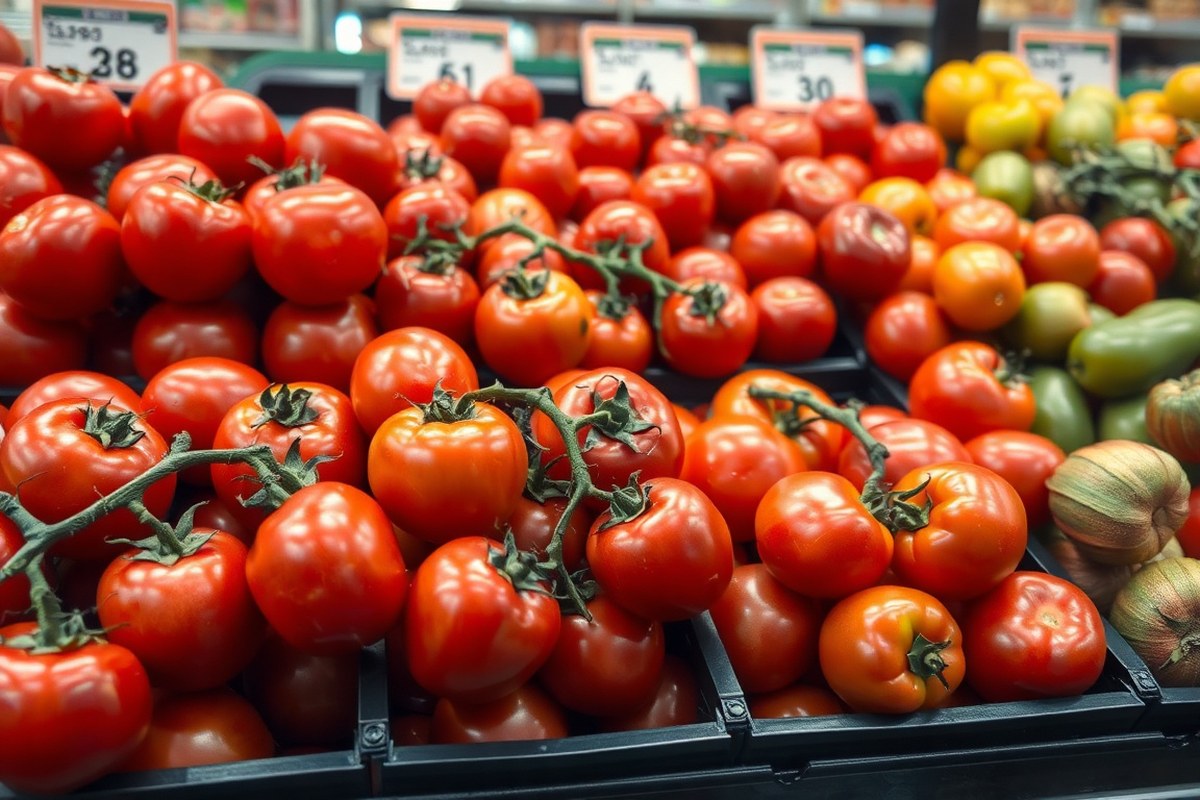
Tomato prices vary a lot depending on the type and packaging. Roma tomatoes cost around $0.97 to $1.49 per pound.
Larger slicing tomatoes generally sell for about $2.49 per pound. Packaged tomatoes like grape and cherry types usually cost more than loose ones, sometimes reaching $4.75 to $8 per pound.
Organic and heirloom tomatoes usually have the highest prices. Organic on-the-vine tomatoes often sell near $3.49 per pound.
Heirloom tomatoes can go up to $3.79 per pound or more. These higher prices reflect their distinct flavors and growing methods.
| Tomato Type | Current Retail Price | Price per Pound |
|---|---|---|
| Roma | $0.97 – $1.49 per pound | $0.97 – $1.49 |
| Large Slicing | $2.49 per pound | $2.49 |
| On-the-vine | $2.49 per pound | $2.49 |
| Organic On-the-vine | $3.49 per pound | $3.49 |
| Heirloom | $3.79 per pound | $3.79 |
| Grape (10 oz package) | $2.99 per package | $4.78 |
| Cherry (10 oz package) | $3.79 per package | $6.06 |
Look at the package size when comparing prices for grape and cherry tomatoes. A 10-ounce pack of grape tomatoes costing $2.99 equals nearly $4.78 per pound.
Cherry tomatoes in a similar package usually cost closer to $6.06 per pound. This makes loose tomatoes often cheaper because packaged ones include container costs.
For example, if you buy a 10-ounce pack of grape tomatoes for $2.99, you pay about $0.19 per ounce. Multiplying that by 16 ounces (1 pound) gives you $3.04.
But since the package is 10 ounces, your effective price per pound rises to about $4.78. So, buying loose tomatoes by weight can save you money.
Major Factors Driving Tomato Price Fluctuations

Tomato prices shift because of many factors. Weather changes affect growing conditions directly. Hot, dry weather or heavy rain can reduce yields.
Extreme cold can damage crops and delay harvests. These effects lower tomato supply and push prices up.
Seasonal patterns matter a lot. Most tomatoes grow best in summer months. Prices drop when harvest is plentiful during this time.
Outside of these months, you pay more for greenhouse or imported tomatoes. Greenhouse tomatoes cost more because they require energy and labor. But their steady supply keeps prices from soaring too high.
Fuel and transportation costs impact how much tomatoes cost at stores. Most tomatoes travel by truck. Diesel fuel price hikes add to shipping costs.
When fuel prices rise, those extra costs get passed to you. The current geopolitical tension in the Middle East has pushed fuel prices up recently. This causes shipping charges to climb and raises tomato prices nationwide.
Tariffs on imported tomatoes can suddenly change prices too. The U.S. Relies heavily on Mexico for fresh tomatoes. New tariffs can increase costs by thousands of percent, as federal data shows.
When tariffs rise, imported tomatoes get pricier, causing retail prices to spike. Traders then adjust prices to balance these added expenses.
Labor is another big driver of price swings. Planting, harvesting, packing, and marketing require many workers. When labor costs rise or workers are scarce, growers spend more.
These add to final prices at supermarkets. Storage can also add costs but is limited for fresh tomatoes. Tomatoes don’t keep well, so prices change a lot.
You see seasonal swings. These come from when they are picked and shipping delays.
Watch prices during late fall and winter months. They often spike due to limited local harvests and higher costs.
Protected farming like greenhouses aims to smooth seasonal gaps. They use energy and equipment but boost yield while extending growing periods.
This usually lowers prices during off-seasons but still keeps them above peak harvest prices. Still, unexpected weather or import shocks can cause prices to jump even with greenhouses in use.
How Tomato Prices Change Throughout the Year
Tomato prices tend to change a lot throughout the year. Tomato prices usually drop in late summer and early fall. This happens when most tomatoes get harvested in the U.S.S. Prices peak in winter and early spring due to limited local supply and higher import costs.
Looking at 2026, the U.S. Tomato price index was 19.5% higher in June than a year earlier. But between May and June, prices actually fell about 10% when adjusting for seasonal trends. This shows how supply grows in summer as harvests increase, easing prices for shoppers.
During peak months, tomatoes can cost about $1 to $2 per pound in supermarkets. Off-season prices often rise above $3, sometimes doubling summer costs.
For example, slicing tomatoes currently go for roughly $2.49 per pound in many stores. Grape and cherry tomatoes are even pricier, often $4.75 to $7.99 per pound.
The timing of harvest plays a key role in availability and price. Tomatoes are delicate and grow best between 70°F and 85°F. Domestic tomato production peaks in June through October. Outside that window, stores depend more on imports or greenhouse-grown tomatoes, which pushes prices higher.
Prices can also change quickly with sudden weather problems or supply chain issues. Because tomatoes bruise easily, any delay or damage means fewer good tomatoes on shelves. This can cause local prices to spike until fresh stock arrives.
Buying tomatoes in late summer and early fall usually gets you the best deal. That’s when U.S. Harvest is at its peak, keeping prices lower and quality higher. Waiting until winter or spring means paying much more for tomatoes, whether fresh or imported.
Comparing Wholesale, Retail, and Farmers Market Prices
Tomato prices change a lot between wholesale, supermarkets, and farmers markets. Different supply chains and quality levels cause these price changes. Wholesale prices are often the lowest, reflecting bulk sales to retailers and foodservice buyers.
Farmers markets may charge higher prices. But their tomatoes usually offer better flavor and freshness.
Wholesale Terminal Prices Explained
Wholesale tomato prices show what producers get at the shipping point or terminal market. These prices apply to large carton lots, usually 25 pounds or more.
They mainly suit buyers who resell or use tomatoes in food service. Prices change daily based on supply, demand, and variety.
For example, mature green tomatoes in bulk cartons average about $31.85 for 25 pounds nationally. Prices vary by region and tomato size.
Prices in Central and South Florida tend to be higher than other areas. This is because of local growing conditions and high demand.
| Region | Size | Origin | Price |
|---|---|---|---|
| Orlando | 5×5 size | Florida West and Georgia District | $29.35 |
| Orlando | 5×5 size | Central and South Florida | $37.35 |
| Orlando | 5×6 size | Florida West and Georgia District | $29.35 |
| Orlando | 5×6 size | Central and South Florida | $37.35 |
Buyers find prices like these useful for budgeting and comparing regional supplies. Wholesale prices do not usually include packaging or transport to grocery stores.
Prices here do not reflect what you pay at checkout. But the base cost for many tomatoes sold in bulk.
Retail Grocers and Price Markups
Supermarkets add markups after buying tomatoes at wholesale prices. These markups cover packaging, transport, overhead, and profit. Markups often double the wholesale price depending on the store and demand.
A common retail price for Roma tomatoes is $0.97 to $1.49 per pound. Vine tomatoes usually cost more, around $2.49 per pound for conventional and $3.49 for organic. The organic premium often runs 40% higher than conventional varieties.
These prices change with supply trends and consumer preferences. Stores charge more for convenience types like pint containers of cherry tomatoes. You pay for variety choices and packaging quality.
Farmers Market Pricing and Quality Factors
Farmers markets generally have higher prices than supermarkets. Local growers sell smaller batches with better freshness and flavor. Many shoppers pay extra for the taste and to support local farms.
Some regional crops at farmers markets offer better deals, especially when tomatoes are in peak season. Quality usually beats supermarket produce, with heirloom varieties and minimal handling. Higher prices reflect the smaller scale and limited supply of these markets.
Farmers markets often do not have the same packaging costs. But their hand-sorting and specialty offerings add to the price. You might spend more per pound but get tomatoes that last longer and taste better.
Packaging Impact on Price Differences
Packaging influences tomato prices in all outlets. Wholesale tomatoes are sold in large cartons, often loose or in bulk bags. Retail stores use smaller containers, clamshells, or wrapped bunches, raising costs.
Farmers markets sometimes use simple or no packaging to save costs. This can add extra handling time for the tomatoes.
Packaging protects tomatoes during shipping and display but can increase shelf price significantly. Better or branded packaging signals quality and freshness too.
Origin plays a role as well. Locally grown or greenhouse tomatoes usually cost more. That’s due to higher labor costs and smaller batch sizes.
Imported tomatoes can cost less but often have tariffs or extra transport fees. These charges can make the overall price higher.
Understanding Tomato Variety Price Differences
Some tomato varieties cost more because of how they’re grown and who wants them. Heirloom tomatoes take more care and time to grow. They often grow in smaller batches.
They need perfect weather. This drives their price up to around $3.79 per pound compared to Roma tomatoes at $1.49 per pound.
Cherry and grape tomatoes also cost more. These small tomatoes are popular as snacks and salad toppings.
They sell for about $4.78 to $7.99 per pound, more than three times the price of Roma tomatoes. Their delicate skin and packaging add to the cost, too.
Roma tomatoes offer great value for cooking. Their thick flesh holds up well when you cook sauces or soups. Buying 25 pounds at about $1.49 cents per pound is much cheaper.
Specialty cherry tomatoes cost up to $8 per pound. Using expensive tomatoes like cherry types for cooking isn’t worth the cost.
Organic tomatoes usually cost more, around $3.49 per pound, because organic farming requires special methods. Farmers avoid synthetic pesticides and fertilizers, which costs more time and money.
This price stays higher whether you buy Roma or heirloom organic tomatoes. So plan your budget accordingly.
Tomato price differences also relate to demand. Fresh eating tomatoes, like heirlooms and cherries, are prized for taste and texture. People pay extra for better flavor and appearance.
Roma and slicing tomatoes grow in large amounts. They are mostly sold for cooking. That keeps their price lower.
Don’t use expensive cherry tomatoes for cooking; choose Roma to keep costs down.
Tips to Save Money When Buying Tomatoes
To save money on tomatoes, buy them loose and in season. Choose heavier tomatoes for their size, and store them properly to last longer. Buying in bulk can help, but only if you store the tomatoes right.
Best Times and Places to Buy
Tomato prices are lowest during summer, especially July and August. Local farmers markets often offer fresher and cheaper tomatoes than big stores. Look for loose tomatoes instead of pre-packaged ones to save money.
Check your local produce stands and farmers markets on weekends. They sometimes have last-day deals on tomatoes nearing peak ripeness. Buying directly from growers often means fewer pesticides and better quality.
Choosing Varieties for Cost Efficiency
Roma and slicing tomatoes are usually cheaper than specialty types. Smaller tomatoes sometimes cost more per pound, especially if packaged in plastic.
Pick tomatoes that feel heavy for their size. It means they hold more juice and quality.
Organic tomatoes might cost more, but local organic growers can offer good prices. Choose tomato varieties you use often to avoid waste and get your money’s worth. Experiment with a few types to find your favorites at good prices.
Storage Tips to Avoid Waste
Keep tomatoes at room temperature, away from direct sunlight. Use a flat surface so they don’t bruise and spoil fast. Avoid placing tomatoes in the fridge, unless they are very ripe and need slowing down.
Tomatoes ripen best around 68°F, says UC Davis Postharvest Center. Tomatoes can get chilling damage when kept below 50°F too long. To speed ripening, put tomatoes in a paper bag.
Add a banana or apple. Leave them for 1 to 3 days.
- Store at room temperature on a flat surface
- Keep away from direct sunlight and cold drafts
- Use within a week or earlier if bruised
- Refrigerate only very ripe tomatoes to extend life
- Use a paper bag with fruit to speed ripening
Buying in Bulk: When It Saves Money
Buying pounds of loose tomatoes can cut the price per tomato. Bulk purchases make sense if you plan to use or preserve them quickly. Buy only as much as you can consume before they spoil.
Check the tomatoes share similar ripeness so they last together. Slightly underripe tomatoes ripen at room temperature in two days. Avoid buying bulk pre-packaged tomatoes, as they usually cost more per pound.
How Tariffs and Imports Affect U.S. Tomato Prices
The U.S. Relies heavily on imported tomatoes, especially from Mexico during winter and spring. Mexican tomatoes face a 17% tariff, which raises import costs noticeably. These tariffs raise prices at stores.
Shipping-point costs go up. That makes retail prices higher.
For example, the U.S. Collected nearly $17,000 in tariffs on tomatoes in 2024. That adds extra dollars to each shipment, which grocers often pass on. A common $2.99 10-ounce package of grape tomatoes works out to about $4.78 per pound, partly due to import fees and tariffs.
Tariff changes in recent years have caused spikes in tomato prices. The 17% tariff stayed steep even after some trade disputes eased. In peak import months, tomato prices rise in stores.
They go higher than local growing costs suggest. So, tariffs make imported tomatoes less affordable, especially when supply from local farms is low.
How to Calculate the Cost per Tomato Based on Weight and Price
To find a tomato’s price, first check the price per pound. Then, know the average weight of one tomato. That tells you the cost of a single tomato.
Then, divide the price per pound by the number of tomatoes in a pound. Tomato size affects this, so adjusting for variety is important.
Typical Weight of Common Tomato Types
The weight of tomatoes can vary widely by type and size. A medium tomato usually weighs about 5 to 6 ounces. That means about 3 tomatoes make up one pound.
Large beefsteak tomatoes tend to weigh more, around 10 to 12 ounces each. Smaller Roma tomatoes weigh less, about 2 to 3 ounces each. This changes how many tomatoes you get per pound.
Step-by-Step Cost per Tomato Calculation
Calculate tomato cost by dividing price per pound by tomatoes per pound. First, find out the price per pound from your grocery receipt or label. Then estimate how many tomatoes equal one pound based on type.
- Check the price of tomatoes per pound, for example, $0.97 for Roma tomatoes.
- Determine the average weight of one tomato in ounces, say 3 ounces for Roma.
- Convert ounces to pounds by dividing the weight by 16 (3 ÷ 16 = 0.1875 pounds).
- Find how many tomatoes make a pound by dividing 1 by their weight. For example, do 1 ÷ 0.2 pounds for each tomato. This gives you the number per pound.1875 ≈ 5.33 tomatoes per pound).
- Divide the price per pound by tomatoes per pound to get cost per tomato ($0.97 ÷ 5.33 ≈ $0.18 per tomato).
This method gives you a clear price for an individual tomato based on weight and price. It works best for uniform tomato types.
Prices can change by store or region. So check your local price per pound first.
Adjusting for Different Sizes and Varieties
Smaller tomatoes cost less per piece, but you get more per pound. Larger tomatoes cost more per piece but weigh more. Consider their use, small tomatoes are often cheaper for salads, large ones better for sandwiches.
Heavier tomatoes mean fewer tomatoes per pound, so their per-piece cost is higher. Judges seller’s price per pound and tomato size before buying. You might pay more per pound for specialty varieties but fewer tomatoes overall.
Your Step-by-Step Plan to Buy Tomatoes Smart
Use this plan to get tomatoes at a good price while knowing what affects costs. Follow each step and check your savings as you go.
- Before shopping: Compare prices online for your favorite tomato types. You’ll spot the best deals near you.
- Day 1: Visit a farmers market and a grocery store. Note price differences for the same tomatoes to see where you save.
- Week 1: Buy tomatoes in season or on sale. You’ll pay less and get fresher produce.
- Week 2: Try smaller or less common varieties. They often cost less but taste great.
- Week 3: Calculate the cost per tomato by weight at each store. This helps compare prices fairly.
- Week 4: Check if tariffs or import rules are changing prices. Local news or government sites show updates.
- After 1 month: Pick stores or markets that consistently offer better prices and quality. Your regular spots save money.
- Ongoing: Store tomatoes properly at home to avoid waste. Fresh tomatoes stay usable longer and stretch your dollars.
Frequently Asked Questions
Why Are Tomato Prices Higher in Winter?
Tomato prices rise in winter due to less local supply. You get fewer fresh options, making imports cost more.
Can I Find Cheaper Tomatoes at Farmers Markets?
Farmers markets sometimes offer better deals on tomatoes. You might pay less for local fresh tomatoes without retailer markups.
How Does Tomato Size Affect Pricing?
Larger tomatoes often cost more because they weigh more per piece. Smaller tomatoes may seem cheaper but weight price is key.
Do Organic Tomatoes Always Cost More?
Organic tomatoes usually cost more because of stricter farming rules. That price covers extra labor, certification, and pesticide-free practices.
How Fast Do Tomato Prices Change During Peak Season?
Tomato prices can drop quickly during peak season when supply is high. Watch weekly ads to catch price drops before demand rises again.
Is There a Quality Difference Between Cheap and Expensive Tomatoes?
More expensive tomatoes often have better taste or are heirloom varieties. Cheaper ones can still be fine for cooking or sauces.
Wrapping Up
Tomato prices vary a lot, but you can shop smart to save. Know when and where to buy for better deals. Start comparing prices this week to get the best value.