How to Plant and Grow Peonies: A Complete Guide for Beautiful Blooms
If you want to know how to plant and grow peonies, start in fall. Plant bare-root peonies about 4 to 6 weeks before the first hard freeze. This timing gives the roots time to settle and grow before winter sets in.
Pick a sunny spot with at least 6 to 8 hours of direct light each day. Peonies rely on strong sunlight to develop large, vibrant flowers.
Be careful not to plant them too deep. Place the eyes about 2 inches below the soil surface.
Peonies need a cold dormant period to thrive. So they don’t do well in warm southern zones.
It usually takes 2 to 3 years for your peony to produce its first blooms. Space plants about 3 to 4 feet apart to allow enough room for air circulation and growth.
Key Takeaways
- Plant bare-root peonies in early fall, 4-6 weeks before ground freezes.
- Choose a spot with 6-8 hours of sun for strong bloom growth.
- Set roots shallow, peony eyes should be about 2 inches under soil.
- Expect 2-3 years before peonies bloom after planting from root.
- Give plants 3-4 feet of space for air and root room.
- Cold temperatures below 40°F for 6 weeks are needed for buds to form.
When and How to Plant Peonies for Best Results

Peonies do best if you plant them in the fall. Plant them 4 to 6 weeks before it freezes deeply. This timing helps them grow strong roots.
This timing lets their roots settle in cooler soil ahead of winter. You can plant them in spring too, but fall planting gives better bloom chances.
Ideal Planting Timeframes Explained
Fall is the prime time for planting bare-root peonies. Plant them once nighttime temperatures dip below 60°F but before the ground freezes. This timing lets roots start growing in cool soil without rushing shoots above ground.
Spring planting is possible 2 to 3 weeks before your last frost date. However, spring-planted bare roots can struggle if they send up shoots too soon. Potted peonies, already growing, can handle spring planting better than bare roots.
Planting Bare-Root Peonies Step-by-Step
Planting bare-root peonies takes care to keep their eyes just under the soil surface. These eyes are pink or red buds where new growth emerges. Plant them no more than 1 to 2 inches deep to avoid leaf growth without flowers.
Here is how to do it right:
- Choose a location with well-drained soil and at least 6 hours of sun daily.
- Dig a hole about 12 to 18 inches wide and 12 inches deep.
- Inspect the bare-root tuber for healthy eyes and roots.
- Position roots in the hole, spreading them out gently.
- Place the eyes 1 to 2 inches below the soil surface.
- Backfill the hole with soil, firming lightly but not packing.
- Water thoroughly to settle the soil around roots.
- Add a 2-inch mulch layer after the ground cools but keep it off the crown.
Container Peony Planting Guidelines
Peonies grow large roots, so use containers 10 to 15 gallons or bigger. This gives room for healthy root development. They tolerate frost in containers unless an arctic blast causes deep freezing.
To plant from a pot, remove the peony and gently loosen any circling roots. Dig a hole twice the pot’s width and the same depth as the original container.
Set the plant so its crown stays at the same soil depth as before. Fill around the roots, water well, and add mulch after settling.
Choosing the Right Location and Soil for Your Peonies
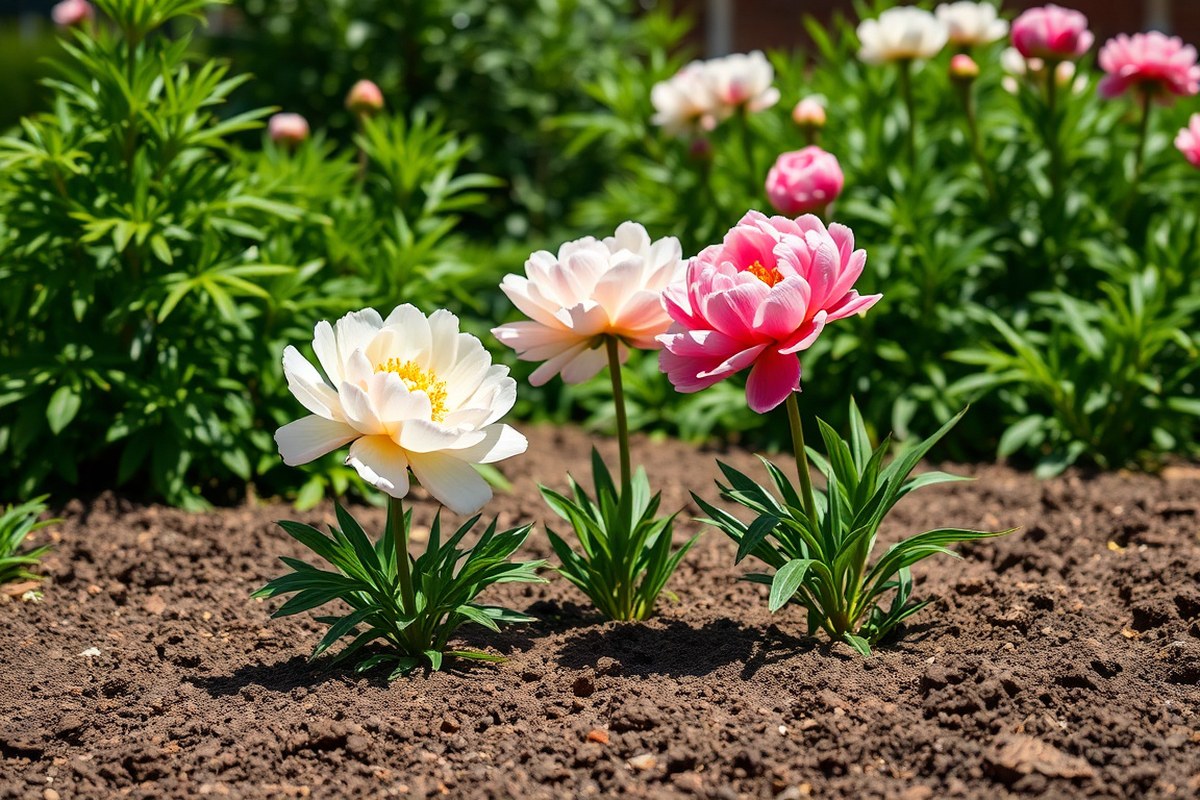
Peonies need a spot with full sun for at least 6 hours daily. Less sun can reduce blooming, especially in cooler zones.
In USDA Zone 8, afternoon shade protects flowers from heat stress. It also helps keep blooms alive longer in warm areas.
Good drainage is a must. Peonies won’t thrive in soggy soil.
Plant them in well-draining, loamy soil rich in organic matter. Slightly acidic soil with a pH between 6.5 and 7.0 works best for nutrient uptake and healthy roots.
Space is another key factor. Peonies grow quite wide, usually 2 to 4 feet tall and just as wide.
Giving each plant 3 to 4 feet between peonies prevents overcrowding. It also keeps air flowing and reduces disease risk.
- Full sun for 6-8 hours daily, afternoon shade in warm zones
- Well-draining loamy soil, enriched with compost
- Soil pH around 6.5 to 7.0, slightly acidic
- Space plants 3 to 4 feet apart
- Plant eyes 1 to 2 inches below soil surface
- Choose varieties suited to USDA zones 3-8 (some to zone 9)
Cold winter temperatures help peonies bloom well. They grow best in USDA Zones 3 through 8, though some varieties handle Zone 9.
Warmer zones might need peonies that require fewer chilling hours. These give you flexibility depending on your climate.
Before planting, loosen soil to at least 12 inches deep. Mix in 2 to 3 inches of compost for good nutrients and texture. Avoid adding heavy clay or sandy soil without amending it first.
Peonies prefer to stay in place for decades. So prepare the soil carefully and pick a permanent spot.
Plant peony roots no deeper than 2 inches below soil surface to avoid poor blooming.
Different Types of Peonies and How They Affect Growth
Peonies come in three main types: herbaceous, tree, and Itoh (intersectional). Each type grows differently in height, bloom time, and care needs. They also suit different growing zones and climates.
Herbaceous Peonies Overview
Herbaceous peonies die back to the ground each winter. They typically grow about 3 feet tall. Their bloom time lasts around 7 to 10 days, usually in late spring.
They are the easiest to grow and suitable for most zones. Herbaceous peonies take about five years to fully mature and bloom strong. They prefer well-drained soil and plenty of sun.
Tree Peony Characteristics
Tree peonies are woody shrubs that keep their stems year-round. They grow much taller, reaching 4 to 7 feet in height. Their blossoms are larger than herbaceous types and bloom earlier, often in mid-spring.
These peonies need more time to mature, around three years or more. They require well-drained soil but can tolerate some shade. Tree peonies are suitable for zones where winters are not too harsh.
Itoh (Intersectional) Peonies Features
Itoh peonies are hybrids of tree and herbaceous peonies. They die back in winter like herbaceous peonies but bloom with large flowers like tree peonies. Height usually reaches about 3 to 4 feet.
Their bloom time can be longer or overlap both types, often appearing early to mid-spring. Itoh peonies usually take about three years to bloom.
They grow well in many different zones and climates. They need well-drained soil and regular watering.
Here is a comparison table showing key differences between the three main peony types:
| Peony Type | Height | Bloom Time | Care Needs | Zone Suitability |
|---|---|---|---|---|
| Herbaceous | About 3 feet | 7, 10 days, late spring | Full sun, well-drained soil, easy | Most zones, hardy |
| Tree | 4 to 7 feet | Earlier bloom, mid-spring | Partial shade possible, well-drained soil | Warmer zones, less harsh winters |
| Itoh | 3 to 4 feet | Early to mid-spring, longer | Full sun to part shade, water regularly | Wide range, adaptable |
Choosing the right type depends on your garden space and climate. Herbaceous peonies suit most gardens and zones. Tree peonies work well if you have more room and milder winters.
Try Itoh peonies for big blooms like tree peonies. They need less care and flower longer. They fit nicely in zones where both types can grow.
Year-Round Care: Watering, Fertilizing, and Maintenance
Peonies need about 1 inch of water a week during the growing season. Water at the base to keep leaves dry and prevent disease. Once established, they are fairly drought tolerant but still need regular deep watering in hot spells.
Fertilize peonies early in spring with balanced 10-20-20 fertilizer. Use about 1/4 cup around each mature plant’s drip line. This helps feed the plant as it starts growing.
Your soil may need extra help. Add bone meal, compost, or well-rotted manure in early summer after blooming and deadheading. Avoid heavy fertilizing in fall as it can encourage weak, frost-prone growth.
Apply 2 to 3 inches of mulch around peonies after planting and during growing seasons. Mulch helps keep moisture in the soil and cools roots. Leave a few inches free near stems to prevent rot.
This protects the plant’s base well. Refresh mulch yearly to keep it effective without smothering the crowns.
Cut back herbaceous peonies in late fall once the first hard frost hits. Cut back foliage to 2 or 3 inches above the soil.
This removes spores left over winter and fights fungal problems next year. Tree peonies keep their leaves year-round, so they do not need this drastic pruning.
During winter dormancy, peonies require no watering or feeding. Focus on removing old foliage, refreshing mulch, and checking soil drainage. In spring, start watering and fertilizing as growth resumes, and continue feeding until after bloom.
This seasonal care plan keeps peonies healthy year-round while reducing disease. For example, skipping fall cleanup can let fungus survive winter and cause leaf spots in spring. Overwatering or watering overhead during hot months leads to fungal leaf diseases.
Supporting Peonies: Staking and Space Needs Explained
Herbaceous peonies often flop because their tall stems get heavy with flowers. Start using peony rings or wire tomato cages to support stems.
Put these in the ground early spring before stems grow over 6 inches tall. Tree and Itoh peonies have strong woody stems that usually don’t need support.
Spacing peonies correctly helps air flow around the leaves and roots. Plant your peonies 3 to 4 feet apart to prevent overcrowding as they mature.
This distance lowers the risk of fungal diseases by improving air circulation. Keeping enough space also makes weeding easier and reduces moisture buildup in the soil.
Weeds compete with peonies for nutrients and water. Mulching around peony beds helps suppress weeds naturally. Use organic mulch to keep the soil moist and cool.
Materials like shredded bark, straw, or compost work well. Mulch also helps block weeds from growing near your peonies. Pull any nearby weeds by hand before they spread, especially early in the season.
- Choose a metal peony ring or tomato cage for support
- Install staking early when stems are under 6 inches tall
- Space peony plants 3 to 4 feet apart for good airflow
- Apply 2-3 inches of organic mulch to control weeds
- Remove weeds by hand near peonies before they establish
- Avoid overhead watering to reduce fungal disease risk
Install supports early to avoid damaging fragile peony stems later in the season.
Proper staking keeps stems upright, so flowers look neat and get more sunlight. Crowded plants block airflow, causing wet leaves that invite diseases. Using mulch reduces weed pressure without chemicals and keeps roots comfortable.
Avoid overhead sprinklers, watering at the base instead. This protects leaves from moisture and helps keep your peonies healthy all season.
Dividing and Transplanting Peonies Without Losing Blooms
Divide and transplant peonies in early fall, once their leaves begin to yellow. Dig carefully to avoid root damage. Plant divisions with eyes 1 to 2 inches below soil to protect buds.
Optimal Timing for Division
Early fall, after peonies finish blooming, is the best time to divide. The plant starts storing nutrients in roots then, helping recovery. Avoid spring or summer division, as this can stress plants and reduce blooms.
Dividing too late in fall risks frost damage before roots settle. Aim for 4 to 6 weeks before hard frost forms where you live. This gives roots enough time to grow.
Preparing and Dividing Roots
First, dig up the mature peony root ball carefully with a spade. Try to keep as many roots connected as possible. Shake off excess soil so you can clearly see the root clump.
Use a sharp knife to cut the root mass into sections. Each division should have at least 3 to 5 healthy eyes and a strong root base. Remove old, woody, or damaged roots.
Here’s the step-by-step for dividing peonies:
- Water the plant a day before digging for easier root removal.
- Dig 10 to 12 inches around the plant to loosen soil deep enough.
- Lift the entire root ball carefully, avoiding root breakage.
- Wash off dirt gently so roots and eyes are visible.
- Cut the root clump into sections with 3, 5 eyes each.
- Trim damaged roots and dead foliage.
- Let roots dry for a few hours in a shaded place.
Replanting and Aftercare
Plant division eyes 1 to 2 inches below soil. Planting deeper delays bloom because buds must grow through more soil. Do not bury roots more than 3 inches deep to avoid rot.
Water well after planting, keeping soil moist but not soggy. Mulch around the base to regulate temperature and moisture. Avoid fertilizing until the plant shows new growth in spring.
It’s normal for divided peonies to bloom less or not at all the first year. This happens because the plant uses energy to recover and grow strong roots. Patience ensures better bloom yields two years later.
Preventing and Managing Common Peony Pests and Diseases
| Pest or Disease | Symptoms | Treatment | Prevention |
|---|---|---|---|
| Thrips | Damaged buds, tiny holes in flowers | Spray insecticidal soap or neem oil every 7 days | Keep ants around, they protect buds by attacking thrips |
| Botrytis Blight (Gray Mold) | Brown spots on stems and leaves, fuzzy gray mold | Remove infected parts promptly; apply fungicide in wet weather | Provide good air circulation and avoid overhead watering |
| Powdery Mildew | White powdery coating on leaves and stems | Use sulfur-based fungicides or neem oil; prune crowded growth | Plant in full sun and improve spacing |
| Ants on Buds | Clusters of ants on flower buds | Do not treat; ants are beneficial and protect buds | Allow ants to remain; avoid using pesticides that harm them |
| Botrytis Leaf Spot | Dark spots on leaves, leaf dieback | Rake and discard fallen debris; fungicide sprays as needed | Keep foliage dry and remove debris in fall |
Ants are actually helpful on peonies. They eat the sugary nectar from buds and chase away pests like thrips. So don’t spray insecticides that kill ants, they help protect your flowers naturally.
Most fungal diseases start from poor airflow or wet leaves. To prevent them, space your plants at least 3 feet apart.
Water at the base only, ideally early in the day. This gives leaves time to dry before nightfall.
- Remove dead or infected leaves right away
- Use neem oil or insecticidal soap against pests weekly
- Apply fungicides like sulfur or copper-based sprays if needed
- Keep garden tools clean to avoid spreading disease
- Mulch to reduce soil splash on leaves
- Check plants regularly for signs of trouble
Treat insect pests quickly with natural sprays. Neem oil costs about $10 to $20 and works on many bugs and fungi.
Apply it on cool mornings or evenings to protect beneficial insects. If you spot gray mold, prune out affected parts and spray fungicide every 7 to 10 days during wet weather.
Healthy plants resist pests better. Feeding peonies with a balanced fertilizer in early spring helps them fight off infections. Avoid heavy nitrogen, which can encourage soft, disease-prone growth.
Watch your plants weekly, especially in humid summers. Early action prevents bigger problems and keeps blooms looking great.
Troubleshooting Peonies: Why Won’t They Bloom and How to Fix It
Peonies don’t bloom when they grow too deep in the soil. The crown is where the roots join the stem. It should be planted only 1 to 2 inches below the ground.
If deeper, the plant focuses on making leaves, not flowers. You get lots of green leaves but no blooms.
Shade can also stop peonies from flowering. They do best with at least 6 hours of sunlight daily.
Partial shade grows healthy leaves but reduces or prevents flower development. Moving them to a sunnier spot usually helps.
Watering matters, especially in the first one or two years. Peonies need steady moisture but not soggy soil.
Too little water weakens the plant and stops buds forming. Regular watering supports flower production, depending on your area’s rainfall.
Fertilizer helps but avoid too much nitrogen. Use a balanced, slow-release flower food like Shake ‘n Feed Rose & Bloom Plant Food.
This encourages stronger blooms without making the plant overgrow in leaf. Apply it early in the growing season for best results.
Peonies bloom only once per season. Deadheading won’t cause more flowers. Also, they take time to establish.
Young peonies planted in the fall might skip blooms their first spring. It’s normal to wait 2 to 3 years before getting full flowers.
Check for common mistakes with this quick process. First, make sure the crown is no deeper than 2 inches. Next, assess sun exposure.
Move the peony if it’s getting less than 6 hours of light. Then ensure steady watering and avoid overfeeding with nitrogen. Finally, give your plant time to mature.
Plant crowns shallow, too deep and your peony won’t bloom, no matter what.
Step-by-Step Action Plan for Growing Peonies
Follow this simple plan to get your peonies growing strong. Check each step to see if your plant is on track.
- Before planting: Choose a sunny spot with well-drained soil. Peonies need 6+ hours of sun and soil that doesn’t stay soggy.
- Planting day: Plant peony roots just 1 to 2 inches deep. Cover with soil and water well to settle the roots.
- First week: Water thoroughly twice, keeping the soil moist but not soaked. This helps roots settle in.
- First month: Watch for new shoots that show the plant is establishing itself. Water only when soil feels dry an inch down.
- Early spring (next year): Add a slow-release, balanced fertilizer around the plant base. This boosts blooming energy.
- Spring through summer: Stake tall stems early before buds get heavy. Tie gently but securely to prevent falling.
- Late fall: Cut back foliage after frost kills leaves. Remove dead leaves to lower disease risk over winter.
- Every 3 to 4 years: Divide your peonies if the center no longer produces shoots. Plant divisions promptly for best results.
Frequently Asked Questions
How Long Do Peonies Take to Bloom After Planting?
Peonies often take two to three years before they bloom. This wait is normal for new plants, so you need patience. Flowers usually don’t appear right after you plant them.
Can Peonies Survive Extreme Cold Winters?
Yes, peonies are hardy down to Zone 3 and need cold below 40°F for six weeks. This chilling helps them bloom well.
Should Peonies Be Fertilized Every Year?
It’s best to fertilize peonies yearly in early spring before growth starts. Use a balanced fertilizer to support healthy blooms.
Can I Grow Peonies in Containers?
Peonies can grow in large containers but need deep pots and good drainage. They may bloom less than those in the ground.
What Is the Best Way to Support Tall Peony Stems?
Use tomato cages or sturdy wire rings to support peony stems. This prevents drooping as flowers get heavy.
Do Peonies Need Pruning After Blooming?
Yes, cut back peony foliage to the ground after leaves die in fall. This reduces disease and tidies your garden.
Key Points to Remember
Peonies thrive with proper planting, care, and occasional dividing. Start with good soil and sun, then follow the watering and feeding steps. Check your plants often to catch problems early and enjoy great blooms for years.