How Do I Know What Type of Grass I Have? A Complete Guide for Beginners
How do I know what type of grass I have? Start by checking where you live.
Grass types usually fall into two groups: cool-season and warm-season. Knowing this helps you narrow down your grass based on your local climate.
Cool-season grasses thrive in temperatures between 60°F and 75°F. Warm-season grasses grow best when it’s 80°F to 95°F outside. Check your lawn in spring or summer.
That’s when it grows most. This helps you spot its growth pattern.
Next, look closely at the grass blades and how they grow. Some grasses, like Bermuda, stay short and dense.
Others such as Tall Fescue grow taller. Noticing these details gives you a better shot at identifying your grass type.
Key Takeaways
- Check your region’s climate to determine if your grass is warm- or cool-season.
- Observe when your grass grows fastest: spring/fall or summer.
- Notice leaf shape and blade texture for clues about grass species.
- Measure grass height, since different types have unique mowing heights.
- Look for collar and leaf tip details, such as the twisted collar on Augustine grass.
- Warm-season grasses like Bermuda prefer hot temperatures above 80°F.
How to Identify Your Grass Type in 4 Simple Steps
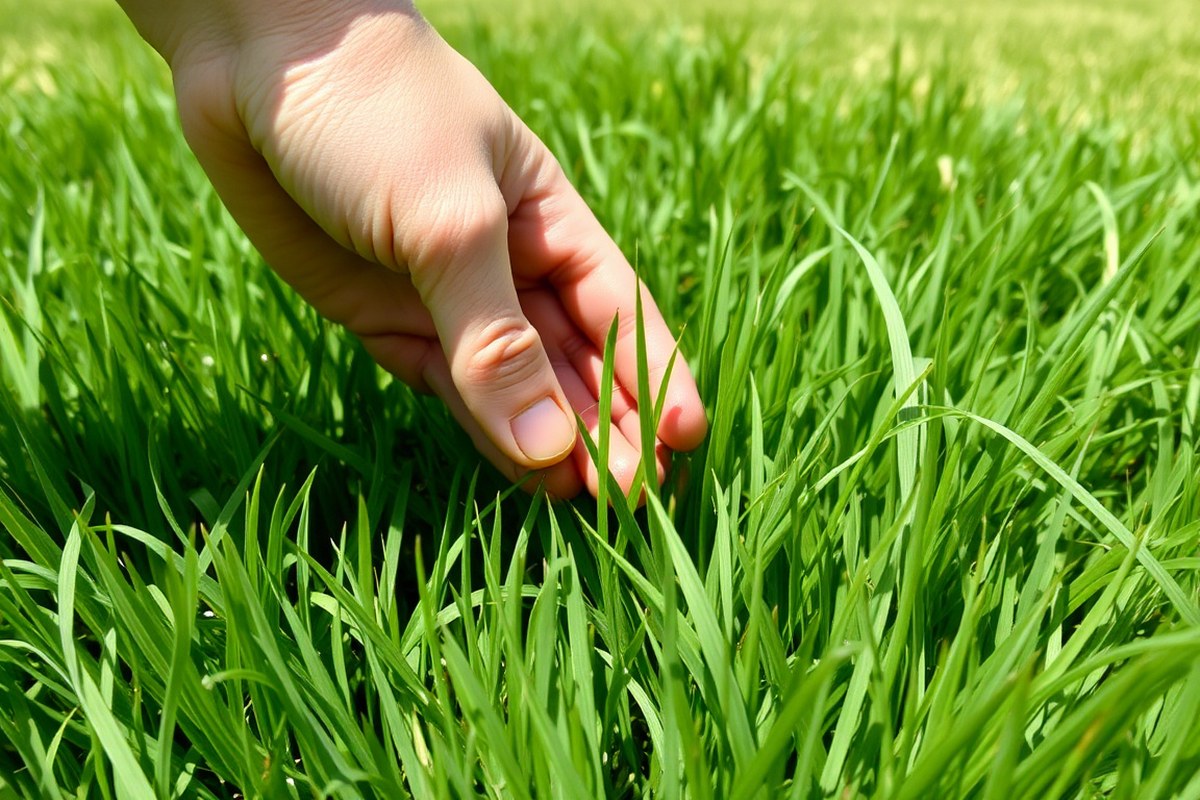
Start identifying your grass by checking a few key traits. Look closely at the blade width and texture first. Then notice how the grass grows and spreads.
Your region and time of year give important clues. Finally, inspect small leaf details like vernation and ligules. These four steps work together to pinpoint your grass type.
Step 1: Observe Blade Width and Texture
Grass blades vary from very fine to coarse. Measuring their width helps split types into categories like fine, medium, or coarse. Texture matters too, some blades feel soft, others rough or wiry.
Fine blades are often under 2 millimeters wide. Medium blades run from 2 to 8 millimeters. Coarse blades are larger than 8.
For example, Kentucky Bluegrass has fine blades around 2 to 4 mm. Tall Fescue has coarse blades up to 10 mm wide.
Run your fingers along the blade’s edge and surface. Notice if it feels smooth or rough. Fine Fescue feels almost hair-like, while Bermuda Grass has some hairs near the base.
- Pull a few individual grass blades from different spots.
- Use a ruler or tape to measure blade width in millimeters.
- Feel the blades to decide if they are soft, rough, or wiry.
- Compare your grass to common widths and textures listed for species nearby.
Step 2: Examine Growth Habit and Spread
How grass grows reveals its type. Some grasses spread aggressively with runners or underground stems. Others grow in tight bunches without spreading far.
Look for stolons (above-ground runners) or rhizomes (below-ground stems). Bermuda Grass spreads with both stolons and rhizomes, making it aggressive.
Kentucky Bluegrass spreads via rhizomes, forming a dense sod. Tall Fescue and Fine Fescue grow in clumps without runners.
Check a patch for new shoots spreading beyond the main plant. Clumping grass stays tight in one spot. Spreading growth means the grass is likely warm-season or some cool-season types with rhizomes.
- Step back and observe how the grass covers the ground.
- Look closely near the soil for runners or underground stems.
- Note if the grass forms clumps or sends out shoots horizontally.
- Identify whether spread is by stolons, rhizomes, or bunch-type growth.
Step 3: Note Your Climate Zone and Seasonality
Your location narrows the list of likely grasses. Cool-season grasses dominate northern climates. Warm-season grasses thrive in southern states.
Grass type also changes seasonally. Cool-season grasses stay green early spring to fall, going dormant in hot summer. Warm-season grasses green up in late spring, stay lush all summer, then brown in winter.
Think about where you live, then check if your grass is green now or dormant. This clue helps confirm if you have cool-season or warm-season grass.
- Find your USDA plant hardiness or climate zone on a local map.
- Note the current season and how your lawn looks, green or brown?
- Match the green/dormant pattern to typical cool or warm-season grass habits.
- Use your region and season to narrow grass options significantly.
Step 4: Look for Key Leaf Features (Vernation, Ligules, Auricles)
Small grass parts tell a big story. Vernation means how the blade folds or rolls inside the shoot.
Ligules are tiny flaps where the leaf meets the stem. Auricles are small ear-like projections at the leaf base.
For instance, Kentucky Bluegrass has folded vernation and membranous ligules without auricles. Tall Fescue’s blades are rolled with visible ligules and no auricles. Bermuda grass has folded vernation and hairy collars, with small rough auricles.
Use a magnifying glass to examine these features closely, as they differentiate species that look alike.
- Pick a young leaf shoot for examining vernation (rolled or folded).
- Look where the leaf blade joins the stem for the ligule type.
- Check for auricles, tiny ears or projections around this collar area.
- Compare observations with known species’ leaf structures to identify your grass.
Distinguishing Cool-Season and Warm-Season Grasses
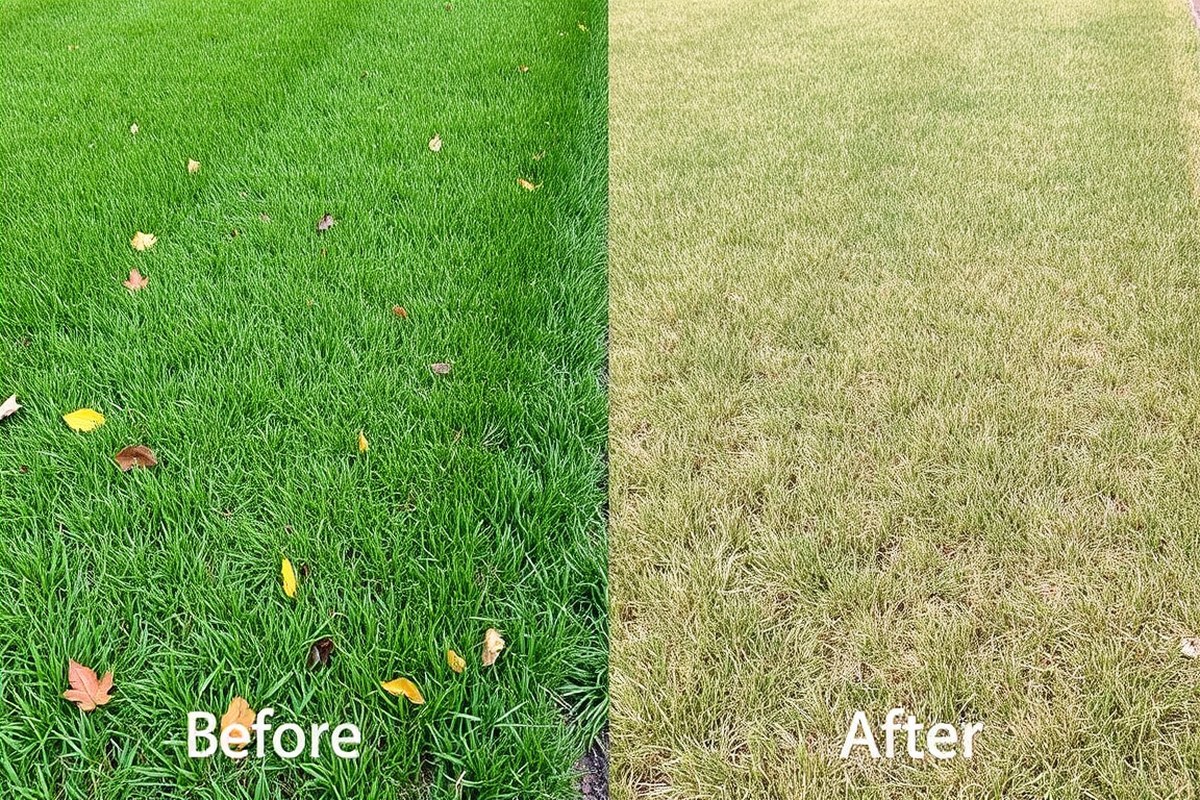
Grasses fall into two main groups: cool-season and warm-season. Cool-season grasses grow best when temperatures stay between 60°F and 75°F. You’ll find them thriving in northern parts of the US, especially in early spring and fall.
Warm-season grasses do well in hot summers and mild winters. They flourish when soil temperatures reach about 80°F.
Seasonality changes how these grasses behave and look. Cool-season grasses start growing in spring and fall. They often go dormant when summer gets hot.
During that time, they may turn brown and stop growing. Warm-season grasses grow fast from late spring to summer. They slow down or go brown in cold winter months.
Their growth mostly stops when temperatures drop low. This difference guides when you mow, water, and fertilize.
| Characteristic | Cool-Season Grasses | Warm-Season Grasses |
|---|---|---|
| Preferred Climate | Cool, northern US with cold winters | Warm, southern US with hot summers |
| Growth Season | Spring and fall (soil 50, 65°F) | Late spring to summer (soil ~80°F) |
| Leaf Width | Broader leaves | Narrower leaves |
| Root System | Shallower roots | Deep, extensive roots |
| Typical Height for Mowing | 2 to 2.5 inches | Varies; often lower than cool-season |
Knowing this helps with timing your lawn care. For example, feed cool-season grass in early spring and fall. Feed warm-season grass during late spring and summer when it grows fastest.
Mowing at the right height fits each type, too. Cutting warm-season grasses too low can harm them, especially if you treat them like cool-season grass.
Grass color and density also clue you in. Cool-season lawns stay greener longer in cooler weather.
Warm-season lawns may turn brown in winter but green up quickly in summer heat. Watch the lawn through the seasons to match its activity with these patterns.
Tip: Applying fertilizer on the wrong schedule can stress your grass and waste money. Follow the feeding guide that suits your grass type and climate zone.
Common Cool-Season Grass Types and Their Characteristics
Grasses that thrive in cooler weather include Kentucky bluegrass, tall fescue, fine fescue, and perennial ryegrass. You can identify each by their leaf shapes and how they grow. Understanding these traits makes it easier to maintain a strong and healthy lawn.
Kentucky Bluegrass: Appearance and Growth
Kentucky bluegrass has boat-shaped blade tips and a dark blue-green color. It spreads through underground stems called rhizomes, helping it fill in bare spots over time. Mowing heights usually stay around 2 to 3 inches to keep it thick and healthy.
This grass thrives in cooler temperatures and prefers well-drained soil. It recovers well from foot traffic because of its spreading habit. Its folded blades have light-colored lines along the midrib, a helpful ID feature.
Tall Fescue: Texture and Climate Adaptability
Tall fescue grows in clumps rather than spreading runners. The blades are coarse, wide, and have pointed tips with visible lines on top.
Its dark green color stands out. It tolerates heat better than other cool-season grasses.
This grass tolerates dry soil and changing temperatures well. It grows great in areas where seasons mix, called transition zones.
It usually grows alone or in drought-tolerant blends rather than common lawn mixes. Its leaf blades feel rougher, unlike Kentucky bluegrass.
Fine Fescue and Perennial Ryegrass Differences
Fine fescue has very thin, needle-like, gray-green blades that spread aggressively, especially in shade. Perennial ryegrass features glossy, bright green blades with pointed tips and a fast initial growth. Ryegrass struggles more in extreme cold but covers soil fast in spring.
Fine fescue has very thin blades that feel soft. It grows well in shady spots with low light.
Perennial ryegrass has a short, membranous ligule and shines noticeably when wet. Both grasses appear in mixes to handle shade and wear better than Kentucky bluegrass alone.
Here’s a quick comparison of these popular cool-season grasses:
| Trait | Kentucky Bluegrass | Tall Fescue | Fine Fescue | Perennial Ryegrass |
|---|---|---|---|---|
| Blade Shape | Boat-shaped tip, folded blades | Wide, pointed tips, coarse texture | Needle-thin, fine blades | Pointed tips, glossy blades |
| Growth Habit | Spreads by rhizomes | Clumping, no runners | Spreads aggressively | Grows in bunches quickly |
| Color | Dark blue-green | Dark green | Gray-green | Bright green, shiny |
| Shade Tolerance | Moderate | Lower | High | Moderate |
| Drought Tolerance | Moderate | High | Moderate | Lower |
Seeing these traits on your lawn helps narrow down which grass you have. Mixing Kentucky bluegrass with tall fescue or perennial ryegrass works well.
They balance shade tolerance, drought resistance, and wear from foot traffic. Knowing these traits saves time choosing the right seed and care plan.
Common Warm-Season Grass Types and How to Spot Them
Warm-season grasses like Bermudagrass, Zoysia, St. Augustine, and Centipede each have unique leaf and growth features to watch for. You can tell Bermudagrass from Zoysia by looking at leaf texture and spread patterns.
St. Augustine is easy to spot by its twisted leaf collar. Centipede has a softer yellow-green color and distinct runners.
Bermudagrass Features and Growth
Bermudagrass shows fine, medium-green blades about 2 to 4 mm wide. Its blades are folded.
The plant spreads using both rhizomes underground and stolons above. This grass prefers short mowing heights, around 0.5 to 1.5 inches, which helps maintain its dense, carpet-like surface.
The mix of rhizomes and stolons lets Bermudagrass recover quickly from damage. It grows best when the soil temperature is 80 to 95°F. The grass may go dormant if soil drops below 55°F.
- Fine, folded leaf blades about 2 to 4 mm wide
- Spreads with both rhizomes and stolons
- Mows short: 0.5 to 1.5 inches recommended
- Medium to dark green color
- Recovers quickly from wear
- Turns brown when soil temperature drops below 55°F
Zoysiagrass Texture and Spread
Zoysia has rolled vernation, meaning its young leaves roll tightly like a cigarette. It sports stiff, needle-like blades with a pale green color. The grass spreads mostly through rhizomes.
It forms a dense, carpet-like turf. It grows slower than Bermudagrass.
You can spot Zoysia by its hairy ligule and collar, which feel rough to the touch. This grass tolerates heat well but takes its time filling in bare spots compared to Bermudagrass.
- Rolled vernation on young leaves
- Stiff, pale green, needle-like blades
- Dense growth forming a tight carpet
- Hairy ligule and collar
- Spreads mainly through rhizomes
- Slow to establish and spread
St. Augustine and Centipede Traits
St. Augustine grows broad, coarse blades with blunt tips. Its collar twists about 90 degrees, making the blade sit at an angle to the sheath. It spreads by stolons and handles shade better than other warm-season grasses.
Centipede grass also spreads by stolons and sports folded, yellow-green blades with notched tips. Both grasses grow slower than Bermudagrass and Zoysia, preferring warm climates with consistent temperatures above 70°F.
- St. Augustine: broad blades, blunt tips, twisted collar
- Centipede: folded blades, yellow-green, notched tips
- Both spread by stolons only
- Slow growth rate compared to Bermudagrass and Zoysia
- St. Augustine tolerates shade and heat well
- Prefer warm temperatures, above 70°F consistently
How Growth Habit and Leaf Features Help Identify Grass
Growth habits and leaf features help tell grass types apart. Stolon and rhizome types show how a grass spreads, revealing its species. Stolons are above-ground runners, while rhizomes grow just under soil.
Bunch grasses grow in tufts without spreading runners. Warm-season grasses often spread with stolons or rhizomes. Cool-season grasses may grow in clumps or spread differently.
Vernation means how a new leaf is folded inside the shoot. Watch a young blade carefully by peeling back the sheath. Cool-season grasses show vernation rolled or folded in specific ways.
Ligules and auricles are little flaps or hairs where the leaf blade meets the stem. Their shape varies by grass type and they help identify different species quickly.
You need to look at these features together to know your grass accurately. Use the checklist below to observe each trait on a handful of blades. Take a magnifying glass outside in the morning when dew is on the grass.
This helps see small details clearly. Compare your notes to known patterns for deciduous warm- and cool-season types.
| Feature | Cool-Season Grasses | Warm-Season Grasses |
|---|---|---|
| Growth Habit | Tight bunches or short rhizomes | Spread widely via stolons and rhizomes |
| Vernation | Rolled or folded leaf within the shoot | Mostly rolled vernation |
| Ligule | Thin, membranous edge | Often hairy or absent |
| Auricles | Pointy or clasping leaves | Usually small or missing |
This table shows what to expect for common lawn grasses. Most home lawns mix cool-season types like fescue and bluegrass.
They look different from warm-season grasses such as bermuda or zoysia. These differences guide choices for care, seed, and treatments.
Check several lawn patches separately. Mixed grasses often coexist, so don’t rely on one spot.
Using Seasonality and Dormancy Patterns for Identification
Grass greening up and growing actively tells you a lot about its type. Warm-season grasses thrive in summer heat and usually go dormant in cold weather, turning brown. Cool-season grasses green up in early spring or fall and stay green longer through mild weather.
Watching your lawn through seasons signals what grass you have. Dormant grass might look dead. But a firm white or pale green crown at its base means it’s still alive.
You should keep watering during dry spells. Do this until dormancy clearly starts. This helps avoid stressing the grass.
Knowing your grass’s seasonal pattern guides watering and fertilizing timing. Warm-season grasses need more care starting in late spring as they green up.
Cool-season grasses want feeding in early fall or spring. Mowing height also varies, with warm-season types usually cut shorter.
- Warm-season grass greens up around late April to May and goes dormant by November.
- Cool-season grass starts growing in March or April. It slows down in summer heat. It stays green until late fall.
- Water warm-season grass regularly until dormancy in late fall; reduce watering afterward.
- Fertilize warm-season grass in late spring and summer for best growth.
- For cool-season grass, fertilize in early spring and again in late fall.
- Brown, dormant lawn still needs minimal watering to protect roots.
- Watch the crown; if it’s firm and pale, the grass isn’t dead.
Your lawn care will be easier once you know this seasonal behavior. Trying to manage two grass types mixed together for watering and feeding can confuse your schedule. Focus on the dominant grass’s needs to keep your lawn healthy and green when it counts.
Identifying Mixed and Transition Zone Lawns
Some lawns have more than one type of grass, especially in the transition zone. This zone stretches roughly from southern Pennsylvania to northern Texas. Here, both cool-season and warm-season grasses can grow, sometimes side by side.
Look closely at your lawn to spot different grasses. Cool-season types like Tall Fescue have thicker blades and stay green in cool weather. Warm-season grasses include Bermudagrass.
They have narrow, fine leaves with tiny hairs. These grasses go dormant when it gets colder. You see a mix of broad and fine grass blades.
The patches green up and fade at different times. This means you likely have several grass types.
Managing mixed lawns means balancing care for each type. Water deeply but less often to avoid stressing warm-season grass during cool spells. Use mowing heights that suit the dominant grass but won’t hurt the weaker one.
Keep Tall Fescue at 3 inches tall. Maintain Bermudagrass between 1 and 2 inches. Adjust these heights to prevent any damage.
Overseeding with a single grass can improve lawn uniformity but requires careful choice. Select a grass that fits your climate and existing lawn. In transition zones, overseed with Tall Fescue if your lawn leans cool-season.
Warm-season grass is the main type. Bermudagrass might suit your lawn better.
Overseeding needs 1 to 2 pounds of seed per 1,000 square feet. The cost ranges from $15 to $30 based on seed quality.
Visual clues help sort mixed lawns. Spot patches of dark green dense blades next to thinner, lighter ones. Note how fast each grass grows with the seasons.
Seasonal dormancy or color change can indicate warm-season grass presence. Watch for different textures by feel, fine hairs or smooth blades are a clear sign.
Trying to care for mixed lawns means accepting some trade-offs. Water and mow for the grass that covers the largest area. Don’t overfertilize, since warm-season grasses fare poorly with excess nitrogen in cool weather.
Problems like patchiness get worse over time. Professional lawn services can help. Your local extension office can also provide advice or testing.
Next Steps After Identifying Your Grass Type
Mowing height changes a lot depending on the grass type. Bermuda grass likes to be cut short, about 1 to 2 inches tall.
Tall fescue does better if you keep it closer to 3 inches. Mowing too short or too tall can stress your grass and invite weeds or diseases.
Your watering schedule depends on whether your grass is cool-season or warm-season. Most lawns need about 1 inch of water per week including rain. Cool-season grasses like Kentucky bluegrass do best with morning watering.
They need water more often in spring and fall. Morning watering helps these grasses stay healthy. Warm-season grasses, such as zoysia, thrive with less frequent watering during hot summer months.
Fertilizer needs vary by type, too. For warm-season grasses, feed them in late spring and summer when they grow fast. Cool-season grasses get their main fertilizing in early fall and spring.
Use slow-release fertilizers and follow package instructions on amounts. Over-fertilizing can burn your grass or encourage pests.
Check herbicide labels carefully before applying weed control products. Some safe herbicides for Bermuda grass harm tall fescue and vice versa.
Look for products that name your grass type as safe. Using a wrong herbicide can thin your lawn and make problems worse.
Once you know your grass type, deciding about overseeding gets easier. Cool-season grasses often benefit from fall overseeding to patch thin spots.
Warm-season grasses usually don’t need overseeding since they spread more on their own. Renovation projects work best when you choose seed or sod matching your existing lawn’s type.
Use local extension services or lawn care pros for advice tailored to your grass and region.
Step-by-Step Action Plan for Identifying Your Grass Type
Follow these steps to figure out your lawn’s grass type. Each step helps you check your progress clearly.
- Day 1: Find a healthy patch of grass. Look at the blades closely to note their texture and width.
- Day 3: Measure the leaf length and check if blades are folded or flat. This helps narrow down your options.
- Week 1: Observe your lawn’s growth rate and how green it stays. Compare it to cool or warm-season patterns.
- Week 2: Pull up a small section of grass to see the growth habit. Check if it spreads by runners or clumps.
- Week 3: Record any color changes or dormancy signs as the weather changes. This confirms seasonal patterns.
- Week 4: Use a grass ID guide or app to match your notes with known types. Cross-check features like leaf shape and growth style.
- After 1 Month: Decide on the best care routine based on your confirmed grass type. Proper care improves lawn health significantly.
Frequently Asked Questions
How Can I Use a Soil Test to Help Identify My Grass Type?
A soil test won’t directly ID grass type but shows conditions like pH and nutrients. Knowing soil health helps you pick grass suited to your yard’s needs.
Can Drone Images Help Me Identify My Lawn’s Grass Type?
Yes, drone photos can reveal grass color and texture clearly. They give a broad view that helps spot pattern differences between common grasses.
What Role Does Mowing Frequency Play in Recognizing My Grass?
Different grasses thrive under certain mowing schedules. Bermuda tolerates frequent, short cuts; tall fescue prefers less frequent, higher cuts. Observing this helps tell them apart.
Can My Lawn’s Shade Level Help Identify Its Grass Type?
Shade can hint at your grass because fine fescue grows well in shade. Grasses like Bermuda need full sun, so examining sunlight helps narrow choices.
Is It Useful to Observe Seed Head Shape to Identify Grass?
Seed heads look very different among species and help confirm ID. Look for boat-shaped tips in Kentucky bluegrass or pointed tips in ryegrass.
How to Spot If My Lawn Has a Mixture of Grass Types?
Mixed lawns show both clumping and spreading patterns from different grasses. Check blade width and color differences to detect blends.
Before You Go
Knowing your grass type lets you care for your lawn the right way. Start by checking your grass blades today. It’s the best move for a greener yard tomorrow.