Can I Plant Peaches? A Complete Guide with 8 Essential Growing Tips
Can I plant peaches where I live? Yes, you can grow peaches in many areas if your climate fits their needs. Peaches do best where winters are cold enough to help them rest but not too harsh.
Peach trees need chill hours between 32 and 45 °F to break dormancy properly. Some varieties need 600+ chill hours.
Others grow well with as few as 200 hours. Choosing the right variety for your climate is key to success.
Peaches need full sun. They require 6 to 8 hours of direct light. This amount helps them grow well.
Also, good drainage and space help them avoid diseases and grow strong. Starting with a healthy spot and the right tree sets you up for a good harvest.
Key Takeaways
- Pick a peach variety that matches your climate’s chill hours.
- Plant peach trees where they get at least 6 to 8 hours of sun daily.
- Avoid soggy soil to prevent root rot and other diseases.
- Give standard peach trees about 18 feet of space to grow.
- Keep grass and turf at least 4 feet away from the tree trunk.
- Test your soil every 3 to 4 years to check nutrient levels.
1. Can I Plant Peaches in My Climate Zone?
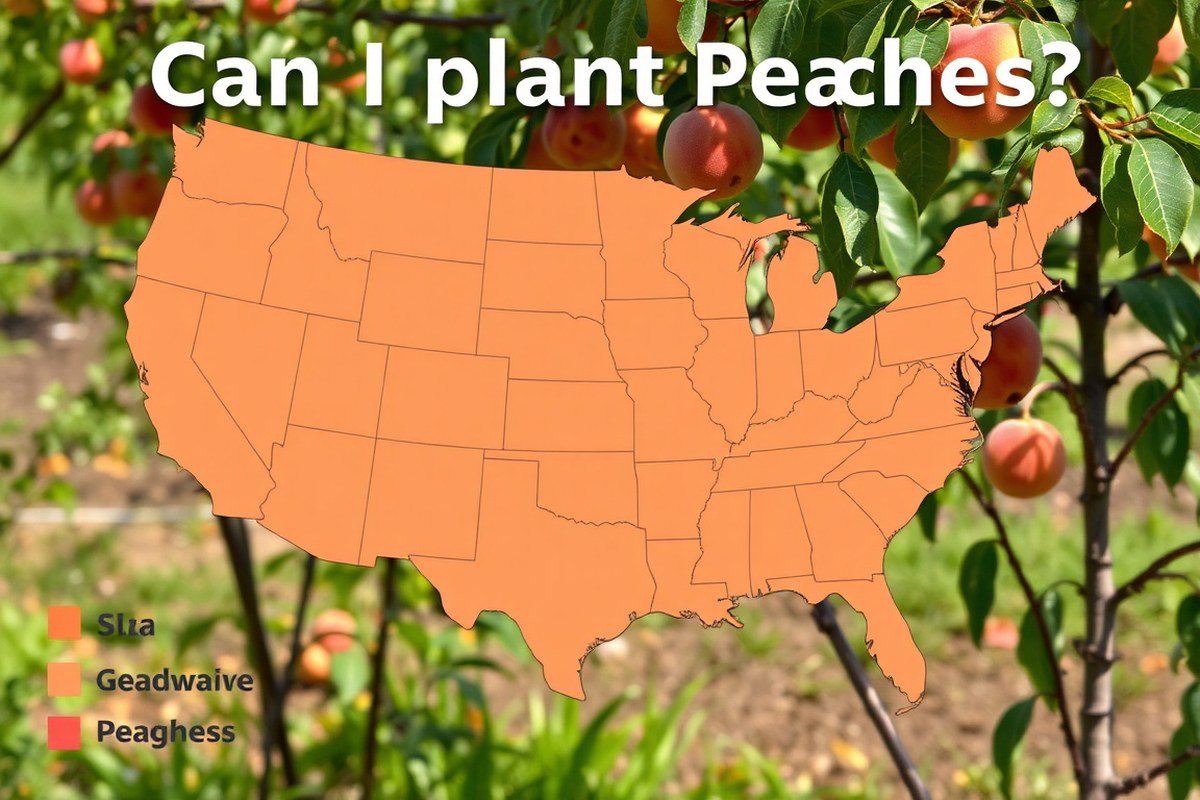
Start by checking your USDA hardiness zone to see if peaches grow well there. Peaches thrive in zones 4 through 9.
But each zone has unique temperature and winter conditions. Knowing your zone helps you pick varieties that tolerate your local cold and frost risks.
You need to know chill hours for your peach tree. Chill hours mean cold hours while the tree is dormant. These hours tell the tree when to grow again.
Chill hours mean temperatures between 32°F and 45°F (0°C to 7.2°C) accumulated during winter. Peach trees generally need 500 to 1,000 chill hours to develop fruit properly. Compare this to your area’s average winter chill hours to choose the right tree.
If you live in Utah, expect warm winter spells. Choose peach types needing about 800 or more chill hours. This fits harder winters better.
In milder climates, such as parts of California or the southern U.S., low chill hour peaches needing 300 to 500 chill hours work better. If your peach tree lacks chill hours, it may bloom late.
It might make less fruit or no fruit at all. This lowers your harvest.
Winter protection depends on your climate and peach type. Use trunk wraps to protect young trees from frost in cold zones. Add mulch around the tree base for extra insulation.
This helps the tree survive winter. Using frost cloths during unexpected cold snaps can save buds from damage.
Peach trees prefer planting in early spring or late fall when dormant. So timing also helps avoid winter injury.
Some common peach varieties include ‘Elberta’ and ‘Redhaven’ for areas with moderate to high chill hours. For warmer zones, consider ‘Tropic Beauty’ or ‘Flordaking,’ which need fewer chill hours. Buy peach trees from local nurseries or reliable online sellers.
So plants are already adapted to your region’s conditions. Matching chill requirements with your climate zone sets a strong foundation for peach tree success.
2. Choosing the Right Peach Tree Type for Beginners

Picking the right peach tree helps you avoid common problems. Grafted trees usually start fruiting faster and have predictable flavors. Choosing between standard or dwarf types affects your space needs and care efforts.
Seed vs. Grafted Trees
Grafted peach trees combine good fruit traits with hardy roots from related species. They usually bear fruit in around 4 years and are easier for beginners. Growing from seed takes longer and the fruit may not match the parent tree.
Seed-grown peach trees need more patience and care. They can take up to 5 or more years before fruit appears. But seeds let you experiment with different varieties if you enjoy growing from scratch.
Choose grafted trees for quicker harvests and more reliable fruit quality.
Standard vs. Dwarf Trees
Standard peach trees need about 18 feet of space. They grow large and produce many peaches but require more room and pruning. Dwarf trees only need 10 feet of space and stay smaller, making them easier to manage.
Dwarf peach trees suit small gardens or container growing well. They make harvesting simpler since you won’t need a ladder. Standard trees handle harsher weather better due to their size and root systems.
| Tree Type | Space Needed | Time to Fruit | Size at Maturity |
|---|---|---|---|
| Standard | 18 feet | 4 years | Large (15+ ft tall) |
| Dwarf | 10 feet | 4 years | Smaller (6-10 ft tall) |
Understanding spacing helps you avoid overcrowding or wasted space. Each type suits different yard sizes and personal care preferences.
Container Growing Options
Dwarf peach trees grow well in containers of at least 15-20 gallons. Big pots help roots spread and keep the tree stable. You can plant them indoors or on patios where ground space is tight.
Plant seeds about 6 inches deep in containers. Ensure the location gets full sun. Container trees still need frequent watering and fertilizing because pots dry out faster.
Use only dwarf varieties in containers to avoid root crowding and poor growth.
Seedlings and Transplanting
Buying seedlings ready to transplant can save time versus seed planting. Seedlings are young trees that have begun growing from seed but are not grafted. They take longer to fruit and may produce unpredictable quality.
Transplant seedlings carefully to avoid root damage. Choose a sunny spot with well-draining soil. Water the new tree gently after planting and keep it moist during the first year.
Seedlings may suit gardeners who want to try propagating trees but expect inconsistent results. Grafted trees remain a safer bet for most beginners.
3. Preparing Soil and Site for Planting Peach Trees
Peach trees need well-prepared soil and a sunny, open space to thrive. Aim for sandy to loamy soil with a pH between 6 and 6.5. Plant each tree 15 to 20 feet apart with good drainage to avoid root problems.
Testing and Adjusting Soil pH
Check your soil’s pH before planting. You can buy a soil test kit at garden centers. You can also send a soil sample to a local extension service.
Both methods give good soil results. Peaches grow best in soil with a pH of 6 to 6.5, which is slightly acidic to neutral.
The pH may be too low and feel acidic. You can add lime to increase the pH level. The pH might be too high and feel alkaline.
Adding sulfur or peat moss lowers the pH slowly. Mix amendments thoroughly into the soil about a month before planting for best results.
Improving Soil Drainage and Texture
Peach roots hate wet feet, so well-drained soil is essential. Your soil might be heavy clay or stay too soggy.
Mix compost or aged manure to improve the soil texture. This helps water drain better and adds nutrients.
Adding coarse sand can also improve drainage but avoid too much, which causes dryness. Dig a hole about 12 inches deep to test drainage.
Fill it with water and check how fast it drains. It should drain within 24 hours.
- Remove grass and weeds from planting area
- Mix in 2 to 3 inches of compost or organic matter
- Amend clay soils with coarse sand cautiously
- Ensure no water pools in the spot after rain or watering
- Raise soil level slightly if area floods or stays wet
Good drainage prevents root rot and supports healthy tree growth. Water that stands for too long hurts peach trees. It can make your tree struggle or even die.
Selecting a Sunny Location
Pick a planting spot that gets full sun daily, at least 6 to 8 hours. Peach trees produce the most fruit and develop strong wood in bright, warm places. Shade reduces yield and encourages pests.
Look for an open area away from tall trees or buildings. Cold air tends to settle in low spots, so avoid frost pockets.
Hills or slopes get better air flow and warmth. This helps buds survive when late frosts arrive.
Proper Tree Spacing Guidelines
Space peach trees 15 to 20 feet apart. This distance allows air to flow between trees, which lowers disease risks. It also prevents overcrowding as trees grow wider.
Mark your planting holes so the graft union sits 2 to 4 inches above soil surface. The graft union is the swollen part where root and scion join.
Planting it too low invites rot and other problems. Dig holes wide enough for roots to spread without bending.
4. Step-by-Step Peach Tree Planting Instructions
- Choose early spring for planting your peach tree outside. The soil is workable, and the tree wakes from dormancy.
- Dig a hole at least twice the root ball’s width and depth. This space helps roots grow out properly.
- Place the tree in the hole with roots laid out naturally, not twisted or crowded. Avoid planting too deep.
- Position the graft union 2 to 4 inches above the soil line. Planting it deeper risks rot or weak growth.
- Backfill the hole, mixing native soil with compost if needed for nutrients. Firm the soil gently without packing it hard.
- Water the tree deeply right after planting to settle roots and remove air pockets.
- Space peach trees about 15 to 20 feet apart. This spacing helps air circulation and sunlight for fruit.
- Mulch around the base but keep mulch a few inches away from the trunk. This prevents moisture buildup that can cause disease.
Planting in early spring gives your peach tree a full growing season. Digging a wide, deep hole helps roots grow well. The graft union must sit above soil to stay healthy.
Watering right after planting gets roots settled fast. Poor planting, like too deep or crowded roots, can stunt growth or kill the tree. Keep spaced trees to avoid crowded branches and improve fruit yield.
Mulch keeps moisture but avoid touching the trunk to stop rot. Following these steps gives your peach tree the best chance to thrive.
5. Watering and Fertilizing Your Peach Tree for Healthy Growth
New peach trees need about 10 gallons of water each week during their first year. Water deeply to soak the soil 12 to 18 inches down. Avoid shallow, frequent watering because it encourages weak roots.
Mature peach trees need about 3 inches of water each month. That adds up to 36 inches per year. Keep watering consistent for healthy growth.
Set up irrigation every 7 to 14 days, depending on soil and heat. Water deeply so moisture reaches 18 to 24 inches below the surface.
Feeding your peach tree helps branches grow strong and fruits to form. Use a 10-10-10 fertilizer twice yearly. Spread 2 pounds around the drip line, not near the trunk.
- For young trees, use half the recommended fertilizer amount in the first year.
- Avoid fertilizing if shoot growth exceeds 24 inches in a growing season.
- Water right after fertilizing to help nutrients soak into the soil.
- Check soil nutrients every 3 to 4 years to adjust your feeding plan.
- Signs of nutrient deficiency include yellow leaves, poor fruit set, or weak growth.
- Stop fertilizing late in the season to avoid stressing the tree before winter.
Look for leaves turning pale or yellow as signs your tree needs more nutrients. Also, if your peach tree grows too fast, cut back on nitrogen fertilizer. Overfeeding can cause weak wood that breaks easily.
Never put fertilizer right at the tree trunk to avoid burning roots and damaging the tree.
Water and fertilizer schedule varies with your soil type and local weather changes. Sandy soils dry out faster and may need watering more often. Clay soils hold moisture longer but can cause root problems if overwatered.
Pay attention to your tree’s response. Healthy growth means vibrant green leaves and steady fruit development. Watch for drooping leaves or bad fruit quality as signs.
Adjust watering or feeding to help the peach tree stay healthy. Act fast to keep it thriving.
6. Identifying and Managing Common Peach Tree Pests and Diseases
Peach trees face several common threats like aphids, peach tree borers, and fungal diseases. These pests and illnesses damage leaves, fruit, and bark, which harms tree health and fruit quality. Spotting problems early helps you contain them before they get worse.
Common diseases include brown rot, peach leaf curl, bacterial spot, and coryneum blight. Coryneum blight is also called shot hole. Brown rot causes fruit decay and needs close monitoring during warm, wet weather.
Leaf curl produces puckered leaves with red or purple patches. Removing affected leaves and pruning infected branches cuts down disease spread.
- Look for small, round purple spots on leaves for shot hole disease
- Note sticky amber ooze or bark peeling from cytospora canker
- Watch for yellowing leaves and weak growth hinting crown or root rots
- Check undersides of leaves for clusters of aphids, especially in spring
- Identify scale insects, minuscule, shell-covered spots on branches and stems
- Avoid irrigation that wets leaves; keep water directed to the soil
- Prune out dead or diseased branches from late winter to early spring
Natural control starts with keeping trees vigorous and well watered without overdoing it. Use drip irrigation or soaker hoses to avoid wetting foliage.
A dry canopy helps prevent many fungal diseases. Remove fallen fruit and leaves to limit disease spores and insect shelter.
You can manage pests by encouraging beneficial insects like ladybugs to eat aphids. Organic sprays with neem oil or insecticidal soap reduce aphid and scale populations safely. Wrap tree bases with protective trunk guards to keep borers away.
Prune out tunnels under bark where larvae hide. Using peach varieties resistant to leaf curl or brown rot lower risks too.
Pruning helps control diseases like cytospora canker. This disease shows as sunken, amber patches that ooze sap. Cut out cankered wood and seal wounds with tree paint if needed.
Clean tools after pruning to avoid spreading pathogens. Keep trees healthy with good soil nutrition and regular monitoring for pests.
7. Pruning and Training Peach Trees for Better Fruiting
Pruning peach trees is best done in late winter before new growth appears. You focus on removing dead wood and shaping the tree for good fruiting. This helps the tree grow strong, produce new fruiting wood, and lets sunlight reach inside.
Timing Your Pruning
Late winter, before buds swell, is the prime time to prune peach trees. This timing keeps the tree dormant and limits sap loss. Some gardeners also prune right after harvest in late summer to early fall.
Pruning during dormancy promotes strong new shoots the next year. Avoid pruning during active growth to prevent damage and infection.
Always check the weather for a few dry days. Dry days make cuts cleaner and safer for the tree.
Removing Dead and Crossing Branches
Start pruning by cutting out all dead, broken, or diseased branches. These branches weaken the tree and block sunlight. Also, remove any branches that cross or rub against others.
Clear space by taking out water sprouts, those vertical shoots from main branches. Removing crowded branches reduces risk of disease. Aim to keep the branches healthy and spaced properly.
Shaping for Optimal Sunlight and Airflow
Pick 4 to 5 main scaffold branches to shape the tree. Choose them about 18 to 24 inches above the ground.
These branches should be evenly spaced around the trunk. This creates an open center or vase shape.
Keep the center clear of branches within one foot of the trunk. This design allows strong air circulation and sunlight inside. Prune to keep about 20 to 25 fruiting laterals on each scaffold at pruning time.
Thin fruiting shoots by removing excess ones to prevent overloading. Overcrowded branches cause small fruit and can break under weight. Managing the shape yearly develops healthy peaches and a strong tree.
Follow these steps to prune and train your peach tree:
- Choose late winter for pruning while the tree is dormant.
- Remove dead, broken, or diseased branches first.
- Cut away crossing branches and water sprouts.
- Select 4 to 5 scaffold branches spaced evenly 18, 24 inches above ground.
- Remove branches growing inside one foot of the trunk.
- Limit fruiting laterals to 20, 25 per scaffold branch.
- Thin extra fruit after buds set to avoid branch damage.
- Clean cuts with sharp tools and seal large wounds if possible.
8. Harvesting Peaches and Knowing When They’re Ready
Peach trees usually start producing fruit three to four years after planting. Early on, your tree might grow leaves and branches but without peaches.
The fruits are often ready to harvest by early September. This depends on your climate and how healthy the tree is.
Check if peaches are ripe by looking at their color and feeling their firmness. Ripe peaches have a deep color without any green. Gently squeeze the fruit; it should give slightly under pressure but not feel mushy.
Ripe peaches smell sweet and juicy near the stem. This is a clear sign they are ready to pick.
Pick peaches carefully by holding the fruit and twisting it gently off the branch. Avoid pulling hard or tugging, since this can damage the tree or bruising the fruit. Harvesting early in the morning when peaches are cooler helps keep them fresh longer.
Let peaches that aren’t fully ripe stay on the tree longer. This helps them get the best flavor possible.
Store ripe peaches in your fridge to keep them from spoiling fast. They last up to five days chilled if you handle them gently. Bruised peaches spoil quickly, so avoid dropping or stacking them too tightly.
Plan to eat a peach soon? Keep it on the counter for a day. This will make it softer and tastier.
Handle peaches gently during harvest because ripe fruit bruises easily and will spoil faster.
Sometimes peaches lack flavor if frost damaged the tree. Low sunlight or poor nutrients can also cause this. Make sure your tree gets enough sunlight every day.
Keep other plants away so they don’t compete at the roots. Allowing peaches to fully ripen on the tree results in the sweetest and juiciest harvest.
Step-by-Step Action Plan for Planting and Caring for Your Peach Tree
Follow these steps to get your peach tree growing strong and healthy from the start.
- Before planting: Choose a sunny spot with well-drained soil. Test soil drainage by digging a hole and filling it with water. Good drainage means it drains within 24 hours.
- Planting day: Dig a hole twice as wide but just as deep as the root ball. Place the tree so the graft union is 2 inches above soil. Fill and water deeply.
- First week after planting: Water your tree every 2 days. Keep the soil moist but not soaking wet. Check the soil before watering again. Check soil moisture with your fingers 2 inches down.
- One month in: Use a 10-10-10 fertilizer around the base. Keep it 6 inches away from the trunk. Apply it once a month for best results. Water again right after feeding.
- After 3 months: Begin pruning your tree in late winter or early spring. Remove dead branches and shape to promote airflow.
- Growing season: Monitor for pests like aphids and peach leaf curl. Use insecticidal soap if you see damage or sticky leaves.
- Summer harvest time: Check fruit color and softness. Pick peaches when they easily come off the branch for best taste.
- Fall: Clean up fallen leaves and fruit under the tree. This helps reduce pests and diseases next year.
Frequently Asked Questions
Can I Grow Peaches from Seed in a Container at Home?
You can grow peaches from seed in a container. Plant the seeds 3 to 4 inches deep. Keep the soil moist and warm for sprouting.
Keep the soil moist and warm as seeds take longer to sprout than veggies like beans. This method takes more patience before you get fruit.
How Far Apart Should Peach Trees Be Spaced in a Backyard?
Space standard peach trees about 18 feet apart and dwarf trees about 10 feet apart. This spacing allows enough room for sunlight and air circulation. Good air flow helps reduce disease problems.
Are Peach Trees Self-Pollinating or Do I Need More Than One?
Most peach trees are self-fertile, so one tree can produce fruit. However, planting two or three trees increases your harvest if you have space. More trees also help with pollination and fruit size.
Can I Plant Peaches in Soil That Doesn’t Drain Well?
Peaches do not grow well in poorly drained soil because their roots may rot. Always choose a well-drained spot for planting peach trees. You might need to improve soil drainage first.
Would Planting Peaches Near a Wall Help in Cold Climates?
Yes, in areas with late frosts, like Utah, plant peaches near a brick or cement wall. The wall reflects heat back and protects the tree during cold nights. It creates a slightly warmer microclimate.
What Is the Best Time of Year to Plant Peach Trees?
Plant peach trees while they are dormant, late winter or early spring. This helps roots adjust before growth. Avoid times with very hot or freezing weather.
Wrapping Up
You can grow peaches well if you plan carefully and follow the right steps. Start by picking the right spot and tree type for your area. Watch your tree closely as it grows, and enjoy fresh peaches when they’re ready.