How to Plant Peaches: Complete Guide for Successful Growth and Harvest
Knowing how to plant peaches starts with picking the right spot and time. Plant peach trees in early spring or late winter before new growth begins.
The tree needs full sun to thrive. So find a place with at least six hours of sunlight daily.
Peach trees need room to spread. So leave 18 to 20 feet between full-sized trees. Dwarf types can go 5 to 10 feet apart.
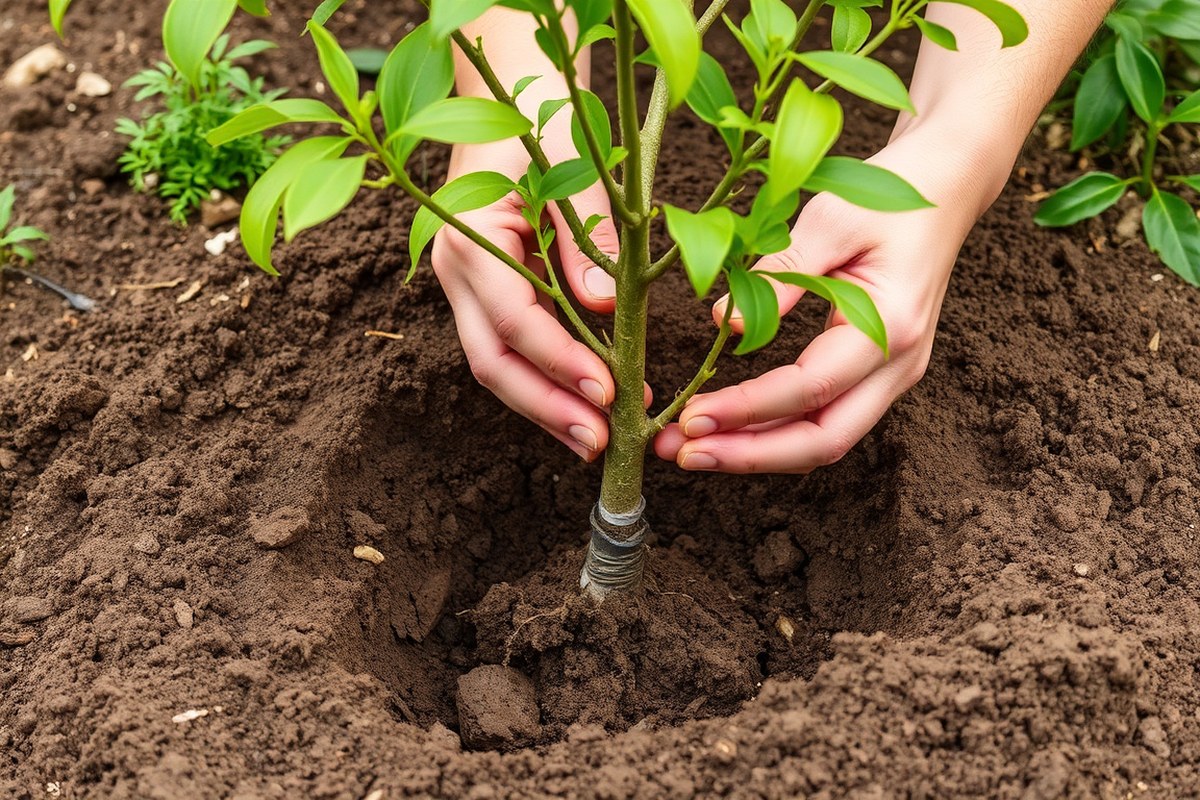
Plant the young tree with the graft union 1 to 2 inches above ground. Keeping it raised helps prevent rot from soil moisture. This setup protects your tree as it grows.
Choosing the right variety for your climate matters, especially based on chill hours your area gets. Peaches need about 600 chill hours below 45°F to produce fruit. So check your local data before buying.
Key Takeaways
- Plant peach trees in early spring or late winter for the best start.
- Pick a location that gets six or more hours of direct sun each day. Sunlight helps peach trees grow healthy and produce more fruit. Make sure the spot is open and bright.
- Space full-size peach trees 18 to 20 feet apart to avoid crowding.
- Position the graft union 1 to 2 inches above soil to prevent rot.
- Pick varieties that match your climate’s chill hours for fruit production.
- Use dwarf or patio peach varieties for small gardens or container growing.
When and How to Plant Your Peach Tree
Plant peach trees when they are dormant to help them establish well. Late autumn, late winter, or early spring all work, depending on your local climate. Container-grown trees do best if planted right after the last frost.
The weather should be cool, but not freezing. This helps the tree adjust well.
Choose a spot with full sun and soil that drains well. The soil should have a pH near 6.5 to 7.0 to suit peach trees. Avoid low spots that hold water, which can cause root and graft union rot.
Dig your hole wide enough to spread the roots out without crowding. The hole should match the root ball’s depth. For bare root trees, use the original soil line depth.
Dig carefully to avoid deep holes. Planting too deep harms the tree and can stop growth.
The graft union is the swollen area on the trunk. This is where the variety joined the rootstock. Keep an eye on this spot when planting.
Position this graft union 1 to 3 inches above the soil surface to prevent rot. Cover roots back to their original soil line only.
Follow these steps to plant your peach tree safely and correctly:
- Clear the area of grass, weeds, or debris before digging your hole.
- Dig a hole two to three times wider than the root ball and just as deep.
- Loosen the soil around the edges to encourage root expansion after planting.
- Place the tree so the graft union sits 1 to 3 inches above the soil line.
- Spread the roots carefully in the hole without bending or twisting them.
- Backfill with native soil, pressing gently to remove air pockets.
- Water the tree deeply right after planting to settle the soil and hydrate roots.
- Apply mulch 2 to 3 inches deep around the base. Keep the mulch away from touching the trunk. Mulch helps keep roots moist and cool.
Selecting Peach Varieties Based on Climate and Chill Hours

Choosing the right peach variety depends mostly on your local climate and chill hours. Chill hours count the cold hours your peach tree needs.
These hours fall between 32°F and 45°F. You track chill hours during winter months. This cold period helps your peach tree break dormancy and produce fruit properly.
Peach trees need different chill hours depending on their variety. Some require 600 or more chill hours, suitable for colder regions.
Others need as few as 200 hours and do better in warmer areas. Matching chill hours to your climate keeps your tree healthy and fruitful.
| USDA Hardiness Zone | Chill Hour Range | Peach Variety Type |
|---|---|---|
| Zone 4 | 1,000, 1,050 chill hours | Cold-hardy varieties |
| Zones 5-8 | 800, 950 chill hours | Standard winter chill varieties |
| Zones 5-9 | 800-900 chill hours | Cool to temperate climates |
| Warmer zones (e.g., parts of Utah) | 600 chill hours or less | Low-chill, warm climate varieties |
Cold-hardy peach trees can survive harsh winters and need more chill hours. Low-chill varieties risk early bud break when winter warms unexpectedly. This can damage fruit development.
For example, living in a warmer climate means you should pick a variety with fewer chill hours. This helps avoid risk to your tree. Choose wisely for your area.
You can find your USDA zone online or at local extension offices. Check the average chill hours for your area. This helps you pick the right tree.
Then, find peach varieties developed for those chill hours. Also, consider disease resistance for your area, some varieties handle local pests better.
Picking a peach variety with too many chill hours can stop fruit production. Your tree may also get damaged. Selecting the right chill hours is important.
Peaches generally do best in USDA zones 5 through 9. But some types handle zone 4’s cold well. Warmer places like parts of Utah do better with higher chill hour varieties.
Warm winter spells can trick trees with low chill hours. Those trees may grow too early. Always match the tree’s chill hour need to your region’s actual winter temperatures.
Preparing the Site: Soil, Spacing, and Sunlight Requirements
Peach trees grow best in soil with a pH from 6 to 6.5. You can add lime to raise pH or sulfur to lower it. Rich soil with nitrogen helps leaves and fruits grow strong.
For peach trees under three years old with slow growth, add half a cup of 20-0-0 fertilizer. Spread it around the roots early in spring. This helps young trees grow better.
Water it in well to help the tree absorb nutrients. Organic granular fertilizer can improve nutrients if your tree looks weak.
It also helps when fruit production drops. Use it according to instructions for best results.
Peach trees need full sun, at least six to eight hours a day. This means direct sunlight, not just bright shade. Sunlight supports healthy growth and fruit production.
Pick a place with no shade from buildings or trees. Sunlight helps your peach tree grow and ripen fruit well.
Make sure the spot stays sunny most of the day. Good sunlight encourages strong growth and better fruit quality.
- Space dwarf peach trees 10 to 12 feet apart for good air flow
- Plant standard peach trees about 18 to 20 feet apart to avoid crowding
- Semi-dwarf trees do well at 20 to 22 feet apart
- Allow enough space for your trees to grow up to their expected height
- Plant trees with open centers to improve sunlight exposure and air circulation
Giving each tree enough room helps reduce disease risks like bacterial canker by improving air flow. Wider spacing also lets you prune more easily to keep the tree healthy. Poorly draining soil can be fixed by adding compost or organic matter.
This improves drainage and adds nutrients. Mix it well into the top soil before planting.
Test your soil every three to four years to check its nutrient levels and pH. This way, you catch any problems before they affect your peach tree’s health. Balanced soil, enough sunlight, and proper space help your peach tree.
These factors boost chances of big, sweet fruit. Care for these areas to get good harvests.
Planting Peach Seeds vs Nursery Trees: Which Method Should You Choose?
Planting peach seeds can be satisfying but takes longer and is less predictable. Nursery trees give you a head start with established growth and earlier fruit. Your choice depends on patience, space, and how soon you want peaches.
Germinating Peach Seeds Step-by-Step
First, clean the peach pit by removing all fruit flesh. Let the seed dry for a few days.
Then crack the hard shell carefully. Avoid damaging the seed inside.
Soak the seed in water for 24 hours. Next, put it in a plastic bag. Add moist peat moss or paper towels inside.
Refrigerate the bag at about 40°F (4°C). Keep it there for four months. This mimics winter chilling called stratification.
After stratification, plant seeds 3 to 4 inches deep in pots with well-draining soil. Keep the soil moist and above 59°F (15°C).
This helps the seed to germinate. Germination can take several weeks.
Transplanting Seedlings Outdoors
Wait until seedlings are 6 to 12 inches tall. Also, wait for outdoor temperatures above 50°F (10°C). Harden them off by placing them outside for a few hours daily over a week.
Plant seedlings in a sunny place with good soil. Space them 15 to 20 feet apart.
This gives room for growth. Water thoroughly after planting and keep the soil moist during the first year.
Be patient. Peaches grown from seed take 3 to 4 years more to fruit than nursery trees. Birds and pests may target young seedlings, so watch for damage carefully.
Benefits of Nursery Trees over Seeds
Nursery trees are often one-year-old, 3 to 4 feet tall, with a strong root system. They quickly establish and start producing peaches within 2 to 4 years of planting.
Buying a nursery tree saves time and effort compared to germinating seeds and growing seedlings. These trees come grafted with known cultivars, giving you reliable fruit quality and size.
Nursery trees cost more upfront but reduce risks, such as unpredictable fruit quality or seedling failure. Nursery trees often come bare-root or potted. Soak roots for 2 to 4 hours before planting.
Watering and Feeding Your Peach Tree for Optimal Growth
Water your peach tree about once a week, giving it 1 to 2 inches. Feed young trees lightly, then increase fertilizer as the tree grows. Adjust water and fertilizer depending on rainfall and temperature where you live.
Water Needs for New vs Mature Trees
Newly planted peach trees need gentle watering to settle roots without stress. Give about 5 gallons of water once or twice a week during their first growing season.
Mature peach trees require about 3 inches of water monthly throughout the growing season. This equals around 30 to 50 gallons weekly, depending on soil and weather.
Watch for dry soil about 6 inches deep before watering mature trees again. Overwatering can damage roots and reduce fruit quality.
Choosing and Applying Fertilizer
Start with ½ cup of balanced 10-10-10 fertilizer per new peach tree seven days after planting. Repeat that dose 40 days later but do not overfeed young trees.
When the tree is at least 4 years old, apply fertilizer. Use 1 to 2 pounds of 10-10-10 fertilizer twice each spring.
Spread it evenly around the tree base, but away from the trunk. Spread fertilizer evenly 1 to 2 feet away from the trunk.
Avoid extra nitrogen when new shoots grow more than 24 inches in a season. This helps stop branches from becoming weak.
Check shoot growth regularly during the growing season. Mature trees may need 150 to 300 pounds annually, depending on size and care.
Adjusting Watering by Season and Climate
In dry or hot climates, increase water to keep soil moist but not soggy. Check soil moisture regularly, especially during heatwaves or droughts.
During rainy seasons, reduce or skip watering to avoid root rot and nutrient washout. Drainage matters; waterlogged soil harms peaches more than dry soil.
Use mulch around the base to keep soil temperature steady and conserve moisture. Mulch also reduces weeds competing for water and nutrients.
Never pile fertilizer right at the tree’s base. Keep it a foot or two away to protect roots.
Thinning Peach Fruit for Bigger, Healthier Harvests
Thinning peach fruit means removing extra young peaches while they’re small. This helps the remaining fruit grow bigger and sweeter. It also stops your tree from stressing over too many peaches.
Too many can cause damage or smaller fruit. This helps keep fruit size and tree health better.
Timing the Thinning Process
The best time to thin peaches is about three to four weeks after bloom. At this point, the peaches are around the size of a quarter or a golf ball. Thinning too early or too late can hurt fruit growth.
It also can stress out the tree a lot. Timing matters for the best fruit and tree health.
Removing fruit at this stage lets the tree redirect energy to fewer peaches. This boosts their size and helps develop good color and flavor. You’ll see better harvests and fewer broken branches by thinning on time.
Determining Proper Fruit Spacing
Space the remaining peaches about 6 to 8 inches apart along the branches. This distance gives each peach room to grow well without crowding. Crowded peaches end up smaller, misshaped, or more prone to disease.
On each fruiting lateral, keep just 1 to 3 fruits depending on the branch size. Thin enough to avoid overloading the branch and causing it to break. This careful spacing supports healthy tree growth and big, tasty peaches.
Techniques for Different Varieties
Some peach varieties grow larger, so they need wider spacing when thinning. For bigger types, lean toward 8-inch gaps between fruits. Smaller or freestone varieties can manage with closer spacing near 6 inches.
Pull off the unwanted peaches by hand, snapping or pinching them off the stem. Use clean hands to avoid spreading disease. When you have many small fruits, remove the smallest or damaged ones first.
This helps the bigger fruit grow better. Focus on the weaker fruits to thin properly.
Steps to thin your peach fruit:
- Check your tree when peaches reach golf ball size, about 3 to 4 weeks after bloom.
- Look for clusters with more than 1 to 3 fruits on each branch lateral.
- Choose the best-looking peaches spaced 6 to 8 inches apart to keep.
- Pinch off the extra peaches by hand gently to avoid damaging branches.
- Remove any small, misshaped, or damaged peaches first.
- Keep the strongest fruits evenly spaced along the branches.
- Discard the removed fruit away from the tree to prevent pests or disease.
Recognizing and Managing Common Pests and Diseases
Peach trees often face pests and diseases that reduce fruit quality. Peach leaf curl, brown rot, and bacterial leaf spot are the most common diseases. Watch for curled, red, or thickened leaves to spot leaf curl early on.
Bacterial leaf spot causes small, dark spots on the leaves. It also makes fruit look pitted or scarred. Both signs can harm your peach tree.
Peach scab appears as olive-green spots on fruit and leaves, which can enlarge and darken. Brown rot causes blossom blight and fruit rot, often leading to fruit shriveling before harvest.
Insects such as white peach scale suck sap from your tree. San Jose scale does the same and adds stress. These pests weaken your peach tree over time.
Aphids also invade, clustering on new growth and leaving sticky residue. These pests weaken trees, making them more vulnerable to diseases.
Use a few key practices to reduce these problems effectively:
- Spray with copper fungicide before buds open and within a week after.
- Prune in spring or summer to reduce infection risks and improve air flow.
- Choose disease-resistant varieties such as Clayton or Cresthaven.
- Keep your tree well-watered and feed it according to soil tests.
- Manually remove scales with a soft brush in early spring.
- Introduce beneficial insects like ladybugs to control aphids.
These steps keep your trees healthy without heavy pesticide use. Copper sprays at bud swell mainly stop leaf curl and bacterial spot from starting. Pruning opens the canopy, helping leaves dry faster and breaking pest cycles.
Choosing resistant varieties cuts down disease treatment needs. For example, Clayton is resistant to leaf curl and bacterial spot, saving you time and sprays. Manual pest removal and natural predators manage insects with less chemical impact.
Brown rot needs special attention during the growing season. Removing infected fruit promptly stops spores from spreading. Keep fallen fruit cleared from the ground to reduce disease pressure next year.
Pruning and Maintenance to Keep Your Peach Tree Healthy and Productive
Prune peach trees every year to keep them healthy and productive. The best time is late winter or early spring before new buds swell. This timing helps reduce disease risk and encourages new growth.
Start pruning by shaping your tree with an open-center or vase form. This means cutting back branches near the tree center and letting sunlight in. More sun helps ripen fruit and prevents crowding.
Remove suckers and water sprouts as soon as you spot them. These shoots grow from the trunk or large branches and waste energy. Cut them off cleanly with sharp pruners close to the source.
Vigorous young shoots need trimming to keep growth balanced. Your tree should grow about 18 inches of new wood a year for good fruiting. Prune back excessive long shoots to encourage sturdy, fruit-bearing branches.
Keeping peach trees healthy long-term means checking for damaged or dead wood yearly. Also, regularly clear fallen leaves or fruit around the base. This prevents pests and fungal diseases from settling in.
- Wait until late winter or early spring before buds swell.
- Cut back branches near the tree center to create an open vase.
- Remove suckers and water sprouts from the trunk and branches.
- Trim overly long shoots to encourage 18 inches of healthy growth.
- Cut away any dead or damaged wood every year.
- Clear fallen leaves and fruit around the tree base to reduce pests.
- Sanitize your pruning tools to avoid spreading disease.
Don’t skip pruning; crowded branches can reduce fruit quality and increase disease.
Step-by-Step Action Plan for Planting and Caring for Your Peach Tree
Follow these steps to plant and care for your peach tree from the start. Each step helps ensure your tree grows well and produces fruit.
- Before planting: Choose a peach variety suited to your climate and find a sunny, well-drained spot. Check soil pH and add lime if needed to reach 6.0-7.0.
- Day 1: Plant your nursery tree or seed right after the last frost. Dig a hole twice as wide as the root ball. Place the roots so they spread out naturally.
- Week 1: Water the tree deeply to help it settle. Add mulch around the base. The mulch should keep soil moist, not soaked. Check for standing water to avoid root rot.
- Month 1: Start feeding your tree with balanced fertilizer following package instructions. Watch leaf color and growth for signs of good health.
- Month 3-4: Thin fruit by removing small, weak peaches, leaving 6-8 inches between fruits. This helps the remaining peaches grow bigger and healthier.
- Month 6: Prune your young tree to shape and remove crossing branches. This improves air flow and sunlight inside the canopy.
- Every growing season: Monitor for pests like peach tree borers and diseases such as leaf curl. Use sprays or treatments recommended by your local extension office if needed.
- Late fall: Spread a thin layer of compost around the tree’s base. This helps the tree get ready for winter. Avoid piling compost too thickly.
Frequently Asked Questions
What Soil pH Is Best for Planting Peach Trees?
Peaches prefer slightly acidic soil with a pH between 6.0 and 7.0. Testing soil pH before planting is very helpful.
You can then adjust it using lime or sulfur. This change helps your peach tree absorb nutrients better.
How Soon After Planting Will a Peach Tree Bear Fruit?
Peach trees usually start bearing fruit 2 to 4 years after planting. Growth speed varies with variety, climate, and care, so be patient and consistent.
Can You Grow Peach Trees Indoors or in Containers?
Yes, patio peach varieties grow well in containers and small spaces. Use large pots with good drainage and place them in full sun.
Is It Necessary to Mulch Around a Newly Planted Peach Tree?
Mulching helps retain soil moisture and control weeds around peach trees. Keep mulch a few inches away from the trunk to avoid rot.
How Do You Protect Young Peach Trees from Frost?
Cover young trees with frost cloth or grow them near a heat-reflecting surface. This protects blossoms from spring frost damage in cooler climates.
Should You Stake a Peach Tree After Planting?
Yes, staking helps young peach trees stay upright in windy areas for the first year. Use soft ties and remove stakes once trees are stable.
Final Thoughts
Planting and caring for a peach tree takes patience. But the results are worth it.
Start with the right location and give your tree water and nutrients regularly. Watch your tree closely, and you’ll enjoy fresh peaches before long.