How Close to Plant Tomato Plants for Best Growth: A Complete Guide
How close to plant tomato plants depends on the variety and growing method. Space tomato plants 2 to 3 feet apart in rows. Keep rows about 3 to 4 feet wide.
This spacing supports best growth. This spacing gives enough room for healthy roots and airflow that helps stop diseases.
Determinate tomato plants need about 12 to 24 inches between plants. Indeterminate types usually require 24 to 36 inches. Raised beds or trellises help save garden space.
You can plant tomatoes closer this way. Sometimes they only need 12 inches apart. Closer spacing works because these methods support vertical growth and improve air circulation.
Start by deciding your variety and method to choose the right spacing. Watch out for crowding plants too close, which raises disease risk and limits fruit size. Giving your plants enough space helps them stay healthy and produce more tomatoes.
Key Takeaways
- Plant determinate tomato varieties 12 to 24 inches apart for ground gardens.
- Space indeterminate tomatoes 24 to 36 inches apart in open rows.
- Use trellises or cages to plant tomatoes as close as 12 to 18 inches.
- Keep rows of tomatoes 3 to 4 feet apart for good airflow.
- Raised beds allow tomato plants 12 to 16 inches apart due to compact space.
- Choose spacing based on tomato size and growth habit for best results.
How Close to Plant Tomato Plants for Best Results
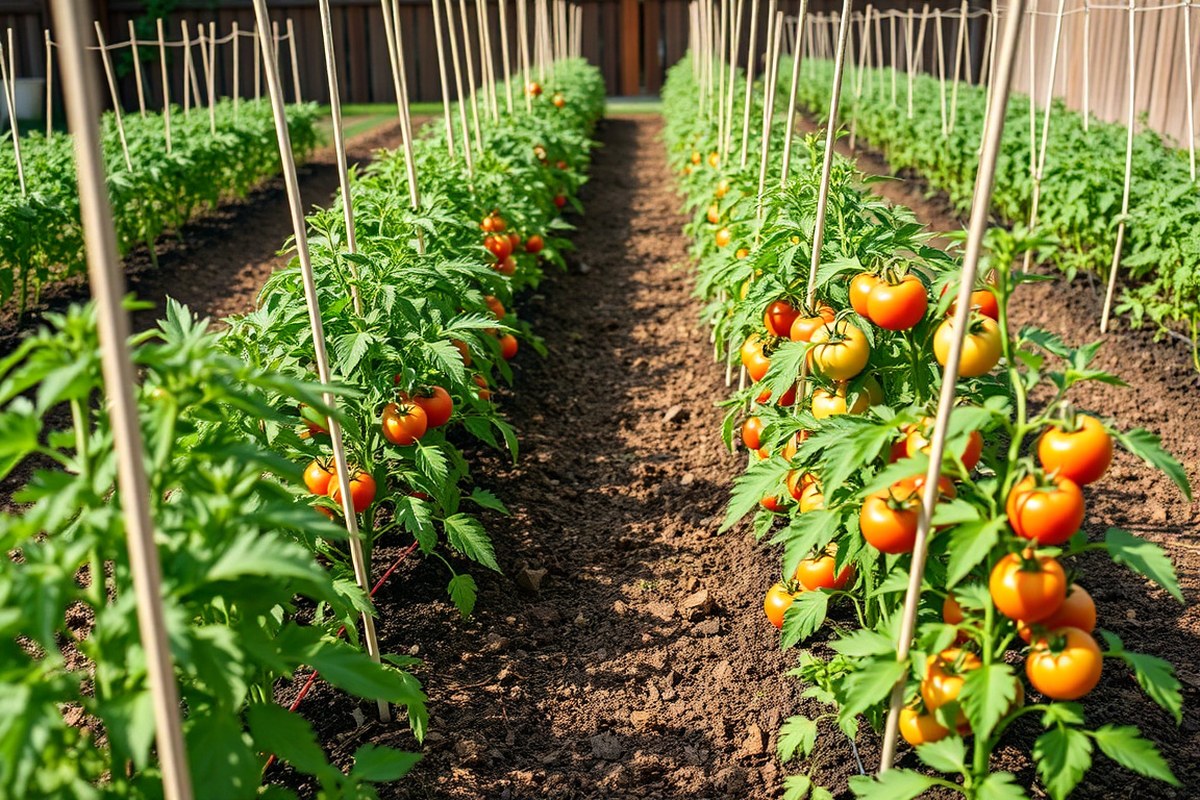
Spacing tomato plants right depends on their type and how you grow them. Determinate tomatoes usually need less space because they grow bushier. Indeterminate ones tend to grow taller and need more room to spread out or climb.
You can plant determinate tomatoes about 18 to 24 inches apart for good results. Rows should be 24 to 36 inches apart.
Indeterminate tomatoes generally require 24 to 36 inches between plants. If you stake or cage them, they might fit closer together, as they grow up more than out.
Tomatoes can be planted as close as 12 inches apart in some special setups. For example, single-stem string trellises let you space plants 12 to 18 inches apart. This works because plants are kept pruned and supported vertically, saving space and still letting airflow.
| Tomato Type | Growing Method | Recommended Spacing |
|---|---|---|
| Determinate | Traditional rows | 18-24 inches apart, 24-36 inches between rows |
| Determinate | Containers (pots 12″ diameter) | One plant per container |
| Indeterminate | Staked or single-stem pruned | 18-24 inches apart |
| Indeterminate | Wire cages | About 24 inches apart |
| Indeterminate | Sprawling (no cages or stakes) | 3 to 4 feet apart |
Smaller spaces need some planning. You can prune indeterminate tomatoes to single stems and use string trellises. This allows spacing of 12 to 18 inches.
For raised beds, keep 24 to 30 inches between plants to avoid overcrowding. Larger cages take more space. So allow extra room if you use big wire supports.
Wider spacing helps keep plants healthy by improving airflow and sunlight exposure. Crowded plants may stay wet longer and get diseases.
Taller indeterminate plants especially need room to grow without pushing into neighbors. Taking a little extra space or pruning carefully can give you better fruit in the end.
How Tomato Variety Affects Plant Spacing Needs
Tomato varieties differ in shape, size, and growth habits. These differences affect how far apart you plant each tomato type. Knowing the variety helps you leave enough room for healthy growth and easier harvesting.
Determinate Tomato Varieties Explained
Determinate tomatoes grow in a bush shape and stop growing after reaching a certain height. They usually stay compact, around 3 to 4 feet tall. These tomatoes produce fruit all at once over 2 to 3 weeks.
Because they stay small, determinate types need less space between plants. You can plant them about 18 to 24 inches apart. Keeping them closer suits their smaller size and harvest timing.
Indeterminate Tomato Varieties Features
Indeterminate tomatoes grow tall and keep producing fruit all season long. They can reach 6 to 8 feet high and spread wider than determinate types. Their growth habit makes them need more space.
Plant indeterminate tomatoes 24 to 36 inches apart to allow room for stems and leaves. You’ll also want 3 feet between cages or supports so you can walk easily. These varieties yield over a longer harvest period.
Dwarf and Small Tomato Types and Spacing
Dwarf tomatoes are smaller versions of regular types and take little space. They usually grow under 3 feet tall and have a bushy shape. These plants work well in containers or raised beds with tighter spacing.
Space dwarf tomatoes about 12 to 18 inches apart, depending on the specific variety. Smaller plants let you grow more per square foot. Still, make sure to leave enough air to keep leaves dry.
Use this chart to compare how different tomato varieties affect spacing choices:
| Tomato Type | Growth Height | Growth Habit | Spacing Between Plants | Harvest Duration |
|---|---|---|---|---|
| Determinate | 3 to 4 feet | Bushy, compact | 18 to 24 inches | 2 to 3 weeks |
| Indeterminate | 6 to 8 feet | Vining, tall | 24 to 36 inches | Continuous |
| Dwarf | Under 3 feet | Bushy, small | 12 to 18 inches | Varies |
Choosing spacing based on plant type helps prevent crowding. Problems like disease and low yields often come from potatoes planted too close. A little extra space helps pollinators do their job and makes your harvest easier.
Check the plant tag for its growth type. Look up the variety online too. Confirm the growth type before you plant it.
How Growing Method Changes Tomato Plant Spacing
How you support tomato plants changes how close you can plant them. Staking or trellising lets you space plants 2.5 to 3 feet apart. Using cages or letting tomatoes sprawl needs more space.
This helps avoid damage and disease. Crowding makes problems worse.
Spacing for Caged Tomato Plants
Tomato cages need about 2.5 to 3 feet between each plant to work well. The cage must be sturdy and anchored into the ground. This support keeps plants upright and stops fruit from touching soil.
Larger cages might make the plant hard to reach inside. Choose a cage size that fits your garden space. Space cage rows 4 feet apart to help with air flow and easier access.
- Place each tomato plant in the center of a sturdy cage.
- Space cages 2.5 to 3 feet apart in rows that are 4 feet apart.
- Anchor cages deeply into the soil for stability.
- Check cages regularly for damage or looseness.
Spacing with Single-Stem Trellis Method
Staking or using a trellis allows you to plant tomatoes closer, usually 2.5 to 3 feet apart. You prune the tomato to one main stem to save space. The trellis supports the plant’s height and keeps fruit off the ground.
Strong stakes or wires about 4 feet tall work best. Place stakes 3 to 4 inches from each plant’s base to avoid root damage. This method helps air flow and sunlight reach the leaves better.
- Prune each tomato plant to a single main stem early in growth.
- Insert a 4-foot stake 3 to 4 inches from the plant base.
- Tie the stem to the stake every 1 to 2 feet as it grows.
- Space plants 2.5 to 3 feet apart with at least 4 feet between rows.
- Remove side shoots regularly to maintain single stem structure.
Growing Sprawling Tomatoes and Spacing Impacts
Heirloom or some beefsteak tomatoes are sprawling and need more space than supported types. Space them at least 3 to 4 feet apart, with rows about 4 feet wide. These plants spread on the ground without support.
This raises the chance of disease. You want to keep tomatoes off the soil.
Sprawling plants also make it harder to reach ripe tomatoes. Leaves touching soil can increase fungal infections. Providing more space helps air circulate and keeps foliage drier.
Florida Weave Technique and Spacing
Florida weave uses stakes and twine to support multiple tomato plants in a row. This method allows you to plant tomatoes closer than cage or sprawling methods. Space plants about 2.5 to 3 feet apart with this weave.
Twine ties plants together and supports the stems as they grow. It uses fewer stakes than staking every plant individually. This approach controls sprawling and improves air flow.
- Set stakes 4 feet tall at row ends and every 6 to 8 feet in between.
- Plant tomatoes 2.5 to 3 feet apart within the row.
- Wrap twine around each plant and tie to stakes at two or three heights.
- Tighten twine as plants grow to keep them upright.
- Check and adjust ties regularly to avoid girdling stems.
Why Adequate Spacing Prevents Diseases and Improves Airflow
Tomato plants need space to let air move freely around them. Crowding traps moisture and raises humidity. This wet setting helps fungi grow on leaves and stems.
Diseases like early blight and powdery mildew love damp spots. These fungi spread fast in moist, crowded spots.
Spaces between your tomato plants letting air flow dry off moisture quickly. Aim for 18 to 24 inches between plants to keep good airflow. This gap helps prevent fungal spores from settling and stops bacterial infections from spreading.
Climates with high humidity or frequent rain require wider spacing. Tight clusters hold wetness longer, giving fungi more time to attack.
Warmer, drier areas can sometimes get away with closer plants. But better airflow always lowers disease risk.
Poor airflow causes symptoms like yellowing, spotting leaves, and wilted stems. You might see white powder on leaves or brown spots appearing fast. These signs mean diseases have taken hold because moisture stayed trapped too long.
Tomato plants grown too close help diseases like early and late blight spread. Tight spaces allow pests to move easily between plants. Poor airflow also speeds up disease and pest growth.
Spacing plants properly takes planning. Plant them based on mature size, not just their small seedling stage. This way, they’ll have enough room as they grow, avoiding future crowding.
Pruning works well with spacing to boost airflow. Removing some lower leaves and suckers opens up the crowded spots. Combining these two steps leads to stronger, healthier tomato plants with fewer problems.
Spacing Tomato Plants in Containers and Raised Beds
Tomato plants need enough room to grow roots and spread leaves. Containers should be at least 12 inches deep and wide for one tomato plant. Compact or determinate tomatoes work best in containers.
They need about 2 feet of space per plant. This space helps them grow well.
Raised beds allow closer spacing than open ground. You can space each tomato plant 12 to 16 inches apart within a raised bed. Leave about 3 to 4 feet between raised bed rows.
This space keeps good airflow around the plants. Airflow helps stop disease.
Planting tomatoes too close in containers or raised beds limits airflow and nutrient access. Each tomato plant grows better with its own space for roots and leaves. Staggering plants in a 4-foot-wide raised bed helps you use space wisely while avoiding overcrowding.
- Use a container at least 12 inches deep and wide for one tomato.
- Space tomato plants 12 to 16 inches apart in raised beds.
- Leave 3 to 4 feet between rows in raised beds for airflow.
- Compact tomato varieties are best for small container gardens.
- Stagger plants in wider raised beds to maximize plant count and airflow.
Containers need deep soil to support healthy root growth. Tomatoes in raised beds like loose, rich soil. The soil should be deep enough to cover lower leaves.
This helps roots grow strong. Compact varieties in containers or beds usually produce more fruit.
Overcrowded plants in the same space produce less fruit. Keeping space helps fruit growth.
Containers less than 12 inches deep won’t keep tomatoes healthy. Size matters even if the plant fits above ground. Deep soil supports strong roots.
How Root Space and Nutrient Needs Influence Spacing
Tomato roots typically spread 2 to 3 feet wide underground. This means each plant needs room not just above ground but below too. Crowded roots compete for nutrients and water, weakening all plants involved.
When roots crowd each other, plants struggle to absorb enough nutrients. You might notice stunted growth or fewer tomatoes on each plant. Providing enough root space allows plants to take up nutrients fully and grow strong.
Soil quality affects how much space you should give your tomatoes. Rich soil may support closer planting because nutrients are abundant. Poor or sandy soil means you need to space plants farther apart to avoid competition.
In containers, root space limits plant size and spacing. A typical tomato needs a container at least 18 to 24 inches wide and deep. Plant only one tomato per container of this size for healthy root growth.
Here’s an easy way to picture root spread for spacing. Imagine a circle about 3 feet wide around each tomato plant. This helps you see how far apart plants should be.
This underground root zone should stay mostly separate from other plants’ roots. It helps reduce competition and supports better growth.
To reduce nutrient competition, regularly add compost or balanced fertilizer near your tomato roots. This feeds the plant well and offsets limited space. Mulching also helps keep soil moist and nutrients available.
How to Measure and Plan Your Tomato Planting Spacing
Measure tomato plant spacing carefully using simple tools and clear steps. Mark your garden with stakes and string to keep rows straight. Planning this will help your plants grow strong and healthy.
Essential Tools for Spacing Tomatoes
A tape measure is the best tool for spacing tomato plants accurately. Stakes and string help mark rows and spot where each plant should go. You can use a garden hoe or stick to dig small holes at each marked spot.
You don’t need expensive gear, a 25-foot tape measure costs under $10 at most stores. Wooden or plastic stakes are inexpensive and reusable. String helps keep your rows straight and neat for easy access later.
Measuring Plant Distances in Rows
Start by deciding the spacing based on your tomato variety and garden size. Use the tape measure to mark the distance between plants along the row. Place stakes where each plant will go, then stretch string from start to finish.
Measuring before you plant stops crowding and ensures better airflow. Take your time to measure carefully to avoid squeezing in extra plants. Plants spaced well get enough light and nutrients to grow big and healthy.
- Decide the distance between tomato plants, usually 18 to 24 inches.
- Mark the first plant spot with a stake at one row end.
- Use the tape measure to find the next spot and place another stake.
- Repeat measuring and staking until the row length is set.
- Stretch string tightly between stakes to mark the row line.
- Check distances again along the string to keep spots evenly spaced.
- Dig holes at each stake or spot on the string for planting.
Staggering Plants for Airflow and Sunlight
Shift plants in one row slightly to sit between plants in the next row. This is called staggering and it uses garden space better. It improves airflow and sunlight exposure on all plants, which reduces disease risks.
To stagger, measure halfway between plants across rows. Mark spots where stakes or string show plant offset positions. | This pattern fills gaps while keeping good space.
Planning Pathways Between Rows
Leave at least 2 feet between rows to make room for walking and garden work. Wider paths help you water, prune, and harvest tomatoes without damaging plants. Narrow paths can tear plants or cause soil compaction around roots.
Measure your garden length and width, then add pathways between rows before placing plant stakes. Use tape and string to mark pathways clearly. This way, you avoid squeezing your plants or trapping yourself between them.
Common Tomato Spacing Mistakes and How to Fix Them
Tomato plants growing too close show several signs. Leaves may yellow or wilt because air can’t circulate well. You might also see more pests and diseases like blight.
Fruits often stay small or ripen unevenly due to competition for nutrients. Plants crowding each other also make it harder to prune or harvest.
Overcrowded tomato plants can be fixed by thinning or pruning. Remove smaller or weaker plants early in the season to give room for stronger ones. For pruning, clip off suckers and crowded branches to open the plant’s interior.
This boosts airflow, sunlight, and makes caring easier. When you see these issues, thin plants by snipping young stems.
Cut at soil level. Do not pull stems to avoid root damage.
Planting too many tomatoes in containers is a common mistake. Tomatoes need enough root space, so one plant per container is best. Keep only one tomato plant in containers smaller than 15 inches wide.
Larger containers 18 inches or wider can fit two small plants. Space them 18 to 24 inches apart. Too many plants in one pot cause stress, poor fruit, and wilting in hot weather.
- Placing tomato cages less than 3 feet apart causes crowding and less airflow
- Using narrow rows in raised beds restricts root growth and airflow
- Ignoring summer heat and crowding increases diseases and poor pollination
- Planting seedlings too close makes pruning hard and encourages pests
- Adding too many plants in containers reduces nutrients and water for each
Increasing spacing or growing fewer plants helps prevent common problems. Home gardeners should leave at least 24 to 36 inches between plants in garden beds. For cages, allow 3 to 4 feet each so plants expand fully.
When growing in containers, use one plant per pot unless containers are very large. Starting with fewer tomato plants means less work and better fruit quality.
Don’t cram tomato plants together just to save space. It’ll cost you healthier fruit and easier care later.
Step-by-Step Action Plan for Proper Tomato Plant Spacing
Follow these steps to set your tomato plants at the right distance for healthy growth. Proper spacing ensures better air, fewer diseases, and bigger yields.
- Before planting: Pick your tomato type. Check the seed packet for spacing. Follow those guidelines for best results. Confirm the spacing matches your growing method, like containers or raised beds.
- Day of planting: Measure and mark your planting spots using a tape measure or garden string. Check that plants have enough room, at least 18 to 24 inches for most types.
- After planting: Water your tomato plants well. Look for crowded leaves or poor airflow. Adjust spacing if plants seem too close. Adjust if necessary.
- 2 weeks later: Inspect the rows for air circulation. Prune lower leaves if airflow is poor to reduce disease risk.
- Mid-season: Add mulch and side-dress with fertilizer according to plant needs. Avoid crowding when you add mulch to keep soil healthy.
- Harvest time: Check plant health and spacing impact. Note any spots that felt too tight or open for next season.
- After harvest: Remove plants and clear the area. Plan next year’s layout with the spacing lessons you learned.
Frequently Asked Questions
How Close Can Tomato Plants Be for Companion Planting?
Plant tomatoes at least 18 inches from basil or peppers to avoid overcrowding. Spacing helps both plants grow well without competing too much.
Can You Plant Tomatoes Closer in a Greenhouse Than Outdoors?
Yes, greenhouse tomatoes can be closer, around 12 inches apart. Controlled conditions help reduce disease risk despite tighter space.
Do Tomato Plants Need More Space in Hot Climates?
Yes, hot climates call for wider spacing, about 24 inches apart. Extra airflow helps reduce heat stress and disease chances.
Does the Soil Type Affect Tomato Plant Spacing?
Heavier clay soils may need wider spacing to reduce root competition. Sandy soils drain better, allowing closer planting.
Is It Okay to Plant Tomatoes Near Tall Plants?
Keep tomatoes at least 2 feet from tall plants to avoid shade. Tomatoes need plenty of sun to produce the best fruit.
How Close Should Tomato Seedlings Be Before Transplanting?
Space seedlings 1 to 2 inches apart in trays to avoid crowding. This gives each seedling good light and airflow before planting outside.
Before You Go
Plant your tomatoes far enough apart for good airflow and root space. Watch them grow with enough elbow room to prevent disease. Now pick your tomato type and measure your bed to space them right.