How Many Potatoes Will One Plant Produce: A Complete Guide to Maximizing Yield
How many potatoes will one plant produce? Typically, a potato plant yields between 3 and 5 pounds of potatoes.
That’s about 8 to 12 tubers, depending on their size. You can expect a smaller yield if the growing conditions aren’t ideal.
How deep and far apart you plant potato seeds affects their growth. Plant seed potatoes 4 to 6 inches deep. Space them 12 inches apart in rows that are 3 feet wide.
Sunlight and soil quality also matter. Your potato plants need 6 to 8 hours of direct sunlight daily. They also require soil rich in nutrients.
This helps them grow and produce well. Proper care early on sets the stage for a bigger harvest.
Key Takeaways
- One potato plant usually produces 3 to 5 pounds of tubers.
- Plant seed potatoes 4 to 6 inches deep with eyes facing upward.
- Space tubers 12 inches apart in rows 3 feet apart for best growth.
- Provide at least 6 to 8 hours of sunlight daily for healthy plants.
- Use nutrient-rich soil to support larger yields and better tuber size.
- Starting with healthy seed potatoes improves overall plant and yield quality.
How Many Potatoes Does One Plant Produce on Average?
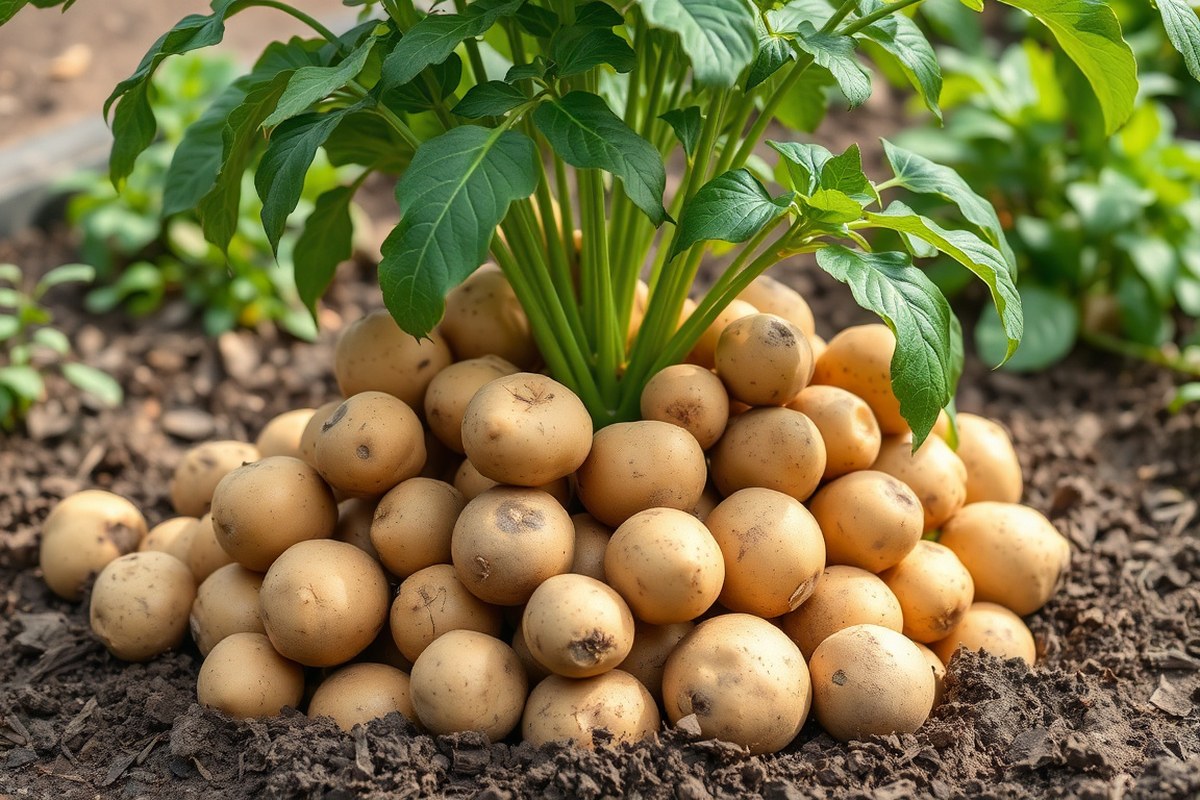
On average, one potato plant produces between 5 to 10 potatoes. Under ideal conditions, this number typically ranges from 3 to 8 tubers per plant. The type of potato matters a lot for your final count.
How well you care for the plant also makes a big difference. Both together affect how many potatoes you harvest.
One plant usually yields about 3 to 5 pounds of potatoes. For example, if you grow medium-sized potatoes, a healthy plant might give you 3.5 pounds. Russet potatoes can produce 8 to 12 tubers per plant.
With perfect care, these can weigh 5 to 10 pounds. They often yield more than other types.
Growing conditions matter a lot for your potato yield. Good soil, water, and sunlight help your plant grow well. Your potato plant will likely produce more tubers this way.
Poor soil or uneven watering lowers your potato yield. You may get fewer than 3 potatoes or about 1 pound. Proper care is key for better harvests.
Say you plant 5 pounds of seed potatoes and provide good care all season. You can expect around 125 pounds of potatoes at harvest. This means 25 potatoes come from a 5-pound seed batch.
That assumes about 8 to 10 tubers per plant on average. It’s a useful estimate for planning.
How Different Potato Varieties Affect Yield and Tubers per Plant

Potato varieties differ in their yield and the number of tubers per plant. Early varieties usually produce fewer tubers, about 3 to 6 per plant. Maincrop types like Russets generally give more potatoes, often larger and heavier.
Fingerling potatoes tend to produce more tubers, 10 to 15 per plant. But these are smaller in size. Red and Yukon Gold potatoes yield 5 to 10 tubers each.
These tubers are medium-sized. They fall in the middle for yield amount. Your choice depends on whether you want more potatoes or bigger ones.
| Variety | Tubers per Plant | Ideal Conditions |
|---|---|---|
| Russet | 8-12 | Full sun, loose soil |
| Red Pontiac | 5-10 | Well-drained, cool soil |
| Yukon Gold | 6-10 | Rich soil, moderate water |
| Fingerling | 10-15 | Sandy soil, consistent moisture |
You can expect about 5 to 10 potatoes from one plant under average conditions. Maincrop varieties often produce a heavier yield, which means fewer but larger potatoes. On the other hand, fingerlings give you more tubers, but smaller in size.
Choosing the right variety depends on your garden and what you need. You can grow fingerlings or Russets for more potatoes.
These types work well for a big family. For quicker harvests, early varieties need less time but yield fewer tubers.
Cut seed potatoes carefully to keep eyes intact; damaged sprouts lower your yield.
Ideal Soil, Planting Depth, and Spacing for Maximum Potato Yield
Soil type, planting depth, and plant spacing affect how many potatoes you get. Nutrient-rich soil with the right pH helps tuber growth. Plant seed potatoes 4 to 6 inches deep.
Proper spacing improves yield. It also keeps plants healthy.
Choosing the Right Soil Type and pH
Potatoes grow best in loose, well-drained soil that holds moisture without becoming soggy. Soil that is nutrient-rich and soft lets tubers expand easily. Heavy clay or rocky soils limit potato size and yield.
Maintain soil pH between 5.0 and 6.0 for best results. This slightly acidic range helps potato plants absorb nutrients efficiently. Avoid highly alkaline or acidic soils, as they can stunt growth.
Before planting, enrich your soil with organic matter to boost fertility. Use compost or well-rotted manure to improve soil structure and nutrient content. This also promotes healthy root and tuber development.
Recommended Planting Depths and Why
Plant seed potatoes 4 to 6 inches deep with eyes facing upward. This depth protects the seed from frost and supports sprout growth. Too shallow planting risks drying out or exposure to pests.
Plant deeper at 6 to 8 inches to get more tubers. A deeper planting encourages longer stems and more tubers along the buried stem. Keep soil moist but not waterlogged to prevent rot.
Hilling soil around plants after sprouting increases tuber-producing area. Planting deeper helps tubers form higher on the stem.
It also lowers greening from sunlight. This increases yields.
Optimal Plant and Row Spacing for Yield
Space potato plants 10 to 12 inches apart in each row. Keep rows 24 to 30 inches apart.
This balance lets each plant get enough nutrients and light. Crowding reduces airflow and increases disease risk.
Common spacing patterns yield roughly 4 to 7 plants per 100 square feet. Spacing plants 12 inches apart in 24-inch rows grows about 6 plants per 100 square feet. Wider spacing lowers total yield per area.
Here’s a quick checklist to set your spacing right:
- Plant seed potatoes 4 to 6 inches deep
- Space plants 10 to 12 inches apart in rows
- Keep rows 24 to 30 inches apart
- Use nutrient-rich, loose soil with pH 5.0 to 6.0
- Hill soil around plants after sprouts appear
- Water consistently, but avoid soggy soil
- Provide full sun exposure throughout the growing season
How Watering, Sunlight, and Fertility Impact Potato Growth
Potato plants need about 1 to 2 inches of water weekly during their growing season. They like steady moisture, especially when tubers form at 4 weeks. Keep soil moist as tubers grow around 6 weeks after planting.
Avoid watering too much at once. Soaking the soil deeply once or twice a week works better than light daily watering.
Too little water makes potatoes small and misshapen. Too much causes diseases like rot. You should check moisture more often in sandy soil because it drains fast.
On clay soil, water less frequently but deeply, as it retains moisture longer. Mulching around the plants helps keep the soil moist and reduces watering needs.
Potatoes need about 6 to 8 hours of direct sunlight daily. Less sunlight slows growth and means fewer and smaller tubers. Plant in the sunniest spot available, like a south-facing garden bed.
Pick a place where the sun shines most during the day. In hotter southern states, some afternoon shade can prevent heat stress that stops tuber growth.
Soil fertility plays a big role in tuber size and number. Potatoes do best with well-drained, loose soil rich in organic matter.
Adding compost or aged manure before planting helps feed the plants as they grow. They need balanced nutrients, too much nitrogen encourages leafy growth but fewer potatoes.
Use a fertilizer with a balanced 10-10-10 ratio for growth. You can also use one with more phosphorus and potassium. These help tubers develop better.
Test your soil first to know what nutrients it lacks. Don’t add too much fertilizer late in the season.
This can lower your yield. Too much can also cause tuber quality problems.
In dry regions or during dry spells, check soil moisture often to avoid stress. Outdoor gardeners can use drip irrigation or soaker hoses to water evenly.
Small growers in containers or raised beds should water more often because these soils dry faster. Fertilize lightly during the season if plants look pale or slow.
Step-by-Step How to Hill Potato Plants to Increase Yield
Hilling means piling soil around the potato plant’s stem while it grows. You do this two or three times during the season. It helps tubers grow bigger and more numerous by blocking sunlight.
It also gives roots more room to stretch out. This way, potato plants develop better underground.
Timing Your First and Second Hillings
The first hilling should happen when the potato plants reach about 6 to 8 inches tall. This usually occurs 3 to 4 weeks after planting. It gives young tubers extra coverage and encourages more to form along the buried stems.
The second hilling should happen 2 to 3 weeks later. This is after stems grow taller and leaves start spreading out. You do it to support the growing plant.
This second mound protects new tubers and improves root growth. Sometimes, a third hilling helps if plants keep growing fast.
Proper Soil Mounding Technique
Start by loosening soil around the plant before pushing it gently toward the stem base. Build the mound up around the plant evenly on all sides. The soil should cover the lower stems by 3 to 5 inches without burying the leaves.
This gradual buildup encourages tubers to form on the buried stem sections. Avoid compacting the soil too much since potatoes need loose, well-draining dirt. Finish by smoothing the mound with your hands or a hoe to reduce soil erosion.
Tools and Best Practices for Hilling
Use a sturdy hoe or garden fork to lift soil without damaging roots. Small hand trowels work well in tight spaces or for container potatoes. Choose loose soil that drains well and add compost if needed to boost fertility.
Work carefully around stems to avoid breaking them. Hilling is easier if you water plants the day before to soften the soil. You can use garden boxes or raised beds for better control over soil quality and space.
- Wait until potato plants are 6 to 8 inches tall.
- Loosen soil carefully around each plant base.
- Push loose soil up around the stem to cover 3, 5 inches.
- Smooth the soil gently to keep the mound stable.
- Repeat 2 to 3 weeks later as plants grow taller.
- Keep the soil loose and moist but not waterlogged.
- Monitor plants for any damage and fix mounds as needed.
Don’t bury leaves when hilling; it can cause stem rot and slow growth.
Pests, Diseases, and Growing Mistakes That Reduce Potato Yields
Colorado potato beetles and aphids are common pests that reduce potato yields. They feed on leaves, weakening plants and lowering tuber size. Watch for yellowing leaves or holes as early signs of infestation.
Late blight and scab are diseases that stunt growth and cause tubers to deform. Late blight appears as dark spots on leaves.
Scab causes rough, corky patches on potatoes. Catch these symptoms early and remove affected plants to prevent spread.
Planting mistakes such as poor spacing and shallow planting reduce tuber numbers. Overcrowding limits airflow and sunlight, which stunts growth. Plant seed potatoes 10 to 12 inches apart.
Bury them 4 inches deep. This helps them grow best.
- Check plants weekly for pests and remove any bugs by hand
- Use organic insecticides in early infestation stages to minimize damage
- Rotate crops yearly to reduce soil-borne diseases
- Maintain soil pH close to 6.0 for healthy tuber development
- Hill soil around plants every few weeks to protect tubers from sunlight
- Water deeply once a week to keep soil moist but not soggy
Ignore these issues and your harvest shrinks and tubers get spotty or misshapen. Correct pest problems as soon as you spot them.
Adjust planting and watering habits before the plants mature. These steps ensure better-sized potatoes.
When and How to Harvest for Maximum Potato Yield and Quality
Harvest potatoes when tubers reach the size you want for eating or storage. Baby potatoes are dug early for tender skin.
Mature potatoes come later for better storage. Knowing when to dig helps keep quality high and tubers from being damaged.
Harvest Timing for New Potatoes
New potatoes are ready about 10 to 12 weeks after planting. Watch for the plants to flower.
That’s a good sign tubers are forming just under the soil. Dig carefully near the base of the plant to check for small, tender potatoes.
Harvest new potatoes while their skins are thin and smooth for the best texture. Early digging means fewer potatoes but a sweeter, more delicate taste.
Stop hilling the soil when you plan to harvest new potatoes. This protects the small tubers near the surface from damage.
Signs Your Plants Are Ready for Full Harvest
For mature potatoes, wait until the plants’ foliage turns yellow and dies back. This signals the tubers have thick skin and stored nutrients for longer storage. Usually, this takes about 15 to 20 weeks after planting, depending on variety and weather.
You can test readiness by digging a few tubers. Their skin should resist rubbing off easily. Then the crop is ready.
Smaller tubers with thin skins may still be immature. So check several spots before harvesting the whole patch.
Safe Methods to Minimize Damage During Harvest
Use a garden fork to gently loosen soil at least 6 inches from tubers before lifting. Avoid stabbing or twisting with hoes or shovels, which can bruise potatoes. Lift tubers carefully out of the soil without dropping them.
Harvest on dry days or after the soil dries to prevent tubers from sticking and tearing. Let potatoes cure in a cool, shaded spot with good air flow. This takes about two weeks.
It helps toughen their skins. This curing reduces rot during storage and keeps potatoes fresh longer.
Calculating How Many Plants You Need Based on Expected Yield
One potato plant usually produces about 8 to 10 potatoes. Multiply the number of potatoes you need by the expected yield per plant. This helps you plan how many plants to grow for your meals.
Your family eats 40 potatoes per week. Divide 40 by 9 yields about 4 plants needed.5 plants.
It’s best to round up. So plant at least 5 potato plants to cover that need.
You also need to consider that some plants may produce less due to weather or pests. Planting a few extra ensures you won’t come up short.
Knowing seed potato weight helps too. Typically, one pound of seed potatoes grows 10 to 15 pounds of potatoes. Your family wants 40 pounds of potatoes.
Plant 3 to 4 pounds of seed potatoes. Check the seed package for specific variety yields.
Spacing also impacts how many plants fit in your garden. Plant seed potatoes about 12 inches apart in rows 3 feet apart.
Space plants well to give each enough nutrients and sunlight. This spacing helps plants grow 8 to 10 tubers each.
Sometimes, your particular potato variety makes a big difference in yield. Varieties vary, so read the seed descriptions online or on the package. Choose a variety with higher yields if you want fewer plants to grow more potatoes.
Don’t forget to plant slightly more than your math suggests. Some plants grow poorly or fail.
Step-by-Step Action Plan to Boost Your Potato Yield
Follow these steps to help your potato plants produce more tubers. This plan focuses on timing and simple tasks you can do right in your garden.
- Before Planting: Choose a high-yield variety suited for your climate. Healthy seed potatoes lead to better crops.
- Day 1: Prepare loose, well-drained soil with compost. Test by squeezing a handful; it should crumble easily.
- Planting Day: Plant seed potatoes 4 inches deep and 12 inches apart. Proper spacing prevents crowding and boosts growth.
- Week 1 to 3: Water evenly to keep soil moist but not soggy. Check soil by feeling about 2 inches below surface.
- Week 3 to 6: Start hilling soil around plants when they reach 6 inches tall. This protects tubers and encourages more sprouts.
- Throughout Growth: Monitor leaves for pests or disease. Remove damaged leaves and apply organic treatments as needed.
- Harvest Time: Harvest when vine leaves start to yellow. Dig carefully to avoid bruising potatoes and check size.
- After Harvest: Cure potatoes in a cool, dark place with good air for 1-2 weeks. This improves storage life and taste.
Frequently Asked Questions
How Does the Size of Potatoes Affect the Total Yield per Plant?
Larger potatoes weigh more, so fewer tubers can match the same total yield. You might get 5 big potatoes, or 10 smaller ones. But the weight could stay similar.
Can the Number of Eyes on a Seed Potato Affect How Many Potatoes Grow?
Yes, more eyes mean more shoots can develop, leading to more potatoes per plant. It’s best to cut seed potatoes with 1 to 2 eyes each for balanced growth.
Does Planting Time Influence How Many Potatoes One Plant Produces?
Planting at the right time ensures good growing conditions and maximum yield. Early or late planting can reduce tuber development and lower the total number.
Will Using Mulch Impact the Number of Potatoes a Plant Produces?
Mulch helps retain soil moisture and control weeds, which supports better potato growth. This stable environment can lead to more tubers per plant and larger yields.
How Does Soil pH Influence Potato Yield and Tuber Count?
Potatoes prefer slightly acidic soil, around pH 5.0 to 6.0. Soil outside this range may reduce nutrient uptake and lower the number of potatoes per plant.
Can the Size of Seed Potato Pieces Affect How Many Potatoes Grow?
Cutting seed potatoes into smaller pieces helps grow plants. Each piece needs at least one eye.
Usually, this produces a single plant. Pieces too small may die or produce fewer tubers.
Wrapping Up
One potato plant usually produces 5 to 10 medium-sized tubers. Your care and conditions make a big difference. Start by picking the right variety and preparing your soil well today.