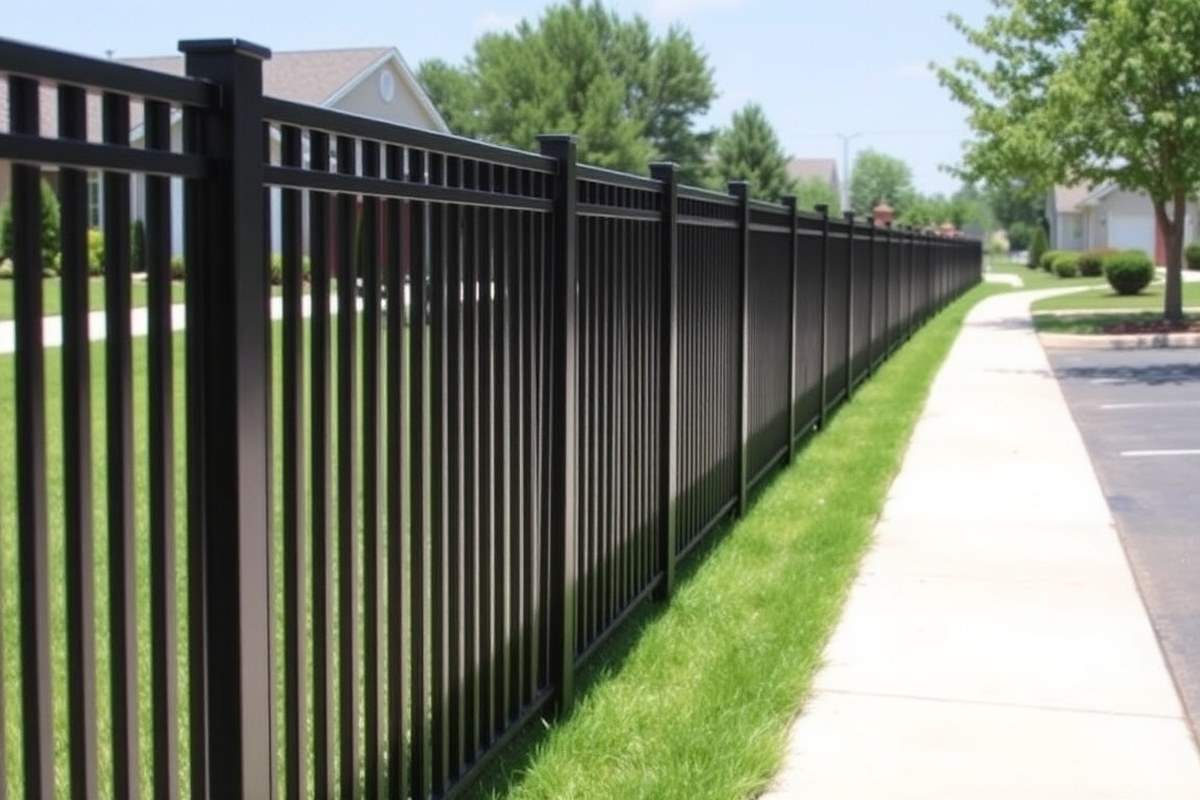
How Much Does 200 Feet of Aluminum Fence Cost? A Complete Cost Breakdown & Tips
The cost for 200 feet of aluminum fencing ranges from $5,000 to $9,000 installed. Design, height, and installation fees strongly impact the total price. Taller fences and elaborate designs raise material costs.
Materials alone usually cost about $2,800 to $5,500 for 200 feet. Installation fees depend on job complexity and local labor rates. Many homeowners find professional installation worth the time saved.
Fence height and style choices help narrow options before you shop. Standard heights of 4, 5, or 6 feet increase prices as the fence gets taller. Deciding early prevents unexpected costs down the road.
Gate inclusion and terrain also affect pricing and installation difficulty. Include these details in your plan to keep your budget steady. This helps avoid surprises while getting the fence you want.
Key Takeaways
- Installed aluminum fences typically cost $25 to $45 per linear foot.
- Material-only purchases run about half the cost of full installation.
- Fence height and style affect both material and labor expenses.
- Removing an old fence costs between $400 and $1,200 for 200 feet.
- A skilled DIYer can install around 150 feet of aluminum fencing in a weekend.
- Obtaining detailed quotes helps you plan your budget accurately.
How Much Does 200 Feet of Aluminum Fence Cost Overall?

Installing 200 feet of aluminum fencing typically costs between $5,000 and $9,000. This price covers materials and labor costs together.
They usually cost $25 to $45 per linear foot. Your choice of style and local labor rates influence where your cost falls within that range.
Material costs alone for 200 feet span $3,000 to $8,000, depending on the fence type. Basic aluminum fences cost $15 to $25 per foot.
Ornate styles with heavier gauges and decorative elements run $25 to $40. Labor adds about $10 to $20 per foot, accounting for most of the installation cost.
As a worked example, a standard picket aluminum fence at $20 per foot material costs $4,000. Add labor at $15 per foot and you pay $3,000 in installation. The fence’s total cost comes to roughly $7,000.
Adding two gates costs about $300 each. Expect to pay $600 more total.
Knowing typical cost ranges by component helps keep your budget on track. Materials usually make up 40% to 55% of the total. Labor covers the remaining 45% to 55%.
Concrete footings generally cost $2 to $5 per foot. Gates usually add $200 to $600 each.
If you pay $30 per foot installed, multiply by 200 feet. Your total estimate is around $6,000. This base price helps you plan your budget better.
Adjust it for your fence style, terrain, and gates. Avoid surprises by adding a buffer for extra features or tougher site conditions.
How Fence Height and Style Affect 200-Foot Aluminum Fence Pricing
Fence height and style strongly affect the total cost of 200 feet of aluminum fencing. Taller fences and more decorative styles typically cost more per linear foot. Matching your choice to your needs helps you save money and get the look you want.
Common Aluminum Fence Heights and Costs
Aluminum fences come in common heights from 3 to 6 feet. Each increase in height raises material needs and installation difficulty, which drives up costs. Choosing the right height depends on your privacy, safety, and local rules.
Here is a cost breakdown for 150 feet of aluminum fence by height. Prices follow a similar pattern for 200 feet, adjusted proportionally.
| Fence Height | Cost per Linear Foot (Installed) | 150 ft Total Cost |
|---|---|---|
| 3 ft | $20 – $30 | $3,000 – $4,500 |
| 4 ft (most common) | $25 – $40 | $3,750 – $6,000 |
| 5 ft | $30 – $45 | $4,500 – $6,750 |
| 6 ft | $35 – $55 | $5,250 – $8,250 |
Choosing a 4-foot fence often balances cost and function for many homeowners. Taller 6-foot fences are common for privacy and security reasons. They cost 40-50% more per foot than 3-foot fences.
Popular Styles and Their Price Implications
Five main aluminum fence styles are picket, ornamental, pool, privacy, and split rail. Basic picket fences cost less than decorative or pool fencing.
Privacy fences have closely spaced panels that block views. Aluminum privacy fences cost more because they need more material.
Pool-style fences meet safety codes and often include extra features like latch gates. These extras and decorative tops raise costs compared to plain picket fences. Ornamental styles carry mid to higher price ranges because of unique designs and thicker materials.
Choosing a style that meets your needs without overdoing features can save you hundreds of dollars.
Choosing the Best Height and Style for Your Budget
Match fence height and style to your needs, not your wants, for best value. For example, a 4-foot picket fence can define your property without overspending.
Privacy matters mean paying more for 5- or 6-foot fences. These have slats placed close together for less visibility.
Calculate total costs by multiplying your desired height’s price per linear foot by 200 feet. Add style premiums for extra features. This approach keeps your budget clear and prevents surprises.
Consider local rules and the fence’s purpose before buying. A corrosion-resistant aluminum picket fence is usually best for long-lasting, affordable property lines.
What Labor Costs to Expect for Installing 200 Feet of Aluminum Fence
Labor to install 200 feet of aluminum fence costs about $15 to $30 per foot. This means the total comes out to $3,000 to $6,000 just to install the fence posts and panels. Prices change based on your location and the job’s difficulty.
Installation usually takes a professional crew two or three days. The work goes faster on flat, clear ground. They begin by placing the fence posts.
The posts must be spaced evenly and fixed in concrete for strong support. After concrete cures, the crew attaches pre-made aluminum panels. This method is quicker than building the fence piece by piece.
Steep or uneven ground slows work because posts need careful leveling. Sometimes, deeper holes are needed for stability. Rocky or clay-heavy soil may require special tools or more labor to dig post holes.
Labor costs may increase several dollars per foot for these conditions. Extra equipment or slower work can drive costs up.
Good installers will prepare the site by clearing vegetation and marking lines before digging starts. They will also check for underground utilities beforehand to avoid damage.
On a slope, installers often use step or contour fence styles. This process lasts longer but results in a cleaner, safer look.
Faster installation happens if the site is easy to reach and clear of trees or debris. Properties with obstacles often face higher labor charges within the usual range.
The extra work takes more time and care. Scheduling the work during dry, mild weather also helps keep the installation on track.
Installers must follow local rules and set posts at the right depth. This helps avoid repairs later on.
Incorrect post placement or insecure panels can lead to shifts or collapsing fences. Watch for crews measuring carefully and using concrete mix properly to get solid results that last.
How Gates and Additional Features Increase Total Aluminum Fence Cost
Adding gates and extras can raise the total cost of a 200-foot aluminum fence significantly. Most fences include at least one walk gate, often two, and sometimes a driveway gate. Each gate type differs in price, and optional features add more expenses.
Gate Types and Typical Costs
Walk gates usually cost between $200 and $400 each. These gates are smaller, designed for pedestrian entry. Driveway gates are bigger and cost between $500 and $1,500.
The price varies by size and style. Larger or fancy gates cost more.
Each gate adds hardware and labor costs concentrated in one spot. A single gate can raise your total project cost. It can cost more than adding 20 extra feet of fence.
Gates often cost more than just fence length. Planning for gates upfront helps avoid surprises in your budget.
Common Add-Ons and Their Price Impact
Optional features like decorative tops, special locks, or custom finishes increase costs. Accessories can add hundreds of dollars to gate prices. Keep in mind that complex finishes or styles require more labor.
Hardware quality also affects price. Heavy-duty hinges and latches last longer but cost more. Consider long-term durability versus upfront cost when choosing these add-ons.
Estimating Total Gate Expenses for 200 Feet of Fence
Typical projects feature one or two walk gates plus one driveway gate. Use this table to estimate gate costs alongside your fence length.
| Gate Type | Typical Cost Range | How Many Usually Added | Total Typical Cost |
|---|---|---|---|
| Walk Gate | $200 – $400 | 1 – 2 | $200 – $800 |
| Driveway Gate | $500 – $1,500 | 0 – 1 | $0 – $1,500 |
| Additional Gates (walk or driveway) | $200 – $1,500 | Varies | Varies |
Adding gates can increase the total fence cost by thousands, especially with large driveway gates. Budget for these early, especially if your property needs vehicle access. Without proper planning, gate costs might push your project beyond your budget.
DIY vs Professional Installation: What Saves Money on 200 Feet?
Installing 200 feet of aluminum fencing yourself can save 40% to 50% on total costs. This means cutting out $2,000 or more in labor fees compared to hiring pros. However, you’ll need the right tools and skills, along with time and patience.
Pros and Cons of DIY Installation
Doing the installation yourself can save around $10 to $18 per linear foot. For 200 feet, that adds up to $2,000 to $3,600 saved. The main downside is the time it takes.
Mistakes often happen without experience. These errors can cost more in the long run.
DIY lets you work on your schedule. But it often takes several days or even weeks.
Mistakes like uneven posts or improperly set footings will cost you more later. Professional installers reduce these risks with their expertise.
Essential Tools and Skills for DIY
You need some basic and specialized tools for aluminum fence installation. These include a post hole digger, level, tape measure, power drill, concrete mix, and a saw. Knowing how to measure, dig straight holes, and attach panels securely matters most.
Here’s a checklist for DIY tools and skills:
- Post hole digger or auger to make proper depth holes
- Carpenter’s level for perfectly vertical posts
- Power drill with bits for screwing panels and brackets
- Measuring tape to space posts evenly (typically 6 to 8 feet apart)
- Concrete mix for setting posts firmly in place
- Protective gloves and goggles for safety
- Basic carpentry skills and patience to follow step-by-step instructions
You need the right tools and skills. Otherwise, your fence may be crooked. Weak footing also wastes your money.
Plan for extra time and double-check measurements before digging any holes to avoid costly rework.
When to Hire a Professional Installer
Hiring pros is best if you lack time or tools. You also need confidence to do the job properly. Professionals know how to avoid costly mistakes.
Pros can finish faster, usually within one to three days for 200 feet. They also guarantee proper footing and alignment.
Choose a professional installer if your fencing site has uneven terrain or obstacles. A pro’s experience can handle slopes, rocks, or underground utilities safely. Professional help also suits strict building codes or HOA rules that require permits and inspections.
Labor usually costs $3 to $7 per linear foot. That might add $600 to $1,400 to your total. The final price depends on your fence length.
But it prevents costly mistakes. Think of it like investing in peace of mind and durability.
Permits, Codes, and HOA Rules That Affect Aluminum Fence Costs
You usually need a permit to install a 200-foot aluminum fence. Permit fees range from $50 to $200 in most U.S. Towns. The local building department issues these permits to check your project meets safety and zoning rules.
Homeowners associations (HOAs) often add rules about fence styles, heights, and colors. Your HOA may require a review and charge fees from $100 to $300. Ignoring HOA rules can lead to fines or forced removal, which adds cost and stress.
Before starting, start with these steps to avoid delays and surprises:
- Check local building department for fence permit rules and fees
- Contact your HOA for specific fence design and approval requirements
- Plan for a property survey if your fence sits on a boundary, costing $300 to $600
- Arrange for utility locates to avoid hitting underground lines, costing $0 to $150
- Factor in any demolition of old fences at $3 to $5 per linear foot
- Schedule inspections as required by your permit to confirm compliance
Permits and extra steps add hundreds to your budget. These costs come on top of materials and labor.
They can easily raise your overall spending. Skipping them often leads to fines, which cost even more.
Getting a permit also means your fence meets local building codes. Codes protect against unsafe fences that could fall or block sightlines. Getting inspections during installation ensures any issues get fixed promptly.
Following HOA rules can affect which aluminum fence panels and styles you choose. This might increase costs if you pick a noncompliant style or need custom work. Checking early saves money and hassle.
Planning ahead by calling your local building office and HOA will clear most hurdles. Expect to pay $400 to $1,000 for permits.
Fees and surveys also add to these costs. Most fence projects fall within this range.
Maintenance Costs and Longevity for a 200-Foot Aluminum Fence
Aluminum fences need very little upkeep, making their maintenance costs low. Over 25 years, you might spend under $1,500 on simple care like washing and occasional touch-ups.
Aluminum doesn’t rust or rot because of its powder-coated finish. So you won’t have to paint it regularly like wood fences.
You should rinse your aluminum fence once or twice a year. Use a garden hose and mild soap to clean it. This keeps the fence looking nice.
Check for any scratches in the finish. Find some rust or damage? Recoat with touch-up paint to stop corrosion.
In windy or salty coastal places, wash your fence more often. This stops buildup that can damage its coating. Clean it regularly to protect it.
| Material | Cost per Linear Foot | Lifespan (Years) | Maintenance |
|---|---|---|---|
| Chain Link | $10 – $25 | 15 – 20 | Low |
| Wood (Cedar/Pine) | $15 – $35 | 10 – 20 | High (stain/seal every 2-3 yrs) |
| Aluminum | $25 – $45 | 20 – 30+ | Very low |
| Vinyl | $20 – $40 | 20 – 30 | Low |
Wood fences need staining or sealing every 2 to 3 years. This regular work adds up to high maintenance costs over time.
Paint or sealer for a 200-foot wood fence can cost several hundred dollars each time. Regular upkeep helps prevent rot and warping but takes time and effort.
Vinyl fences require less maintenance than wood but more than aluminum. They need occasional washing to stop dirt and mildew buildup.
Over 20 to 30 years, the cleaning expenses for vinyl are low. But scratches or cracks might need repairs.
Aluminum fences last 20 to 30 years or longer with minimal care. Their powder-coated surface resists rust and weather damage well.
Aluminum fences are very durable. This saves you money on painting and big repairs compared to wood or steel fences.
Live near the ocean or in humid spots? Rinse your aluminum fence twice a year. This helps keep it in good shape.
This prevents salt or moisture damage to the finish. For regular suburban yards, once-a-year cleaning usually works fine.
You can reduce costs by buying aluminum fencing materials wholesale, then hiring local installers. That way, you pay less for materials while still getting professional setup.
To preserve your fence’s lifespan, avoid harsh chemicals during cleaning. Gentle soap and water are best.
How to Save Money When Installing 200 Feet of Aluminum Fence
Buying your aluminum fencing in bulk can lower the price per foot. Suppliers often give discounts on large orders like 200 feet because it simplifies their logistics. Try to buy in a slow season like late fall.
Demand drops then. Prices often go down at that time.
Save on installation without cutting quality. Use the fence’s lighter weight to help. Aluminum fences weigh about one-third as much as steel.
This cuts labor time and cost on big jobs. Workers handle materials faster. It takes less effort.
Picking a simple fence design helps cut costs. Plain aluminum pickets or panels cost less than ornate styles.
Look for powder-coated finishes instead of custom colors. Powder coats protect the fence from rust and fading and cost less than special paint jobs.
- Order all materials together to avoid multiple delivery fees
- Ask suppliers about seasonal discounts or clearance items
- Choose styles with standard panel sizes to reduce cutting and waste
- Consider preassembled sections for faster installation
- Plan fence runs in straight lines to minimize extra posts and fittings
- Get multiple quotes to compare prices and find the best deal
Buying during off-peak times or near holiday sales can save up to 10% on fencing materials. Watch for bulk deals from local fence suppliers and national chains alike. Getting multiple quotes from installers also helps you spot who charges fairly for long fence runs.
Simple panel styles usually keep your fence looking good without higher costs. Avoid overly decorative gates or posts if you want to stay on budget. A quality powder-coat finish keeps your fence looking sharp longer, reducing maintenance costs in the future.
Don’t skimp on post quality. Cheaper posts can lead to fence failure and higher repair costs.
Step-by-Step Action Plan for Installing Your 200-Foot Aluminum Fence
Follow these steps to budget, plan, and install your fence smoothly. Each step helps control costs and avoid surprises.
- Before You Start: Check local permit and HOA rules. Confirm you can install the fence where planned.
- Week 1: Measure your property carefully. Confirm your 200-foot fence line to order the right materials.
- Week 2: Choose your fence height and style. Pick options that fit your budget and needs.
- Week 3: Get quotes from at least three installers. Compare labor costs and warranties.
- Week 4: Decide on professional installation or DIY. Select based on your skills and how much time you have.
- Week 5: Order your aluminum fence and gates. Confirm delivery dates to fit your installation schedule.
- Week 6: Prepare the site. Clear obstacles and mark fence lines to ensure smooth installation.
- Week 7: Oversee the installation or start your DIY project. Check for proper post alignment and secure gates.
Frequently Asked Questions
How Much Does 200 Feet of Aluminum Fence Cost in Materials Only?
Materials for 200 feet usually cost between $1,500 and $3,000. Labor and extra features can raise the total price, so budget accordingly.
Can Aluminum Fences Be Painted to Match My Home?
Yes, aluminum fences can be painted using spray paint designed for metal. This lets you customize the color to fit your home’s style.
How Long Does It Usually Take to Professionally Install 200 Feet of Aluminum Fence?
Professional installation takes around 1 to 3 days depending on terrain and complexity. Hard soil or extra gates add more time.
Are There Cheaper Aluminum Fence Options That Still Look Good?
Powder-coated aluminum fences offer a cost-effective, durable finish that looks stylish. It also resists fading and rust for years.
Is It Okay to Install Aluminum Fence Near Trees or Roots?
It’s possible but tricky because roots may block posts or damage them later. Plan for special digging or avoid tree-heavy areas.
How Often Do Aluminum Fences Need Maintenance?
Aluminum fences generally need washing once a year to stay neat and rust-free. They rarely need repainting or repairs if installed properly.
Final Thoughts
Knowing the exact cost of 200 feet of aluminum fence helps you plan your project well. Start by checking local rules before ordering materials. This simple action keeps your project on track and within budget.