How to Take Care of a Peach Tree: A Complete Guide for Healthy Growth
Knowing how to care for a peach tree helps you grow healthy trees. Healthy trees produce tasty fruit. This knowledge improves your chances of a good harvest.
You need good soil, proper watering, and regular pruning. Start by choosing a sunny spot with well-drained soil for planting your tree.
Make sure the graft union is just above the soil line. This protects the base of the tree. Keep checking it each season.
Water your peach tree about three inches each month during the growing season. This keeps the roots moist without drowning them.
Pruning every year encourages new fruiting branches and maintains a manageable tree size. Mulching around the base helps keep soil moist and stops weeds from stealing nutrients. These simple steps build a strong foundation for your peach tree’s health and fruit production.
Key Takeaways
- Plant peach trees in full sun with well-drained soil and a cleared 4-5 foot radius.
- Keep the graft union 2-3 inches above soil to protect the tree’s healthy growth.
- Water peach trees about three inches monthly during growing months for steady moisture.
- Prune up to 40 percent annually to encourage new branches and increase fruit yield.
- Apply 2-3 inches of mulch to conserve soil moisture and reduce weed competition.
- Trim trees to about 15 feet for easier fruit access and better air circulation.
Essential Peach Tree Care Steps from Planting to Harvest

Growing a peach tree involves hands-on care from the first planting to harvesting your fruit. You’ll want to handle the planting carefully to avoid stressing the tree. Keeping a steady care routine all year helps it grow healthy branches and tasty peaches.
Plant your peach tree in a sunny spot with well-draining soil. Space peach trees about 18 feet apart for standard types. Dwarf trees need about 10 feet between them.
This gives each tree plenty of room to grow. Plant the grafting joint about 2 inches below the soil.
This helps keep it safe from damage. Make sure it isn’t too shallow or too deep.
Here’s a straightforward step-by-step checklist to care for your peach tree:
- Dig a hole twice as wide and deep as the root ball. Set the tree in carefully, making sure the graft joint is under soil. Backfill gently without compacting soil too much.
- Water deeply after planting. This settles the soil and starts strong root growth. Expect to water weekly during dry spells, especially the first year.
- Maintain mulch around the base. A 3-inch layer of organic mulch keeps soil moist and controls weeds. Keep mulch a few inches from the trunk to stop rot.
- Prune yearly in late winter or early spring. Remove up to 40 percent of growth to shape the tree and encourage fruiting branches. Focus on opening the center for sunlight and airflow.
- Check for pests and diseases regularly. Look for discolored leaves or spotted fruit. Early treatment prevents major damage and fruit loss.
- Support pollinators by planting flowers nearby. Bees help your tree produce fruit. Plants like lavender or clover attract these helpful insects.
- Harvest when peaches are soft and fragrant. Check fruits regularly once they start changing color. Pick carefully to avoid bruising.
Following these steps will help your peach tree thrive through seasons. You’ll notice a healthy tree has plenty of green leaves and fruit by year four.
Avoid planting in low spots where water collects or in shady corners. Poor drainage or cold drafts can harm growth and reduce fruit.
How to Choose and Prepare the Best Site and Soil for Your Peach Tree
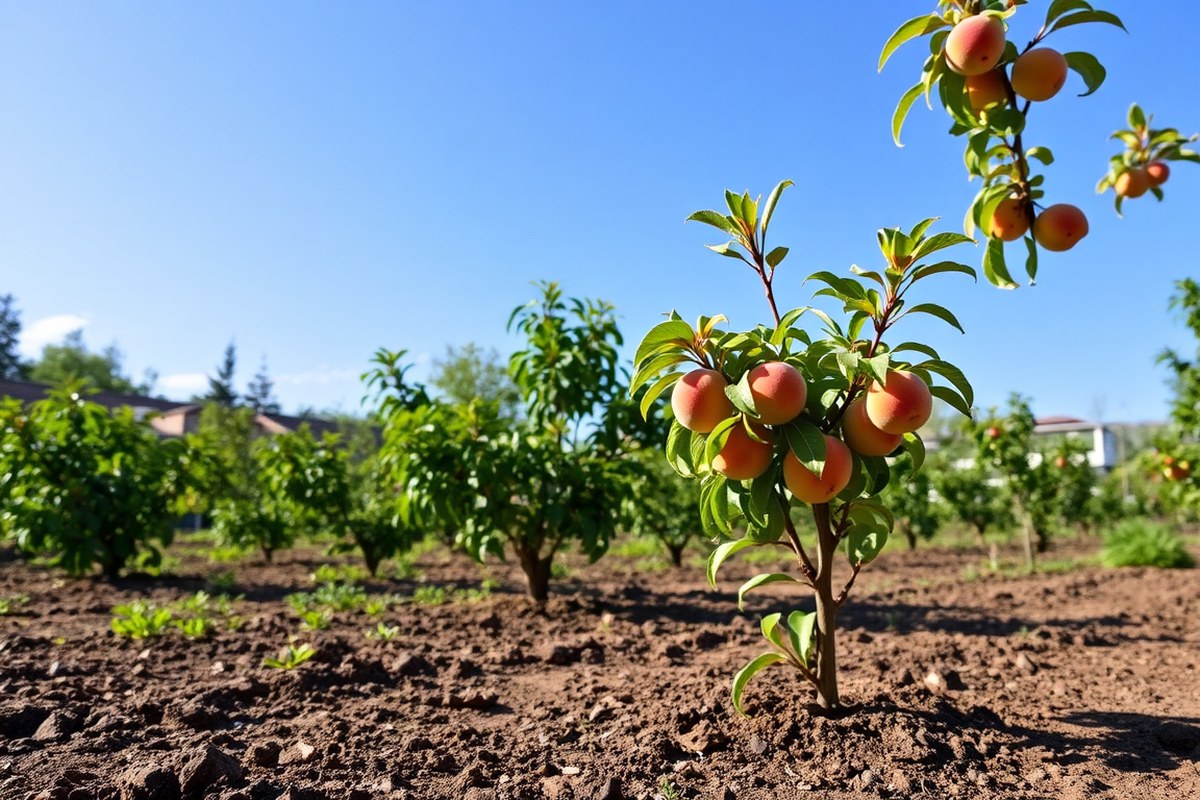
Pick a planting spot that gets at least six hours of direct sunlight daily. Eight to ten hours works even better for your peach tree’s growth and fruit. Avoid shady areas or places near large trees that block light.
The soil should drain well and have a pH between 6.0 and 7.0. Test your soil’s pH and drainage before planting.
Water pooling or heavy clay soil means you should add organic compost. You can also build a raised bed to improve drainage.
Before planting, check for hazards like frost pockets or strong winds. A flat or slightly sloping area works best to avoid cold air settling around the tree.
Leave enough space between trees. Plant them 15 to 25 feet apart.
Planting peach trees in heavy clay without fixing it causes root rot. It also lowers fruit yield.
A good soil test reveals nutrient gaps. Use the results to choose the right fertilizer after planting.
Prepare the site by tilling about 12 inches deep, mixing in compost to loosen heavy soil. This helps roots spread easily and stay healthy.
Add 1 to 2 inches of organic matter to clay soil. Till it well afterward.
For sandy soil, organic matter helps retain moisture and nutrients. These changes improve growth and reduce stress on your tree.
You can’t find good soil? Try planting your peach tree in a large container.
This method suits gardeners with poor soil or limited space. Use high-quality potting mix and ensure the container drains well to avoid waterlogged roots.
At planting, look at your young tree’s trunk. The soil line should sit just below the swollen bump about two inches above ground.
This keeps the graft union safe from rot and disease. Follow this precisely to avoid future trunk damage.
Watering Peach Trees: How Much and When
Peach trees need different watering amounts depending on their age and the season. Young trees under five years old require about 1 to 1.5 inches of water each week.
This water amount supports their shallow roots as they grow. It also helps them develop deep roots over time.
As peach trees mature, their roots reach deeper. So they need less frequent watering but more water per session.
Mature trees typically need 10 to 15 gallons of water per week during the growing season. Deep watering encourages strong roots and helps the tree resist drought better.
The best watering schedule changes with the seasons. In spring, water young trees twice a week and mature trees weekly. Summer demands more frequent watering due to heat.
So water young trees three times weekly and mature trees twice. During fall, reduce watering to once a week or less. But keep the soil moist if it stays dry for long periods.
To figure out how much water your peach tree needs monthly, multiply weekly water by four. For example, a mature tree getting 12 gallons weekly would need about 48 gallons monthly.
Adjust this if rainfall varies. Weekly rainfall over an inch can reduce the need to water.
Use a slow drip or soaker hose for deep watering. Water at the base, spreading through the drip line area where roots grow.
Avoid frequent shallow watering. It makes roots stay near the surface, prone to drying out and damage.
Young trees in containers or bare root need more careful monitoring. Their soil dries faster. So check often and water when the top 2 inches feel dry.
Mulch keeps moisture steady around the tree base. Keep mulch away from touching the trunk.
Overwatering can cause root rot and other fungal problems. Watch for yellowing leaves or soggy soil as warning signs.
Soil that stays wet over two days means stop watering for now. Well-drained soil and proper mulch use prevent many water-related issues.
Timing also matters. Water your peach tree early in the day.
Morning watering reduces evaporation and helps leaves dry before night, lowering disease risk. Avoid watering late in the evening unless soil is very dry.
Pruning Peach Trees to Promote Health and Fruit Production
Pruning peach trees yearly keeps them healthy and fruit-producing. The best time is late winter when the tree is dormant. Cut back 25 to 30 percent of last year’s new growth.
This keeps the tree easy to manage. It also lets sunlight reach inside better.
Ideal Pruning Times by Season
Late winter, before bud break, is the prime pruning season. The tree is dormant, making cuts less stressful. You can see the tree’s structure clearly without leaves.
Light pruning can happen after blossoms fall to remove dead or diseased wood. Avoid heavy pruning in summer or fall since it can encourage weak growth. Follow local frost dates to avoid damage.
Techniques for Shaped Pruning
Peach trees grow best with an open-center or vase shape. This shape improves sunlight and air flow, reducing disease risks. Focus on three to five main scaffold branches growing outward from 3 feet above the ground.
Choose branches at a 60 to 90-degree angle from the trunk to form a strong structure. Remove inward-growing or crossing branches to prevent crowding. Cut branches back to a healthy outward-facing bud.
How to Prune for Fruit Thinning and Size
Prune to remove about one-quarter to one-third of last year’s new growth annually. This controls size and encourages better fruit quality. Avoid cutting too much wood, which reduces fruit production.
Thin fruit after it forms by removing small or closely spaced peaches. This improves air circulation and allows remaining fruit to grow larger. Use hand pruning tools like sharp bypass pruners for clean cuts.
Avoid leaving stubs; make angled cuts about ¼ inch above a healthy bud. This prevents disease entry and promotes quick healing.
- Start pruning in late winter, before buds swell.
- Remove dead, broken, or diseased branches first.
- Cut out inward-growing and crowded branches.
- Shape the tree by keeping 3, 5 main scaffold branches spaced evenly.
- Trim last year’s growth by removing 25, 30% of wood.
- Cut branches at a 45-degree angle above healthy buds.
- Thin fruitlets after they set to improve size and quality.
- Clean tools between cuts to prevent disease spread.
Fertilizing Peach Trees: What, When, and How Much
Peach trees need balanced nutrients to grow well and produce fruit. For young trees, use a 10-10-10 fertilizer about a week after planting.
This provides equal parts nitrogen, phosphorus, and potassium to support early growth. Avoid applying fertilizer right at the trunk base to protect roots.
You should hold off on heavy feeding for young trees in the first year. Overfertilizing too soon can stress them. Water the tree once a month during the growing season.
Use fertilizer diluted in the soil around the drip line. Keep weeds away, as they compete with the young peach tree for nutrients and water.
Once a peach tree is about four years old, it is considered mature. The tree can take up to two pounds of fertilizer per time. Apply fertilizer two times each growing season.
Use a 10-10-10 or 14-14-14 blend to meet nutrient needs. Spread fertilizer evenly around the tree’s base. Keep it a few inches away from the trunk.
This helps avoid root damage. A fully mature tree should not get more than five pounds in one application.
Applying fertilizer early in spring right as buds break helps promote healthy leaf and fruit growth. A second feeding in mid-summer supports ongoing fruit development. Avoid fertilizing late in the growing season to prevent tender new growth vulnerable to cold damage.
Regular feeding improves fruit size and yield. But too much nitrogen can cause excessive leafy growth with fewer fruits.
Never place fertilizer directly at the tree trunk. Apply it near the drip line to protect roots.
A three-year-old peach tree gets one to two pounds of 10-10-10 fertilizer. Apply it in early spring. Spread the fertilizer evenly under the canopy.
Keep it six to twelve inches from the trunk. Water the area after applying fertilizer. A mature tree receives about two pounds twice a year.
But never exceed five pounds at one time. Adjust amounts if growth seems slow or foliage looks pale.
In dry or sandy soils, split fertilizer into smaller doses for better absorption. Peaches grown near invasive weeds may need extra attention to keep nutrients available.
Monitoring tree growth and leaf color helps you adjust feeding schedules. Healthy mature trees develop strong new growth annually, the buds for the next year’s fruit.
Common Pests and Diseases Affecting Peach Trees and Treatments
Peach trees often face pests like aphids and peach tree borers. Diseases such as peach leaf curl and scab.
Spotting symptoms early helps protect your tree quickly. Different treatments work depending on the problem and the season.
Identifying Peach Leaf Curl
Peach leaf curl shows as thick, puckered, and reddish leaves in early spring. Affected leaves may turn yellow or drop off. This disease slows growth and lowers fruit yield.
Look for blistered patches on young leaves right after buds open. It’s easier to catch peach leaf curl before leaves fully expand. Once you see symptoms, it’s too late to treat the current season.
Keep the tree healthy by removing fallen leaves in autumn. This reduces spores overwintering near your tree, lowering next year’s infection risk.
Controlling Common Insect Pests
Aphids cluster on tender new growth and leave sticky honeydew on leaves. Peachtree borers attack the trunk’s base and cause gum oozing or damage bark. Both pests weaken your tree over time.
Spray insecticides like Sevin with at least two weeks before harvest for pests. You can use insecticidal soap for aphids early in the season. It helps limit harm to beneficial insects.
Use it carefully to protect helpful bugs. Prevent borers by applying insecticide to the trunk in late spring.
Check trees every 7 to 10 days during active growth for signs of pests. Early treatment helps keep pest numbers down and reduces tree stress from damage.
Fungicide Applications for Scab and Other Diseases
Peach scab appears as small, dark spots on fruit and leaves, worsening as fruit ripens. Brown rot causes fruit to rot and shrivel, especially in warm, wet weather. Treat these with Daconil fungicide.
Start fungicide sprays in early spring when buds swell. Repeat every 10 to 14 days.
Stop about two weeks before harvest. Follow label instructions for dosage and safety precautions carefully.
Wear gloves and avoid spraying on windy days to protect yourself and beneficial insects. Removing infected leaves and fruit also helps lower disease spread through your garden.
When and How to Harvest Peach Fruit for Best Flavor and Storage
Peaches usually ripen in early September when grown from a young tree. Check ripeness every two or three days during harvest season because peaches soften fast. Ripe fruits gently yield to light pressure and have a sweet aroma near the stem.
Picking peaches right from the tree is best to avoid bruises. Use your thumb and fingers to hold the fruit and twist gently. Avoid pulling or squeezing hard, as this can damage the peach skin or flesh.
- Check for a deep color and a slight softness to touch
- Pick by twisting and lifting fruit off the branch carefully
- Handle peaches softly to prevent bruises
- Wear gloves if you want to protect both skin and fruit
- Place peaches in a shallow box or basket in one layer
- Inspect tree every 2 days during peak ripening
Store ripe peaches in the fridge for up to five days to keep freshness. Arrange peaches in a single layer so they don’t press on each other. If you plan to eat them soon, leave them at room temperature to ripen fully first.
Peach trees start to fruit around their third year, so plan your patience accordingly. Smaller trees produce about three bushels of fruit a year, which makes harvesting easier. Harvesting at peak ripeness gives you the best flavor and longest storage.
Special Care Considerations by Tree Type and Seasonal Cycle
Peach tree care changes mostly by tree size and by seasonal weather patterns. Dwarf, standard, and miniature trees differ in space needs and pruning. Your local climate affects when you water and prune your peaches.
You also need to protect trees from cold or hot weather. These tasks depend on your area’s weather patterns.
Dwarf vs Standard Tree Spacing and Pruning
Dwarf peach trees grow 8 to 10 feet tall, about half the size of standard trees. They need 8 to 10 feet of space between trees. Standard trees reach 12 to 15 feet tall and require 18 to 20 feet of spacing.
Pruning dwarf trees is easier since branches stay low, letting you prune safely from the ground. Standard trees need pruning tools that reach higher. Dwarf trees also produce fruit sooner, often within two to three years after planting.
| Peach Tree Type | Mature Height (feet) | Recommended Spacing (feet) | Typical Time to Fruit |
|---|---|---|---|
| Miniature | 5 to 6 | 4 to 6 | 2 to 3 years |
| Dwarf | 8 to 10 | 8 to 10 | 2 to 3 years |
| Standard | 12 to 15 | 18 to 20 | 3+ years |
Spacing affects tree health. Too close crowds roots and blocks sunlight. Proper pruning keeps branches open and strong for fruit.
Key Seasonal Activities from Dormancy to Harvest
Peach trees need about 800 chill hours between 32 and 45°F. These cold hours help the tree wake up in early spring. Without enough chill, buds may not grow properly.
In winter, protect young peach trees from very cold weather. Use mulch or wraps when temperatures fall below 20°F. This helps prevent damage to the tree.
Spring starts with thinning blossoming fruit to avoid crowding. Prune damaged wood and apply dormant oil spray to control pests before buds break.
During summer, water deeply every 7 to 10 days when no rain falls. Harvest usually begins mid to late summer. Clean fallen fruit to reduce disease risk.
Adjusting Care for Chill Hours and Climate Zones
Select a peach variety that matches your USDA hardiness zone and chill hour profile. Zones 5 to 8 suit most peaches. But each type needs specific chill hours to fruit well.
Warmer climates may not provide enough chill hours, causing uneven or no fruiting. You can delay pruning a little in warmer climates.
This helps buds get more cold time before they start growing. It reduces the risk of losing flower buds too soon.
In colder zones, protect trees from late frosts with frost cloths or wind machines. Water more during dry spells because dry soil stresses trees and reduces fruit quality.
Check local frost dates and chill hour counts yearly to adjust your peach tree care properly.
Step-by-Step Action Plan for Your Peach Tree
Follow these simple steps to start strong with your peach tree. Each step shows clear signs you’re on the right track.
- Before planting: Choose a sunny spot with well-drained soil. The soil should feel loose and not waterlogged.
- Day 1: Plant your tree in a hole twice as wide as the root ball. Roots should fit without bending, and soil settles evenly.
- Week 1: Water the tree deeply right after planting. You’ll see the soil stay moist but not soggy.
- Month 1: Start mulching with a 3-inch layer of organic material. Mulch should stay in place and keep weeds down.
- Spring (after planting year): Prune branches to open the center for air and sun. The tree should look balanced and airy.
- Early summer: Apply a balanced fertilizer recommended for fruit trees. Leaves should look green and healthy after a month.
- Every week during dry spells: Water deeply about 1 inch per week. Soil should remain moist a few inches below surface.
- Harvest season: Pick peaches when they are fully colored and slightly soft. They should smell sweet and taste juicy.
Frequently Asked Questions
How Far Should the Grafting Union Be Planted Underground?
Plant the grafting union about 2 inches below the soil line. This protects the graft from damage and helps the tree establish well.
Can You Grow Peach Trees in Containers?
Yes, dwarf peach trees grow well in containers with proper drainage. Use quality soil and water regularly to keep the roots healthy.
How Do Peach Trees Cope with Extreme Heat?
Peach trees love heat but need extra water during hot spells. Mulching helps keep roots cool and retains moisture.
When Do Peach Trees Start Producing Fruit After Planting?
Most peach trees produce fruit in 2 to 4 years after planting. Growth and soil quality affect the exact timing.
Should You Thin Peach Fruits on the Tree?
Yes, thinning helps improve fruit size and tree health. Remove weaker fruits early for better energy use.
Can Peach Trees Grow Well in Partial Shade?
Peach trees do best in full sun, at least 6 hours daily. Partial shade may reduce fruit yield and tree growth.
The Bottom Line
Taking good care of your peach tree means paying attention to soil, water, pruning, and pests. Your tree can live many years and give you tasty fruit. Start today by checking your tree’s watering and pruning needs this week.