Do Robotic Lawn Mowers Work? A Complete Guide to How and When They Perform
Do robotic lawn mowers work to keep your lawn neatly trimmed? Yes, these machines can maintain grass usually under 3 inches tall without much fuss. They cut a little grass often.
This keeps your lawn fresh. It looks well taken care of.
They use sensors and sometimes GPS to move around, so they don’t miss spots. You must set up boundary wires first. Or the mower needs a map of your yard.
This tells it where to go. Make sure your yard’s layout isn’t too complex or steep beyond your mower’s limits.
Robotic mowers typically run for about an hour before recharging themselves. Keep in mind that steeper slopes or obstacles can slow them down or cause trouble. They save you a lot of time.
The mower cuts most of the grass itself. You don’t have to do much.
Key Takeaways
- Most robotic mowers leave grass cut below 3 inches for a clean look.
- Set boundary wires or use GPS mapping to help the mower navigate.
- Check your yard’s slope; many models work well up to about 15% grade.
- Robotic mowers usually run for 60 to 90 minutes before recharging.
- Keep an eye on your mower to avoid theft or unauthorized use.
- Regularly replace blades every 1 to 2 months for a sharp cut.
Do Robotic Lawn Mowers Really Work to Keep Lawns Trimmed?
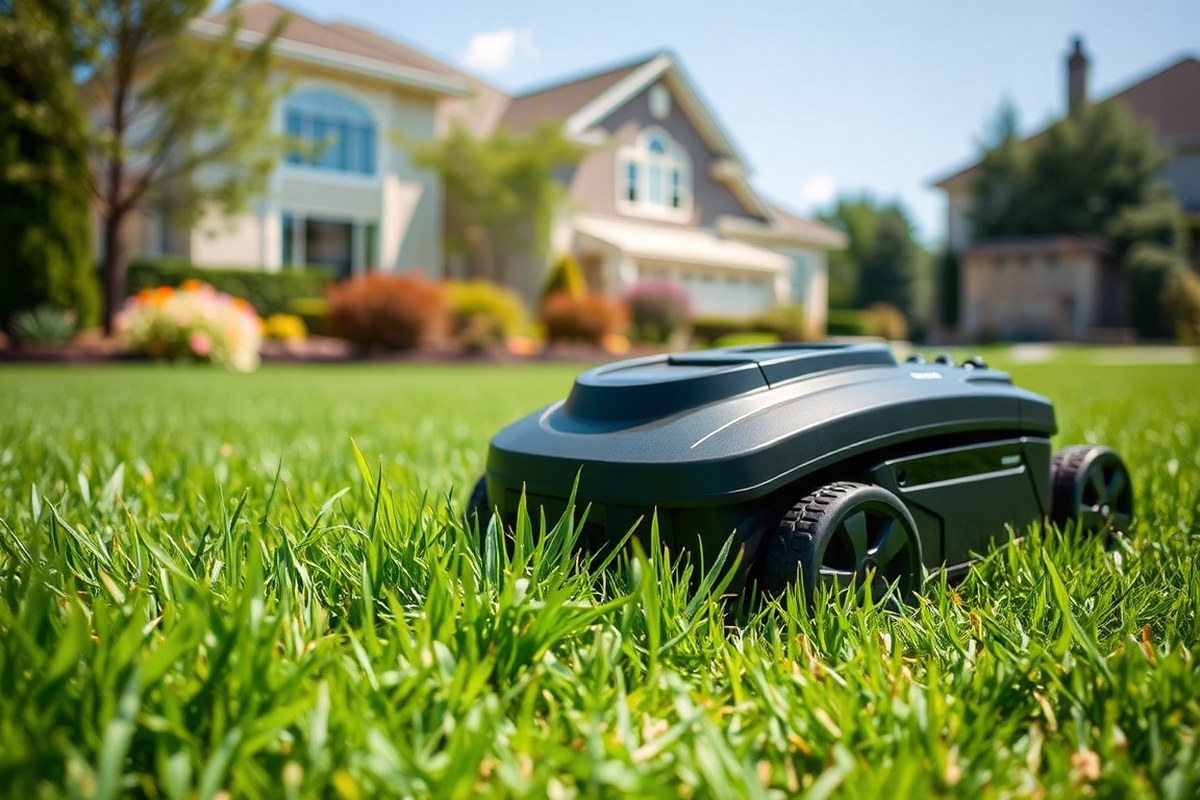
Robotic lawn mowers keep grass at a consistent height by cutting a little bit often. They usually maintain grass under 3 inches, which helps prevent overgrowth and brown patches. Since they operate on a preset schedule, you’ll rarely see tall grass popping up between cuts.
These mowers work best on smooth, open lawns. They need boundary wires and sensors to stay within set areas. This setup helps them operate correctly.
Complex yards with many obstacles or steep slopes can limit their efficiency. Your mower might struggle on lawns with narrow spots. It can also get stuck on steep hills more often.
Expect robotic mowers to reduce your mowing time but not eliminate work completely. They cover the whole lawn over several passes.
But they don’t trim edges near fences or walls well. You might still need a trimmer for those tight areas to keep the lawn looking neat.
Robot mowers work with battery power and return to their charging station automatically. They cut slower than push mowers do. They take narrower paths and stop to go around furniture or toys.
A robotic mower can take several hours to finish a larger yard. You could mow the same yard manually in about an hour.
Robotic mowers mulch grass clippings, leaving them to fertilize the lawn naturally. This helps create a lush, healthier lawn without extra effort.
Fast or thick grass can cause clumps of clippings or uneven cuts. The mower needs to run often to avoid this problem.
You will get the best results on mostly flat lawns. Lawns with clear borders and medium grass types work well too. Lawns with uneven terrain or very thick grass can slow the mower and reduce cutting quality.
These mowers still offer good automation and steady lawn care. They fit well with many common lawn types.
How Robotic Lawn Mowers Navigate Your Lawn Reliably
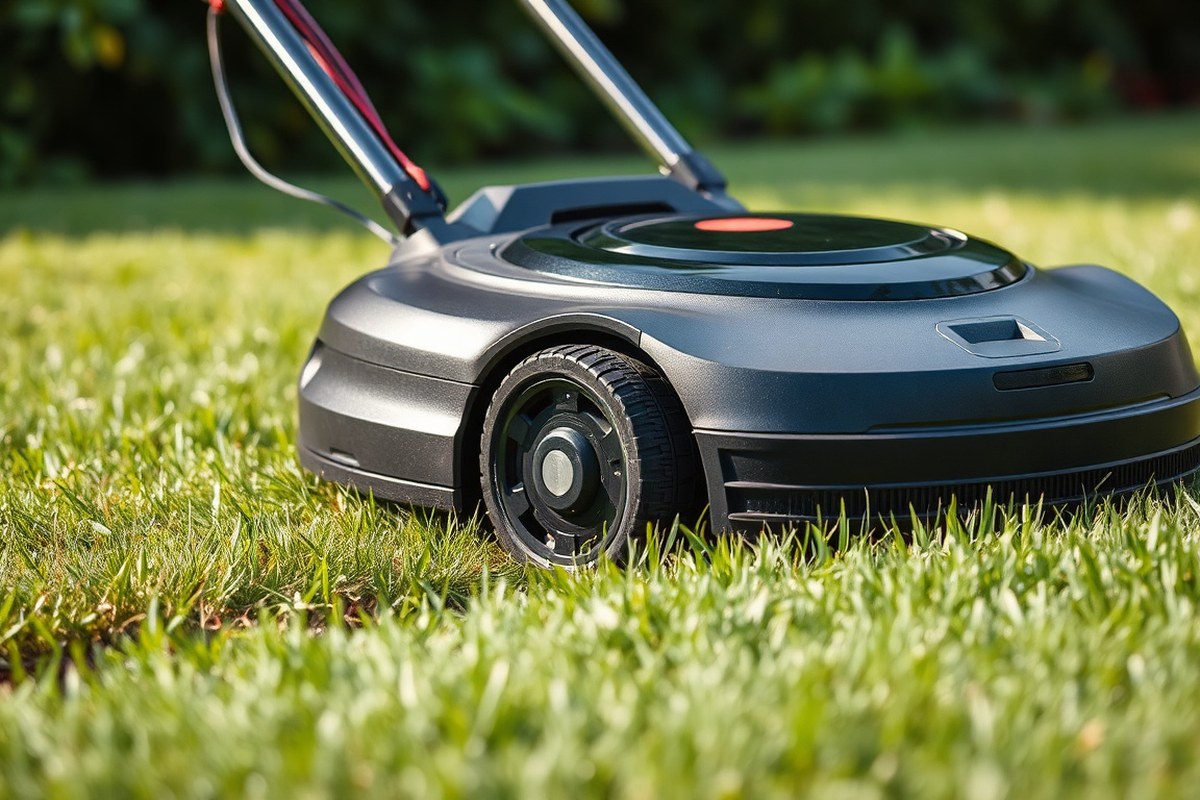
Robotic lawn mowers find their way using either boundary wires or GPS navigation. Boundary wires are buried or pinned around your lawn’s edge.
They send signals the mower detects to stay inside the lawn area. This works great for complex yards or spaces with lots of trees blocking satellites.
Newer models often use GPS combined with Real-Time Kinematic (RTK) technology for more precise positioning. Standard GPS can be off by 5 to 10 feet. But RTK narrows this to just a few inches.
This system doesn’t need boundary wires. It works well on open lawns. Use it where wires are hard to install or unwanted.
Some mowers add AI vision or LiDAR to read their surroundings digitally. These systems help the mower avoid obstacles like garden furniture or pets. They also improve navigation in tricky spots without physical wires.
Guide wires assist robotic mowers in tight passages as narrow as 24 inches (60 cm). You run these thin wires ahead from the main boundary wire through narrow paths or gates. The mower follows the guide wire signal to navigate narrow spaces without getting stuck.
Setting up boundary wires takes effort: you bury or staple the wire around your lawn’s perimeter. Materials might cost $50 to $150. It takes a few hours to set up.
Price depends on your yard size. GPS and RTK setups skip boundary wires.
They cost more and need a base station. The base station helps with satellite signals.
With boundary wires, the mower stays reliably inside and won’t wander off your lawn. You usually need to trim lawn edges by hand. Robot blades don’t cut as close.
Regular mowers handle edges better. Wireless GPS mowers are easier to set up.
They may have trouble with heavy tree cover. Narrow spots can also be a challenge.
Walk along the boundary or guide wires first. This tests signal strength and coverage. Make sure your mower can follow the wire well.
Can Robotic Lawn Mowers Handle Slopes, Obstacles, and Complex Yards?
Robotic lawn mowers can handle slopes, obstacles, and complex yards if you choose the right model. Most standard robot mowers manage moderate slopes and avoid obstacles using sensors. Steeper hills and narrow or intricate spaces need specialized features for best results.
Slope and Terrain Handling Capabilities
Most robotic mowers work well on slopes up to 15 degrees (about 27%). Some premium models handle even steeper grades, up to 35 degrees or 70% incline. All-Wheel Drive (AWD) models offer extra traction for rough or uneven terrain.
Standard models struggle on slopes over 20% to 40%. They also have trouble on very uneven ground. You might need a special mower for these lawns.
You’ll want to check the exact incline limit noted in the mower’s specs before buying. A mower with AWD or specialized traction is needed for steep hills or gravel paths.
Obstacle Detection and Safety Sensors
Robotic mowers use sensors to detect objects and avoid collisions. Vision systems, lidar, or ultrasonic sensors help spot trees, pets, and other obstacles. Many have tilt sensors to detect sudden changes in terrain or steep drops.
These sensors stop or steer the mower around obstacles like flower beds or garden furniture. Small things like sticks, fallen fruit, or toys can still trip it up. Clearing the area helps the robot work smoothly and avoid getting stuck.
Models Designed for Complex Lawns and Narrow Passages
Advanced models feature multi-zone management so you can set separate areas for mowing. This helps when you have multiple lawns, narrow paths, and flower beds to work around. Some use Tri-Fusion Navigation, a mix of GPS, vision, and sensors, to handle complex yards.
You can avoid perimeter wires with some newer models. These use wire-free navigation to move around.
These allow the mower to roam without physical boundaries, reducing setup time. Narrow passages require smaller body sizes and good obstacle detection.
Terrain-Related User Tips and Limitations
Robot mowers are best on smooth, relatively flat lawns. Steep, rocky, or very bumpy terrain can cause loss of traction or navigation errors. Regularly check paths and remove debris like sticks or toys.
Flower beds and paths need clear edges. Sensors help mowers avoid running over these areas. Marking boundaries keeps your plants safe.
Large or steep lawns require AWD models. These come with better sensors.
Expect to pay more for these features. Installing boundary wires carefully also improves performance on tricky layouts.
Safety and Security Features of Robotic Lawn Mowers
Robotic lawn mowers are built with safety for children and pets. They move slowly, making it easier for kids and animals to see. Lift sensors stop the blades immediately if the mower tips or lifts.
These mowers use several sensors to detect obstacles and avoid collisions. When they sense something in their path, they slow down or steer away. This helps protect pets, kids, and your garden furniture from accidental bumps.
Some models use GPS to stay inside safe zones like your lawn. They avoid sidewalks and flower beds automatically. These features help keep the mower away from unsafe areas.
You can lock or secure a robotic mower to prevent theft or unauthorized use. Most mowers come with PIN codes or app locks for security. These locks prevent use by anyone without your permission.
This keeps your mower safe from unauthorized use. Store the mower in its charging station when not in use. You can also keep it somewhere secure inside.
This protects the mower from damage or theft. This keeps it safe from weather damage and theft.
Always watch your mower while it runs in your yard. Pay special attention if children or pets are nearby. This helps avoid accidents or problems.
Check that all boundary wires or virtual fences are set up right. These keep the mower inside your yard. Proper setup prevents the mower from going where it shouldn’t.
Consider adding a fence or extra locks if strangers can reach your yard. This stops unauthorized people from getting near your mower.
It adds an extra layer of security for your equipment. These steps make the mower safer for your family and secure from theft.
Maintenance Essentials: Keeping Your Robotic Mower Running Smoothly
Robotic lawn mowers need routine care to work well and last. Regular blade replacement, battery upkeep, cleaning, and troubleshooting keep your mower reliable. Follow these steps to avoid common problems and save time.
Blade Maintenance and Replacement Schedule
Blades on robotic mowers are small, sharp, and spin on a disc. They wear down fairly quickly.
So plan to replace them every 1 to 2 months. This varies with lawn size and grass thickness.
Regular blade changes keep your mower cutting cleanly and evenly. Dull blades tear grass, causing a ragged look and stressing your lawn. You can usually swap blades yourself in under 10 minutes using a screwdriver.
Wear signs include uneven cutting and more noise from the mower. Keep extra blades on hand, as replacement sets often cost $15 to $30. Avoid letting the blades get too dull to prevent mower strain.
Battery Care and Recharging Tips
Robotic mowers run on lithium-ion batteries that last around 60 to 90 minutes per charge. After mowing, the mower returns to its dock to recharge automatically. Avoid unplugging it while charging to protect battery life.
Keep the charging contacts clean by wiping them with a dry cloth monthly. This helps maintain a steady power flow. Depending on use, battery lifespan is roughly 3 to 5 years before it needs replacing.
If you store the mower for winter, charge the battery to about 50% and keep it in a cool, dry place. Fully draining the battery can shorten its useful life and cause startup problems in spring.
Cleaning and Seasonal Storage Procedures
Grass clippings and dirt can build up under the cutting deck and wheels. Clean these areas weekly with a soft brush, avoiding water near electrical parts. This prevents blockages and keeps smooth cutting.
Before storing the mower for the winter, give it a thorough cleaning and remove blades. Charge the battery halfway, then place the mower in a dry, frost-free space. This avoids corrosion and damage from freezing temperatures.
Check rubber wheels and plastic covers for cracks or dirt. Replace damaged parts before spring to prevent performance issues. Clean docking station sensors too, ensuring good connection for charging.
Troubleshooting Common Issues
The most common problem is a stuck blade or wheel from debris. Stop the mower and clear obstacles right away to prevent damage. Inspect for wear or broken parts if the mower suddenly stops working.
Software glitches can cause navigation errors. Restart the mower and check for updates through the app or manufacturer’s site to fix bugs. Keep boundary wires secure to avoid signal loss.
Low battery or poor charging shows as shorter run times. Clean contacts and confirm the dock power is steady. Replace the battery if issues continue despite good maintenance.
Never touch blades while the mower is powered on, even if you only remove debris.
How Long Does It Take a Robotic Lawn Mower to Finish the Job?
A typical mowing session for a robotic lawn mower lasts between one and three hours. Most models run on battery power for about an hour on a single charge. After this, they return to their charging station to recharge before continuing.
The size of your yard has a big impact on how long it takes. For example, a mower covering around 1200 square feet (about 0.03 acres) might take an hour.
Larger yards may require multiple sessions. A mower with a six-volt battery might cover roughly 0.25 acres before needing a recharge.
Factors that slow down mowing include tall grass, wet conditions, or uneven terrain. When grass gets too tall, the mower’s blades may struggle. This makes mowing take longer.
Sometimes, you’ll need a traditional mower first. Wet or bumpy yards also make the mower work harder, draining the battery faster.
Speed varies by model. But robotic mowers generally move slower than gas mowers for precision and safety. They follow semi-random paths to cover the lawn fully.
They don’t race through your yard. Instead, they take time.
This makes sure every spot gets trimmed. Complex lawn layouts with many obstacles can add to their mowing time.
Here’s an example: a robotic mower rated for 0.25 acres runs about 60 minutes before a 45-minute recharge. Your lawn is 0.5 acres, it might need two sessions and one recharge to finish. You can set the mower to run daily or every few days.
This keeps grass at a steady height. It avoids long mowing sessions.
Robotic mowers handle frequent, short mowing sessions better than occasional, long ones. Keep grass shorter by running the mower every one to three days. This strategy also cuts down mowing time each session because the grass is easier to cut.
Recharging time typically takes 30 to 60 minutes, depending on the model. You can expect the mower to spend about half its overall cycle recharging and half mowing. This balance allows it to work automatically with minimal input from you.
Are Robotic Lawn Mowers Worth Buying for Your Yard?
Robotic lawn mowers save you time and effort. They cost more upfront. Consider them if you value saving time.
They help keep your lawn healthy with frequent trimming while cutting down physical work. Still, they don’t fit every yard or homeowner equally well.
Cost vs Time Savings Analysis
These mowers cost anywhere from $800 to over $3,000 upfront, much more than manual mowers. You save time by letting the mower run itself regularly, freeing you from weekly pushes.
The time saved depends on how often you mow. It can add up to hours each month.
Maintenance costs are lower than gas mowers but still present. You need to change blades sometimes. Clean the mower when needed.
Gas mowers need more tune-ups and fuel. The real value appears if you dislike mowing or have limited time.
For many, the extra spending pays off through less physical work and more free time. Spend more than 2 hours weekly mowing? A robot mower can save your time.
It might be cost-effective. Otherwise, a cheaper traditional mower might suit you better.
Environmental Impact Comparison
These mowers run on electricity, emitting no direct exhaust like gas mowers do. Robots pollute less when powered by renewable energy. This lowers your carbon footprint.
It’s a cleaner way to mow. They also use less energy overall because they cut only small sections of grass frequently.
Frequent trimming improves lawn health by encouraging thicker grass. The dense turf better resists weeds and pests, reducing the need for chemicals. Unlike gas mowers, this can help your yard stay greener and support local wildlife more naturally.
However, electricity use depends on your local grid. Your environmental benefits drop if your power comes from coal or oil. Still, robotic mowers generally rank as more eco-friendly compared to traditional gas-powered lawn care tools.
Best User Profiles and Yard Types
Robotic mowers best serve busy homeowners who want a neat lawn without the hassle. People with medium-sized yards of about a quarter to half an acre benefit the most. Small yards under 5,000 square feet might be better left to push mowers to save money.
Yards with simple shapes and few obstacles make the mower’s job easier and more effective. Modern mowers handle moderate slopes and layouts well. Steep or cluttered lawns can cause problems.
Your yard needs edging if you have many flower beds or trees. You may still do this by hand.
Seniors or those with physical limits find robotic mowers especially helpful. They remove the strain of mowing, pushing a mower uphill, and dealing with noise and fumes. They also fit well with smart home enthusiasts who appreciate automated, hands-off solutions.
Drawbacks and When Not to Buy
High upfront costs and setup complexity are the biggest drawbacks. Installation can take hours to set boundary wires and configure settings right.
Not spending time on setup means the robot mower may be a hassle. It needs upfront effort to work well.
They don’t replace every part of lawn care. You’ll still need to handle leaf clearing, edging, and patch repair.
A robot mower won’t do everything alone. It requires some help from you.
Those with uneven, very large, or heavily landscaped yards might face frequent errors and interruptions. If mowing is already quick and easy for you, a robot likely isn’t worth its cost. Avoid them if basic push mowing doesn’t feel burdensome.
Choosing and Setting Up Your Robotic Lawn Mower Correctly
Pick a robotic lawn mower that fits your garden’s size and shape. Smaller, simple yards do better with models using boundary wire, which cost less and work reliably. Bigger or tricky yards get more from GPS or RTK mowers.
They give better cutting accuracy for complex layouts. These models usually cost more than basic ones. Knowing your yard’s slope, obstacles, and grass type helps find the right mower.
Put the charging station on flat ground near power. Choose a spot in the shade if you can. This helps the mower charge safely.
Follow the mower’s directions to lay the boundary wire. Place it 6 to 12 inches from fences or flower beds. This keeps the mower inside your lawn area.
Make sure the wire forms a continuous loop, which helps the mower know where to cut. Adding a guide wire helps the mower find the charger.
This is useful near lawn corners or far edges. It makes sure the mower returns easily.
Many mowers connect to a smartphone app. The app controls when the mower cuts grass and stops. You can set virtual borders on GPS models.
It also shows the battery level. Use the app to change the blade height or pause mowing. This is handy if you want to walk on the lawn.
You stay in control while the mower works. Not setting the boundary wire right causes missed spots.
Skipping app setup may let the mower leave your lawn. Install everything carefully to avoid those problems.
Double-check the boundary wire connection before starting to avoid the mower leaving your yard.
Don’t skip testing the mower after setup. Run it with the boundary in place, then watch how it handle the space. Tight corners, thick grass, or uneven ground may need boundary tweaks.
Expect initial setup to take a few hours depending on yard size. Planning your mower’s schedule is easy once it’s running. The device works automatically on your chosen days and times.
Step-by-Step Action Plan for Using Your Robotic Lawn Mower
Follow this plan to get your robotic mower up and running. Each step helps you see progress quickly.
- Before You Start: Read the manual fully and plan your lawn’s boundary setup carefully. This sets clear mowing limits.
- Day 1: Install boundary wires or markers and test your mower’s navigation. It should cover the designated area without missing spots.
- Week 1: Run the mower daily and watch how it handles slopes and obstacles. Adjust boundaries or clear unexpected debris if needed.
- After 2 Weeks: Check blade sharpness and clean the underside. This keeps mowing smooth and avoids uneven cuts.
- Week 3: Review cutting schedules and battery life. Make sure your mower works long enough to cover your whole lawn before recharging.
- Month 1: Inspect sensors and safety features by simulating object detection. Confirm the mower stops or avoids obstacles as it should.
- Month 2: Check how your lawn looks this month. Adjust mowing times or patterns as needed. Fix any patches that look uneven or too long.
Frequently Asked Questions
What Are the Disadvantages of a Robotic Mower?
Robotic mowers cut slower since they trim small grass sections. They may struggle with steep slopes and very complex yards. Battery life limits how long they can run between charges.
Are Robotic Lawn Mowers Worth Buying?
Yes, if you want less time mowing and a tidy lawn all season. They work well on regular lawns but might not suit large or uneven yards.
What Is the Lifespan of a Robotic Lawn Mower?
Most robotic mowers last around 5 to 10 years with good care. Replacing batteries periodically is key to keeping them running well.
What Happens to Grass Clippings with a Robot Lawn Mower?
They mulch clippings finely and leave them on your lawn. This acts like natural fertilizer and reduces the need to bag clippings.
Do Robotic Lawn Mowers Work on Uneven Terrain?
They handle slight unevenness but may struggle on very bumpy or rocky lawns. Smooth, moderately sloped yards suit them best for steady mowing.
How Noisy Are Robotic Lawn Mowers Compared to Other Mowers?
They are among the quietest on the market, quieter than gas mowers. Expect peaceful operation ideal for early mornings or quiet neighborhoods.
Final Thoughts
Robotic lawn mowers work well for many yards when set up right. Start by planning your boundaries and testing them carefully. That first step gets your mower off to a strong start.